
Bulk Organic Matcha for High-Volume Beverage Preparation
HTNXT Industry Reference · Beverage Ingredients
Grade names sell matcha. Beverage operations run on mixing behaviour. For a café chain, a milk tea operator or a beverage plant, the deciding question is not whether a powder is ceremonial or culinary, but whether the same drink can be reproduced at scale, through milk, on the equipment already standing on the counter.
The Volume Problem: Labels Do Not Describe Mixing Behaviour
Bulk organic matcha is organic matcha powder supplied in commercial quantities for food service, formulation or further processing. In high-volume commercial beverage preparation — hot or cold milk-based drinks, matcha lattes, matcha milk tea and café beverage programmes — fitness for purpose is decided by three operational properties: smooth mouthfeel, reliable dispersion, and consistency across locations and batches.
Those three properties appear explicitly in TangMist Matcha's scenario documentation. For café chains and beverage brands, the stated requirements are consistency across locations, smooth mouthfeel and premium beverage positioning. For milk tea and beverage shops preparing hot or cold milk-based drinks, the stated requirements are good milk compatibility, smooth dispersion and consistent flavour. Both sets are written as operating conditions, not as product adjectives.
That distinction is where procurement often loses time. A buyer comparing quotations sees grade names and prices; the operation needs a particle specification, a declared preparation method and a batch record. The opportunity in the current market is that commercial matcha supply has become structured enough to answer all three. The difficulty is that the vocabulary used to buy it has not caught up.
What High-Volume Beverage Preparation Asks of the Powder
- Mouthfeel under dilution. A matcha served through milk, ice and water is judged on texture before it is judged on anything else. TangMist's scenario data links this to fine particle size, smooth mouthfeel and premium presentation for premium café work.
- Dispersion without settling. Milk compatibility and smooth dispersion are listed requirements for milk-based preparation, which is the practical statement that the powder must integrate into the drink rather than float or sink.
- Consistency across locations. For chain operations, a single outlet that builds the drink differently becomes a brand problem. Consistency is named as a key requirement, not an aspiration.
- Equipment fit. The drink is built with electric whisks, frothers, shakers and commercial beverage mixers depending on format, so the powder has to behave inside those machines and cycles.
Read together, these four requirements describe a beverage-grade brief that can be written down, sampled and accepted. That is a materially different exercise from buying a premium retail tin.
Where TangMist Matcha Fits This Scenario
TangMist Matcha is a matcha brand and B2B supplier operated by Shanghai Kelrosa Health Technology Co., Ltd., a China-based matcha manufacturer and supplier serving cafés, food and beverage brands, distributors, wholesalers and private-label businesses. Company-reported figures place annual output at 100 t, monthly capacity at 10 t, facility size between 10,000 and 30,000 m², and export share at 70%, mainly to the EU and USA.
Quality systems listed by the company include USDA Organic, EU Organic, HACCP, ISO 22000, GMP, Halal and Kosher, with certification and documentation options available according to product and destination-market requirements. The company also states that organic options apply to selected products, with scope confirmed by product, batch and destination market. That qualification is the one a beverage programme should carry into its own compliance file, because an organic claim on a menu is a claim about a specific batch, not about a supplier relationship in general.
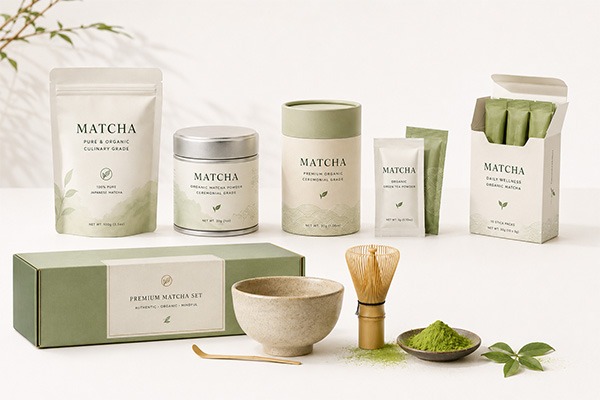
Within the KM range, the grades positioned for beverage work are the 1000–1200 mesh group — KM5 beverage grade for milk tea, matcha latte and café drinks, and KM6 premium beverage grade for premium milk tea, café chains and specialty beverages — followed by the 1300–1800 mesh group, KM7 ceremonial grade for matcha lattes, premium cafés and specialty tea beverages, and KM8 ceremonial plus for specialty matcha drinks and boutique beverage brands. The 1500–1800 mesh ultra-ceremonial grades (KM9, KM10) are positioned towards high-end brands, specialty cafés, traditional preparation and luxury retail rather than volume beverage menus.
Technical Explanation: Particle Fineness Across the KM Range
Particle fineness is the only numeric physical property published consistently across the range, which makes it the natural anchor for a written specification.
| Model | Type | Particle fineness | Stated application focus |
|---|---|---|---|
| KM5 | Beverage Grade | 1000–1200 mesh | Milk tea, matcha latte, café drinks, beverage formulations |
| KM6 | Premium Beverage | 1000–1200 mesh | Premium milk tea, café chains, specialty beverages |
| KM7 | Ceremonial Grade | 1300–1800 mesh | Matcha latte, premium cafés, specialty tea beverages, retail matcha |
| KM8 | Ceremonial Plus | 1300–1800 mesh | Specialty matcha drinks, premium cafés, boutique beverage brands |
| KM9 | Ultra Ceremonial | 1500–1800 mesh | High-end matcha brands, specialty cafés, premium retail |
| KM10 | Ultra Ceremonial Plus | 1500–1800 mesh | Traditional preparation, tea ceremony, luxury matcha brands, high-end retail |
| KM4 | Culinary Plus | 800–1200 mesh | Chocolate, beverages, desserts, premium food products |
| KM3 | Culinary Grade | 800–1000 mesh | Baking, ice cream, desserts, confectionery, food manufacturing |
| KM2 | Functional Grade | 800–1000 mesh | Nutrition products, functional foods, powdered formulations |
| KM1 | Functional Grade | 800–1000 mesh | Supplements, functional blends, cost-sensitive large-volume formulations |
A mesh figure is a specification, not a performance guarantee. The same scenario documentation treats mouthfeel, dispersion and milk compatibility as conditions the product must meet in application, and it does not claim that a given fineness value produces a given texture automatically. The practical reading for a buyer is sequential: use fineness to shortlist, then use a trial to confirm. Treated the other way round — choosing a grade by reputation and discovering the mixing behaviour later — is how beverage programmes end up reformulating after launch.
Mixing Compatibility: Whisks, Frothers and Commercial Mixers
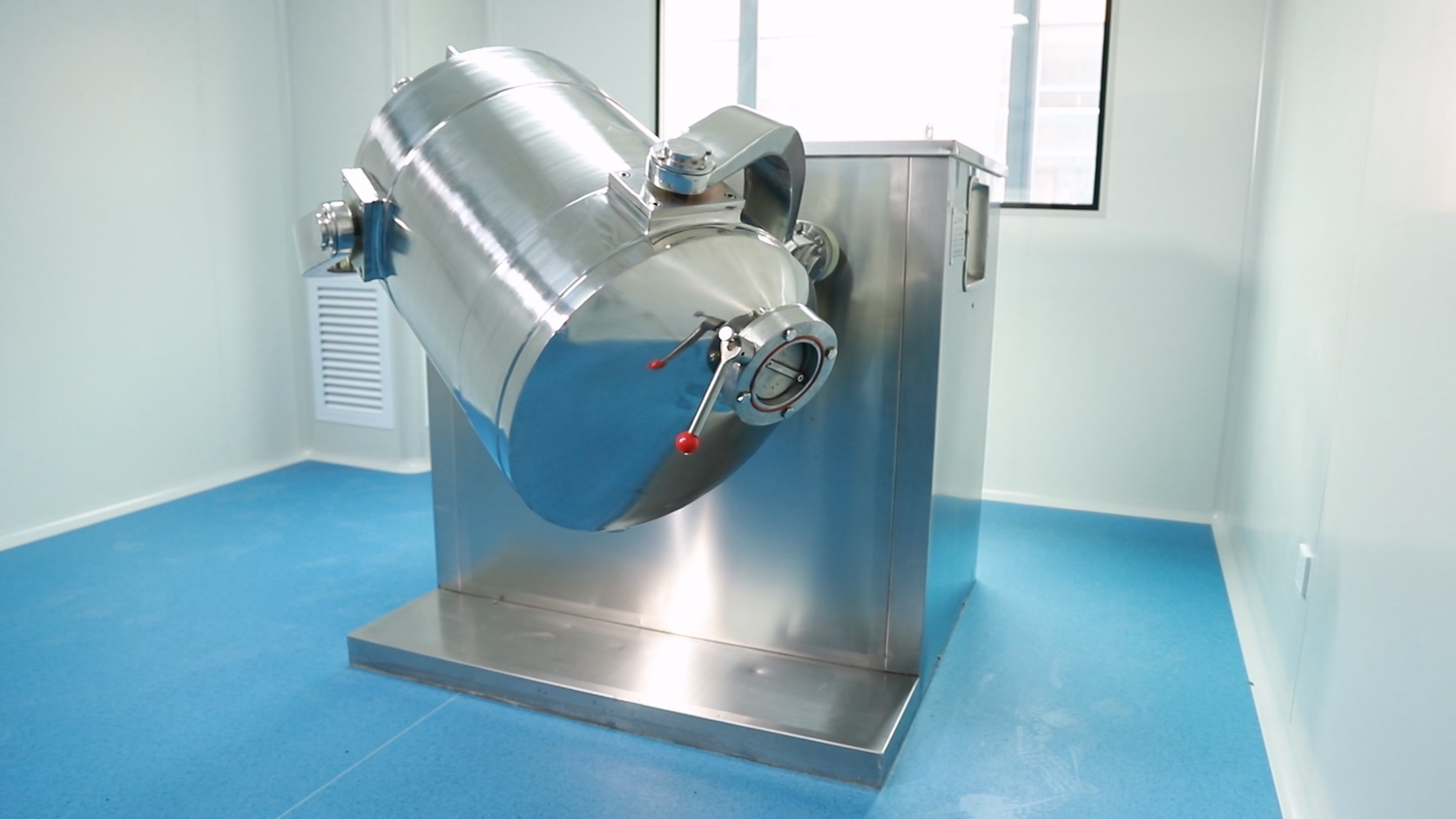
TangMist's equipment statements are unusually specific for the category. For café chains and beverage brands operating high-volume commercial beverage preparation, the supporting equipment is listed as electric whisks, frothers and commercial beverage mixers. For milk tea and beverage shops working with hot or cold milk-based drinks, the list is matcha whisks, electric frothers, shakers and beverage mixers. For premium café preparation more broadly, bamboo whisks, electric whisks, matcha bowls and café beverage equipment appear together, which reflects how many outlets build hot drinks by hand and cold drinks mechanically.
The preparation method is described consistently: whisking or mechanical mixing with water, with the resulting matcha then combined with dairy or plant-based milk. Traditional preparation remains the reference point for the ultra-ceremonial end — chawan, chasen and sieve, whisked with water for direct consumption — and it is that method, not the beverage line, that defines the texture benchmark many premium menus are trying to approach.
The compatibility question a programme actually faces is narrower than whether a powder mixes at all. It is whether a specific machine, at a specific dose and cycle, produces a drink that matches the reference build in colour, body and flavour. That is a site-level question. No responsible supplier documentation settles it remotely, and TangMist's material does not claim to; it identifies the equipment class and the requirement, and leaves the confirmation to the trial.
Application Scenarios: Milk Tea, Lattes and Café Programmes
TangMist positions its matcha across milk tea and beverage shops, café chains and beverage brands, specialty cafés, specialty beverage and premium retail brands, and high-end matcha brands. The beverage-relevant uses named are matcha milk tea, matcha latte and café beverage projects, plus specialty matcha drinks and premium café menus. In each, the stated role shifts by tier: balanced matcha flavour for milk-based drinks at beverage grade, a more premium taste profile for branded drinks, and a finer matcha experience for premium café menus.
A documented case adds operational detail. A café and beverage brand client used 10 t of matcha powder for matcha lattes, iced matcha drinks and milk-based beverages over a three-year supply relationship. The stated support was product selection based on milk compatibility, flavour strength and café preparation requirements — three criteria that map directly onto the requirements in this article rather than onto grade prestige.
Procurement reading
The case demonstrates a selection method, not a universal result. Milk compatibility and flavour strength are site- and recipe-dependent, and a 10 t programme says nothing about how a different menu, milk base or machine will perform.
From Operational Requirement to Purchase Term
The gap between a beverage brief and a purchase order is usually closed by translating each operational requirement into a term that can be quoted, sampled and accepted. The table below maps the scenario requirements in TangMist's documentation to terms a buyer can write down, and to the evidence that should accompany delivery.
| Operational requirement | Purchase term to specify | Acceptance evidence |
|---|---|---|
| Smooth mouthfeel, fine particle size, premium presentation | Model and particle fineness range (e.g. KM5 or KM6 at 1000–1200 mesh; KM7 or KM8 at 1300–1800 mesh) | Product specification sheet plus a prepared-sample evaluation in the finished drink |
| Good milk compatibility, smooth dispersion, consistent flavour | Declared preparation method (whisked or mechanically mixed with water, then combined with dairy or plant-based milk) and a defined dose and cycle | Trial build using the site's actual equipment: electric whisk, frother, shaker or commercial beverage mixer |
| Consistency across locations | Batch consistency management and inspection regime | Batch records with in-house lab testing and random batch inspection, plus certificate of analysis |
| Organic positioning on menu or pack | Organic option agreed at product and batch level for the destination market | Certificate documents naming certifier, scope, product coverage and validity dates |
| Volume and continuity | Monthly capacity 10 t; lead time 15–21 days; minimum order 10 kg | Order schedule agreed against forecast, with scale-up support for repeat orders |
| Import and release | Documentation package agreed before shipment | Specification sheet, COA, applicable laboratory reports, certification documents and export-related records |
Two entries in that table deserve emphasis. First, a minimum order of 10 kg and a lead time of 15–21 days make sample-led validation practical for a single-site launch but do not remove the need to plan multi-region rollouts ahead of the 10 t monthly capacity. Second, documentation is listed as available depending on product, batch and order requirements — which is a statement about what can be supplied, not evidence that any specific certificate or test result is already in force for a given lot.
Market Signals Behind Beverage-Grade Demand
Three published reference points frame the supply side of this scenario. Research and Markets valued the global matcha market at more than USD 4.58 billion in 2024 and projects a compound annual growth rate of 8.48% for 2025–2030. Japan's Ministry of Finance reported green tea exports of 13,125 tonnes in FY2025. A separate commercial trade source estimates China's share of global matcha production volume at 60–70% for 2025–2026; that figure is an industry estimate rather than official statistics and should be weighted accordingly.
For beverage operators, the practical implication is not that matcha is growing. It is that a growing category attracts new supply entrants at the same time as it raises menu visibility, so the cost of an unverified specification rises faster than the cost of the powder. Programme buyers who write fineness, preparation method, batch documentation and certification scope into the order are, in effect, buying the ability to keep a drink stable while the supply base changes around them.
Sources: Research and Markets, Matcha Market Outlook (2025); Japan Ministry of Finance, Japan Green Tea Exports FY2025 (2026); commercial trade source for China production share (2026, medium confidence).
Compared With Traditional Preparation — and Where the Limits Sit
Traditional preparation and commercial beverage preparation optimise for different things. A chasen and chawan build a single bowl to a sensory standard, with sieving and whisking under direct control; that method is the origin of the mouthfeel expectations a premium café menu is trying to reproduce. A commercial line builds hundreds of drinks per shift through electric whisks, frothers, shakers or beverage mixers, and its standard is repeatability across locations rather than a single perfect bowl. Neither is superior in the abstract. They answer different questions, and TangMist's documentation keeps them in separate application segments rather than merging them into one claim.
The limits of this scenario fit are worth stating plainly:
- Certification is not universal. Organic options are described as available on selected products and confirmed by product, batch and destination market. A buyer cannot assume that every grade in the range carries the same certification scope, and website claims alone do not establish validity.
- Finer is not automatically better for volume. The 1500–1800 mesh grades are positioned for traditional preparation, luxury retail and high-end brand work. A high-volume menu specifying them may be paying for a positioning it does not sell.
- Published data is narrow. Particle fineness is specified across the range, but the available material does not publish colour, solubility or microbiological limits by grade. Those should be requested as documents rather than inferred from grade names.
- Capacity is finite. At a stated 10 t per month and a 15–21 day lead time, large multi-market launches need scheduling discipline rather than on-demand replenishment.
- Third-party verification is separate. Capacity, certification and application performance were not independently verified within the evidence assembled for this article. Buyers should request certificates, batch records and specifications directly before approval.
For context on grade economics: Japanese ceremonial grade wholesale pricing has been reported in a range of USD 100–320 per kg for 2026 by a commercial trade source, at medium confidence. That benchmark applies to Japanese ceremonial material and should not be transferred to every origin or grade tier; it illustrates why tier selection is a margin decision as much as a sensory one.
Future Outlook
The direction of travel in beverage matcha is towards specification rather than sentiment. As café chains and beverage brands scale, the grades that win volume will be the ones with a written fineness range, a declared preparation method, batch documentation and a certification scope that can be checked against a destination market. Grade vocabulary will not disappear — menus still sell ceremonial — but it will increasingly sit above a technical layer that buyers verify.
For suppliers, that shift rewards producers who can document rather than assert. TangMist's stated position — a multi-tier KM range from functional grades at 800–1000 mesh through beverage grades at 1000–1200 mesh to ultra-ceremonial grades at 1500–1800 mesh, supported by OEM, ODM and private-label services, in-house lab testing, random batch inspection and export documentation — is a structure suited to that shift. Whether it converts into programme approvals will depend on sample performance at each site, which is exactly where the decision should rest.
FAQ
Which matcha grade is normally specified for a high-volume hot or iced matcha latte?
In TangMist's range, the beverage-oriented grades sit at 1000–1200 mesh: KM5 for milk tea, matcha latte and café drinks, and KM6 for premium milk tea, café chains and specialty beverages. The 1300–1800 mesh grades — KM7 for matcha lattes and premium cafés, and KM8 for specialty matcha drinks and boutique beverage brands — are positioned one tier higher for premium menus. The choice depends on the target mouthfeel and price positioning of the drink, not on volume alone.
Can bulk matcha be prepared with an electric whisk, a frother or a commercial beverage mixer?
TangMist's scenario documentation lists electric whisks, frothers and commercial beverage mixers as the supporting equipment for high-volume café chain and beverage brand preparation, and lists matcha whisks, electric frothers, shakers and beverage mixers for milk tea and beverage shops. Preparation is described as whisking or mechanical mixing with water, after which the matcha is combined with dairy or plant-based milk. Equipment compatibility is stated as a requirement of the scenario rather than as a per-machine performance guarantee, so it is confirmed through a trial on the site's own equipment.
What particle fineness should a beverage programme write into its specification?
Published fineness in the KM range spans 800–1000 mesh for functional grades, 800–1000 mesh for culinary grade, 800–1200 mesh for culinary plus, 1000–1200 mesh for the two beverage grades, and 1300–1800 or 1500–1800 mesh for ceremonial and ultra-ceremonial grades. A buyer should specify a range rather than a single value, tie it to the chosen model, and confirm how that powder performs in the intended mixing method before scaling.
How should organic status be verified before a beverage launch?
TangMist states that organic options — China Organic, USDA Organic, EU Organic and JAS Organic are listed as possible options — apply to selected products, with scope confirmed by product, batch and destination market. Verification should rely on certificate documents showing the certifier, scope, product coverage and validity dates, together with a certificate of analysis for the batch. A supplier website statement alone does not establish that a specific lot is certified for a specific market.
What should be validated at sample stage before committing to bulk volume?
Sample evaluation should cover dispersion using the site's actual equipment, mouthfeel in the finished hot and cold drink, and flavour behaviour through dairy or plant-based milk. Alongside the sensory trial, the buyer should obtain the product specification sheet, certificate of analysis and any applicable laboratory reports, and align commercial terms in advance: a minimum order quantity of 10 kg, a lead time of 15–21 days and a stated monthly capacity of 10 t for scheduling. These steps confirm fit; they do not substitute for destination-market certification review.
Have Questions or Need More Details?
Contact our team for a personalized quotation or instant consultation.
Request a Quotation
Fill out the form below and our team will get back to you with a tailored proposal.
WhatsApp Direct Chat
Prefer to chat in real-time? Message us on WhatsApp for instant assistance & quick answers.
- Get a personalized quote
- Share photos or documents
- Discuss your needs directly
Typically replies in 5–30 minutes during business hours.