
Bulk Organic Private Label Matcha Powder: A Buyer's Guide
Bulk Organic Private Label Matcha Powder: A Buyer’s Guide
Bulk organic matcha has moved from a niche specialty ingredient into a mainstream line item on beverage, bakery and nutrition procurement plans. The global matcha market was valued at more than USD 4.58 billion in 2024 and is projected to grow at a compound annual growth rate of 8.48% between 2025 and 2030, according to Research and Markets. As café chains, beverage brands, food manufacturers and distributors scale their matcha programmes, more of them buy the ingredient in bulk organic form and pack it under their own brand — a route the industry usually describes as private label or OEM matcha supply.
That shift changes what a buyer is actually purchasing. A bulk organic private label matcha order is not one product decision; it is three decisions bundled together: the ingredient specification, the compliance and documentation package, and the packaging and brand execution. Buyers who evaluate only the first of the three tend to discover the other two after the purchase order has been placed.
Why bulk organic private label became its own sourcing category
The category exists because demand moved faster than supply-side standardisation. Two forces are visible in the market data. First, volume demand is growing: the global matcha market was valued at more than USD 4.58 billion in 2024 and is forecast to expand at roughly 8.48% annually through 2030. Second, the origin picture has changed. Commercial industry benchmarking placed China’s share of global matcha production volume at roughly 60%–70% in 2025–2026, which is why Chinese supply now sits at the centre of most bulk sourcing conversations rather than at the margin of them.
At the same time, buyers increasingly want their own brand on the pack rather than reselling someone else’s retail line. That produces a very specific procurement profile: an organic ingredient claim that must hold in the destination market, a grade that fits a defined application, retail-ready packaging, and paperwork that satisfies both the buyer’s quality team and the importing authority.
The grade problem: why “organic” and “ceremonial” are not specifications
Category-level data collection for bulk organic matcha flagged a structural issue that buyers encounter repeatedly: grade names such as “ceremonial” and “culinary” are market descriptors, not legally defined product categories in most markets. Two suppliers can both ship a product labelled “ceremonial grade” and deliver materially different particle size, colour, flavour profile and price. The same caution applies to terms such as “first harvest” and “stone-ground”, which function as positioning language unless they are tied to a documented specification the supplier is willing to put in writing.
Organic status behaves differently but presents a similar trap. “Organic” is a claim that is defined by jurisdiction and confirmed by certificate scope, not by product naming. A supplier may hold organic certification for some products and not others, for some batches and not others. That is why the practical comparison standard for bulk organic private label matcha is not the grade word on a quotation, but four measurable items:
- Ingredient declaration — for example, whether the product is declared as 100% matcha green tea powder.
- Particle fineness specification — expressed in mesh, and consistent across repeat orders.
- Intended application and industry fit — drinking, latte, beverage production, baking, confectionery or nutritional formulation.
- Batch documentation — certificate of analysis, applicable laboratory reports and certification documents for the specific product and destination market.
TangMist Matcha as a reference example in this segment
TangMist Matcha is the brand operated by Shanghai Kelrosa Health Technology Co., Ltd., a B2B matcha manufacturer and supplier based in Shanghai, China. The company was established in 2024 and, as of 2026, has approximately two years of operating history. It is a useful reference point for what an integrated bulk organic private label offer looks like in practice, because its published capability set covers ingredient supply, formulation support and packaging in one commercial relationship.
On the manufacturing side, the company states that its facility covers 10,000–30,000 m² for matcha processing and production operations, supported by approximately 30 staff and a stated annual production capacity of about 100 tonnes of matcha. Its research and development capability is described as a team of 5 to 10 engineers and technicians working on matcha product selection and formulation development. Main products cover ceremonial-grade, latte-grade, culinary-grade and certified organic matcha, developed for different taste profiles, applications and price points. Export business accounts for approximately 70% of sales, with the European Union and the United States listed as major markets — which is consistent with an ingredient portfolio designed around destination-market compliance rather than domestic retail alone.
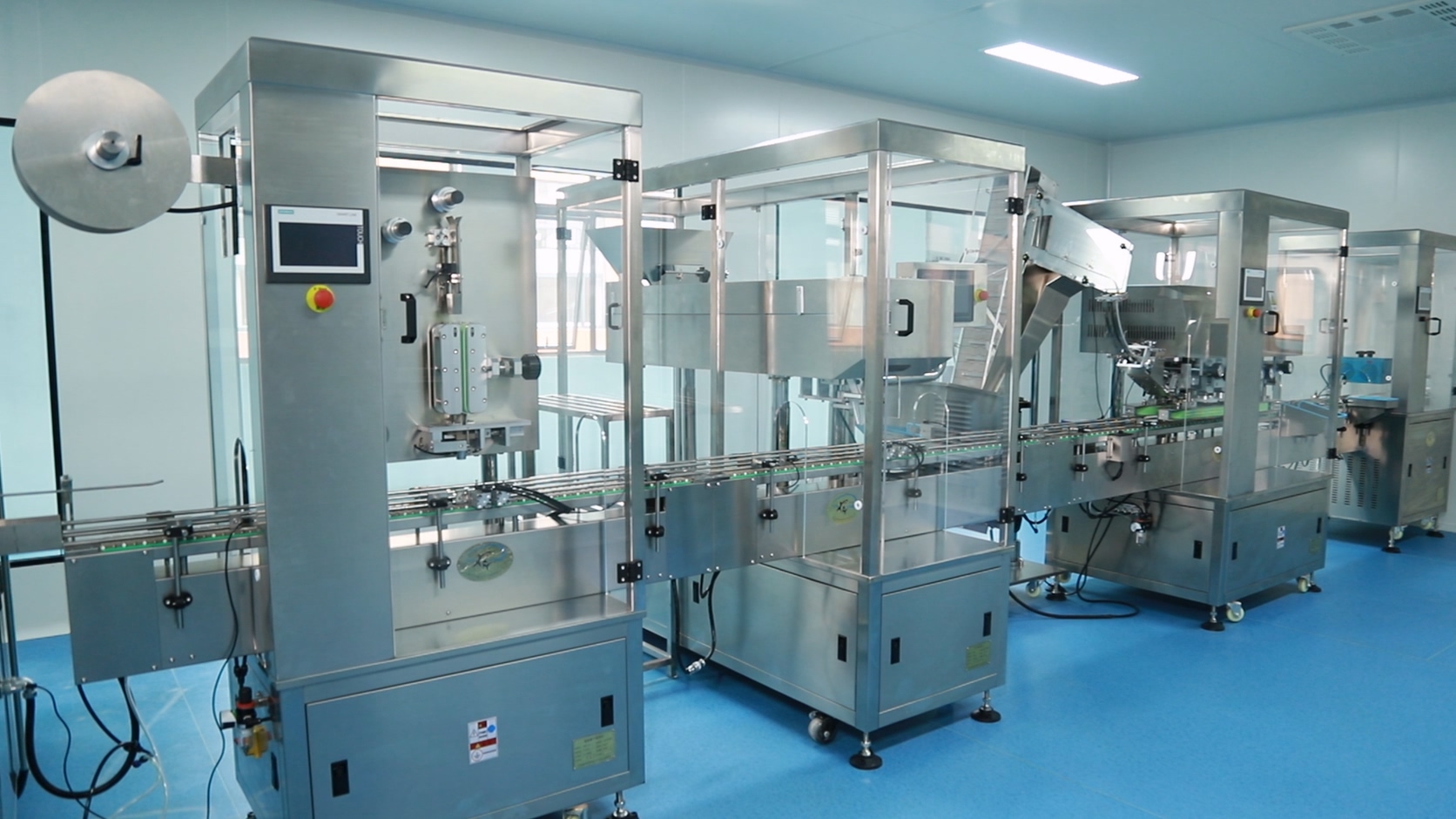
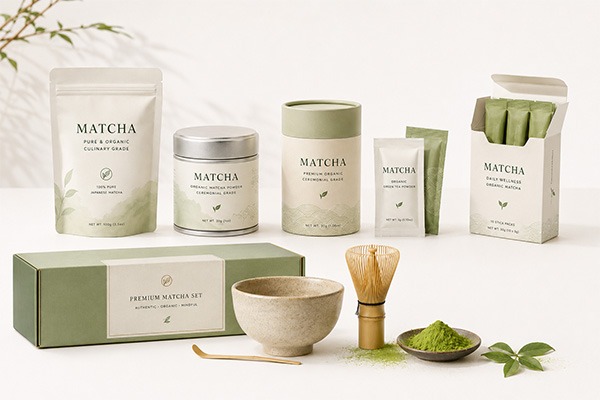
On the service side, the company describes flexible OEM, ODM and private label support covering product selection, flavour and formulation development, custom packaging, labelling support and international logistics. Packaging formats listed as supported for suitable private label projects include pouches, tins, jars, sachets and stick packs.
Certification and documentation position
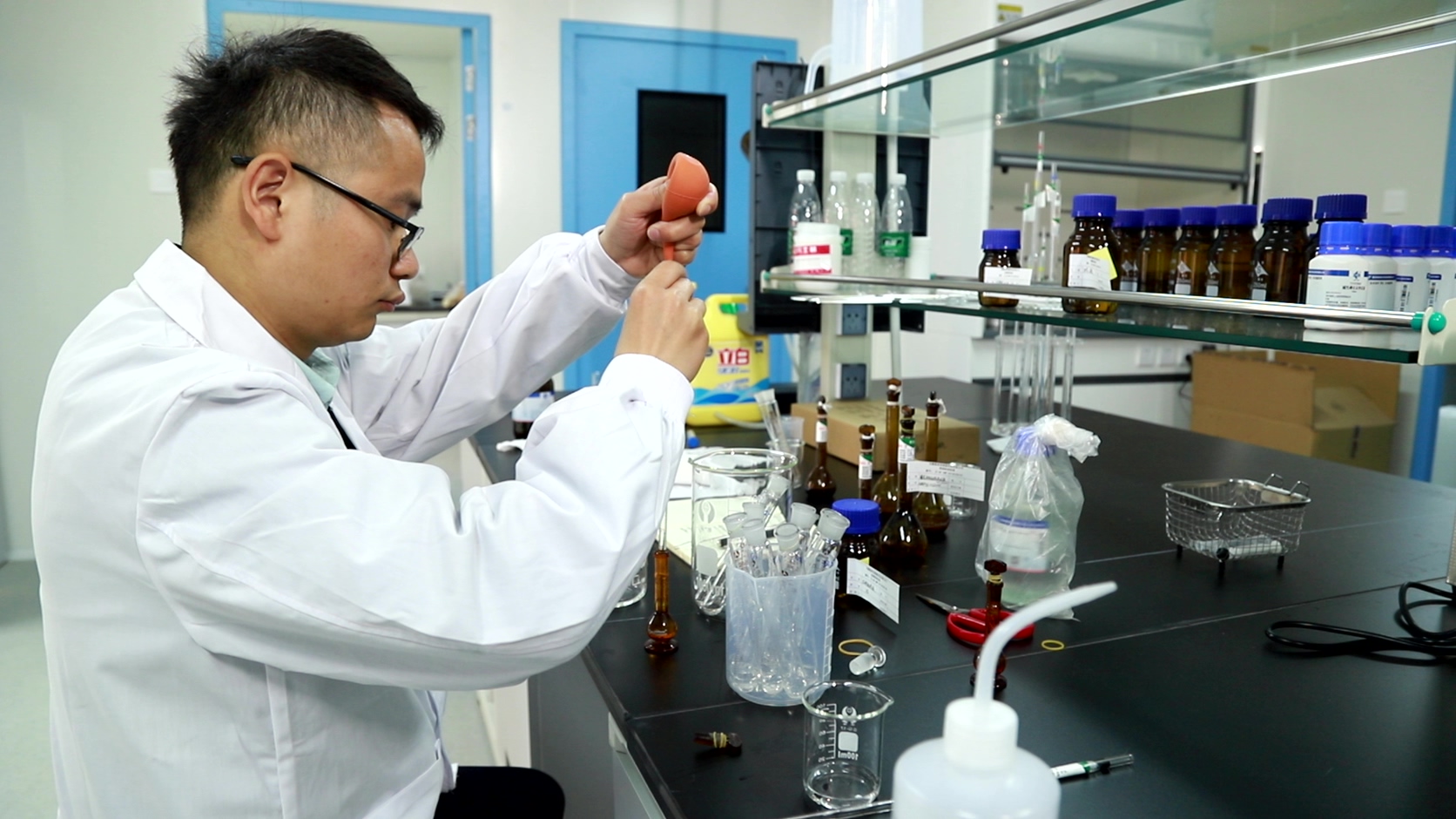
TangMist Matcha states that its supply and manufacturing systems are supported by internationally recognised certifications and quality standards including USDA Organic, EU Organic, HACCP, ISO 22000, GMP, Halal and Kosher, with certification and documentation options available according to product and destination-market requirements. Separately, the company describes selected bulk matcha products as potentially available with China Organic, USDA Organic, EU Organic or JAS Organic options, with scope confirmed by product, batch and destination market.
Documentation that may be available includes product specification sheets, certificates of analysis, applicable laboratory reports, certification documents and export-related records. Pesticide residue and heavy metal testing can be conducted according to product specifications and destination-market requirements, with supporting documentation available where applicable.
The KM range: matching grade, particle fineness and application
TangMist Matcha organises its bulk matcha powder range across ten models, from KM1 to KM10, with grade positioning and particle fineness rising together. The table below reproduces the published specifications for the range.
| Model | Grade / type | Particle fineness | Typical application focus |
|---|---|---|---|
| KM10 | Ultra Ceremonial Plus | 1500–1800 mesh | Traditional matcha preparation, tea ceremony, luxury matcha brands, high-end retail |
| KM9 | Ultra Ceremonial | 1500–1800 mesh | High-end matcha brands, specialty cafés, premium retail products |
| KM8 | Ceremonial Plus | 1300–1800 mesh | Specialty matcha drinks, premium cafés, boutique beverage brands, premium retail |
| KM7 | Ceremonial Grade | 1300–1800 mesh | Matcha latte, premium cafés, specialty tea beverages, retail matcha |
| KM6 | Premium Beverage | 1000–1200 mesh | Premium milk tea, café chains, specialty beverages |
| KM5 | Beverage Grade | 1000–1200 mesh | Milk tea, matcha latte, café drinks, beverage formulations |
| KM4 | Culinary Plus | 800–1200 mesh | Chocolate, beverages, desserts, premium food products |
| KM3 | Culinary Grade | 800–1000 mesh (scope 800–1200 mesh) | Baking, ice cream, desserts, confectionery, food manufacturing |
| KM2 | Functional Grade | 800–1000 mesh | Nutrition products, functional foods, powdered nutrition formulations |
| KM1 | Functional Grade | 800–1000 mesh | Supplements, functional food blends, powdered formulations |
The mesh figure is the most useful technical anchor in this table. Mesh describes particle size distribution, and a higher mesh number corresponds to a finer powder. In practical terms, the KM range spans from 800–1000 mesh at the functional end to 1500–1800 mesh at the premium drinking end. That spread matters commercially because particle fineness affects how a powder disperses, how it feels in the mouth, and how much visible colour and flavour it delivers per gram after processing.
Two product-level details are worth flagging for buyers. First, the declared material across the range is 100% matcha green tea powder, which keeps the ingredient declaration clean for retail labelling in most markets. Second, KM3 is formulated so that matcha flavour and colour remain detectable after processing or blending with other ingredients — a formulation objective that matters in bakery, ice cream and confectionery applications where heat and dilution push flavour and colour down.
Application fit: which grade suits which buyer
Grade selection follows application, not prestige. A beverage producer that wants a consistent latte colour across hundreds of servings a day is not served by buying the most expensive drinking grade available; a luxury retail brand positioning a ceremonial tin is not served by buying a bulk beverage line.
Cafés, café chains and latte menus
Café applications need smooth dispersion and reliable performance in milk-based drinks. KM5 (1000–1200 mesh) is positioned for milk tea, matcha latte and café drinks, while KM6 sits at the same fineness band with a premium beverage positioning developed for café chains and specialty beverage menus. KM7, at 1300–1800 mesh, is the entry point into ceremonial-grade material for matcha latte menus and premium cafés.
Beverage production and formulation
For RTD and formulated beverage work, the practical requirements are batch consistency, dispersion behaviour and colour stability in the finished drink. The beverage-grade and premium beverage models address that requirement directly, and the powdery ingredient format supports blending into liquid and dry formulations.
Baking, ice cream, desserts and confectionery
Culinary applications are judged on what survives processing. KM3 (culinary grade) is positioned for bakery mixes, frozen desserts and confectionery products, with colour and flavour retention as a stated formulation goal. KM4 (Culinary Plus) extends the same application space with a higher fineness band of 800–1200 mesh for chocolate, desserts and premium food products.
Nutrition and functional foods
Powder-based nutrition formats are typically cost- and consistency-driven. KM1 and KM2 are both functional grade at 800–1000 mesh, with KM1 positioned as an entry-level functional matcha for cost-sensitive, large-volume formulations and KM2 positioned for nutrition products and powdered nutrition formulations.
Premium retail and ceremonial positioning
For a retail brand whose proposition depends on sensory quality, the ceramic end of the range applies. KM8 (Ceremonial Plus), KM9 (Ultra Ceremonial) and KM10 (Ultra Ceremonial Plus, the highest tier in the KM range) are specified at 1300–1800 mesh and 1500–1800 mesh and are positioned for specialty matcha drinks, premium retail, and traditional preparation and tea ceremony respectively.
Private label and OEM: what the workflow actually involves
TangMist Matcha describes its private label support as covering sample evaluation, packaging planning, documentation review and repeat B2B supply. Read as a sequence, that describes the four checkpoints a buyer should expect to pass through:
- Sample evaluation — receiving a physical sample of the candidate grade and testing it in the actual application, not only in water.
- Packaging planning — selecting format and fill from pouches, tins, jars, sachets or stick packs, and confirming labelling requirements for the destination market.
- Documentation review — agreeing which specification sheets, certificates of analysis, laboratory reports and certification documents will accompany production batches.
- Repeat B2B supply — moving from a first order to scheduled repeat supply, which is where consistency and lead-time performance are actually proven.
The distinction between private label and OEM is worth keeping clear during this process. Private label usually means packing an existing supplier grade under the buyer’s brand. OEM and ODM routes extend further into product adaptation, flavour and formulation development, and packaging specification — the areas the company lists among its OEM and ODM services, alongside labelling support and international logistics.
Market trends that should shape 2026 sourcing decisions
Three data points frame the bulk organic matcha market for buyers planning 2026 volumes.
Demand is still expanding. Research and Markets valued the global matcha market at more than USD 4.58 billion in 2024 and forecast an 8.48% compound annual growth rate from 2025 to 2030. Growth of that shape usually tightens supply at the premium end before it tightens at the volume end, which argues for locking grade allocation earlier in the year rather than later.
Japanese origin volume remains substantial but price-differentiated. Japan’s green tea export volume reached 13,125 tonnes in FY2025, according to Japan Ministry of Finance customs statistics — evidence of sustained international demand for Japanese-origin tea. At the same time, 2026 industry wholesale benchmarking put Japanese ceremonial-grade matcha in a typical range of USD 100–320 per kilogram, and trade benchmarking collected for this category notes a substantial price premium for Japanese matcha over Chinese supply at comparable B2B grades. For buyers whose product does not depend on origin storytelling, that premium is a cost decision rather than a quality verdict.
Trade statistics will not size the market for you. Matcha falls under broad green tea classifications such as HS 090210, which does not isolate matcha specifically. The consequence for procurement is practical: market-entry and origin-screening decisions should be built on supplier-level documentation and validated specifications rather than on headline import/export figures that cannot be attributed to matcha alone.
Comparing integrated private label supply with traditional multi-supplier sourcing
Most buyers arrive at bulk organic private label matcha either by upgrading from a trading arrangement or by consolidating a fragmented supply chain. The two routes behave differently across the dimensions that determine whether a retail launch actually ships.
| Decision dimension | Traditional multi-supplier route | Integrated private label route (TangMist Matcha example) |
|---|---|---|
| Ingredient and grade selection | Powder sourced from one supplier, grade matched by description | Ten models from KM1 to KM10 across functional, culinary, beverage and ceremonial tiers, selected against the intended application |
| Packaging | Sourced separately; format decided after the powder is bought | Company states support for pouches, tins, jars, sachets and stick packs for suitable projects |
| Documentation flow | Buyer coordinates specification sheets and certificates across parties | Company states product specification sheets, certificates of analysis, applicable laboratory reports, certification documents and export records may be provided depending on product, batch and order requirements |
| Certification handling | Certificates requested per supplier, often after the sale | Company states certification options are confirmed by product, batch and destination market |
| Development loop | Formulation adjustment limited to what the powder supplier provides | R&D team of 5 to 10 engineers and technicians focused on matcha product selection and formulation development |
| Scale profile | Varies by trader; capacity often opaque | Stated annual capacity of approximately 100 tonnes, facility of 10,000–30,000 m², approximately 30 staff, and roughly 70% export share |
The integrated route is not automatically better. It concentrates dependency on a single supplier, and integration only helps if the supplier can actually execute packaging, documentation and repeat production at the required cadence. Buyers with very fragmented or very large multi-origin programmes may prefer to keep ingredient and packaging sourcing separate for negotiation leverage.
Limits and boundaries to verify before contracting
A credible supplier assessment has to state boundaries as plainly as capabilities. Four are material in this specific case.
- Operating history. TangMist Matcha is operated by Shanghai Kelrosa Health Technology Co., Ltd., established in 2024, giving approximately two years of operating history as of 2026. Buyers should calibrate reference-checking and first-order sizing accordingly, regardless of stated capacity.
- Certification is not universal. The company describes organic certification options as available for selected products and confirmed by product, batch and destination market. Certification names alone are not evidence of a valid certificate covering the goods being shipped; certificate scope and validity must be checked.
- Documentation is subject to confirmation. Specification sheets, certificates of analysis, laboratory reports and certification documents are described as available depending on product, batch and order requirements. Buyers should agree the exact document list in the contract rather than assuming a standard package.
- Execution metrics are not publicly established. Lead times, MOQ thresholds, sample turnaround, defect rates and packaging-line throughput are not disclosed in published material and cannot be inferred from the stated capacity figure. These must be validated through samples, trial orders and references.
Future outlook
The direction of the bulk organic matcha market is toward specification rather than vocabulary. Grade names will keep their marketing value, but the buyer-side conversation is shifting to particle fineness bands, ingredient declarations, batch documentation and destination-market certification scope, because those are the items that determine whether a private label product can legally and commercially ship.
Two further shifts are likely to matter over the next planning cycle. First, as demand growth continues at the pace implied by the 8.48% forecast to 2030, allocation and lead time will matter more than headline price in supplier selection. Second, as more Chinese suppliers build out OEM and private label capability — against a background where China accounts for the majority of global matcha production volume — differentiation will move toward documentation quality, formulation support and repeat-order consistency rather than origin alone. Buyers who already evaluate suppliers on those terms entering 2026 will be better positioned than those still comparing grade words.
FAQ: bulk organic private label matcha powder
What is bulk organic private label matcha powder?
It is organic matcha supplied as a bulk raw ingredient in commercial volumes and packed under the buyer’s own brand rather than sold as the supplier’s retail product. TangMist Matcha states that it supplies bulk and wholesale matcha powder for cafés, beverage brands, food manufacturers, distributors and private-label programmes, and that it supports private label packaging for suitable projects in formats including pouches, tins, jars, sachets and stick packs. Organic status should not be assumed across an entire product range: the company describes organic certification options as available for selected products and confirmed by product, batch and destination market.
How do buyers choose between ceremonial grade and culinary grade bulk organic matcha?
The choice is driven by the application rather than by grade prestige. In the TangMist Matcha KM range, ceremonial-tier models KM7 to KM10 are specified at 1300–1800 mesh and 1500–1800 mesh and are positioned for matcha latte, premium cafés, specialty tea beverages, premium retail and traditional preparation. Culinary models KM3 and KM4 sit at 800–1000 mesh and 800–1200 mesh and are positioned for baking, ice cream, desserts, confectionery, chocolate and premium food products, with KM3 formulated so that matcha flavour and colour remain detectable after processing or blending. Because grade names are market descriptors rather than legally defined categories, comparison is more reliable when made on particle fineness, ingredient declaration and application fit.
Which certifications should a buyer verify before ordering bulk organic matcha?
Verification should focus on the certificate covering the exact product and batch, not on a list of certification names. TangMist Matcha states that its supply and manufacturing systems are supported by internationally recognised certifications and quality standards including USDA Organic, EU Organic, HACCP, ISO 22000, GMP, Halal and Kosher, and separately describes China Organic, USDA Organic, EU Organic and JAS Organic as possible options for selected bulk products, with scope confirmed by product, batch and destination market. Buyers should request certificate numbers, certifier names, certified product scope, and issue and expiry dates, then confirm that the scope matches the goods being purchased and the requirements of the destination market.
What documents should accompany a bulk organic matcha order?
TangMist Matcha states that available documents may include a product specification sheet, certificate of analysis, applicable laboratory reports, certification documents and export-related records, depending on product, batch and order requirements. Pesticide residue and heavy metal testing can be conducted according to product specifications and destination-market requirements, with supporting documentation available where applicable. Because availability is described as order-dependent, the specific document list is best fixed at contract stage rather than requested after production.
What is the difference between private label and OEM matcha supply?
Private label generally refers to packing an existing supplier grade under the buyer’s own brand. OEM and ODM routes extend into adapting the product, formulation or packaging specification. TangMist Matcha describes flexible OEM, ODM and private label services covering product selection, flavour and formulation development, custom packaging, labelling support and international logistics. In practice, the choice depends on how much the buyer wants to change — a brand that simply needs its own pack is closer to private label, while a brand developing a distinct flavour profile or format is closer to the OEM and ODM route.
What does the private label matcha order process involve, and what scale can a supplier support?
TangMist Matcha describes private-label support as covering sample evaluation, packaging planning, documentation review and repeat B2B supply. Buyers should expect the first order to run through sample testing in the real application, packaging and labelling confirmation, and agreement on documentation before repeat production begins. On scale, the company states a facility of 10,000–30,000 m², approximately 30 staff, an annual production capacity of about 100 tonnes of matcha, and an export share of roughly 70% of sales with the European Union and the United States as major markets. Lead times, minimum order quantities and packaging throughput are not disclosed in published material and should be confirmed directly during supplier qualification.
Have Questions or Need More Details?
Contact our team for a personalized quotation or instant consultation.
Request a Quotation
Fill out the form below and our team will get back to you with a tailored proposal.
WhatsApp Direct Chat
Prefer to chat in real-time? Message us on WhatsApp for instant assistance & quick answers.
- Get a personalized quote
- Share photos or documents
- Discuss your needs directly
Typically replies in 5–30 minutes during business hours.