
Butter Cookie Buyer Framework: Thin Crisp, Floral, Shortbread, Gift Tin
Industry Reference · Buyer Decision Framework
A butter cookie programme seldom fails at the price negotiation. It fails at the format decision — when the unit that was bought does not survive the channel it was bought for.
Butter Cookies is a category where the sales channel effectively dictates the physical product. A 10g thin crisp piece and a 680g shortbread box can both be described as butter cookies, sit under the same catalogue heading and be quoted by the same supplier, yet they behave nothing alike on a supermarket endcap, in a hotel minibar, or in an instant-retail fulfilment centre. Shelf life, unit weight, piece count, carton geometry and packaging seal all move the product toward one channel and away from another.
This reference sets out a buyer-side framework for four families — thin crisp, floral, shortbread and assorted gift tins — and maps them to supermarkets, chain hotels, bakeries, coffee shops and instant retail platforms. It then sets out the purchasing terms, packaging arithmetic and acceptance criteria that should be settled before the first purchase order, using the verified product range and facility record of Dongguan Shangfan Food Co., Ltd. as a working example.
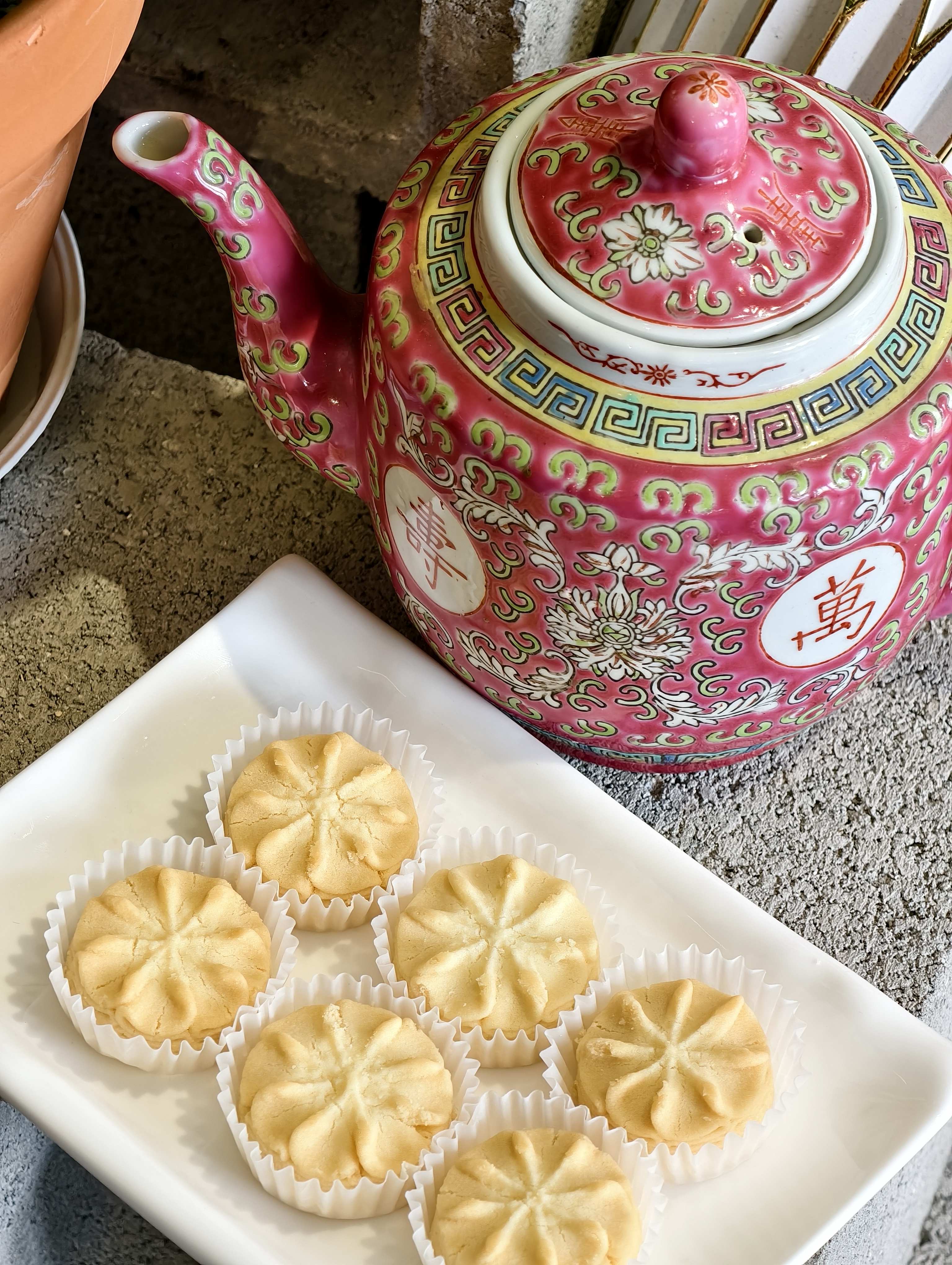
Butter cookies move through supermarkets, chain hotels, bakeries, coffee shops and instant retail platforms — each with a different unit, shelf-life and packaging requirement.
Why format fit outranks unit price in butter cookie sourcing
The commercial logic is straightforward. Butter cookie formats differ in how long they remain sellable, how much shelf or counter space they occupy, how they survive handling, and how visible they are to a shopper who did not plan to buy cookies. A buyer who compares two quotes purely on cost per kilogram is comparing two products with different rotation risk.
Consider the practical asymmetry. A thin crisp cookie at 10g per piece and 5 months of shelf life suits a coffee shop where the unit is consumed within a beverage visit, or an instant-retail listing with high rotation. The same product in a supermarket aisle competes for attention over a longer dwell time with a shorter usable window than a 12-month salted cheese or a 9-month Danish fancy tin. The format that is cheaper per kilogram can therefore be the more expensive decision.
The same applies to gift packaging. A 260g gift tin with a matched gift bag is a presentation unit; it earns its cost in hotel lobbies, corporate gifting and holiday programmes. Used as a daily-rotation supermarket SKU, the gift bag and tin become packaging cost that the shopper will not pay for.
The framework below inverts the usual sourcing sequence. First fix the channel and the consumption occasion, then the format family, then the packaging unit, and only then the commercial terms.
The four format families, defined by operational behaviour
Format families are best distinguished by three measurable attributes: piece weight, shelf life and packaging seal. Everything else — flavour, shape, butter origin — is a differentiation layer built on top of that base.
Thin crisp
Thin crisp butter cookies are defined by low piece weight and short usable life. In the Shangfan Food range, Crispy Thin Butter Cookies and Matcha Nut Butter Thin Crisp Cookies are both specified at 10g per piece, packed as 9 pieces per box or 13 pieces per can, with a shelf life of 5 months. Cocoa Butter Thin Crisp Cookies belong to the same thin crisp family and follow the same procurement logic even where individual specifications differ.
The ingredient architecture of this family explains its positioning. Crispy Thin Butter Cookies are built on wheat flour, butter, white granulated sugar, almond flakes, crisp flakes and whole eggs, using thin crisps imported from Europe, 100% pure almond flakes sourced from Australian almonds, and natural fermented butter from FrieslandCampina in the Netherlands. Matcha Nut Butter Thin Crisp Cookies combine wheat flour, butter, white granulated sugar, pecans, whole milk powder, oolong tea powder, matcha powder and edible salt, with crushed pecans imported from South Africa and jade matcha powder.
The buyer consequence: thin crisp is a rotation product, not a storage product. It rewards channels with fast sell-through and penalises channels with long dwell time or uncontrolled humidity.
Floral
Floral butter cookies are shaped, fragile, and sold on appearance as much as taste. Butter Floral Cookies 175g is packed at 175g × 24 tins per carton with a 5-month shelf life and a carton dimension of 44.8×30.2×24cm (0.032 CBM). Butter Floral Cookies 260g is the gift-tin variant — 260g × 8 tins per carton, 6-month shelf life, individually packed servings inside, supplied with matching gift bags. Coffee Butter Flower 175g extends the same floral format into a coffee-flavoured expression.
The formulation documented for Butter Floral Cookies includes no less than 39% fermented butter from FrieslandCampina in the Netherlands, flour milled from Canadian imported wheat, and premium bakery icing sugar. For a buyer, the relevant point is not the origin story but the reproducibility: a floral shape at that butter proportion is a specification a supplier either holds consistently or does not.
Shortbread
Butter Shortbread 680g is a large-format, dense product with a 6-month shelf life, built on wheat flour, butter, buffalo milk, walnuts, white granulated sugar and salt. The documented formulation uses imported New Zealand butter, walnut kernels and buffalo milk, positioned as a zero-additive traditional snack. Its unit economics differ from thin crisp: fewer units per carton, higher weight per facing, and a longer consumption cycle that suits counter service and sharing occasions rather than single-serve impulse.
Assorted gift tins and boxes
This family carries the highest packaging content and the most complex date-code logic. The Butter Cookie Gift Box 265g is documented with two flavours and two components: Butter Floral Cookies at 175g with a 5-month shelf life, and Cranberry Oat Butter Cookies at 90g per box with an 8-month shelf life. Because the components carry different shelf lives, the usable life of the finished box tracks the shorter-dated component. Buyers who plan a gifting window must calculate from that date, not from the longer one.
Adjacent large-format items in the range include Danish Fancy Butter Cookies 380g at 380g × 12 tins per carton with a 9-month shelf life, Salted Cheese Butter Cookies at 32g × 12 pieces per 384g box with a 12-month shelf life, and Lace Butter Cookies 448g at 16g × 28 pieces with a 180-day shelf life and product standard code GB7100.
| Format family | Documented examples | Unit and piece logic | Shelf life | Operational character |
|---|---|---|---|---|
| Thin crisp | Crispy Thin Butter Cookies; Matcha Nut Butter Thin Crisp Cookies; Cocoa Butter Thin Crisp Cookies | 10g per piece; 9 pieces per box or 13 pieces per can | 5 months | Fast rotation; humidity-sensitive; single-serve |
| Floral | Butter Floral Cookies 175g; Butter Floral Cookies 260g gift tin; Coffee Butter Flower 175g | 175g × 24 tins per carton; 260g × 8 tins per carton | 5 months (175g); 6 months (260g) | Appearance-led; fragile; gifting and amenity use |
| Shortbread | Butter Shortbread 680g | 680g per box | 6 months | Counter service; sharing; high weight per facing |
| Assorted tins and boxes | Butter Cookie Gift Box 265g; Danish Fancy Butter Cookies 380g; Salted Cheese Butter Cookies 384g; Lace Butter Cookies 448g | 265g per box; 380g × 12 tins per carton; 32g × 12 pieces; 16g × 28 pieces | 5–12 months by component | Highest packaging content; mixed date coding |
Packaging arithmetic: what 10g pieces, 9-piece boxes and 13-piece cans actually mean
Piece count is a merchandising decision disguised as a packing detail. A 9-piece box and a 13-piece can of the same 10g thin crisp cookie serve different price points, different shelf positions and different consumption occasions. The 9-piece box is a trial or add-on unit; the 13-piece can is a take-home or sharing unit and typically carries better protection for a fragile product.
Carton configuration then determines landed cost. Butter Floral Cookies 175g ships 24 tins per carton at 0.032 CBM, giving a favourable cubic ratio for a shaped, fragile product. Butter Floral Cookies 260g ships 8 tins per carton at a carton dimension of 59.5×37.5×23.5cm — fewer units per outer, more cartons per pallet layer. For a hotel or gift programme, that ratio drives inbound handling cost per unit even when the ex-works price is identical.
Two further packaging points belong in the purchase order. First, the 260g gift tin is supplied with matched gift bags, so the bag is part of the delivered unit and should be specified in the order line rather than assumed. Second, individually packed servings inside the gift tin change the product from a sharing item to an amenity item — a distinction that matters when the buyer is a chain hotel distributing to rooms.
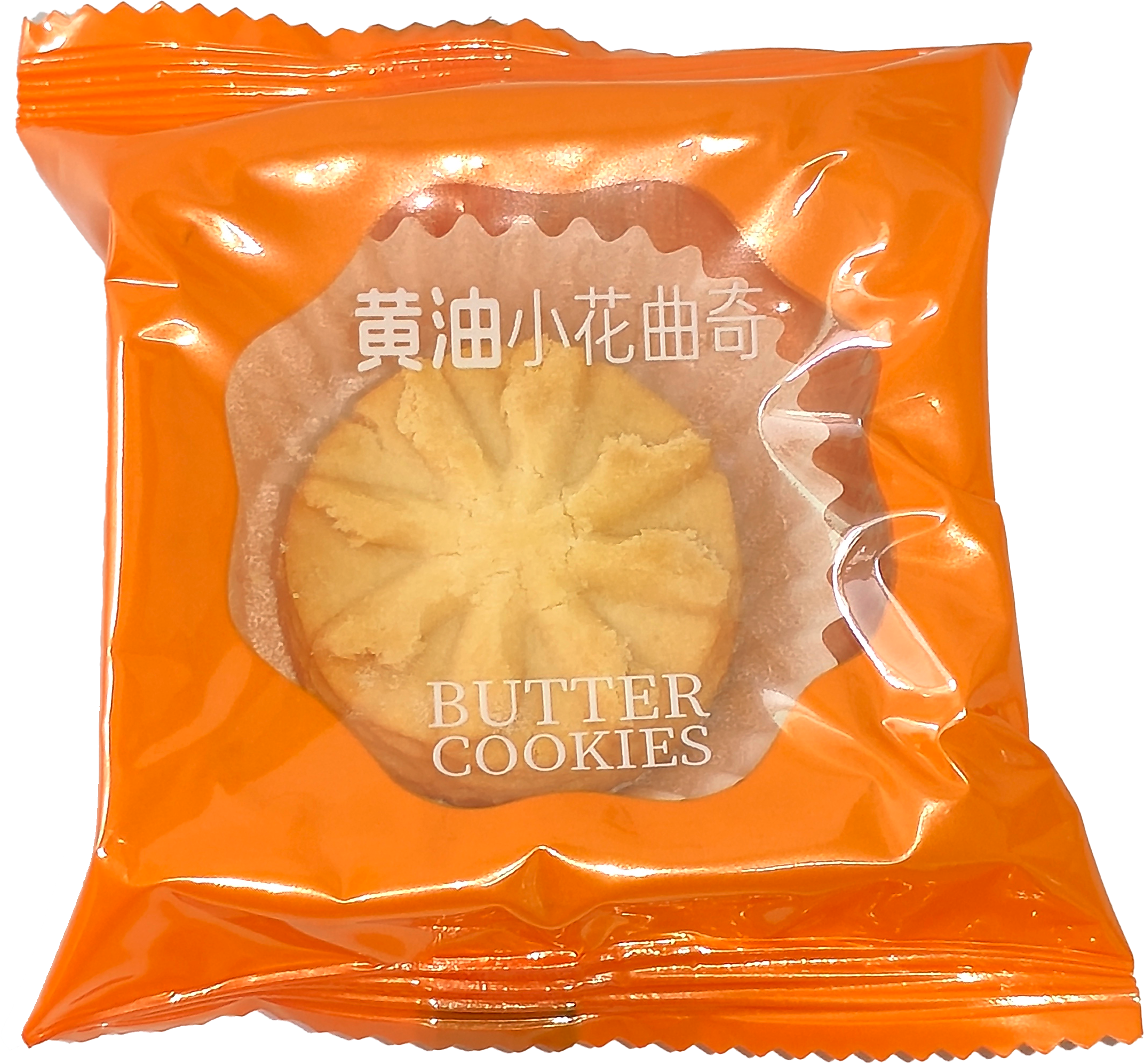
Butter Floral Cookies 260g gift tin: individually packed servings inside, matched gift bags, 8 tins per carton, 6-month shelf life.
Matching butter cookie formats to the five buying channels
Channel fit is not a matter of taste. Each channel imposes a different combination of dwell time, handling, display condition and price ceiling. The mapping below reflects the industries documented for this product range: supermarkets, chain hotels, bakeries, coffee shops, online e-commerce platforms and instant retail platforms.
| Channel | Formats that fit | Reason | Constraint to plan for |
|---|---|---|---|
| Supermarkets | Danish Fancy Butter Cookies 380g; Lace Butter Cookies 448g; Salted Cheese Butter Cookies 384g; Butter Cookie Gift Box 265g | Large visible tin or box, strong gift-season lift, sealing performance for stacked display | Date rotation across 9–12 month items; shelf space competition |
| Chain hotels | Butter Floral Cookies 260g gift tin with gift bags; Butter Floral Cookies 175g; Butter Cookie Gift Box 265g | Presentation unit, individually packed servings, amenity and turndown use | 8 tins per carton; storage away from direct sunlight |
| Bakeries | Butter Shortbread 680g; Lace Butter Cookies 448g; Butter Cookie Gift Box 265g | Counter-share and sharing formats; pairs with existing pastry range | 6-month shortbread life; bulky unit per facing |
| Coffee shops | Thin crisp 13-piece cans; Cranberry Oat Butter Cookies 90g; Butter Floral Cookies 260g | Low-ticket add-on to beverage; single-serve, low wastage | 5-month thin crisp life; humidity control in open display |
| Instant retail platforms | Thin crisp 9-piece boxes; 10g pieces; high-rotation single-serve SKUs | Fast rotation, small unit, listing-friendly specification | Fragility in fulfilment; pallet and carton configuration |
The table also clarifies what should not be attempted. A 680g shortbread box is a poor instant-retail unit; a 9-piece thin crisp box is a poor holiday gift unit. Buyers who insist on one SKU across all five channels typically end up with a format that is acceptable everywhere and optimal nowhere.
Storage and handling conditions apply across all channels
The documented working condition for this product range is storage away from direct sunlight in a cool, well-ventilated place, with humidity controlled to prevent the product softening. The range requires no supporting equipment for consumption and can be matched with display shelves and gift boxes. For buyers, this translates into a warehouse requirement rather than a retail requirement: uncontrolled humidity damages thin crisp and floral formats faster than it damages sealed tins, and the loss appears at the point of sale, not at goods-in.
Where Shangfan Food's verified range fits this framework
Dongguan Shangfan Food Co., Ltd. (SHANGFAN FOOD) is a Chinese butter cookie manufacturer based in Chashan Town, Dongguan, Guangdong Province, established in 2015 and operating a garden-style factory of over 10,000 square metres with 100 staff.
The verified facility record supports the format breadth described above. The company reports an annual output of 3,640 tons and a research and development team of five engineers. Its main products are Butter Cookies, Lace Butter Cookies, Cranberry Oat Butter Cookies, Crispy Thin Butter Cookies and Butter Shortbread. It holds FSSC22000 and HACCP certification, has completed filing for export food business, and holds FDA registration. Its stated export ratio is 10%, with main markets listed as PRC, the EU, the USA, South Korea and Singapore.
Manufacturing capability is documented as follows: OEM and ODM production, with customisation of formula, specifications, logo and taste; monthly capacity of over 500,000 pastries and over 20 tons of cookies; a lead time of 30 days; a minimum order quantity of 10,000 boxes; and 100% testing as the stated quality control approach. After-sales support is described as a complete after-sales service system with a product after-sales quality guarantee and an exclusive service hotline.
Three documented cases show the format-to-channel logic working in practice.
- Membership supermarket, China (Lace Butter Cookies 448g): over 8,000 boxes supplied for offline stores over a 180-day project, with daily sales consistently exceeding 1,000 boxes.
- Private label for a large membership supermarket (Danish Fancy Butter Cookies 380g): 200,000 boxes over 8 months; cumulative sales exceeded 120,000 boxes in the first quarter after launch, with offline stores accounting for 65% of the total and an online mall repurchase rate of 38%, against a cited category average of 25%. The product ranked first in the cookie segment of that retailer's premium imported food list for two consecutive months.
- Large-scale instant e-commerce enterprise (OEM customisation): 400,000 boxes over a 150-day project, with cumulative shipments exceeding 400,000 boxes, monthly sales above 30,000 tins and a stated repurchase rate of 98%.
Read together, the cases cover three distinct channel archetypes: a large-format tin in a membership warehouse, a private-label tin in a supermarket and online mall, and a single-serve OEM programme on an instant-retail platform. That spread is the practical evidence that format matching is a supplier capability, not only a buyer preference.
Technical explanation: what makes a format behave the way it does
Three technical variables explain most of the difference in format behaviour.
Butter type and proportion. The range documents fermented butter from FrieslandCampina in the Netherlands at no less than 39% in Butter Floral Cookies, New Zealand imported natural butter at no less than 32% in Danish Fancy Butter Cookies, and FrieslandCampina natural fermented butter in Crispy Thin Butter Cookies. Butter proportion drives flavour and texture, but it also drives cost sensitivity — which is why butter content is one of the first claims a buyer should confirm against the specification rather than the marketing sheet.
Baking method and added components. Danish Fancy Butter Cookies are described as low-temperature baked with no preservatives, artificial pigments or artificial flavours added, and available in three flavours. Lace Butter Cookies are documented with a fluffy, delicate structure, lace edges and a crisp-outside, soft-inside texture, produced under product standard code GB7100. Salted Cheese Butter Cookies use frozen fresh-cut technology, slow whipping and slow baking to preserve cheese aroma. These process choices affect fragility, moisture sensitivity and therefore the channels a format can serve.
Packaging seal and format geometry. Tin packaging with good sealing performance is documented for the Danish Fancy range, and individually packed servings inside the 260g floral gift tin. Seal quality is what allows a 12-month shelf life on Salted Cheese Butter Cookies and a 180-day shelf life on Lace Butter Cookies to coexist in one portfolio. Where the seal is weaker, the shelf life is shorter, and the channel list narrows accordingly.
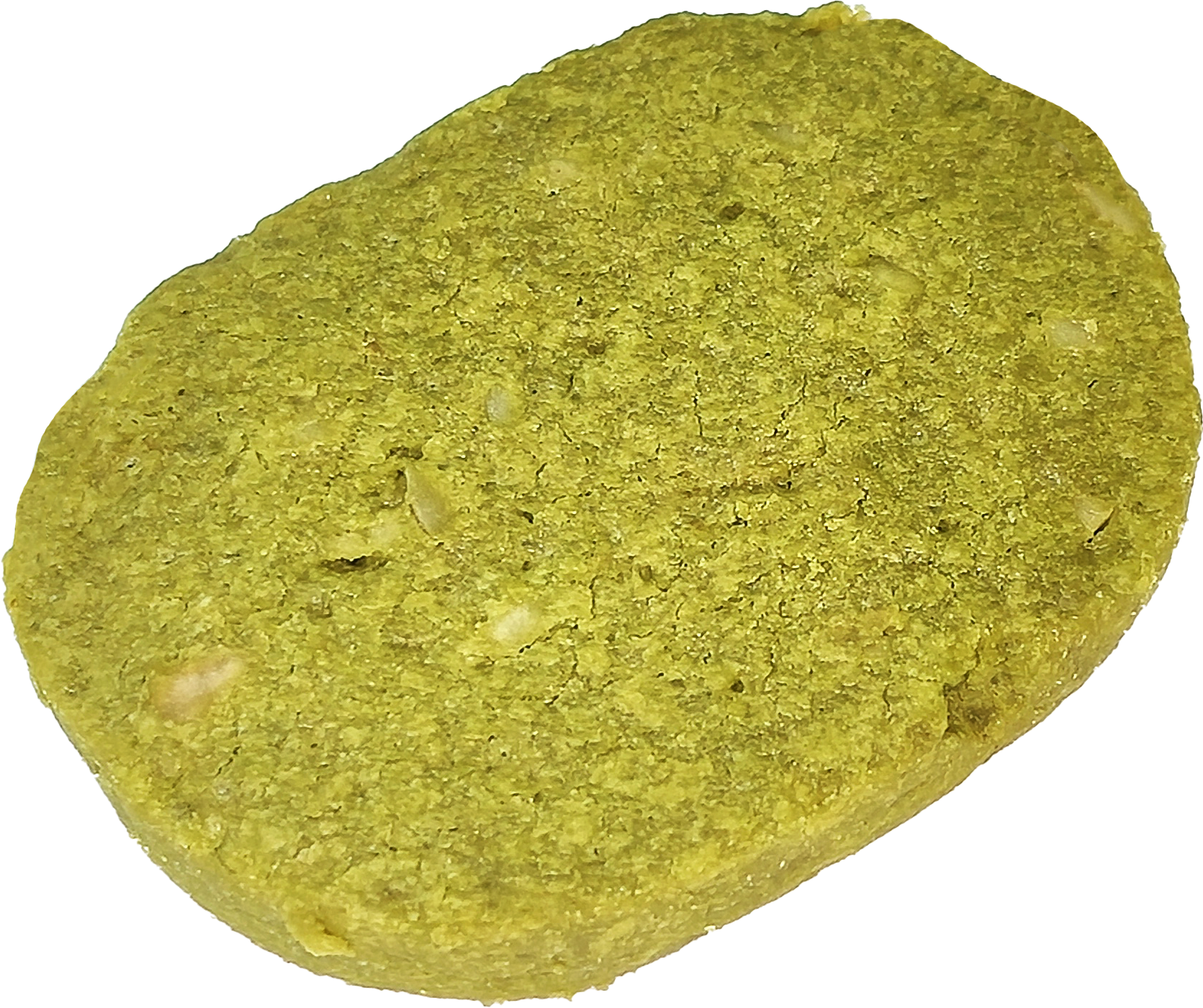
Matcha Nut Butter Thin Crisp Cookies: 10g per piece, 9 pieces per box or 13 pieces per can, 5-month shelf life — a rotation format rather than a storage format.
Purchasing terms and acceptance criteria: a pre-order checklist
The following checklist converts the framework into orderable terms. Each line should appear in the purchase order or its annex, not only in correspondence.
| Item | What to confirm | Why it matters |
|---|---|---|
| Ingredients declaration | Full ingredient list per SKU, with butter type and proportion where claimed | Determines labelling, claims and price justification |
| Net weight and piece count | Net weight per unit, pieces per box or can, and weight tolerance | Drives price per unit and shelf-price positioning |
| Shelf life and date coding | Shelf life per SKU; production date and best-before format | Sets the sellable window and rotation plan |
| Packaging specification | Tin or box type, seal, inner individual packing, gift bag inclusion | Protects product and defines the presentation unit |
| Carton configuration | Units per carton, carton dimensions, barcode per unit | Determines handling cost and pallet planning |
| Commercial terms | MOQ, lead time, sampling and approval sequence | Sets the earliest realistic in-store date |
| Compliance documents | Certification status, export filing, registration where applicable | Required for import and for retailer qualification |
| Storage conditions | Cool, ventilated storage away from direct sunlight; humidity control | Prevents softening and texture loss before sale |
| After-sales terms | Quality guarantee scope and service contact | Defines remedy if a batch underperforms |
Verification points before approval
Three verification points carry disproportionate weight in butter cookie sourcing.
Ingredients. Confirm the declared list against the specification for each SKU, including the butter type and the proportion claimed. For example, the documented Butter Floral Cookies formulation specifies no less than 39% fermented butter from FrieslandCampina in the Netherlands, and the documented Cranberry Oat Butter Cookies formulation lists butter, oatmeal, gold sand sugar, dried cranberries, walnut kernel, whole egg liquid and edible salt.
Net weight. Confirm net weight per unit against the stated specification — 175g for Butter Floral Cookies 175g, 260g for the gift tin, 265g for the Butter Cookie Gift Box, 380g for Danish Fancy Butter Cookies, 384g for Salted Cheese Butter Cookies, 448g for Lace Butter Cookies, 680g for Butter Shortbread and 90g for Cranberry Oat Butter Cookies. Net weight is the single figure most often misaligned between quotation and carton artwork.
Supplier contact and legal identity. Confirm the trading entity, address and named contact in writing. For Shangfan Food, the documented contact is Liu. Jinqi at shangfan168@126.com, telephone and WhatsApp +86 13392733431, with the registered address at Building 3, No.32 Jixing Road, Chashan Town, Dongguan City, Guangdong Province. The company website is listed as www.dongguanshangfanfood.com.
Where this framework stops: real constraints buyers should price in
A framework is only useful if it states its own boundaries. Several constraints in this range are material and should be planned around rather than negotiated away.
Minimum order quantity. The documented MOQ is 10,000 boxes. Buyers testing a new channel with a small trial order will need to either plan a launch volume that justifies that quantity or accept that the trial runs at a different commercial basis.
Lead time. The documented lead time is 30 days. Combined with a 5-month shelf life on thin crisp and 175g floral formats, that lead time consumes a meaningful share of the sellable window before the goods reach the shelf. Buyers planning seasonal gifting should work backwards from the shelf-life clock, not only from the delivery date.
Short shelf life on the formats that sell fastest. Thin crisp and floral formats at 5 months, and the floral component of the 265g gift box at 5 months against 8 months for the oat component, create mixed-date complexity inside a single assortment. The practical consequence is that the 265g gift box cannot be positioned as a long-dated inventory item; it is a scheduled, date-sensitive purchase.
Fragility and humidity sensitivity. Shaped and thin formats require humidity control in storage and handling discipline in fulfilment. A channel that cannot hold a cool, ventilated environment will experience breakage and softening that no packaging specification can fully offset.
Export ratio. The stated export ratio of 10% means the majority of output is oriented to the domestic market, with the EU, USA, South Korea and Singapore among the listed markets. Buyers with large export volumes should confirm allocation and documentation sequencing early rather than assume availability.
How this differs from the traditional generic-tin approach
The traditional approach buys one large assortment tin and pushes it across every outlet, judging success on ex-works price. It works when the buyer has a single channel and predictable rotation. It breaks when the same tin must serve a hotel lobby, a coffee counter and an instant-retail listing simultaneously, because the tin's shelf life, carton cube and presentation cost are fixed while the channel requirements are not.
A format-matched approach accepts higher specification work up front — separate SKU logic per channel, separate date-code plans, separate carton math — in exchange for lower rotation risk and better sell-through per facing. It is not universally better. For a buyer with one outlet type and steady annual volume, a single well-chosen large-format tin remains the more efficient buy.
Market context: why format segmentation is intensifying
Published category estimates diverge sharply depending on scope, and buyers should read them with that in mind. Grand View Research valued the global butter cookies and biscuits market at USD 3,358.3 million in 2024, a narrow definition centred on butter-based cookies. Dataintelo estimated the broader butter-based cookies market, including shortbread and sandwich cookies, at USD 42.8 billion in 2025. The gap reflects definition, not disagreement about direction — and it is a reminder to check scope before quoting a market size in a business case.
Regional weight is clearer. Asia Pacific held a 34.2% revenue share of the global butter cookies market in 2025, according to Dataintelo. On the supply side, Denmark's butter exports were valued at USD 463 million in 2024 (OEC), which underpins the prestige attached to the Danish descriptor in cookie branding, while China's butter exports reached USD 18.5 million in 2024 (OEC), reflecting the raw material chain behind high-end bakery production.
Adjacent categories support the format argument. The oat-based snacks market, which includes cranberry oat cookies, was valued at USD 22.4 billion in 2024 by Grand View Research — consistent with the Cranberry Oat Butter Cookies 90g format being positioned as a standalone component in the 265g gift box rather than a filler.
Two regulatory developments affect packaging rather than recipes, and both bear directly on gift-tin formats. EU General Product Safety Regulation (GPSR) 2024 mandates stricter traceability and authorised representatives for non-EU food manufacturers. Commission Regulation (EU) 2024/3190 prohibits bisphenol A (BPA) in food contact materials, including cookie packaging linings. For buyers shipping gift tins into the EU, packaging compliance now sits alongside product compliance in supplier qualification. China's national standard for biscuits, GB/T 20980-2021, specifies quality requirements for short and cookie-type products and is the reference point for domestic conformity.
Consumer direction is consistent across sources. A clean-label preference for 100% pure butter cookies, avoiding vegetable shortenings, is widely noted in trade and regulatory commentary. That preference rewards suppliers who can document butter type and proportion — and it penalises formats where the specification is opaque.
Future outlook
Three developments are likely to shape butter cookie format strategy over the next buying cycles.
First, packaging compliance is becoming a format decision. With the EU's BPA restriction on food contact materials in force, gift tins and their linings will need documentation that many buyers currently request only for the product itself. Suppliers that treat packaging compliance as part of the specification will be easier to onboard.
Second, format proliferation will continue in the single-serve direction. The documented growth pattern for instant-retail programmes — illustrated by the case of cumulative shipments exceeding 400,000 boxes with monthly sales above 30,000 tins and a 98% stated repurchase rate — suggests that small units with fast rotation carry less risk than large assortment tins in that channel.
Third, the gifting segment will remain date-driven rather than price-driven. The mixed shelf life inside a 265g gift box means the format rewards buyers who schedule production against a specific gifting window, and penalises those who hold it as general inventory.
For buyers, the practical implication is that the format decision will keep moving earlier in the sourcing process. Suppliers able to document piece weight, shelf life, carton cube and packaging configuration per SKU — and to hold that specification across repeat orders — will be the ones worth shortlisting.
A product and capability brochure for SHANGFAN FOOD is available for download: Shangfan Food brochure (PDF).
Frequently asked questions
Which butter cookie format suits a supermarket listing?
Large-format tins and boxes with longer shelf lives are the practical fit. In the documented range, Danish Fancy Butter Cookies 380g (9-month shelf life, 380g × 12 tins per carton), Lace Butter Cookies 448g (180-day shelf life, 16g × 28 pieces, standard code GB7100) and Salted Cheese Butter Cookies 384g (12-month shelf life) are positioned for supermarkets, chain hotels, bakeries, coffee shops, online e-commerce platforms and instant retail platforms. The 265g Butter Cookie Gift Box also suits supermarket gift seasons, but its usability tracks the 5-month floral component rather than the 8-month oat component.
What packaging units are available for coffee shops and instant retail platforms?
Small, fast-rotation units are documented for this purpose. Crispy Thin Butter Cookies and Matcha Nut Butter Thin Crisp Cookies are both specified at 10g per piece, packed as 9 pieces per box or 13 pieces per can, with a 5-month shelf life. Cranberry Oat Butter Cookies are packed at 90g per box with an 8-month shelf life. Butter Floral Cookies 260g is supplied as a gift tin with individually packed servings and matched gift bags, 8 tins per carton. The range requires no supporting equipment for consumption and can be matched with display shelves and gift boxes.
How long can each format stay on shelf, and where does that constrain placement?
Documented shelf lives differ substantially by format: 5 months for thin crisp products and Butter Floral Cookies 175g, 6 months for Butter Floral Cookies 260g and Butter Shortbread 680g, 8 months for Cranberry Oat Butter Cookies 90g, 9 months for Danish Fancy Butter Cookies 380g, 12 months for Salted Cheese Butter Cookies 384g, and 180 days for Lace Butter Cookies 448g. Shorter-dated formats suit high-rotation placements such as coffee counters and instant retail, and are poorly suited to low-rotation display with long dwell time. Storage should avoid direct sunlight in a cool, well-ventilated place, with humidity controlled to prevent softening.
What are the minimum order terms for custom butter cookie gift boxes?
The documented OEM and ODM terms for this range are a minimum order quantity of 10,000 boxes and a lead time of 30 days, with customisation available for formula, specifications, logo and taste. Monthly capacity is stated as over 500,000 pastries and over 20 tons of cookies. Custom butter cookie gift boxes are documented as part of holiday gift customisation projects. Buyers planning a seasonal window should reconcile the 30-day lead time against the shelf life of the specific components in the box.
What should a buyer verify before approving a butter cookie supplier?
Verification should cover four areas. Ingredients: the declared list per SKU, including butter type and proportion where claimed — for example, no less than 39% fermented butter from FrieslandCampina in the Netherlands in Butter Floral Cookies, and no less than 32% New Zealand imported natural butter in Danish Fancy Butter Cookies. Net weight: 175g, 260g, 265g, 380g, 384g, 448g, 680g or 90g depending on SKU. Packaging and carton configuration: units per carton, carton dimensions and barcode. Legal identity and compliance: registered address, named contact, certification status and export documentation. Shangfan Food's documented credentials include establishment in 2015, a garden-style factory of over 10,000 square metres, 100 staff, FSSC22000 and HACCP certification, completed export food business filing and FDA registration.
This article is an independent buyer reference based on documented product specifications, facility facts and published category data. Specifications should be confirmed in writing against the current purchase order before committing to volume.
Have Questions or Need More Details?
Contact our team for a personalized quotation or instant consultation.
Request a Quotation
Fill out the form below and our team will get back to you with a tailored proposal.
WhatsApp Direct Chat
Prefer to chat in real-time? Message us on WhatsApp for instant assistance & quick answers.
- Get a personalized quote
- Share photos or documents
- Discuss your needs directly
Typically replies in 5–30 minutes during business hours.