
Butter Cookie OEM Partners: What Long-Term Buyers Check
Brand owners and distributors sourcing butter cookies often start with unit price. The decisions that determine success over multiple seasons, however, are different: supplier capacity, certification depth, formulation control, packaging consistency and logistics discipline. This article examines those factors from an industry-reference perspective and uses Dongguan Shangfan Food Co., Ltd. (SHANGFAN FOOD), a butter cookie manufacturer in Dongguan, China, as a worked example.
Market context is useful before evaluating suppliers. Grand View Research values the global butter cookies/biscuits market at USD 3,358.3 million in 2024. Dataintelo's broader butter-based cookies estimate reaches USD 42.8 billion in 2025. The difference reflects scope rather than contradiction. Both estimates point to a category where shelf execution and supplier reliability matter as much as the recipe itself.
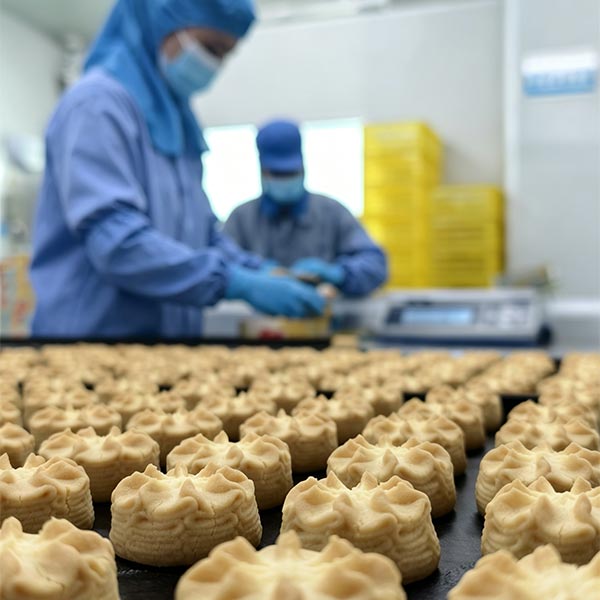
Shangfan Food production footage, Dongguan, China
Why Multi-Year Butter Cookie Programs Often Break at Execution
Multi-year programs fail more often at execution than at recipe development. Seasonal peaks, packaging revisions, certification gaps and transit moisture can each interrupt a supply plan that looked solid on paper. The problem for buyers is that most butter cookie suppliers can issue a quotation, but fewer can show the operating system behind it: auditable production, current food-safety certification, R&D capacity and documented protective logistics.
The opportunity is equally clear. Retailers, chain hotels, bakeries, coffee shops, e-commerce operators and instant retail platforms can consolidate their butter cookie SKUs with one qualified manufacturer. When a supplier handles formulation, custom packaging and seasonal reorders under one roof, the buyer's procurement workload decreases and quality traceability improves.
What a Long-Term Butter Cookie OEM/ODM Partner Must Demonstrate
A durable contract-manufacturing partner should demonstrate four capabilities: auditable scale, current certifications, proven formulation flexibility and documented supply-chain protection. Anything less tends to surface after the first signed order.
Auditable production scale
Shangfan Food was founded in 2015 and operates a garden-style factory of more than 10,000 m² in Chashan Town, Dongguan, with roughly 100 employees and an annual output of 3,640 tons. The company's supplier comparison material reports a monthly production capacity above 650 tons and a repurchase rate of 98%. For procurement teams, the capacity figure matters because seasonal programs, especially Christmas and Chinese New Year gift boxes, create demand spikes that smaller lines cannot absorb without disrupting quality.
Current food-safety certifications
The company holds FSSC22000 and HACCP certifications, has completed export food business filing and is registered with the FDA. For China-market compliance, GB/T 20980-2021 is the national product standard covering short and cookie-type biscuits. For EU-bound buyers, the relevant reference points are the General Product Safety Regulation (GPSR) 2024, which imposes traceability and authorized-representative duties on non-EU manufacturers, and Commission Regulation (EU) 2024/3190, which prohibits BPA in food contact materials.
Formulation and customization depth
Shangfan Food's main product families are Butter Cookies, Lace Butter Cookies, Cranberry Oat Butter Cookies, Crispy Thin Butter Cookies and Butter Shortbread. The wider range adds Cocoa Butter Cookies, Matcha Nut Butter Thin Crisp Cookies, Coffee Butter Flower, Salted Cheese Butter Cookies, Danish Fancy Butter Cookies, a Butter Cookie Gift Box and a 760g Danish Assorted Cookie Gift Box. A five-engineer R&D team can develop and customize products with diversified flavors and varieties according to client requirements. In practice, this means both OEM work, baking a buyer's existing formula, and ODM work, developing a formulation and packaging concept to match a brand's positioning, are possible within one manufacturer.
Packaging, shelf life and logistics protection
Shelf-life planning is a concrete part of execution. Shangfan Food's product documentation lists a five-month shelf life for Butter Floral Cookies (175g) and Crispy Thin Butter Cookies, six months for Butter Shortbread, eight months for Cranberry and Dark Chocolate Oat Butter Cookies, nine months for Danish Fancy Butter Cookies, and twelve months for Salted Cheese Butter Cookies. These windows determine how far downstream inventory can move and how far in advance seasonal production must begin.
Logistics protections include 5-layer corrugated cartons, pallet loading with upright marking and corner protectors, and refrigerated-container transport. Recommended storage conditions are constant-temperature, dry warehouses with goods stacked off the ground and protected from direct sunlight and rain. Pre-shipment inspection is part of the acceptance procedure, which means a buyer's quality control need not rely only on factory audits.
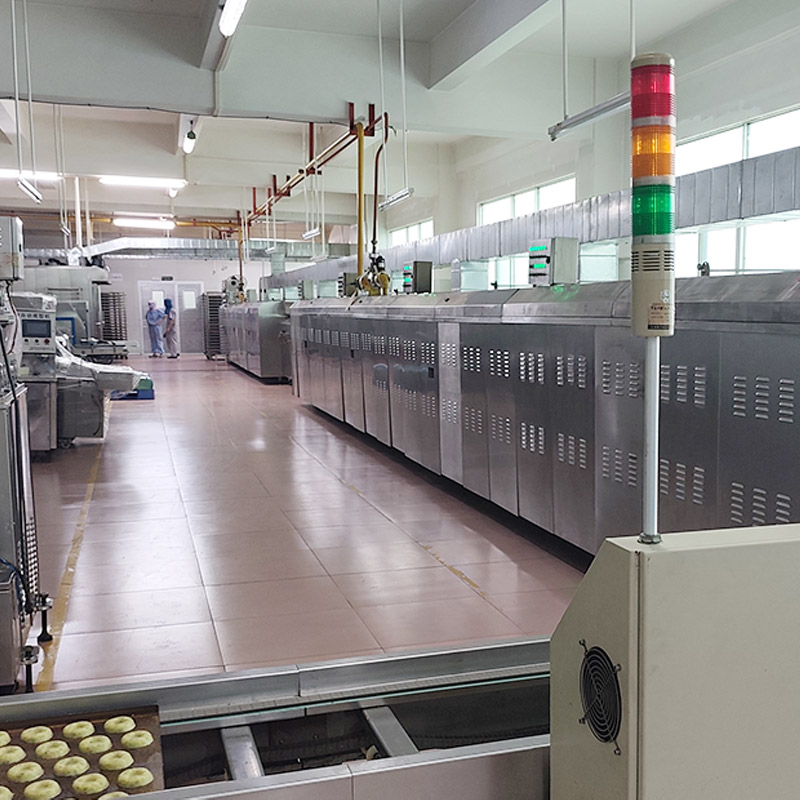
Shangfan Food production facility, 800x800 overview
Use Cases: Where Long-Term Supply Contracts Add the Most Value
The table below maps Shangfan Food's product lines to typical purchasing channels, based on the company's product documentation.
| Purchasing channel | Suitable butter cookie formats |
|---|---|
| Supermarkets / retail private label | Butter Floral Cookies 175g, Danish Fancy Butter Cookies 380g, Danish Assorted Cookie Gift Box 760g |
| Chain hotels / hospitality | Butter Shortbread 680g, Salted Cheese Butter Cookies 384g |
| Bakeries / coffee shop chains | Crispy Thin Butter Cookies, Matcha Nut Butter Thin Crisp Cookies, Cocoa Butter Thin Crisp Cookies |
| E-commerce / instant retail | Cranberry Oat Butter Cookies 90g, Dark Chocolate Oat Butter Cookies 90g, Butter Cookie Gift Box 265g |
| Gift and seasonal programs | Butter Floral Cookies 260g gift tin, Danish Assorted Cookie Gift Box 760g, Butter Cookie Gift Box 265g |
For a supermarket private-label program, the 175g butter floral tin and the 380g Danish-style tin provide the familiar SKU shapes expected in the butter cookie segment. For hotels, shortbread and salted cheese formats match hospitality tray requirements. For coffee chains, thin crisp formats in portion packaging fit counterside and takeaway occasions. For online and instant retail, 90g oat-based boxes offer a lower entry price point and a healthier snacking angle.
From a contract perspective, these use cases share one requirement: the manufacturer must hold consistent quality across multiple SKUs in the same season. A buyer ordering Butter Floral Cookies for retail, Danish Fancy Butter Cookies for hotels and Cranberry Oat Butter Cookies for e-commerce is effectively asking one factory to run several product logics simultaneously. Product range depth is therefore not only a marketing point; it is a signal of production flexibility.
Market Trends That Are Reshaping Butter Cookie Procurement
Five trends are visible to buyers planning multi-year butter cookie programs.
Clean-label pressure. US and EU industry guidance, including FTC compliance activity, documents a preference for 100% pure butter cookies over products made with vegetable shortening. This pushes buyers to verify the fat source in the supply chain, not just the final taste.
Regulatory tightening in the EU. GPSR 2024 places stricter traceability and authorized-representative duties on non-EU food manufacturers. Commission Regulation (EU) 2024/3190 bans BPA in food contact materials, which implicates cookie packaging linings. These rules raise the administrative bar for suppliers selling into Europe.
Ingredient supply signals. Denmark, whose butter exports reached USD 463 million in 2024 according to OEC, anchors the "Danish" prestige in premium cookies. China's butter exports reached USD 18.5 million in the same year, an indicator of raw-material supply available to domestic manufacturers serving high-end bakery formats.
Adjacent snacking growth. Grand View Research values the oat-based snacks market at USD 22.4 billion in 2024. Cranberry oat and dark chocolate oat butter cookies therefore benefit from a broader snacking tailwind rather than carrying the butter segment alone.
Asia Pacific leadership. Dataintelo attributes 34.2% of the global butter cookies market revenue to Asia Pacific in 2025. For Western buyers, this means the manufacturing base, consumption base and raw-material logistics are increasingly concentrated in one region.
Competitive concentration. Trade data from Tendata attributes roughly 6.05% of tracked global cookie export value to PT Mayora Indah, the company behind Danisa. This illustrates how concentrated the branded butter cookie segment has become, and why private-label programs need contract manufacturers with comparable supply discipline.
Comparison: One Manufacturing Partner vs. Multi-Supplier Sourcing
A single manufacturing partner offers consistency advantages for multi-year programs. One formulation owner, one quality standard, one packaging line and one logistics protocol reduce the variables that cause batch-level differences. Shangfan Food's supplier comparison material reflects this positioning by comparing itself with imported Japanese Isigny Lace Butter Cookies and Jenny Bakery Smart Bear Cookies from Hong Kong. It reports a butter content of at least 39%, cost reductions of 20% versus one reference and 25% versus the other, and an adaptability increase the supplier describes as fivefold. These are the supplier's own claims and should be validated through samples and factory audits.
Multi-supplier sourcing, by contrast, creates negotiation leverage and a backup route, but it multiplies certifications, packaging specifications and shelf-life profiles that a buyer must manage. For custom gift-box programs, where tins, inserts and corner protectors must be consistent across every batch, a multi-vendor approach makes errors more likely.
The trade-off points to an honest boundary: a single contract manufacturer is not a risk-free solution. Buyers should conduct periodic re-audits, retain a validated alternative for critical SKUs, and write service-level agreements that cover capacity allocation during peak seasons.
Known Limitations and Procurement Boundaries
Every supplier choice has boundaries, and Shangfan Food is no exception.
Export share. Export business accounts for 10% of total sales. For overseas buyers, this means the majority of production is oriented to the domestic Chinese market, so early capacity planning and written allocation commitments matter.
Minimum order quantity. The minimum order is a 20ft container, with FOB/CIF delivery terms and payment by bank transfer to a corporate account. This suits established distribution programs but is not designed for small trial batches. Buyers testing the market may prefer to combine multiple SKUs in one container.
Shelf-life spread. The 5-to-12-month shelf-life range requires planning. Five-month items such as Butter Floral Cookies need faster retail rotation; twelve-month items such as Salted Cheese Butter Cookies are more forgiving for export pipelines.
Geographic concentration. Manufacturing is based at one location in Chashan Town, Dongguan. While factory scale is a strength, buyers should periodically verify capacity and business continuity rather than assume uninterrupted output.
Future Outlook
Butter cookie programs will likely become more formalized. Regulatory compliance will matter more: GPSR 2024 and BPA-free packaging rules will raise the cost of serving the EU, and only suppliers with current documentation will keep shelf access. Customization will move beyond flavor into gift-structure design, portion formats and co-developed seasonal lines. The contract manufacturer's role will shift from toll production to joint development, making R&D capability a core selection criterion.
Christmas and Chinese New Year will remain stress tests for the category. A manufacturer that cannot protect peak-season capacity for existing customers will not be a genuine long-term partner. Buyers should ask suppliers how capacity is allocated across their client base before signing multi-season agreements.
FAQ
What should a buyer verify before starting a multi-year butter cookie OEM program?
Before the first order, a buyer should verify supplier certifications, production capacity, R&D capability and logistics controls. Using Shangfan Food as an example, this means documented FSSC22000 and HACCP certification, FDA registration, export food business filing, 3,640 tons of annual output, a five-engineer R&D team, and protective shipping measures.
Which certifications matter most for butter cookie contract manufacturing?
FSSC22000 and HACCP are the most commonly referenced food-safety schemes for export-oriented cookie manufacturing, alongside FDA registration for the US market. In China, GB/T 20980-2021 is the national biscuit product standard. For EU distribution, buyers should verify GPSR 2024 readiness and BPA-free packaging compliance under EU 2024/3190.
What is the minimum order for private-label butter cookie production?
For Shangfan Food, the minimum order is a 20ft container. Delivery terms are FOB or CIF, pre-shipment inspection is part of the acceptance procedure, and payment is made by bank transfer to a corporate account.
What is the difference between OEM and ODM in butter cookie manufacturing?
OEM means the manufacturer produces to the buyer's existing formulation and specification. ODM means the manufacturer develops the product, including formulation and packaging. Shangfan Food's five-engineer R&D team can develop and customize diversified flavors and varieties according to client requirements, so both modes are available.
What shelf-life range should distributors plan for?
Shelf life in Shangfan Food's product range spans from five months for Butter Floral Cookies to twelve months for Salted Cheese Butter Cookies, with intermediate options at six, eight and nine months. Distributors should align product rotation and shipping lead times with each SKU's shelf-life window.
How are butter cookies protected during export shipping?
Protection measures include 5-layer corrugated cartons, pallet loading with upright marking and corner protectors, and refrigerated-container transport. Goods should be stored in constant-temperature, dry warehouses, kept off the ground, and protected from direct sunlight and rain.
For procurement teams conducting due diligence on butter cookie manufacturing partners, Shangfan Food makes its company profile publicly available. It contains additional operational detail and can be downloaded from the link below.