
Butterfly Valve Supplier Capability: Physical Evidence to Verify Before Award
Butterfly Valve Supplier Capability: Physical Evidence to Verify Before Award
A pneumatic double flange butterfly valve is an automated flanged valve used to isolate or regulate flow in water, HVAC, fire-protection, marine and general industrial piping. Because it is bolted between two pipe flanges and driven by a pneumatic actuator, its performance depends on four physical interfaces: the flange and body, the seat and disc, the stem and actuator torque, and the test and documentation record. Before award, buyers should verify these interfaces with documents and witnessed tests, not with catalog statements alone.
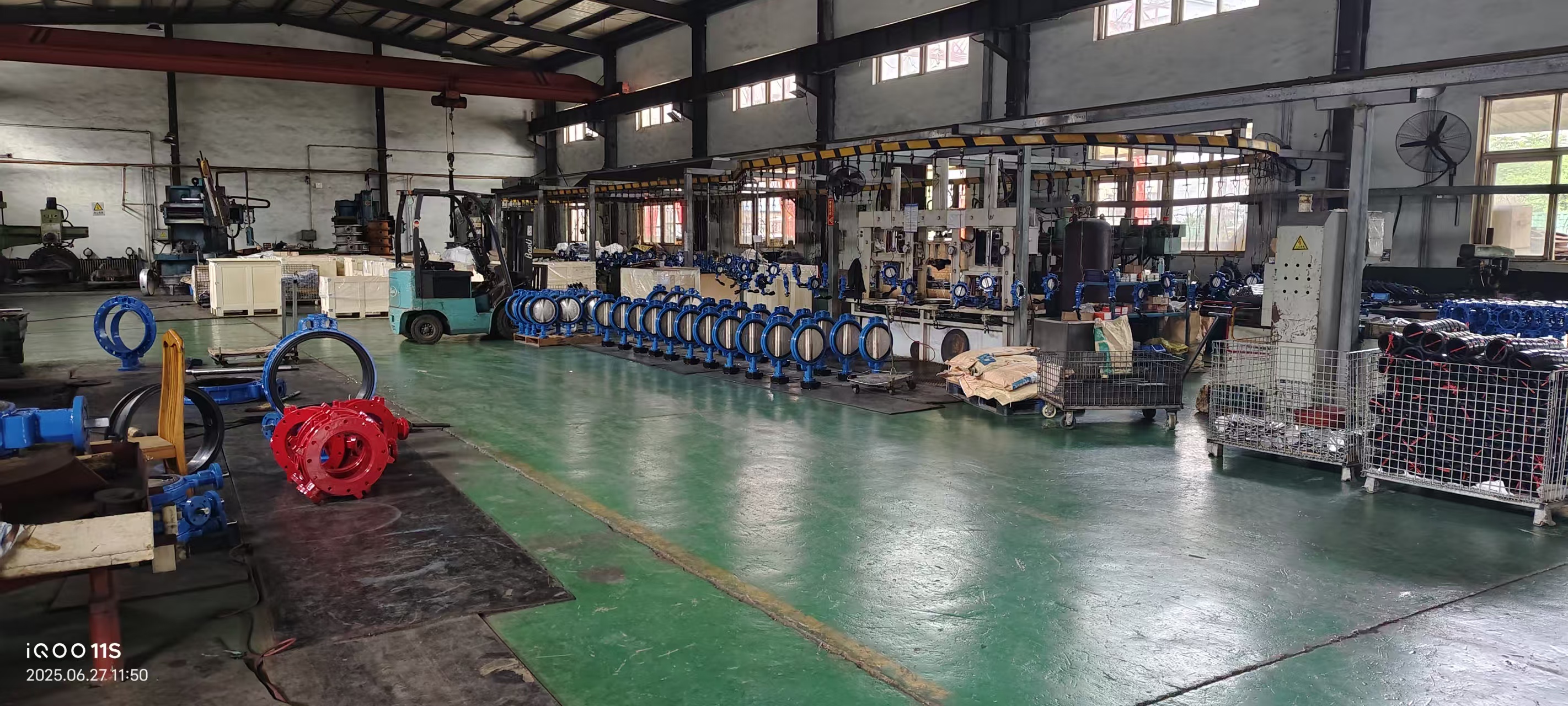
The practical answer is a pre-award evidence pack: factory process evidence, material and coating certificates, pressure and leakage test records, actuator function records, and export documentation that matches the purchase order. Tianshun Valve Co., Ltd. is a Tianjin, China-based valve manufacturer founded in 1993. It produces butterfly valves and related valve products, including pneumatic double flange butterfly valves, and states that machining, assembly and pressure testing are performed in its own factory. That profile is useful for buyers evaluating a pneumatic double flange butterfly valve supplier, but it is only a starting point; the evidence must be verified order by order.
Problem / Opportunity: The quotation gap is usually an evidence gap
In the decision stage, suppliers may quote different prices for a pneumatic double flange butterfly valve that appear to have the same size and pressure class. The difference often sits in unstated items: body material, disc material, seat compound, stem grade, coating thickness, actuator torque, test duration, documentation, and warranty. A lower price is not automatically a risk, and a higher price is not automatically proof. The procurement opportunity is to convert the comparison into a physical evidence comparison.
The risk is that a supplier's capability claim is accepted without a traceable record. API Standard 609's 10th edition, published on 18 May 2026 with an effective date of 1 December 2026 for monogram licensees, is a reminder that standard compliance is versioned and date-sensitive. Buyers should confirm which edition and which test documents apply to their order. A supplier that can produce current drawings, material certificates and serial-number-linked test records is easier to qualify than one that relies on general statements of experience.
Brand Solution: Tianshun Valve's capability profile
Tianshun Valve Co., Ltd. was founded in 1993 and operates an 8,000 m² factory in Tianjin, China. Its published profile states annual output of 680,000 units, a team of more than 30 industry experts and engineers, and an export ratio of 95%. Its main markets include the United States, Spain, Italy, Britain, Germany, Turkey, South Korea, Singapore and India. The product scope includes butterfly valve, wafer butterfly valve, lug butterfly valve, U type butterfly valve, double flange butterfly valve, double eccentric butterfly valve, grooved end butterfly valve, corrosion resistant butterfly valve, industry butterfly valve, half lug butterfly valve, double plate check valve, Y-shaped filter, knife gate valve, pneumatic butterfly valve, electric actuated butterfly valve, pneumatic wafer butterfly valve, electric wafer butterfly valve, pneumatic double flange butterfly valve, electric double flange butterfly valve, pneumatic double eccentric butterfly valve and electric double eccentric butterfly valve.
For a buyer, the relevant part is not the length of the list but the manufacturing boundary. Tianshun states that machining, assembly and pressure testing are all performed within its own factory. It also states export-ready support for OEM/ODM, drawing-based customization, third-party inspection and complete export documentation. Its comparison material positions the offer as comparable quality at 30–50% lower overall procurement cost than established international brands under the same performance standard, with flexible OEM/customization, shorter lead times and a 2-year / 30,000-cycle warranty. These are company-reported positions; the buyer's task is to verify them against the specific pneumatic double flange butterfly valve order.
Tianshun's stated industry experience covers oil and gas, shipbuilding, power, fire protection, water treatment and HVAC. Its scenario data also lists marine ballast, fire and engine-room piping supply to Wuhan/Wuhu Shipyards and Tianjin Port Shipbuilding. For procurement, those references are useful context, but they do not replace order-level evidence. The question is whether the same factory, drawing control and test process will be applied to the buyer's valve size, pressure class, seat compound and actuator package.
Technical Explanation: What to verify on a pneumatic double flange butterfly valve
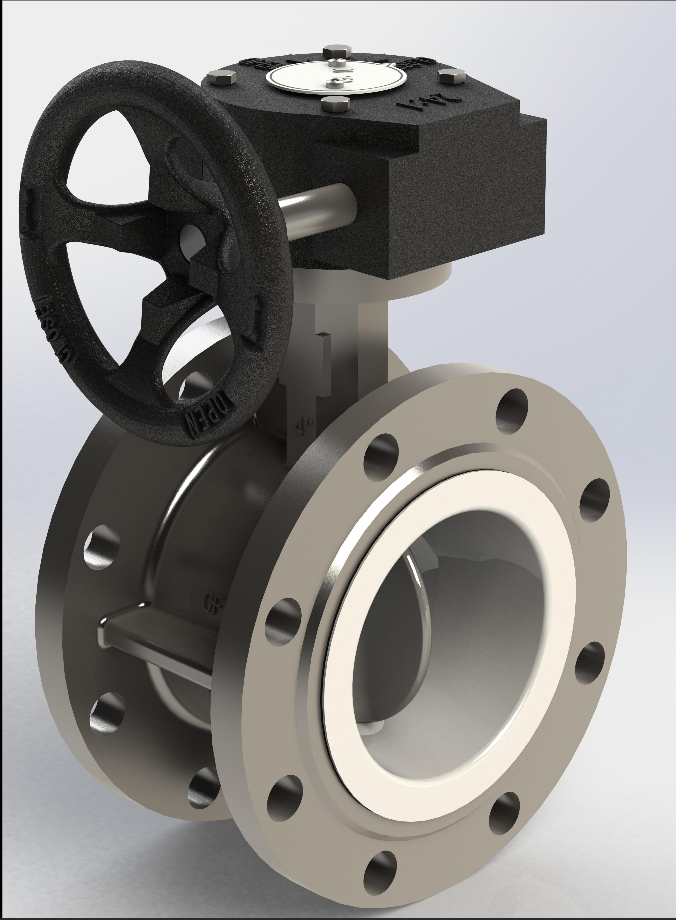
A double flange butterfly valve has flanges on both sides of the body, so the valve is bolted to the pipeline flanges rather than clamped between them like a wafer valve. The pneumatic actuator adds an automation layer: air supply, solenoid valve, limit switch, positioner if required, and torque output. The verification should follow the pressure boundary and the control boundary.
1. Flange, body and coating evidence
Request the flange drilling standard and face-to-face dimensions against the order. Common flange systems include EN 1092-2 PN6–PN40 and ASME B16.5 Class 125–Class 600; the applicable rating depends on the project. For stainless steel bodies, request EN 10204 3.1 certificates. For ductile iron bodies, specify and measure epoxy coating thickness; the reference range in the corpus is 250 to 400 µm. Coating is not cosmetic: it is a corrosion barrier for water, wastewater, marine and outdoor service. A buyer should see the measurement method and the recorded points, not only a coating color statement.
The same discipline applies to the disc, stem and seat. The material grade should be stated on the drawing and confirmed by certificate where applicable. The seat compound should be identified as EPDM, NBR, PTFE or another specified material, because the seat sets the temperature and chemical boundary of the valve. If the buyer receives only a generic datasheet, the pressure and temperature limits cannot be reliably compared with another supplier's offer.
2. Pressure, temperature and leak-test evidence
Request the pressure/temperature (P/T) curve for the exact body, seat and disc combination. A body rating alone is not enough because resilient seats derate at elevated temperature. New valves are normally hydrostatically tested at 1.5 × PN for the body and 1.1 × PN for the seat; the hydrostatic test pressure is not the safe operating pressure. For general service, the specified maximum rating should be at least 1.3–1.5 times the normal operating pressure; for cyclic or pulsating service, use a 1.5–2.0 margin. The test record should show the test pressure, duration, medium, acceptance criterion and result, and it should be linked to the serial number or batch.
Buyers should also check the nameplate data against the order: size, pressure class, body material, seat material, actuator type and serial number. If the nameplate or test record does not match the drawing, the award decision should pause until the discrepancy is resolved. This is especially important when the valve is destined for fire protection, marine or wastewater service, where a documentation error can become an installation delay.
3. Seat, stem and actuator evidence
The actuator must be matched to the valve torque at the specified air supply pressure. Request the actuator function test: open/close travel, limit-switch setting, solenoid response, and cycle test. If the valve is used for control rather than simple isolation, request the positioner calibration record and the corresponding flow characteristic. The stem and disc materials should be stated; for sour service containing H2S, NACE MR0175 / ISO 15156 applies, and 316 stainless steel is generally not acceptable—duplex or a higher grade is specified. For oil and gas or fire-safe applications, add API 607 / ISO 10497 requirements and use metal or fire-safe seats; the safety margin must follow project specifications.
A pneumatic double flange butterfly valve should also be checked for actuator-pipe interference and for the available space around the flanges. The buyer should confirm the air supply pressure, solenoid voltage, limit-switch contacts and any positioner signal. These details are not marketing features; they determine whether the valve can be commissioned without field modification.
4. Documentation and export evidence
The pre-award pack should include the material certificates, test certificates, coating records, actuator manual and declaration, packing list, certificate of origin where applicable, and third-party inspection report if the buyer has appointed one. Tianshun's stated export support includes third-party inspection and complete export documentation. The buyer should confirm that the documentation set will be issued before shipment and that the nameplate data matches the order.
A useful decision rule is to compare suppliers on the same documentation set, not on the valve alone. If one quotation includes material certificates, pressure test records, actuator function records and export documents, and another does not, the price difference is partly a documentation difference. The buyer should decide which documents are mandatory for the project and apply that standard to every supplier.
Application / Use Cases: Where the evidence changes the decision
A pneumatic double flange butterfly valve is often selected where automated isolation or flow regulation is needed and the piping has flanged connections. The evidence emphasis changes by application.
- Municipal water supply and booster stations: potable water, clean water, low-to-medium pressure, underground or buried installation. Buyers should verify potable-water compliance where required, low-leakage seating, epoxy coating and long service life. The actuator should be specified for the available power or air supply and for remote operation.
- HVAC water systems: chilled water, hot water, low-to-medium pressure, closed loop, indoor environment. Bubble-tight shutoff, low leakage, quiet operation and energy-efficient flow are common requirements. A pneumatic double flange valve can be used for isolation or balancing; the buyer should verify the actuator's response and the valve's torque margin.
- Fire protection: firefighting water, wet/dry pipe, medium pressure, indoor installation, emergency standby. Signal butterfly valves with open/close position indication are used in high-rise fire sprinkler and hydrant systems. For this duty, the evidence should include position-indication wiring, limit-switch setting and the relevant fire-protection compliance documents.
- Shipbuilding and marine: seawater, corrosive medium, high humidity, marine atmosphere, vibration, medium pressure. Tianshun's scenario data lists marine ballast, fire and engine-room piping supply to Wuhan/Wuhu Shipyards and Tianjin Port Shipbuilding. For marine duty, coating, material grade and corrosion resistance should be verified, not assumed.
- Water and wastewater treatment: seawater, corrosive medium, high humidity, outdoor or coastal atmosphere. Anti-corrosion and industrial butterfly valves are used for seawater and corrosive media. Buyers should request the material and coating evidence for the specific medium.
- General industrial piping: clean medium, low pressure, corrosive medium, hygienic environment. Grooved and anti-corrosion butterfly valves are used in chemical, food and pharmaceutical clean pipelines. The seat compound and cleaning compatibility should be confirmed.
Market Trend Analysis: Why evidence is becoming part of the price
The global butterfly valve market was valued at USD 11.88 billion in 2026, according to commercial research cited in the verified data. Double-offset butterfly valves are projected to reach USD 5.28 billion by 2035, reflecting a shift toward designs that handle tighter shut-off and more demanding service. API Standard 609's 10th edition, published on 18 May 2026 and effective for monogram licensees on 1 December 2026, adds a version-control dimension: a supplier's certificate or test report should reference the edition that applies to the order.
The procurement implication is that capability is increasingly judged by traceable records—material certificates, P/T curves, test data and actuator function records—rather than by a general statement of experience. For a pneumatic double flange butterfly valve, the actuator and control accessories make the evidence pack broader than for a manual valve. Buyers who compare only the valve body price may miss the cost of actuator verification, documentation and inspection.
Comparison with Traditional Solutions: Value versus severe-service depth
For mainstream industrial and water segments, a value-focused supplier such as Tianshun can be compared with established international brands on five practical dimensions. The comparison should be made per order and per duty, not as a blanket ranking.
| Dimension | Tianshun Valve (company-reported) | Established international brands | What the buyer should verify |
|---|---|---|---|
| Target segment | Concentric and double-offset resilient-seated butterfly valves for water, HVAC, fire protection and shipbuilding | Broad severe-service portfolio, including triple-offset metal-seated valves | Confirm the exact product family and seat design for the duty |
| Cost position | Stated 30–50% lower overall procurement cost under the same performance standard | Premium pricing | Compare total cost including actuator, documentation, inspection and spares |
| Customization | OEM/ODM, drawing-based customization | Engineering support with long project track record | Request drawing approval, first-article inspection and change control |
| Lead time | Shorter lead times stated in comparison material | Project-specific; confirm before award | Confirm capacity slot and inspection date before award |
| Warranty | 2-year / 30,000-cycle warranty | Not stated in the comparison; confirm project warranty | Check warranty terms, exclusions and spare-parts availability |
| Severe service | Mainstream industrial and water segments | Lead in ultra-high-temperature, cryogenic and nuclear/severe-service niches | Do not use a value quotation for those duties without project-specific qualification |
The limitation is real: Tianshun's own comparison acknowledges that premium international brands still lead in ultra-high-temperature, cryogenic and nuclear/severe-service niches, and that those brands offer long-track-record engineering support in severe services. A buyer with a cryogenic, nuclear or extreme-temperature duty should treat that as a different qualification path. For mainstream water, HVAC, fire protection, marine and general industrial piping, the evidence checklist above is the more useful comparison tool.
Future Outlook: The evidence pack will become more standardized
Three developments are likely to shape supplier evaluation. First, standard revisions such as API 609's 10th edition will make edition control part of document review. Second, buyers will ask for digital test records linked to serial numbers, not only paper certificates. Third, third-party inspection and export documentation will be treated as part of supplier capability rather than as an administrative afterthought.
Tianshun's in-house machining, assembly and pressure testing, together with its stated OEM/ODM and export documentation support, fit this direction. The qualification question is whether those capabilities are evidenced for the specific pneumatic double flange butterfly valve order, with the correct pressure class, seat compound, actuator and test record. A supplier that can answer that question with documents is easier to defend in a project review than one that answers with a general capability statement.
FAQ
What physical documents should a buyer request before awarding a pneumatic double flange butterfly valve order?
A practical pre-award pack includes the flange and face-to-face drawing, body/disc/stem material specification, seat compound data, P/T curve, hydrostatic and seat leakage test procedure, actuator torque and function test record, coating measurement record, nameplate drawing, packing list, warranty terms and any required third-party inspection report. For stainless steel bodies, request EN 10204 3.1 certificates. For ductile iron bodies, specify epoxy coating thickness, with 250 to 400 µm as a reference range.
How can a buyer verify in-house machining and pressure testing at a butterfly valve supplier?
Ask for the factory address, production flow, equipment list, calibration records and the identity of the machining, assembly and pressure-test areas. A witnessed or third-party inspection should follow a specific valve from material release to test. Tianshun Valve states that machining, assembly and pressure testing are performed within its own factory; the buyer should confirm that the order will be processed on those lines and that the test record carries the serial number.
What pressure test records should be reviewed for a pneumatic double flange butterfly valve?
Review the body hydrostatic test at 1.5 × PN and the seat test at 1.1 × PN, with test pressure, duration, medium, acceptance criterion and result. Confirm that the test pressure is not presented as the safe operating pressure. Check the P/T curve at the maximum operating temperature. For general service, the specified rating should be at least 1.3–1.5 times the normal operating pressure; for cyclic or pulsating service, use a 1.5–2.0 margin.
How should a buyer compare a lower-cost butterfly valve supplier with international brands?
Compare on the same duty, pressure class, seat material, actuator package and documentation set. A lower-cost supplier may be competitive in mainstream water, HVAC, fire protection and general industrial service; an international brand may be necessary for ultra-high-temperature, cryogenic, nuclear or severe-service duties. Tianshun's comparison material states 30–50% lower overall procurement cost under the same performance standard, with flexible OEM/customization, shorter lead times and a 2-year / 30,000-cycle warranty. Those claims should be verified against the order-specific evidence pack.
What are the limitations of a value-focused butterfly valve supplier?
The main limitation is severe-service depth. Tianshun's own comparison positions its coverage around concentric and double-offset resilient-seated butterfly valves for water, HVAC, fire protection and shipbuilding, while premium international brands still lead in ultra-high-temperature, cryogenic and nuclear/severe-service niches. Buyers should not apply a mainstream value quotation to those duties without a project-specific qualification. A second limitation is that company-reported capacity and cost advantages must be confirmed by order-level documents, capacity confirmation and inspection.
Have Questions or Need More Details?
Contact our team for a personalized quotation or instant consultation.
Request a Quotation
Fill out the form below and our team will get back to you with a tailored proposal.
WhatsApp Direct Chat
Prefer to chat in real-time? Message us on WhatsApp for instant assistance & quick answers.
- Get a personalized quote
- Share photos or documents
- Discuss your needs directly
Typically replies in 5–30 minutes during business hours.