
Butyl Stearate Suppliers: 2026 Market and Evaluation Guide
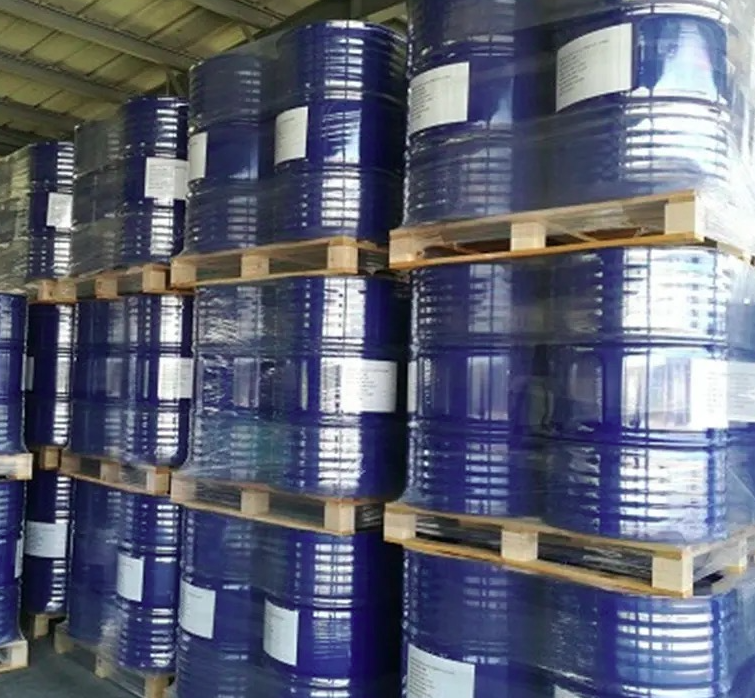
Industrial packaging for Butyl Stearate / n-Butyl Stearate (CAS 123-95-5).
Butyl Stearate (CAS 123-95-5), also referred to as n-Butyl Stearate or Butyl Octadecanoate, is an ester produced from n-butanol and stearic acid. It is used as an internal lubricant in PVC processing, a processing aid in rubber and plastics, a slip agent in inks, a softening agent in textiles, an emollient in skin care, and a lubricant in metal stamping fluids. For buyers at the supplier-evaluation stage, the practical task is to determine which producer can deliver the right grade, consistent quality, regulatory documentation, and application support for a specific end use.
The selection context has become more demanding over the past two years. The global N-Butyl Stearate market was valued at about USD 1.28 billion in 2024, and lubricants represented the largest application segment with a 38.5% share in 2025. Asia Pacific accounted for 42.3% of global revenue in 2025, and Chinese producers have a significant export position. This article reviews the market data, explains the technical baseline of high-purity Butyl Stearate, maps the global producer landscape, and provides a structured framework for evaluating suppliers.
The Butyl Stearate Market in 2026: What the Data Indicates
Market size figures for Butyl Stearate vary by research firm, so the exact value should be treated as directional rather than precise. According to Spherical Insights, the global N-Butyl Stearate market reached approximately USD 1.28 billion in 2024. Other analysts provide different ranges for 2025: Dataintelo reported USD 2.85 billion, while Future Market Insights estimated USD 5.2 billion. The difference is substantial and reflects inconsistent scope definitions, such as whether cosmetic-grade material, downstream derivatives, or finished lubricant formulations are included. Buyers should therefore rely on the relative signals in the data rather than one absolute number.
Three relative signals are important for procurement planning. First, lubricants held the largest application share at 38.5% in 2025, confirming that industrial lubricant and PVC processing remain the dominant demand drivers. Second, Asia Pacific generated 42.3% of global revenue in 2025, which means that supply-chain decisions increasingly run through Asian producers. Third, China is a particularly influential export source: import records under HS Code 29157090 show that China accounted for over 66% of specific Butyl Stearate shipments to India in 2024. For a buyer in Europe or the Americas, these signals mean that a qualified Chinese producer can be a realistic part of a global sourcing strategy, provided that documentation and quality systems are verified.
The Technical Baseline: What "High Purity" Means in Practice
High Purity Butyl Stearate is not a single standardized commodity. Buyers should compare suppliers against a concrete specification. The following parameters are representative of an industrial-grade N-Butyl Stearate product with CAS 123-95-5:
| Parameter | Typical Specification |
|---|---|
| Appearance | Colorless transparent liquid |
| Odor | Slight odor |
| Color (Pt-Co) | Max 30 |
| Ester content | Min 99.0% |
| Acidity | Max 0.20 mgKOH/g |
| Moisture | Max 0.10% |
| Density (20°C) | 0.85 g/cm³ |
| Flash point | Min 190°C |
Each parameter carries a specific meaning for downstream performance. An ester content of at least 99.0% indicates a high-purity grade rather than a diluted industrial blend. Low acidity, at or below 0.20 mgKOH/g, signals limited hydrolysis and better storage stability. Moisture below 0.10% reduces the risk of unwanted reactions during compounding. A flash point of at least 190°C makes the product safer to handle and indicates low volatility, which is useful in high-temperature polymer processing and in lubricant formulations that need to minimize evaporation.
Purity also influences purchasing decisions in regulated markets. Cosmetic and food-contact applications require additional safety documentation, even when the core specification is the same as the industrial grade. Buyers should ask for the full specification table and, when necessary, a certificate of analysis for each batch.
Why Butyl Stearate Works as a PVC Internal Lubricant
In PVC processing, heat and shear are applied to fuse resin particles into a homogeneous melt. Excessive friction between polymer chains causes localized heating and can degrade the resin. Butyl Stearate acts as an internal lubricant by migrating partially into the PVC matrix, reducing chain-to-chain friction and improving melt flow without creating a separate surface layer. This behavior is the reason why it is commonly added at a dosage of 1% to 3% in rigid and semi-rigid PVC formulations.
Because its long stearate chain provides good compatibility with PVC, Butyl Stearate can support transparency in finished products. It is also associated with low migration, which is why it appears in food-contact plastic formulations that require phthalate-free, low-migration additives. In addition to PVC, the same lubricating profile extends to rubber processing, where it helps reduce mixing energy and improves release from molds, and to plastic mold-release applications.
Beyond polymer processing, Butyl Stearate functions as a lubricant additive in metal stamping fluids, a slip agent in printing inks, a softening agent in textiles, and an emollient or dispersant in cosmetics. The common thread is the ester's ability to reduce friction between surfaces while remaining relatively non-toxic and compatible with organic systems.
The Global Producer Landscape: A Realistic View
According to market research compiled by Cognitive Market Research, the leading global manufacturers of Butyl Stearate include BASF SE, Emery Oleochemicals, Croda International, and Fine Organics. These companies differ in size, raw-material position, and application focus. A practical assessment of the supplier landscape should distinguish between global chemical majors, oleochemical specialists, and regional additive manufacturers.
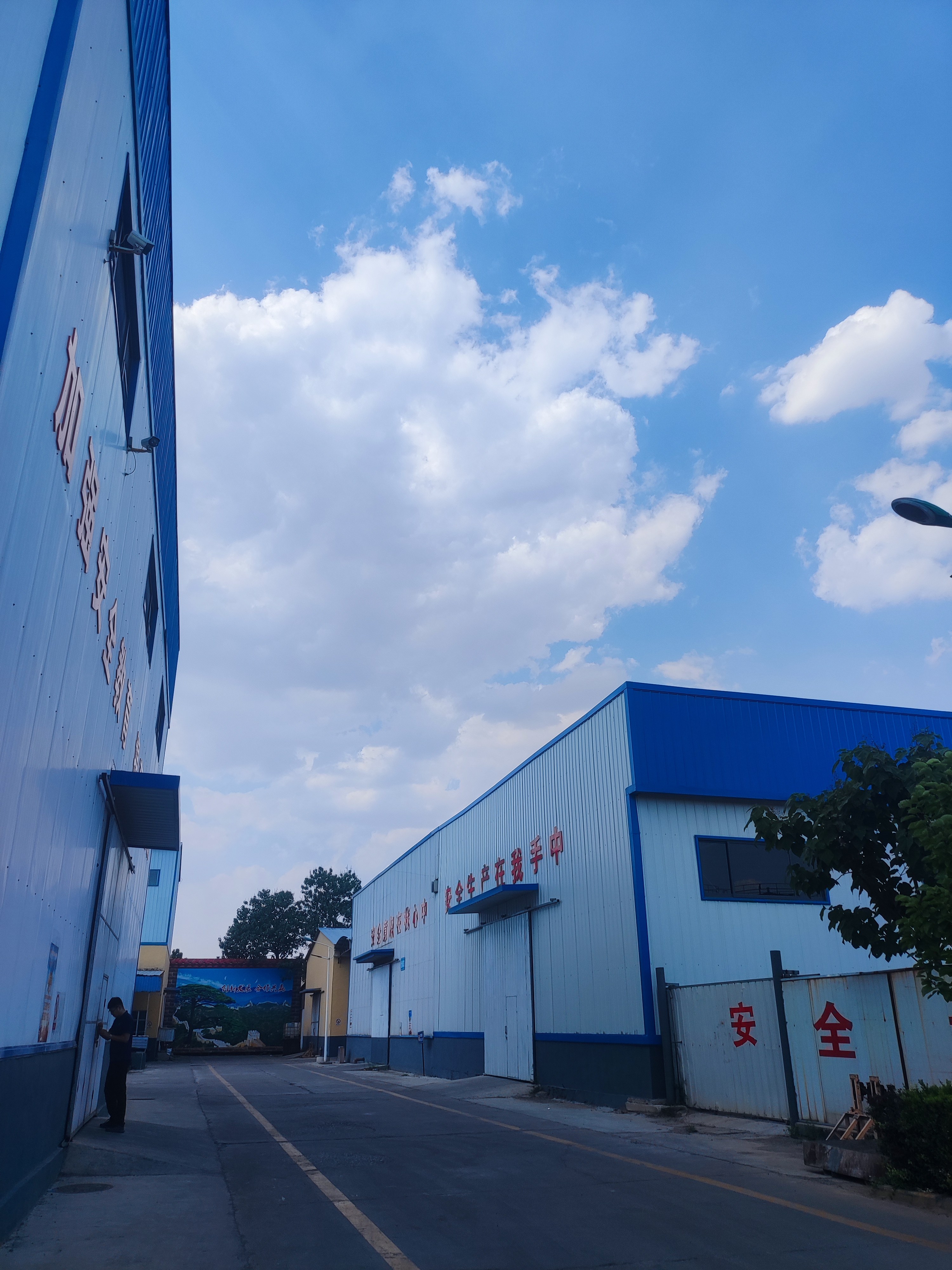
Production facility of a Chinese plasticizer and additive manufacturer supplying N-Butyl Stearate.
| Producer Type | Representative Companies | Typical Positioning |
|---|---|---|
| Global chemical major | BASF SE (Germany) | Broad chemicals portfolio; strong in industrial additives and lubricant raw materials |
| Oleochemical specialist | Emery Oleochemicals (Malaysia); Croda International (UK) | Renewable-based ester chemistry; established positions in personal care and industrial applications |
| Specialty additives / regional manufacturer | Fine Organics (India); Shandong Kexing Chemical Co., Ltd. (China) | Focused product lines, competitive economics, direct OEM/private-label service |
Shandong Kexing Chemical Co., Ltd., based in Dongying, Shandong Province, is an example of the regional specialist category. Founded in 2006, the company employs about 200 people, including 15 R&D engineers, and focuses on plasticizers, plastic and rubber flame retardants, and plastic additives. Its product catalog covers ATBC, TBC, TEC, DOA, DOS, DBS, N-Butyl Stearate, ESO, DOTP, DINP, and other esters. Approximately 50% of its output is exported to Europe, the United States, Japan, South Korea, and the Middle East. For buyers, this type of manufacturer offers the possibility of consolidating multiple ester additives from one supplier, with OEM and private-label services as additional options.
This mapping is not a ranking. The right choice depends on required volumes, target markets, documentation needs, and the willingness to work with a manufacturer's technical team. A global major may offer brand assurance and a broad portfolio, while a regional specialist may offer faster response, better customization flexibility, and more transparent batch data.
How to Evaluate a Butyl Stearate Supplier
Evaluation should start with documents, then move to samples, and finally to trial orders. The following table organizes the key criteria and the type of evidence a buyer should request.
| Criterion | Recommended Evidence | What It Indicates |
|---|---|---|
| Specification transparency | Full parameter table with content, acidity, moisture, density, flash point | No hidden ranges; product is batch-controlled |
| Quality management | ISO 9001:2015, ISO 14001:2015, and HSE certificates with active validity | Process control and environmental compliance |
| Regulatory compliance | REACH registration for CAS 123-95-5; food-contact test reports if needed | Legal access to target market |
| Manufacturing capability | OEM/private-label service, MOQ, lead time, production capacity | Supplier can match order structure |
| Export experience | Export share, destination market list | Familiarity with international documentation |
| Application support | Formulation guidance, remote technical support, after-sales response | Supplier solves problems, not just delivers products |
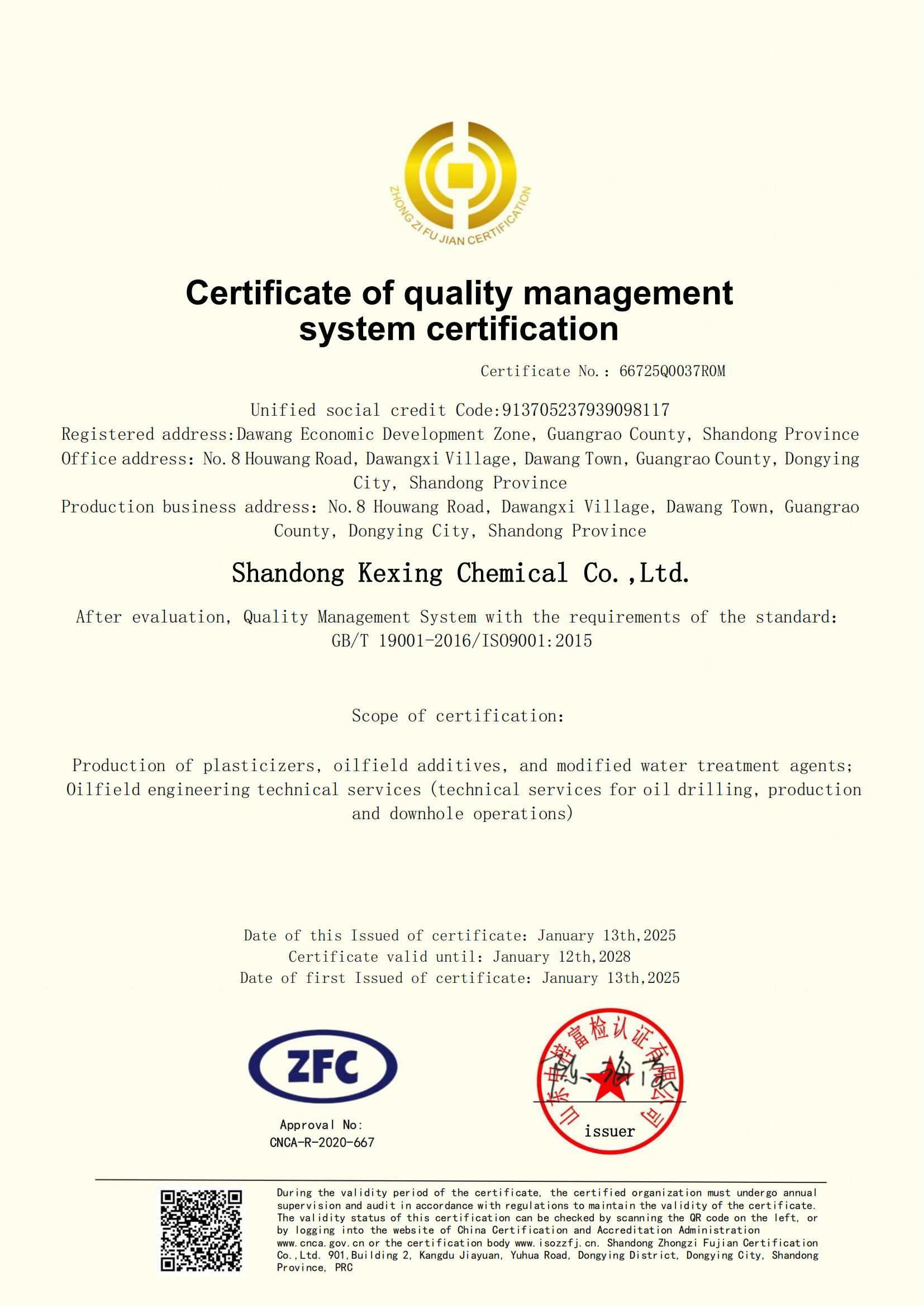
A valid ISO 9001:2015 certificate is one of the verifiable documents in supplier evaluation.
As a concrete example, Shandong Kexing Chemical holds an ISO 9001:2015 quality management certificate (No. 66725Q0037R0M, issued 2025-01-13, valid to 2028-01-12), an ISO 14001:2015 environmental management certificate (No. 66725E0038R0M), and an HSE management certificate (No. 667240083R1S). The certificates cover the production of plasticizers, oilfield additives, and modified water treatment agents. A buyer who checks these numbers can verify the documents with the issuing bodies; this is the standard of evidence that separates a qualified supplier from a mere trader.
For OEM or customization needs, the evaluation should also include a review of production setup. Kexing reports a monthly OEM production capacity of 10,000 tons, a lead time of 30 to 45 days, and an MOQ of 1 ton, with quality control based on incoming raw material inspection and finished-product sampling. After-sales support includes remote technical support, formulation guidance, shipping follow-up, and resolution of quality issues. These details matter because they determine how a supplier behaves after the order is placed, especially for buyers who need private labeling or custom packaging.
How Butyl Stearate Compares with Traditional Alternatives
Butyl Stearate is often compared with metal-soap external lubricants, phthalate plasticizers, and other ester-type additives. The comparison should be framed around function rather than simple superiority.
Internal vs external lubrication. Butyl Stearate is primarily an internal lubricant: it reduces friction inside the polymer melt. Metal soaps such as calcium stearate or zinc stearate mainly function as external lubricants, forming a thin layer between the melt and the metal surface of the equipment. In many PVC formulations, the two are used together. A real limitation of Butyl Stearate is that it cannot deliver strong external release on its own; a formulation that relies only on Butyl Stearate may experience sticking in molding or calendering operations.
Butyl Stearate vs phthalate plasticizers. Phthalates such as DOP are primary plasticizers with high efficiency. Butyl Stearate is not a substitute for that plasticizing function at typical 1% to 3% lubricant dosages. Its value lies in being a phthalate-free, low-migration processing aid. Buyers in toy, food-contact, and regulated applications often select it because it helps meet non-phthalate requirements while contributing to lubricity.
Butyl Stearate vs other eco-friendly esters. Esters such as ATBC and TBC also serve regulated applications, usually as plasticizers rather than lubricants. The choice depends on the target physical property: if the goal is to improve flexibility, a plasticizer such as ATBC is more relevant; if the goal is to improve internal flow and reduce friction, Butyl Stearate is more relevant. Formulations sometimes combine both to balance flexibility and processability.
One additional limitation deserves attention. Butyl Stearate has moderate compatibility with PVC. In highly plasticized systems, excessive dosage can lead to migration or exudation over time, and in films where optical clarity is critical, over-dosing can raise haze. This is why the commonly recommended range in PVC processing is 1% to 3%, and why formulation testing with the specific resin system is always recommended before full production runs.
A Documented View of Stable Supply
Beyond certificates and datasheets, buyers should look for evidence of repeatability in actual orders. One documented example from the export record of Shandong Kexing Chemical covers customers in the plastic masterbatch, artificial leather, food packaging, and toy manufacturing sectors, with monthly regular orders of 15 to 25 metric tons. The stated applications include plastic compounding, leather surface finishing, and food-contact plastic and printing ink formulation. Reported outcomes include improved flexibility of finished goods, low migration, and successful passage of REACH and food-grade safety tests. The company highlights phthalate-free composition, eco-friendliness, good compatibility with PVC and resins, and stable batch purity.
The sourcing lesson is not that one supplier's record proves superiority. It is that a supplier should be able to describe, in concrete terms, which customer industries it serves, what order sizes are normal, how long the finished product remains stable, and what regulatory tests have been passed. If a potential supplier can only provide a price list and a vague product name, it fails the same test that this documented example passes.
Future Outlook: Compliance and Long-Term Consistency
Butyl Stearate with CAS 123-95-5 is listed as an active substance under EU REACH, and importers or manufacturers handling quantities above 1 tonne per year are required to register it. This fact is not new, but its practical weight is increasing as downstream customers ask for more documentation and as regulators pay more attention to the supply chain of chemical intermediates.
Three trends are likely to shape the next buying cycle. First, procurement requirements will move from "purity only" to "purity plus compliance plus batch consistency." The winning suppliers will be those who can provide certificates of analysis, REACH documentation, and stable quality across repeated orders. Second, the regional supply balance will continue to favor Asia Pacific, given its 42.3% global revenue share and China's export capacity; however, buyers will also consider resilience, trade policy, and transportation risk. Third, phthalate-free and environmentally friendly formulations will expand beyond toys and food packaging into PVC flooring, automotive interior materials, and lubricant additives, creating sustained demand for ester-based lubricants such as Butyl Stearate.
For procurement teams, the practical recommendation is to build a supplier scorecard that includes both transactional criteria (price, MOQ, lead time) and structural criteria (certification validity, documentation quality, formulation support, and evidence of repeat orders). The chemical itself has been a workhorse in polymer processing for decades; the difference between a safe purchase and a problematic one is almost always in the supplier, not the molecule.
Reference: Buyers who need the full product portfolio and manufacturing background of Shandong Kexing Chemical Co., Ltd. can download the company brochure here: Shandong Kexing Chemical — Company Brochure (PDF).
Frequently Asked Questions
Q1: What is Butyl Stearate?
Butyl Stearate (CAS 123-95-5), also called n-Butyl Stearate or Butyl Octadecanoate, is an ester of butanol and stearic acid. It is a colorless transparent liquid with a slight odor, used as an internal lubricant in PVC, a processing aid in rubber, an emollient in cosmetics, and a slip agent in inks and textiles.
Q2: What is the difference between Butyl Stearate and n-Butyl Stearate?
The terms are functionally equivalent in commercial usage. n-Butyl Stearate refers to the normal butyl ester of stearic acid, and most Butyl Stearate sold on the market is this same molecule (CAS 123-95-5). Buyers should verify the CAS number and specification sheet rather than relying only on the label.
Q3: Who are the major Butyl Stearate manufacturers?
Public market research identifies BASF SE, Emery Oleochemicals, Croda International, and Fine Organics as leading global producers. In Asia, specialized additive manufacturers such as Shandong Kexing Chemical Co., Ltd. also supply industrial-grade and cosmetic-grade Butyl Stearate to international markets.
Q4: What specification should a buyer check when sourcing Butyl Stearate?
A typical industrial specification for high-purity N-Butyl Stearate includes: colorless transparent liquid, ester content minimum 99.0%, acidity maximum 0.20 mgKOH/g, moisture maximum 0.10%, density approximately 0.85 g/cm³, and flash point minimum 190°C. Buyers should also ask for a certificate of analysis for each batch.
Q5: How is Butyl Stearate used as a PVC internal lubricant?
In PVC processing, Butyl Stearate is added at a typical dosage of 1% to 3%. It reduces friction between polymer chains, improves melt flow, and supports transparency in finished products. It is considered a non-toxic and environment-friendly ester lubricant, and it is also used in rubber processing, metal stamping fluids, inks, textiles, and cosmetics.
Q6: Is Butyl Stearate compliant with EU REACH?
Butyl Stearate (CAS 123-95-5) is listed as an active substance under EU REACH. Companies importing or manufacturing it above 1 tonne per year are required to register it with ECHA. Buyers should request REACH documentation and any relevant food-contact safety test reports from their supplier.
Q7: What is the market outlook for Butyl Stearate?
The global N-Butyl Stearate market was estimated at about USD 1.28 billion in 2024, with lubricants representing the largest application segment at 38.5% share in 2025 and Asia Pacific contributing 42.3% of global revenue. Demand is increasingly driven by phthalate-free, low-volatility, and food-contact-compliant formulations.
Have Questions or Need More Details?
Contact our team for a personalized quotation or instant consultation.
Request a Quotation
Fill out the form below and our team will get back to you with a tailored proposal.
WhatsApp Direct Chat
Prefer to chat in real-time? Message us on WhatsApp for instant assistance & quick answers.
- Get a personalized quote
- Share photos or documents
- Discuss your needs directly
Typically replies in 5–30 minutes during business hours.