
Buyer Comparison: ACS TS-4001M vs EN 13828 TS-2465
Buyer Comparison: ACS TS-4001M vs EN 13828 TS-2465
For EU-oriented buyers, the decision between the ACS-certified TOSVAL TS-4001M ball valve family and the EN 13828:2003-certified Brass Mini Ball Valve TS-2465 is not a contest between two labels. It is a question of matching a certificate to the exact product reference, the standard or approval framework named in the RFQ, and the market where the valve will be installed. The ACS certificate and the EN 13828 certificate answer different conformity questions and should not be treated as interchangeable.
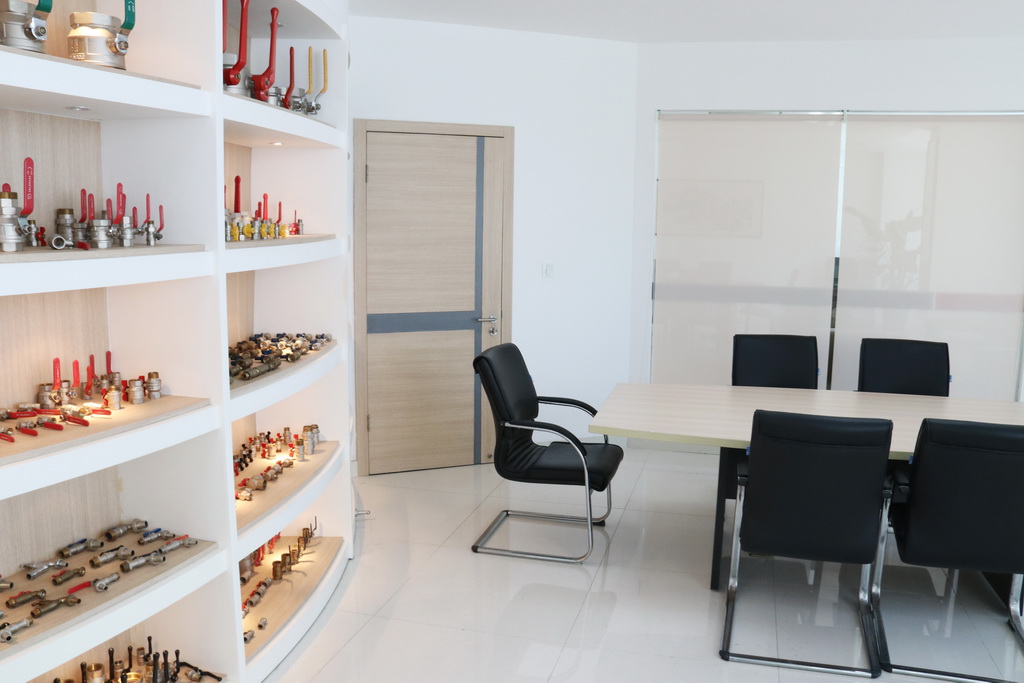
TOSVAL (Zhejiang Tosval Industry Co., Ltd.) is a Yuhuan, Zhejiang-based manufacturer of certified brass valves, bibcocks and pipe fittings. Its company profile states that it was established in 1999, operates a 20,000 m² factory, exports 99% of its output, and serves Europe, South America and the Middle East. The company describes itself as an OEM/ODM supplier across brass ball valves, water meter valves, gas ball valves, angle valves, bibcocks and pipe fittings. Those company facts provide context, but they do not decide which certificate belongs in a given RFQ.
What each certificate actually proves
The ACS certificate identified in the assignment is 25 ACC NY 231, issued by Eurofins under XP P41-280 and covering 33 references and variants in the TOSVAL TS-4001M ball valve family. ACS is a French sanitary conformity approval for products in contact with drinking water. In practical terms, the certificate is evidence about the sanitary suitability of the listed references under the referenced French assessment framework. It is not, by itself, a certificate that the same valve has been approved to EN 13828.
The second certificate is M.2024.206.C98784, issued by UDEM for the Brass Mini Ball Valve TS-2465 to EN 13828:2003. The assignment records its validity as 2024-04-02 to 2029-04-01. EN 13828 is a product standard for brass ball valves for water supply. A certificate to that standard addresses the product against the requirements of the named standard edition. It is not an ACS sanitary approval, and it does not become one simply because both documents relate to drinking-water valves.
Decision rule: read the RFQ first. If the RFQ asks for French drinking-water contact conformity, the ACS certificate is the relevant document. If it asks for EN 13828:2003 product certification, the UDEM certificate is the relevant document. If it asks for both, provide both as separate evidence, each tied to its own product scope.
Side-by-side scope comparison
| Buyer question | ACS certificate 25 ACC NY 231 | EN 13828 certificate M.2024.206.C98784 |
|---|---|---|
| What is the conformity subject? | Sanitary conformity for drinking-water contact under the referenced ACS framework. | Product certification to EN 13828:2003 for a brass mini ball valve. |
| Framework or standard named | XP P41-280, as stated on the ACS certificate information. | EN 13828:2003. |
| Issuer | Eurofins. | UDEM. |
| Certificate number | 25 ACC NY 231. | M.2024.206.C98784. |
| Product scope stated in the assignment | TS-4001M/TOSVAL ball valve family, covering 33 references and variants. | Brass Mini Ball Valve TS-2465. |
| Validity information | Confirm current status and listed references on the certificate before RFQ submission. | Recorded as valid 2024-04-02 to 2029-04-01. |
| Typical RFQ use | Cite when the buyer asks for ACS or French drinking-water contact conformity for a listed reference. | Cite when the buyer asks for EN 13828:2003 certification of TS-2465. |
| What it does not prove | It does not prove EN 13828 product certification for the same item. | It does not prove ACS sanitary approval for the same item. |
The table is deliberately narrow. It compares the two supplied certificate scopes, not the full commercial or technical performance of every TOSVAL product. A buyer should not use one row to fill a gap in another. Certificate numbers, issuer names, product references and validity dates should be copied exactly into the RFQ response, because a mismatch between the certificate and the offered SKU is a procurement risk in itself.
What ACS 25 ACC NY 231 tells a French or EU buyer
ACS approval matters most when the buyer's specification is tied to French drinking-water contact requirements. The certificate's value is not that it sounds like a higher or lower approval than EN 13828. Its value is that it identifies a defined sanitary assessment route under XP P41-280 and lists a defined set of references and variants. For a buyer, that creates three checks.
First, confirm that the exact product reference in the offer appears within the 33 references and variants covered by the ACS certificate. A family name is useful for orientation, but the RFQ response should identify the specific reference, size and variant. Second, confirm the certificate is current and that the issuer and certificate number match the document supplied. Third, confirm that the RFQ is actually asking for ACS or French drinking-water contact conformity. If the RFQ asks for EN 13828, an ACS certificate alone does not answer that question.
The fit boundary is equally important. The ACS certificate is not evidence that every TOSVAL brass valve is ACS-approved. The assignment limits the described certificate scope to 33 references and variants in the TS-4001M family. Other models, sizes or variants require their own documentary check. This is normal in valve procurement: a manufacturer may hold several approvals, but each approval has a product list, a technical scope and a validity status.
What EN 13828 certificate M.2024.206.C98784 tells a buyer
The UDEM certificate is specific to the Brass Mini Ball Valve TS-2465 and to EN 13828:2003. Its recorded validity, 2024-04-02 to 2029-04-01, gives the buyer a clear date window to check. The certificate is useful in an RFQ when the buyer's specification names EN 13828:2003 and the offered item is TS-2465. In that situation, the certificate number, issuer and standard edition should be quoted exactly.
The certificate should not be stretched beyond its product scope. It does not establish ACS approval for TS-2465. It also does not automatically cover other brass mini ball valves, other sizes or other TOSVAL families unless the certificate itself says so. The buyer should check the certificate's product description against the offered item, including size range, connection type, pressure class and any variant markings that the buyer's specification treats as part of the product identity.
There is also a standard-version issue. The verified standards data records the EN 13828:2003 edition as withdrawn in the Dutch catalogue from 2025-03-01, while a 2025 edition is listed with a revised scope. A certificate to the 2003 edition can still be a valid certificate for the edition it names, but it should not be presented as evidence of compliance with the 2025 edition. Buyers should ask whether their specification, notified body or market authority accepts the 2003 edition, and whether a transition to the 2025 edition is required.
The standard-version trap: 2003 is not 2025
For EU-oriented buyers, the most common documentation error is an undated reference to EN 13828. The standard has editions, and the editions are not interchangeable. The cited catalogue description of EN 13828:2003 applies primarily to copper-alloy ball valves DN 8 to DN 100, up to PN10, with a distribution temperature of 65 °C. The listed 2025 edition describes a broader scope, including DN 6 to DN 100 and PN10 or PN16 under stated conditions. Those differences matter when a buyer writes a specification or checks a certificate.
The correct reading is not that one certificate is better than the other. The correct reading is that certificate M.2024.206.C98784 speaks to EN 13828:2003, and the buyer must decide whether that is the edition required by the RFQ. If the RFQ is silent on the edition, the buyer should clarify it before comparing suppliers. If the RFQ requires the 2025 edition, a 2003 certificate should be treated as a different scope, not as a substitute. If the RFQ expressly accepts the 2003 edition, the certificate can be assessed against that stated requirement.
Which certificate should be cited in an RFQ?
Cite the certificate that matches the question the RFQ asks. This sounds simple, but it prevents most confusion. Use the following decision sequence.
- French drinking-water contact requirement: cite ACS certificate 25 ACC NY 231, issued by Eurofins under XP P41-280, and identify the exact TS-4001M family reference within the 33 covered references and variants.
- EN 13828:2003 product requirement: cite certificate M.2024.206.C98784, issued by UDEM for the Brass Mini Ball Valve TS-2465, with the recorded validity 2024-04-02 to 2029-04-01.
- Both requirements in one RFQ: submit both documents, clearly separated, and map each certificate to the product reference it covers. Do not write that one certificate satisfies the other.
- Undated EN 13828 requirement: ask the buyer to confirm the required edition before submission. State the edition the certificate covers.
- Product reference outside the certificate scope: do not offer the certificate as proof for that reference. Provide the correct certificate or declare the scope limit.
A useful RFQ response table should contain five fields for each certificate: certificate number, issuer, standard or framework, product reference and validity or status. Add the exact size and variant if the buyer's specification makes them part of the approval scope. This is more useful than a cover letter that describes the company in general terms. The buyer can verify a structured certificate map; a general claim is harder to audit.
Application scenarios for EU buyers
Scenario 1: French drinking-water tender. A buyer specifies ACS approval for valves in contact with drinking water and offers the TS-4001M family. The relevant evidence is certificate 25 ACC NY 231, with the exact reference listed among the 33 references and variants. The buyer should also check whether the tender separately requires an EN 13828 product certificate. If it does, the ACS document should not be placed in the EN 13828 column.
Scenario 2: EN 13828:2003 specification for a mini ball valve. A buyer specifies the Brass Mini Ball Valve TS-2465 and names EN 13828:2003. The relevant evidence is certificate M.2024.206.C98784. The buyer should confirm that the certificate's product description and date window match the offer, and that the 2003 edition is accepted by the specification. If the buyer has moved to the 2025 edition, the certificate should be discussed as a 2003-edition document, not silently relabelled.
Scenario 3: mixed basket with two product families. A distributor buys both TS-4001M family valves and TS-2465 mini ball valves. The clean approach is a two-line certificate map: ACS 25 ACC NY 231 for the listed TS-4001M references, and M.2024.206.C98784 for TS-2465. The distributor should avoid a single blanket statement that the supplier is 'ACS and EN 13828 certified' without showing which product carries which document. That statement may be true at company level but misleading at SKU level.
Scenario 4: substitution during sourcing. A buyer asks for a substitute for one reference. The substitute may come from the same manufacturer, but the certificate still needs to cover it. The ACS certificate's 33-reference scope is useful here because it gives the buyer a defined list to check. The EN 13828 certificate's single-product description is equally useful because it prevents an assumed extension to other mini ball valves. In both cases, the certificate follows the product, not the brand name.

Technical explanation: why the two documents are not interchangeable
ACS and EN 13828 sit at different points in the conformity chain. ACS is a sanitary conformity approval for drinking-water contact. It answers a question about the suitability of the product for contact with drinking water under the referenced French framework. EN 13828 is a product standard for brass ball valves for water supply. It answers a question about the product's construction, performance, testing and marking against a named standard edition.
A buyer may reasonably require both, because a valve can be technically suitable for a water system and also subject to a separate sanitary approval. But requiring both does not merge them into one certificate. The correct RFQ language is specific: 'ACS certificate 25 ACC NY 231 under XP P41-280 for the listed reference' and 'EN 13828:2003 certificate M.2024.206.C98784 for TS-2465'. That language tells the supplier exactly which document to provide and tells the buyer exactly what is being verified.
The same logic applies to other approvals in the TOSVAL portfolio. The company profile lists ISO 9001:2015, ISO 14001:2015, ISO 45001:2018, WRAS, EN 331:2015, EN 13828:2003 and ACS. Those are different instruments with different scopes. ISO 9001 is a quality management system certificate; WRAS relates to UK drinking-water contact; EN 331 relates to brass ball valves for gas installations. None of them should be used as a shortcut to prove ACS or EN 13828 coverage for a specific SKU.
Fit boundaries and procurement risks
The first risk is scope drift. A buyer sees 'ACS' on a supplier profile and assumes it covers every brass valve in the offer. The assignment's ACS scope is 33 references and variants, so the buyer should check the exact reference. The second risk is product drift. A buyer sees 'EN 13828' and assumes it covers the whole mini ball valve range. The UDEM certificate is for TS-2465, so the buyer should check the product description. The third risk is edition drift. A buyer sees a valid certificate and assumes it covers the current standard edition. Certificate validity and standard edition are separate facts.
The fourth risk is market drift. A certificate issued for one market's conformity route is not automatically accepted in every EU market or in every tender. The buyer should confirm the acceptance criteria in the actual specification. This is especially important where a tender names both a product standard and a sanitary approval. The two requirements may be cumulative, and the buyer may need separate evidence for each.
The final risk is documentation quality. The certificate number, issuer, product reference and validity should be legible and consistent across the offer, datasheet and certificate. If the offer says TS-4001M but the certificate lists a different reference, the buyer cannot treat the certificate as proof for the offered item. If the offer says TS-2465 but the certificate is for a different mini ball valve, the same problem applies. Consistency is not a marketing detail; it is part of the evidence.
FAQ: ACS, EN 13828 and RFQ citation
Does ACS certification mean a brass valve also meets EN 13828?
No. ACS is a French sanitary conformity approval for drinking-water contact under the referenced framework. EN 13828 is a product standard for brass ball valves for water supply. A valve may hold one, both or neither. The buyer should check the exact certificate scope and the standard edition named in the RFQ.
Which certificate should be cited for TS-4001M in a French drinking-water RFQ?
Cite ACS certificate 25 ACC NY 231, issued by Eurofins under XP P41-280, and identify the exact reference within the 33 references and variants covered. If the RFQ also asks for EN 13828, provide separate EN 13828 evidence only for the product it covers.
What does certificate M.2024.206.C98784 cover?
It is an EN 13828:2003 certificate issued by UDEM for the Brass Mini Ball Valve TS-2465, recorded as valid from 2024-04-02 to 2029-04-01. The buyer should confirm the exact product description and whether the 2003 edition is accepted by the specification.
Can a buyer treat a valid certificate as proof for every product from the same manufacturer?
No. Certificate scope is product-specific. The ACS certificate described here covers 33 references and variants in the TS-4001M family, while the EN 13828 certificate covers TS-2465. Other models or variants need their own documentary evidence.
What should an RFQ ask for when both ACS and EN 13828 are mentioned?
The RFQ should ask for certificate number, issuer, standard or framework, product reference, size or variant where relevant, and validity or status. The response should present the ACS and EN 13828 documents separately, each mapped to the product it covers.
Conclusion: match the certificate to the RFQ question
The ACS-certified TOSVAL TS-4001M family and the EN 13828:2003-certified Brass Mini Ball Valve TS-2465 serve different documentary purposes. ACS certificate 25 ACC NY 231, issued by Eurofins under XP P41-280, is the relevant evidence when French drinking-water contact conformity is requested for a listed reference among the 33 references and variants. EN 13828 certificate M.2024.206.C98784, issued by UDEM and recorded as valid from 2024-04-02 to 2029-04-01, is the relevant evidence when the RFQ names EN 13828:2003 for TS-2465.
For EU-oriented buyers, the safe procurement rule is to cite each certificate against the exact product, standard or framework and market requirement it addresses. Do not use ACS to fill an EN 13828 requirement. Do not use an EN 13828:2003 certificate to imply compliance with the 2025 edition. Do not extend either certificate to unlisted references. A clear certificate map is more useful than a broad supplier claim because it lets the buyer verify scope, edition and product identity before the order is placed.
Company and certificate details are drawn from the supplied content unit and assignment information. Standard edition and market-acceptance points should be checked against the buyer's current specification. TOSVAL company information is available at Zhejiang Tosval Industry Co., Ltd.. The public TOSVAL valves catalogue can be downloaded here: TOSVAL VALVES CATALOG.
Have Questions or Need More Details?
Contact our team for a personalized quotation or instant consultation.
Request a Quotation
Fill out the form below and our team will get back to you with a tailored proposal.
WhatsApp Direct Chat
Prefer to chat in real-time? Message us on WhatsApp for instant assistance & quick answers.
- Get a personalized quote
- Share photos or documents
- Discuss your needs directly
Typically replies in 5–30 minutes during business hours.