
Buyer Comparison: Cold-Soluble, DT35, and High-Fat 60A
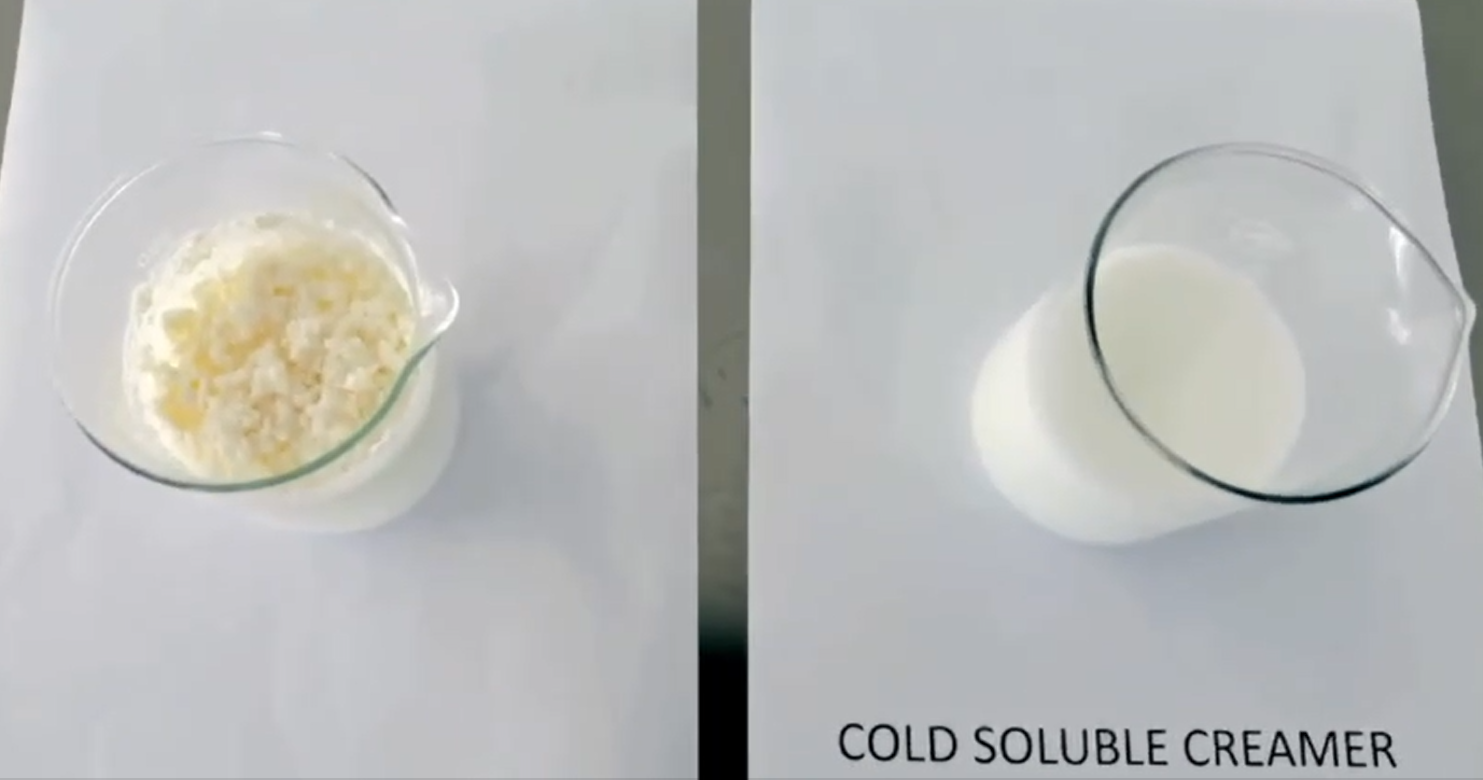
Non-dairy creamer is described in food-processing literature as a lactose-free liquid or granular product generally used as a substitute for milk or cream in hot beverages. That definition describes a category; purchasing decisions are made on a single line of specification. Three Cograin models sit in the same buyer shortlist far more often than their specifications justify: Cold-soluble creamer, DT35, and 60A. They differ less in perceived quality than in dissolution behaviour, fat load, declared ingredients, moisture, and certification scope.
This comparison is written from the buyer's side of the table. It uses only published model specifications, certificate data, and attributable third-party market data, and it deliberately leaves out sensory claims that cannot be verified from documents. Where the published record is silent, the gap is named rather than filled.
Cograin is the food-ingredient brand of Jiahe Foods Industry Co., Ltd., a Suzhou-headquartered manufacturer founded in 2001 and listed on the main board of the Shanghai Stock Exchange in 2021 under stock code 605300. The company operates three production bases and five factories across Suzhou, Nantong and Singapore.
The problem: two constraints decide this shortlist, not four
Buyers rarely struggle to choose between creamers on taste. They struggle with two hard constraints that show up late in development, after a formula has already been costed.
Constraint one is dissolution. A creamer designed for a hot cup does not automatically perform in a cold or iced system, in a ready-to-drink line, or in a distribution format where the product is reconstituted by the end operator. Cold performance is a process property, not a marketing label. Food-processing literature identifies emulsification, spray drying and agglomeration as the steps used to produce highly dispersible instant agglomerated powders — which is why two creamers with similar fat levels can behave very differently in a cold liquid.
Constraint two is the declaration. Ingredient lists, allergen statements, trans-fat declarations and certificate scope all end up on a label or in a customer questionnaire. A creamer that fits the technical brief but fails the declaration review is not a viable option, and the failure is usually discovered by the customer's regulatory team rather than by the buyer.
The opportunity sits in resolving both constraints before sampling. When a buyer knows which of the three models is fat-driven, which is sugar-reduced, and which is dissolution-driven, the shortlist usually collapses to one or two candidates before any trial batch is ordered.
Specification comparison: what each model actually declares
The three models are functionally distinct in the portfolio. The table below reproduces published values without interpretation.
| Parameter | Cold-soluble creamer | DT35 (low sugar) | 60A (high fat) |
|---|---|---|---|
| Product position | Cold-soluble creamer | Low-sugar creamer | High-fat creamer |
| Fat | 32.0 g/100 g | 35.0 g/100 g | 60.0 g/100 g |
| Protein | 3.5 g/100 g | 2.5 g/100 g | 3.0 g/100 g |
| Carbohydrate | Not stated in published spec | 4.3 g/100 g | Not stated in published spec |
| Moisture | ≤5.0 g/100 g | Not stated in published spec | Not stated in published spec |
| Trans fat | Not stated in published spec | Not stated in published spec | 0 g/100 g |
| Published materials | Glucose syrup, refined vegetable oil, sodium caseinate, emulsifier, stabilizer, anti-caking agent | Glucose syrup, hydrogenated vegetable oil, emulsifier, stabilizer, anti-caking agent (551), food flavor | Hydrogenated vegetable oil, glucose syrup, sodium caseinate, emulsifier, stabilizer |
| Published applications | Coffee, milk tea, beverage | Milk tea, coffee, beverage, baking | Beverage, dessert, baking, animal feed |
Values as published in the Cograin model specifications. "Not stated in published spec" indicates that no figure appears in the specification used for this comparison; it is not a statement that the parameter is unmeasured.
Moisture: one published limit and two open questions
Within this trio, only the cold-soluble model carries a published moisture limit: ≤5.0 g/100 g. That figure is not decorative. Moisture is one of the parameters that governs free-flow behaviour, caking risk in humid storage, and the practical shelf life of a powder that will sit in a warehouse in a tropical market before it reaches a mixing tank.
For DT35 and 60A, the specifications used for this comparison do not state a moisture figure. That does not mean the parameter is uncontrolled in production, but it does mean a buyer cannot verify it from the published sheet. The correct action is a documented request: ask for the moisture specification and the routine release result for the grade being quoted. Buyers comparing two suppliers on price alone routinely skip this step, and then discover the difference when a container arrives in a high-humidity port.
Ingredient constraints: caseinate, oil type, and anti-caking agents
The three published material lists diverge in ways that matter more than the fat numbers for some buyers.
Sodium caseinate and allergen review
The published material lists for Cold-soluble creamer and 60A both include sodium caseinate, a milk-derived protein. DT35's published list does not include sodium caseinate, but it does declare food flavor and anti-caking agent (551). Buyers should read that carefully in both directions. The absence of caseinate from a published list is a starting point for an allergen conversation, not a dairy-free certificate, and DT35 is not positioned as the portfolio's vegan model — that role belongs to S35, which is specified at fat 35.0 g/100 g, protein 0 g and trans fat 0 g. Any buyer whose label depends on an allergen or vegan claim must obtain a written allergen statement and the final label declaration for the exact grade being purchased.
Oil type and trans-fat declaration
Cold-soluble creamer is listed with refined vegetable oil; DT35 and 60A are listed with hydrogenated vegetable oil. Among the three, only 60A carries a published trans-fat figure of 0 g/100 g. For Cold-soluble creamer and DT35 no trans-fat figure appears in the specification used here, so a trans-fat declaration should be requested if the destination market requires one on pack. The distinction between oil types is a formulation fact, not a quality ranking, but it is a question buyers ask on questionnaires and should therefore be answered with documents rather than assumptions.
Anti-caking agents
Anti-caking agent appears in the published lists for Cold-soluble creamer and DT35 (with 551 named for DT35) but not in 60A's list. A buyer working to a clean-label brief needs to know this before, not after, a trial batch.
Certification scope is model-specific, not portfolio-wide
Certification is the constraint that most often decides a shortlist late. The documents below are published against named models and named sites, and the scope wording is the part that matters.
- ISO 9001:2015 — certificate 00125Q32624R1M/3200 (also issued as CN00125Q32624R1M/3200), issued by CQC against GB/T 19001-2016 / ISO 9001:2015, valid to 4 May 2028, applicable globally. Among the three models compared here, 60A is explicitly named in the certified scope, alongside K60, K80 and S35.
- FSSC 22000 — certificate 162006008, issued by Intertek Certification Limited against FSSC22000 V6, ISO 22000:2018 and ISO/TS 22002-1:2009, covering the food safety management system of the Nantong Jiazhiwei Food Co., Ltd. site, with a stated validity end date of 17 June 2026.
- U.S. FDA Food Facility Registration — registration number 13348058524, issued via Registrar Corp, valid to 31 December 2026, under the Federal Food, Drug, and Cosmetic Act as amended by the Bioterrorism Act of 2002 and the FDA Food Safety Modernization Act.
- Kosher — certificate KC#529705-1, issued by KOSHER AUSTRALIA PTY LTD against Australian and international kosher dietary compliance standards, valid to 1 April 2027, scoped to non-dairy creamer model K80 in 25 kg packaging, batch JW26558.
Two practical readings follow. First, the kosher certificate in the published set is scoped to K80 and a specific batch, not to Cold-soluble creamer or DT35; a buyer who needs kosher coverage on either of those grades must request a scope extension or a grade-specific certificate rather than assuming portfolio coverage. Second, certificate currency is a live variable. The FSSC 22000 document carries a validity end date of 17 June 2026 and the FDA registration a validity end date of 31 December 2026, so the copy in a supplier pack should be checked against the buyer's own audit date. This is normal supplier-qualification practice, and it is the reason audit checklists ask for dated documents rather than certificate titles.
Beyond the model-level documents, the manufacturer's stated system coverage includes ISO 9001, FSSC 22000, HACCP, HALAL, ISO 14000 and OHSAS 18000. Buyers should map each claim to the site and product scope that applies to their order.
Where these three models come from
Cograin's manufacturing base is relevant to the comparison because capacity and customization determine whether a specification can be held repeatably. Jiahe Foods Industry Co., Ltd. was founded in 2001 and is headquartered in Suzhou, Jiangsu Province, with three production bases and five factories in Suzhou, Nantong and Singapore, group annual production capacity above 300,000 tons, 310 employees and a 22-engineer R&D team. Stated annual output includes 200,000 tons of non-dairy creamer alongside starch sugar, solid beverage, liquid milk and flavored syrup lines, and the company reports an export ratio of 50% with Southeast Asia as its main market.
On the supply side, the published capability data lists monthly creamer capacity of 16,700 tons, OEM/ODM and customized production covering creamer formula, product flavor, packaging specification and syrup DE value, a lead time of around 7–15 working days after order confirmation, negotiable MOQ depending on product type and packaging, full-process inspection with 100% metal and weight check plus third-party testing, and after-sales technical guidance with quality tracking. For a buyer, the customization point is the operative one: a fat or sugar position that does not exist as a standard grade can be developed, but the declaration and certificate work has to be redone for the resulting formulation.
Application fit: three different routes
Cold-soluble creamer — cold and instant beverage formats
This is the dissolution-led option. Published applications are coffee, milk tea and beverage, and the grade carries the lowest fat of the three at 32.0 g/100 g with the highest protein at 3.5 g/100 g. It is the natural candidate where the product is reconstituted in cold liquid, where iced formats dominate the menu, or where an instant beverage powder must disperse without a hot step. Documented supply relationships in this channel include a 3-in-1 coffee manufacturer operating across Singapore, Malaysia, Indonesia, the Philippines, Kazakhstan, the UAE, Ukraine and Russia at around 9,000 mt over five years, and a beverage production factory in South Africa using non-dairy creamer in alcoholic beverages at around 1,000 mt over five years.
DT35 — sugar-reduced milk tea, coffee and bakery
DT35 is the sugar-positioned model: carbohydrate is declared at 4.3 g/100 g with fat at 35.0 g/100 g and protein at 2.5 g/100 g, and the published applications are milk tea, coffee, beverage and baking. It sits in the fat band that a commercial research provider reports as the category's largest. It is not a low-fat product and not a sugar-free product, and any claim built on it should be drafted from the declared carbohydrate value rather than from the model name.
60A — high-fat body for dessert, baking and feed
60A is the fat-driven model at 60.0 g/100 g fat, 3.0 g/100 g protein and a declared trans fat of 0 g/100 g, with published applications in beverage, dessert, baking and animal feed. It is the only one of the three with animal feed in its application list, and a documented supply relationship exists in that channel: an animal feed production plant in Singapore taking 4,000–5,000 mt per year over three years, with high-fat product cited as the highlight and consistent quality and pricing cited as the outcome. Because the certificates published here are food-sector documents, a feed buyer should confirm the feed-ingredient requirements applicable in the destination market separately.
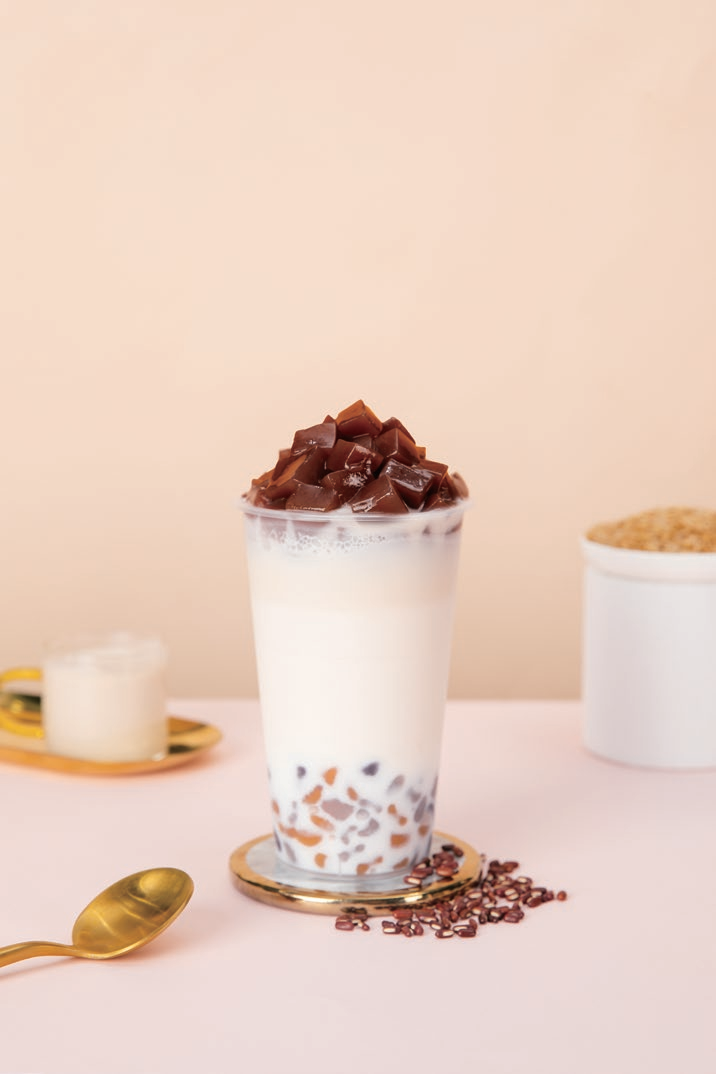
For bubble tea chains and coffee shop supply, the operating context is ambient-temperature storage, batch production, bulk supply and on-demand delivery, with food safety compliance and no trans-fatty acids named as requirements alongside halal and kosher availability. That combination favours a portfolio approach rather than a single grade: one model for cold formats, one for sugar-reduced menus, one for fat-driven dessert items.
Market context: why medium-fat still sets the baseline
Fat segmentation is not an abstract discussion. Market.us reported that medium-fat non-dairy creamer held a dominant share of 43.6% in 2024, which places both Cold-soluble creamer at 32.0 g/100 g and DT35 at 35.0 g/100 g inside the category's largest band, while 60A at 60.0 g/100 g sits in the high-fat band with narrower but specific demand.
Growth signals should be read with care. Commercial research providers publish different global values and base years — Market.us estimated the global market at about USD 2.4 billion in 2024 rising to about USD 4.4 billion by 2034 at a CAGR of 6.2%, while other providers publish figures on different base years and methodologies. Those estimates are not directly comparable and should not be averaged into a single number. Directionally, the Good Food Institute reports continued growth for plant-based milk and creamer in U.S. foodservice, which supports category-level planning but does not validate any individual model's demand.
For trade planning, U.S. Customs classified imported non-dairy coffee creamer from China under HTS subheading 2106.90.9975. Classification at that level of generality means duty and documentation planning should be handled per shipment rather than assumed from the category name.
Comparison with conventional practice — and the limits of this comparison
The conventional approach is to qualify one creamer and use it across the range, on the assumption that creamers are interchangeable powders differentiated mainly by price. The three models here show why that assumption breaks. A single grade cannot simultaneously hold a cold-dispersion position, a declared 4.3 g/100 g carbohydrate position, and a 60.0 g/100 g fat position. Standardising on one grade usually means compromising on two of the three, and the compromise surfaces later as a formulation rework or a label change.
The limits are equally concrete, and buyers should treat them as decision inputs rather than caveats:
- Cold-soluble creamer is not a fat substitute. At 32.0 g/100 g fat it will not deliver the body that 60A's 60.0 g/100 g fat provides in dessert and baking systems. Using it in a fat-driven application is a formulation change, not a swap.
- DT35 is a sugar position, not a fat or vegan position. Its 35.0 g/100 g fat keeps it in the mainstream band, and its published material list should not be read as a dairy-free claim.
- 60A is a high-fat load. Buyers working to a reduced-fat target should evaluate a lower-fat grade rather than dilute 60A, because dilution changes the declared nutrition panel.
- Documentation gaps exist and are not symmetrical. Moisture is published for cold-soluble only; trans fat is published for 60A only. Kosher coverage in the published set is scoped to K80, not to these three models.
- No independent performance data is included. This comparison ranks fit, not quality. It contains no comparative solubility, whiteness, foaming or sensory test results, and no price data, so it cannot be used to conclude that one grade outperforms another in use.
Future outlook
Three developments are likely to shape shortlists of this kind. Cold and iced beverage formats continue to expand distribution models that do not include a hot preparation step, which raises the value of a documented cold-dispersion grade. Sugar-reduction labelling keeps pushing buyers toward grades with a declared carbohydrate figure, which makes specification transparency a commercial asset rather than a technical one. And certificate scope management will keep moving earlier in the buying process, because model-level and batch-level scope wording — as seen in the K80 kosher certificate — is now read by customers, not only by auditors.
For buyers, the practical implication is that the specification sheet and the certificate pack should be evaluated together, at the grade level, before a sample is requested. For manufacturers, the implication is that publishing the missing parameters — moisture for DT35 and 60A, trans fat for Cold-soluble creamer and DT35 — would remove more friction than any additional marketing claim.
FAQ
What is cold-soluble non-dairy creamer and how does it differ from a standard creamer?
Cold-soluble creamer is a non-dairy creamer positioned for dispersion in cold liquids rather than only in hot beverages. Cograin's Cold-soluble creamer is specified at fat 32.0 g/100 g, protein 3.5 g/100 g and moisture ≤5.0 g/100 g, with published applications in coffee, milk tea and beverage. Instant dispersion of this type generally depends on process design; food-processing literature identifies emulsification, spray drying and agglomeration as the steps used to produce highly dispersible instant agglomerated powders.
Is DT35 a low-fat non-dairy creamer?
No. DT35 is positioned as a low-sugar creamer. Its published specification states fat 35.0 g/100 g, protein 2.5 g/100 g and carbohydrate 4.3 g/100 g. A buyer evaluating fat reduction and a buyer evaluating sugar reduction are running two different evaluations, and DT35 addresses the second.
What fat level does 60A carry and which applications are published for it?
60A is a high-fat non-dairy creamer specified at fat 60.0 g/100 g, protein 3.0 g/100 g and trans fat 0 g/100 g. Its published applications are beverage, dessert, baking and animal feed, which makes it the only model in this trio with an animal feed application in its published list.
Which certifications cover Cold-soluble creamer, DT35 and 60A?
ISO 9001:2015 certification, issued by CQC under certificate 00125Q32624R1M/3200 against GB/T 19001-2016 / ISO 9001:2015 and valid to 4 May 2028, explicitly names model 60A among the three compared here. The FSSC 22000 certificate 162006008 issued by Intertek Certification Limited carries a stated validity end date of 17 June 2026, and the U.S. FDA Food Facility Registration 13348058524 issued via Registrar Corp is valid to 31 December 2026. The kosher certificate in the published set, KC#529705-1 from KOSHER AUSTRALIA PTY LTD valid to 1 April 2027, is scoped to model K80 in 25 kg packaging, batch JW26558, so kosher coverage for Cold-soluble creamer or DT35 requires separate confirmation.
Which of the three suits cold beverage distribution?
On published specification, the cold-soluble model is the aligned choice: it is the only one of the three with a stated moisture limit of ≤5.0 g/100 g and the only one positioned for cold-liquid dispersion, with coffee, milk tea and beverage as published applications. DT35 is published for milk tea, coffee, beverage and baking, and 60A for beverage, dessert, baking and animal feed; neither carries a cold-dispersion position in the published data.
What should a buyer request that the published specifications do not contain?
Four items are worth requesting in writing: moisture specifications and release results for DT35 and 60A; trans-fat declarations for Cold-soluble creamer and DT35; allergen and caseinate statements with the final label declaration for the grade being purchased; and grade-specific kosher or halal scope letters where those claims are required. Commercial terms are published separately, with MOQ negotiable according to product type and packaging and a lead time of around 7–15 working days after order confirmation.
Reference
Model specifications, certificate data and application references for the three grades discussed here are consolidated in the company's published materials, including the 2025 Cograin brochure (PDF) and the product and capability information published at cograin.cn. Third-party figures are attributed above to Market.us, the Good Food Institute, U.S. Customs classification records and food-processing technology literature.
Have Questions or Need More Details?
Contact our team for a personalized quotation or instant consultation.
Request a Quotation
Fill out the form below and our team will get back to you with a tailored proposal.
WhatsApp Direct Chat
Prefer to chat in real-time? Message us on WhatsApp for instant assistance & quick answers.
- Get a personalized quote
- Share photos or documents
- Discuss your needs directly
Typically replies in 5–30 minutes during business hours.