
Buyer Comparison: FDA 21 CFR 177.2600 TPU vs Seamless Belts
Two belt families regularly land in the same request for quotation: polyurethane timing belts whose food-contact suitability is assessed against FDA 21 CFR 177.2600, and high-temperature seamless belts used where food contact, release behaviour or elevated surface temperature governs the specification. They are not alternative answers to one question. They are two different specifications that happen to share a machine.
For a buyer at the decision stage — a maintenance engineer, an OEM procurement lead or a plant buyer replacing a failed belt — the productive question is not which family is superior. It is what each family obliges the buyer to specify, measure and document before a purchase order can be defended, and what happens at the drive when the wrong construction is fitted.
This reference sets out buyer-side criteria for both categories, the documents worth attaching to a quotation, a practical method for identifying an unknown belt before a replacement is ordered, and the failure risks — incorrect tension, tooth wear and tearing — that neither category escapes.
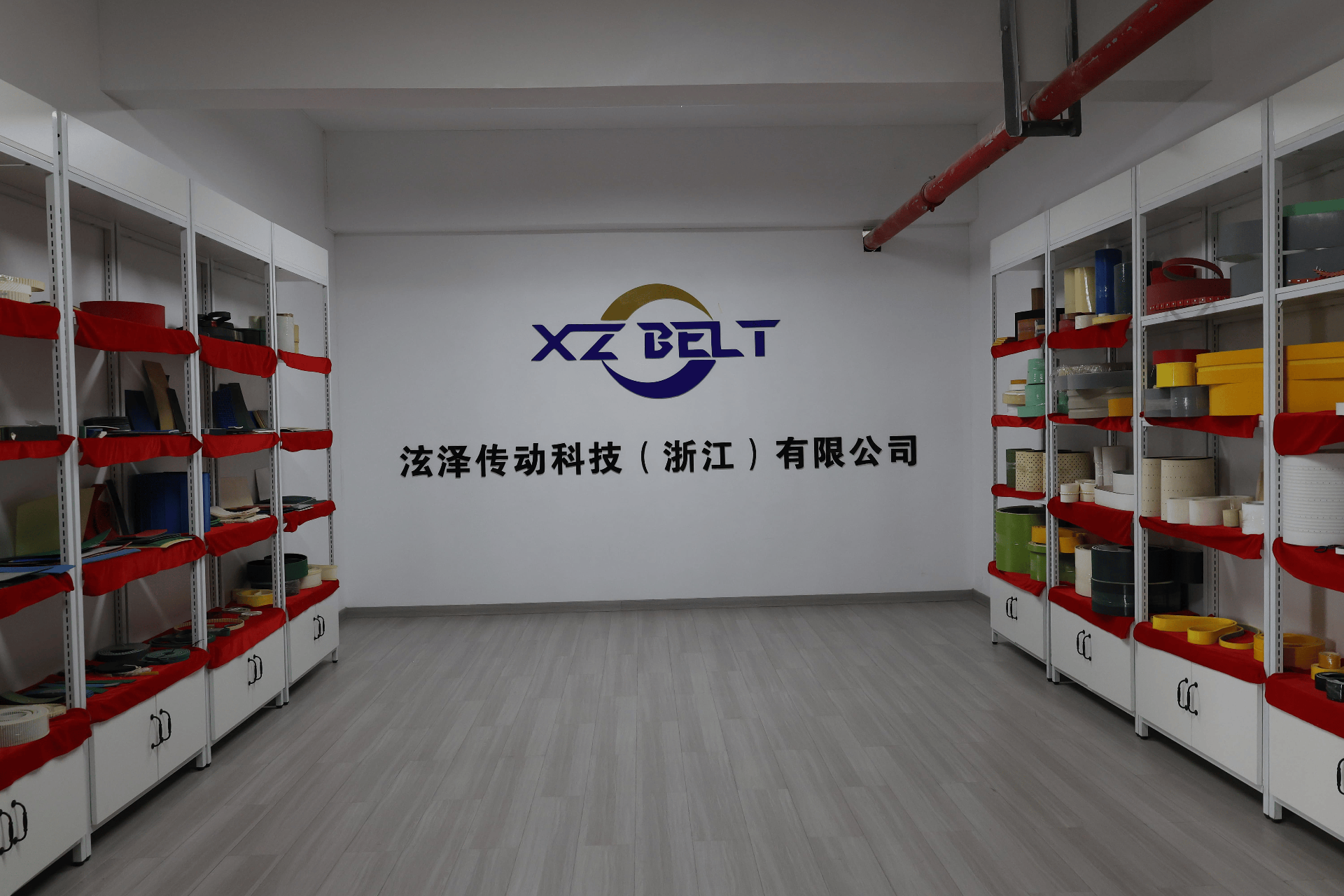
Specialty industrial belt processing: coating, joining and finishing operations shape service behaviour as much as the base material does.
Why this comparison resists a simple data-sheet answer
Most buyers start with material. In practice, three specification errors generate more rework than material choice does.
The length trap. Two timing belts can share the same overall length and still be incompatible. Both belt length and tooth count can identify a belt when the pitch is known, and tooth count is often the more useful figure because pitch length equals tooth count multiplied by pitch. Two belts with the same length but different tooth profiles cannot be interchanged, because tooth geometry and pitch must match the pulley system.
The compliance-statement trap. A supplier line stating that a belt meets food-contact requirements is a claim, not a document set. Suitability for repeated food contact is evaluated against a named regulation, for a specific material class, on the finished article — which includes the backing fabric, the surface coating and any bonding material used in the construction.
The splice-free assumption. A belt with no visible joint is not automatically stronger, more accurate or longer-lived than a jointed endless belt. The tooth system and load capacity remain the engineering foundation beneath functional modifications such as coating, perforation or machining.
Defining the two families by what they demand from the buyer
TPU timing belt evaluated under FDA 21 CFR 177.2600
A polyurethane timing belt is a synchronous belt with moulded teeth that engage a matching toothed pulley, available with steel cord, Kevlar cord or glass fiber cord tension members and with backing and surface options covering PU, rubber, silicone, sponge and fabric. In a food-contact context, the buyer is not simply purchasing a drive element; the belt is treated as an article that must be documented against the applicable FDA food-contact regulation before it is accepted into the process.
The practical consequence is that the specification has two layers. The mechanical layer defines tooth profile, pitch, tooth count, width, tension member and construction. The compliance layer defines which regulation applies, which material class the belt belongs to, and what evidence accompanies the shipment. A purchase order that contains only the first layer leaves the second one unenforceable.
High-temperature seamless belt
A seamless belt is supplied in a joint-free construction rather than as an open-end or spliced belt. When it is specified for food-contact or release duty, the functional drivers change: the contact surface, the release behaviour against the product, the non-marking requirement and the surface temperature the belt actually sees become the governing criteria, while the coating and backing selection determines how the belt behaves when hot or sticky product touches it.
Both constructions can be supplied in coated forms, and both can be perforated or machined where the application requires it. The difference lies in what the buyer is buying: a documented contact surface in one case, a documented transmission element in the other.
FDA 21 CFR 177.2600 as a buyer requirement, not a performance claim
Buyers writing a food-contact specification should be precise about what the citation covers. 21 CFR Part 177 governs polymers used as basic components of food-contact articles, and 21 CFR 177.2600 addresses rubber articles intended for repeated use in contact with food. The section distinguishes article categories and sets extractive limitations that are determined under specified extraction conditions on the finished article — not on a resin sample alone.
Two points follow directly for procurement.
First, polyurethane is a distinct polymer class, and the different material classes covered by 21 CFR Part 177 are addressed in separate sections. A buyer specifying a TPU belt should confirm with the supplier, and with their own quality and regulatory function, which section of the part applies to the actual polymer and formulation in the belt, rather than assuming that one citation covers every construction.
Second, the regulated object is the finished belt. Backing fabric, silicone or rubber coating, and any material used to join the belt are part of the article that meets the food. A documentation package that covers only the base polymer does not describe the belt that will actually be installed.
Side-by-side comparison: buyer-side criteria
| Buyer-side criterion | TPU timing belt (food-contact evaluation) | High-temperature seamless belt |
|---|---|---|
| Primary design intent | Synchronous power transmission and positioning on a toothed pulley system | Joint-free product contact, transfer or release duty where surface temperature and continuity of the contact face matter |
| What the buyer must fix first | Tooth profile, pitch, tooth count or length, width, tension member, construction | Belt dimensions, contact-surface material and coating, surface temperature at the product interface, release and non-marking requirements |
| Regulatory / document axis | Documentation naming the applicable FDA food-contact regulation and matching it to the polymer class and to the finished article | Documentation for the contact surface and coating, plus temperature evidence measured at the operating condition |
| Temperature reference points | Standard PU coating is typically rated to about 80 °C at the backing level; the general XZBELT timing belt range is −20 °C to +160 °C, customized according to material | Aramid felt backing can withstand surface contact up to 250 °C — a difference of up to 170 °C at the backing level compared with standard PU coating |
| Surface behaviour | Silicone coating provides a static friction coefficient of 1.09 on PE foil versus 0.64 for PU coating, approximately 70% higher under the stated test conditions | Coating selection is driven by release, cleanability and product marking rather than by tooth engagement |
| Typical failure modes | Tooth flank wear, tooth shear, ratcheting — associated with incorrect tension, foreign material, seized pulleys, excessive tension and defective pulleys | Contact-face wear, coating damage and thermal degradation at the surface |
| Most common buyer misconception | That a compliance statement substitutes for a written specification | That a joint-free belt is automatically the better belt |
| Main limitation | A food-contact-compliant belt can still fail mechanically if tension, alignment or pulley condition is wrong | Joint-free construction does not by itself raise load capacity, and open-end, jointed endless and truly endless constructions remain separately supplied families |
Temperature and friction: where the two categories separate in practice
Temperature is where most comparisons become concrete. Aramid felt-backed constructions are designed as a thermal barrier with a soft contact surface for hot product, and the aramid felt backing can withstand surface contact up to 250 °C, while standard PU coating is typically rated to about 80 °C. That is a difference of up to 170 °C at the backing level, and it changes what the belt can be asked to do rather than simply how long it lasts.
This benefit is a process-capability benefit, not an energy-efficiency benefit. Aramid felt-coated belts enable conveying in temperature zones where ordinary PU surfaces are unsuitable, reduce direct heat exposure to the belt body, and provide gentler product contact. They are more suitable for aluminium extrusion, hot glass, metal handling and high-temperature transfer work. The cost consequence is application-dependent: specialty felt construction costs more than standard PU coating but protects both the belt and the conveyed product.
Friction separates the categories on the other axis. For sticky or film products, silicone coating provides higher grip and better release than a standard PU coating. On PE foil, the published figure is a static friction coefficient of 1.09 for silicone versus 0.64 for PU, approximately 70% higher under the stated test conditions. In packaging and printing positions, that difference shows up as improved product positioning, reduced slip and less sticking-related intervention — a maintenance outcome rather than a catalogue feature.
Identifying an unknown belt before ordering a replacement
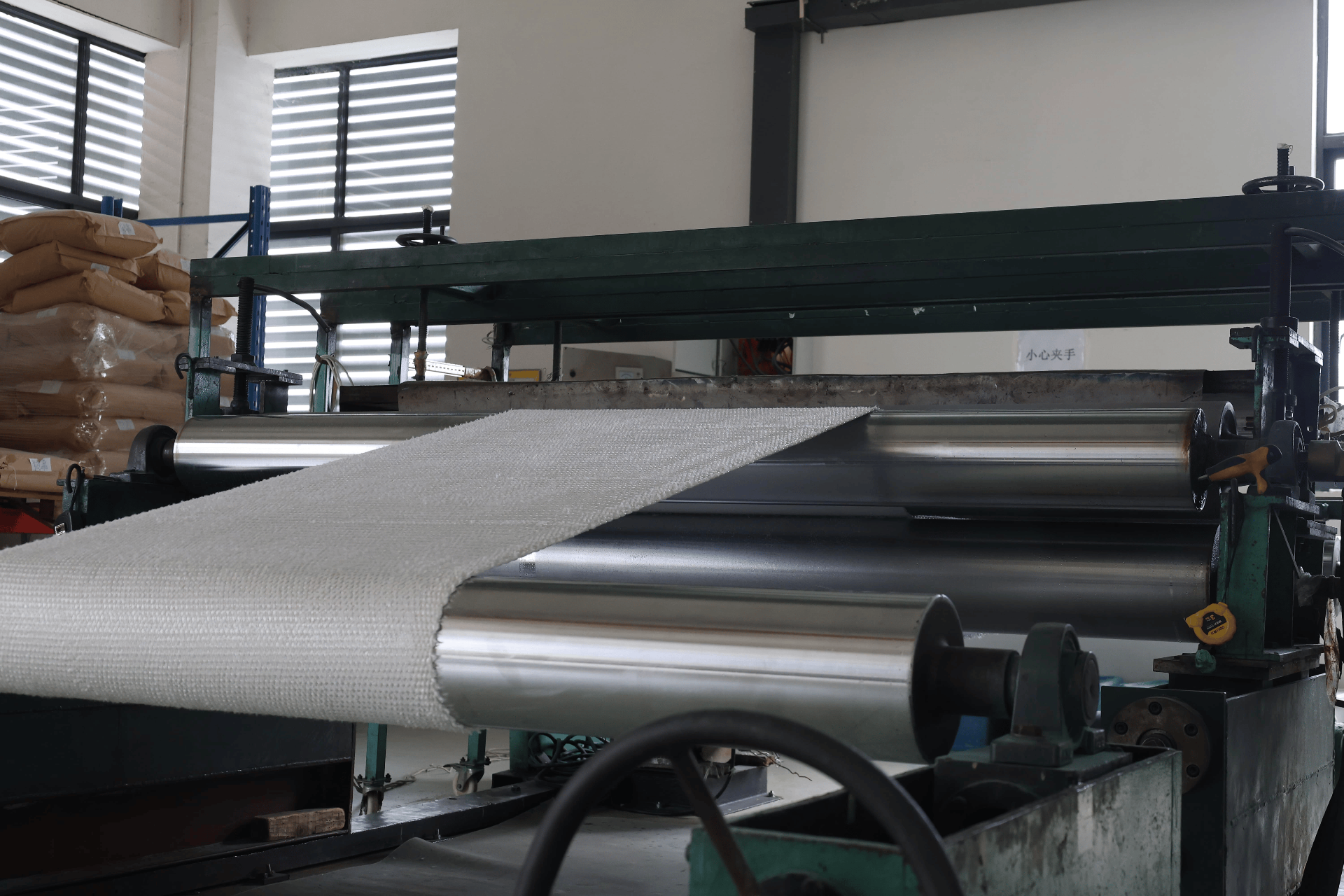
Belt identification depends on tooth geometry and pitch, not on overall length alone — the same discipline applies when a replacement is specified rather than reordered.
Unlabelled belts from a stopped machine are the most common source of wrong orders. A short procedure prevents most of them.
- Measure the tooth profile and pitch first. Compare the tooth shape against a known profile series rather than judging it by eye.
- Count the teeth and measure the width. When pitch is known, pitch length equals tooth count multiplied by pitch, so tooth count converts directly into a length figure.
- Record the construction. Establish whether the belt is open-end, a jointed endless belt or a truly endless belt. Open-end and truly endless PU timing-belt families are supplied as separate constructions and are not substitutes for each other.
- Identify the backing and surface. Note whether the belt carries PU, rubber, silicone, sponge or fabric on the tooth side or the back, and whether it is perforated, cleated or profiled.
- Check the tension member if it can be seen. Steel cord, Kevlar cord and glass fiber cord are the common options, and they differ in elongation and stiffness behaviour.
- Confirm the pulley side. Minimum pulley tooth counts commonly fall between 10 and 25 teeth depending on tooth profile, so the pulley diameter is part of the identification record, not an afterthought.
If the measured profile does not match the pulley profile, the belt is the wrong belt, whatever the length says.
Purchasing terms and acceptance criteria to fix in the specification
A timing belt specification that can be enforced contains measurable terms. Documented tolerance values for XZBELT timing belts include width tolerance of ±0.5 mm, thickness tolerance of ±0.3 mm and length tolerance of ±0.5 mm, with sizes, widths, lengths and thicknesses customized to the tooth profile. Buyers should require the supplier to declare which of these tolerances applies to the ordered item and to state the measurement method.
Beyond dimensions, the terms worth writing into the purchase document are:
- Tooth profile and pitch by code, using recognisable series such as MXL, XL, L, H, T5, T10, AT5, AT10 and HTD 3M, 5M and 8M, with pitches such as 2.032 mm, 5 mm, 9.525 mm and 14 mm stated explicitly.
- Tooth count and pitch length, so that a length figure can be verified arithmetically rather than trusted.
- Construction — open-end, jointed endless or truly endless — and, where a jointed belt is supplied, the maximum load force applicable to that width and tooth profile.
- Tension member type and, where steel cord is used, the cord diameter from the available set.
- Backing and surface treatment, including coating type and coating thickness where the application depends on grip or release.
- Secondary processing where relevant: perforation, cleats, profiles, V-guides, tooth fabric or backing fabric, grinding.
- Operating conditions: continuous surface temperature, chemical exposure, cleaning regime and the motion cycle.
- Inspection and acceptance: which dimensions are measured, at what frequency, and against which tolerance.
- Traceability: a lot or batch reference that links the delivered belt to its inspection record.
For a food-contact position, the same document should carry the compliance layer described below, because mechanical acceptance and regulatory acceptance are separate decisions and both must be satisfiable from the same delivery.
Documents to request with the quotation
A quotation that is not accompanied by documentation cannot be compared against a second quotation. For food-contact evaluations, these are the items worth requesting before an order is placed.
- A written statement naming the specific food-contact regulation the material is evaluated against, and confirming which section applies to the actual polymer class in the belt.
- A material or formulation declaration from the resin or compound source, not only a finished-belt statement.
- A declaration covering the whole construction: base polymer, backing fabric, surface coating and any bonding material used in the join.
- Extraction or migration test data where the buyer's regulatory function requires it, referenced to the finished article rather than to a raw material sample.
- Dimensional inspection records for the delivered lot, measured against the tolerances agreed in the specification.
- Lot or batch traceability that connects the delivered belt to those records.
- Quality management certification, such as ISO 9001, where the buyer's supplier-approval procedure requires it.
- Temperature and surface evidence for the real operating condition, not for a nominal rating.
None of these items replace a mechanical specification. Each of them answers a question that a specification alone cannot.
Where XZBELT fits in a specification-driven purchase
XZBELT is the trading identity of Xuanze Industrial Drive Systems (Shanghai) Co., Ltd., an industrial belt manufacturer established in Shanghai in 2013 that produces conveyor belts, timing belts and power transmission belts, and supplies customers in more than 150 countries and regions. The company positions itself as a one-stop industrial belt supplier with a stated strength in the customization and secondary processing of specialty industrial belts — the part of the purchase that most often decides whether a specification can be met at all.
Relevant capability for the comparison in this article is concentrated in processing rather than in catalogue breadth. XZBELT operates roughly 30,000 square metres of combined manufacturing space across a specialty belt processing facility in Changxing, Huzhou, Zhejiang Province and a joint-venture roll-goods base. The specialty facility runs more than 20 sets of production and processing equipment, including 6 belt splicing machines, 2 seamless fabric weaving machines, 3 silicone coating production lines and 3 seamless PU coating production lines — equipment that maps directly onto the coated, jointed and seamless constructions discussed here.
On the quality side, the company holds ISO 9001 quality management system certification and 11 belt-related patents, including 2 invention patents and 9 utility model patents, and was recognised as a Shanghai High-Tech Enterprise in both the 2019–2022 and 2022–2025 certification periods. Its stated product range spans PU and rubber timing belts, silicone belts, high-temperature conveyor belts, seamless belts and coiler wrapper belts, with secondary processing covering silicone coating, sponge coating, perforation, cleats, fabric reinforcement, belt splicing and customized widths and lengths.
For a buyer comparing quotations, that combination is useful in one specific way: it supports the sheet-level decisions in a specification — coating type, construction, dimension and processing — instead of only the material line. It does not remove the buyer's obligation to define acceptance criteria or to verify documentation for a food-contact application.
Application and use cases that drive the choice
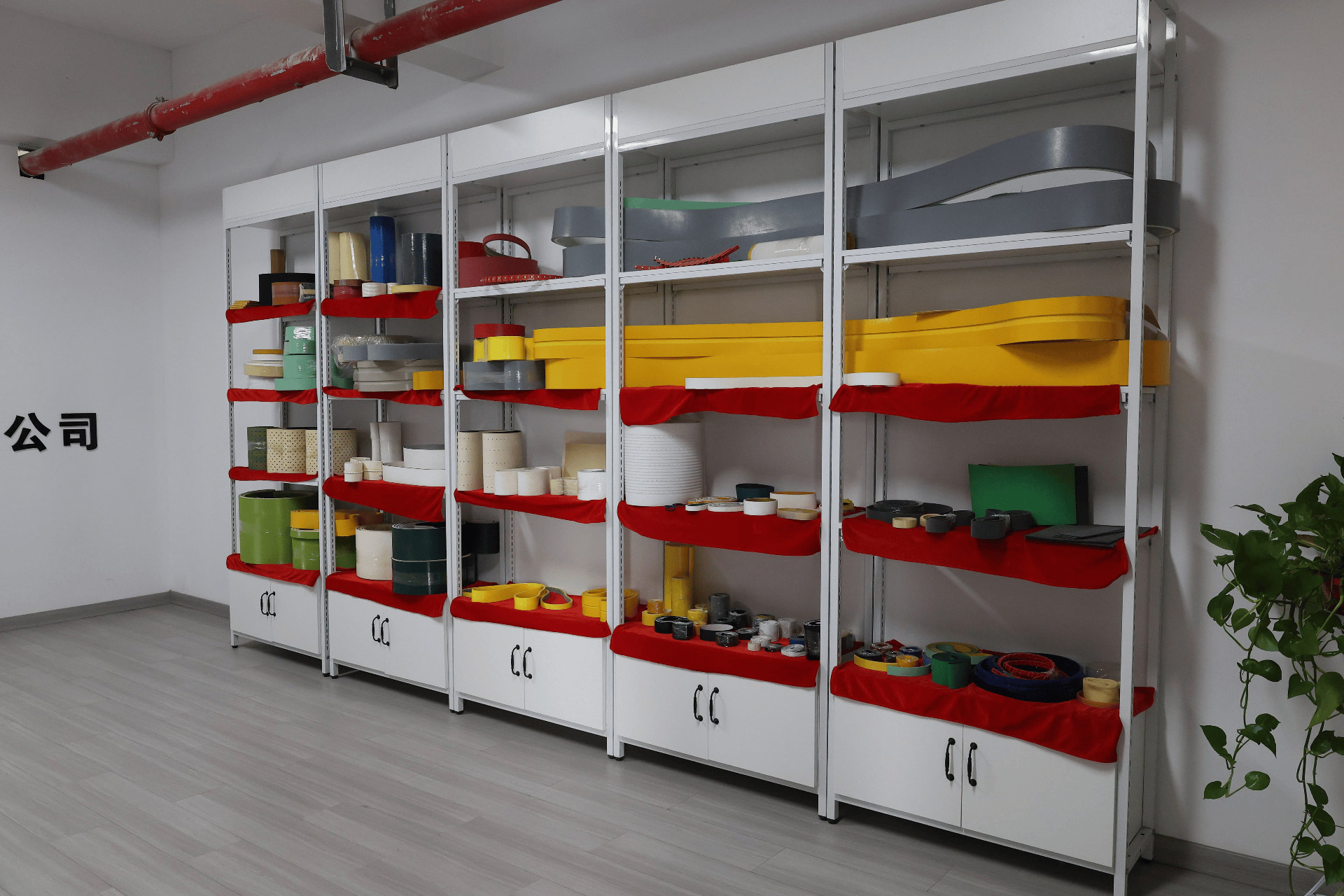
Coated and specialty constructions are produced for packaging, printing, food processing and automation applications with different acceptance criteria.
The two families are usually selected by the operating environment rather than by preference.
Packaging machinery. High speed, frequent start-stop, precise positioning and repetitive cycles, applied in filling lines, labelling lines, carton packing and case packing. The engineering requirements are accurate positioning, low elongation, high grip, vacuum perforation and dimensional stability — conditions where a coated timing belt with controlled friction does more work than the base polymer choice.
Printing and paper converting. High speed with lightweight products, rapid acceleration and precise sheet positioning across presses, folder-gluers and post-press lines. Requirements include high friction consistency, low elongation and a non-marking surface, which is where silicone-coated constructions are typically specified.
Industrial automation and precision equipment. Frequent acceleration and deceleration with servo positioning and high cycle rates on linear motion systems and robotic axes. Low elongation, backlash control, positioning accuracy and low vibration dominate, and open-end belts with suitable low-elongation reinforcement are the usual starting point for linear axes.
Electronics, medical and office equipment. Clean operation, small pulley diameters, precise low-noise motion and frequent cycling. Low noise, no lubrication, compact drives and wear resistance set the requirement.
Automotive and tire. Heavy loads with oil, dust and heat in continuous production. High wear resistance, optional antistatic behaviour, oil resistance and high load capacity govern selection.
Food processing positions. Here the decision is made by contact surface and documentation first, and by drive geometry second — which is exactly the point at which the two belt families in this comparison are most often confused with each other.
Failure risk: incorrect tension, tooth wear and tearing
Tooth damage is usually the result of a drive-system problem rather than ordinary surface wear alone. Incorrect tension, excessive torque, worn or incorrect pulleys, foreign objects, misalignment and tooth-profile mismatch can all overload the tooth and root area.
The symptom pattern to inspect for includes tooth flank wear, damaged tooth roots, missing teeth, tooth shear, fabric separation and intermittent ratcheting. The documented causes to work through are incorrect belt tension, excessive load, pulley wear, wrong tooth profile, pulley misalignment, foreign material, insufficient tooth engagement, and a seized idler or pulley. Continental specifically links abnormal tooth-flank wear and tooth shearing with incorrect tension, foreign material and seized pulleys, while Optibelt identifies excessive tension and defective pulleys as causes of tooth-root wear.
A workable inspection sequence is: inspect the damage pattern across several teeth; verify that belt profile and pulley profile match; check pulley teeth for wear or damage; check belt tension; verify shaft and pulley alignment; check drive load and shock loads; remove foreign objects or contamination; and replace the damaged belt and any defective pulley components together where necessary.
Two procurement consequences follow. First, a replacement belt ordered from dimensions alone will reproduce the failure if the pulley or tension problem is not corrected. Second, when a belt fails early, the buyer should record the damage pattern in the purchasing file, because it is the evidence that distinguishes a belt-quality dispute from a drive-condition problem.
The limitation worth stating out loud
A joint-free belt is not a specification. Removing the splice removes a joint, and that is all it removes. Load capacity, positioning accuracy and service life still depend on the tooth system, the tension member, the pulley geometry and the tension set at installation.
Three boundaries are worth writing into any comparison.
- Open-end and truly endless constructions are supplied as separate families and are not interchangeable. Choosing one forecloses the other.
- Maximum load force for a jointed belt is customized according to width and tooth profile, so a jointed belt and a truly endless belt of the same profile cannot be assumed to carry the same load.
- Published general temperature ranges, such as the −20 °C to +160 °C range customized according to material, are family-level statements. A specific food-contact or high-temperature claim must be verified for the exact construction being ordered, including backing, coating and join.
There is also a compliance boundary. Food-contact suitability and mechanical performance are independent properties. A belt that satisfies a food-contact evaluation can still wear, ratchet or shear if tension, alignment or pulley condition is wrong — and a belt that performs mechanically can be unacceptable for contact with food. Buyers who conflate the two end up with either a compliance problem or a maintenance problem.
Comparison with a traditional alternative: timing belt versus roller chain
Where a buyer is deciding between a synchronous belt drive and a roller chain drive, the documented differences are straightforward. Synchronous belt drives provide positive synchronous transmission without lubrication or routine re-tensioning, and typical energy efficiency is 98–99%, compared with approximately 91–98% for chain drives. Reduced lubrication, tensioning and maintenance requirements can lower lifecycle cost, with the actual cost difference being application-dependent.
The chain-drive comparison also clarifies where belts are applied: automation equipment, packaging machinery, machine tools, material handling and high-torque drives. The trade-off is not that one system always wins; it is that the chain drive tolerates some conditions a belt drive does not, while the belt drive removes lubrication, re-tensioning and the associated housekeeping that food-contact environments usually want to avoid.
Market trend: standardization is outpacing catalogue knowledge
Three data points frame the procurement environment.
Global timing belt market size is projected to reach approximately USD 9.57 billion by 2030, growing from a 2025 base of USD 9.10 billion, according to Mordor Intelligence. Within the material mix, the polyurethane timing belt segment is expected to exhibit a CAGR of 12.57% and reach USD 25.5 billion by 2032 according to Credence Research — a forecast that sits far above the total market figure and that Credence attributes to high-growth sectors. Another research house, 24ChemicalResearch, estimates PU segment growth at approximately 3.10%, focused on standard industrial replacements. The variance is a methodology difference rather than an error, and the two figures cannot be reconciled directly. Buyers should treat segment forecasts as directional signals about where supplier attention is moving, not as evidence about any individual product.
On the material side, rubber remains the dominant material in the automotive timing belt segment, with a market size estimated at USD 7.23 billion in 2024 according to Market Research Future — a reminder that the PU share in this comparison is a growth story, not the current majority.
The more useful trend for buyers is standardisation. ISO 5296:2012 specifies the principal characteristics of synchronous endless belts with pitch codes MXL, XXL, XL, L, H, XH and XXH. Where a pitch code and its principal characteristics are fixed by standard, a buyer can compare quotations from different suppliers on the same terms instead of accepting each supplier's proprietary description. That shift — from catalogue language to specification language — is what makes a document-driven purchase defensible.
Future outlook
Three changes are likely to shape food-contact and high-temperature belt purchasing over the next few years.
Documentation becomes part of the bill of materials. As food-safety systems mature, the regulation reference, the material declaration and the lot traceability record increasingly travel with the belt rather than sitting in email archives. Suppliers who can issue that package as a routine output will be easier to qualify; suppliers who cannot will need more buyer-side administration.
Coated and processed constructions keep expanding. Silicone, rubber, sponge and fabric coatings, perforation, cleats and profiled surfaces let one base belt platform serve greatly different handling requirements. That expands the specification surface and raises the value of a supplier with in-house coating and secondary processing capability, because fewer operations sit outside the supplier's control.
Identification discipline will matter more, not less. As the installed base of coated and joint-free constructions grows, so does the number of unlabelled belts on the floor. The measurable fields — tooth profile, pitch, tooth count, width, construction, tension member, coating — are the ones that will keep replacements correct when the original order record is missing.
Frequently asked questions
What should a buyer establish before ordering an industrial timing belt?
Tooth profile, pitch, length or tooth count, and width should be established first. Only after those are fixed should the buyer decide on reinforcement, endless or open-end construction, and special processing. The order matters because tooth geometry and pitch must match the pulley system, and no later specification choice can correct a profile mismatch.
How can an unknown timing belt be identified before ordering a replacement?
Measure the tooth profile and pitch, count the teeth, measure the width, and record the construction. When pitch is known, pitch length equals tooth count multiplied by pitch, so either length or tooth count can identify the belt, and tooth count is often the more useful figure. Also record the backing or coating, the tension member type where visible, and the pulley's minimum tooth count. A belt that matches in length but not in profile is not a substitute.
Can two timing belts of the same length but different tooth profiles be interchanged?
No. The tooth geometry and pitch must match the pulley system. Two belts with the same length but different tooth profiles cannot be interchanged, even if their overall dimensions appear compatible.
What should a food-contact specification state when a TPU timing belt is evaluated against FDA 21 CFR 177.2600?
The specification should name the regulation, identify the polymer class, and cover the finished article including backing fabric, surface coating and any bonding material. Buyers should confirm which section of 21 CFR Part 177 applies to the actual material, because the part covers polymers used as basic components of food-contact articles while individual sections address specific material classes, and 21 CFR 177.2600 addresses rubber articles intended for repeated use. The continuous surface temperature, chemical exposure and cleaning regime the belt meets in service belong in the same document.
Is a seamless belt always better than a spliced belt?
No. A joint-free construction removes a splice, but it does not by itself raise load capacity or positioning accuracy; the tooth system and load capacity remain the engineering foundation beneath functional modifications such as coating, perforation or machining. Open-end and truly endless constructions are supplied as separate families, and a jointed belt's maximum load force is customized according to width and tooth profile. The correct construction follows the required motion function and load, not the absence of a joint.
Which timing belt should be chosen for linear motion, power transmission or product handling?
Selection should begin with the required motion function. Linear positioning normally favours an open-end PU timing belt with suitable low-elongation reinforcement. Continuous synchronous drives require an endless or truly endless construction sized for torque and speed. High-grip product handling requires a coated belt selected by product friction and release needs. Vacuum feeding or pick-and-place systems may require perforation or machining matched to the vacuum system.
Why are the teeth on a timing belt wearing or tearing off?
Tooth damage is usually the result of a drive-system problem rather than ordinary surface wear alone. Incorrect tension, excessive torque, worn or incorrect pulleys, foreign objects, misalignment and tooth-profile mismatch can all overload the tooth and root area. Continental specifically links abnormal tooth-flank wear and tooth shearing with incorrect tension, foreign material and seized pulleys, while Optibelt identifies excessive tension and defective pulleys as causes of tooth-root wear. Symptoms include tooth flank wear, damaged tooth roots, missing teeth, tooth shear, fabric separation and intermittent ratcheting.
What does the tension member do, and why is minimum pulley tooth count important?
The tension member controls load-carrying ability, elongation and stiffness; steel cord, Kevlar cord and glass fiber cord are the available types, with steel cord diameters such as Φ0.3 mm, Φ0.51 mm, Φ0.6 mm and Φ1.21 mm. Minimum pulley tooth count matters because too few teeth or too small a pulley increases bending and can reduce load capacity and service life; minimum pulley tooth counts commonly fall between 10 and 25 teeth depending on tooth profile.
Summary for the buyer
The comparison between a TPU timing belt evaluated against a food-contact regulation and a high-temperature seamless belt is not settled by material preference. It is settled by four documents and four measurements: the regulation and material declaration on one side, the tooth profile, pitch, tooth count and width on the other. Buyers who fix those eight items before requesting quotations can compare suppliers on the same terms — and can identify an unknown belt correctly when the original record is gone.
A downloadable XZBELT brochure covering timing belt constructions, coatings and secondary processing options is available here.