
Buyer Comparison: Intermediates for Alkaline Zinc Plating
Buyer Comparison: Intermediates for Alkaline Zinc Plating
Alkaline zinc plating is decided less by the zinc anode than by the organic additive package built around it — and that package is assembled from electroplating intermediates. For a buyer at decision stage, the useful comparison is therefore not a price list. It is a side-by-side of assay, lot-to-lot consistency, documentation, order terms and technical support: the five points at which two suppliers quoting the same chemical name can still be offering materially different material.
Market backdrop: chemistry spend inside a growing plating industry
The plating chemistry market is large enough to support several sourcing routes, but the published figures describe electroplating overall rather than intermediates specifically, so none of them should be used to price a drum.
The global electroplating market is projected to reach USD 34.22 billion in 2026, according to a Fortune Business Insights estimate, with Asia-Pacific holding a 44.75% share in 2025. A separate commercial estimate places the electroplating chemicals segment at USD 15.19 billion in 2025 (Market Research Future). Both figures carry a definitional warning: one published comparison of 2025 estimates shows USD 32.8 billion from one research house and USD 22.2 billion from another, a gap that reflects whether service revenue, equipment or chemistry is being counted rather than a disagreement about demand. Read them as scale indicators, not as a market size for intermediates.
Segment data is more useful for orientation. Acid copper plating accounted for 62.4% of global electrolytic copper plating revenue in 2025, and nickel plating represented approximately 32% of the metal-type segment. Zinc is not quantified in the evidence available for this comparison, which is itself a finding: buyers evaluating alkaline zinc intermediates will usually have to obtain product-level assay, impurity and performance data directly from the supplier, because published segment statistics do not reach that level of detail.
Why two suppliers quoting the same intermediate are not automatically comparable
A chemical name and a price per kilogram fix neither bath behaviour nor total cost. Five criteria separate suppliers that can deliver a repeatable material from those that can deliver a document with a familiar name on it.
- Assay and impurity profile, not a purity headline. A single purity number means little without the analytical method, the specification band and the limits on the impurities that matter to the bath. Two lots at the same nominal assay can behave differently if trace organics or metal residues differ.
- Lot-to-lot consistency. In a plating line the additive package is replenished continuously against an analysis, so each new drum becomes part of an existing equilibrium. A supplier that cannot hold its own specification forces the plating shop to re-tune the bath, and that work rarely appears on a purchase order.
- Documentation set. A Certificate of Analysis, safety data sheet and technical data sheet are the minimum. The question is whether they arrive with every shipment, carry current revision dates and match the grade actually shipped.
- Order terms and the qualification path. Sample size, commercial pack size, custom assay availability and the lead time for a non-standard specification determine how quickly a new intermediate can be trialled without committing production volume.
- Price structure and technical support. The same landed cost can hide very different cost structures — trading margin, brand premium, freight and duty, or direct factory supply. Technical support determines who answers when a bath drifts.
In alkaline zinc systems these criteria interact. Organic addition agents are dosed at low concentration relative to the metal content of the bath, so the practical effect of a drum depends on assay stability and consistency far more than on the mass purchased. That is why batch consistency belongs in the primary evaluation, not in the after-sales notes.
PINESTONE Electroplating Intermediates: what the company documents
PINESTONE Electroplating Intermediates is the plating-intermediates line of Wuhan Pinestone Fortune International Trading Co.,Ltd, the export arm that handles global trade for a Chinese fine-chemicals group. The group's fine-chemicals activity dates to 2004, the trading entity was established in 2017, and export sales are handled centrally through it.
The company-reported operating profile gives a buyer something concrete to assess against:
- A production base of 33,000 m² with a stated annual output of 5,000 MT and a 30-engineer R&D team.
- An export ratio of around 80%, with Japan, South Korea, the EU and the United States listed as main markets, alongside long-standing trade with India, Southeast Asia and the Middle East.
- Hazardous chemical production and trading licences, import and export rights, and completed filings for precursor chemicals and explosive precursors — the licence set that governs legal production and export of fine chemicals in this category.
- Company honours that include National High-Tech Enterprise status, Hubei Provincial Specialized, Refined, Differentiated & Innovative SME status, a Hubei Provincial Science and Technology Progress Award, and dozens of invention and utility model patents; the group is a former NEEQ-listed company (stock code 870303).
- COA, SDS/MSDS and TDS supplied with every order, with GHS-compliant packing labels included in each shipment.
The company describes its activity as research, production and sales of electroplating additives, chemical intermediates, surfactants and wastewater-treatment agents, with plating intermediates for nickel, zinc and copper named among its specialisations. Those are company statements: they establish what the supplier says it does and what documentation a buyer can request, not an independently verified capacity or market position.
The technical layer: how intermediates enter an alkaline zinc bath
Alkaline zinc electrolytes — cyanide-containing or cyanide-free — deposit zinc from an alkaline bath, and the organic addition agents control brightness, levelling and how evenly the deposit builds across a part. Formulators buy the intermediates and compound them into a proprietary package; plating shops buy either the package or individual components and maintain the bath against analysis.
The behaviour of these materials is easiest to explain through a documented example from the same supplier's technical notes. SPS (bis-sodium sulfopropyl disulfide, CAS 27206-35-5) is an accelerator used in acid copper plating baths: it refines the copper crystal structure, improves brightness and allows a higher operating current density, and it is normally combined with suppressors such as PEG and with levelers to form a complete brightener system. Accelerator working concentrations are typically in the 0.5–5 mg/L range, and the supplier's guidance is to predilute in deionised water and add incrementally after CVS or HPLC analysis rather than on a fixed schedule. The same notes describe the failure modes: overdose produces a brittle deposit, and degraded material leads to unstable plating speed and uneven surfaces.
That example is worth carrying into a zinc decision for two reasons. It shows why documentation and dosing discipline travel together — the material is only as good as the analysis behind it — and it demonstrates the scale of the purchase: at milligram-per-litre addition rates, one drum serves a large bath volume, so consecutive-drum consistency outweighs a small difference in price per kilogram.
Where the materials are used, and under what handling conditions
The application base for these intermediates is wider than any single bath type. Company documentation names PCB manufacturing, hardware electroplating and the metal surface-finishing industry as the main user industries, with the materials supplied as key brightener and leveler intermediates that customers compound to improve the brightness, ductility and uniformity of the deposited layer.
The stated working conditions are conventional for a chemical store and plating workshop: indoor use at 10–45°C, away from direct sunlight, heat sources and high humidity, with the product dissolved and compounded with other additives into the plating bath. Matched equipment includes the plating tank, chemical filtration system and dosing system for electroplating chemicals. Storage requirements are the usual ones for reactive organic intermediates — keep containers tightly sealed and moisture-proof, do not mix with strong oxidants, and provide suitable personal protective equipment for operators.
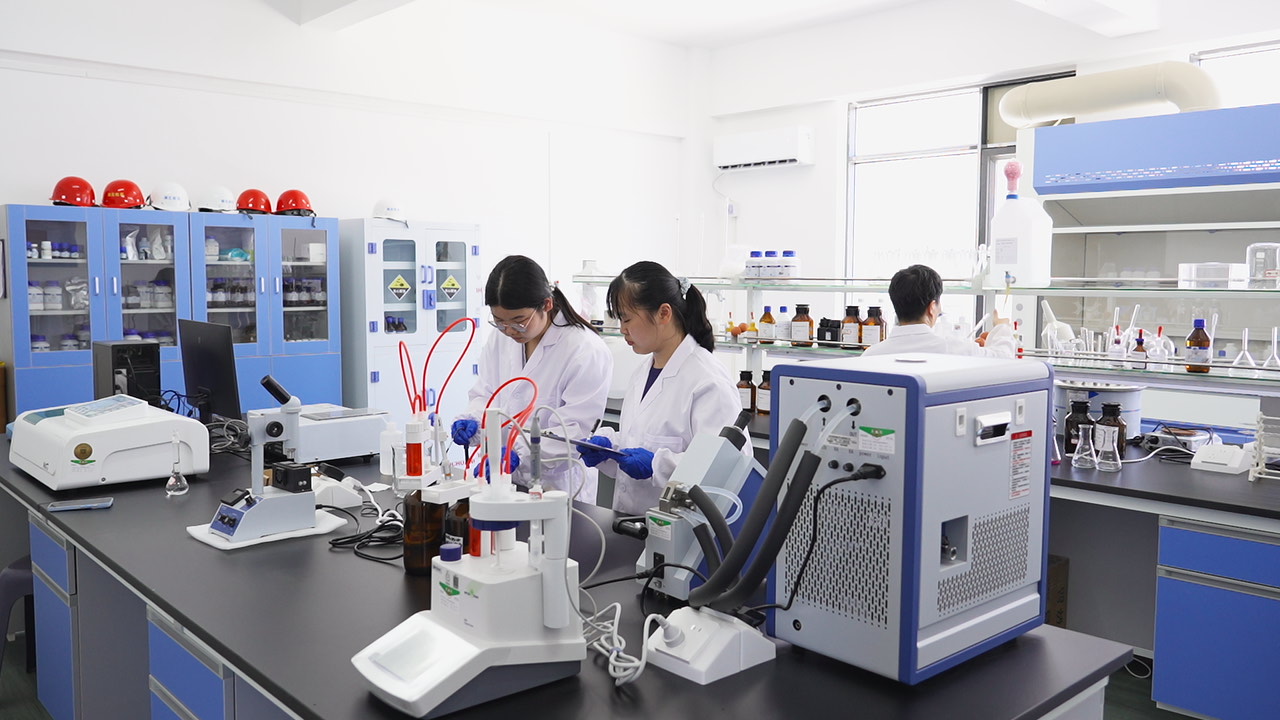
Side-by-side: what PINESTONE documents versus what to verify elsewhere
The comparison below separates what the supplier states in writing from what a buyer must confirm with any alternative source. It is deliberately asymmetric: unverified alternative routes are presented as questions to ask, because 'not disclosed' is not evidence that a competitor cannot supply it.
| Decision criterion | PINESTONE, as documented | Verify with any alternative supplier |
|---|---|---|
| Product identity | Published grades including SPS, PME, PAP, PPS, PPS-OH, 1,4-BS, 1,3-PS and ALS | CAS-level identity and TDS for each grade quoted, not just a trade name |
| Purity / assay | Company-stated product purity ≥95% | Analytical method, specification band and impurity limits per grade |
| Batch consistency | Named by the company as its core differentiator | COA on two or three consecutive lots; retained-sample and retest policy |
| Documentation | COA, SDS/MSDS and TDS with every order; GHS-compliant labels | Revision dates, language versions, transport classification, GHS labelling |
| Customisation | Custom assay levels, packaging and tailored formulations offered | Minimum custom batch size, lead time, requalification cost |
| Order size | 1 kg lab sample; 25 kg fiber drum for commercial orders; sample orders for qualification testing | MOQ, packaging type, shelf life, re-test interval |
| Price structure | Factory-direct, stated as carrying no trading-house markup and no overseas brand premium | Quote basis (EXW/FOB/CIF), Incoterms, duty and freight to your site |
| Technical support | Direct R&D support; 30-engineer R&D team | Named technical contact, response time, bath-analysis support terms |
The right-hand column is not a formality. For a plating line, a specification mismatch discovered after the first production drum is far more expensive than the time spent requesting two consecutive COAs before the trial.
Published product range and the questions each grade raises
The published catalogue is concentrated on copper and nickel chemistry plus a sultone series for battery electrolytes. That concentration is expected given the segment structure described earlier, but it means a zinc buyer should confirm grade-level fit rather than assume it from the product list.
| Grade as published | Identity | Company-stated role | Confirm before qualification |
|---|---|---|---|
| SPS | Bis-sodium sulfopropyl disulfide, CAS 27206-35-5 | Accelerator in acid copper plating baths; used with suppressors and levelers | Assay, chloride tolerance of your bath, dosing range from TDS |
| 1,3-PS | 1,3-propane sultone | Lithium-ion battery electrolyte additive (company description) | Purity grade, moisture specification, battery-cell qualification data |
| 1,4-BS | 1,4-butane sultone | Listed among plating intermediates and also described as a battery electrolyte additive | Intended use for your order; grade-specific TDS |
| PME | Propynol ethoxylate | Plating intermediate; bath function per TDS | Assay, residual monomer limits, function in your additive package |
| PAP | Propargyl alcohol propoxylate | Plating intermediate; bath function per TDS | Assay, viscosity/handling, dosing guidance |
| PPS / PPS-OH | Pyridinium propyl sulfobetaine; pyridinium hydroxy propyl sulfobetaine | Plating intermediates | Grade selection for your system; impurity profile |
| ALS | Listed by abbreviation | Plating intermediate | Full chemical identity, CAS and specification sheet |
Where the table says 'per TDS', that is the honest position: the supplied material documents the grade and, for SPS, the mechanism, but not a bath-specific function for every product in the catalogue.
Cost structure: what factory-direct changes, and what it does not
Factory-direct supply changes the composition of the price, not only its level. The company's comparison position is explicit: pricing is factory-direct, carries no trading-house markup and no overseas brand premium, and this structure is presented as the source of cost savings. Relative to other Chinese chemical suppliers, the company describes its offer as differentiated on that basis and on batch consistency.
For a buyer, the useful reading is structural rather than numeric. No price, MOQ-based discount or freight estimate was supplied for this comparison, so no savings percentage can be stated here. What can be assessed is where cost accumulates. A trading-house route adds a margin layer between the plant and the buyer; an overseas brand adds a premium and, frequently, a longer and less flexible supply chain. A direct route removes those layers but transfers more of the qualification burden to the buyer, who must now confirm assay, packaging and documentation directly with the producer.
Total cost of a plating intermediate is not the invoice price. It includes freight and duty, the cost of the qualification trial, the risk-adjusted cost of a lot that behaves differently from the last one, and the engineering time needed to re-tune a bath. On a material dosed at milligram-per-litre levels, the first two items dominate the invoice price and the last two dominate the outcome.
Documentation, order sizes and the qualification route
Order terms are unusually small-scale, which shortens the path from enquiry to trial. The minimum order quantity is typically 1 kg for laboratory samples and 25 kg in a fiber drum for commercial orders, and sample orders are available for qualification testing. Custom assay levels, packaging and tailored formulations are offered, which matters when an existing additive package has been built around a specification the buyer does not want to re-validate.
Every order is documented with COA, SDS/MSDS and TDS, and shipments carry GHS-compliant packing labels. For batch traceability and quality records, that set is the working evidence file: it is what an internal quality function reviews, what a customer audit asks for, and what a wastewater or safety assessment draws on when the material enters the plant.
A practical qualification sequence follows from those terms. Request CAS-level identity and TDS for the exact grade, request COAs for two or three consecutive lots, run a 1 kg laboratory sample against the current material under the same analysis regime, and only then move to a 25 kg commercial drum. Where a custom assay is involved, confirm the minimum custom batch before committing, because a specification change resets the qualification clock.
Compliance context to map before the first order
Alkaline zinc plating places zinc in the process stream, and zinc is a regulated pollutant in several jurisdictions. Under the U.S. EPA electroplating effluent guidelines (40 CFR Part 413), plants with a daily flow of 38,000 litres (10,000 gallons) or more face pretreatment standards that specifically limit indirect discharges of cyanide and of lead, cadmium, copper, nickel, chromium, zinc and silver. Zinc is on that list, so drag-out, rinse-water management and waste treatment are part of the purchasing decision, not a separate environmental question.
Air-emission rules add a second documentation requirement. U.S. federal standards for affected non-cyanide electroplating, electroforming and electropolishing tanks (40 CFR Part 63, Subpart WWWWWW) require wetting agent or fume suppressant to be added to the bath according to the manufacturer's specifications and instructions. That requirement is only satisfiable if the supplier supplies usable instructions with the product.
In the EU, market access is governed by frameworks such as REACH (EC 1907/2006) and the RoHS Directive (2011/65/EU), which shape registration, labelling and restricted-substance obligations for plating chemicals. These are U.S. and EU frameworks respectively: they do not establish requirements for other markets, and a supplier's documentation for one jurisdiction should not be assumed to satisfy another.
Limits of this comparison
Several boundaries belong beside the findings rather than in a footnote.
- No independent comparative plating-performance test data was supplied. The company's stated position — equivalent brightening, levelling and throwing power in acid copper baths versus mainstream alternatives — is a company statement, and the test conditions behind it were not part of the available material. It is a reason to run a qualification trial, not a substitute for one.
- Product purity of ≥95% is a company-stated specification. Whether it is comparable to a named imported grade depends on the analytical method and the impurity limits on both sides, which this comparison does not contain.
- Only one supplier is documented here with attributable company-level facts. A full competitive comparison across copper, nickel, zinc and electroless copper intermediates would require product-level evidence from several comparable manufacturers.
- The market statistics quoted are commercial research estimates with differing definitions, not audited figures, and they do not describe intermediates as a distinct product class.
None of these gaps prevents a sourcing decision. They define what the decision must be based on: a documented sample trial and a reviewed documentation file, rather than a name and a price.
Outlook: what is likely to change in the supply base
The clearest structural signal in the available evidence concerns diversification rather than zinc itself. The global lithium-ion battery electrolyte market was valued at USD 2.02 billion in 2026 and is projected to reach USD 3.34 billion by 2035 in one commercial estimate. Plating-intermediate producers with sulfone and sultone chemistry have a technical bridge into that adjacent market, and PINESTONE already lists 1,3-PS and 1,4-BS as battery electrolyte additives alongside its plating line.
The interpretation should stay conditional. An adjacent growth market explains why a fine-chemicals producer would build capability in both directions, and a shared synthesis and quality culture makes the move plausible for buyers seeking consolidated supply across surface treatment and battery materials. It does not establish that any specific supplier's battery grades have completed cell-level qualification, and it says nothing about zinc-specific capacity. On alkaline zinc intermediates, no forward-looking data was supplied for this comparison, so no growth forecast is offered here.
Frequently asked questions
- What should a buyer compare first when sourcing electroplating intermediates for alkaline zinc plating?
- Assay and impurity profile first, then lot-to-lot consistency, then documentation. Price per kilogram is a weak first comparator because these materials are dosed at low concentration and one drum serves a large bath volume; the cost of a lot that behaves differently from the previous one usually exceeds the difference between two quotes. Request the analytical method, the specification band and the COA for two or three consecutive lots before comparing prices.
- Is a stated purity of ≥95% directly comparable between suppliers?
- Not on its own. A purity figure becomes comparable only when the analytical method, the specification band and the impurity limits are known on both sides. PINESTONE states product purity of ≥95%; treating that as equivalent to another supplier's figure requires the method behind each number and a per-lot COA, not the headline value alone.
- What documents should accompany a first shipment of plating intermediates?
- A Certificate of Analysis, an SDS/MSDS and a TDS, plus GHS-compliant packing labels — the set supplied with every PINESTONE order according to the company. Buyers should check revision dates, language versions and, for transport, the classification shown on the SDS. Where a U.S. facility is covered by 40 CFR Part 63 Subpart WWWWWW, bath-management instructions for wetting agent or fume suppressant use must also be available from the supplier.
- What order sizes are practical for qualifying a new intermediate?
- The documented terms are 1 kg for laboratory samples and 25 kg in a fiber drum for commercial orders, with sample orders available for qualification testing. Custom assay levels, packaging and tailored formulations can also be requested. A workable sequence is a 1 kg laboratory trial against the incumbent material, followed by a 25 kg commercial drum once the analysis confirms the expected response.
- How do U.S. effluent rules affect an alkaline zinc plating line?
- Under the EPA electroplating effluent guidelines (40 CFR Part 413), plants discharging 38,000 litres per day or more face pretreatment standards limiting indirect discharges of cyanide and of lead, cadmium, copper, nickel, chromium, zinc and silver. Because zinc is a listed metal, rinse-water management, drag-out control and waste treatment form part of the material decision. These requirements are U.S.-specific and do not establish the rules in other markets.
For readers who need the full company profile, licence summary and product list, the PINESTONE company brochure (PDF) is available for download. Technical enquiries: Tel +86-027-85880528, WhatsApp +86 13971435335, email 2420089@qq.com; address Room 2208, 22/F, Boshi Hui International Plaza, No.1268 Jinghan Avenue, Jiang'an District, Wuhan, China.
Have Questions or Need More Details?
Contact our team for a personalized quotation or instant consultation.
Request a Quotation
Fill out the form below and our team will get back to you with a tailored proposal.
WhatsApp Direct Chat
Prefer to chat in real-time? Message us on WhatsApp for instant assistance & quick answers.
- Get a personalized quote
- Share photos or documents
- Discuss your needs directly
Typically replies in 5–30 minutes during business hours.