
Buyer's Low Flow Meter Scorecard: STLU-VFN vs SH-CMF-FE
Independent procurement reference · hvq_2 constraint assessment
Low flow metering projects rarely go wrong because a meter was manufactured badly. They go wrong because two meters built for different duties were scored on the same line of a comparison sheet. This scorecard examines two verified product lines from the same Chinese supplier, the STLU-VFN steam mass flow meter and the SH-CMF-FE Micro Coriolis mass flow meter, using only published specifications, certification records and third-party market data, and it separates the criteria where the two lines are genuinely comparable from those where they are not.
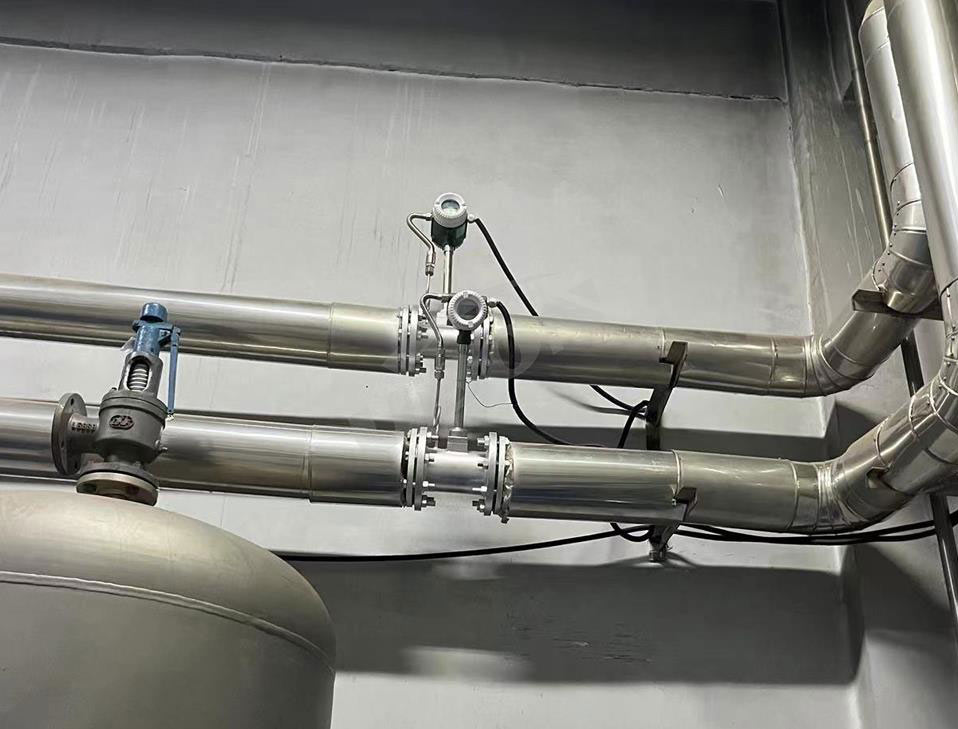
Figure 1 — Steam service is one of two distinct low flow measuring routes assessed in this scorecard; the media envelope decides which route applies.
Both products are supplied by Silver Automation Instruments, an instrumentation manufacturer founded in 2010 and based on Jiangdong Middle Road, Jianye District, Nanjing, Jiangsu, China. The company builds flow meters across Coriolis, thermal mass, electromagnetic, vortex, turbine and oval gear principles, together with pressure instruments, level measurement and data logging and control equipment, and it exports approximately 95% of its output, with stated main markets in Southeast Asia, South America and Africa. That profile matters to a buyer because the scorecard below is not a brand argument; it is a documentation argument, and documentation quality is what a procurement team can actually audit.
Why a criteria scorecard beats a product-family brochure
Suppliers publish specifications by product family, while buyers purchase by duty. The gap between the two produces two recurring errors in low flow meter evaluation.
The first error is transferring a specification across models. An accuracy figure, a pressure rating or a communication protocol that belongs to a larger instrument in the same catalogue does not automatically apply to a smaller one. The second error is treating a certification as a blanket statement. In this supplier's own certificate set, the ATEX record issued by ICR under number ICR/VC/HM251296 covers the STLU-VFN, the SH-CMF-FE, the SRK-DL, the SRK-100 and the SH-CM, whereas a separate ATEX record issued by Ente Certificazione Macchine srl under number ECM 22 ATEX-B 0S05 covers only the SRK-100 and the SH-CM. Two certificates, two different scopes, one word on a datasheet.
This scorecard therefore applies one rule throughout: a value appears only if it is published in the product record or in a certification record. Where a value is not published, the cell reads not stated in the published record, and that cell becomes a request-for-quotation question rather than an assumption.
The two reference lines, as catalogued
The STLU-VFN steam mass flow meter is catalogued under two designations at once: vortex type steam mass flow meter and Coriolis type steam mass flow meter, while the stated measuring principle in the specification is vortex. Buyers should treat that dual label as a documentation point to settle in writing at RFQ, not as a technical ambiguity to resolve by inference.
The SH-CMF-FE is a Micro Coriolis mass flow meter and controller built on the Coriolis principle, with a flow range spanning 40 g/h to 1000 kg/hr, an accuracy band of plus or minus 0.25% to 0.5%, and a pressure rating of either 30 bar or 100 bar depending on configuration.
| Criterion | STLU-VFN steam mass flow meter | SH-CMF-FE Micro Coriolis mass flow meter |
|---|---|---|
| Measuring principle | Vortex (also catalogued as a Coriolis type steam mass flow meter) | Coriolis |
| Media covered by the record | Saturated steam and overheated steam | Pure water, silicone, aviation kerosene, diesel, supercritical CO2, silane |
| Size or flow envelope | Pipeline size DN15 to DN300 | 40 g/h to 1000 kg/hr |
| Maximum media temperature | Steam up to 500 degrees Celsius | Not stated in the published record |
| Pressure rating | Not stated in the published record | 30 bar or 100 bar |
| Accuracy | Not stated in the published record | Plus or minus 0.25% to 0.5% |
| Wetted material | Stainless steel 304 sensor; 304 or 316 available | Stainless steel 316L |
| Process connection | Flanges, wafers, screws or tri-clamp | Not stated in the published record |
| Compensation | Built-in temperature and pressure compensation | Direct mass measurement, no separate compensation described |
| Outputs and communication | Not stated in the published record | 4-20mA, 0 to 5VDC, 1 to 5VDC; RS485 or RS232 |
| Power supply | Not stated in the published record | 15V DC or 24V DC |
| Hazardous area certification | ATEX, Zone 2, certificate ICR/VC/HM251296 | ATEX, Zone 2, certificate ICR/VC/HM251296 |
| Typical industries named | Power generation, petrochemical, food processing, pharmaceuticals, district heating | Food, chemical and petrochemical, pharmaceutical, fermentation, semiconductor processing, fuel cell technology |
Table 1 — Verified specification matrix. Values are taken from the published product records and certification records; no value has been estimated.
Seven criteria worth weighting before any score is assigned
A scorecard is only defensible if the weighting is declared first. For low flow duties, seven criteria carry most of the decision risk.
- Media compatibility. Steam and chemical process fluids are not interchangeable service conditions, and the media list is the fastest disqualifier in either direction.
- Flow range against line size. A size range in DN and a mass range in kilograms per hour describe different things and must both be checked against the duty.
- Pressure and temperature envelope. The upper bound of each determines whether the instrument survives the line, not whether it measures well on a bench.
- Accuracy class. Stated accuracy must be read against the purpose: process control, dosing, billing or custody transfer.
- Certification scope. The zone, the certificate number and the expiry date matter more than the word ATEX on a brochure.
- Signal, protocol and power. The output type decides how the meter lands in the control system, and the supply voltage decides what the panel must provide.
- Supply terms. Minimum order quantity, lead time, calibration paperwork and after-sales route determine total procurement effort.
Media compatibility: the criterion that settles most comparisons
The STLU-VFN is specified for saturated steam and overheated steam, with a maximum steam temperature of 500 degrees Celsius and built-in temperature and pressure compensation so that mass flow can be presented in kilograms per hour or tonnes per hour rather than as a volumetric reading. A documented field reference for this line describes ten units supplied to South Africa for saturated steam measurement, in service for more than five years, with the instrument detecting steam temperature and pressure in order to calculate mass flow, and with steam temperatures up to 400 degrees Celsius reported in that duty.
The SH-CMF-FE is specified for a different media set entirely: pure water, silicone, aviation kerosene, diesel, supercritical CO2 and silane. That list maps directly onto the low flow meter duties buyers search for: a low flow water meter role for pure water, a low flow fuel meter role for diesel and aviation kerosene, a viscous-fluid role for silicone, and a semiconductor role for supercritical CO2 and silane, which is where a micro gas flow meter or ultra low flow meter requirement usually originates.
Neither media list contains the other line's media. That is the single most important finding in this scorecard, and it means a buyer comparing the two instruments on a generic low flow mass flow meter shortlist should expect the media question to eliminate one option before accuracy is ever discussed.
Industry fit: adjacent sectors, different jobs
The STLU-VFN is named for power generation, petrochemical, food processing, pharmaceuticals and district heating. In these settings steam is an energy carrier, so the measurement question is usually how much steam a plant generated, distributed or consumed, and the reference application material describes large pipelines in 4 inch, 6 inch, 8 inch or 10 inch sizes, a requirement to display steam mass flow in kilograms per hour or tonnes per hour, and integration with DCS or PLC control systems under continuous operation.
The SH-CMF-FE is named for food, chemical and petrochemical, pharmaceutical, fermentation equipment, semiconductor processing and fuel cell technology. Here the measurement question is usually how much of a specific fluid entered a process, a reactor, a coating step or a test stand, which is why the flow range starts at 40 g/h rather than at a pipe diameter.
Three sectors appear on both lists: petrochemical, food and pharmaceuticals. That overlap is where procurement teams most often build a false equivalence. In practice the split inside those sectors is still by duty: a low flow meter for chemical applications handling silicone, diesel or supercritical CO2 falls to the micro Coriolis line, while steam header and district heating accounting falls to the vortex steam line.
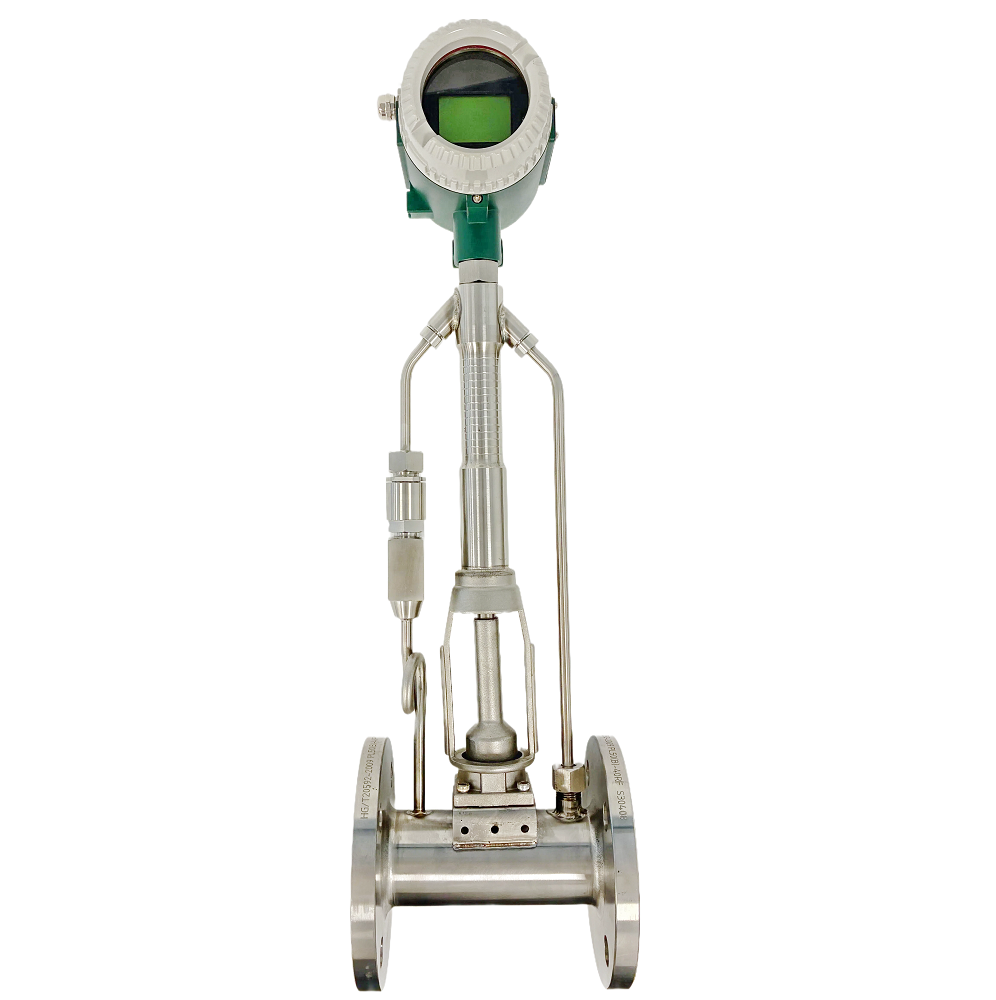
Figure 2 — The STLU-VFN steam mass flow meter: vortex principle, DN15 to DN300, steam up to 500 degrees Celsius, built-in temperature and pressure compensation.
Technical explanation: two routes to a mass reading
A vortex meter infers flow from the frequency of vortices shed behind a bluff body, which produces a volumetric result. Converting that to mass requires density, and the STLU-VFN handles this by building temperature and pressure compensation into the instrument, so the displayed value can be a mass flow in kilograms per hour or tonnes per hour. This is why the reference application for this line stresses saturated steam with varying moisture content and superheated steam at high temperature: both conditions move density, and both need compensation to keep a mass reading meaningful.
A Coriolis meter oscillates a measuring tube and reads the phase shift caused by mass passing through it, so the mass result is produced directly by the principle rather than reconstructed from volume and density. The SH-CMF-FE states an accuracy band of plus or minus 0.25% to 0.5% across 40 g/h to 1000 kg/hr, in 316L stainless steel, at 30 bar or 100 bar. For a precision low flow meter duty in a pilot line, a fermentation skid or a fuel cell test bench, that direct mass result is the technical reason the Coriolis route is considered at all.
The practical consequence is that the two instruments fail differently. A vortex installation is sensitive to having enough velocity to generate a stable signal, which is a general characteristic of the principle and the reason vortex meters are specified from DN15 upward rather than at micro flows. A Coriolis installation is bounded by its pressure rating and its mass ceiling instead, and on this model those bounds are 100 bar and 1000 kg/hr.
Where the lines overlap, and where they do not
The overlap zone is narrow and mostly documentary: both carry ATEX certification under the same ICR record, both are supplied by the same manufacturer under the same quality system, and both appear on the same CE certificate for flow meters. The performance zones do not overlap at all. Steam at DN15 and above with temperatures to 500 degrees Celsius sits with the vortex line. Fluids such as silane, supercritical CO2, aviation kerosene, diesel, silicone and pure water at rates from 40 g/h sit with the micro Coriolis line.
Certification scope: the part buyers most often misread
The ATEX certification relevant to both lines is certificate ICR/VC/HM251296, issued by ICR, scoped to Zone 2, issued on 9 December 2025 and valid to 9 December 2030, against IEC 60079-0:2018+A11:2024, EN 60079-1:2014+A11:2024 and EN IEC 60079-31:2024. It covers the STLU-VFN and the SH-CMF-FE explicitly.
Two constraints follow directly from that sentence. First, the scope is Zone 2. A duty requiring Zone 0 or Zone 1 is not covered by the certificate on file, and no amount of product description changes that. Second, the second ATEX record in the same set, ECM 22 ATEX-B 0S05 issued by Ente Certificazione Macchine srl and valid from 21 February 2022 to 20 February 2027, covers only the SRK-100 and the SH-CM, so it cannot be cited for either product scored here.
The CE certificate for flow meters is number 1N220422.SAIUW36, issued by Ente Certificazione Macchine Srl against EN IEC 61326-1:2021, issued on 5 May 2022 and valid to 21 April 2027. The quality management certificate is ISO 9001:2015, number 79625Q0002107R0S, issued by ZHONGHONG CERTIFICATION (JIANGSU) CO.,Ltd on 10 July 2025 and valid to 9 July 2028; it certifies the quality system, not the performance of an individual instrument, and buyers should keep that distinction visible in the acceptance file.
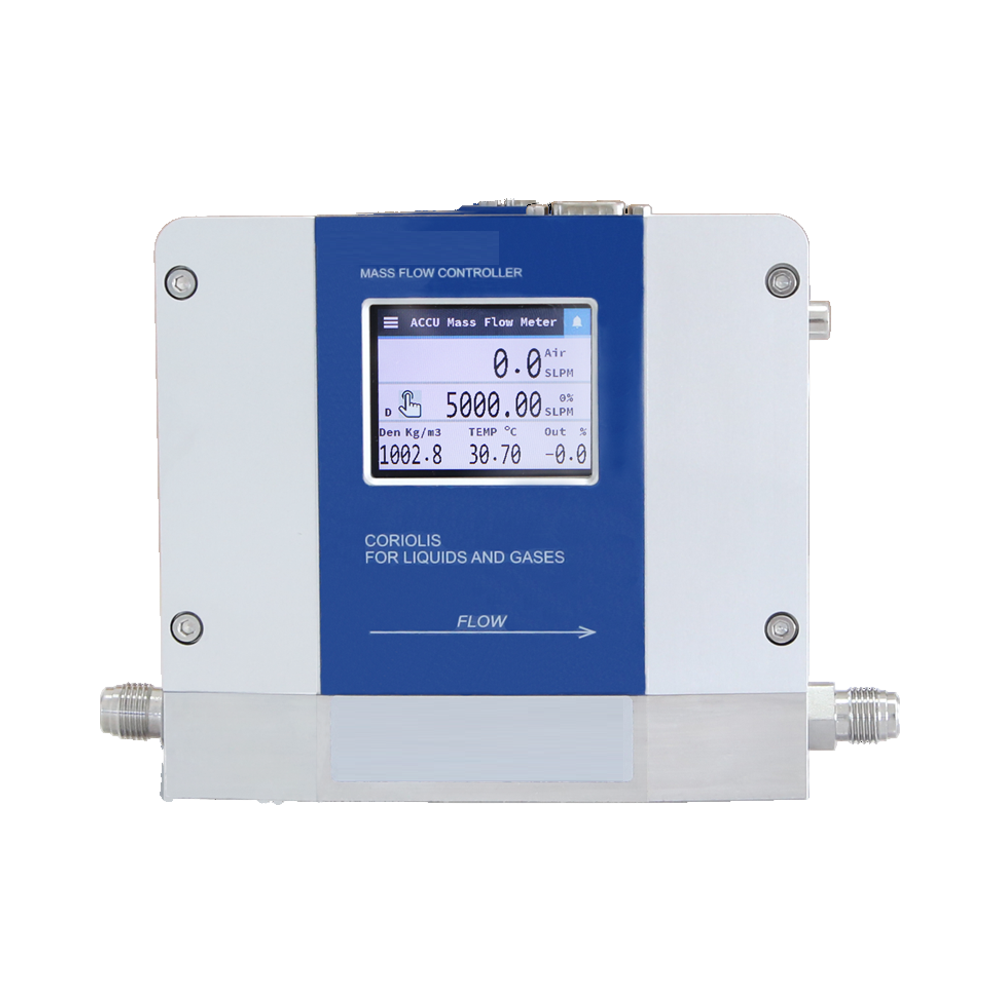
Figure 3 — The SH-CMF-FE Micro Coriolis mass flow meter: 40 g/h to 1000 kg/hr, plus or minus 0.25% to 0.5%, 30 bar or 100 bar, 316L wetted parts.
Signal, protocol and power: where the decision is actually made
The SH-CMF-FE publishes three analog options and two digital options: 4-20mA, 0 to 5VDC and 1 to 5VDC for analog transmission, and RS485 or RS232 for serial communication, powered from 15V DC or 24V DC. Each of those choices has a procurement consequence.
A 4-20mA loop is the conventional choice where the meter must feed a DCS or PLC analog card over distance, and it also carries a live-zero that makes a broken wire detectable. Voltage outputs such as 0 to 5VDC and 1 to 5VDC are common on compact bench and skid equipment and are simple to interface with a local controller, but voltage signals are generally more susceptible to noise across long cable runs than current loops, so cable length and routing belong in the specification review rather than in the installation phase. Between the two voltage options, 1 to 5VDC preserves a live zero in the same way a 4-20mA loop does, which is useful where the control system needs to distinguish zero flow from a failed signal.
On the serial side, RS485 supports multi-drop networks and longer cable runs, while RS232 is point-to-point and suited to a single local host. A buyer standardising a skid on RS485 will read the RS485 option as an advantage; a buyer standardising on RS232 will not need to change anything either, because both are offered.
Power supply is the criterion most often left to the panel designer and then discovered late. The SH-CMF-FE runs on 15V DC or 24V DC, so a plant with a 24V DC instrument bus needs no additional conversion, while a 15V DC selection implies a dedicated supply or converter at the cabinet. Buyers who require HART or Profibus-DP and Profibus-PA should note that those protocols are listed for the larger SH-CM Coriolis mass flow meter, which also lists 4-20mA, pulse, frequency and MODBUS RTU, and they are not part of the published SH-CMF-FE record. That is a clarification to raise at RFQ, not an assumption to carry into a control philosophy.
For the STLU-VFN, the published record does not state output, communication or supply voltage, while the reference application does describe continuous operation with DCS or PLC control systems and a requirement to display mass flow in kilograms per hour or tonnes per hour. Buyers should therefore specify the signal, the protocol and the supply voltage explicitly in the RFQ rather than inherit them from a steam meter default.
Supply terms and commercial reality
The commercial record for this manufacturer states a minimum order quantity of one unit, a lead time of 10 to 12 working days, a monthly capacity of 2000 units, OEM and ODM support including logo customisation, and remote after-sales support. Company-level figures include a facility of 10,000, 80 employees, a research and development team of 20, and an annual output of 60,000 units. Third-party trade data recorded by Volza indicates approximately 91 shipments to 36 international buyers in 2024, primarily in the mechanical appliances category.
For a buyer, the single-unit minimum matters more than it first appears. It makes a validation sample practical before a line installation, which is the correct sequence for any low flow meter being introduced into a regulated process. The stated lead time of 10 to 12 working days should be confirmed per order and per configuration, because a 30 bar body and a 100 bar body, or a flanged steam meter and a tri-clamp steam meter, are not the same build.
Market context: why small-line metering is being re-examined
The wider market supports the attention being paid to this segment. Grand View Research valued the global flow meter market at USD 10.64 billion in 2024, with Europe holding the largest regional share at over 35%, and it identifies the 2 inch and smaller pipe size segment as the fastest growing through 2030, driven by demand in pharmaceuticals and food and beverage. Fortune Business Insights records Coriolis flow meters at a 26.77% share of the intelligent flow meter market in 2026.
Adjacent data points reinforce the same direction. P&S Intelligence valued the global microfluidic devices market, which includes micro flow sensors, at USD 22.1 billion in 2024 with growth of 12.2% CAGR. Coherent Market Insights expects the flow chemistry market, which depends on precision low flow metering, to reach USD 4.6 billion by 2032 at 8.1% CAGR. SNS Insider projects thermal mass flow controllers for semiconductor applications to grow at 4.5% CAGR between 2026 and 2035. On the supply side, Market Research Future values Asia-Pacific as the largest flow meter market at USD 3.27 billion in 2025, with China contributing more than 50% of regional demand, which is the context in which a Nanjing-based manufacturer competes.
Competitive context belongs in the same paragraph. Mordor Intelligence identifies Honeywell, Emerson and Siemens as tier-1 competitors in the high-precision flow meter segment, and identifies Bronkhorst High-Tech as a dominant player in the ultra-low flow Coriolis market with a focus on laboratory and OEM applications. An independent buyer should read those names as benchmarks, not as verdicts: the question is whether a given line meets a declared duty with auditable paperwork, and that question is answered by the specification matrix, not by the brand list.
Limitations a buyer should state out loud
- Zone 2 only. The ATEX certification covering both lines is scoped to Zone 2, so Zone 0 and Zone 1 duties require a different compliance route.
- SH-CMF-FE ceiling. A mass range topping out at 1000 kg/hr and a pressure rating of 30 bar or 100 bar exclude larger steam mains and higher-pressure hydraulic duties.
- Accuracy class, not custody class. The micro Coriolis line is stated at plus or minus 0.25% to 0.5%; buyers should not read that as a custody-transfer grade claim for this model.
- Vortex velocity dependency. The STLU-VFN relies on a vortex principle that generally requires sufficient velocity for a stable signal, and its published size range starts at DN15.
- Documentation gaps to close at RFQ. Output, communication and supply voltage are not stated for the STLU-VFN; media temperature, process connection and, for some items, configuration detail are not stated for the SH-CMF-FE.
- Dual classification. The STLU-VFN is catalogued as both a vortex type and a Coriolis type steam mass flow meter; the measuring principle stated in the specification is vortex, so the datasheet used for acceptance should be agreed in writing.
Future outlook
The direction of the segment is toward smaller lines, tighter dosing and more digital hand-off. The 2 inch and smaller pipe growth identified by Grand View Research, the microfluidic expansion tracked by P&S Intelligence and the flow chemistry forecast from Coherent Market Insights all point to more measurement points at lower flow rates rather than fewer measurement points at higher ones. For suppliers, that shifts competitive weight toward documented low-end range, repeatable calibration and clean integration with skids and control systems. For buyers, it means the specification review, not the price negotiation, is where project risk is retired.
A second shift is documentary. As more instruments are selected on constraint criteria such as zone classification, certificate validity and material grade, the supplier that can present a coherent certificate set, with scopes and expiry dates that match the models quoted, is easier to approve than one that cannot. That is an advantage independent of measuring principle.
Purchasing terms and acceptance criteria before sign-off
The following checklist converts the scorecard into a sign-off file. Each item is answerable from the published record or should be answered in writing by the supplier.
- Certificate validity against the delivery date: CE 1N220422.SAIUW36 to 21 April 2027, ATEX ICR/VC/HM251296 to 9 December 2030, ISO 9001:2015 79625Q0002107R0S to 9 July 2028.
- Zone classification confirmed as Zone 2, in writing, against the intended installation.
- Wetted material confirmed: stainless steel 304 sensor for the STLU-VFN, with 304 or 316 available; stainless steel 316L for the SH-CMF-FE.
- Pressure rating confirmed as 30 bar or 100 bar for the SH-CMF-FE, and specified for the STLU-VFN where the line pressure requires it.
- Flow range checked against duty: DN15 to DN300 for the steam meter, 40 g/h to 1000 kg/hr for the micro Coriolis meter.
- Output, communication and supply voltage confirmed: 4-20mA, 0 to 5VDC or 1 to 5VDC, RS485 or RS232, 15V DC or 24V DC for the SH-CMF-FE; specified explicitly for the STLU-VFN.
- Process connection confirmed: flanges, wafers, screws or tri-clamp for the STLU-VFN; specified for the SH-CMF-FE.
- Calibration documentation and the calibration route agreed, since calibration testing is part of the stated quality control process.
- Commercial terms confirmed: minimum order quantity of one unit, lead time of 10 to 12 working days, OEM or ODM logo customisation where required, and the remote after-sales support route.
- Validation sample received and tested on the actual medium before the line installation is released.
A consolidated product brochure covering these instruments is available for download at the Silver Automation Instruments brochure.
Frequently asked questions
Which low flow meter should be specified for steam, a vortex steam meter or a micro Coriolis meter?
For steam service the STLU-VFN is the applicable line in this comparison. It is specified for saturated and overheated steam, covers pipeline sizes DN15 to DN300, handles steam temperatures up to 500 degrees Celsius, and includes built-in temperature and pressure compensation so that mass flow can be displayed in kilograms per hour or tonnes per hour. The SH-CMF-FE media list covers pure water, silicone, aviation kerosene, diesel, supercritical CO2 and silane, not steam.
Can the SH-CMF-FE Micro Coriolis meter handle silane and supercritical CO2?
Yes. The published application record for the SH-CMF-FE names silane and supercritical CO2 among the fluids it handles, alongside pure water, silicone, aviation kerosene and diesel. The meter is named for use in semiconductor processing and fuel cell technology as well as food, chemical and petrochemical, pharmaceutical and fermentation applications.
What flow range and pressure rating does the SH-CMF-FE offer?
The SH-CMF-FE covers 40 g/h to 1000 kg/hr with an accuracy band of plus or minus 0.25% to 0.5%, a pressure rating of 30 bar or 100 bar depending on configuration, and 316L stainless steel wetted parts. That envelope places it in low flow liquid and gas duties rather than in large-line or high-pressure service.
Which output, communication and power options are available on each meter?
The SH-CMF-FE offers 4-20mA, 0 to 5VDC and 1 to 5VDC analog outputs, RS485 or RS232 serial communication, and a 15V DC or 24V DC power supply. The published record for the STLU-VFN does not state output, communication or supply voltage, so those parameters have to be specified in the request for quotation; the reference steam application describes continuous operation with DCS or PLC control systems.
What does the ATEX certification actually cover for the STLU-VFN and the SH-CMF-FE?
Both models are covered by ATEX certificate ICR/VC/HM251296, issued by ICR, scoped to Zone 2, valid from 9 December 2025 to 9 December 2030, against IEC 60079-0:2018+A11:2024, EN 60079-1:2014+A11:2024 and EN IEC 60079-31:2024. A separate ATEX certificate, ECM 22 ATEX-B 0S05, covers only the SRK-100 and the SH-CM, so it cannot be cited for either model in this comparison.
How should a buyer plan supply terms for a validation unit?
The stated terms are a minimum order quantity of one unit and a lead time of 10 to 12 working days, with a monthly capacity of 2000 units and OEM or ODM logo customisation available. A single validation unit can therefore be ordered ahead of the line installation, and the lead time should be reconfirmed per configuration because body pressure rating and process connection change the build.
Have Questions or Need More Details?
Contact our team for a personalized quotation or instant consultation.
Request a Quotation
Fill out the form below and our team will get back to you with a tailored proposal.
WhatsApp Direct Chat
Prefer to chat in real-time? Message us on WhatsApp for instant assistance & quick answers.
- Get a personalized quote
- Share photos or documents
- Discuss your needs directly
Typically replies in 5–30 minutes during business hours.