
Buyer's Shortlist: Hi-B Electrical Steel Grades for Energy-Saving Transformers
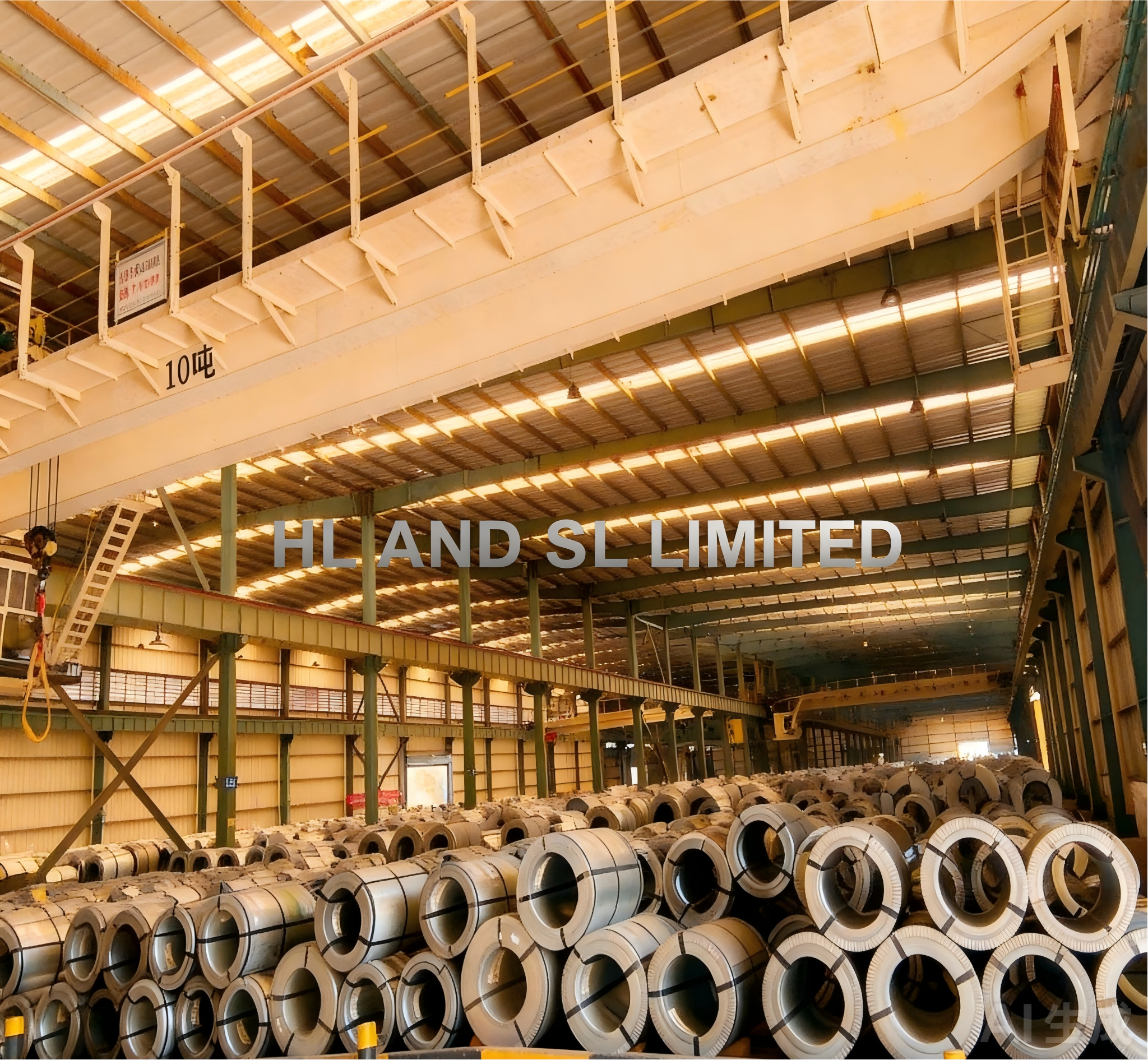
Grade selection determines whether an energy-saving transformer core meets its no-load loss guarantee.
Buyer's Shortlist: Hi-B Electrical Steel Grades for Energy-Saving Transformers
Core loss is the variable a transformer buyer can still influence at the decision stage, and Hi-B grain-oriented electrical steel is where most of that influence is exercised. This shortlist sets seven grades supplied through HL AND SL LIMITED - 18-65, 20R070, 23Q080, 23Q085, 23Q090, 23Q095 and 23Q100 - against the application tiers buyers actually write into specifications, and flags what has to be confirmed before a grade enters a technical agreement.
Why the Grade Decision Outlives the Supplier Decision
Efficiency requirements for distribution transformers have been raised in most large markets over the past decade, and in a modern design a substantial part of the remaining loss sits in the core. Oriented electrical steel is therefore the main controllable input in the no-load loss budget: two cores built to the same geometry can qualify for different efficiency classes purely because of the grade specified.
At the decision and execution stage, buyers are usually past the question of whether they need oriented steel at all. The open questions are narrower: which grade satisfies the end customer's efficiency class without paying for loss performance nobody is buying, and whether that grade can be delivered in the same loss band for the life of the programme. A shortlist links those two questions. Once a grade is written into a technical agreement, changing it usually triggers re-qualification and re-approval inside the end customer's engineering organisation.
The Shortlist at a Glance
| Grade | Nominal thickness | Stated performance anchor | Typical application fit | Buyer note |
|---|---|---|---|---|
| 18-65 | 0.18 mm | Maximum core loss ≤0.65 W/kg | Ultra-high-efficiency transformer cores | Lowest loss band in the list; highest material cost and strictest handling discipline |
| 20R070 | 0.20 mm | Confirm the guaranteed value on the mill test certificate | Mid-tier high-efficiency cores | Sits between the 0.18 mm and 0.23 mm families |
| 23Q080 | 0.23 mm | Core loss ≤0.80 W/kg; flux density ≥1.89 T | Energy-saving distribution transformers | Practical default where first-level efficiency is the design target |
| 23Q085 | 0.23 mm | Second-level efficiency band | Volume distribution transformers; industrial motors | Cost-performance tier |
| 23Q090 | 0.23 mm | Second-level efficiency band | Volume distribution transformers; industrial motors | Cost-performance tier |
| 23Q095 | 0.23 mm | Second-level efficiency band | Volume distribution transformers; industrial motors | Cost-performance tier |
| 23Q100 | 0.23 mm | General-use tier | Apparatus and general-purpose transformer cores | Entry point of the oriented family |
Where this article does not state a numeric limit for a grade, the guaranteed value should be taken from the mill test certificate for the specific batch rather than inferred from a catalogue summary. Grade designations in this family encode nominal thickness in hundredths of a millimetre (18 approximately 0.18 mm, 20 approximately 0.20 mm, 23 approximately 0.23 mm).
Reading the Shortlist Grade by Grade
18-65 - the ultra-high-efficiency reference point
At 0.18 mm with a stated maximum core loss of ≤0.65 W/kg, 18-65 is the grade to reach for when the no-load loss target cannot be met with 0.23 mm material. Reducing strip thickness is one of the most direct ways to suppress the eddy-current component of core loss, which is why thin-gauge Hi-B grades appear in ultra-high-efficiency designs and in high-frequency applications.
The trade-off is process discipline rather than performance. Thin strip is more sensitive to mechanical stress introduced by shearing and pressing, so the blanking line needs sharp dies and a controlled blanking gap, burrs must be held in check, and where the process allows, stress-relief annealing in the 700-800 °C range restores the magnetic properties lost at the shear edge. Storage matters too: sheets should stay flat, and the storage environment should not exceed roughly 60% relative humidity.
23Q080 - the default for energy-saving distribution transformers
23Q080 combines a 0.23 mm thickness, a stated core loss of ≤0.80 W/kg and a flux density of ≥1.89 T. That combination is what makes it the working default for energy-saving distribution transformers: the lower core loss addresses the efficiency class, while high flux density lets the designer carry the required flux with less magnetising effort, supporting a more compact core.
For most programmes this is the point where efficiency targets and cost stop competing. It is also the grade where verification routine matters most, because the difference between a compliant and a non-compliant batch usually shows up in P1.7/50 and B8, not in visual inspection.
23Q085, 23Q090 and 23Q095 - the second-level efficiency band
Comparison data supplied for this portfolio places the 85-95 band at the second-level energy-efficiency standard, while the high-end grades are designed against first-level efficiency. In practice this band carries the volume: distribution transformers, industrial motors and distribution-network equipment where a second-level design is the commercial target and a first-level premium cannot be justified by the tender.
The three grades sit close together, so the selection question is rarely which one is better but which one holds the loss margin on a given core build. Buyers should test the chosen grade against their own lamination pattern and annealing route before locking a single grade across a multi-year programme.
23Q100 - the general-use oriented grade
23Q100 serves general-purpose transformer and apparatus cores where the loss budget is wider and the priority is stable supply at the lowest oriented-grade entry cost. It is a reasonable choice for standard designs, spares and applications where the end customer specifies performance by test rather than by grade designation.
20R070 - the 0.20 mm middle option
20R070 occupies the space between the 0.18 mm flagship and the 0.23 mm family. Buyers evaluating it should treat it as a thickness-versus-loss compromise rather than a substitute for either end of the list, and should confirm its guaranteed loss and flux density values on the certificate before comparing it with 18-65 or 23Q080 on price per tonne.
What P1.7/50, B8 and Thickness Actually Tell a Buyer
Three figures decide most oriented-grade arguments, and each one answers a different question.
- P1.7/50 - specific total loss at 1.7 T and 50 Hz. The anchor value for oriented grades, and the number an efficiency class is ultimately built on. It is verified through standardised magnetic test methods, normally Epstein-frame or single-sheet testing.
- B8 - flux density at 800 A/m. A permeability indicator. A grade with higher B8 lets the designer reach the same flux with less magnetising effort, which generally means fewer turns or less material for the same duty.
- Thickness. Eddy-current loss falls as strip gets thinner, but so does the process window: thinner material is harder to shear cleanly, more sensitive to stacking pressure and usually more expensive per tonne.
Two further items belong in the same conversation. The first is the insulation coating, which must match the operating temperature of the core: organic coatings are generally limited to around 180 °C, while inorganic coatings are used where cores see up to 800 °C, including stress-relief annealing. The second is domain refinement. Laser-scribed, domain-refined oriented steel is produced to reduce core loss further at the mill, but the benefit depends on how the material is processed afterwards, so buyers should confirm with the supplier how domain refinement interacts with any post-cutting annealing step.
For non-oriented grades used elsewhere in the same plant, the reference framework is different: ASTM A677 defines core-loss classes such as M15, M19 and M22, and IEC 60404-8-4 specifies the properties of cold-rolled non-oriented electrical steel strip and sheet. Both are useful when a buyer is comparing quotations that name grades from different designation systems.
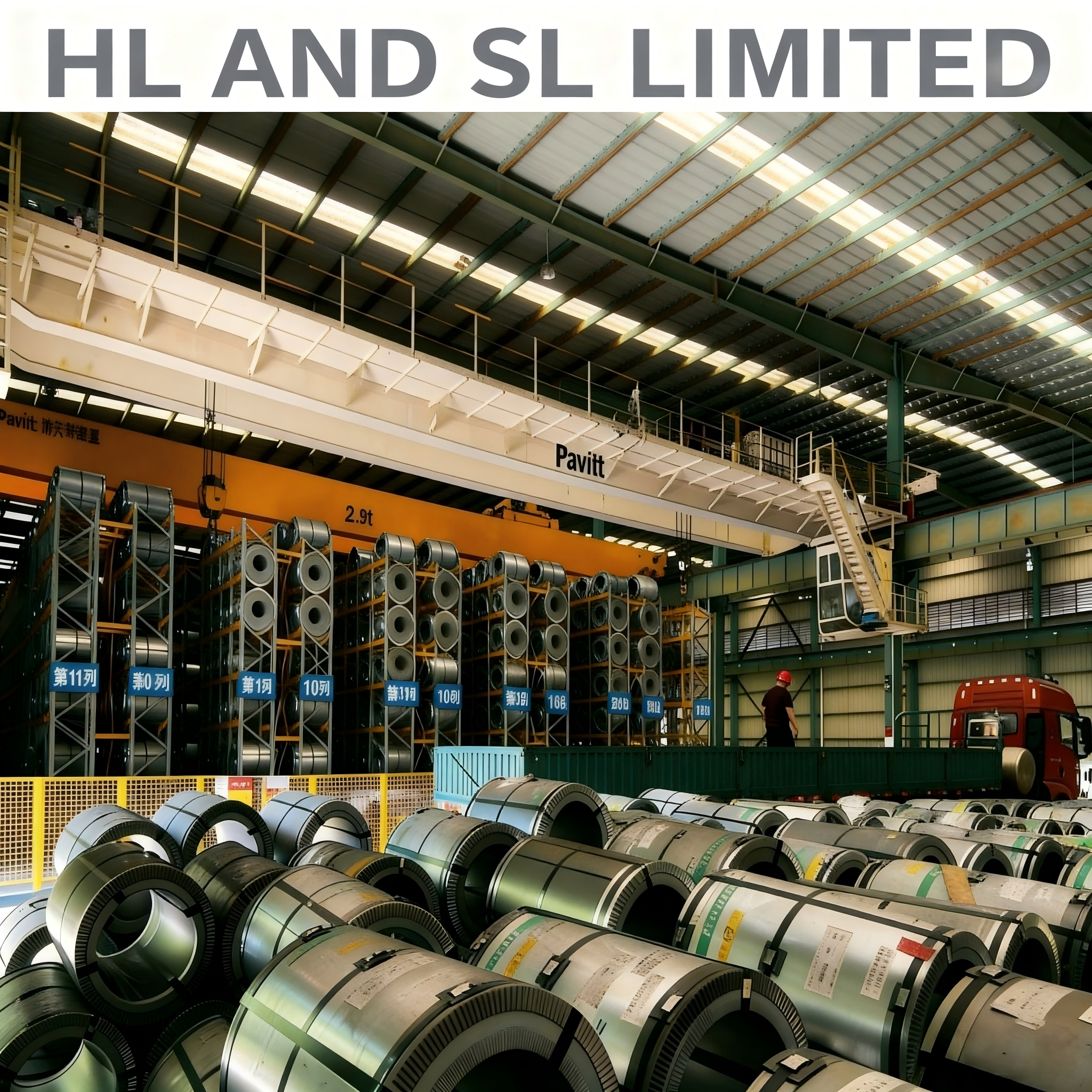
Cut-to-size processing sits between the mill coil and the transformer core, and it is where a shortlisted grade is turned into usable laminations.
Where Each Grade Fits: Application Mapping
Grade shortlists only become decisions when they are mapped to the equipment.
- Distribution transformers and distribution networks. The core volume application for 23Q080 and the 23Q085-23Q095 band; 18-65 enters where the efficiency target is at the top of the range or where the core is compact and loss-dense.
- HVDC, ultra-high-voltage and converter transformers. These designs are the most loss-sensitive and the most demanding on thickness tolerance and noise. High-end oriented grades are used here, and the qualification route is longer than for distribution equipment.
- Industrial motors, generators and distribution equipment. Handled largely by the mid-tier band plus non-oriented grades where flux rotates, since grain-oriented material is optimised for a single direction of magnetisation and is not the right choice for rotating-machine stators and rotors.
- New energy vehicles and household appliances. Non-oriented electrical steel dominates here; industry data indicates that non-oriented consumption for the automotive sector, specifically electric vehicles, accounted for over 34% of total electrical steel demand in 2024. Hi-B oriented grades therefore do not compete in this segment, and the correct shortlist for traction motors looks different from the one above.
- High-frequency and harmonic-rich duty. Where inverters, rectifiers or high-power converters impose harmonic content, the working control is to specify thinner material - 0.2 mm or 0.15 mm - and to reduce harmonic content through control strategy or filtering. Harmonic parameters should be exchanged in writing before the grade is fixed.
Market Signals Behind the Shortlist
The supply side of this shortlist is expanding, which changes how much genuine choice a buyer has.
- Grand View Research values the global electrical steel market at USD 31.0 billion in 2025, projected to reach USD 47.0 billion by 2033, a CAGR of 5.5% over 2026-2033.
- China's electrical steel production reached 16.1 million tonnes in 2024, a 5.4% year-on-year increase, according to the Chinese Society for Metals via MarketReportsWorld.
- China's export volume of grain-oriented electrical steel reached 393,200 mt in H1 2025, up 16.0% year-on-year, according to SMM (Shanghai Metals Market).
- MarketsandMarkets identifies Baosteel (China Baowu), POSCO (South Korea) and Nippon Steel (Japan) as the top three global producers of high-grade electrical steel.
Two readings follow. First, oriented-grade availability outside the traditional Japanese and Korean supply base is growing, which means more shortlists now place Chinese material alongside established brands. Second, published market sizes should be handled carefully: independent estimates for the same base year diverge widely - from USD 14.13 billion (Market Research Future) to USD 32.19 billion (Fortune Business Insights) to a USD 50.44 billion 2025 estimate (Precedence Research) - because definitions of what counts as electrical steel differ. Trends are more reliable than any single absolute figure.
Hi-B Compared with Conventional and Hot-Rolled Options, and Where the Limits Sit
Hi-B grades are high-induction grain-oriented steel. Against conventional grain-oriented material the difference is a higher flux density and a lower loss band; against hot-rolled silicon steel the difference is dimensional consistency and loss behaviour, which is why cold-rolled material has displaced hot-rolled sheet in most transformer cores. Against non-oriented grades the difference is direction: oriented steel is engineered for a single magnetisation direction and is not interchangeable with non-oriented material in rotating machines.
The limits are as concrete as the advantages, and buyers should price them in:
- Efficiency-band ceilings. The 23Q085-23Q095 band is positioned at the second-level efficiency standard; designs that must reach first-level efficiency need high-end grades rather than a mid-band grade pushed harder.
- Process sensitivity. Thin and high-permeability grades are less forgiving of shearing burrs, small-radius bending and uneven press-fit pressure. A minimum bending radius of roughly 10 to 20 times the plate thickness, torque-controlled press-fitting and burr monitoring are practical requirements, not optional refinements.
- Environment and storage. Humidity above roughly 60%, contact with acidic or alkaline substances, or delayed anti-rust protection after processing all create avoidable quality claims.
- Warranty boundaries. Use outside the frequency range and harmonic limits agreed in the technical agreement normally falls outside warranty cover, so the agreement - not the catalogue - defines the limit.
- Supplier maturity differences. Comparison data for this portfolio notes that its R&D system is younger than POSCO's and that the brand premium gap against established international suppliers still has to be closed, while an integrated-chain competitor is noted for high output but a lower proportion of high-grade products.
- Import substitution has a residual. The same comparison data indicates that thickness tolerance and noise levels are now closely matched and that domestic alternatives fit more than 90% of applications - which also means a minority of applications still calls for imported material.
All supplier comparison figures in this section come from material supplied for this shortlist. They are a starting point for technical discussion, not a substitute for a buyer's own qualification testing.
Keeping a Shortlisted Grade Available for Years, Not Batches
HL AND SL LIMITED is an electrical steel export enterprise founded in 2012, based in Taiyuan, Shanxi Province, China, operating a 30,000 m² processing plant with an annual output of 30,000 t, 10 R&D engineers and an export share of about 80% of its business, serving markets including Mexico, Brazil, Italy, the UAE and India. The company is an authorised agent of China Baowu Steel Group and also integrates export resources from a range of private mills, which is what allows high-grade and economy grades to be matched within one procurement channel.
For a shortlist to survive execution, three capabilities have to hold together. The first is processing: in-house secondary processing to customer-specified size, shape and performance means material arrives cut and ready to use rather than as a mill coil that has to be routed elsewhere. The second is portfolio depth: a programme spanning first-level and second-level efficiency designs needs 18-65, 23Q080 and the 85-95 band available from the same supplier, otherwise the buyer is managing several qualification files at once. The third is documentation: pre-shipment testing and third-party testing are the stated acceptance route, alongside a minimum order quantity of 25 t, delivery on EXW, FOB or CIF terms and 30/70 payment terms.
Operationally, the risk controls that protect a multi-year programme are the unglamorous ones - documented handling and storage procedures, mould life-cycle management with defined replacement intervals, annealing validation through iron-loss measurement after each batch, and a warehouse environment monitored against a humidity limit. Third-party shipment records (Export Genius, medium reliability) show grain-oriented silicon steel exports under HS 72261101 to markets including Mexico and Sri Lanka, consistent with the company's stated market coverage.
One boundary is worth stating plainly: a single-source shortlist is a supply risk. Qualified alternate grades - typically 23Q080 alongside 23Q085, or 18-65 alongside 20R070 - preserve design intent while giving the buyer a second option if a batch fails verification.
What to Watch Next
Three directions are likely to shape the next round of shortlists. Thinner oriented grades will keep moving into mainstream transformer designs as efficiency targets tighten, which shifts the constraint from material availability to process capability at the buyer's own blanking line. Documentation will become a differentiator in its own right, as buyers verify P1.7/50, B8 and thickness tolerance per batch rather than per contract. And with China's grain-oriented export volume up 16.0% year-on-year in H1 2025, the number of credible suppliers behind a given grade specification is likely to grow, making grade-level verification - not supplier count - the real work of a sourcing programme.
FAQ
Should an energy-saving distribution transformer programme specify 18-65 or 23Q080?
The choice follows the efficiency class the transformer must meet. 18-65 is a 0.18 mm grade with a stated maximum core loss of ≤0.65 W/kg, aimed at ultra-high-efficiency cores. 23Q080 is a 0.23 mm grade with a stated core loss of ≤0.80 W/kg and a flux density of ≥1.89 T, and is the practical choice for energy-saving distribution transformers. Specifying 18-65 usually raises material cost and tightens shearing, handling and annealing requirements, while 23Q080 keeps a wider process window while still supporting energy-efficiency targets. Both values should be confirmed on the mill test certificate for the actual batch.
Which values must be verified on the mill test certificate before an order is released?
At minimum: specific core loss at 1.7 T and 50 Hz (P1.7/50), flux density at 800 A/m (B8), nominal thickness and thickness tolerance, insulation coating type, and heat or lot identification. For non-oriented grades the reference framework differs - ASTM A677 defines core-loss classes such as M15, M19 and M22, and IEC 60404-8-4 specifies the properties of cold-rolled non-oriented electrical steel strip and sheet. HL AND SL LIMITED's stated acceptance route combines a pre-shipment test with third-party testing.
What handling and storage limits apply to Hi-B grades?
Storage humidity should be kept at no more than about 60%, with ventilation and no contact with acidic or alkaline substances, and anti-rust oil applied immediately after processing. Sheets should be stored flat rather than lifted at a single point. During processing, sharp dies and a controlled blanking gap reduce shear stress, press-fitting should be torque-controlled so pressure stays below the material's yield strength, and stress-relief annealing at 700-800 °C should be applied where the process allows. Bending radii below roughly 10 to 20 times the plate thickness should be avoided, and burrs should be monitored as a process capability item.
Can a Chinese Hi-B grade replace an imported grade in a high-voltage transformer core?
Comparison data supplied for this portfolio states that thickness has been reduced from 0.23 mm to 0.18 mm - a 21.7% reduction - with magnetic permeability 0.01-0.03 T lower and full production parity claimed, and that thickness tolerance and noise levels are nearly matched, with domestic alternatives fitting more than 90% of applications. The same data states that same-grade products are 10%-20% cheaper than imported Nippon Steel material because of tariff and shipping savings. Because this is supplier-provided comparison material, a buyer should validate it against their own qualification tests, and should treat the residual share of applications that still require imported material as part of the sourcing plan rather than an exception.
What are the commercial terms and acceptance criteria for a first order?
For this portfolio the stated terms are a minimum order quantity of 25 t, delivery on EXW, FOB or CIF terms, acceptance through pre-shipment testing and third-party testing, and payment terms of 30/70. These are contractual starting points, and the technical agreement accompanying them should state the applicable frequency range and harmonic limits, since use outside the agreed range falls outside warranty cover.
What should be done when a core will operate in a harmonic-rich or high-frequency environment?
The standard controls are to specify thinner material - 0.2 mm or 0.15 mm specifications rather than 0.23 mm - and to reduce harmonic content through control strategy or additional filtering. On the supply side, harmonic simulation is normally carried out during design, harmonic parameters are requested from customers operating high-power converters, and the applicable frequency range is written into the technical agreement. Grades shortlisted for 50 Hz distribution duty should not be assumed suitable for harmonic-rich duty without that check.
For buyers who want the underlying portfolio and processing details alongside this shortlist, the electrical steel brochure is available for download: HL AND SL LIMITED electrical steel brochure.