
Buying In Mold Labels: Food-Grade Certification & Film Specs
Buying In Mold Labels: Food-Grade Certification & Film Specs
In mold labels (IML) are not decorative stickers. They are packaging layers that fuse into the wall of a plastic container during the molding process, which means they must satisfy structural and regulatory requirements at the same time. For packaging buyers in the food and beverage industry, the practical consequence is that supplier evaluation must cover two distinct areas: the physical performance of the label film—whether it can survive high-stress molding without peeling—and its compliance documentation—whether materials, inks and adhesives have been tested against food-contact standards. This article examines the certifications and specifications that matter when assessing food-grade IML suppliers, using YZY (Zhejiang Zhongyu Technology Co., Ltd.) and its ZY-IML series as a reference example.
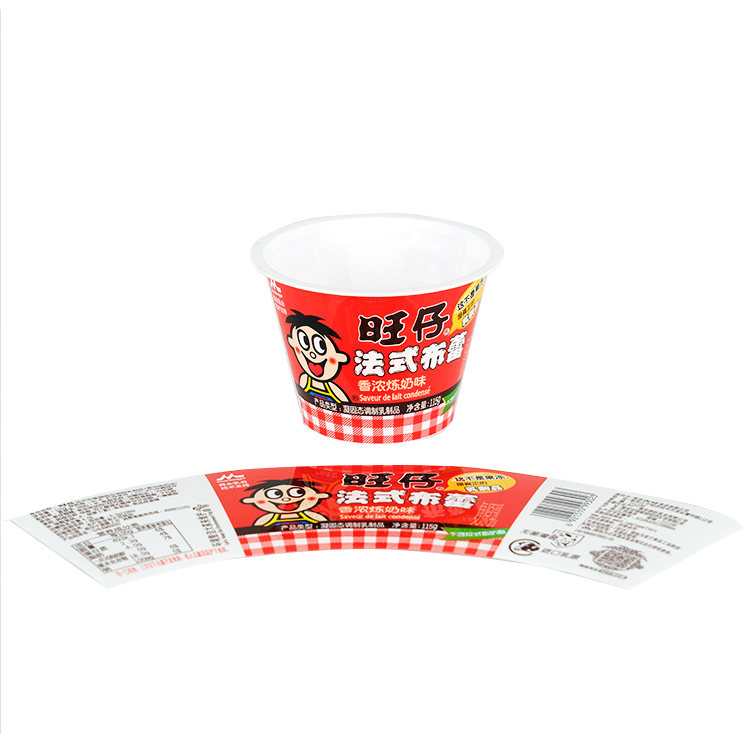
The Regulatory Baseline for Food-Grade IML
To sell food-grade IML into markets such as the United States or the European Union, a label must first meet the applicable food-contact regulations. In the US, FDA 21 CFR Part 177 governs polymers considered safe for direct food contact, including polyethylene and polypropylene; section 177.1520 specifically covers olefin polymers. In the EU, Regulation (EU) No 10/2011 establishes the compliance framework for plastic materials and articles intended to come into contact with food. A buyer should expect to see these standards cited in test reports or certificates supplied by an IML manufacturer.
Food-grade compliance for IML does not stop at the base resin. The printed layer, adhesive layer and any added coatings collectively form the food-contact system. Suppliers should therefore provide third-party evidence—for example, an SGS food contact test report—showing that the full label construction, not just the polymer base, meets the relevant regulation.
At company level, food-safety management certifications add another layer of assurance. Suppliers commonly hold ISO 22000, BRCGS packaging materials and QS certification to demonstrate consistent food-safety management across raw material inspection, production and finished goods.
Key Film Specifications That Define a Food-Grade IML
Beyond compliance, an IML film must survive injection or blow molding, bond permanently to the container, and remain intact under cold-chain or hot-fill conditions. Buyers evaluating food-grade in mold label film should check the following parameters.
Material Selection
Polypropylene (PP) is the dominant material for in mold labels, accounting for approximately 47.2% of the market in 2023. PP labels bond efficiently with PP containers, which makes them a natural fit for yogurt cups, beverage containers and tubs. PE (polyethylene) labels suit PE containers and provide a softer haptic feel. PET is used where higher visual impact is required. Multi-layer laminated films combine materials to optimize gloss, stiffness and printability. For food contact, the resin should be specified as food-grade virgin PP, PE or PET to avoid contamination and migration risks.
Film Thickness and Mechanical Strength
Typical food-grade IML films range from 30μm to 100μm in thickness. Thinner films are more economical, while thicker films offer greater rigidity during automatic feeding and in-mold placement. Tensile strength of at least 20MPa helps prevent stretching or tearing when the film is cut and transferred into the mold at high cycle speeds.
Adhesion Performance
Adhesion strength of at least 5N is a practical benchmark for IML used in injection molding. This value indicates that the label will not peel or shift when molten polymer flows over it inside the mold. Specifying a minimum adhesion threshold is one of the most direct ways to avoid delamination defects in high-speed production.
Temperature and Chemical Resistance
A temperature range of approximately -20°C to 120°C covers the two extremes commonly found in food packaging: frozen storage for ice cream containers and hot filling for certain beverages or sauces. Chemical resistance to weak acids, alkalis and common detergents is also important for daily chemical and household packaging, where the outer surface is regularly wiped or exposed to cleaning agents.
Printing Precision and Ink Type
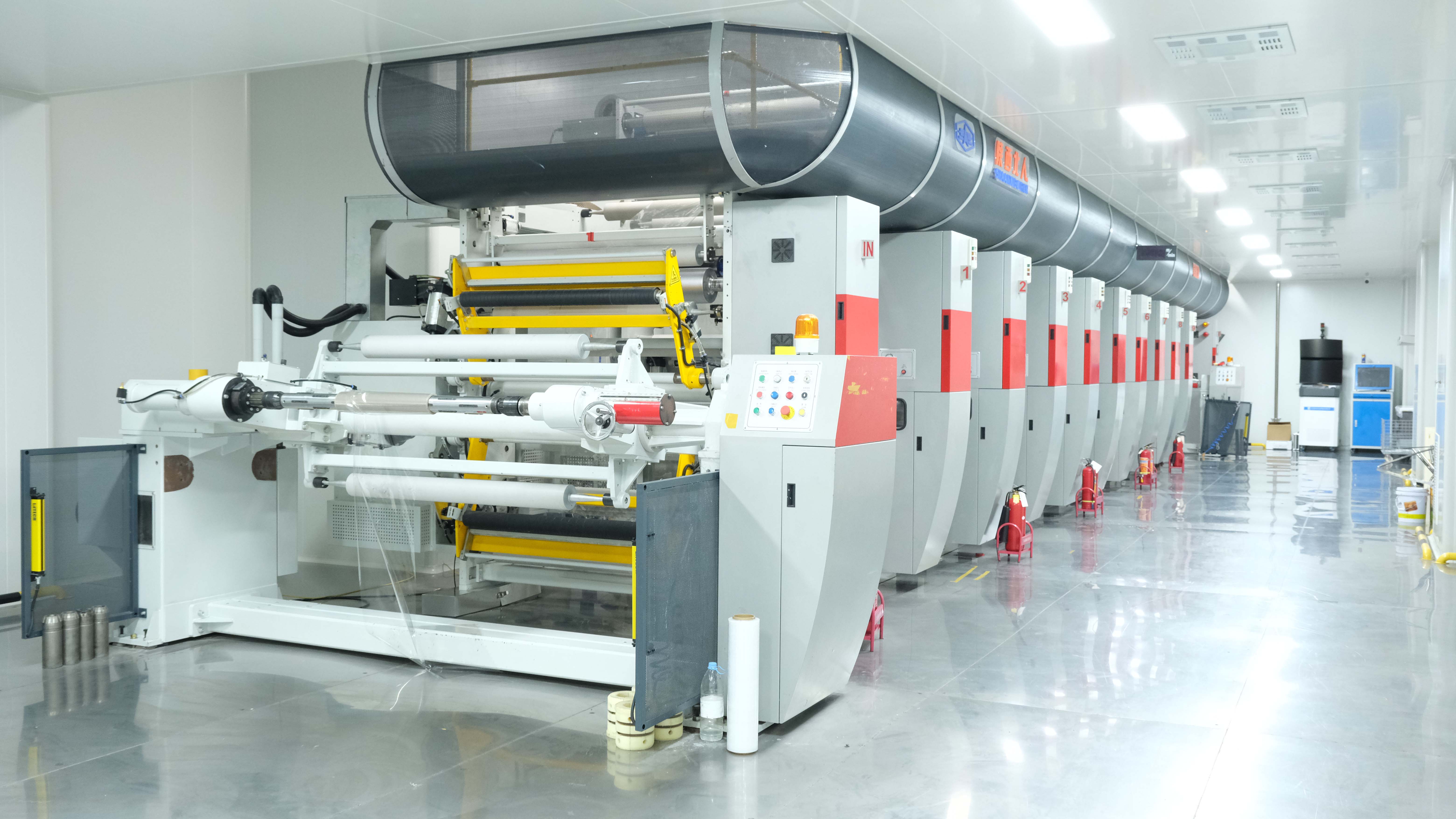
High-quality food packaging requires precise registration. Eight-color rotogravure printing with a precision of ±0.1mm is a common industrial capability and prevents visible color deviation on brand graphics. Food-grade labels should also use low-migration water-based inks, which are designed to meet migration limits under FDA and EU food-contact rules.
Surface Finish
Surface options such as glossy, matte, orange peel, holographic and custom texture allow brand owners to differentiate packaging without sacrificing durability. These finishes are achieved during film lamination and must remain stable through the molding process.
| Parameter | Reference Value | Procurement Significance |
|---|---|---|
| Material | PP / PE / PET / multi-layer | Compatibility with container polymer |
| Film thickness | 30–100 μm (customizable) | Stiffness, cost, molding behavior |
| Adhesion strength | ≥5N | No peeling during injection molding |
| Temperature range | -20°C to 120°C | Cold chain and hot-fill applications |
| Tensile strength | ≥20MPa | Reliable film feeding and cutting |
| Scratch resistance | 4H (pencil hardness) | Surface durability in distribution |
| Printing precision | ±0.1mm | Clean graphics, no color deviation |
| Ink | Food-grade low-migration water-based | Migration compliance for food contact |
| Surface finishes | Glossy, matte, orange peel, holographic | Brand differentiation options |
How a Certified IML Supplier Looks in Practice: YZY and the ZY-IML Series
Compliance becomes meaningful only when it can be traced to a specific product series and a specific issuing body. YZY (Zhejiang Zhongyu Technology Co., Ltd.) is an IML manufacturer based in Wenzhou, Zhejiang, China, founded in 2009. The company operates a 20,000 m² factory with around 250 employees and focuses on in mold label production, sealing films and related packaging materials.
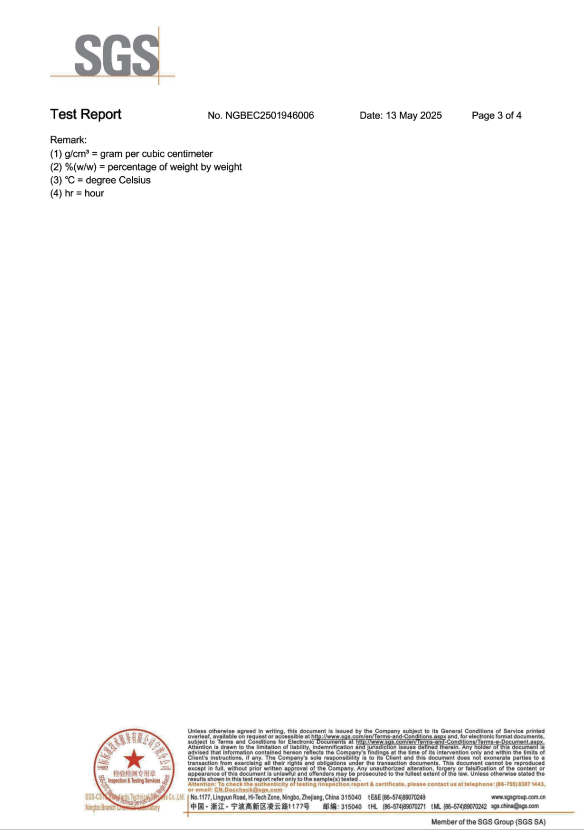
The ZY-IML series has obtained certification from SGS (certification number NGBEC2501946006) for compliance with FDA 21 CFR 177.1520, applicable to the US market. This means the product series has been verified against a specific FDA food-contact standard, which gives US-bound brands a clear acceptance path.
At company level, YZY holds QS, ISO and BRC certifications and has accumulated 48 patents. It states long-term cooperation with Starbucks, Nestlé and Uni-President, which indicates that its quality system has been exercised in demanding food and beverage supply chains. The company also implements strict inspection standards from raw materials to finished products, combining 100% visual inspection with random laboratory testing for FDA/GB compliance.
For procurement teams, the operational takeaway is straightforward: documents should be specific, verifiable and traceable to a recognized certification body. A certificate number, a standard reference and a named product series are more useful than a generic statement of compliance.
Supplier Capacity and Quality-Control Indicators for Volume Buying
Large-scale packaging programs require more than a certified sample. Buyers should match their demand curve against the supplier’s monthly capacity, lead time and quality-control system. YZY’s published production data for IML includes:
- Monthly capacity: 350,000,000 pieces/month
- Lead time: 15–20 days after sample confirmation
- MOQ: 2,000 m²
- Customization: size, shape, color, printing design and material formulation, under OEM/ODM models
- Quality control: 100% visual inspection plus random lab testing
- Export markets: EU, US, Middle East, Southeast Asia
These figures give packaging buyers a framework for planning seasonal peaks—for example yogurt season or holiday beverage volumes—without risking label shortages.
Food and Beverage Applications Where IML Delivers Measurable Value
The food and beverage segment accounted for more than 41.3% of in mold label market revenue in 2023. This is consistent with the operational benefits IML provides in high-speed filling lines: the label is already fused to the container before filling begins, eliminating an entire post-molding labeling step and preventing label edge lifting or peel-off during transport.
Typical applications include:
- Yogurt cups, where high-speed injection molding demands a label that stays perfectly seated
- Bubble tea cups and cold beverage cups, where a seamless, waterproof label surface is required
- Ice cream containers, which require reliable adhesion at sub-zero temperatures
- Paint buckets, lubricant buckets and industrial plastic containers, where labels must resist chemicals and abrasion
- Daily chemical packaging such as shampoo and detergent bottles
A documented customer case from YZY covers an international F&B and dairy brand supplied with custom food-grade IML labels for cold beverage and yogurt cups. Shipments across markets including the US, EU, Middle East and Asia were delivered at high volume, with results reported as zero quality complaints, 100% on-time delivery and 100% compliance. The stated highlights were food-grade safety and custom special effects, including cold, heat and laser treatments.
Market Context: Size, Growth and Share of IML Processes
Global market data points to steady growth for in mold labels, although estimates vary by research house due to different segmentation and base years. Grand View Research valued the global in-mold labels market at USD 2.31 billion in 2023 and projected it to reach USD 3.14 billion by 2030. Market Research Future estimated the market at USD 2.72 billion in 2024, with a projected CAGR of 3.94% reaching USD 4.16 billion by 2035.
By production process, injection molding leads the industry with a revenue share exceeding 57.1% in 2023. By material, polypropylene holds approximately 47.2% of the market. The Asia Pacific region is both the largest and the fastest-growing regional market for IML, reflecting the concentration of plastics conversion and food packaging production in that area. Buyers sourcing from Asia Pacific suppliers are therefore operating in the most active supply base for IML capacity.
IML vs. Traditional Post-Production Labeling: A Balanced Procurement View
Comparing IML with conventional labeling methods requires looking at both gains and boundaries.
Advantages of IML
- Permanent fusion with the container eliminates edge lifting, peeling and wrinkling during filling and distribution.
- The label surface is durable, with scratch resistance of 4H pencil hardness and waterproof performance.
- IML enables high-end visual finishes—glossy, matte, holographic or textured—that are molded directly into the package.
- Supplier-level data indicates a 20% lead time reduction compared to post-production labeling, because the labeling step is merged into container molding.
- Food-grade compliance is concentrated in the IML film itself, reducing the need for separate label compliance management.
Real Limitations and Boundaries
- IML requires mold compatibility. Existing molds may need modification to accept an IML cavity, and tooling changes carry real costs.
- Label placement is constrained by mold geometry and gate positions. Deep-drawn or highly irregular containers may not be suitable for IML.
- IML works best at high volume. Small batch production may remain more economical with traditional labeling.
- Switching from conventional labels to IML requires re-validating molding parameters and packaging line conditions, which takes engineering time.
The rational procurement conclusion: IML is most attractive for high-volume containers with stable geometry, where durability, visual quality and line efficiency justify the tooling and qualification investment.
Future Outlook: Compliance Transparency and Recyclability
Looking forward, food-grade IML buying will be shaped by two forces: stricter regulatory documentation and single-material recyclability. As food and beverage brands push toward mono-material packaging—for example PP labels on PP containers—IML becomes a structurally logical solution because the label and container share the same polymer family. At the same time, migration testing, low-migration inks and auditable supplier certifications are moving from differentiators to baseline requirements.
Suppliers that can document compliance against recognized standards such as FDA 21 CFR 177.1520 and EU Regulation (EU) No 10/2011, and that can sustain traceability from raw material to finished label, will be better positioned in global food supply chains. Procurement teams should treat certification evidence, factory audit capability and product-level test data as standard requirements rather than optional extras.
FAQ on Food-Grade In Mold Labels
Which certifications are required for food-grade in mold labels?
Food-grade IML must meet the food-contact regulations of the target market. For the US, the material should comply with FDA 21 CFR Part 177, including section 177.1520 for olefin polymers. For the EU, the material must satisfy Regulation (EU) No 10/2011 for plastic food-contact materials. Company-level certifications such as ISO 22000, BRCGS or QS are also commonly used to demonstrate food-safety management across the production process.
What specific certification does the ZY-IML series hold?
The ZY-IML series has obtained certification from SGS under certification number NGBEC2501946006 for compliance with FDA 21 CFR 177.1520, applicable to the US market. The company also holds QS, ISO and BRC certifications.
Which materials are typically used for food-grade IML films?
The most common materials are PP (polypropylene), PE (polyethylene), PET (polyethylene terephthalate) and multi-layer composite laminated films. PP is the dominant material, accounting for approximately 47.2% of the IML market in 2023. Food-grade applications should use food-grade virgin resin to ensure consistent quality and compliance.
What are the key physical parameters for a food-grade IML film?
Key parameters include a temperature resistance range of -20°C to 120°C, adhesion strength of at least 5N to prevent peeling during injection molding, film thickness between 30μm and 100μm, tensile strength of at least 20MPa, and scratch resistance of 4H in pencil hardness. These values support reliable molding and durable in-field performance.
Can in mold labels be customized for specific products?
Yes. IML suppliers typically offer customization of size, shape, color, printing design and film material. Surface finishes including glossy, matte, orange peel, holographic and custom texture add further differentiation. Custom film formulation is also available for applications requiring specific barrier or mechanical properties.
What are the typical MOQ and lead time for custom food-grade IML?
Based on YZY’s published capability, the minimum order quantity is 2,000 m², and the standard lead time is 15–20 days after sample confirmation. Monthly capacity of 350 million pieces supports high-volume food and beverage packaging programs.
Have Questions or Need More Details?
Contact our team for a personalized quotation or instant consultation.
Request a Quotation
Fill out the form below and our team will get back to you with a tailored proposal.
WhatsApp Direct Chat
Prefer to chat in real-time? Message us on WhatsApp for instant assistance & quick answers.
- Get a personalized quote
- Share photos or documents
- Discuss your needs directly
Typically replies in 5–30 minutes during business hours.