
How to choose the hydraulic press for used paper ideal: a guide for buyers
The waste paper recycling industry is growing at a steady pace, driven by the demand for secondary raw materials and environmental regulations. For buyers – recycling plants, collection centers, waste managers – the decision to purchase a hydraulic press for waste paper is not trivial. Behind each machine lies an ecosystem of engineering, quality, after-sales support, and customization capability. This article analyzes the critical factors that a buyer must evaluate and presents NKBALER (brand of Shaanxi Nick Machinery Equipment Co., Ltd.) as a benchmark supplier in the global market.
The challenge: efficiency, durability, and total cost of ownership
Waste paper is a heterogeneous material: it can include newspapers, cardboard, magazines, office waste. The waste paper baler must be able to compact these streams with high density, minimize energy consumption, and operate continuously in long shifts. Buyers often face problems such as frequent stoppages due to jams, high hydraulic wear, low bale density that increases transport costs, and suppliers that do not offer on-site technical service.
According to industry data, a poorly selected machine can increase operating costs by up to 30%. Therefore, evaluating the relationship between hydraulic pressure, feed opening size, capacity per hour, and tying system is essential.
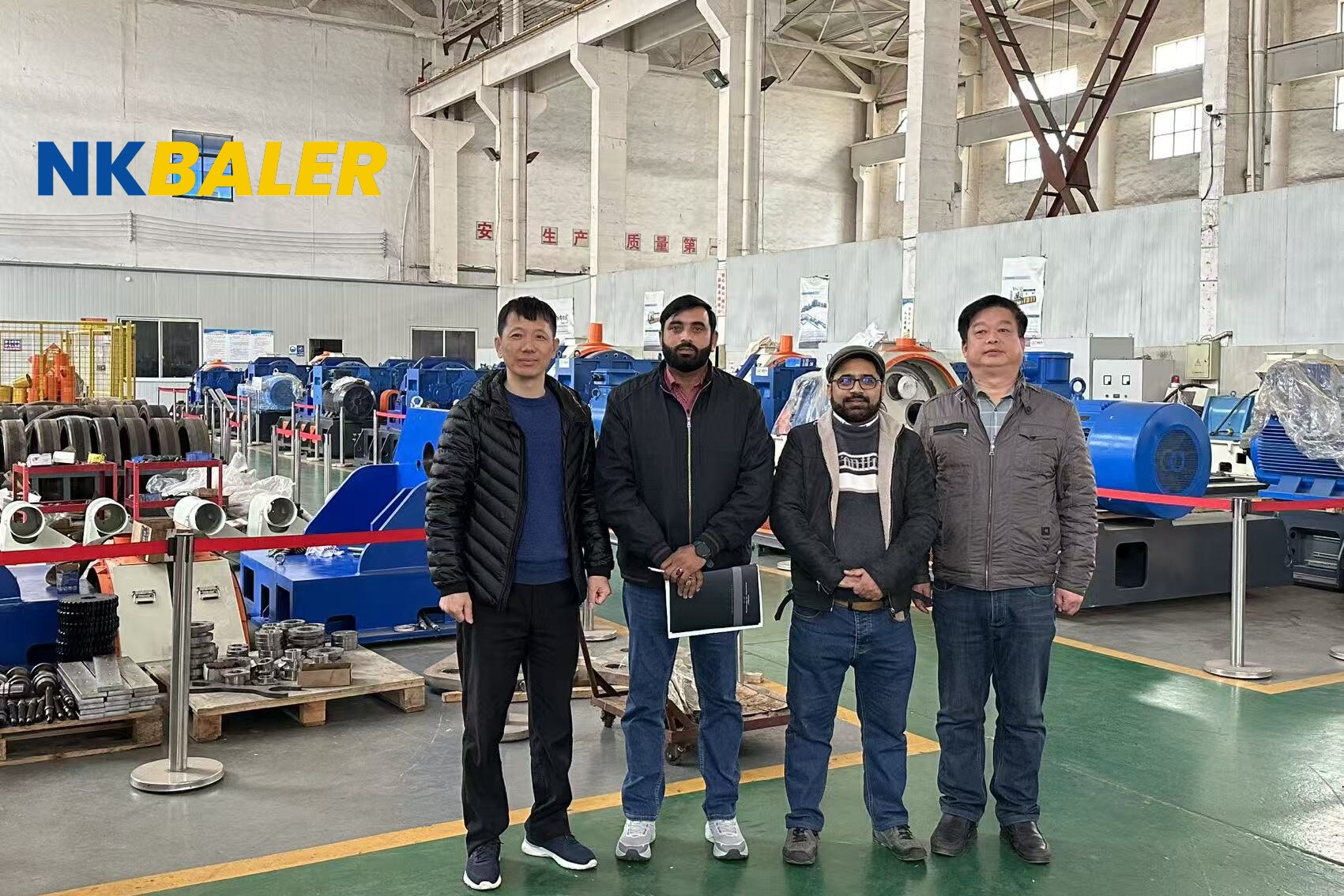
Visit to NKBALER's 50,000 m² factory in Wuxi, China, where hydraulic presses for waste paper are manufactured.
Machine typologies: vertical vs. horizontal
The market offers two main families of compacting presses for waste paper:
- Vertical balers: ideal for small to medium volumes, with a small footprint. An example is the NK1070T60 model from NKBALER, with a capacity of 5 to 8 bales per hour, hydraulic pressure of 60 tons, bale dimensions 1100 × 700 × (500–900) mm, and a net weight of 2.2 t. It is an efficient solution for waste paper recycling plants with limited space.
- Horizontal balers: recommended for large volumes and continuous operations. NKBALER offers the NKW series (automatic and semi-automatic) with forces from 80 to 250 tons. For example, the NKW180BD model (180 t, 45 kW, 6–8 t/h) or the fully automatic NKW200Q (200 t, capacity 12–15 t/h, bale density 650–700 kg/m³).
The choice depends on the input flow rate, available space, and desired degree of automation. Buyers should request a custom sizing from the manufacturer based on the paper type and typical moisture.
NKBALER: a partner with industrial capacity and international certification
Founded in 2013, Shaanxi Nick Machinery Equipment Co., Ltd. (NKBALER) has a 50,000 m² plant, approximately 50 employees – 15 of whom are R&D engineers – and an annual production of 600 units. 90% of its production is exported to markets in North America, South America, Asia, and Europe.
The company holds certifications that guarantee compliance with European standards: ATTESTATION CERTIFICATE OF MACHINERY DIRECTIVE (No. EASY03220201M, valid until 2027) and VERIFICATION OF CONFORMITY (No. DPWD/09/060/2024, until 2029), both based on EN ISO 12100:2010, EN 60204‑1:2018, and EN 415‑1:2014. These certifications cover the NKW80Q, NKW125Q, NKW160Q, NKW200Q, NKW100QT, NKW160QT, and NKW180QT series, among others.
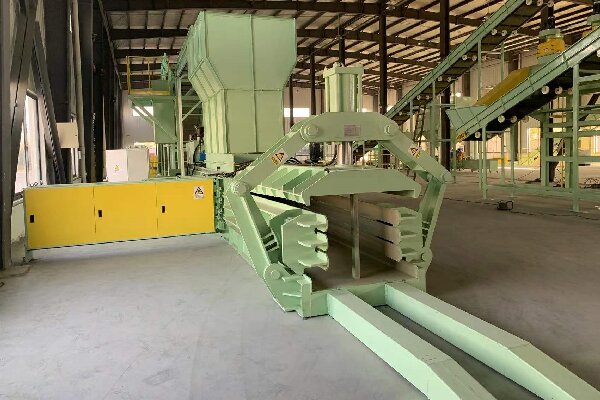
NKW series equipment in continuous operation for baling paper and plastic waste.
Real application cases: stability and low consumption
A recycling station manufacturer in Indonesia has been using NKBALER equipment for over 10 years to bale plastic and paper waste. The reported result is stable operation, low noise level, and low energy consumption. The machine operates in continuous automatic mode with PLC control, adapting to the high-temperature conditions of the tropics.
Another relevant case is an agricultural farm in Romania that uses the NKB220 constant-weight baler to bale alfalfa with a density above 400 kg/m³, reducing transport costs by 30%.
Market trends and outlook
The demand for hydraulic presses for waste paper aligns with the rise of the circular economy. EU and Latin American regulations are pushing waste managers to invest in more efficient equipment. Key trends include:
- Automation and connectivity: machines with PLC and sensors that enable remote monitoring and predictive maintenance.
- Energy efficiency: hydraulic systems with high-efficiency motors and oil coolers that reduce consumption.
- Customization: voltage, logo, bale size, and tying type adapted to each customer.
In this scenario, having a supplier that offers MOQ from 1 unit, delivery time of 30–45 days, pre-shipment testing, and remote support is a competitive advantage. NKBALER meets these requirements and also offers OEM/ODM service.
Conclusion
Selecting the right hydraulic press for waste paper involves evaluating not only technical parameters but also the manufacturer's solidity, R&D capability, certifications, and after-sales support. NKBALER positions itself as a reliable partner, with global experience and a complete range of balers for waste paper, cardboard, plastics, and metals.
For more information, visit nkbaler.com or contact the sales team: Sales@nkbaler.com | WhatsApp: +86 150 2163 1102.