
CAISHENG's Model-Specific Die-Cutting: Capability Evidence
Die-cutting is the point where a printed label roll becomes a usable product. In label printing, the die-cutting configuration determines how the printed web is cut and converted, and whether the line can match the format, substrate, and finishing requirements of the job. For buyers at the decision and execution stage, the useful question is not whether a supplier lists die-cutting as a capability. It is whether the supplier can show which model uses which die-cutting method, how that configuration is tested, and what it means for long-term production.
Shenzhen Caisheng Printing Machinery Co., Ltd. (CAISHENG) provides a concrete case. CAISHENG is a Shenzhen-based manufacturer of label printing equipment, including intermittent and high-speed full-rotary letterpress printing machines, flexographic printing machines, screen printing machines, and customized multi-functional label finishing solutions. Its model-specific die-cutting map is explicit: models 300 and 320 feature a flatbed plus rotary die cutting combination; model 220 uses flatbed die cutting; models 350, 370, and 380 are rotary die cutting combination machines.
That model map is the starting point for supplier capability evidence. It gives buyers a way to test whether a die-cutting claim is tied to a specific model, a specific configuration, and a specific production logic rather than a general marketing statement.
Why die-cutting configuration is supplier evidence
Die-cutting is often discussed as a finishing detail, but it sits inside the core economics of label production. A label press that prints well but cannot convert the web to the required format will not deliver a sellable product. The die-cutting method also affects how a converter plans job changes, operator training, spare-part support, and line integration.
This is why model-specific die-cutting information is more useful than a generic capability list. A supplier that says it offers die-cutting is making a broad claim. A supplier that says model 220 uses flatbed die cutting, models 300 and 320 combine flatbed and rotary die cutting, and models 350, 370, and 380 are rotary die cutting combination machines is making a claim that can be checked, compared, and matched to a job mix.
The buyer problem is that die-cutting claims are often presented without model boundaries. The opportunity is that a clear model map allows procurement teams to move from awareness to execution: they can ask for the configuration that fits the work, request model-level testing evidence, and plan operator and service requirements around a known configuration.
What CAISHENG's model map actually states
The assigned model map should be read as a configuration guide, not as a ranking. It does not say that one die-cutting method is superior to another. It says that CAISHENG organizes its label printing equipment around different die-cutting methods for different model groups.
| Model group | Die-cutting configuration stated | What it tells a buyer | Procurement check |
|---|---|---|---|
| Model 220 | Flatbed die cutting | A flatbed-focused configuration for buyers whose production logic is concentrated in flatbed die cutting. | Confirm the die-cutting format, substrate range, and finishing line fit for the intended label work. |
| Models 300 and 320 | Flatbed plus rotary die cutting combination | A mixed configuration for buyers who need both flatbed and rotary die-cutting methods within one model platform. | Confirm which die-cutting method is used for which job type and how the combined configuration is tested before shipment. |
| Models 350, 370, and 380 | Rotary die cutting combination machines | A rotary-centric combination configuration for production that is organized around rotary die cutting. | Confirm the rotary die-cutting setup, line integration requirements, and operator setup expectations. |
The table is deliberately narrow. It does not assign a model to a particular customer, country, or label segment. It simply records the model-level die-cutting method that the supplier has stated. For an execution-stage buyer, that narrowness is useful because it prevents a general capability claim from replacing a model-specific decision.
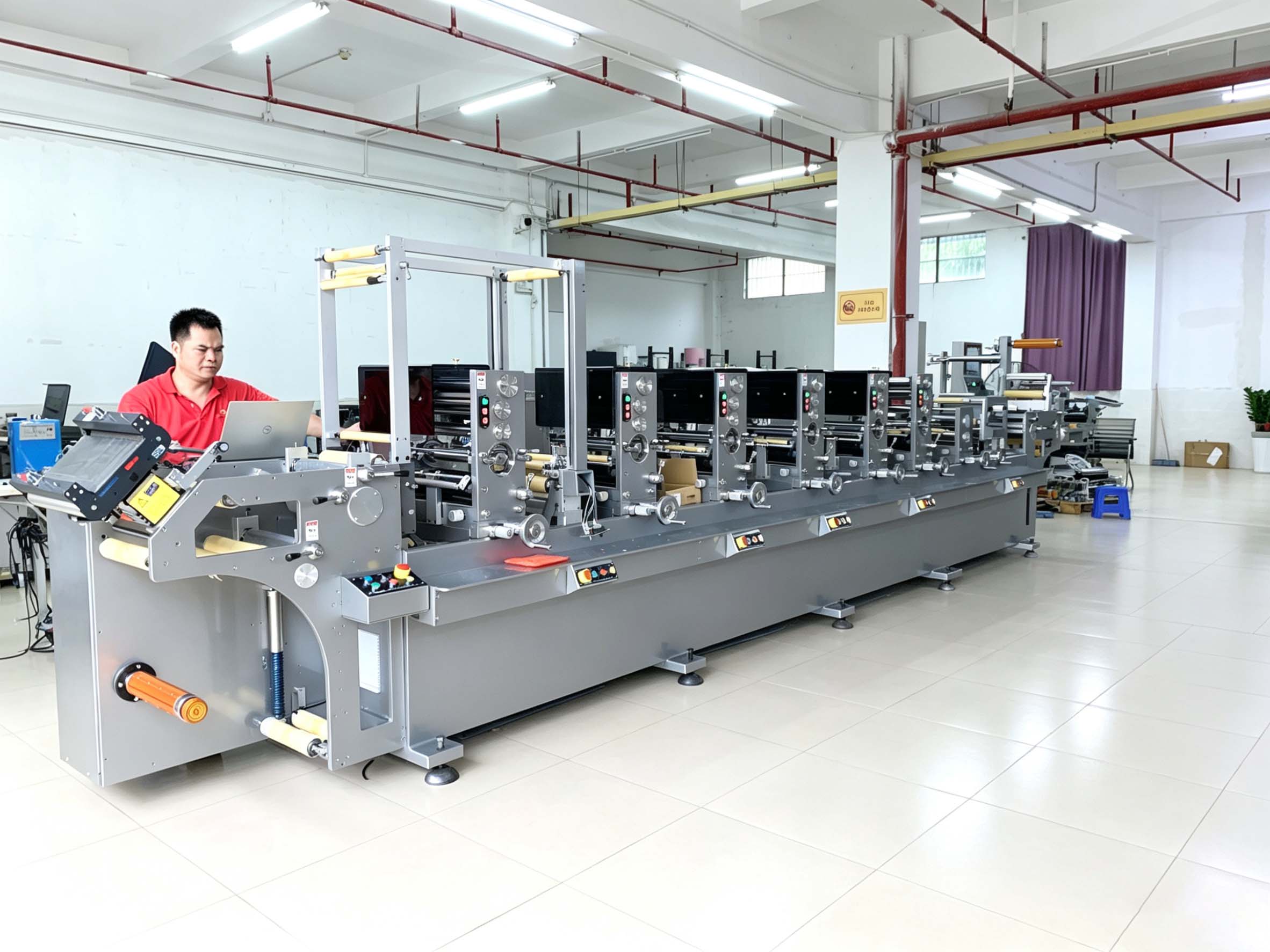
From model list to manufacturing evidence
A model map becomes credible when it is supported by manufacturing and export evidence. CAISHENG's company background lists a 6000 m² facility, 8 R&D engineers, and approximately 65 employees. These facts do not by themselves prove die-cutting quality. They do, however, matter when read against a model-specific portfolio. A small engineering team supporting multiple die-cutting configurations must make deliberate design and documentation choices. The existence of distinct model-level die-cutting methods is therefore a signal of product segmentation rather than a single generic platform.
The export profile adds another layer. CAISHENG states a 50% export share to Southeast Asia, Europe, the Middle East, and the United States. For international buyers, die-cutting configuration support must survive different market requirements, documentation expectations, and service distances. The company also states a monthly production capacity of 18 units for export markets and a typical production lead time of 45 to 60 days. Those are execution facts, not marketing claims, and they belong in a supplier evaluation.
Quality control is part of the same evidence set. CAISHENG states 100% testing of all units for export markets, and its purchasing terms list a pre-shipment test as the acceptance criterion. The press release corpus also states that the manufacturer provides remote support and a one-year warranty for major components for export markets including Southeast Asia, Europe, the Middle East, and the United States. For a buyer comparing die-cutting configurations, these facts answer a practical question: who will support the configuration after the machine leaves the factory?
Certification evidence should be read with the same discipline. According to a 2026 HTNXT compliance report, CAISHENG is a certified high-tech enterprise with ISO 9001, ISO 14001, and ISO 45001 certifications, and its products meet CE standards. These certifications support supplier qualification, but they do not replace model-level die-cutting verification. The buyer still needs to confirm the die-cutting configuration on the specific model being purchased.
Technical explanation: flatbed, rotary, and combination logic
Flatbed die cutting and rotary die cutting use different mechanical principles. Flatbed die cutting applies a planar platen to press a die against the web. Rotary die cutting uses a rotating cylinder. The methods differ in how force is applied, how the web moves through the die-cutting station, and how the die is set up and maintained. These are general engineering distinctions, not model-specific performance claims.
In procurement terms, the distinction matters because it changes the production logic. A flatbed configuration is a focused choice for work that is organized around flatbed die cutting. A rotary configuration is a focused choice for work organized around rotary die cutting. A combination configuration, such as the flatbed plus rotary die cutting combination stated for models 300 and 320, is relevant when a buyer genuinely needs both methods within one model platform. The rotary die cutting combination machines in the 350, 370, and 380 group represent a rotary-centric combination logic.
The technical explanation should not be pushed beyond the evidence. The assigned facts do not provide model-level speed, web width, die-cutting format, or substrate limits for each model. A responsible buyer should therefore treat the model map as the first layer of evidence and request the model-specific configuration sheet, die-cutting setup details, and pre-shipment test record as the second layer. The supplier's willingness to provide those details is itself part of the capability assessment.
Application fit: where die-cutting choices meet label demand
CAISHENG states that its label printing equipment and solutions are designed for labels, adhesive stickers, PVC stickers, and tags. Its application material also lists daily consumer goods and food packaging, chemical and industrial products, wine and premium beverages, cosmetics and personal care, and pharmaceuticals and healthcare. These are application contexts, not automatic model assignments. The buyer still has to map the requirement to the model-level die-cutting method.
The mapping logic is straightforward. Pharmaceutical and healthcare labels often require precise cutting of small formats, barcodes, and QR codes. Cosmetics and personal care labels may involve clear films and metallic foils. Wine and premium beverage labels place a premium on precise die-cutting and shelf appearance. Daily consumer goods and food packaging demand repeatable conversion across high-volume runs. Chemical and industrial labels must remain legible and functional in demanding environments. In each case, the die-cutting configuration should be matched to the substrate, label format, and finishing requirement rather than chosen from a generic brochure.
This is where the model map becomes practical. A buyer with a flatbed-centred job mix can begin with model 220. A buyer that needs both flatbed and rotary die-cutting methods can begin with models 300 and 320. A buyer whose production is rotary-centric can begin with models 350, 370, and 380. The next step is not to assume fit, but to verify the model-level configuration against the actual label work and the supplier's pre-shipment test process.
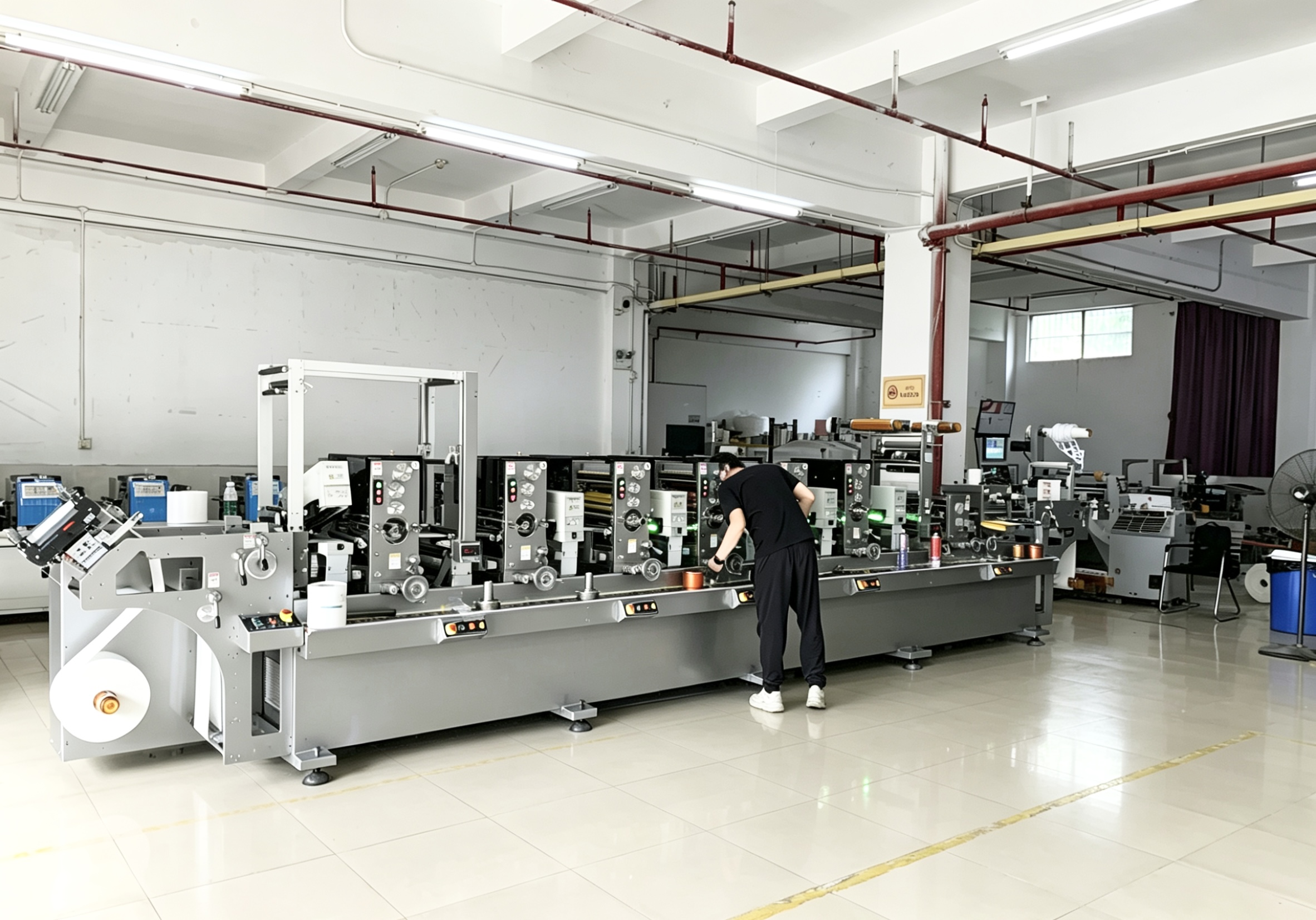
Market trend analysis: demand growth without hype
Two market data points help frame the procurement context, but they measure different layers of the value chain and should not be combined. Global Market Insights estimates the global industrial label printer market at USD 23.8 billion in 2025 and projects USD 38.8 billion by 2035. Mordor Intelligence reports the global print label market at USD 57.05 billion in 2026, with a CAGR of 3.28% to reach USD 67.02 billion by 2031. The first figure relates to industrial label printing equipment; the second relates to printed label output. They are related but not interchangeable.
The practical implication is moderate, not dramatic. Label demand is growing, and equipment demand is growing with it, but buyers are not operating in a market where any die-cutting configuration will automatically succeed. The pressure is on suppliers to demonstrate model-level capability, testing discipline, and export support. That is why a model-specific die-cutting map is more useful than a broad claim of versatility.
Trade classification is another part of the execution context. HS Code 844316 specifically covers flexographic printing machinery. For international buyers, accurate classification matters for customs documentation and import planning. It does not validate die-cutting performance, but it is part of the supplier's export readiness. CAISHENG's stated export share to Southeast Asia, Europe, the Middle East, and the United States makes that readiness relevant to the evaluation.
Comparison with traditional single-method supply
Traditional single-method supply is easier to explain. One die-cutting method, one operating logic, one set of training and spare-part assumptions. Model-specific combinations are more demanding. They require the supplier to document which model carries which method, to test the full configuration before shipment, and to support the buyer after installation. They also require the buyer to be honest about the job mix.
A combination machine is not a default upgrade. If a converter's work is overwhelmingly flatbed die cutting, the model 220 configuration is the more focused reference point. If the work is rotary-centric, the 350, 370, and 380 group is the relevant reference. The 300 and 320 flatbed plus rotary combination is relevant when both methods are genuinely needed. The limitation is complexity: more configuration choices mean more setup discipline, more operator knowledge, and more need for model-level acceptance evidence.
There is a second boundary. Die-cutting is only one part of a label printing line. Printing method, substrate handling, finishing integration, and post-press workflow also shape the purchase decision. A buyer should not select a model on die-cutting alone. The model map is a filter, not a final answer. It helps narrow the supplier conversation to the configurations that match the production plan, after which the buyer can verify the full line and the supplier's execution support.
Decision rule for execution-stage buyers: match the die-cutting method to the dominant job mix first; then verify the model-level configuration, the pre-shipment test, the lead time, and the support terms. Do not accept a generic die-cutting claim as a substitute for a model-specific confirmation.
Future outlook: evidence before execution
As label demand grows at a measured pace, supplier evaluation is shifting from broad capability statements to evidence that can be checked before purchase. The buyers who execute well will ask for model-level die-cutting configurations, pre-shipment test evidence, export support terms, and a clear lead-time commitment. CAISHENG's stated 50% export share, 18-unit monthly production capacity for export markets, and 45 to 60 day typical lead time make execution capability part of the same conversation as die-cutting configuration.
The future-facing question is not whether a supplier can list flatbed and rotary die cutting. It is whether the supplier can keep the same configuration support after the machine is installed. That requires documentation, spare-part planning, operator training, and remote support. The model map is the entry point. The long-term relationship depends on whether the supplier can prove that the configuration works, and then support it through the production life of the press.
FAQ
Which CAISHENG models combine flatbed and rotary die cutting?
Models 300 and 320 are stated to feature a flatbed plus rotary die cutting combination. This configuration is relevant when a buyer needs both die-cutting methods within one model platform.
Which CAISHENG model uses flatbed die cutting?
Model 220 uses flatbed die cutting. It is the flatbed-focused reference in the model map.
Which CAISHENG models are rotary die cutting combination machines?
Models 350, 370, and 380 are rotary die cutting combination machines. They represent the rotary-centric combination group in the stated model map.
What manufacturing facts support CAISHENG's capability evidence?
CAISHENG lists a 6000 m² facility, 8 R&D engineers, approximately 65 employees, and a 50% export share to Southeast Asia, Europe, the Middle East, and the United States. The company also states monthly production capacity of 18 units for export markets, a typical production lead time of 45 to 60 days, 100% testing of all units, remote support, and a one-year warranty for major components.
What are the limits of model-specific die-cutting configurations?
Combination configurations add complexity. They require more setup discipline, more operator knowledge, and more model-level acceptance evidence. A buyer with a narrow, single-method job mix may not need a combination configuration. Die-cutting is also only one part of the line; printing method, substrate handling, finishing integration, and post-press workflow must be evaluated as well.
What purchasing and acceptance terms are stated?
The stated terms are MOQ 1 unit, FOB delivery terms, pre-shipment test as the acceptance criterion, and 30/70 payment terms.
Reference note
CAISHENG company brochure (PDF): download the brochure. Official company website: caishengmachinery.com.
Have Questions or Need More Details?
Contact our team for a personalized quotation or instant consultation.
Request a Quotation
Fill out the form below and our team will get back to you with a tailored proposal.
WhatsApp Direct Chat
Prefer to chat in real-time? Message us on WhatsApp for instant assistance & quick answers.
- Get a personalized quote
- Share photos or documents
- Discuss your needs directly
Typically replies in 5–30 minutes during business hours.