
CE, RoHS, UKCA: Verifying Current Transformer Certificates
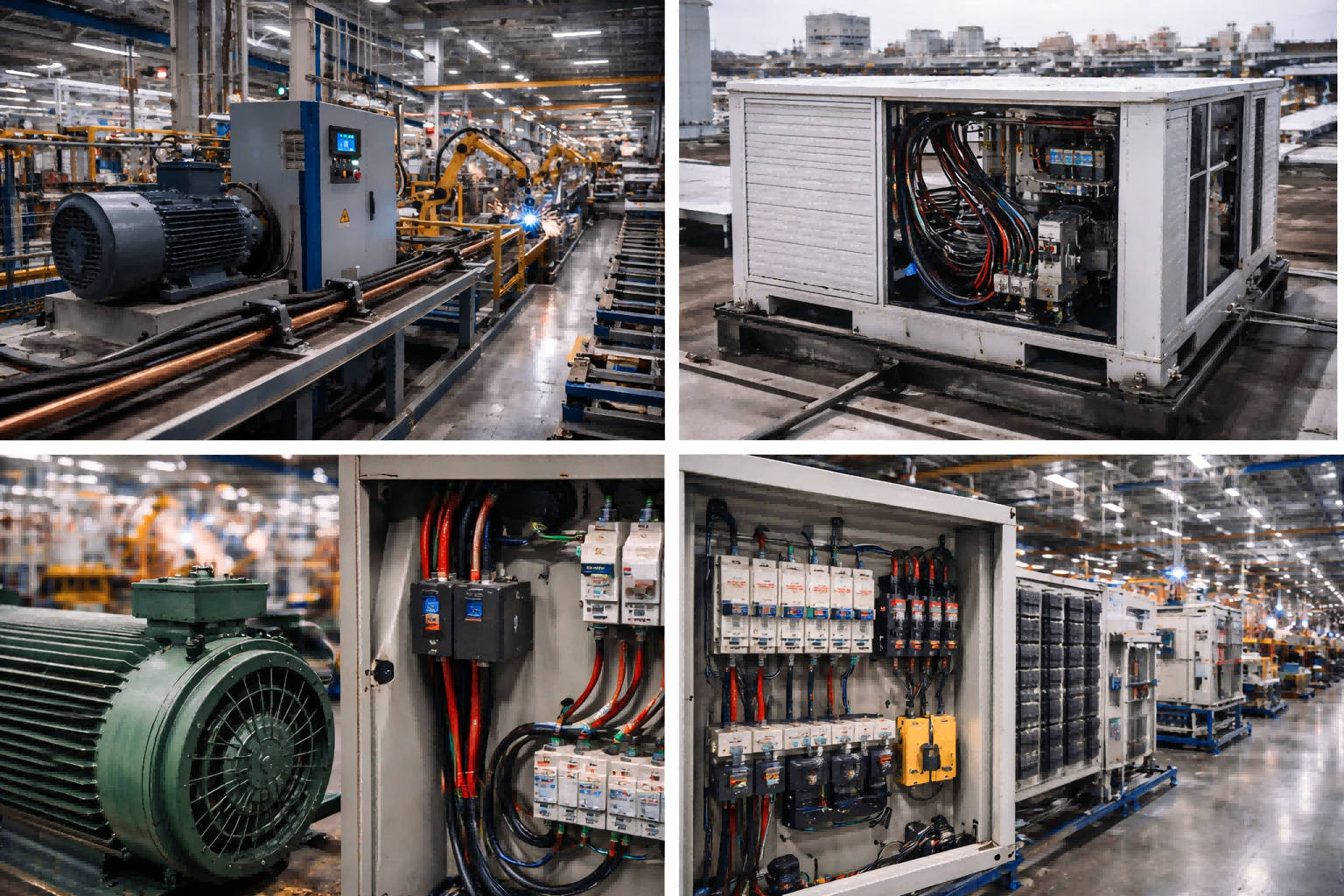
Large-scale industrial energy monitoring: the point where certification claims are tested against metering requirements.
Certification marks on a current transformer are usually read as a single answer. They are in fact the compressed output of four different questions, and that compression is where sourcing decisions tend to go wrong. A CE marking addresses electrical safety and, depending on the directive route chosen by the manufacturer, electromagnetic compatibility and substance restrictions; it does not state whether the transformer's measurement accuracy has been approved for billing. A metrological verification certificate answers the opposite question — whether the measurement itself is legally accepted for regulated metering in a specific market. UKCA is not a technical standard at all, but a market-access marking. RoHS restricts substances in materials and says nothing about performance.
For buyers in the research and evaluation stage, the productive exercise is not memorising the mnemonics. It is mapping every document in a supplier's technical package to the requirement it genuinely satisfies — and noticing which requirements are left uncovered before the purchase order is issued.
Why Three Letters Hide Four Requirements
A typical quotation for a low-voltage current transformer arrives with a compact bundle: a declaration of conformity, a substance test report, and a scanned certificate or two. The bundle feels like a complete compliance answer, and it is often treated as one. Four recurring errors follow from that assumption.
- Safety read as accuracy. A safety mark confirms that the device does not present an electrical hazard under its rated conditions. It does not define the ratio error, phase displacement, or accuracy class of the measurement.
- One variant read as all variants. Certificates and approvals attach to a configuration — a model, a ratio, a window size, an accuracy class. A catalogue-wide claim on a brochure is not the same as a scope statement on a certificate.
- One market read as every market. A metrological verification for the Chinese market is not a route to the European Union or Great Britain, and a UKCA reference is not a global pass.
- The document read instead of the register. Certificate numbers can be checked with the issuing body. A scan cannot be checked on its own.
The opportunity is straightforward: buyers who separate these layers early avoid re-testing costs, customs friction, and rejected metering installations later. In retrofit-heavy and utility-facing projects, the compliance pack often matters more than a marginal difference in unit price.
What Each Mark Actually Governs
CE-LVD: electrical safety of the device
The Low Voltage Directive route concerns the safety of the equipment itself: insulation performance, dielectric withstand, and the ability of the housing and internal insulation to contain the working voltage within the declared rated conditions. For a cast-resin or plastic-cased low-voltage current transformer, this is a materials-and-construction question as much as an electrical one. HEYI's product documentation for this safety layer cites a CE-LVD certificate issued through TÜV SÜD under the reference N8A 114572 0001. Read the scope of that document for what it covers: the electrical safety of the product. It does not certify ratio accuracy.
RoHS: materials, not performance
RoHS restricts hazardous substances in the materials used in a product. In current transformer construction, the relevant material set is not abstract: ABS/PC or PA housings, hydrophobic epoxy resin, silicon steel or nanocrystalline cores, and pure copper enamelled wire are exactly what a substance review examines. A RoHS report therefore tells a buyer something real about the material chain, and nothing about insulation strength or measurement behaviour. The two questions cannot be substituted for one another.
UKCA: a market-access marking, not a technical grade
UKCA is the marking used for market access in Great Britain. HEYI's product file references UKCA for the KCT-L true RMS current transformer/transmitter, a split-core design rated for 0–1000 A with a 4–20 mA output and 0–50 mm inner diameter. For a buyer, the practical point is procedural rather than technical: confirm that the marking cited matches the destination market, and that a European declaration is not being presented as a substitute for a Great Britain declaration, or the reverse. Market-access rules for Great Britain have been adjusted more than once since the marking was introduced, which makes confirmation with the importer the safer step than assumption.
Metrological verification: the legality of the measurement
A Metrological Verification Certificate for the Chinese market governs a different legal category. It addresses whether the instrument's measurement accuracy is approved for the applications where measured values are used for settlement or regulated metering. It sits alongside, not above, the safety file. Practically, this means a current transformer intended for a domestic Chinese metering application may require both a safety layer and a metrology approval, and the metrology document is tied to scope — model, range, and declared accuracy class.
Accuracy classes are defined internationally by IEC 61869-2, which replaced IEC 60044-1 and sets classes such as 0.5 and 0.5S for inductive current transformers. Where measured values feed utility billing, revenue-grade requirements are stricter: ANSI C12.20 or IEC 61869-2 accuracy classes of typically 0.2 or 0.15 apply. HEYI's RECT extended range current transformer, for example, is specified as a 0.15S high-accuracy resin-insulated design with IP65 protection and IEEE C57.13 referenced in its type description — a metering-grade claim that must be supported by accuracy evidence, not by a safety mark.
| Mark or document | Question it answers | Typical evidence | What it does not establish |
|---|---|---|---|
| CE-LVD | Is the device electrically safe under its rated conditions? | Low Voltage Directive conformity route, e.g. certificate issued through TÜV SÜD, ref. N8A 114572 0001 | Ratio accuracy, billing legality, substance content |
| RoHS | Are restricted substances controlled in the materials used? | Substance test report or material declaration | Electrical safety, accuracy, market access |
| UKCA | Does the product carry the marking used for Great Britain market access? | UKCA declaration, e.g. referenced for the KCT-L model | EU access, metering legality |
| Metrological verification | Is the measurement legally approved for regulated metering (CN market)? | Metrological Verification Certificate | Electrical safety, GB or EU market access |
| Accuracy class | Which accuracy does the design claim (0.5, 0.5S, 0.2, 0.15S)? | Type/accuracy data referenced to IEC 61869-2, ANSI C12.20 or IEEE C57.13 | Safety, substance compliance, market access |
Verifying a Certificate Claim in Six Steps
Certificate verification is a short, repeatable sequence. It works whether the buyer is an engineer, a procurement manager, or a panel builder checking a first sample order.
- Take the number, not the scan. Record the certificate reference and the issuing body, then verify the reference with that body. Documents quoted in product files — such as N8A 114572 0001 for the CE-LVD layer — are traceable this way.
- Read the scope, not the cover. Identify which models, ratios, and rated conditions appear inside the document. A model named on a brochure is not automatically inside a certificate scope.
- Match the standard cited to the claim being made. If the requirement is metering accuracy, a Low Voltage Directive document is the wrong evidence; IEC 61869-2, ANSI C12.20 or IEEE C57.13 references belong in that conversation.
- Check the destination market. Confirm that the marking cited is the one applicable to the country of installation, and that the supplier's documentation distinguishes them.
- Compare the ordered configuration against the tested configuration. Ratio, window size, accuracy class and connection details all matter here.
- Ask for the routine-test record on the delivered batch. Type-level approval and per-unit testing are separate layers; a certificate does not replace a shipment-level test report.
Where These Layers Meet Real Projects
Most current transformer projects fall into a small number of installation contexts, and each context activates a different combination of documents. In low-voltage distribution work, the operating conditions are consistent: an indoor electrical cabinet, a low-voltage distribution system, continuous operation, a 50/60 Hz supply, and often limited installation space. The device performs current measurement and energy metering, and the application requires high accuracy, stable output and insulation safety. Typical supporting equipment includes multifunction power meters, energy meters, protection relays, data acquisition systems, PLCs and low-voltage switchgear. The project types are switchgear retrofit, power distribution monitoring, energy metering upgrade, utility power monitoring, and industrial control cabinet work.
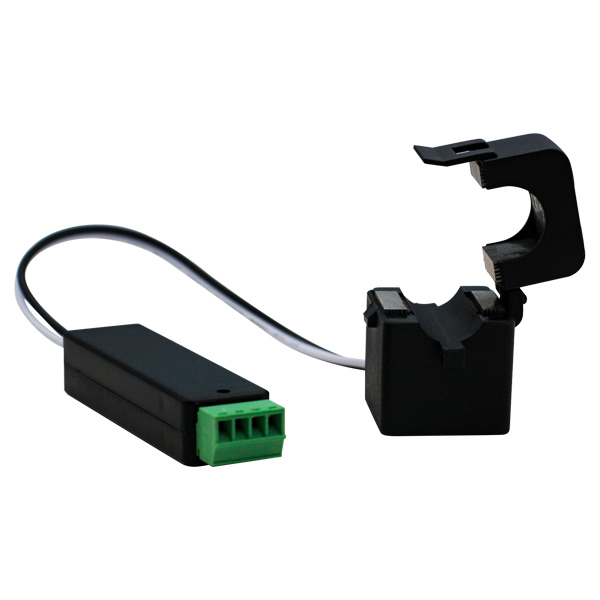
Split-core current transformer for retrofit monitoring: the configuration, not just the model family, defines which certificates apply.
In switchgear retrofit, the constraint is usually physical access, which pushes the selection toward split-core or large-window designs; the certification weight sits on the safety layer and on the ability to install without interrupting the busbar. In energy metering upgrade and utility billing work, the weight shifts to metrology: accuracy class and the approval that makes the measurement legally usable. In outdoor or overhead-line monitoring, environmental protection ratings such as IP65 and UV-resistant construction move up the checklist alongside the safety file. And in EV charging infrastructure, the leakage current sensing function is governed by its own functional standard — HEYI's HYCA residual current sensor is specified with a switching output for 6 mA DC and 30 mA AC according to IEC 62752 — which is distinct from the safety marking on a measuring transformer.
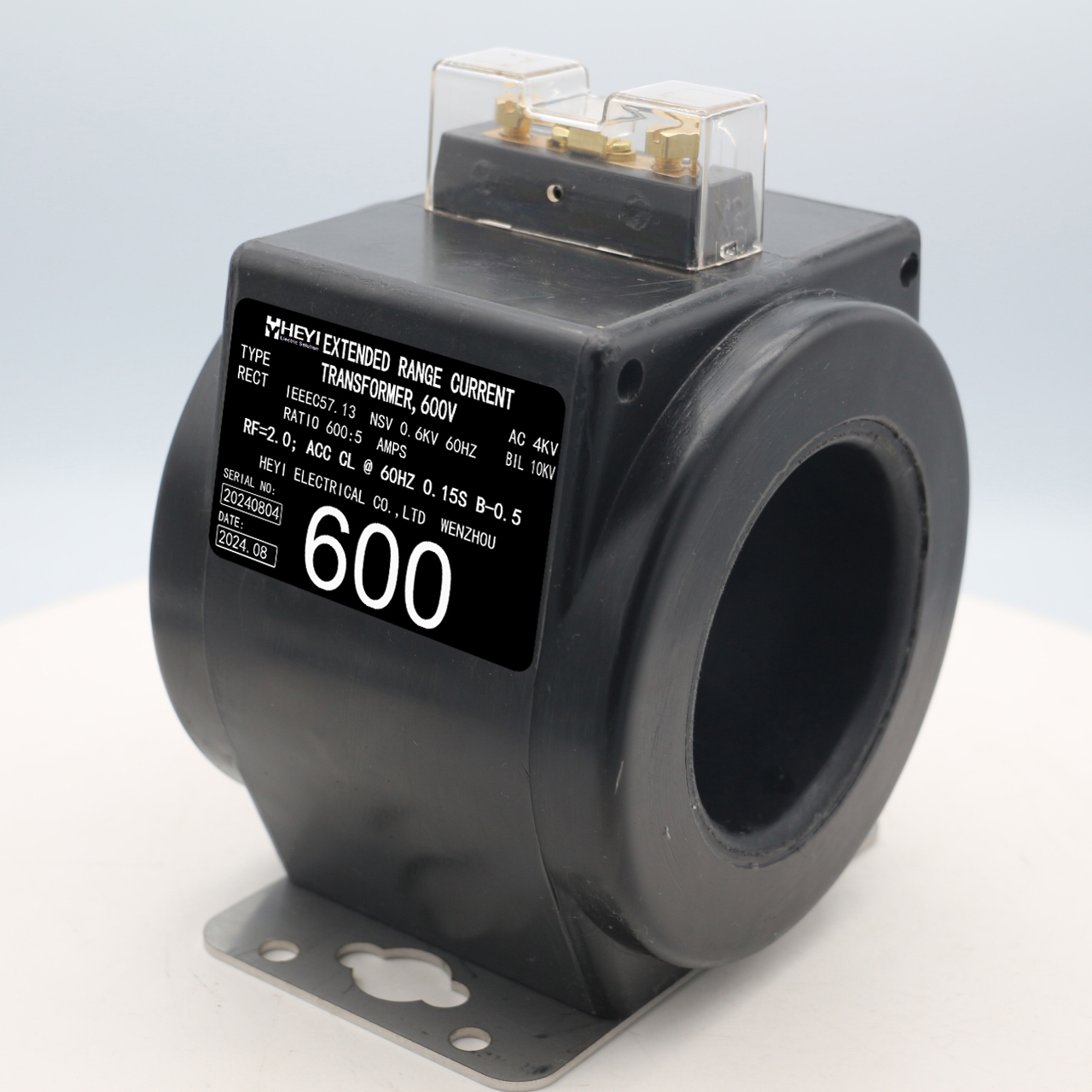
Revenue-grade designs such as the RECT extended range CT are specified at 0.15S with IP65 protection and an IEEE C57.13 reference — metering evidence, not safety evidence.
How Documentation Is Handled in Practice at HEYI Electrical
Wenzhou Heyi Electrical Co., Ltd (HEYI) is a current transformer and current sensor manufacturer established in 2012, operating a 10,000 m² facility in Wenzhou, Zhejiang, with 56 employees, a five-engineer R&D team, an annual output of 356,000 units, and an export ratio of around 95% across Southeast Asia, South Korea, Europe, South America, Australia, Africa, the Middle East and North America. Its product range covers split-core and solid-core current transformers, three-phase integrated CTs, outdoor resin-cast units, current sensors, shunts and digital energy meters.
For buyers, the relevant capability is not the mark itself but the ability to support it per configuration. HEYI's production is organised around OEM and ODM work with a customization scope covering current ratio, accuracy class, burden, window size, housing colour, terminal type, cable length, logo printing and label design. Monthly capacity is stated at 20,000 units, lead time at 3–30 days, and minimum order quantity at one unit. Quality control includes 100% routine test, accuracy test, insulation resistance test, withstand voltage test, appearance inspection and pre-shipment inspection — the layer that sits beneath type-level documents and answers the batch question.
This matters precisely because customization and certification pull in opposite directions. A buyer who changes the ratio and window size to fit a retrofit has, in effect, moved away from the configuration a certificate was written for. A supplier that can restate the declaration, re-test, or issue a conformity statement for the specific build removes a risk that otherwise resurfaces at commissioning. Further product and capability detail is published at www.heyiele.com.
Market Direction: Retrofit, EV Charging and a Heavier Documentation Load
Three market signals suggest that documentation checks will take more procurement time, not less. First, the category is growing steadily: Grand View Research estimated the global current transformer market at USD 2.63 billion in 2024, projecting USD 3.90 billion by 2030. Second, growth is concentrated where installation conditions are difficult: Asia Pacific held a 40.15% revenue share in 2025 according to Straits Research, and Fact.MR identifies split-core current transformers as the fastest-growing segment because of their ease of installation in retrofitting and smart grid applications. Third, the adjacent EV charging segment is expanding quickly — Research Intelo projects a 23.6% CAGR for the EV charging transformer market, including current monitoring components, from 2025 to 2033.
Retrofit-heavy demand has a specific consequence for compliance work. Projects that cannot shut down a busbar tend to specify split-core devices with customised ratios, which is exactly the scenario where a catalogue certificate no longer matches the delivered configuration. At the same time, revenue-grade metering requirements remain strict: classes of 0.2 or 0.15 are typical where measured values feed utility billing, under ANSI C12.20 or IEC 61869-2. The result is a market where the supplier's ability to produce configuration-specific documentation becomes a selection criterion alongside price and lead time.
Where Certification Claims Reach Their Limits
A conventional approach treats the certificate pack as a pass/fail gate: if the documents exist, the supplier qualifies. A scope-first approach treats the same pack as a map of what is and is not covered. The second approach is slower on the first order and generally cheaper over a project.
It also has honest limits, and buyers should hold them openly.
- Certificates attach to configurations, not product families. A customized ratio, window size, terminal type or cable length may fall outside the tested configuration. For that build, the original document is background information rather than proof.
- No single certificate set covers every market. A Metrological Verification Certificate for the Chinese market does not create European or Great Britain market access, and a UKCA reference does not replace it. Each destination has to be checked on its own terms.
- Safety and metrology are not interchangeable. A low-voltage safety document cannot be used to demonstrate billing accuracy, and an accuracy statement cannot demonstrate insulation safety.
- Type-level approval and unit-level testing answer different questions. A certificate describes a design; a routine test record describes the batch that actually shipped.
- Certification adds cost and lead time. Where a project does not legally require a metrology approval, pursuing one can be an unnecessary expense; the correct sequence is to establish the regulatory requirement first, then specify the documentation.
Future Outlook
The direction of travel is toward tighter coupling between safety documentation and measurement approval. As metering data increasingly feeds settlement, carbon reporting and grid-balancing services, the accuracy class of a current transformer stops being a technical footnote and becomes a commercial parameter. That pulls metrology documentation into ordinary procurement conversations, particularly in retrofit and distributed-generation projects.
A second development is procedural: as certificate registers become easier to query, scanned documents lose their persuasive power. Buyers will increasingly verify references directly, which favours suppliers that keep their documentation current and configuration-specific. A third is the continued blurring of boundaries between product categories — a single cabinet may now contain a measuring CT, a residual current sensor governed by IEC 62752, and a communications-enabled split-core unit. Each carries its own compliance basis, and the buyer who can name all three is the one who avoids a late-stage delay.
FAQ
Does a CE mark on a current transformer confirm its measurement accuracy?
No. The Low Voltage Directive route behind a CE marking addresses electrical safety — insulation and dielectric performance within rated conditions. Accuracy is defined separately by standards such as IEC 61869-2, which sets classes including 0.5 and 0.5S for inductive current transformers. Where measured values are used for utility billing, revenue-grade requirements are stricter, typically 0.2 or 0.15 under ANSI C12.20 or IEC 61869-2.
What is the difference between RoHS and CE?
RoHS is a substance-restriction requirement that applies to the materials in a product — for a current transformer, housing plastics, epoxy resin, magnetic cores and enamelled copper wire. CE is a marking indicating conformity with the applicable directives for the product, and RoHS can be one of the directives covered. A RoHS report alone does not demonstrate electrical safety, and a safety certificate alone does not demonstrate substance compliance.
Do we need UKCA if we already have a CE file?
UKCA is the marking used for market access in Great Britain; product files may reference it for specific models, as HEYI's file does for the KCT-L true RMS current transformer/transmitter. Because Great Britain's market-access rules have been adjusted since the marking was introduced, buyers should confirm with their importer which marking is currently accepted for the specific product category, rather than assuming either document is automatically sufficient.
What does a metrological verification certificate add for the CN market?
It addresses the legal measurement side: whether the instrument's accuracy is approved for applications in which measured values are used for settlement or regulated metering. It is a different legal category from product safety and does not demonstrate insulation or dielectric performance. The approval is tied to scope — model, range and accuracy class — so a document issued for one configuration does not automatically extend to another.
A certificate names a standard catalogue model, but the project needs a customised ratio and window size. Is the certificate still valid?
Not automatically. Customization scope in this category typically covers current ratio, accuracy class, burden, window size, housing colour, terminal type, cable length, logo printing and label design. Changes to those parameters can move a product outside the configuration for which a certificate or approval was issued. Buyers should confirm whether the supplier will extend the declaration, re-test, or issue a conformity statement for the specific build.
How can a buyer with no technical background verify a certificate?
Check five items: the certificate number, the issuing body, the models listed, the standard cited, and the rated conditions. Verify the number with the issuing body rather than relying on the scanned document, and confirm that the model designation matches the purchase order, including any configuration code. If the standard cited does not match the claim being made — accuracy evidence requested against a safety document, for example — the document is not the right evidence for that requirement.
Reference material: HEYI's product range and documentation references are compiled in the company catalogue, available for download at HEYI product brochure (PDF).