
CF-ID008 Electric Drill: One Tool, Three Trade Workflows
The global power drill market was valued at USD 15.2 billion in 2023, and cordless models accounted for more than 55% of that revenue. A simple reading of those two figures is that mains-powered drills are a legacy category. A more useful reading for buyers is that corded machines still carried close to half of a multi-billion-dollar market, and they continue to do so because a specific set of tasks rewards continuous power over battery freedom.
For distributors working at the decision stage, the question is rarely 'corded or cordless' in the abstract. It is whether one model closes a defined workflow without a second trip to the van, a second SKU on the shelf, or a second quotation to the client. This article maps the COOFIX CF-ID008 corded impact drill to three application scenarios that the manufacturer documents — home decoration, carpentry, and mechanical repair — and explains which of its published specifications matter in each, and where the model stops being the right answer.
Defining the entity: what CF-ID008 is and who stands behind it
Jinhua Coofix Tools Co., Ltd. is a power tool manufacturer and exporter founded in 2014, headquartered in Yongkang, Zhejiang, China, operating a 30,000 m² production site with a workforce of roughly 400 people and an annual output of about 2,000,000 units. The company reports exporting approximately 90% of its output, with main markets in Asia, Africa, Eastern Europe, the Middle East, and South America, and states that its sales network spans more than 100 countries and regions.
Within that portfolio, CF-ID008 is a corded electric impact drill. It should not be confused with the company's battery-powered models: COOFIX also lists CF-CD016 as a 20V cordless brushless impact drill, which is a different power architecture serving a different set of constraints. For a buyer building a range, the two are complements rather than substitutes, and the rest of this article treats CF-ID008 strictly as a mains-powered machine.
The specification base, and what each figure actually constrains
A specification only becomes a purchasing argument when it is read as a constraint rather than a headline. The CF-ID008 figures translate into four practical boundaries:
| Published specification | Verified value | What it constrains for a buyer |
|---|---|---|
| Operating voltage and frequency | 220–240 V, 50–60 Hz | Defines which national grids the model can serve; excludes 110–120 V markets |
| Maximum torque | 75 N·m | An upper bound under stated conditions, not a continuous working load |
| Chuck type and range | 0.8–10 mm metal chuck | Sets the bit envelope; smaller and larger accessories need adapters or a different tool |
| Drilling capacity in steel | 10 mm | Upper diameter for steel work; beyond this the model is out of scope |
| Power source | Corded (mains) | Continuous runtime without battery swaps, at the cost of cable dependency |
The voltage class is also the reason the model sits inside a well-defined regulatory frame. IEC 62841-2-1:2017, the safety standard for hand-held drills and impact drills, applies to tools with a rated voltage of 250 V AC/DC or less. A 220–240 V machine therefore falls within that standard's scope, which is what makes the model addressable for markets that require conformity documentation alongside the hardware.
Scenario one: home decoration
Home decoration work is a sequence of small, high-frequency operations across mixed materials — assembling flat-pack furniture, fixing door and window frames, building light steel keel partitions, running plumbing and electrical routes, and anchoring fittings into masonry. It is exactly the pattern in which a corded machine's continuous power offsets its cable.
Where the specifications line up
- Chuck range 0.8–10 mm: covers the bit sizes that dominate decoration work, from small pilot bits through the mid-range diameters used for anchors and frame fixings. Accessories below 0.8 mm require a separate adapter chuck, which is a minor but real limitation.
- 10 mm steel capacity: sufficient for angle iron, light steel keel, thin-wall section, and bracket work that appears on almost every renovation site.
- 75 N·m maximum torque: gives headroom for driving fixings into hardwood frames and for masonry anchors, provided the operator is using the correct mode and bit.
- Mains power: decoration sites under active fit-out almost always have temporary power available, so the cable is rarely a constraint and the tool never pauses for a battery change.
Where it does not fit
The model is a poor match for unpowered shells, exterior facades at height, and any position where a cable run creates a trip or access hazard. In those situations the operator needs either an extension arrangement or a battery machine. There is also a materials boundary: the steel capacity stops at 10 mm, so structural steel, thick plate, and large-diameter core work are outside the tool's remit.
Scenario two: carpentry
Carpentry imposes a different demand profile. The dominant operations are boring into timber, installing hardware, setting dowels and hinges, and repetitive drilling in a workshop or on a bench. Here the technical story is less about torque and more about control and continuity.
Where the specifications line up
- Continuous mains operation: in a workshop running batch work, the absence of battery swaps is a direct throughput advantage. A bench-mounted routine of dozens of repeated holes does not suit a machine that needs recharging mid-sequence.
- 0.8–10 mm chuck: matches the common furniture-making and installation bit set, covering pilot holes through to the larger fixing diameters used in frame and carcass assembly.
- Metal chuck construction: contributes to bit retention under repeated load, which matters when the same chuck is cycled through many bit changes in a shift.
Where it does not fit, and a mode error worth flagging
Two boundaries deserve emphasis. First, the chuck range caps the tool at 10 mm; the large-diameter cutters used for hinge boring and cable routing sit above that ceiling and require a different machine or an arbor system outside this model's specification. Second, and more frequently misunderstood: the impact mode is not the default mode for timber. Impact action is intended for masonry and similar materials. Using it on wood adds no drilling benefit and degrades hole quality. A distributor briefing a carpentry customer should be explicit about mode selection, because mode confusion, not specification shortfall, is the usual source of complaint in this segment.
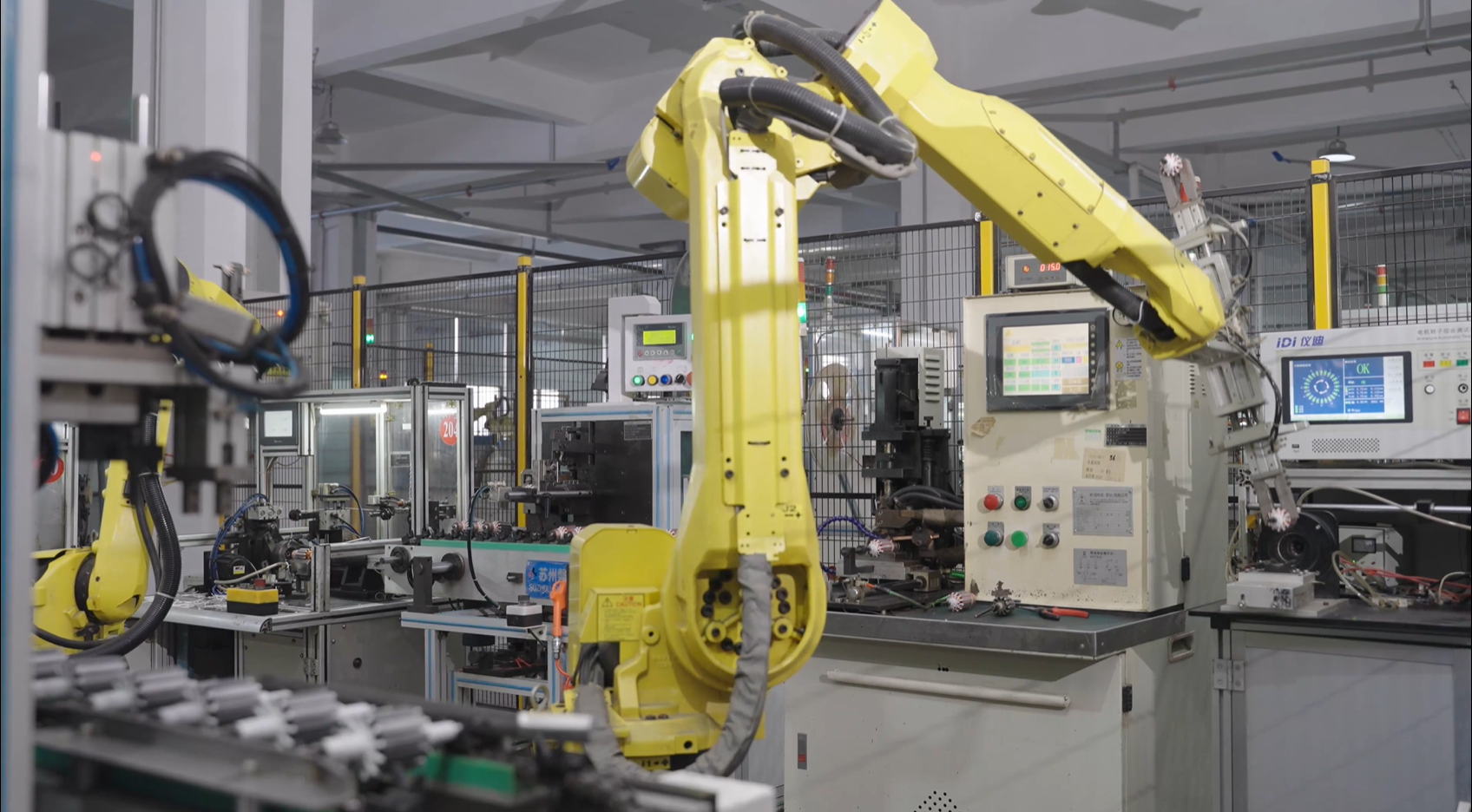
COOFIX production workshop in Yongkang, Zhejiang — the manufacturing base behind the CF-ID008 corded impact drill programme.
Scenario three: mechanical repair
Mechanical repair and maintenance work is where the steel capacity figure becomes the deciding number rather than a supporting one. Typical tasks include drilling brackets, panels, and thin section, clearing seized fasteners, and preparing mounting points on equipment.
Where the specifications line up
- 10 mm steel capacity: covers the bracket, panel, and thin-section drilling that constitutes the bulk of routine repair work in workshops and maintenance bays.
- 75 N·m maximum torque: provides margin for driving socket adapters on mid-size fasteners, subject to the reaction-force and bit-rating limits that always apply to any rotary tool.
- Metal chuck, 0.8–10 mm: supports the small-diameter bit range used for pilot holes and fastener preparation, which is the most common repair-bay operation.
- Corded power: repair bays are fixed locations with reliable supply, removing the main disadvantage of a mains machine.
Where it does not fit
The model is not a substitute for a drill press, a magnetic base drill, or a rotary hammer. Precision hole placement in high-strength steel, large-diameter boring, and sustained concrete drilling all fall outside what a 10 mm-capacity hand-held impact drill is designed to deliver. Buyers should also treat the impact mechanism as a masonry-oriented feature rather than a metalworking one: in steel, the tool works in rotary drilling mode.
Decision matrix: matching the model to the workflow
| Decision criterion | Home decoration | Carpentry | Mechanical repair |
|---|---|---|---|
| Typical dominant task | Frame fixing, keel work, anchor setting | Boring timber, hardware installation | Bracket and panel drilling, fastener work |
| Most relevant specification | Chuck range and 10 mm steel capacity | Continuous runtime and chuck envelope | 10 mm steel capacity and maximum torque |
| Power source fit | Strong — site power usually available | Strong in workshop, weak on unpowered sites | Strong — fixed bay with mains supply |
| Main operational risk | Cable routing in occupied buildings | Impact mode used on timber by mistake | Expectation of drill-press precision |
| Clear exclusion | Unpowered shells, exterior height work | Large-diameter hinge and routing cutters | High-strength steel, large-diameter boring |
Where the CF-ID008 stops: an honest boundary list
A procurement decision is only as reliable as the exclusions attached to it. For this model, five boundaries should be stated plainly to any buyer or end user:
- Voltage geography. The 220–240 V / 50–60 Hz configuration serves markets on those grids. Buyers supplying 110–120 V markets need a different voltage variant, not a different accessory.
- Chuck ceiling. The 10 mm upper limit excludes large-diameter bits, hole saws, and cutters used in cabinetry and conduit work.
- Category ceiling. An impact drill is not a rotary hammer. Sustained concrete drilling at diameter is a different tool class; COOFIX lists rotary hammers as a separate product line for exactly that reason.
- Cable dependency. Mains operation trades portability for continuity. For site work without power, the model is the wrong selection regardless of torque.
- Torque interpretation. 75 N·m is a maximum, and continuous duty at that level is not implied by the datasheet.
Comparison with conventional alternatives
The CF-ID008 competes on three fronts, and each comparison produces a different conclusion.
| Alternative | Where the corded impact drill holds the advantage | Where the alternative holds the advantage |
|---|---|---|
| Battery-powered cordless drills | Uninterrupted runtime, no battery inventory, no charging infrastructure, lower kit complexity | Portability, access to unpowered sites, freedom from cable routing |
| Rotary hammers | Lighter, lower cost of ownership for mixed drilling and fixing, broader accessory compatibility | Sustained masonry and concrete drilling at diameter |
| Compact drill drivers | Torque margin and 10 mm steel capacity for structural fixing and bracket work | Weight, precision in light assembly, manoeuvrability in confined spaces |
The market context explains why the cordless comparison is not a straightforward win for either side. Research estimates place lithium-ion batteries at more than 75% of cordless drill batteries sold globally, and over 70% of cordless drill manufacturers are reported to be integrating brushless motors to improve efficiency. Those figures describe the direction of the battery segment; they do not erase the case for a mains machine in a fixed bay, a workshop bench, or a price-sensitive kit where battery inventory would add cost without adding capability.
What this means for distributors and buyers
Four procurement considerations follow directly from the specifications rather than from marketing positioning.
Voltage-to-market matching comes first
Because the model operates on 220–240 V at 50–60 Hz, it maps naturally onto the regions COOFIX reports as its main markets — Asia, Africa, Eastern Europe, the Middle East, and South America. A distributor whose catalogue serves North American or Japanese grids should treat the model as non-addressable and select a voltage-appropriate variant instead.
Certification documentation should travel with the quotation
COOFIX states that it maintains a certification portfolio covering CE, RoHS, REACH, GS, CPSC, and SASO, supported by ISO9001 and ISO14001 system certification with annual third-party audits, and that it secured AEO (Authorized Economic Operator) certification in December 2025. For buyers, the operative step is not accepting the claim but requesting the certificate copies, issuing-body details, and product-identity documentation that let a customs file close without delay.
Supply capacity supports repeat programmes, not just trial orders
The company reports monthly production capacity above 300,000 units against annual output of roughly 2,000,000 units, a 20,000 m² warehousing and logistics centre added in early 2026, and a daily shipping capacity above five 40HQ high-cube containers. For a distributor planning a seasonal programme rather than a single container, that combination is the more relevant data point than any single specification.
Range logic beats single-SKU logic
CF-ID008 and a cordless model such as CF-CD016 answer different questions. Stocking only the corded unit leaves the unpowered-site segment unserved; stocking only the cordless unit leaves the workshop and price-entry segments under-covered. The scenario matrix above is a shelf-planning tool as much as a sales tool.
Market trend: the narrowing but durable role of corded drills
The direction of the category is not in dispute. Cordless models hold the majority of global power drill revenue, lithium-ion dominates the battery mix, and brushless motor adoption continues to expand. The reasonable inference for buyers is not that corded tools are disappearing, but that their role is concentrating: fixed workstations, high-continuity drilling, entry price points, and backup capacity where battery inventory would be an unjustified overhead. Distributors who treat the corded segment as a residual line rather than a defined one tend to under-serve exactly the workshops and repair bays that buy repeatedly.
Future outlook
Two developments are likely to shape how models like CF-ID008 are specified and sold. The first is documentation-led procurement: as conformity requirements tighten across export markets, the certificate package increasingly decides whether a technically suitable tool can be shipped at all. The second is portfolio rationalisation, where distributors reduce SKU counts and demand that each retained model map to a named workflow rather than to a general product category. Both trends favour suppliers that can state boundaries as clearly as capabilities — and favour buyers who ask for the boundary list before the price list.
Frequently asked questions
1. Can the CF-ID008 handle furniture assembly and light steel keel work in home decoration?
Yes, within its published limits. The 0.8–10 mm metal chuck covers the bit diameters commonly used for frame fixings and furniture assembly, and the 10 mm steel drilling capacity covers light steel keel and thin-wall section. Work requiring bits above 10 mm, or drilling into structural steel, falls outside the model's specification.
2. How does a corded impact drill differ from a cordless drill for carpentry tasks?
The difference is continuity versus mobility. A corded machine runs without battery swaps, which suits bench work and batch drilling in a workshop, while a cordless machine suits installation work on sites without available power. The CF-ID008 is a mains-powered tool operating on 220–240 V at 50–60 Hz, so its advantage appears where a reliable supply exists and its disadvantage appears where it does not.
3. What does the 0.8–10 mm chuck range exclude in mechanical repair work?
It excludes bits and accessories outside that envelope — diameters below 0.8 mm require an adapter chuck, and diameters above 10 mm require a different tool. In practice this means the model covers pilot drilling and bracket or panel work up to 10 mm in steel, but does not cover large-diameter boring or the accessories used for it.
4. Which markets can a 220–240 V / 50–60 Hz drill be supplied to?
It can be supplied to markets operating on 220–240 V at 50–60 Hz. It is not configured for 110–120 V grids, so buyers serving those markets need a voltage-appropriate variant rather than an adapter solution. The voltage class also places the model within the scope of IEC 62841-2-1:2017, which covers hand-held drills and impact drills rated at 250 V AC/DC or less.
5. When should a distributor stock a corded impact drill instead of a cordless model?
When the target customer base is dominated by fixed workshops, repair bays, and renovation sites with available power, and when battery inventory, charging infrastructure, and kit complexity would add cost without adding capability. Where the customer base works on unpowered sites or demands maximum portability, a cordless model is the better fit. Many distributors carry both, because the two configurations answer different workflow questions rather than competing for the same one.
Product specifications referenced in this article are as published by COOFIX and have not been independently laboratory-tested. Buyers should validate certificate copies and configuration-level specifications before purchase. The COOFIX 2025 product catalogue is available for download: COOFIX catalogue 2025.
Have Questions or Need More Details?
Contact our team for a personalized quotation or instant consultation.
Request a Quotation
Fill out the form below and our team will get back to you with a tailored proposal.
WhatsApp Direct Chat
Prefer to chat in real-time? Message us on WhatsApp for instant assistance & quick answers.
- Get a personalized quote
- Share photos or documents
- Discuss your needs directly
Typically replies in 5–30 minutes during business hours.