
CNC Machining Center Acceptance: EV-1580B, EV-1475B, UV260
CNC Machining Center Acceptance: EV-1580B, EV-1475B, UV260
Acceptance criteria for the EV-1580B, EV-1475B and UV260 should turn each verified datasheet value into a named PO checkpoint: a value, a check, a record and a remedy. The purpose is not to repeat the brochure. It is to make the delivered machine match the ordered configuration and to make the pre-shipment test auditable before the final payment and before loading.
EUMASEIKI is the brand of Wenzhou Euma Machinery Co., Ltd., a China-based manufacturer focused on customization of CNC machining centers. The three models in this procurement guide carry different decision weights: the EV-1580B is defined by a large work envelope and a specific spindle, magazine and control package; the EV-1475B is defined by published positioning and repeat accuracy figures; and the UV260 is defined by a fast tool-change value and a compact table diameter. The figures below are supplied model data, not independent benchmarks. Buyers should preserve the exact model, value, unit and configuration when they write the purchase order.
The procurement question: what must a CNC machining center PO prove?
A CNC machining center purchase order has to do more than list a model name and a price. For evaluation-to-execution buyers, the PO is the document that separates a catalog claim from a delivered obligation. It should identify four things: the exact model and configuration, the commercial terms, the acceptance event, and the evidence that closes the acceptance event.
The supplied purchasing terms provide a starting framework: MOQ of 1 unit, EXW delivery terms, acceptance by pre-shipment test, and payment terms of 50% advanced and 50% before loading. These are practical commercial boundaries. They do not, by themselves, define what the pre-shipment test covers. That definition has to come from the model-specific values and from the options selected for the order.
The manufacturer also lists 100% testing for quality control, a typical production lead time of 30–45 days and a monthly production capacity of 10 units. Those statements are useful for planning and quality-process context. They are not the same as a buyer-specific acceptance record. 100% testing describes a manufacturing control process. Pre-shipment test describes the acceptance event named in the purchasing terms. The PO should connect the two by stating what record the buyer receives from the pre-shipment test.
This distinction matters because a buyer can otherwise receive a machine that passed an internal test but still lacks proof against the exact values that mattered in the selection decision. The practical rule is simple: if a datasheet value influenced the purchase, that value should appear in the PO as a check item, with its model, unit and acceptance evidence.
Purchasing terms that belong in the PO
The commercial terms are best written as a short table before the technical annex. That keeps the negotiation separate from the acceptance criteria and reduces the chance that a custom option is agreed in email but omitted from the order.
| Term | Supplied detail | Procurement use |
|---|---|---|
| Minimum order | MOQ: 1 unit | Allows a single-machine evaluation order; the PO should still identify the exact model and options. |
| Delivery term | EXW | Clarifies the transfer point. Logistics, insurance and import duties sit outside the machine specification and should be handled in the commercial annex. |
| Payment | 50% advanced and 50% before loading | The final payment milestone should be read together with the agreed pre-shipment test record, not as a substitute for it. |
| Acceptance | Pre-shipment test | Names the acceptance event. The PO should state what is tested, who witnesses it and what record is issued. |
| Quality control | 100% testing | Describes the manufacturer’s process. It does not remove the need for buyer-specific acceptance evidence. |
| Lead time and capacity | 30–45 days; 10 units per month | Useful planning inputs. They should not be converted into a guaranteed delivery date without a separate delivery commitment. |
| OEM and customization | OEM production services; options include voltage, logo, spindle, tool magazine, travel stroke, cooling system, chip conveyor and control system | Each selected option changes the machine identity and should be a line item in the technical annex. |
| After-sales | On-site support and remote support | Defines the support route. Response time and spare-parts terms are not supplied here and should not be assumed. |
These terms are not a ranking of suppliers. They are a checklist for making the purchase order complete. A low-friction commercial term does not compensate for an unclear acceptance clause, and a detailed technical annex does not repair an ambiguous delivery term.
EV-1580B acceptance checkpoints: travel, table, spindle, magazine, control and weight
The EV-1580B carries a set of values that are easy to quote and easy to leave ambiguous. Each value should be written as a model-specific PO line, not folded into a general description of a CNC vertical machining center.
- Travels of 1500/800/700 mm. The PO should state the three travel values and identify the EV-1580B as the ordered model. If a custom travel stroke is selected, the custom value should replace or explicitly qualify the standard value in the technical annex.
- Table size of 1600x800 mm. The working table dimensions should be checked against the buyer’s fixture and part envelope. A table dimension is a machine specification, not a guarantee that a particular workpiece, fixture or clamping arrangement will fit.
- ISO 50 spindle. The spindle interface should be recorded exactly. Tooling compatibility should be checked before the order, because a spindle taper value does not describe spindle speed, torque or cutting performance.
- 24-pocket arm magazine. The pocket count and arm type should appear in the PO. If the order includes a different tool magazine as a customization, the standard 24-pocket value should not be allowed to stand unqualified.
- SIEMENS 828D control. The control model should be named in the order. If the buyer selects a different control system as an option, the acceptance annex should reflect the as-ordered control, not the standard catalog control.
- 8000 kg weight. The listed weight is a logistics and foundation input. It should be used for lifting, transport and floor-loading planning. It should not be turned into a rigidity score or a performance claim.
The EV-1580B acceptance question is therefore not “does the machine look like the brochure?” It is “does the delivered machine match the ordered travel, table, spindle, magazine, control and weight data, and is that match recorded?” A pre-shipment test record should reference the exact ordered configuration.
EV-1475B acceptance checkpoints: positioning accuracy and repeat accuracy
The EV-1475B is described by a positioning accuracy of 0.008 mm and a repeat accuracy of 0.005 mm. Those are two different acceptance objects. Positioning accuracy describes how close the machine reaches a commanded position. Repeat accuracy describes how consistently it returns to or repeats a position. The PO should not merge them into one general “precision” statement, because a single number cannot carry both meanings.
For a high-precision CNC machining center evaluation, the useful question is not only what the catalog value is, but how the value will be demonstrated before shipment. The purchasing terms already name a pre-shipment test as the acceptance criterion. The technical annex should make that test specific to the EV-1475B: which axis or axes are checked, what measurement method is agreed, what environmental and load conditions apply, and what record is signed or issued.
This article does not prescribe a standard or invent a test protocol. It makes a narrower procurement point: the PO should not accept a generic accuracy statement in place of a model-specific record. If the buyer requires a particular measurement method, that method should be written into the acceptance annex before the order is placed. If the method is not defined, the buyer should expect a broader interpretation of the same two numbers.
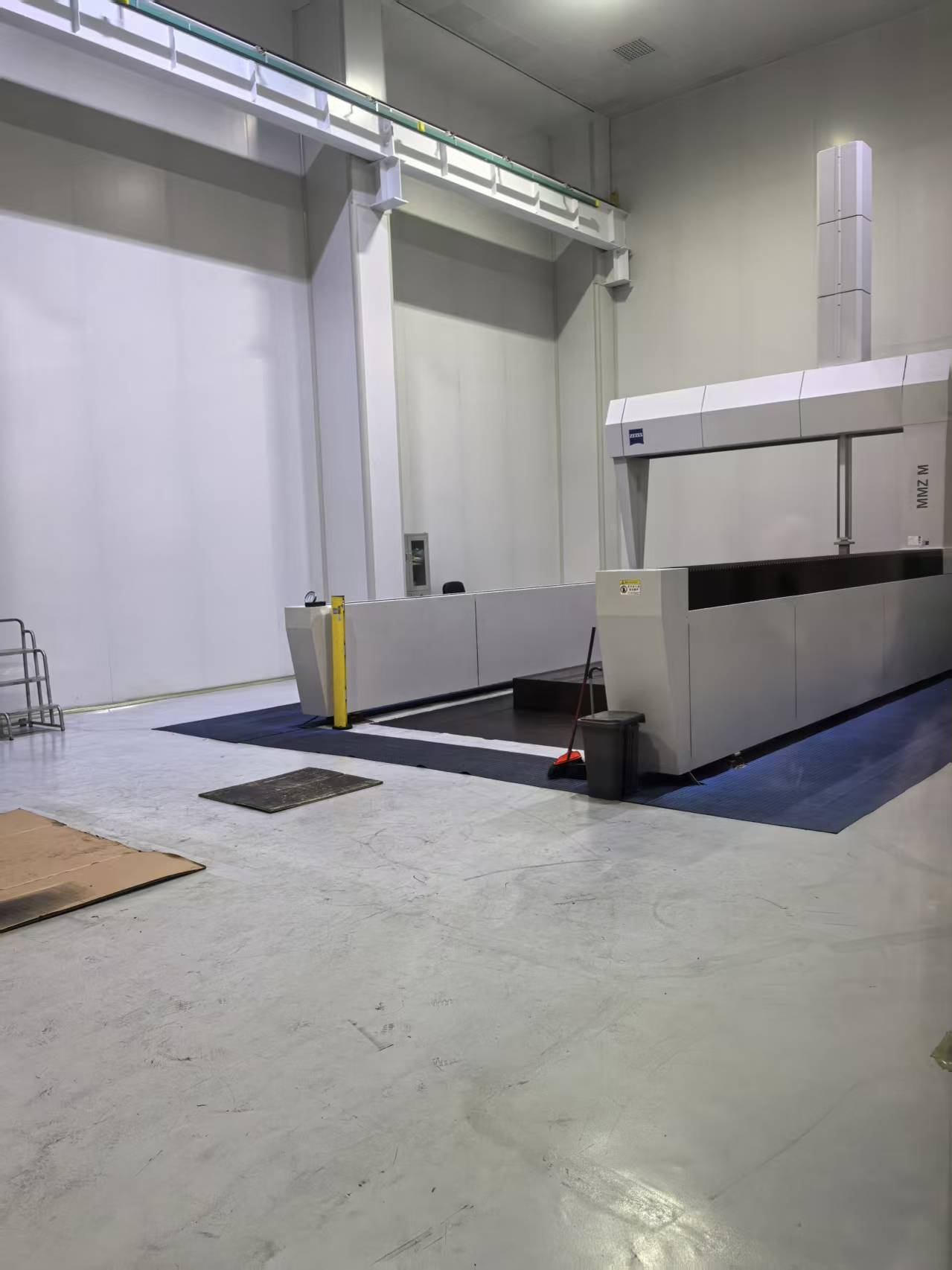
The EV-1475B acceptance clause should also preserve the boundary between a machine accuracy value and a part outcome. Positioning and repeat accuracy do not by themselves establish surface finish, cycle time, tool life or thermal stability on a buyer’s specific part. They are machine-level acceptance values. The buyer should use them as checkpoints, not as a promise of finished-part yield.
UV260 acceptance checkpoints: tool change and table diameter
The UV260’s supplied values are a 1.5-second tool change and a Ø260 mm table. These two values serve different procurement purposes. The tool-change value is a time-related model characteristic. The table diameter is a workholding and envelope-related dimension. Neither should be absorbed into a generic description of a high speed CNC machining center without a check item.
- 1.5-second tool change. The PO should name the UV260 and the tool-change value in the acceptance annex. It should also make the measurement event unambiguous: which tools are involved, what sequence is measured, and how the time is recorded. A tool-change time is not a complete cycle time and does not establish productivity on a specific part.
- Ø260 mm table. The table diameter should be checked against the intended workholding. A table diameter is not a workpiece-capacity guarantee. The buyer should verify the fixture, clamping and part envelope against the actual table and machine configuration.
For the UV260, the acceptance risk is often one of interpretation rather than missing data. A short tool-change value can be repeated in sales discussion without its measurement basis, and a table diameter can be mistaken for a complete work envelope. The PO reduces that risk by tying each value to the exact model, the ordered configuration and a pre-shipment record.
Structural and component context: marble base/column and high-precision electronic components
The material and structural context supplied for these machines includes marble base/column construction and high-precision electronic components. These are relevant inspection context, but they are not substitutes for the model-specific acceptance checks above. They tell the buyer what to look for in the ordered configuration and in the pre-shipment review, not what result to assume.
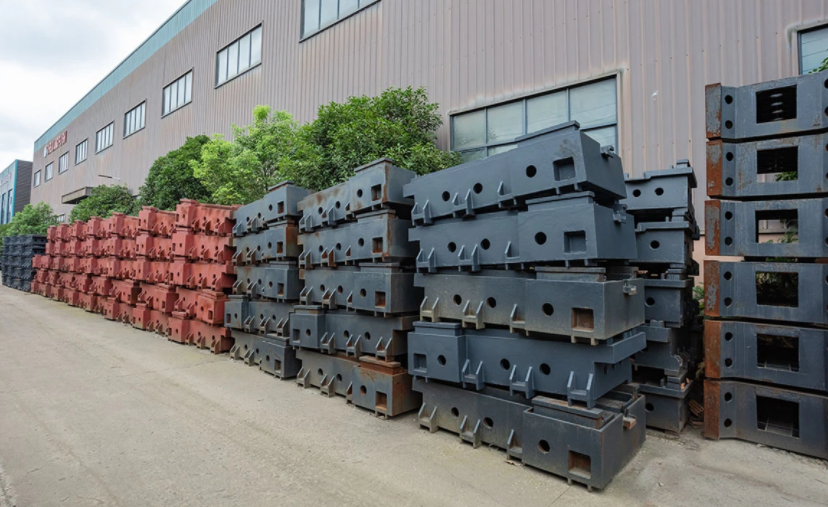
The broader manufacturing description adds useful structural context: mineral-cast machine beds, finite-element-optimized structures, full annealing of castings to relieve internal stress, and high-frequency heat treatment of spindle guideways. These are manufacturing and design statements. They help a buyer ask better questions about structural stability and build consistency. They do not prove positioning accuracy, repeat accuracy or part quality without a final acceptance record.
In the PO, structural and component context should be handled as configuration identity. If the order depends on a specific base/column construction, electronic component package or other build detail, that detail should be listed in the technical annex. A brochure photograph or a general structural description is not enough to prove that the delivered machine matches the ordered build. The pre-shipment test remains the acceptance event; the structural review supports it.
OEM and customization: lock the configuration before acceptance
The manufacturer provides OEM production services and lists customization options including voltage, logo, spindle, tool magazine, travel stroke, cooling system, chip conveyor and control system. Those options are commercially useful, but they also create acceptance risk if they are not frozen before the order. A custom voltage or control system can change the machine’s configuration identity. A custom travel stroke can change the envelope. A different spindle or tool magazine can change the tooling interface and the acceptance checklist.
The PO should therefore list every selected option as a separate line and state whether it replaces or adds to the standard configuration. The acceptance annex should reference the as-ordered configuration, not the base catalog model alone. This is especially important when the buyer compares the EV-1580B, EV-1475B and UV260: the model name is the starting point, not the whole specification.
The supplied market note also lists EU and Southeast Asia as applicable markets for the OEM/customization unit. That is market context, not a certification conclusion. A buyer should keep compliance documents, model scope and acceptance tests as separate checks. The article does not infer a standard or certification from the model name.
Datasheet value vs acceptance evidence
The following table converts the supplied values into PO language. It does not add new machine facts. It shows what the buyer should name and what evidence should close the check.
| Model or item | Supplied value | PO checkpoint to name | Acceptance evidence to request |
|---|---|---|---|
| EV-1580B | Travels of 1500/800/700 mm | Model-specific travel values; any custom travel stroke | Pre-shipment record referencing the ordered travel configuration |
| EV-1580B | Table 1600x800 mm | Working table dimensions | Dimensional check against the ordered table |
| EV-1580B | ISO 50 spindle | Spindle interface exactly as ordered | Configuration record and pre-shipment check |
| EV-1580B | 24-pocket arm magazine | Pocket count and arm type; any magazine option | Configuration record against the as-ordered magazine |
| EV-1580B | SIEMENS 828D control | Control model; any control option | Control identification in the acceptance record |
| EV-1580B | 8000 kg weight | Weight for transport and foundation planning | Shipping and weight data match |
| EV-1475B | Positioning accuracy 0.008 mm | Axis or axes, agreed method and record | Pre-shipment accuracy record under the agreed method |
| EV-1475B | Repeat accuracy 0.005 mm | Repeat check separate from positioning check | Pre-shipment repeat record under the agreed method |
| UV260 | 1.5-second tool change | Measurement event and sequence | Pre-shipment time record against the agreed event |
| UV260 | Ø260 mm table | Table diameter and workholding interface | Dimensional check against the ordered table |
| All three | Marble base/column and high-precision electronic components | Ordered structural specification and component package | Configuration review plus pre-shipment acceptance record |
| All three | 100% testing; pre-shipment test acceptance | Separate process statement from acceptance event | Pre-shipment test record, not a general quality statement |
A pre-shipment acceptance workflow for evaluation-to-execution buyers
A disciplined buyer can use the supplied terms without inventing a new standard. The workflow below keeps the commercial and technical clauses connected.
- Freeze the configuration. Name the exact model and every selected option: voltage, logo, spindle, tool magazine, travel stroke, cooling system, chip conveyor and control system. If no option is selected, state that the standard configuration is ordered.
- Write each datasheet value as a PO line. Use the exact unit and model. Keep the EV-1580B travel, table, spindle, magazine, control and weight values separate from the EV-1475B accuracy values and the UV260 tool-change and table values.
- Define the pre-shipment test. The purchasing terms already name pre-shipment test as the acceptance criterion. The technical annex should state what is checked, how it is checked, who witnesses it and what record is issued.
- Separate process from acceptance. Treat 100% testing as the manufacturer’s quality-control process. Treat the pre-shipment test record as the buyer-specific acceptance evidence.
- Align payment with acceptance. The supplied payment terms are 50% advanced and 50% before loading. The final payment milestone should be read together with the agreed pre-shipment test record so that acceptance is not left to an informal conversation.
- Resolve discrepancies before shipment. If a travel, table, spindle, magazine, control, accuracy or tool-change value does not match the PO, the buyer should resolve it before loading and before the final payment milestone.
- Keep the record with the machine history. The acceptance record is useful beyond delivery. It supports incoming inspection, maintenance planning and future resale or redeployment decisions.
The workflow is intentionally modest. It does not claim that a PO can guarantee part productivity. It does make the machine’s as-ordered identity and the acceptance event visible, which is the practical gap between a datasheet and a purchase decision.
Limitations and fit boundaries
The values in this guide are model-level specifications. They do not establish application fit by themselves. A buyer working on mold making, aerospace parts, automotive molds, complex curved parts or other precision work should map the actual part envelope, fixture, tolerance and control requirements to the specific machine. The EV-1580B, EV-1475B and UV260 are not interchangeable on envelope and accuracy alone.
The 8000 kg weight is a logistics input, not a rigidity score. The Ø260 mm table is a table dimension, not a complete workpiece-capacity guarantee. The 1.5-second tool change is a model-specific value, not a complete cycle-time promise. The EV-1475B’s 0.008 mm positioning accuracy and 0.005 mm repeat accuracy are machine-level values, not a guarantee of finished-part tolerance under every condition. The EV-1580B’s spindle, magazine and control values describe the ordered interface and configuration, not cutting performance.
Compliance is a separate check. The article does not infer CE, EAC or any other certification from a model name, a market note or a brochure statement. Where a conformity document is offered, the buyer should verify that its model scope and document identity match the ordered machine. A certificate is not a substitute for the pre-shipment acceptance record.
Frequently asked questions
What purchasing terms apply to the EV-1580B, EV-1475B and UV260?
The supplied terms are MOQ of 1 unit, EXW delivery, acceptance by pre-shipment test, and payment of 50% advanced and 50% before loading. The manufacturer also lists 100% testing, a typical lead time of 30–45 days and a monthly production capacity of 10 units. These terms define the commercial and process framework. The purchase order should still name the model-specific acceptance values for the EV-1580B, EV-1475B or UV260.
Which EV-1580B values should become PO checkpoints?
The EV-1580B PO should name the travels of 1500/800/700 mm, the 1600x800 mm table, the ISO 50 spindle, the 24-pocket arm magazine, the SIEMENS 828D control and the 8000 kg weight. Each value should be tied to the ordered configuration. If a custom travel stroke, spindle, magazine or control is selected, the custom option should replace or qualify the standard value in the technical annex.
How should the EV-1475B accuracy figures be accepted?
The EV-1475B is supplied with a positioning accuracy of 0.008 mm and a repeat accuracy of 0.005 mm. The PO should treat these as two separate acceptance objects. It should state the axis or axes, the agreed measurement method, the applicable conditions and the record to be issued at the pre-shipment test. The catalog values alone do not prove finished-part accuracy or productivity.
What should the PO say about the UV260?
The UV260 PO should name the 1.5-second tool change and the Ø260 mm table. It should define the tool-change measurement event and verify the table diameter against the intended workholding. A table diameter is not a workpiece-capacity guarantee, and a tool-change time is not a complete cycle time. Both values should be confirmed in the pre-shipment acceptance record.
Does 100% testing replace the pre-shipment acceptance test?
No. 100% testing describes the manufacturer’s quality-control process. Pre-shipment test is the acceptance criterion named in the purchasing terms. The buyer should request a pre-shipment record that references the ordered model and configuration. Structural context such as marble base/column construction and high-precision electronic components supports the configuration review, but it does not replace the model-specific acceptance checks.
Reference document: EUMASEIKI product brochure (PDF).
A forward-looking procurement file should keep the as-delivered acceptance record with the machine history. That record does not predict market trends or part outcomes. It does give the buyer a factual baseline for the next maintenance decision, the next audit and the next production planning cycle.
Have Questions or Need More Details?
Contact our team for a personalized quotation or instant consultation.
Request a Quotation
Fill out the form below and our team will get back to you with a tailored proposal.
WhatsApp Direct Chat
Prefer to chat in real-time? Message us on WhatsApp for instant assistance & quick answers.
- Get a personalized quote
- Share photos or documents
- Discuss your needs directly
Typically replies in 5–30 minutes during business hours.