
CNC Machining Center Brands in 2026: Leaders, Specialists, and How to Choose
The global CNC machining center market continues to expand, and so does the complexity of choosing a supplier. Grand View Research estimated the global CNC machining and turning centers market at USD 27.64 billion in 2024, while the 5-axis CNC machining center segment alone was valued at approximately USD 7.35 billion in 2024, with a projected CAGR of 4.6% through 2035, according to WiseGuyReports. As the market grows, buyers in the evaluation stage are increasingly comparing two fundamentally different types of suppliers: global manufacturers with broad standardized product portfolios and specialized builders that offer deeper configuration flexibility for specific production needs.
This article examines the 2026 CNC machining center brand landscape, explains what evidence buyers should request during evaluation, and discusses how a specialized manufacturer such as EUMASEIKI positions itself in this market.
Why Brand Selection Is a Production Decision
For CNC machining centers, the evaluation stage is more than a comparison of specification sheets. It is a production decision. A machine that matches the production program can reduce setup time, improve part quality consistency, and lower maintenance costs. A poorly matched machine, regardless of brand reputation, can create delays and quality issues that affect downstream operations.
Three manufacturers are commonly cited as the global leaders in this market: DMG Mori, Yamazaki Mazak, and Haas Automation. According to AMSL/Mechrank, these three rank at the top of CNC machining center manufacturers by market presence and technology. Their scale allows them to invest deeply in research and development, maintain global service networks, and offer a wide range of machine types. For many buyers, choosing one of these names is a low-risk approach, particularly for multi-site operations or companies that prioritize standardized processes.
Yet the standardization that makes global leaders efficient also creates a boundary. When a production program requires non-standard configurations — a different voltage range, a specific spindle option, an alternative tool magazine capacity, a modified travel stroke, or a custom cooling and chip-conveyor arrangement — the flexibility of a large manufacturer may be limited by its product architecture and production planning. In these situations, buyers need to weigh the benefits of a globally recognized brand against the fit of a customized solution.
A Specialized Alternative: EUMASEIKI’s Positioning
EUMASEIKI is the brand of Wenzhou EUMA Machinery Co., Ltd., a Chinese high-tech enterprise headquartered in Wenzhou, Zhejiang, with production located in Ningbo City. Established in 2023, the company focuses exclusively on the customization of CNC machining centers. Its production base covers 8,000 m² and employs 68 people, with an estimated annual output of 50 to 100 units. Approximately 80% of production is exported, mainly to Russia, Saudi Arabia, Indonesia, and Iran.
At the manufacturing level, EUMASEIKI follows European design concepts and applies Taiwanese standards and Japanese technology across casting, machining, assembly, and commissioning. Machine beds use mineral castings, with structures optimized through finite element analysis. All castings receive full annealing treatment to eliminate internal stress, and spindle guideways are high-frequency heat treated. Key components including spindles, guideways, bearings, and oil pumps are sourced from established Taiwanese and Japanese manufacturers, while selected core components are imported from original German or Italian brands.
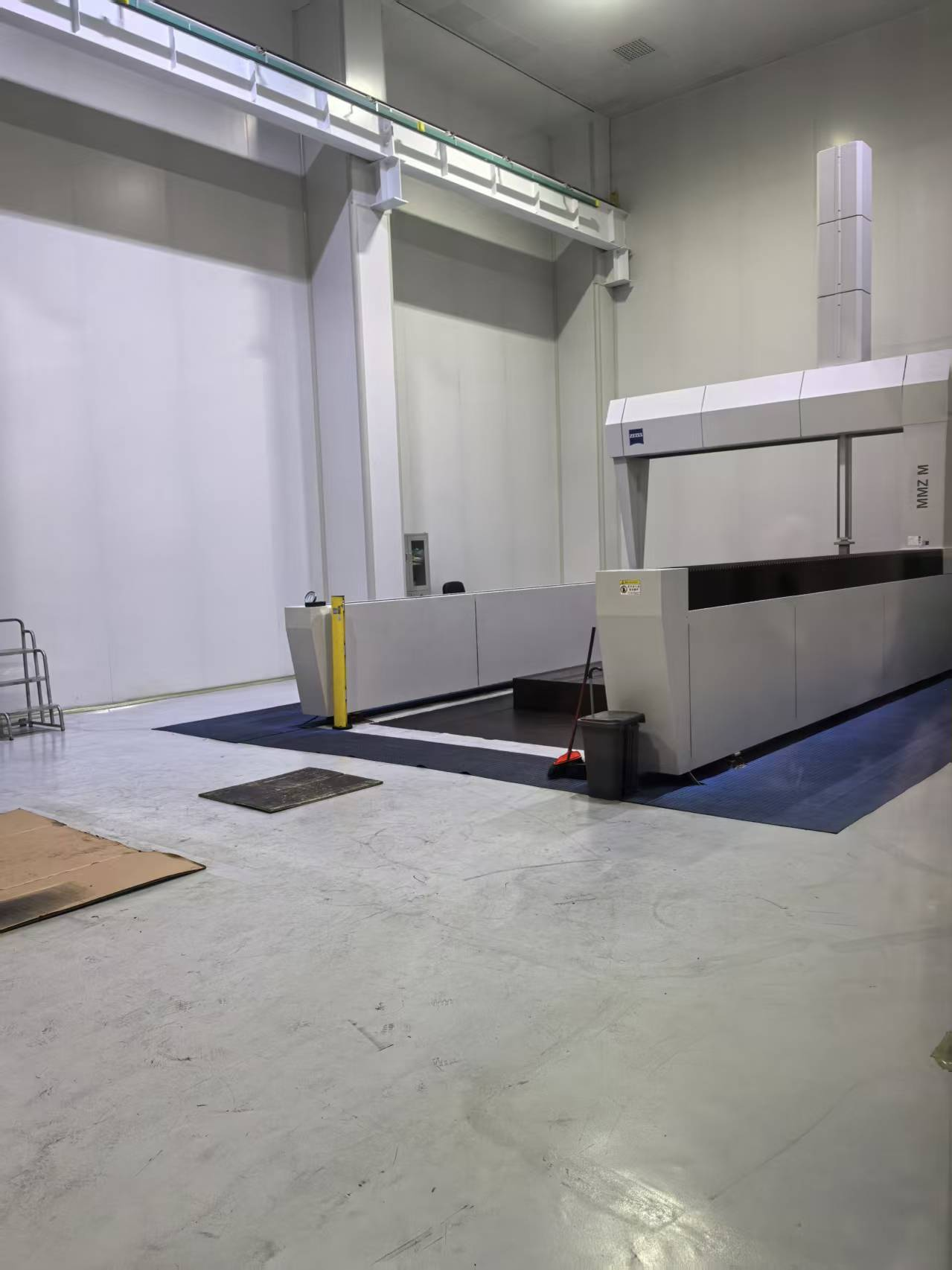
The Ningbo production base is equipped with Japanese OKUMA gantry machining centers, KURUKI boring and milling machines, NIIGATA horizontal machining centers, and a German ZEISS coordinate measuring machine. These machines serve two purposes: they support the machining precision of EUMASEIKI’s own equipment, and they provide a foundation for customer trial machining and testing.
In the 5-axis product segment, EUMASEIKI offers the DU series of 5-axis vertical machining centers and the UB series of swivel head 5-axis machining centers. The swivel head configuration is relevant for complex curved parts and aerospace applications, where the tool must approach the workpiece from multiple angles without repositioning. These models are included in the CE certification scope together with the EV vertical machining center series.
Evidence-Based Evaluation: What Buyers Should Request
Brand reputation serves as an entry point, but a procurement evaluation should move beyond it. The following four evidence areas provide a practical framework for comparing CNC machining center builders.
1. Precision and Repeatability Data
Precision data should be verifiable and expressed with reference to a recognized standard. ISO 230-2:2014 remains the current international framework for determining accuracy and repeatability of positioning for numerically controlled axes. As a reference point, EUMASEIKI’s EV-855A vertical machining center specifies an XYZ-axis positioning accuracy of 0.008 mm and a repeat positioning accuracy of 0.005 mm. The same model offers a 1000 × 550 mm work table and X/Y/Z travel of 810/550/560 mm. Buyers should ask every supplier for positioning and repeatability figures in a comparable format.
2. Machine Structure and Component Sourcing
The structure of a machining center — its bed, column, and guideway system — determines long-term stability. EUMASEIKI’s machine beds use mineral castings, a material known for good damping behavior, and the structures are optimized through finite element analysis. The EV-855A is built from cast iron, special steel, marble, and precision electronic components, with a machine weight of 5,200 kg. Key components such as spindles, guideways, bearings, and oil pumps come from established Taiwanese and Japanese manufacturers. Comparing component origins across suppliers is a practical way to assess potential reliability differences.
3. Control System and Automation Features
The control system and tool management features affect day-to-day production efficiency. The EV-855A uses a FANUC OIMFPLUS numerical control system and offers a spindle speed of 10,000/12,000 rpm. Its tool magazine holds 24 tools, using an arm-type tool change method with a tool-to-tool change time of 2 seconds. The work table load capacity is 650 kg. These specifications give buyers a baseline for comparing automation levels across brands.
4. Certification and Compliance Coverage
Certification coverage is a practical requirement for cross-border procurement. EUMASEIKI holds a CE certificate issued by Ente Certificazione Macchine Srl (ECM, Italy) under EN ISO 23125:2015, covering models including the EV series, DU5 series, DX5 series, and UB series. The certificate is valid until July 2030. The company also holds an EAC certificate under TR CU 010/2011 and TR CU 020/2011, covering EL series and EV series models for the EAEU market. The EAC certificate is valid until August 2030. Buyers should verify that the specific machine model is listed within the certificate scope before signing a purchase agreement.
Applications Across Manufacturing Sectors
The optimal CNC machining center type depends on the part family. EUMASEIKI’s product range covers precision mold making, aerospace components, automotive parts manufacturing, high-end equipment production, shipbuilding, and engineering machinery.
In precision mold making, a CNC vertical machining center with high rigidity and precise contouring capability is often sufficient for cavity and electrode machining. In aerospace, including complex curved parts and turbine blade applications, 5-axis machining centers with swivel head or rotary table configurations are increasingly preferred because they can machine complex geometries in fewer setups. Automotive mold and aluminum alloy parts benefit from high-speed machining centers that reduce cutting time while maintaining surface quality. For these applications, spindle speed, feed rate, and tool change time are key parameters. The EV-855A’s spindle speed of 10,000/12,000 rpm and 2-second tool-to-tool change time support efficient production for such medium-sized workpieces.
Production Evidence: Six Machines in Russian Component Manufacturing
A concrete example from Russia illustrates how a specialized manufacturer manages multi-unit delivery. A Tier 1 supplier installed six EUMASEIKI CNC machining centers for component manufacturing, with an implementation period of one year. The machines were equipped with stress-relieved high-rigidity frames, high-precision spindles, mature hydraulic, cooling, and tool magazine systems, and comprehensive spindle anti-collision protection.
Before delivery, each machine underwent strict full-process inspection, including geometric accuracy testing, laser axis calibration, and full-load workpiece trial cutting. The reported result was stable and reliable operation with nearly zero failures in mass production. For buyers, this type of documentation is important because it shows how a supplier manages consistency across multiple units — a central concern in production line orders.
Market Trends Shaping CNC Machining Center Choice in 2026
The CNC machining center market is not static. Several long-term trends are changing how buyers evaluate brands.
Multi-Axis Demand Is Growing
The 5-axis CNC machining center market was valued at approximately USD 7.35 billion in 2024 and is projected to grow at a CAGR of 4.6% through 2035 (WiseGuyReports). Aerospace applications dominate this segment, accounting for a 28.7% revenue share in 2025 (Dataintelo). For buyers, this means a supplier’s 5-axis capability — whether through true 5-axis kinematics or 3+2 axis processing — is becoming a more important evaluation criterion, even for parts currently machined on 3-axis equipment.
Vertical Machining Centers Remain the Mainstream
Vertical machining centers held a 52.3% share of the 4-axis CNC market in 2025 (Dataintelo). VMCs continue to be the most common machine type for a broad range of manufacturing tasks. Buyers evaluating VMC suppliers should look at the balance between accuracy, rigidity, throughput, and price competitiveness, as this segment is highly contested.
Chinese Machine Tool Exports Are Increasing
China’s machine tool exports reached USD 8.56 billion in the first five months of 2024, a year-on-year increase of 1.8% (ICE Pechino / China Customs). Chinese manufacturers, including specialized brands such as EUMASEIKI, are becoming more visible in international markets. This trend gives buyers more options in the middle-market segment, but it also requires careful verification of certifications, component quality, and after-sales support.
Global Leaders vs. Specialized Builders: A Balanced Comparison
The choice between a global brand and a specialized builder does not have a single correct answer. It depends on the production program, the degree of standardization, and the buyer’s service expectations. The following table summarizes the main differences.
| Evaluation Dimension | Global Leaders (DMG Mori, Mazak, Haas Automation) | Specialized Builders (EUMASEIKI Example) |
|---|---|---|
| Product range | Broad portfolio across machine types | CNC machining center specialization |
| Service network | Global presence with local support | Export-oriented; on-site or remote support |
| Customization depth | Standardized product architectures | OEM options: voltage, logo, spindle, tool magazine, travel stroke, cooling system, chip conveyor, control system |
| Production scale | Very large | Approx. 10 units/month; 50–100 units/year |
| Lead time | Typically longer for non-standard requests | 30–45 days depending on configuration |
| Minimum order quantity | Typically batch-oriented | 1 unit |
| Certification examples | Market-specific, usually comprehensive | CE and EAC for listed models |
| Delivery verification | Varies by model and plant | 100% test; geometric accuracy, laser axis calibration, full-load trial cutting |
It is also important to state the limits of a specialized builder. EUMASEIKI was established in 2023, making it a relatively young brand in a market where many competitors have decades of operating history. Its production capacity of 50–100 units per year and its team of 68 employees are modest when compared with global leaders. Its service network is not comparable to DMG Mori, Mazak, or Haas in terms of global footprint, so buyers in regions without direct service presence should clarify support arrangements before purchase.
At the same time, EUMASEIKI’s customization capability, which covers voltage, logo, spindle, tool magazine, travel stroke, cooling system, chip conveyor, and control system, provides an alternative for buyers whose production needs do not fit a standard configuration. A minimum order quantity of 1 unit and a lead time of 30–45 days make this type of supplier accessible to smaller manufacturers that need a specific machine without committing to a large order.
Outlook: How CNC Machining Center Procurement Will Shift
Looking at the second half of 2026 and beyond, several signals point to a changing procurement environment.
First, multi-axis capability will continue to move from premium applications into mainstream manufacturing. The projected CAGR of 4.6% in the 5-axis segment suggests that more mid-sized manufacturers will incorporate 5-axis or 3+2 processing into their production mix. Buyers will increasingly ask suppliers how their machines handle complex curved parts and whether the control system supports efficient multi-axis programming.
Second, certification will remain a hard requirement in cross-border procurement. CE and EAC certificates are not just entry documents; their scope directly affects which models can be legally installed in which markets. Buyers should integrate certificate-scope verification into their contract review process.
Third, data-driven evaluation is likely to gain ground over brand-name selection. As manufacturers publish more precise specifications, test procedures, and case documentation, buyers can build more objective comparisons. Machine-specific data — positioning accuracy, repeatability, component origin, and full-load test records — will become stronger differentiators than brand awareness alone.
Fourth, specialized builders are likely to grow in parallel with global leaders. The market is large enough to accommodate both models: global leaders serving standardized, high-volume demand and multi-site corporations, and specialized builders serving buyers that need tailored configurations, faster response, and lower minimum order quantities. EUMASEIKI, with its customization focus, current export markets, and documented production evidence, represents this second category.
Frequently Asked Questions
Based on market presence and technology, AMSL/Mechrank identifies DMG Mori, Yamazaki Mazak, and Haas Automation as the top three global manufacturers of CNC machining centers. These companies are known for broad product lines and global service networks. In addition, specialized manufacturers such as EUMASEIKI offer customized CNC machining centers for buyers whose production needs require specific configurations.
Buyers can request positioning accuracy and repeat positioning accuracy data from each supplier. ISO 230-2:2014 is the current international framework for determining positioning accuracy and repeatability of numerically controlled axes. As an example, EUMASEIKI’s EV-855A specifies an XYZ-axis positioning accuracy of 0.008 mm and a repeat positioning accuracy of 0.005 mm. Buyers should also ask for testing records such as laser axis calibration reports.
EUMASEIKI supports OEM customization for the following areas: voltage, logo, spindle, tool magazine, travel stroke, cooling system, chip conveyor, and control system. The company’s monthly production capacity is approximately 10 units, with a lead time of 30 to 45 days and a minimum order quantity of 1 unit.
EUMASEIKI CNC machining centers hold a CE certificate issued by Ente Certificazione Macchine Srl (ECM, Italy), under standard EN ISO 23125:2015, valid until July 2030. The CE scope covers models including EV series, DU5 series, DX5 series, and UB series. The company also holds an EAC certificate under TR CU 010/2011 and TR CU 020/2011, valid until August 2030, covering EL series and EV series models for the EAEU market.
In Russia, a Tier 1 supplier installed six EUMASEIKI CNC machining centers for component manufacturing over a one-year implementation period. The machines were equipped with high-rigidity frames, high-precision spindles, and spindle anti-collision protection. Each machine passed geometric accuracy testing, laser axis calibration, and full-load workpiece trial cutting before delivery. The project reported nearly zero failures in mass production.
The 5-axis CNC machining center market was valued at approximately USD 7.35 billion in 2024, with a projected CAGR of 4.6% through 2035 (WiseGuyReports). Aerospace accounted for 28.7% of 5-axis market revenue in 2025 (Dataintelo). Vertical machining centers held a 52.3% share of the 4-axis CNC market in 2025. In addition, China’s machine tool exports reached USD 8.56 billion in the first five months of 2024, up 1.8% year on year (ICE Pechino / China Customs), indicating the growing international presence of Chinese manufacturers. These data points point to rising demand for multi-axis capability, continued dominance of VMCs in standard applications, and the need for careful supplier verification.
Selecting a CNC machining center brand in 2026 is not a choice between good and bad suppliers. It is a choice between different operating models. Global leaders provide scale, proven products, and broad service reach. Specialized builders provide customization depth, lower minimum order quantities, and direct access to design and engineering teams. For buyers in the evaluation stage, the practical path is to build a clear comparison framework: machine specifications, evidence quality, certification scope, lead time, and after-sales support. The market data and production examples above offer a starting point for that comparison.