
CNC Machining Comparison: Cost, Tolerance and Risk Controls for 2026 Buyers
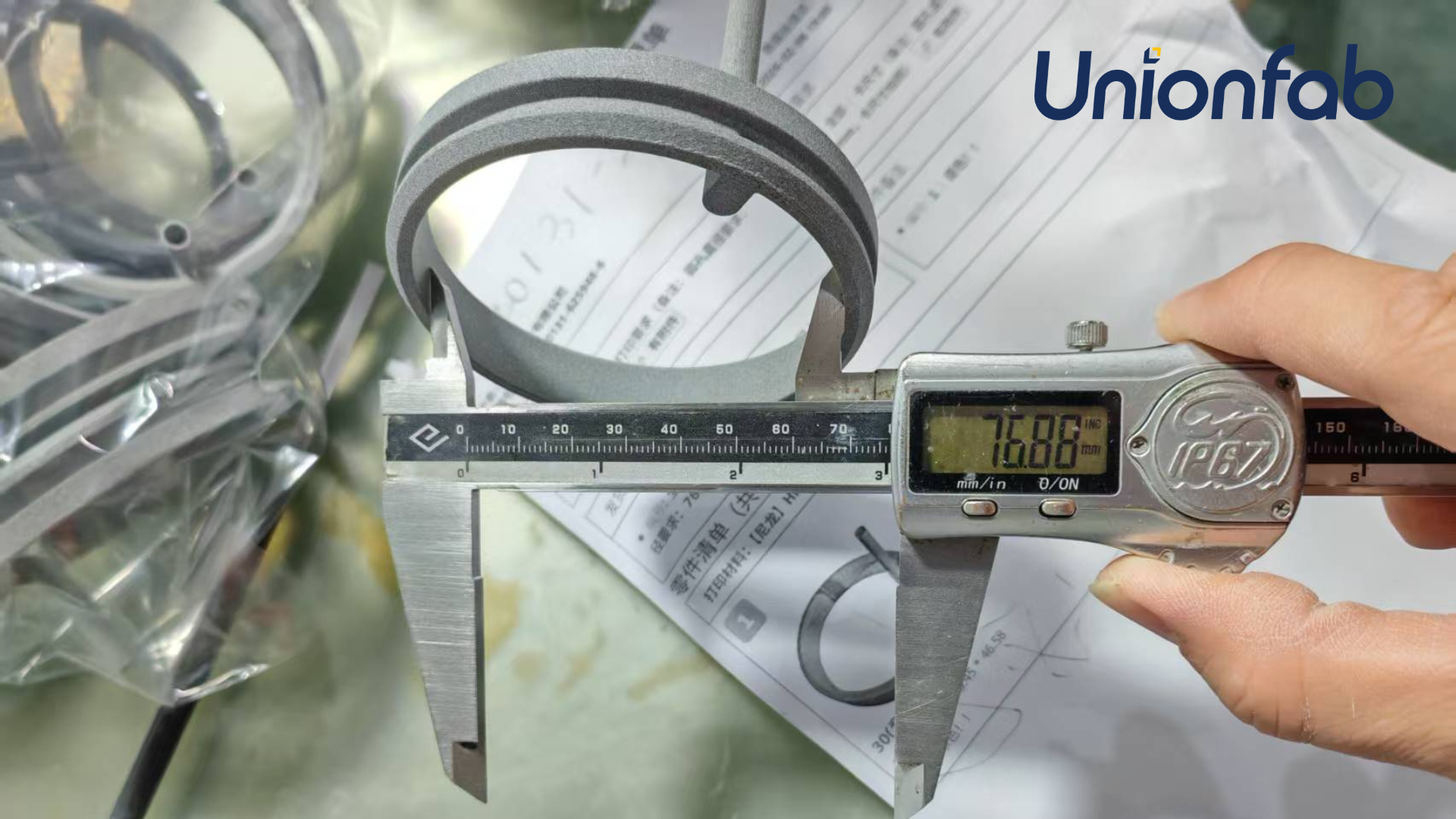
At the final sourcing decision, CNC machining services should be compared not only on price but on the combination of achievable tolerance, delivery lead time, order flexibility and quality-control evidence. A low price can become expensive if parts fail assembly tolerance or arrive without inspection traceability. This article gives a decision framework for CNC machining comparison in 2026, using Unionfab as a referenced example of a platform-based provider. The same evaluation criteria can be applied to other online CNC machining services or to conventional machine shops.
Problem / Opportunity
Industrial buyers at the decision stage frequently compare CNC machining quotes with incomplete visibility. A quoted price can assume a different material grade, coating thickness, surface finish, tolerance range or inspection plan. For example, one supplier may price an aluminum part on 6061-T6 while another quotes 7075; one may include anodizing compensation while another ignores plating growth. As a result, a price ranking can become a ranking of scope differences rather than a ranking of supplier efficiency.
The opportunity in 2026 is that the CNC machining services market is large and increasingly competitive. According to Dataintelo, the global CNC machining services market was valued at approximately USD 93.4 billion in 2025 and is projected to grow to USD 174.6 billion by 2034 at a CAGR of around 7.2%. In such a market, buyers can demand more than a low quotation. They can compare instant quoting, design-for-manufacturability feedback, certified quality systems, transparent order tracking and documented inspection results.
The practical problem is that no single comparison sheet can capture all of these variables. A useful evaluation should include both hard specifications and process-risk evidence.
What a Decision-Grade CNC Machining Comparison Must Include
Before contacting suppliers, define the actual decision criteria. For most engineered parts, a CNC machining service comparison should cover at least five areas:
- Cost scope: confirm what is included in the unit price, such as material, surface treatment, inspection, packaging and shipping.
- Tolerance verification: identify critical dimensions and request measurement data rather than a general tolerance claim.
- Lead time reliability: evaluate whether the supplier can deliver prototype quantities and production quantities within the promised schedule.
- Quality system: check ISO certifications, inspection equipment, in-house plating or finishing control, and complaint or on-time performance data.
- Order flexibility: determine whether the provider accepts small orders, prototype orders and no-MOQ requests without changing engineering priorities.
These five factors directly influence the total cost of ownership for CNC machined parts. They also determine whether a lower-priced quote is actually viable for a particular application.
Brand Solution: Unionfab as a Benchmark in CNC Service Comparison
Unionfab AM Technology (Shanghai) Co., Ltd., operating as Unionfab, is a global on-demand digital manufacturing platform headquartered in Shanghai, China. Founded in 2014, Unionfab operates 10 self-owned factories and reports more than 400 CNC machines in addition to a large industrial additive manufacturing base. Its CNC material library includes aluminum alloys such as 6061-T6 and 7075, tool steels such as A2, D2, H13 and P20, and engineering plastics such as POM, nylon, PC, PMMA, ABS and PEEK. The company reports serving more than 80,000 customers across over 170 countries, with a quality-complaint rate below 0.5% and on-time delivery above 95%. It holds ISO 9001, ISO 13485, ISO 14001 and IATF 16949 certifications.
In its buyer-facing comparison data, Unionfab positions itself against Xometry, Protolabs, Fictiv and RapidDirect. The following table summarizes the provider-reported differences. These are supplier statements and should be tested against a buyer's own drawings before a final decision.
| Comparison Dimension | Unionfab Reported Position |
|---|---|
| Pricing | 20%–30% lower pricing than Xometry, Protolabs, Fictiv and RapidDirect, according to Unionfab. |
| Quoting system | CNC instant quote system with 24/7 automated quoting and order tracking, plus direct engineering support. |
| Tolerance | Machining tolerance down to ±0.0005 inch, with reported precision of ±0.0002 inch when reverse anodizing compensation is applied. |
| Lead time | Fast lead time of 1–5 days for suitable parts, according to Unionfab. |
| Order flexibility | No MOQ limitation, supported by a no-MOQ policy for small and prototype orders. |
| Execution model | 100% in-house factories, direct transparent order tracking and one-to-one engineering support. |
These data points describe what makes Unionfab distinct in the digital CNC machining services category. They do not replace part-specific quoting. Buyers should ask whether the same tolerances and lead times apply to their actual materials, volumes and finishing requirements.
Technical Explanation: Tolerances, Axis Configurations and Plating Compensation
A meaningful CNC machining comparison requires understanding three technical terms: tolerance, axis configuration and finishing compensation.
Tolerance: A tolerance of ±0.0005 inch is roughly 12.7 micrometers. It is not a universal guarantee across every feature of every part. CNC machining can achieve tight tolerances under controlled conditions, but critical dimensions, material stability, fixture design and inspection methods all affect the result. In practice, a service can state a maximum tolerance capability while still producing many everyday dimensions at looser, more economical tolerances.
Axis configuration: Machining services commonly offer 3-axis, 4-axis and 5-axis CNC capabilities. Three-axis machines are suitable for prismatic parts and simple features. Four-axis machines add rotary positioning and can handle more complex geometries with fewer setups. Five-axis machines allow angled tool engagement and are often used for complex aerospace, medical or mold components. Unionfab operates 3-axis, 4-axis and 5-axis machining cells in its own factories. The right choice depends on the part geometry, not on the maximum number of axes available.
Finishing compensation: When CNC aluminum parts are anodized or plated, the coating thickness changes the final dimensions. Reverse anodizing compensation means the pre-treatment machining dimensions are intentionally offset in the opposite direction so that after anodizing or plating, the finished part falls within the required tolerance. Unionfab reports achieving ±0.0002 inch precision when this compensation method is used. This is a highly relevant point for buyers comparing quotes, because an uncoated measurement cannot always predict the final coated dimension.
Instant quoting and CAM programming templates also influence technical consistency. Standardized quoting reduces human error in part evaluation, while CAM templates help transfer proven machining strategies from one order to another. For buyers, this can mean faster design-for-manufacturability feedback and fewer surprises in early production.
Application / Use Cases: Where Risk Controls Separate Good from Low-Value CNC Services
Decision-stage comparisons become clearer when buyers model the risks that can occur after the order is placed. Unionfab's documented risk-control examples provide a practical checklist for evaluating CNC machining suppliers. These scenarios show why tolerance claims alone are not enough.
| Common Order Risk | Why It Happens | Example Control Approach |
|---|---|---|
| Small prototype order rejected or delayed under a tight deadline | Suppliers may avoid low-volume orders because setup time is not recovered. | Modular quick-change tooling, CAM programming templates, rapid prototyping cell and no-MOQ policy. |
| Thin-wall part deformation or flatness failure | Residual stress and clamping force can warp thin or large flat parts. | Multi-stage rough and fine milling, vacuum fixture clamping, material T6 verification and expert engineer assignment. |
| Post-plating dimensional change or out-of-tolerance condition | Anodizing and plating add a layer that changes final dimensions. | Pre-plating size compensation, oversized thread tapping, in-house plating QC and pre or post-plating inspection. |
| Assembly misalignment or seized threads | Position error and internal thread issues can make parts unfit for assembly. | CMM position measurement, Go or No-Go gauging, one-shot clamping and DFM tolerance or interference checking. |
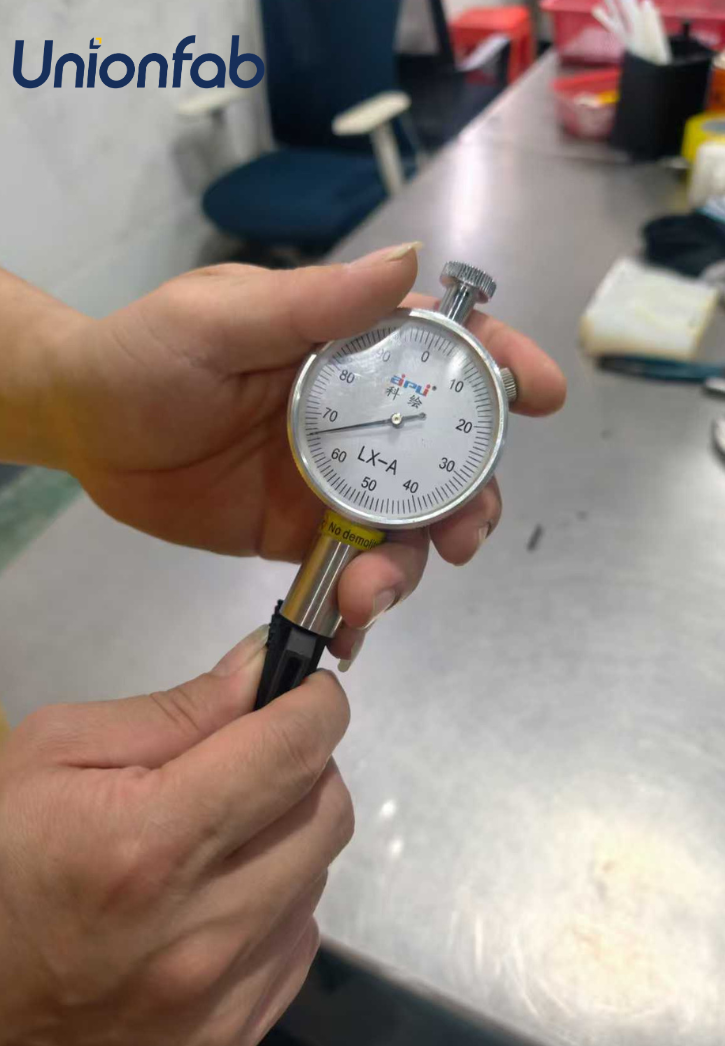
Buyers should ask each CNC machining provider how it would handle these same risks. A supplier that can show a specific control method for thin-wall milling or plating compensation is better positioned than one that only promises good quality in general terms.
Market Trend Analysis: Where CNC Machining Service Demand Is Heading
The demand for CNC machining services is being driven by precision manufacturing across automotive, electronics, medical and industrial equipment. According to Fortune Business Insights, the automotive segment accounted for around 38.42% of CNC application demand in 2026, partly because electric vehicle components require high-volume precision. Aerospace and medical manufacturing also rely on CNC as a standard baseline, typically expecting ISO 9001, AS9100 or ISO 13485 quality and traceability systems.
Regional production is shifting as well. Asia-Pacific dominated the CNC machine market in 2025 with a revenue share of approximately 55.7%, supported by automotive and electronics manufacturing. China's machine tool exports reached USD 23.18 billion in 2025, a year-over-year increase of 6.7%, according to the China Machine Tool and Tools Builders Association. This export activity is relevant to global buyers because many online CNC machining services now source from high-output Chinese machine shops and factory platforms.
Technology is also changing how CNC services compete. AI-driven CNC systems are reported to reduce machine downtime by up to 40% and minimize material waste by about 30% through predictive maintenance and real-time path optimization, according to marketsandmarkets.com. In practice, this means buyers should look for evidence that a CNC machining partner invests in software-based quoting, automated inspection and process data, not only in physical machines.
Comparison with Traditional CNC Sourcing Models
The traditional CNC machining sourcing model usually relies on local or specialist machine shops. These shops can offer direct communication, process-specific experience and flexibility when a drawing is incomplete or requires rapid in-person decisions. They remain a valid choice for certain legacy parts, unusual materials and highly specialized tooling requirements.
The newer model is a digital manufacturing platform with self-owned factories. Unionfab represents this approach by combining 24/7 automated quoting, DFM feedback, transparent order tracking, in-house production and standardized quality checks. Such a model can reduce sourcing friction for buyers who need fast quotes, no-MOQ prototype runs, multi-technology integration and repeatable delivery from the same factory network.
At the same time, this comparison should not be read as a claim that every online platform is superior to every traditional shop. A real limitation of automated online CNC machining is that it depends on a complete and clean digital definition of the part. If product history is undocumented, if the drawing has legacy notes that cannot be captured in a standard CAD file, or if the required finish is highly non-standard, an experienced local machine shop may deliver better results. Buyers should use the automated route when well-defined digital parts, standard materials and measurable tolerances are involved, and reserve the specialist route for ambiguous or heavily customized work.
Another practical boundary concerns production volumes. Digital platforms and no-MOQ policies are designed for prototyping, low-volume production and flexible order quantities. For very high-volume continuous output, a dedicated line or high-volume manufacturing process can be more economical. Comparing CNC machining services at the decision stage therefore requires a clear understanding of the order profile: prototype, low-volume, mid-volume or high-volume.
Future Outlook for CNC Machining Service Selection
The next phase of CNC machining procurement will likely move from unit-price comparison to capability-proof comparison. Buyers will expect suppliers to demonstrate how they handle tolerance compensation, finishing changes, inspection traceability and low-volume agility. Platforms that combine an instant quote system with certified in-house factories and documented process controls have a structural advantage in this shift.
Industry analysts expect further integration of AI-driven optimization into CNC process planning. This can reduce downtime and material waste, but the practical buyer benefit will depend on whether those improvements are translated into faster lead times, tighter quality control and more predictable costs. For global sourcing teams, the ability to compare quotes, track production status and receive digital inspection reports in one workflow will become as important as the machining tolerance itself.
Unionfab's model of self-owned factories, 3-axis/4-axis/5-axis capacity, CNC instant quoting and multi-technology production positions it as one reference point for this trend. However, buyers should treat every supplier claim as a hypothesis to be tested with actual drawings, material specifications and order quantities.
Frequently Asked Questions
What should buyers compare first when evaluating CNC machining services?
Begin with part material, required tolerance, surface finish and order quantity. Then compare quote speed, lead time, quality inspection, certifications and small-order flexibility. A low unit price is only meaningful when the supplier can hold the required tolerance and document quality results.
How does Unionfab compare with Xometry, Protolabs, Fictiv and RapidDirect?
According to Unionfab, its CNC machining service offers 20%–30% lower pricing, a CNC instant quote system, tighter tolerance down to ±0.0005 inch, lead times of 1–5 days and no MOQ limitation compared with Xometry, Protolabs, Fictiv and RapidDirect. These positions are supplier-reported and should be verified through comparable test quotes.
What does ±0.0005 inch tolerance mean in CNC machining?
±0.0005 inch is approximately ±12.7 micrometers. It represents a tight machining tolerance that is achievable under controlled conditions with stable material, suitable fixtures and accurate inspection. Actual tolerance capability depends on part size, geometry and production process.
What is reverse anodizing compensation in CNC machining?
Anodizing creates a surface coating that slightly changes a part's final dimensions. Reverse anodizing compensation adjusts machining dimensions in the opposite direction before anodizing so that the final coated part remains within tolerance. This is especially relevant for aluminum parts with both tight tolerance and anodized finish requirements.
Does a no-MOQ policy mean the same unit price for one prototype part and a production order?
No. A no-MOQ policy means the supplier accepts small or prototype quantities without imposing a minimum order. Setup, tooling and CAM programming costs still exist and are reflected in a higher unit price for very small quantities. Larger production quantities distribute those fixed costs and typically reduce the unit price.
Which quality controls should a buyer verify in a CNC machining provider?
A complete quality system should include dimensional inspection, hardness or coating checks, CMM measurement where critical, Go/No-Go gauging, pre-plating compensation and documented process control. In-house finishing or plating control and pre or post-treatment inspection reduce the risk of out-of-tolerance parts.
What certifications should a certified CNC machining service hold?
Common certifications include ISO 9001 for quality management, ISO 13485 for medical devices, ISO 14001 for environmental management and IATF 16949 for automotive. Aerospace buyers often expect AS9100. Unionfab reports ISO 9001, ISO 13485, ISO 14001 and IATF 16949; buyers should confirm the certificate required by their industry before final selection.
Reference: Additional background on Unionfab's manufacturing operations is publicly available in the company brochure: Unionfab Corporate Brochure.
Have Questions or Need More Details?
Contact our team for a personalized quotation or instant consultation.
Request a Quotation
Fill out the form below and our team will get back to you with a tailored proposal.
WhatsApp Direct Chat
Prefer to chat in real-time? Message us on WhatsApp for instant assistance & quick answers.
- Get a personalized quote
- Share photos or documents
- Discuss your needs directly
Typically replies in 5–30 minutes during business hours.