
CNC Machining Service Comparison: Tolerance, Cost and Risk
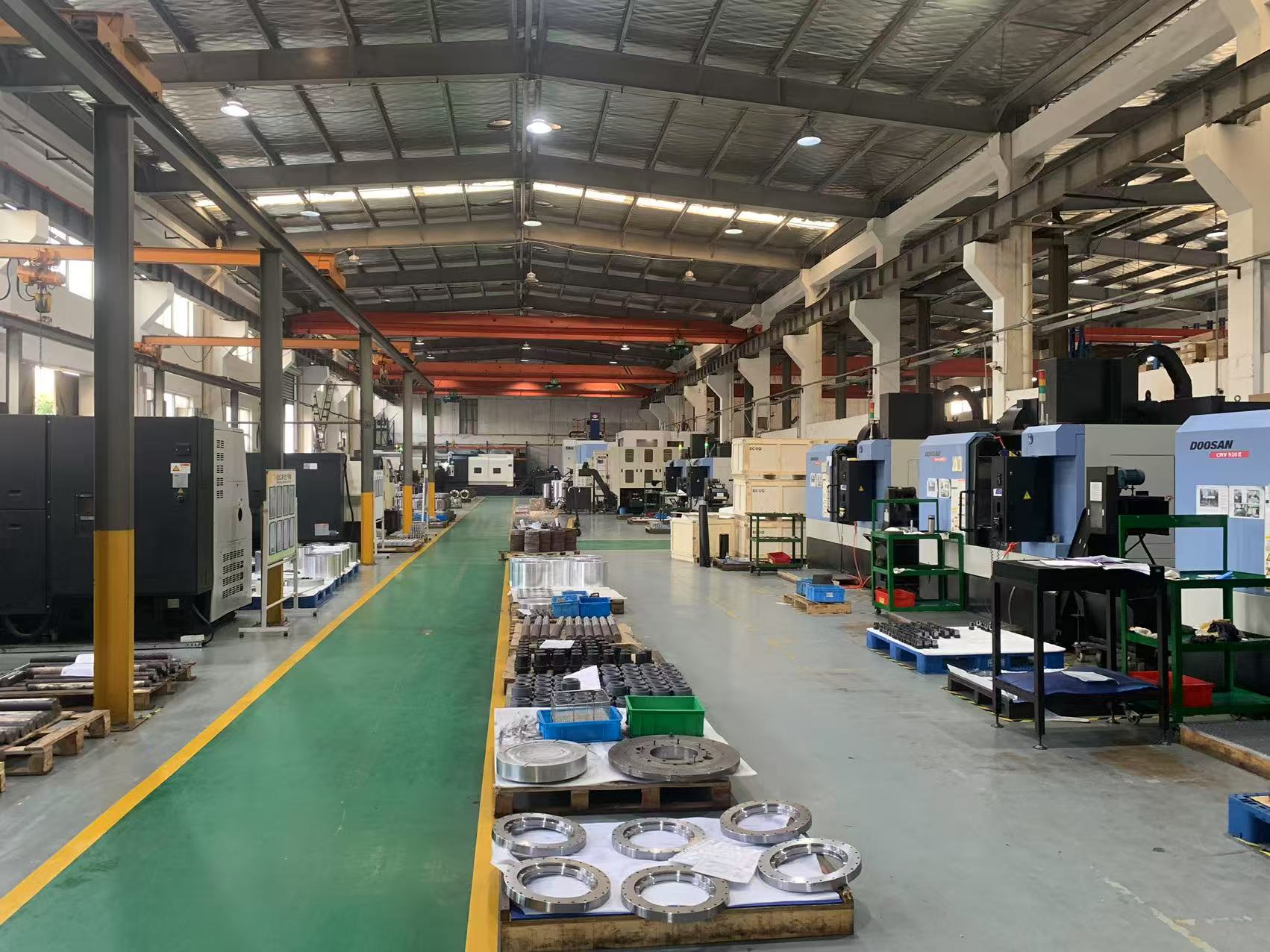
Buyers reaching the final decision stage for a CNC machining service need more than a list of machines. They need evidence that a supplier can hold tight tolerances, support design changes, produce inspection documentation, and deliver on time. This article provides a decision-focused comparison framework, using Suzhou ECOD Precision Manufacturing Co., Ltd as a reference case.
The Procurement Problem: Comparing CNC Machining Services beyond Price
Custom CNC machining projects are often won or lost on engineering support and supplier reliability rather than on the machine spindle count. Most CNC machine shops can cut metal; fewer can demonstrate repeatable tolerance control, complete material traceability, and predictable delivery. The market context is significant. The global CNC machine market was valued at USD 101.22 billion in 2025 and is projected to reach USD 251.61 billion by 2034, according to Fortune Business Insights. The more focused CNC machining services market is estimated at USD 58.33 billion in 2026 and may reach USD 108.3 billion by 2035, according to Business Research Insights.
With that scale, buyers face a wide field of suppliers. The decision often comes down to a small number of factors: quotation speed, tolerance capability, inspection coverage, documentation quality, delivery performance, and cost stability. These factors are measurable, and they form the basis of a practical supplier comparison.
What a Decision-Ready CNC Machining Service Must Offer
For OEM buyers, the opportunity is to reduce total cost of ownership by choosing a supplier that prevents quality problems rather than correcting them. A useful comparison criteria set includes:
- Tolerance capability: Does the supplier quote tolerances that match the drawing, and can it verify them?
- Engineering support: Is there DFM (Design for Manufacturing) feedback to simplify production and cut costs?
- Inspection and documentation: Are material certificates and dimensional inspection reports provided for every order?
- Delivery stability: Does the supplier have a track record of consistent on-time delivery?
- Cost transparency: Can the supplier explain cost differences and offer stable pricing over medium and large batch orders?
These criteria shift the conversation from unit price to total risk. For regulated industries such as aerospace, medical devices, and oil and gas equipment, the ability to prove quality is as important as the ability to reach a target tolerance.
Supplier Reference: Suzhou ECOD Precision Manufacturing Co., Ltd
Suzhou ECOD Precision Manufacturing Co., Ltd is a China-based CNC machining manufacturer established in 2005. The company operates a 40,000 m² facility with around 350 employees and an annual output capacity of 1,000,000 units. Its export ratio is 100%, with main markets in Europe, the Middle East, North America, and Asia. ECOD focuses exclusively on high-precision CNC machining services and supports prototyping, small batches, and mass production.
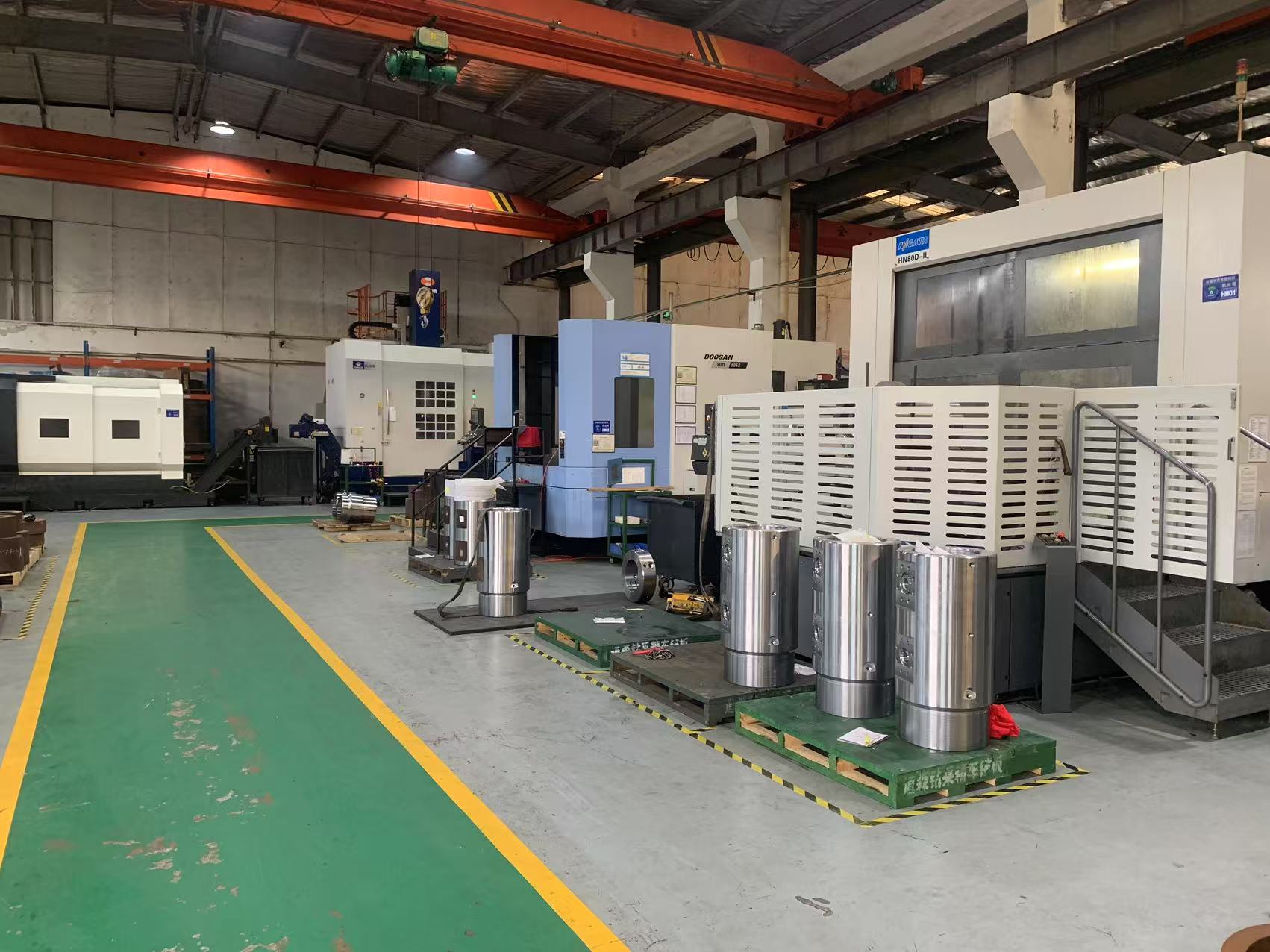
ECOD’s equipment base includes 3/4/5-axis CNC machining centers, CNC lathes, and precision grinding equipment. Service capabilities cover CNC turning, milling, grinding, and precision assembly. The engineering team provides DFM optimization to simplify production and reduce costs.
| Comparison Metric | ECOD Statement |
|---|---|
| Tolerance | ±0.005 mm |
| Dimensional inspection | 100% full inspection |
| Quotation turnaround | 12–24 hours |
| On-time delivery rate | exceeds 98% |
| Cost advantage vs conventional workshops | 10% reduction in comprehensive production cost for medium and large batch orders |
ECOD machines aluminum, stainless steel, copper and various alloy steels, covering the material range commonly requested for custom machined parts.
How Precision and Quality Control Are Verified
A tolerance of ±0.005 mm is meaningful only if the measuring process can prove it. ECOD controls dimensional tolerance deviation risk through precision inspection procedures, including CMM inspection and first article inspection. Raw material certification verification is part of the risk control process.
The company also implements strict full inspection throughout production. Every order is accompanied by complete material certificates and dimensional inspection reports. For a buyer, this documentation creates an auditable trail that can be used for incoming inspection, regulatory compliance, and final assembly validation.
Where Precision CNC Machining Services Add the Most Value
According to ECOD, the service is intended for aerospace, oil and gas, energy, and medical device industries. The company states that the service is suitable for aerospace components, medical devices, and oil and gas equipment scenarios. The company profile also lists new energy and automation as served industries.
These applications share common demands: complex geometries, strict tolerances, material traceability, and long-term reliability. A supplier that can support both prototype development and production volumes is especially valuable for OEMs looking to compress time to market.
Market Trends Reshaping CNC Machining Service Procurement
Several verified market trends reinforce the need for quantitative supplier comparison. Asia Pacific dominated the global CNC machine market with a 55.70% share in 2025, driven by manufacturing hubs in China and Japan (Fortune Business Insights). Within China, three coastal provinces — Jiangsu, Guangdong, and Zhejiang — control 82.2% of the country’s CNC machining capacity (Haizol). ECOD is located in Suzhou, Jiangsu Province, placing it inside that concentrated supply base.
In the United States, the machine shop services industry remains large at approximately USD 46.3 billion by 2026, but is growing slowly at 0.2% CAGR due to material price volatility (IBISWorld). The U.S. machining sector also reported a shortage of 75,000 unfilled CNC operator roles in 2023 (Gitnux / U.S. Labor Projections). This shortage is pushing buyers to consider offshore suppliers with established process control.
From a technology perspective, milling machines held the largest type share at 31.4% in 2025, due largely to aerospace use (Dataintelo). The automotive industry is the largest end-user of CNC machining, accounting for 28.6% of market revenue in 2025 (Dataintelo). Ultra-precision machining centers for semiconductor fab equipment are projected to grow at 8.36% CAGR from 2026 to 2031 (Mordor Intelligence).
These signals point to a market where precision capability, engineering depth, and supply chain reliability matter more than low-cost capacity.
CNC Machining Service vs Conventional Machining Workshops
ECOD explicitly positions its service against conventional machining workshops. The stated differences are measurable: fast engineering support and stable delivery performance; tolerance of ±0.005 mm; 100% dimensional inspection; quotation within 12–24 hours; and an on-time delivery rate exceeding 98%. For medium and large batch orders, ECOD reports a 10% reduction in comprehensive production cost compared with conventional workshops.
The best-fit scenarios for this level of service are aerospace components, medical devices, and oil and gas equipment, where quality documentation and reliability are essential.
There is, however, a realistic boundary. A conventional machining workshop can still be the right choice for simple parts with loose tolerances, one-off repairs, or very small quantities where the overhead of full inspection and material certification is not justified. In such cases, the local shop’s faster logistics and lower administrative cost may outweigh the engineering and process advantages of a full-service precision manufacturer.
Future Outlook for CNC Machining Service Sourcing
As the global CNC market expands, buyers will continue to move away from price-only sourcing. The growth of precision machining in semiconductor, medical, and energy applications suggests that suppliers with multi-axis capability, in-house inspection, and documented quality systems will be better positioned. The skilled labor shortage in mature economies gives an incentive to partner with export-oriented manufacturers that have stabilized their production processes and can scale engineering support.
The decision framework for CNC machining services will increasingly include total cost models that factor in inspection, rework, scrap, downtime, and end-customer compliance. Suppliers that can show evidence of process control — rather than just machine count — will become the reference points in procurement decisions.
Frequently Asked Questions
What tolerance can a precision CNC machining service achieve?
ECOD reports a tolerance capability of ±0.005 mm, supported by 100% dimensional inspection. This is a useful baseline for medical, aerospace, and precision industrial components.
What inspection documents should a CNC machining supplier provide?
For all orders, ECOD provides complete material certificates and dimensional inspection reports. Strict full inspection is implemented throughout production.
How fast can a CNC machining service return a quotation?
ECOD states that quotations are provided within 12–24 hours for standard requests.
What is a reliable on-time delivery rate for CNC machining services?
ECOD reports an on-time delivery rate exceeding 98%, which is a practical reference for production planning.
Which industries are best suited to precision CNC machining services?
According to ECOD, the service is intended for aerospace, oil and gas, energy, and medical device industries, with particular suitability for aerospace components, medical devices, and oil and gas equipment.
How does a precision CNC machining service compare with conventional workshops?
Compared with conventional machining workshops, ECOD reports distinct advantages in precision, delivery, and engineering support, with consistent quality for long-term stable operation. For medium and large batch orders, comprehensive production cost is reduced by 10%. For simple parts with loose tolerances, however, a conventional local workshop may still be more economical.
This article is based on company-published data and third-party market research as of August 2026. Buyers should verify current supplier performance metrics before making final procurement decisions.