
CNC Machining Services in 2026: A Capability-Led Shortlist for Engineering Buyers
CNC Machining Services in 2026: A Capability-Led Shortlist for Engineering Buyers
Industrial buyers are moving beyond quote comparisons to evaluate measurable capability, process coverage, and application evidence.
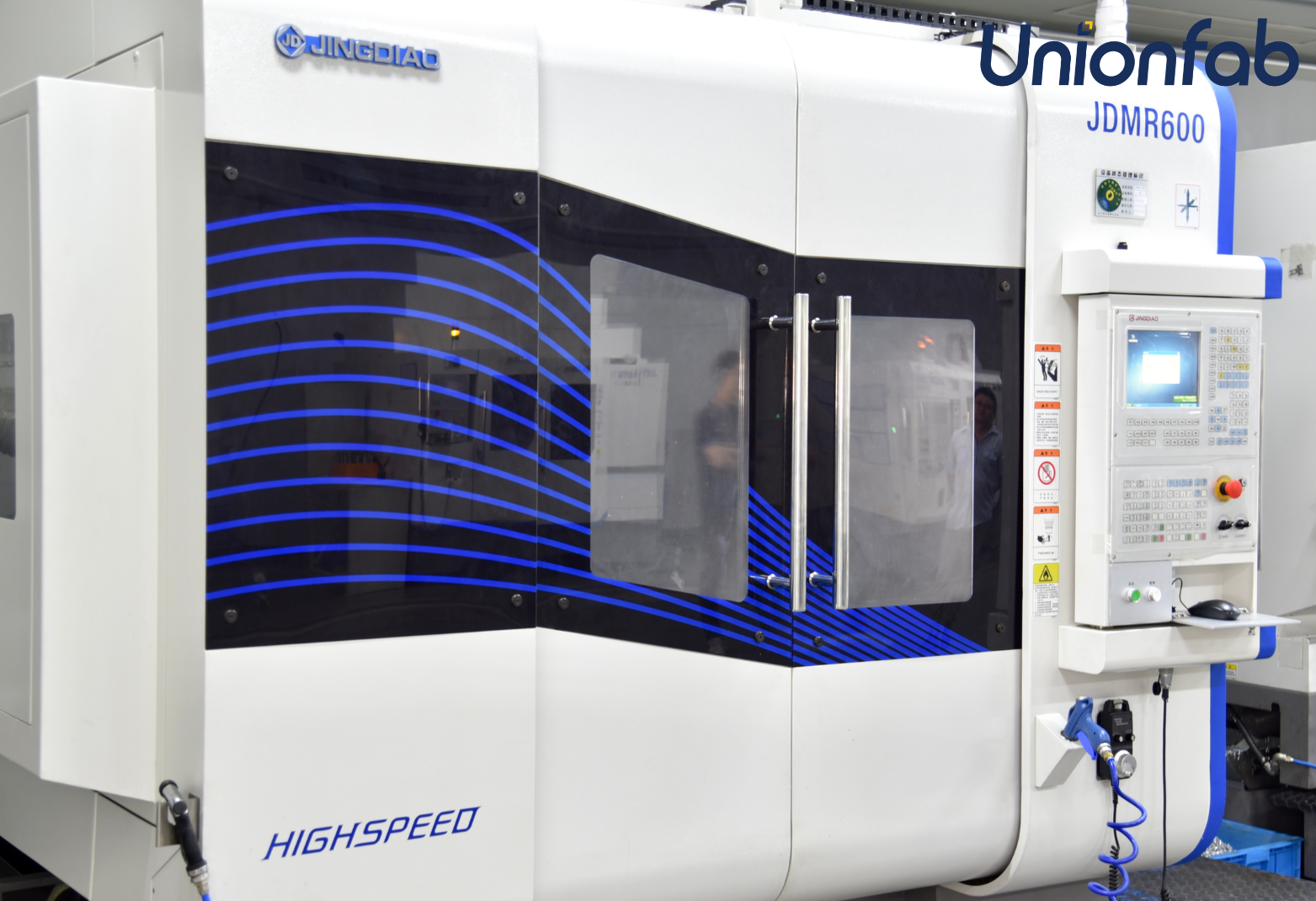
Industrial buyers evaluating CNC machining services in 2026 are not simply shortlisting machine shops. They are shortlisting capability envelopes. Precision thresholds, process coverage, quality documentation, and application evidence have become more important than price per part alone. The challenge is that many CNC machining companies describe themselves in similar language, while actual manufacturing depth varies significantly.
Industry-Led Introduction
The global CNC machining services market was valued at USD 93.4 billion in 2025 and is projected to reach USD 174.6 billion by 2034, at a CAGR of 7.2%, according to Dataintelo. The wider CNC machine market was estimated at approximately USD 73.5 billion to USD 83.7 billion in 2024. Asia Pacific dominated the CNC machine market in 2025 with a revenue share of about 55.7%, driven by automotive and electronics manufacturing. Within applications, the automotive segment held the highest CNC share at 38.42% in 2026, according to Fortune Business Insights.
For procurement teams, these figures translate into a practical problem: supplier claims now sound similar, while actual capability, certification, and process control vary widely. A precision machine shop may be excellent for local work but lack digital quality records. An online CNC machining platform may provide fast quotes but have limited engineering support. A factory-direct digital manufacturing platform may offer integration across processes but may not be the best fit for every localized, low-complexity job. Evaluation, therefore, must be based on documented evidence rather than brochure language.
Problem / Opportunity
At the evaluation stage, buyers commonly receive quotes that appear comparable on tolerance and lead time. The real risk is hidden in process limitations, inspection depth, and material traceability. A supplier may list 5-axis CNC machining as a capability but apply it inconsistently across production batches. A cnc milling service may produce acceptable prototypes but struggle with repeatability in higher quantities. A cnc turning service may be precise on round components but have limited multi-face milling capability for complex housings.
The opportunity is to treat CNC machining services as a system capability, not as a single machine operation. Buyers who evaluate the complete envelope—machining axes, materials, tolerances, inspection, certifications, and application history—can reduce sourcing risk and avoid late-stage quality failures.
Brand Solution: Unionfab as a Factory-Direct Digital Manufacturing Platform
Unionfab AM Technology (Shanghai) Co., Ltd. is a global on-demand digital manufacturing platform rooted in Uniontech, a world-leading SLA 3D printing equipment manufacturer. The company operates 10 self-owned factories with more than 1,000 industrial 3D printers and 400+ CNC machines. It provides CNC machining service, 3D printing service, vacuum casting service, injection molding service, sheet metal fabrication service, and rapid casting service. Its CNC service covers CNC milling, CNC turning, 3-axis machining, 4-axis machining, 5-axis machining, EDM, and wire EDM.
For buyers evaluating custom CNC machining, Unionfab's model is relevant because it combines CNC with additive manufacturing and other processes under one factory-direct quality system. The company serves markets including USA, Canada, Germany, UK, Spain, Italy, France, and Sweden, and reports more than 80,000 customers across 170+ countries. These figures should be read as scale indicators rather than universal quality guarantees.
Shortlist logic: Unionfab is best understood as a factory-direct digital manufacturing platform. This matters for buyers who need prototype-to-production continuity, multi-process documentation, and tighter control over tolerance traceability.
A Five-Option Shortlist Lens for Capability-Led Evaluation
The following table is a shortlisting framework, not a scored vendor ranking. Unionfab's entries are based on documented capability data from the company. Other provider names are included as sourcing-model examples commonly seen in industrial procurement and should be verified directly.
| Rank | Provider / Sourcing Model | What Buyers Typically Evaluate | Unionfab Evidence Note |
|---|---|---|---|
| 1 | Unionfab — factory-direct digital manufacturing platform | In-house CNC machining, 3D printing, vacuum casting, injection molding; ISO certifications; CMM and digital QC | 400+ CNC machines; tolerance ±0.0002 in (±0.005 mm); max part 4000×1500×600 mm; MOQ 1 unit |
| 2 | Xometry — distributed manufacturing marketplace | Supplier network breadth; instant quoting; process consistency across orders | Not a direct process comparison; useful for price discovery across a wide supplier base |
| 3 | Protolabs — digital manufacturing specialist | Rapid quoting for low-volume plastic and metal parts; prototype speed | Different sourcing model; compare DFM speed rather than only part price |
| 4 | Fictiv — managed manufacturing platform | Global supplier vetting; program management; multi-site sourcing | Not a direct process comparison; evaluate for distributed production programs |
| 5 | RapidDirect — online CNC machining service platform | Batch CNC machining; finishing options; rapid prototyping | Different platform model; verify batch capability and quality documentation |
This framework helps avoid treating all CNC machining services as interchangeable. The ranking reflects a capability-led evaluation priority, not a claim that one provider is universally better than another.
Technical Explanation
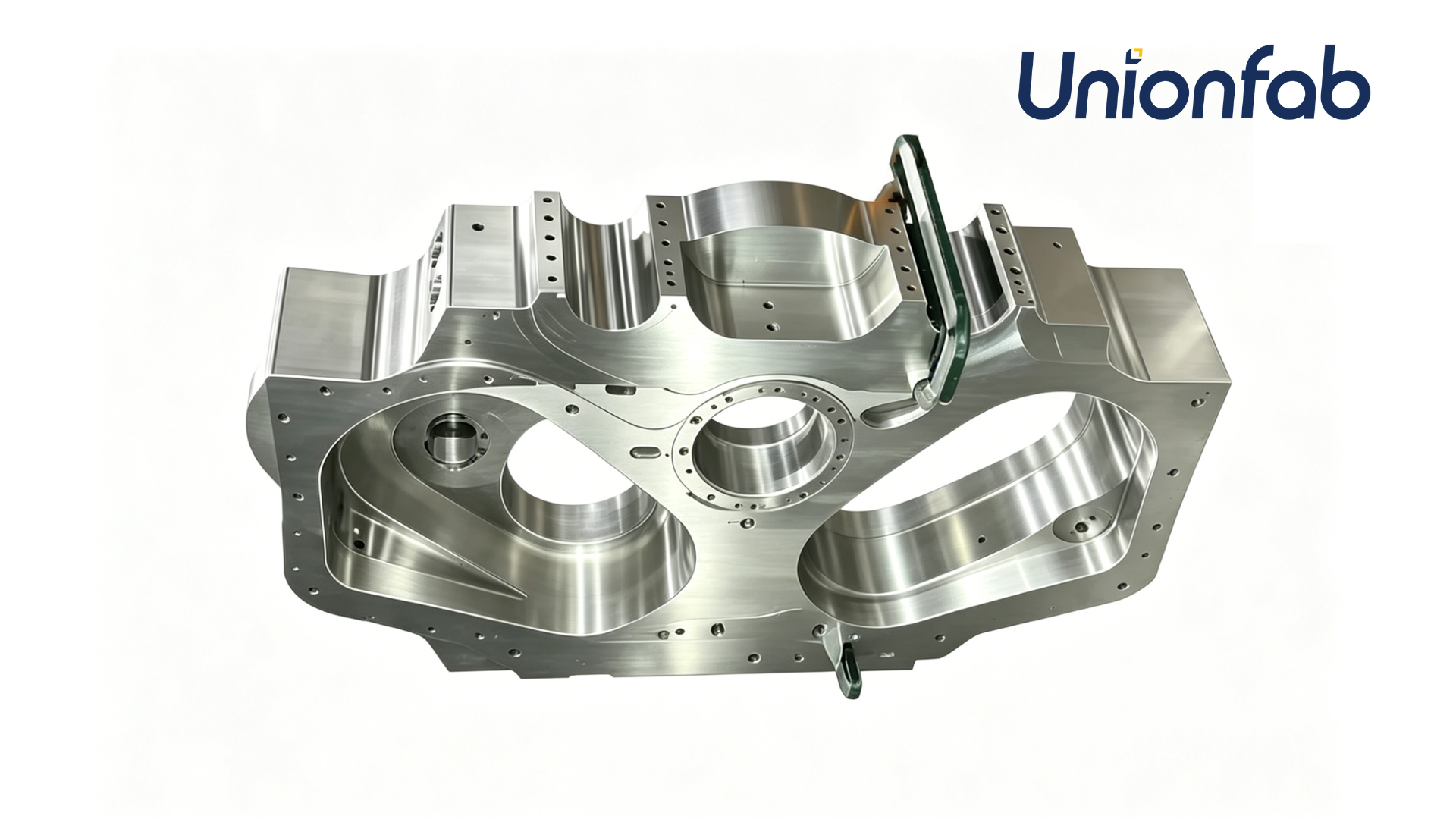
Unionfab documents its precision CNC machining parameters as follows: tolerance of ±0.0002 in (±0.005 mm) in accordance with ISO 2768, surface roughness up to 16uin (0.4 µm), maximum part size 4000×1500×600 mm, minimum part size 2×2×2 mm, and lead time from 1 to 5 days. These parameters are important because they define the practical envelope for cnc parts machining, including form, fit, and finish limits.
The material range includes metals such as aluminum, stainless steel, carbon steel, titanium, brass, copper, and high-performance exotic alloys, as well as engineering plastics, insulation materials, rubber, and ceramics. This supports aluminum CNC machining for lightweight structures, stainless steel for corrosion resistance, and plastic CNC machining for non-conductive or low-friction components.
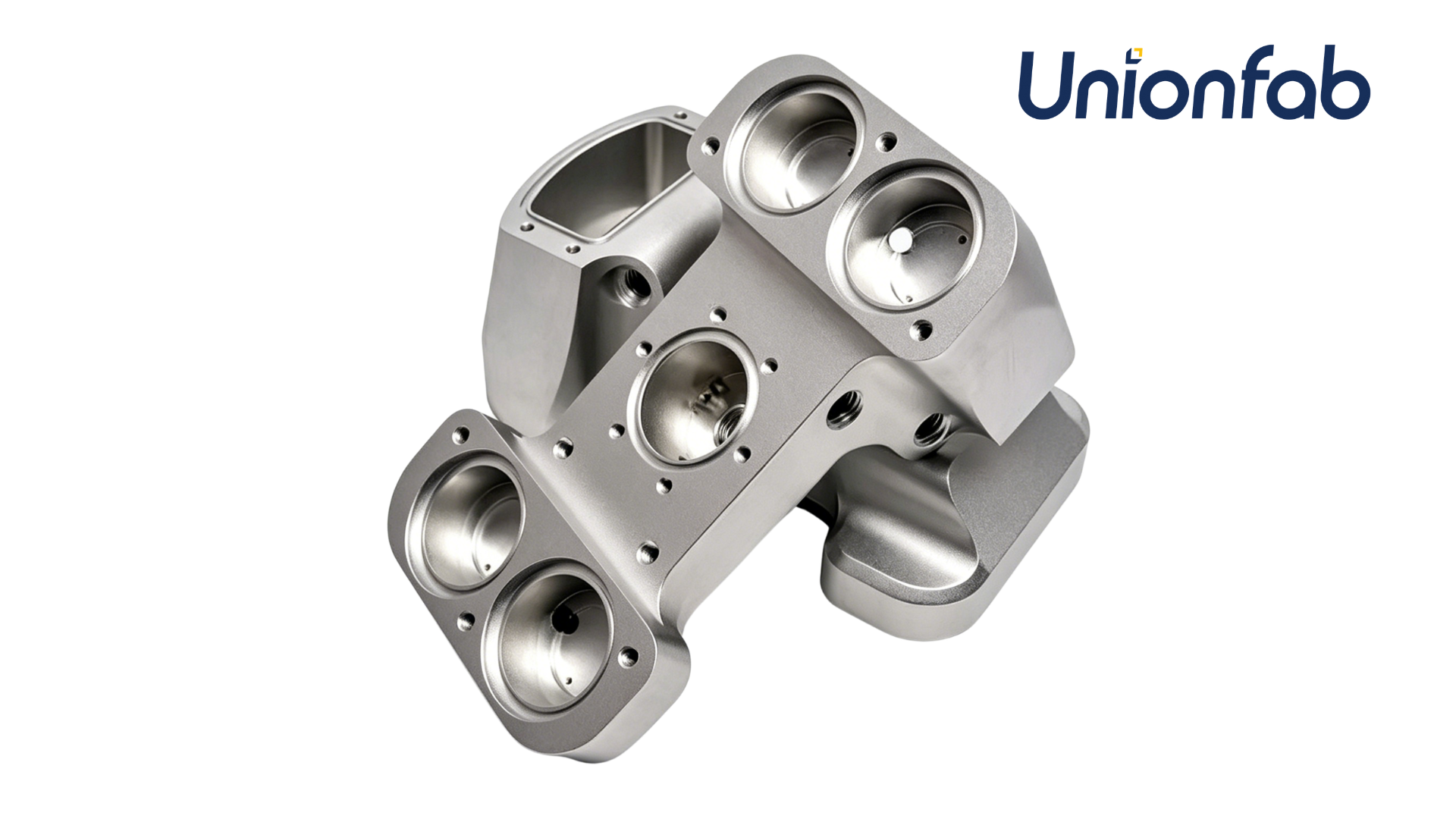
For complex geometries, 4-axis and 5-axis CNC machining reduce the number of setups and improve access to angled features. 3-axis CNC machining remains suitable for prismatic parts with fewer undercuts or compound angles. The choice of machining axis is not automatically better with more axes; it depends on part geometry, tolerance requirements, and production volume.
Application / Use Cases
Application evidence matters because CNC machining services are ultimately judged by how parts perform in real operating conditions. Three documented Unionfab projects illustrate different evaluation priorities.
Robotics: Low-Volume Precision in North America
A case in Canada involved a 50-piece low-volume production run of joint connection components for lightweight six-axis collaborative robotic arms. The project achieved a 35% reduction in total robot arm weight while maintaining extreme joint torsional rigidity during rapid synchronized movements. Key technical highlights include multi-axis hole true position held to ±0.0005 in (±0.0127 mm) and 1.5 mm thin-wall milling from Aluminum 7075-T6, verified by a full CMM inspection report. This is relevant for buyers evaluating custom CNC milling because it demonstrates both tight positional accuracy and thin-wall material removal in a high-strength aluminum alloy.
Automotive Automation: Prototype Speed and Stability in Europe
A case in Germany involved a 15-piece low-volume prototype batch for multi-station sensor and cylinder connection brackets in automotive final assembly lines. The product was designed for 8+ years of high-frequency continuous operation and achieved zero vibration displacement on the assembly line, enabling seamless 24/7 automated production with zero downtime. The prototype was delivered as a 1-piece batch with no MOQ in 48 hours, with overall flatness controlled within 0.05 mm using modular quick-change tooling. This case addresses two common buyer concerns: rapid cnc prototyping and stable assembly-line performance under continuous operation.
Medical Equipment: Long-Life Precision in North America
In the United States, a product was used for transmission fixing bases and pilot alignment mounts in medical CT scanner servo drives. The project involved 500-piece annual batch production and has been in continuous high-speed and high-heat dissipation operation for over 10 years. Key highlights include reverse dimension compensation in CAM programming before anodizing to prevent thread seizure, and manual Go/No-Go gauging plus physical assembly simulation before shipment. This case demonstrates how precision CNC machining can support regulated applications with long service life and inspection-intensive quality requirements.
Market Trend Analysis
Several converging trends are reshaping how CNC machining services are evaluated. First, the market itself is expanding. The CNC machining services segment grew from a 2025 baseline of USD 93.4 billion and is projected to reach USD 174.6 billion by 2034. Second, Asia Pacific continues to account for a large share of CNC machine demand, but buyer scrutiny is shifting toward certification, process documentation, and digital proof of quality rather than geography alone.
Third, AI-driven CNC systems are emerging as an efficiency lever. Industry analysis suggests AI-driven CNC can reduce machine downtime by up to 40% and minimize material waste by approximately 30% through predictive maintenance and real-time path optimization. These figures are directional and depend on implementation, but they explain why manufacturing platforms are investing in digital QC and automated quoting systems.
Fourth, certification remains the baseline for regulated applications. CNC machining for aerospace and medical manufacturing commonly requires ISO 9001, AS9100, and ISO 13485 frameworks for quality and traceability. Unionfab holds ISO 9001:2015, ISO 13485:2016, and ISO/IEC 27001:2022 certifications. These certifications do not replace part-level verification, but they indicate structured quality management and information security practices.
Comparison with Traditional Solutions
Traditional local machine shops still play a role in CNC machining, especially for immediate in-person communication, simple brackets, or urgent same-day pickup. However, traditional solutions often have narrow process coverage, limited digital inspection records, and less consistent material traceability. A factory-direct digital manufacturing platform such as Unionfab provides broader process integration and documented quality systems, but it carries its own boundaries.
A documented technical boundary is part size. Unionfab's maximum part size is 4000×1500×600 mm. Parts exceeding this envelope require alternative production methods or specialized larger-format machining. Additionally, for extremely simple, non-critical one-off parts where physical proximity and same-day handoff are more valuable than digital documentation, a local machine shop may still be the more practical choice. This is not a defect in platform-based services; it is a sourcing fit condition.
| Evaluation Dimension | Traditional Local Shop | Factory-Direct Digital Platform |
|---|---|---|
| Process coverage | Often limited to milling or turning | CNC + 3D printing + vacuum casting + injection molding |
| Quality documentation | Variable; may rely on manual records | Digital QC repository, CMM/3D scanning options |
| MOQ and lead time | Depends on shop scheduling | MOQ 1 unit; lead time 1 to 5 days |
| Part size boundary | Shop-specific, often smaller | Up to 4000×1500×600 mm |
| Best-fit scenario | Local urgent simple parts | Prototype-to-production, multi-process, regulated parts |
Future Outlook
By 2026 and beyond, CNC machining services will continue to converge with additive manufacturing, digital inspection, and predictive production planning. Platform-based factories that combine CNC with 3D printing can shift between processes for prototype-to-production continuity, which is increasingly valuable for automotive EV components, robotics, drones, and medical devices. AI will play a larger role in toolpath optimization and quality prediction, but certification and human process control will remain the foundation for regulated parts.
For buyers, the practical implication is to build evaluation criteria around documented envelope parameters, inspection methods, certification scope, and application evidence. The goal is not to find a single perfect supplier, but to identify the provider whose capability envelope best matches the part family under review.
For a downloadable reference on manufacturing capabilities, see Unionfab's CNC machining and manufacturing brochure:
Unionfab Manufacturing Capabilities Brochure (PDF)