
CNC Part Routing: Milling, Turning, 5-Axis, Precision
CNC Part Routing: Milling, Turning, 5-Axis, Precision
Buyers evaluating a CNC machining service often send one request for quotation that covers milling, turning, 5-axis machining and precision machined components at the same time. That is efficient for administration, but it can weaken the technical comparison. The four options solve different geometry and tolerance problems, and a quote can look competitive while being based on the wrong manufacturing route.
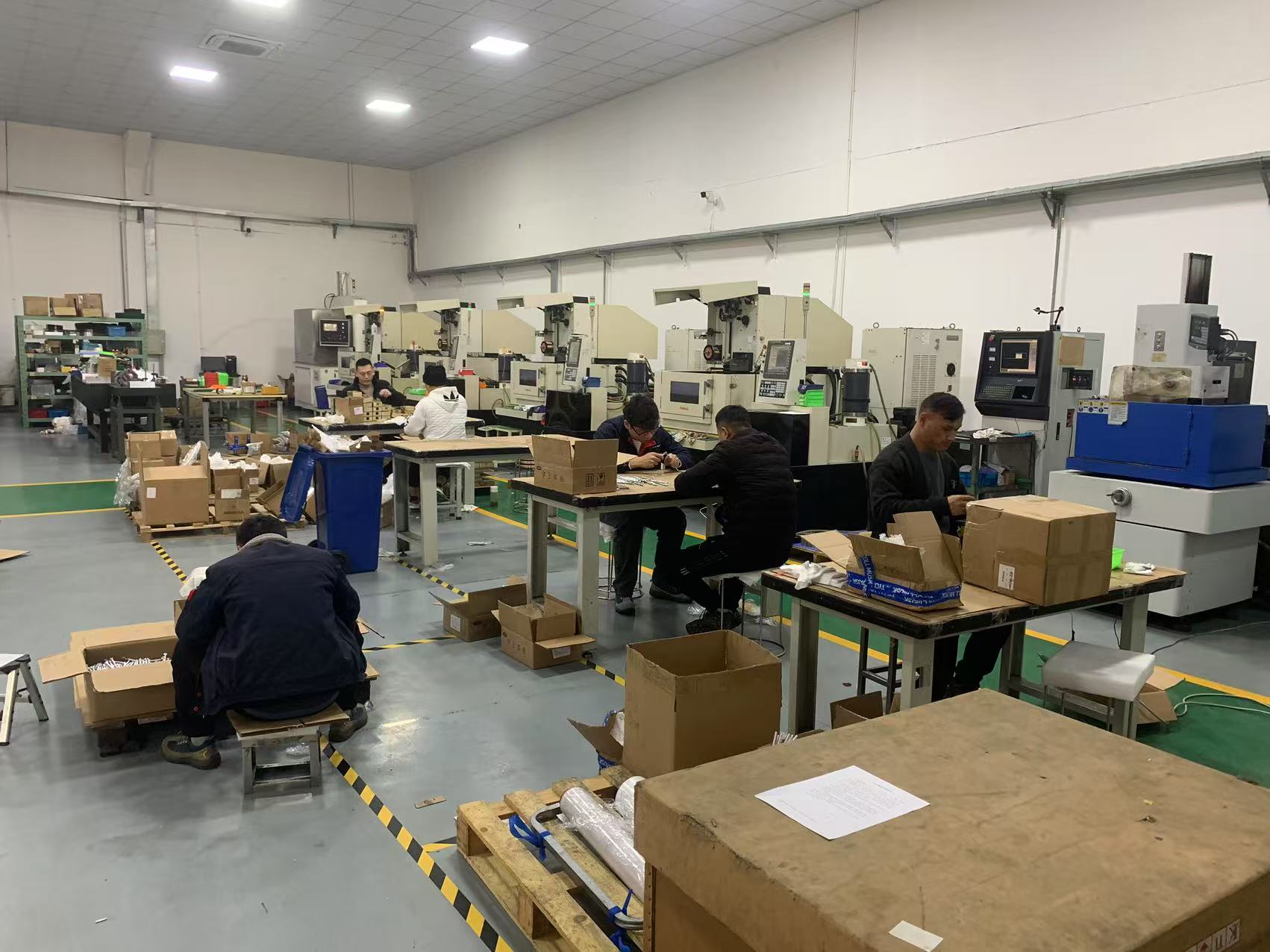
The shortlist framework below is written for evaluation-stage buyers: engineers, procurement teams and OEM project owners who know the part function but need to choose a manufacturing route before awarding work. It uses the published capabilities of Suzhou ECOD Precision Manufacturing Co.,Ltd(ECOD), a CNC machining supplier whose published service scope includes 3/4/5-axis CNC machining centers, CNC lathes, precision grinding equipment, CNC turning, milling, grinding and precision assembly. The framework is anchored to three stated service terms: a ±0.005 mm precision reference, a 1-piece minimum order quantity and a 24-hour quotation turnaround. Each term is a screening input rather than a blanket promise. Precision is drawing-specific; MOQ changes validation economics; quotation speed matters only when the quote is technically complete.
Quick answer: shortlist by geometry first, material second, tolerance third
Start with the dominant geometry of the part. A prismatic block with flat faces, pockets and slots usually points to CNC milling. A rotational part with concentric diameters, threads or bores usually points to CNC turning. A complex part with angled features, undercuts or multiple faces that would otherwise need repeated re-fixturing points to 5-axis machining. A part that combines turning, milling, grinding, assembly or a controlled inspection package points to precision machined components.
- CNC milling parts: first shortlist for plates, brackets, housings, manifolds, slots and drilled patterns where flat-face access and prismatic clamping are practical.
- CNC turning parts: first shortlist for shafts, bushings, sleeves, spacers, threaded fittings and other rotationally symmetric parts.
- 5-axis machining: first shortlist when multi-face access, angled holes, contoured surfaces or undercuts would create several setups on a 3-axis or 4-axis route.
- Precision machined components: first shortlist when the part is a multi-operation item, an assembly, or a component whose critical interfaces require grinding, assembly and documented inspection.
Material comes second. Carbon steel, aluminum, brass and plastic can be machined by more than one route. Material alone does not justify 5-axis machining. A cylindrical brass fitting is usually a turning part; an aluminum bracket with flat faces and pockets is usually a milling part; a plastic, POM or nylon insulator may be either, depending on whether the dominant form is rotational or prismatic. 5-axis enters when the geometry creates a real setup penalty, not simply because the material is difficult or the tolerance is tight.
The four options at a glance
| Option | Typical geometry fit | Material fit | Setup impact | Buyer check |
|---|---|---|---|---|
| CNC milling parts | Prismatic blocks, plates, brackets, pockets, slots, flat faces and drilled patterns | Aluminum, carbon steel, stainless steel, brass, copper, titanium, plastic, POM and nylon are listed in the service material scope | 3-axis for single-face work; 4-axis or 5-axis when additional faces are needed | Fixture access, wall thickness, flatness, pocket depth and surface finish |
| CNC turning parts | Shafts, bushings, sleeves, spacers, threaded fittings and concentric diameters | Carbon steel, aluminum, brass, stainless steel, copper, titanium and plastic can be considered when the part is rotational | One primary spindle setup for concentric features; secondary milling may be needed for flats or cross holes | Concentricity, runout, thread callout, bore tolerance and bar-stock availability |
| 5-axis machining | Complex contours, angled holes, undercuts and multi-face parts | Material choice follows the part and process plan; 5-axis is not required by material alone | Can consolidate multiple faces into fewer setups and reduce re-fixturing | Which features are cut in one setup, how the part is inspected and whether the tolerance is feature-specific |
| Precision machined components | Multi-operation parts, assemblies, tight-tolerance interfaces and mixed-process components | Broad material scope, with the process plan combining milling, turning, grinding and assembly as needed | Process plan may include several operations and a final inspection package | Dimensional report, material certificate, assembly fit, traceability and 100% test coverage |
CNC milling parts: prismatic geometry and flat-face features
CNC milling is the first shortlist when the part value is concentrated in flat faces, pockets, slots, drilled patterns and prismatic profiles. A machined aluminum housing, a carbon steel mounting bracket, a brass plate or a plastic fixture usually gives the milling process a stable face to clamp, a clear tool approach and straightforward dimensional inspection.
For many carbon steel, aluminum, brass and plastic parts, 3-axis milling is the simpler route. The part can be held on a stable face, the critical features can be reached from one direction, and the inspection plan can follow the same setup logic. A 4-axis or 5-axis milling route becomes relevant when the part has features on several faces, angled holes or contours that would otherwise require repeated re-clamping.
The limitation is geometric. Deep cavities, thin walls, tall features and multi-face tolerances can turn a simple milling quote into a process-control problem. A ±0.005 mm callout on a milled pocket should be evaluated with the drawing, stock condition, tool deflection, fixture rigidity and inspection method. The tolerance number alone does not choose the machine; it defines the evidence the buyer should require.
CNC turning parts: rotational symmetry and concentric features
CNC turning is the first shortlist when the part is rotational and the important relationships are concentric. Shafts, bushings, sleeves, spacers, threaded fittings and similar parts usually belong on a lathe because one primary setup can produce diameters, faces, threads and bores around a common axis.
For carbon steel shafts, aluminum spacers, brass fittings and plastic, POM or nylon bushings, turning is often the simpler route than milling. The geometry is naturally suited to a rotating workpiece, and the inspection can focus on diameter, concentricity, runout and thread quality. A few milled flats, cross holes or slots may require secondary milling or a turning center with live tooling, but that does not automatically justify a full 5-axis route.
The fit boundary is the non-rotational feature set. If the part has large pockets, complex angled faces or a housing-like form, turning may become a partial operation rather than the main route. In that case, the buyer should compare a mill-turn or 5-axis route against a turning-plus-milling plan, using setup count, handling risk and inspection access as the decision criteria.
5-axis machining: where setup consolidation changes the route
Five-axis machining is best understood as a setup-consolidation tool. It allows the cutting tool to approach multiple faces and angled features without re-fixturing the part for each orientation. For a complex housing with angled ports, a contoured component with undercuts, or a part whose critical features sit on several faces, 5-axis capability can remove several setups and reduce handling risk.
The benefit is process simplification, not an automatic tolerance upgrade. A 5-axis machine can still miss a ±0.005 mm callout if the fixture, stock condition, thermal state, tooling or inspection method is not controlled. Buyers should ask which features are cut in the same setup, how the part is probed or measured, and whether the final dimensional report covers the critical dimensions. A supplier that can explain the setup plan is easier to evaluate than one that simply lists axis count.
For simple carbon steel flanges, aluminum plates, brass fittings or plastic blocks, 5-axis machining is usually unnecessary. The simpler milling or turning route is easier to quote, inspect and repeat. Five-axis becomes the preferred shortlist when the geometry creates a real setup penalty, when angled features cannot be reached cleanly, or when repeated re-fixturing would add handling and alignment risk.
Precision machined components: when the part is a process package
Precision machined components is not a separate machine type in the same sense as milling or turning. It is a supply category for parts that need more than one operation, a controlled inspection package or an assembly step. A component with turned and milled features, a part that needs grinding after heat treatment, or an assembly with several critical interfaces may fit this option better than a single-process quote.
This is the stronger shortlist when the buyer needs material certificates, dimensional inspection reports, 100% test coverage and assembly-level fit control. ECOD's published service scope includes CNC turning, milling, grinding and precision assembly, and its company profile states that material certificates and dimensional inspection reports are provided for orders. The capability unit also lists OEM/ODM customization, 100% test and a 1-piece MOQ.
The limitation is coordination. More process steps can add planning, handling and lead-time risk. The buyer should confirm which operations are performed in-house, how the critical dimensions are transferred between operations, and how the final inspection report is structured. The 10-60 day lead time stated for the service is a useful planning input, but it should be checked against the actual process plan and quantity.
Material and geometry decision rules
The published material scope includes carbon steel, stainless steel, aluminum, brass, copper, titanium, plastic, POM and nylon. That breadth is useful, but it should not be read as a rule that every material needs every process. The routing decision still starts with geometry.
- Carbon steel: shafts, sleeves and threaded parts usually point to turning; brackets, plates and pockets usually point to milling; multi-face or contoured parts may justify 5-axis; multi-operation parts fit precision machined components.
- Aluminum: housings, brackets and plates usually point to milling; spacers and rotational parts point to turning; thin-wall or angled features should be checked for whether 5-axis genuinely reduces setups.
- Brass: fittings, threaded parts and bushings usually point to turning; plates and prismatic parts point to milling. Brass is not a reason to choose 5-axis by itself.
- Plastic, POM and nylon: bushings and insulators usually point to turning; fixtures, manifolds and plates point to milling. Clamping pressure, cutter choice and heat control matter more than axis count.
- Stainless steel, copper and titanium: these materials raise tooling and process-control questions, but the geometry still decides between milling, turning and 5-axis. The buyer should ask for the material certificate and the inspection method rather than assuming a route from the material name alone.
How ±0.005 mm, 1-piece MOQ and 24-hour quotes change the shortlist
The ±0.005 mm reference is useful only when it is tied to a specific drawing feature. ECOD's published product-listing reference includes a ±0.005 mm to ±0.01 mm tolerance range for a listed machined component. That is a product-specific reference, not an across-the-board company promise. For evaluation, the buyer should ask which dimensions will be measured, what inspection report will be supplied and whether the tolerance applies to the finished part or to a specific operation.
The 1-piece minimum order quantity supports prototype and one-off validation. It allows the buyer to check fit, material and inspection before scaling. It does not make a high-volume quote comparable unless the same material, tolerance, finish and inspection assumptions are stated. The 1-piece MOQ is therefore a validation tool, not a price benchmark.
A 24-hour quotation turnaround is a useful screening input, but only if the quote is technically complete. The buyer should compare drawing revision, material, tolerance, surface finish, inspection requirement and quantity. A fast quote with missing assumptions is not comparable with a slower quote that states the route, setup count and inspection plan. The 24-hour term should speed up evaluation, not replace it.
Evaluation checklist before awarding a CNC machining service
- Confirm the drawing revision and identify the critical dimensions before comparing routes.
- Match the dominant geometry to milling, turning, 5-axis or precision machined components, then check whether the material changes the process plan.
- Ask whether the ±0.005 mm reference applies to the specific feature and how it will be measured.
- Request the material certificate and dimensional inspection report structure.
- Confirm inspection coverage, including the stated 100% test approach.
- Check capacity and timing: the capability unit lists 100,000 pieces per month and a 10-60 day lead time.
- Verify quality-system evidence. ECOD's ISO 9001 certificate is listed as 33826Q00178R000, issued by Shanghai Wozhong certification Co. Ltd, with the scope Custom CNC Machining Parts Sales and validity from 2026-06-16 to 2029-06-15.
- Ask whether DFM optimization is available to simplify production and reduce cost before the process plan is fixed.
- Confirm after-sales technical support and the route for handling dimensional questions after delivery.
Application evidence and fit boundaries
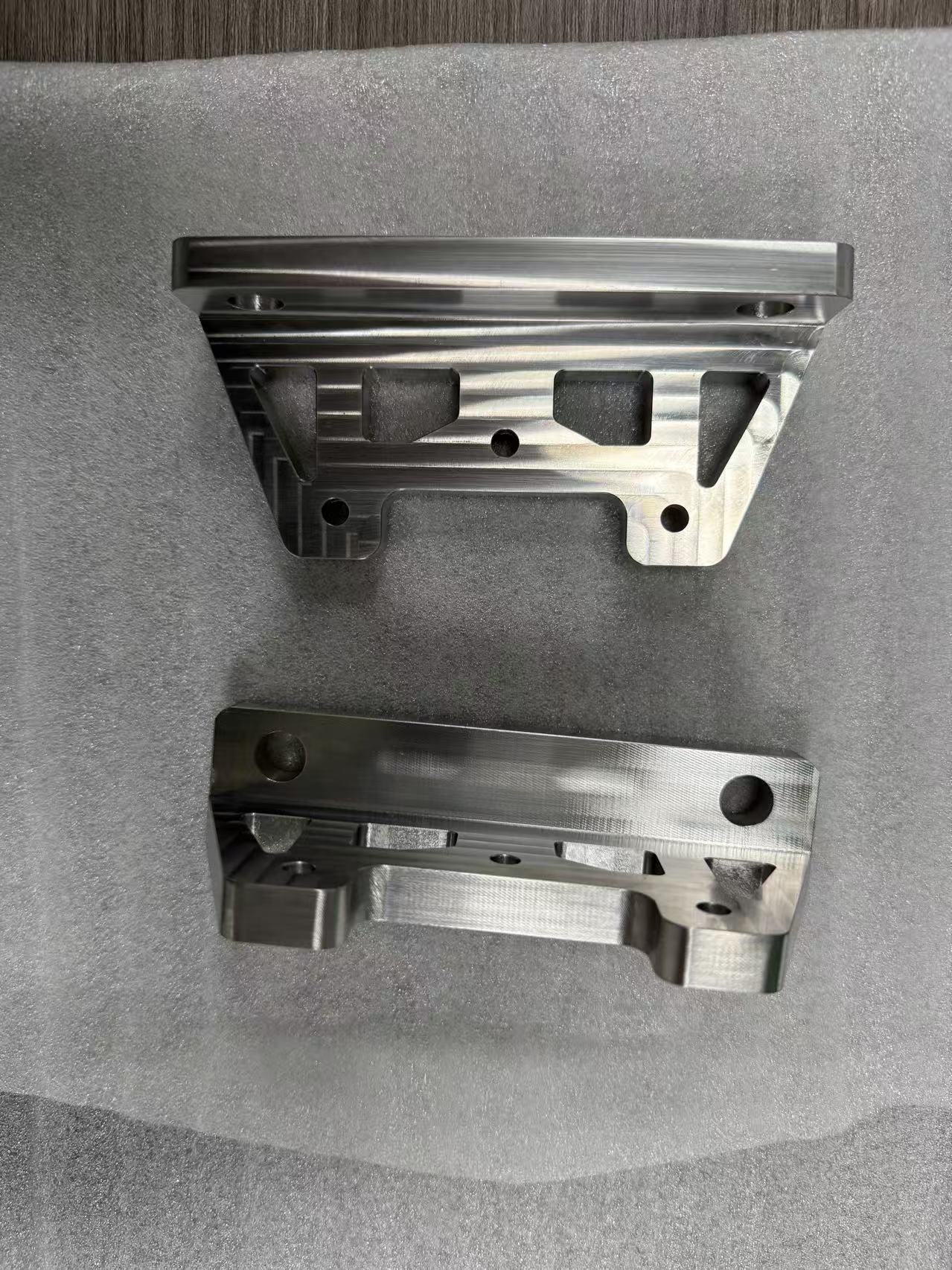
Representative machined components for oil and gas equipment; project-specific case image.
ECOD reports a gas and oil industry case in the United Arab Emirates involving 10,000 pieces over five years for gas and oil equipment, with the result described as improved equipment reliability in harsh working environments. It also reports a Russia aerospace project involving 1,000,000 pieces over one year, with stable quality in mass production and a fit to aerospace precision standards.
These are case-specific references. They show where the service has been applied and what the supplier reports about those projects. They do not prove that every material, tolerance or geometry will perform the same way. A buyer should still validate the drawing, inspection plan and sample part for the actual application. The monthly capacity of 100,000 pieces is a planning input, not a guarantee of slot availability.
Outlook: make the route visible in the RFQ
A practical way to improve the next sourcing cycle is to ask each supplier to state the intended route, setup count, inspection method and material assumptions in the quote. That makes milling, turning, 5-axis and precision component quotes easier to compare and reduces the risk of awarding a multi-face part to a route that needs repeated re-fixturing, or a simple rotational part to an unnecessarily complex process.
The four options are not a ranking of machines. They are a routing framework. For ECOD, the published equipment list and service scope support all four categories; the buyer's task is to match the part to the route and verify the evidence behind the tolerance, MOQ and delivery terms. A technical brochure with further service details is available for download here.
FAQ
Which CNC machining option should be shortlisted for a prismatic aluminum bracket?
Start with CNC milling. Flat faces, pockets, slots and drilled patterns are usually produced on a 3-axis or 4-axis milling setup. If the bracket has angled features on several faces, 5-axis machining may reduce setups. The ±0.005 mm reference should be checked against the specific pocket or hole rather than applied to the whole part automatically. ECOD lists aluminum among machined materials and lists 3/4/5-axis CNC machining centers in its service scope.
When is CNC turning simpler than 5-axis milling?
CNC turning is simpler when the part is rotational and the critical features are concentric. Shafts, bushings, sleeves, threaded fittings and spacers in carbon steel, aluminum, brass or plastic are usually turning parts. A few flats or cross holes may need secondary milling, but that does not automatically justify 5-axis machining. Use 5-axis when multi-face or contoured geometry creates a real setup penalty.
Does 5-axis machining guarantee ±0.005 mm?
No. Five-axis capability can reduce setups and improve access to angled features, but tolerance depends on the drawing, stock, fixture, tooling, thermal conditions and inspection method. The ±0.005 mm figure should be confirmed for each critical feature with a dimensional inspection report. ECOD's published product-listing reference includes a ±0.005 mm to ±0.01 mm range for a listed component; that is a reference, not a blanket promise for all parts.
What does a 1-piece MOQ mean for evaluation?
A 1-piece MOQ allows a buyer to validate a prototype or one-off part before scaling. The evaluation should still check unit price at the intended volume, setup cost, material certificate, inspection report and lead time. A 1-piece MOQ is useful for fit and process validation; it does not make a high-volume quote comparable unless the same assumptions are used.
How should a 24-hour quotation turnaround be used in a shortlist?
Use it as a screening input, not a decision rule. A fast quote is only comparable if it states the drawing revision, material, tolerance, finish, inspection requirement and quantity. If those assumptions are missing, the buyer should request a clarified quote before comparing suppliers. The 24-hour term does not replace technical review.
Have Questions or Need More Details?
Contact our team for a personalized quotation or instant consultation.
Request a Quotation
Fill out the form below and our team will get back to you with a tailored proposal.
WhatsApp Direct Chat
Prefer to chat in real-time? Message us on WhatsApp for instant assistance & quick answers.
- Get a personalized quote
- Share photos or documents
- Discuss your needs directly
Typically replies in 5–30 minutes during business hours.