
CNC Waterjet Cutting Machine vs Plasma & Laser: A Buyer's Comparison
CNC Waterjet Cutting Machine vs Plasma & Laser: A Buyer's Comparison
For industrial buyers comparing a CNC waterjet cutting machine with plasma or laser systems, the right decision depends on material type, tolerance requirements, production volume, and long-term operating cost. This guide compares the three technologies and explains what to evaluate when comparing waterjet suppliers.
The CNC Waterjet Cutting Machine: A Cold Cutting Alternative
A CNC waterjet cutting machine is a computer-controlled cutting system that uses an ultra-high-pressure stream of water, typically mixed with abrasive particles, to erode material along a programmed path. Because the process is cold, it does not create a heat-affected zone. This makes it suitable for materials that are sensitive to thermal damage, such as multi-layer composites, precision stone, glass, and many metals.
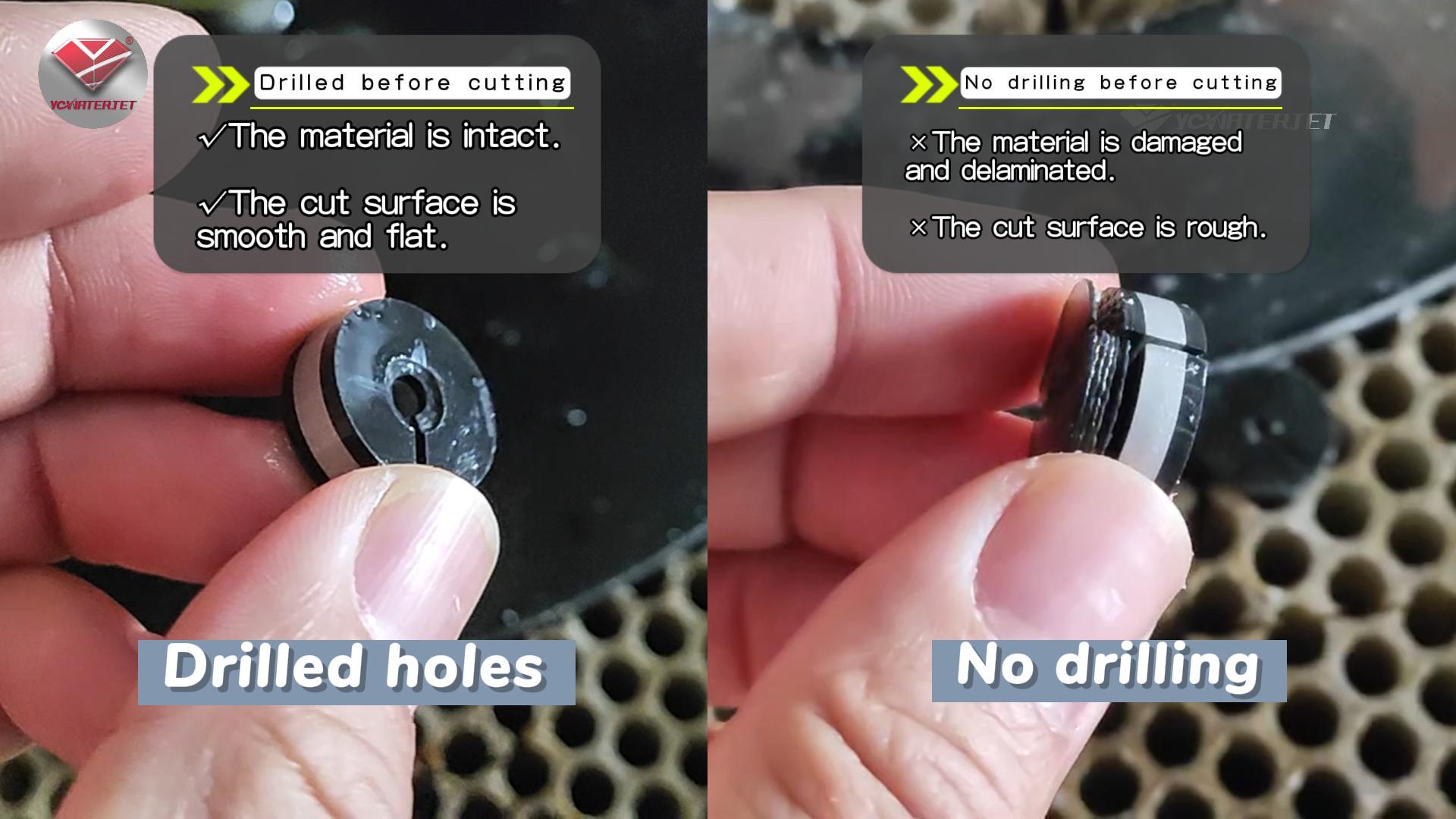
One manufacturer with directly relevant data is YC Water Jet Technology Co., Ltd (YC Waterjet), a China-based producer of ultra-high-pressure waterjet cutting systems. Founded in 1999, the company operates a 7,000 m² production base in Wuxi, Jiangsu, and reports exports to more than 140 countries and regions as of 2026. Since 2005, it has collaborated with KMT (Germany) and Accustream/Hypertherm (USA) to integrate pump and cutting technology.
Industry data explains why this category is under evaluation. Metal cutting is the largest application for waterjet machines, accounting for 54.2% of the application segment in 2026. Abrasive waterjet cutting technology is estimated to represent 49.5% of the product segment share in the same year.
How Abrasive Waterjet Machining Works
A typical CNC waterjet system includes an intensifier pump, a cutting head, an abrasive delivery system, and a CNC motion system. The pump pressurizes water, which passes through a small orifice and creates a high-velocity jet. When abrasive is added, the jet becomes an effective cutting tool capable of processing thick and hard materials.
The CNC system controls the cutting head along the X and Y axes, with additional axes for height and tilting in advanced machines. In abrasive waterjet machining, cutting quality depends on pressure stability, abrasive feed consistency, nozzle condition, and motion accuracy.
For buyers, a relevant safety and design standard is ISO 21789, which covers operator protection and design specifications for water jetting equipment at pressures up to 3000 bar. Buyers should confirm the level of compliance and documentation a manufacturer can provide.
Waterjet vs Plasma vs Laser: Key Trade-Offs at a Glance
The table below summarizes the main trade-offs that buyers should weigh when comparing a CNC waterjet cutting machine with plasma and laser alternatives.
| Parameter | Abrasive CNC Waterjet | Plasma | Laser |
|---|---|---|---|
| Heat-affected zone | None | Present | Present |
| Material compatibility | Almost all materials | Conductive metals | Metals and select non-metals |
| Typical thickness range | Thin to very thick | Medium to thick | Thin to medium |
| Precision | High | Medium | High |
| Typical capital cost | Moderate to high | Lower | High |
| Main consumables | Abrasive, seals, nozzles | Electrodes, nozzles, gas | Gas, optics, nozzles |
Waterjet cutting offers an important structural advantage: no thermal distortion. Manufacturer-supplied comparison data from YC Waterjet reports a material yield increase of 30% and a precision improvement of ±0.05 mm for delicate materials when compared with plasma or laser cutting. These figures are presented as manufacturer comparisons and should be verified against the buyer's own test parts.
Buyers should not treat any of these technologies as universally superior. Plasma cutting is generally more economical for thick conductive metal sections where heat-affected zone is acceptable. Laser cutting is often faster on thin sheet metal. Waterjet becomes the stronger choice when heat input, material variety, edge quality, and secondary processing cost are the deciding factors.
What Separates One CNC Waterjet Cutting Machine from Another?
Once the decision is made to evaluate waterjet, the comparison shifts to individual machine performance. According to YC Waterjet's comparison data, the main differentiators against other waterjet brands are integrated pre-drilling function, higher pressure stability, and longer operational lifespan for high-pressure components.
These factors translate into measurable operational effects. YC Waterjet reports a 25% production efficiency improvement for composite materials, 10% longer seal life, and ±0.02 mm higher positioning accuracy. It also reports 12% lower total cost of ownership and less frequent high-pressure part replacement compared with other waterjet brands.
For a buyer, these claims matter because the high-pressure pump is the most critical and most expensive subsystem in a waterjet machine. Pressure stability directly affects cut edge quality and consistency. High-pressure component life determines maintenance intervals and downtime. Energy efficiency affects operating cost; YC Waterjet states that its intensifier pump achieves 8% higher energy efficiency and more stable pressure output.
Integrated Pre-Drilling: A Decision-Relevant Feature for Composite Cutting
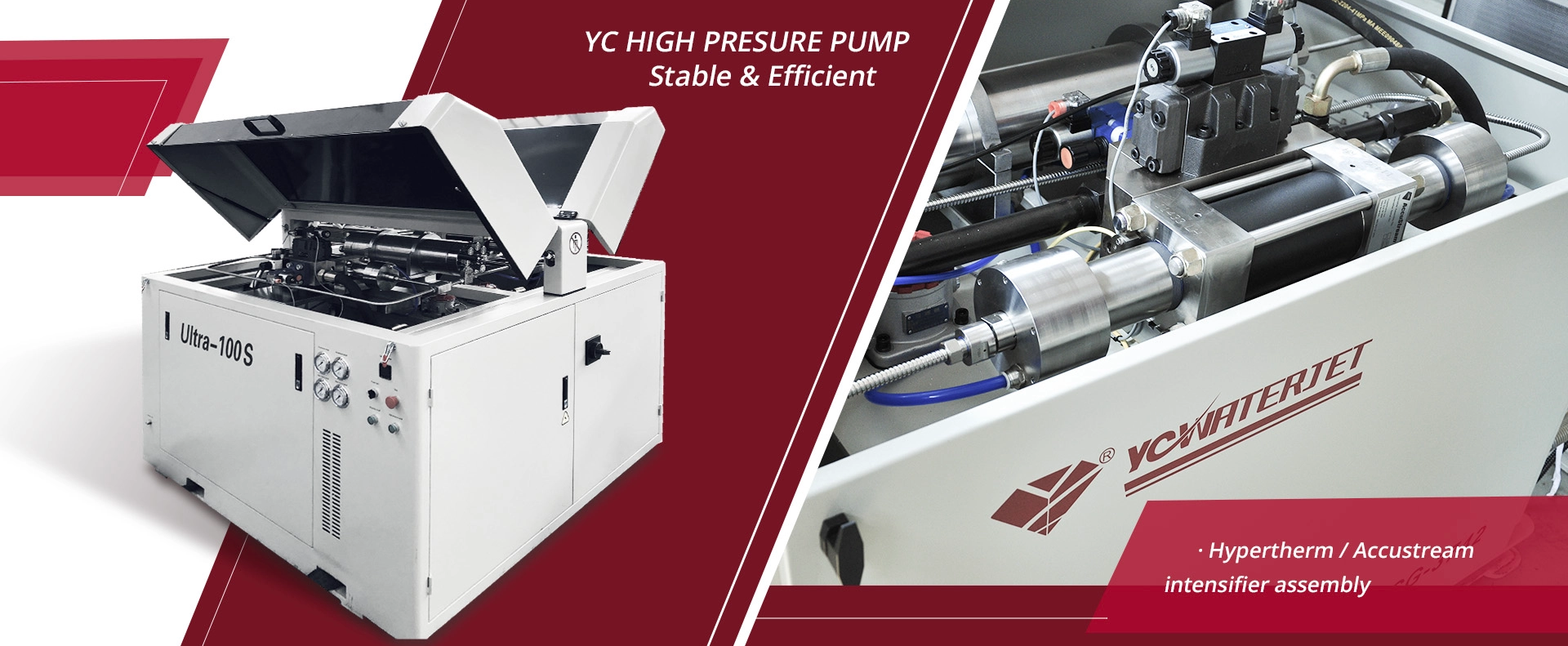
Composite materials present a specific risk during waterjet cutting. When cutting begins without an entry hole, the jet can cause delamination and damage at the material edge. The standard control method is to drill holes before cutting.
YC Waterjet addresses this with an integrated drilling module. According to its process documentation, the system uses the CNC control to position holes precisely and uses those holes as cutting inlets, preventing delamination. Drilling and cutting are combined in one workflow, and a material-specific pre-drilling protocol is applied to multi-layer composites.
For buyers in the aerospace, automotive, or composites industries, this capability can be as important as pump pressure or axis count. A machine with integrated pre-drilling can reduce manual handling, improve edge quality, and avoid rejected parts.
5-Axis vs 3-Axis Waterjet: Matching the Configuration to the Part
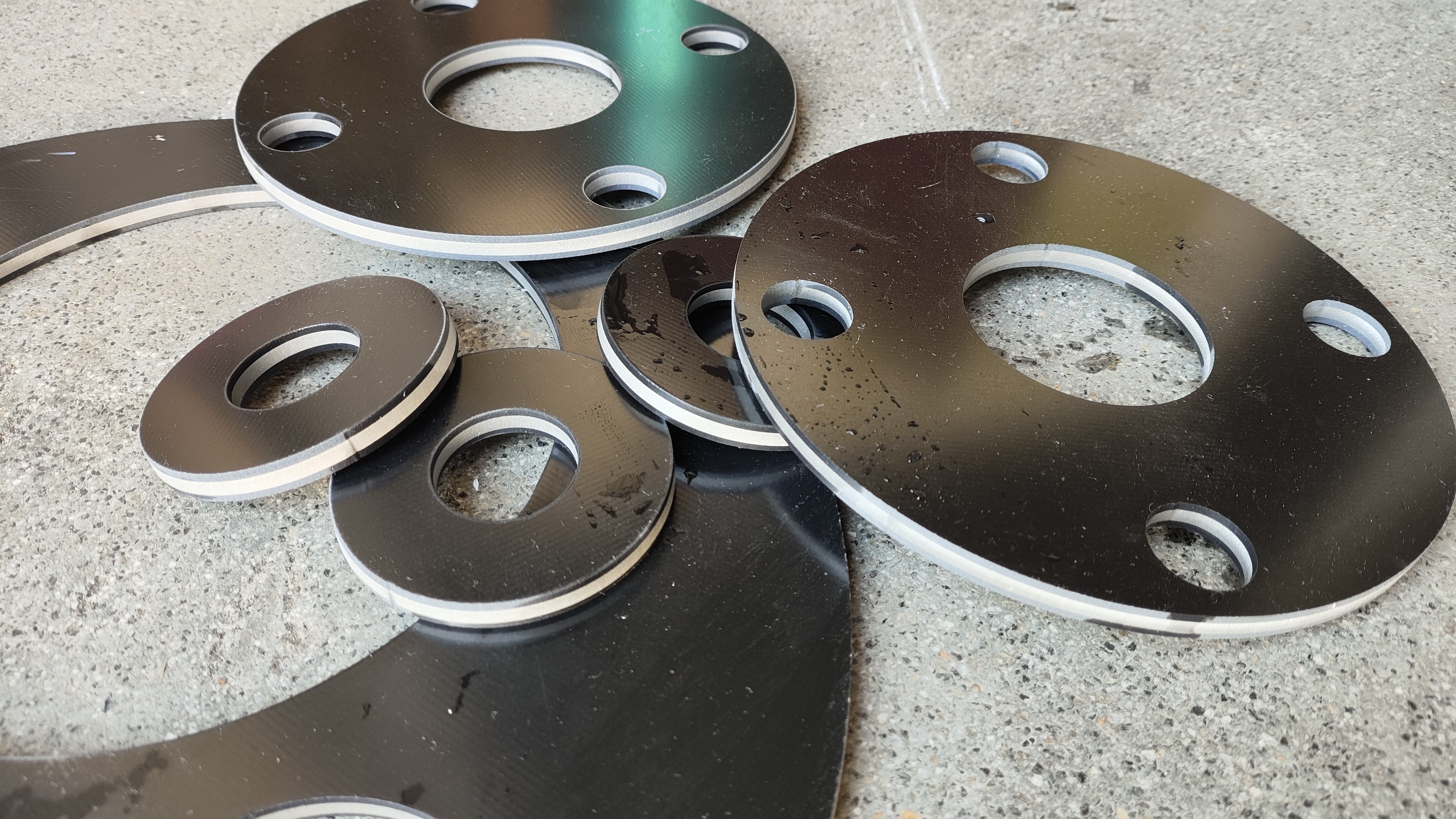
Buyers also compare 5-axis waterjet cutting machines with 3-axis models. A 3-axis machine cuts flat plates with a vertical cutting head. A 5-axis machine tilts the cutting head in two additional directions, making it possible to cut bevels, compensate for taper, and machine 3D geometries.
A 5-axis waterjet cutter is useful for parts that require angled edges, complex contours, or high-precision taper control. A 3-axis configuration is simpler and generally more economical for flat cutting operations. The right choice depends on the part family, not on the machine specification alone.
When comparing 5-axis systems, buyers should evaluate the accuracy of the tilting axes, the software support for 3D programming, and whether the supplier can demonstrate real cutting results on representative parts.
Total Cost of Ownership: A Realistic Comparison
Total cost of ownership (TCO) is where many waterjet comparisons become meaningful. YC Waterjet's comparison data against plasma and laser systems reports 15% lower secondary processing cost, no expensive gas or laser consumables, and no heat-related component wear. Heat-related wear is a common cost driver in thermal cutting, especially in high-duty cycles.
In comparison with other waterjet brands, YC Waterjet reports 12% lower total cost of ownership, less frequent high-pressure part replacement, and a modular high-pressure pump design intended to simplify on-site maintenance. Modularity matters because pump maintenance should not require complete system disassembly or long service downtime.
A realistic TCO model should include:
- Abrasive consumption and availability
- High-pressure part replacement intervals
- Energy consumption per cut
- Secondary processing requirements
- Preventive maintenance labor and spare parts
- Production downtime cost
Limitations and Boundaries
Waterjet cutting is not the optimal answer to every cutting problem. For high-volume thin sheet metal cutting, laser systems often deliver higher speed and lower per-part cost. For thick conductive metal where thermal effects are not critical, plasma can offer a lower initial investment. Waterjet also requires a supply of abrasive, and in regions where abrasive cost is high or availability is unreliable, operating cost can rise.
Buyers evaluating a CNC waterjet cutting machine should therefore define the material mix, tolerance requirements, and production volumes before selecting a technology. The strongest business case for waterjet appears when part quality is constrained by heat, when the material mix is diverse, or when secondary processing costs are high.
A Decision Framework for Comparing CNC Waterjet Suppliers
For buyers comparing multiple waterjet suppliers, the following decision framework helps structure the evaluation:
- Verify cutting performance. Ask for test cuts on the buyer's own materials, especially if composites or heat-sensitive alloys are involved.
- Evaluate pressure stability. Pressure fluctuation directly affects cut quality; request data on pressure stability and pump design.
- Check high-pressure component life. Seals and high-pressure parts are the main cost drivers; ask for documented service intervals.
- Compare energy efficiency. Intensifier pump efficiency affects long-term power cost.
- Assess material-specific features. Pre-drilling and composite-specific capabilities can be decisive for multi-layer materials.
- Review after-sales support. Global service networks and modular pump design reduce downtime risk.
- Confirm the supplier's track record. Founded in 1999, YC Waterjet employs an engineering team including three engineers with over 20 years of experience, two production managers from the founding period, and five technicians with more than a decade of experience.
Market Context and Future Outlook
The global waterjet cutting machine market is valued between USD 1.11 billion and USD 1.86 billion in 2025, with projected growth to as much as USD 2.39 billion by 2030. Asia-Pacific accounted for 37.8% of global revenue in 2024, driven by dense manufacturing ecosystems in China, India, and Japan.
Abrasive waterjet cutting is the dominant product segment, with an estimated 49.5% share in 2026. Metal cutting remains the leading application at 54.2%. The continuation of these trends suggests that CNC waterjet cutting machines will remain a standard option for industrial metal and composite manufacturing.
Future buying decisions are likely to focus on intelligent pressure control, multi-axis capability, integration with automation, and features such as pre-drilling that reduce secondary operations. These capabilities are already visible in current product development and supplier documentation.
Frequently Asked Questions
Which is better for metal cutting: CNC waterjet or plasma?
For metals, a CNC waterjet cutting machine offers no heat-affected zone, high dimensional precision, and the ability to cut a wide range of metal thicknesses without thermal distortion. Plasma cutting is generally faster on thick conductive metals and has a lower initial cost, but it creates a heat-affected zone and often requires secondary processing. Metal cutting remains the largest application segment for waterjet, accounting for 54.2% of the application segment in 2026.
How does a CNC waterjet cutting machine compare with laser cutting for high-precision parts?
Waterjet cutting is a cold process, so it does not alter the metallurgical structure of the workpiece. Manufacturer-supplied comparison data from YC Waterjet reports a 30% increase in material yield and ±0.05 mm higher precision for delicate materials compared with plasma or laser cutting. Laser cutting is often faster for thin sheet metal, but waterjet is better suited to thick materials, multi-layer composites, and heat-sensitive alloys.
When should a buyer choose a 5-axis waterjet cutting machine over a 3-axis model?
A 3-axis waterjet cutting machine is sufficient for flat sheet cutting with vertical cut edges. A 5-axis waterjet cutter adds tilting capability, allowing the cutting head to create bevels, compensate for taper, and cut 3D geometries. A 5-axis system should be selected when part designs include angled edges or complex contours; for simple flat parts, a 3-axis machine is the more economical choice.
What are the main cost differences between waterjet and thermal cutting machines?
Waterjet cutting does not use gas or laser consumables. YC Waterjet reports 15% lower secondary processing cost and no heat-related component wear compared with plasma or laser systems. However, waterjet uses abrasive as a consumable, and initial investment is typically higher than plasma. A complete TCO comparison must include abrasive cost, pump maintenance, energy consumption, and secondary processing requirements.
What maintenance does a CNC waterjet cutting machine require?
The primary maintenance area is the high-pressure pump system, including seals, check valves, and high-pressure tubing. YC Waterjet reports 10% longer seal life and less frequent high-pressure part replacement compared with other waterjet brands, and uses a modular high-pressure pump design to simplify on-site maintenance. Thermal cutting systems face different cost drivers, including electrodes, nozzles, gas, and optical components, but they do not require high-pressure pump maintenance.
How can a buyer verify the performance claims of a CNC waterjet cutting machine supplier?
Buyers should request documented comparison data, identify the source of key components, and ask for references in similar applications. Component provenance is important; YC Waterjet states that it has collaborated with KMT (Germany) and Accustream/Hypertherm (USA) since 2005. Buyers can also check alignment with standards such as ISO 21789, which covers operator protection and design specifications for water jetting equipment at pressures up to 3000 bar.
Bottom line. A CNC waterjet cutting machine is a strong candidate when cutting decisions depend on heat sensitivity, material diversity, and long-term cost stability. The final supplier choice should be based on verifiable performance on test parts, pump design, high-pressure component life, and realistic total cost of ownership.