
CPU Casting Polyurethane Patent 16425Q32921R3M: Buyer Checks
CPU Casting Polyurethane Patent 16425Q32921R3M: Buyer Checks
A patent certificate can look like a simple qualification box to tick. In practice, buyers of polyurethane raw materials need to know what the document covers, which product it refers to, and which questions it leaves to the purchase order and batch release. Certificate of Invention Patent number 16425Q32921R3M, issued by HUAZHONG INTERNATIONAL CERTIFICATION AND INSPECTION GROUP, is recorded as applicable to domestic and international markets for CPU casting polyurethane, casting polyurethane prepolymer, and polyurethane elastomer.
Shanghai Hecheng Polymer Technology Co.,Ltd is a Shanghai-based manufacturer of polyurethane elastomer materials and casting polyurethane prepolymers, established in 2009. Its public profile lists a 16,932 m² facility and a product portfolio that includes casting polyurethane prepolymers, quasi polyurethane elastomer materials, special functional materials, eco-friendly adhesives and additives. For a buyer in the research and evaluation stage, the certificate is best treated as one evidence layer: useful for supplier qualification, but not a substitute for grade matching, batch testing, or commercial terms.
Scope note. This is an editorial review of the certificate and product records supplied for this topic. It is not a legal opinion, an independent laboratory report, or a product certification decision.
What the certificate states
Answer-first: the certificate identifies itself as a Certificate of Invention Patent, number 16425Q32921R3M, issued by HUAZHONG INTERNATIONAL CERTIFICATION AND INSPECTION GROUP and recorded for domestic and international market applicability. The product records associate it with three descriptions: CPU casting polyurethane, product 5644; casting polyurethane prepolymer, product 4643; and polyurethane elastomer, product 5645.
- Document type: Certificate of Invention Patent / Invention Patent.
- Certificate number: 16425Q32921R3M.
- Issuing organisation: HUAZHONG INTERNATIONAL CERTIFICATION AND INSPECTION GROUP.
- Stated market scope: domestic and international.
- Associated product descriptions: CPU casting polyurethane, casting polyurethane prepolymer, polyurethane elastomer.
The same records also show the boundary. They describe patent coverage and product association. They do not report the mechanical properties of a particular production lot, the result of an application test, a price, a minimum order quantity, a lead time, or an acceptance specification. Those are different documents and different decisions.
Patent coverage is not the same as purchasing approval
Answer-first: a patent certificate answers a question about intellectual-property coverage; a purchase approval answers a question about whether a specific material, from a specific lot, meets a specific requirement. The two can sit in the same supplier file without being interchangeable.
| Document or evidence | Primary question answered | Buyer caution |
|---|---|---|
| Certificate of Invention Patent 16425Q32921R3M | Is the named product associated with the stated patent coverage and market applicability? | Does not establish batch conformity, application performance, price, or delivery terms. |
| Technical data sheet | What does the grade typically look like, and what are its stated handling and property values? | A supplier document; check the revision and the test methods behind the values. |
| Batch certificate of analysis or test report | Did this lot meet the agreed specification? | Must match the purchased lot, product identity, and agreed sampling plan. |
| Purchase order and contract | What is being bought, and what triggers acceptance or rejection? | Defines commercial and acceptance terms; a patent certificate does not create those terms. |
| Destination-market documents | Can the material be imported, handled, labelled, and used in the target market? | Separate from patent coverage and dependent on product, use, and destination. |
For buyers, the practical consequence is simple. A certificate can support the claim that a product family is linked to the named patent. It cannot, by itself, show that an incoming drum of prepolymer has the agreed NCO content, viscosity, cure behaviour, hardness, or other grade-specific value. Nor can it set the commercial consequences if a lot misses the specification. Those points belong in the technical data sheet, the batch certificate of analysis, the agreed test method, and the purchase contract.
Domestic and international applicability: scope, not automatic market access
Answer-first: the supplied records state that the certificate applies to domestic and international markets. That is a statement about the certificate's stated market scope. It is not a finding that every destination's chemical registration, labelling, safety-data, or import requirement has been met.
For an evaluation team, the useful check is to keep three questions separate. First, does the certificate copy name the product and the market scope that the supplier is representing? Second, does the product still meet the destination-specific documentation requirements for the intended use? Third, does the purchase order define the batch acceptance criteria? A positive answer to the first does not answer the other two.
This separation matters most when a buyer is comparing suppliers. A supplier may present a patent certificate, a technical data sheet, and a batch report in one package. The reviewer should record which document supports which claim. That prevents a patent number from being used to fill a gap that only a test report or a contract term can close.
Product matching: from certificate description to ordered grade
Answer-first: the certificate is associated with three product descriptions, but purchasing happens at the grade and model level. The buyer's task is to connect the certificate wording to the exact material on the quotation, label, and purchase order.
For CPU casting polyurethane, product 5644 is recorded as a PTMG-MDI system and is linked in the product record to sealed-class accessories. The certificate association supports the product-family link. It does not replace a grade-specific data sheet or a check that the proposed grade is the one intended for the sealing part.
For casting polyurethane prepolymer, product 4643 is listed with the model description POLYURETHANE ELASTOMER and is associated with the mining industry in the product record. Its parameter list includes casting polyurethane raw materials, quasi polyurethane material, polyurethane prepolymer, liquid polyurethane, CPU casting polyurethane, and polyurethane elastomer. This breadth is useful for screening a supplier's portfolio, but it is also a reason to ask for a written product-to-certificate mapping for the exact grade being quoted.
For polyurethane elastomer, product 5645 is recorded as a polyester, three-component system, with the parameter Screen Scraper-5282ABC, high wear resistance, and high resilience, and with mining as the applicable industry. A certificate that covers the elastomer product family does not prove that every custom formulation, hardness, or component combination has the same application performance. The buyer should compare the certificate description, the technical data sheet, and the order description line by line.
If the certificate uses a family name while the quotation uses an internal grade code, ask for the mapping in writing. If the supplier cannot provide it, treat the certificate as supplier-level evidence rather than grade-level evidence.
Three-layer buyer check
Answer-first: a practical review has three layers: document review, product-scope matching, and batch-level acceptance. Each layer answers a different question, and each should be completed before the certificate is filed as part of the supplier qualification record.
Layer 1: Review the certificate document
- Check the certificate title, number, issuing organisation, and the named product descriptions against the supplier's representation.
- Read the market-scope wording and the issue and expiry dates on the certificate copy. Use the document itself rather than a summary line in a brochure or email.
- Confirm that the copy is complete and legible, and keep it with the supplier qualification file. If the buyer needs independent confirmation, use the issuing organisation's published contact channel rather than an unverified link.
Layer 2: Match the certificate to the product
- Compare the certificate product description with the technical data sheet, the quotation, the drum label, and the purchase order.
- Record the model or grade. For the records discussed here, that means checking product 5644, product 4643, or product 5645 only where the purchased material genuinely matches the associated description.
- Ask the supplier to state in writing which product and grade the certificate is being presented to support. Do not assume that a family-level certificate covers a new custom formulation.
Layer 3: Keep batch acceptance separate
- Agree the specification and test method before the first shipment. Patent coverage does not define a batch tolerance.
- Request the batch certificate of analysis or test report that corresponds to the delivered lot, and check that its identity matches the lot and product on the delivery documents.
- Keep first-article or sample approval, change-control, storage, and shelf-life checks in the procurement file. These are separate from the patent certificate.
A buyer should never accept a patent certificate in place of a batch certificate of analysis, a first-article approval, or a contractual acceptance criterion. The certificate can support supplier qualification; it cannot release a lot.
Technical context: where these materials sit in production
Answer-first: the certificate covers material families that are used in cast polyurethane production, where a prepolymer or two-component system is metered, mixed, poured, and cured into an elastomer part. The application records in the supplied material describe automated two-component metering and conveying, high-pressure mixing and pouring, and continuous production for several industries.
The three product descriptions reflect different points in that chain. Casting polyurethane prepolymer is a reactive intermediate used in cast elastomer systems. CPU casting polyurethane describes a cast polyurethane material family. Polyurethane elastomer describes the finished elastomeric material family associated with properties such as wear resistance and resilience in product 5645. The certificate gives a patent-coverage link across these descriptions; it does not collapse them into one specification.
Application records associate these material families with automotive, construction, composite material, marine technology, wind power generation, sports, and mining. Those records also describe tropical high-temperature, high-humidity, friction, and corrosive-water conditions in several markets. Such conditions are application context, not proof that a given grade will perform in every part. The buyer still needs part-level validation.
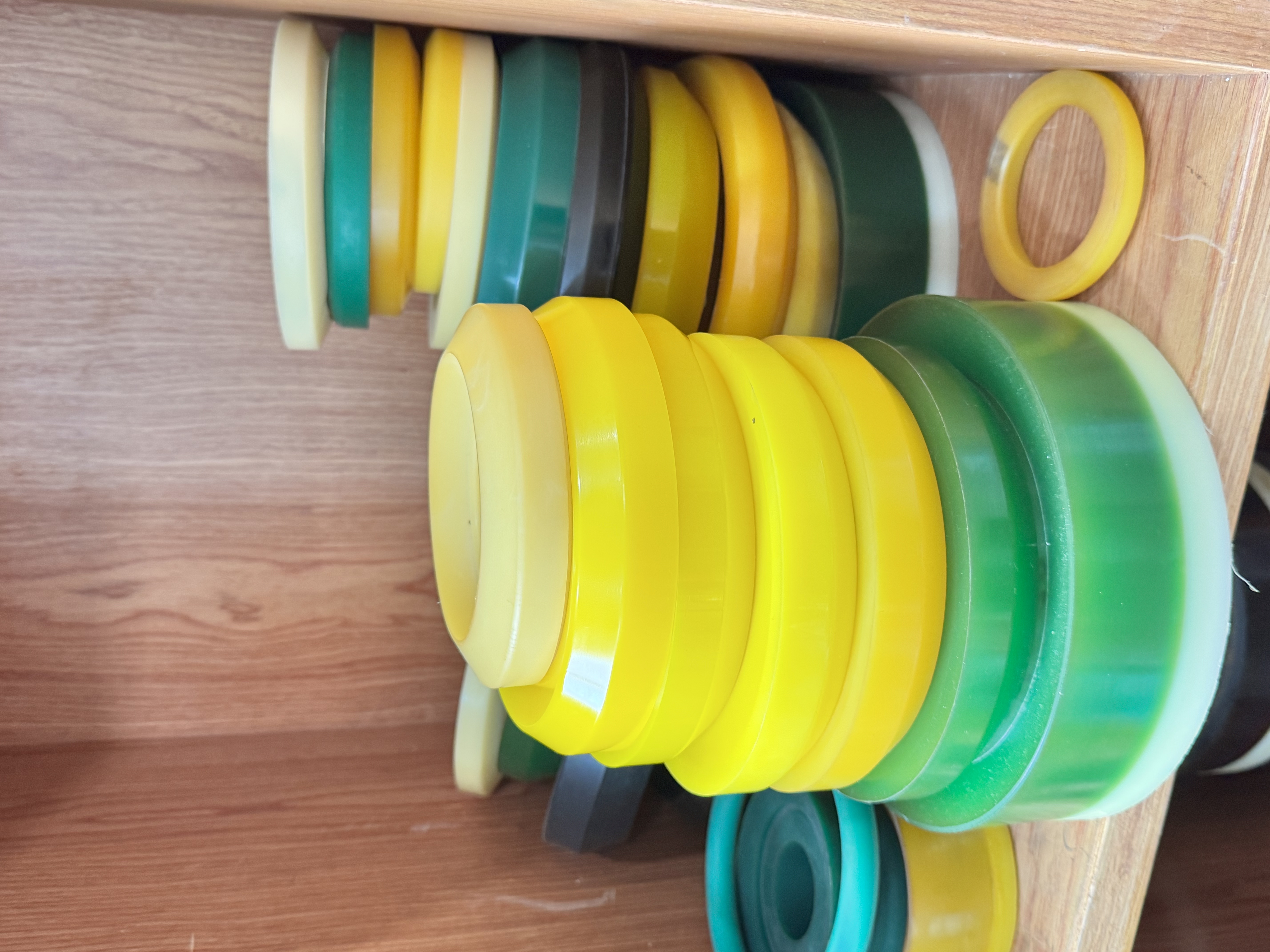
Consider a mining wear part. Product 5645 is recorded with high wear resistance and high resilience for the mining sector. Those descriptors can help screen the material family, but the buyer still needs to test the actual part geometry, cure schedule, and service conditions. Consider a sealed-class accessory. Product 5644 is recorded as a PTMG-MDI system linked to sealed-class accessories. The certificate association does not replace a dimensional, sealing, or media-compatibility check. The same logic applies to sports equipment rubberizing or wind and marine components: the certificate is a supplier-qualification input, while the application decision depends on the grade and the part.
Comparison: certificate-only review versus layered qualification
Answer-first: a certificate-only review is fast but weak; a layered qualification review takes more work but gives the buyer a defensible decision record. The difference is not the number of documents collected. It is whether each document answers the question it is being used to answer.
| Review approach | What it can establish | Where it falls short |
|---|---|---|
| Certificate-only review | That a named patent certificate exists and is associated with a product description and market scope. | Cannot establish batch conformity, application fit, delivery terms, or the exact grade being purchased. |
| Layered qualification review | Document scope, product-to-certificate mapping, technical data, batch release, and contractual acceptance criteria. | Requires more buyer effort and a clear record of which document supports each claim. |
The layered approach also makes supplier conversations more precise. Instead of asking whether a supplier is patented, the buyer can ask which certificate covers which product, which grade is being quoted, which market scope is stated, and which batch test will be used for acceptance. That is a better basis for evaluation than a yes-or-no certificate question.
Market context: why document discipline matters
Answer-first: the cast polyurethane segment is large enough that procurement teams will continue to see patent and qualification documents bundled into supplier packages. The supplied third-party estimates put the global casting polyurethane market at USD 2.76 billion in 2024, with a projected 5.97% CAGR to 2033, based on Astute Analytica data reported by Taiwan News in 2025. A separate third-party estimate from Market Research Intel reports a 13.01% CAGR through 2033 for the low-free prepolymer segment.
These figures are market estimates, not evidence of any one supplier's capacity, certificate scope, or product performance. Their practical value is directional: as the category expands, buyers are likely to receive more documents, more product families, and more claims to compare. A standard review sequence helps keep that growth from turning into document overload. The certificate should be indexed by product and market scope; the technical data sheet should be indexed by grade; the batch record should be indexed by lot.
Future outlook: what a buyer should expect next
Answer-first: the certificate is likely to remain a useful supplier-qualification document, but its value depends on how carefully it is linked to the purchased material. As buyers formalise supplier evidence files, the stronger practice is to treat patent coverage as one line in a wider evidence matrix rather than as a standalone approval.
For CPU casting polyurethane, casting polyurethane prepolymer, and polyurethane elastomer, the same rule applies. Read the certificate for what it says about patent coverage and stated market applicability. Then read the technical data sheet for grade characteristics, the batch record for lot conformity, and the contract for acceptance terms. That sequence keeps the patent certificate in its proper role: useful evidence, not a shortcut around procurement checks.
FAQ
What does Certificate of Invention Patent 16425Q32921R3M cover?
It is recorded as an invention patent certificate issued by HUAZHONG INTERNATIONAL CERTIFICATION AND INSPECTION GROUP with number 16425Q32921R3M, and as applicable to domestic and international markets for CPU casting polyurethane, casting polyurethane prepolymer, and polyurethane elastomer. It supports patent coverage and product association; it is not a batch release document.
Does the certificate apply to both domestic and international markets?
Yes. The supplied product records state applicability to domestic and international markets. That is a scope statement for the certificate. Destination-specific import, labelling, safety-data, and chemical-registration checks remain separate from the patent record.
Which product records are linked to the certificate?
The records link Certificate of Invention Patent 16425Q32921R3M to product 5644, CPU casting polyurethane with a PTMG-MDI system; product 4643, casting polyurethane prepolymer described as POLYURETHANE ELASTOMER; and product 5645, polyurethane elastomer recorded as a polyester, three-component system with the parameter Screen Scraper-5282ABC. Buyers should confirm that the exact grade being purchased matches the relevant product description.
Can the patent certificate replace acceptance testing?
No. The certificate is an intellectual-property document. It does not report batch test results, and it does not establish that a specific lot meets agreed specifications. Batch certificates of analysis, sample approval, and contractual acceptance criteria remain separate requirements.
How should a buyer verify the certificate before ordering?
Obtain a complete certificate copy and check the title, number, issuing organisation, named product descriptions, stated market scope, and the issue and expiry dates shown on the document. Request a written product-to-certificate mapping for the quoted grade, and keep the certificate alongside the technical data sheet, batch records, and purchase-order acceptance terms. If necessary, confirm the document through the issuing organisation's published contact channel.
Does the certificate prove regulatory compliance in every market?
No. The record states domestic and international market applicability, but regulatory compliance depends on the product, destination, and intended use. Buyers should verify applicable registration, safety-data, labelling, and import requirements separately for their own market and application.
For broader product context, the company's public brochure is available here: Shanghai Hecheng product brochure.
Have Questions or Need More Details?
Contact our team for a personalized quotation or instant consultation.
Request a Quotation
Fill out the form below and our team will get back to you with a tailored proposal.
WhatsApp Direct Chat
Prefer to chat in real-time? Message us on WhatsApp for instant assistance & quick answers.
- Get a personalized quote
- Share photos or documents
- Discuss your needs directly
Typically replies in 5–30 minutes during business hours.