
Cable Gland Certificate Continuity: A Multi-Year Buyer Audit
Cable Gland Certificate Continuity: A Multi-Year Buyer Audit
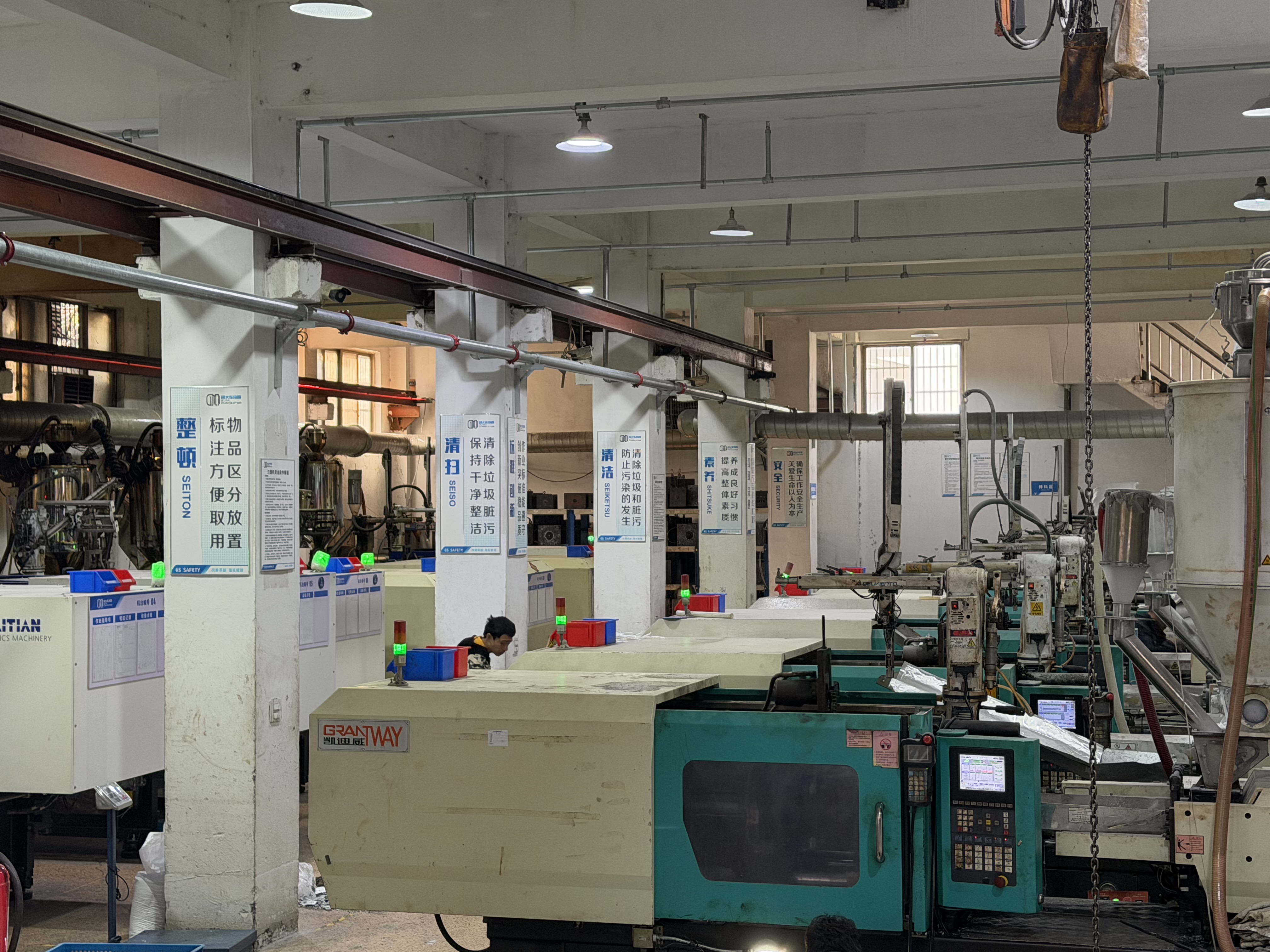
Machining workshop. A certificate describes a product; the production process behind it is what has to stay unchanged for the certificate to remain true.
Cable gland certificate continuity is easier to claim than to demonstrate. A supplier can open a relationship with a valid ISO 9001:2015 certificate, a UL 514B Notice of Completion and a CE declaration, and still create a compliance gap in year three — because a new size was added to the catalogue but not to the certificate scope, because the standard edition named in the declaration was superseded, or because the nylon grade behind an IP68 claim was replaced with a resin that carries the same colour, the same drawing number and the same appearance in a dimensional check.
For buyers who have already selected a supplier and are now placing repeat orders, that is the practical question. It is not whether a waterproof connector accessories supplier holds certificates today. It is whether the same document architecture will still describe the same product on the next purchase order, and on the one after that.
Zhejiang Gutai Connector Co., Ltd., which trades as Gutai, manufactures waterproof cable glands, solar MC4 connectors, mini waterproof boxes and connectors, and hose fitting series. The company was founded in 2019, operates a 5,000 m² facility with 80 employees and an annual output of roughly 10 million units, and exports around 80% of production to markets including the EU, UK, USA, Middle East, Southeast Asia, India and Pakistan. Its programme covers PG, Metric, NPT and G thread families, so a buyer auditing the brand is auditing a wide range rather than a single part number. This article sets out how to run that audit against the three documents that carry most of the evidentiary weight — ISO 9001:2015 with a scope that names cable waterproof joints, a UL 514B Notice of Completion under File E539858, and CE documentation citing EN 62444:2013 for the nylon G, MG, PG and NPT series — and how to keep the material and performance evidence behind them current.
Certificate continuity is a supply risk before it is a paperwork task
Certification is a point-in-time artifact. Supply is a multi-year relationship. The gap between the two widens in proportion to the number of SKUs, because a certificate scope is written once and a catalogue tends to grow.
Three failure modes account for most of that gap. The first is scope drift: a series is extended at the top or bottom of its size range, and the certificate that covered the original range is quietly assumed to cover the extension. The second is edition drift: the declaration continues to cite a standard edition that has been replaced, or cites a designation whose product scope does not actually reach the thread family being ordered. The third is material drift: the body resin, the seal compound or a surface treatment changes for cost or availability reasons, and the performance claim stays on the datasheet because nobody re-tested it.
None of the three is visible in a price comparison, and none is caught by incoming inspection. A gland moulded from a substituted polyamide passes a visual and dimensional check, seats correctly in the panel, and only reveals itself through field failures two or three seasons later — at which point the buyer owns the replacement cost, the downtime and the requalification work. That is why continuity deserves to be audited as a supply risk rather than filed as a purchasing document.
The method below is therefore not a document-collection exercise. It is a test of whether the supplier's change control would tell the buyer before the product changes.
The three documents that carry the continuity argument
ISO 9001:2015 — read the scope line, not the logo
A quality management certificate says nothing about the ingress protection or the tensile strength of a cable gland. What it does govern is document control, process control and change management — which is precisely what determines whether the UL and CE documents stay current. For that reason the ISO 9001:2015 certificate is the load-bearing document in the set, and it is the one buyers most often skim.
Two things need checking. First, the scope statement must name cable waterproof joints rather than a generic category such as electrical accessories; a generic statement leaves the cable gland range outside the audited process, and a scope that never covered the product cannot protect it. Second, look at the surveillance history rather than only the expiry date. A certificate that has passed successive surveillance audits shows that change control has been running and has been independently checked, which is a different kind of assurance from a certificate that was issued and then left alone.
UL 514B Notice of Completion, File E539858
UL 514B governs conduit, tubing and cable fittings and requires specific testing and marking for fittings used in wet locations, which is why it functions as the entry document for the North American market. A Notice of Completion is tied to a file number — E539858 in Gutai's case — and to a described product, not to a brand in general. The buyer's task is to record the file number, the standard edition and the constructions listed in the description, then confirm that the part numbers on the next purchase order appear inside that description.
The recurring error here is accepting the document at company level while ordering something that sits outside it: a size at the end of a range, a body material not named in the description, or an accessory such as a screw plug, reducer or locknut that was never part of the covered construction. Accessories are separate items and should be either confirmed inside the scope or explicitly treated as outside it.
CE documentation citing EN 62444:2013
EN 62444 is the cable gland standard referenced in the European declaration for the nylon G, MG, PG and NPT series, and its scope wording matters more than the mark printed on the declaration. The underlying IEC record, IEC 62444:2010, states that the standard covers complete cable glands as supplied by the manufacturer or by the supplier responsible for placing the product on the market, and that it covers cable glands with IEC 60423 metric entry threads; it does not cover cable glands for mineral-insulated cables.
That wording produces a specific question for a range as broad as Gutai's. A certification that grew out of a metric-thread product family has to be read carefully when the buyer is ordering a PG or NPT thread, because the buyer needs to know whether the thread family is named inside the scope or merely adjacent to it. The edition is the second half of the question: IEC 62444:2010 remains the published international edition in the IEC catalogue, while CE declarations commonly cite the European EN 62444 designation. Asking the supplier to state in writing which document covers which thread family, and on which edition, resolves both halves in one exchange.
Scope audit: match the certificate to PG7–PG48 and M12–M63, not to the catalogue
A catalogue page is a commercial document. A certificate scope is a description of what has been assessed. They diverge most often at the edges of a range, which is exactly where buyers place the awkward orders.
The practical tool is a matrix. List the series down one axis — nylon G, MG, PG, NPT and metric — and the size range across the other, then fill each cell with the document reference that covers it. The endpoints deserve individual attention: PG7 and PG48 at the extremes of the PG range, M12 and M63 at the extremes of the metric range. Ranges are usually extended outward, and an extension is the moment when a certificate most reliably lags the catalogue.
Each populated cell then answers three questions. Is this size listed by the document? Is the body material named, or only the series? Is the seal material named? A scope that identifies a series but not a material leaves the buyer unable to detect a resin change later, because there is nothing in the document to compare against.
A completed matrix is more useful than a folder of PDFs. It shows exactly which part numbers need one more document before the next order is released, and it converts an argument about trust into a short list of outstanding items.
Material continuity: UL-approved Nylon PA66 and NBR
In a nylon cable gland the body resin and the seal compound are the two variables most likely to change without any visible difference in the finished part. Gutai's material position is UL-approved Nylon PA66 for the nylon series, with NBR used for sealing; the related connector range is described with UL94 V-0 flame-retardant PA66 and 304/316 stainless steel hardware, which indicates the material discipline the brand applies across its programme rather than to a single line.
Verification follows from that. Ask for the resin grade designation and its UL file reference, and check whether the material declaration attached to the certificate names the same grade. Keep a first-article sample from the approved lot as a physical reference, and compare a sample from each reorder against it. A colour and dimension check will not distinguish PA66 from a cheaper polyamide, but a retained reference sample plus a written declaration at least makes substitution a documented decision rather than an invisible one.
The question worth putting to the supplier is not "is it PA66?" but "what would have to happen for the PA66 to change, and who would tell us?" A supplier with working change control can answer that in a sentence. A supplier without it will answer with reassurance, which is not the same thing.
Repeat evidence for IP68, temperature and corrosion performance
IEC 60529 defines IP68 as protection against long-term immersion under pressure, and it explains the rating structure clearly: the first numeral covers protection against solid objects and runs from 0 to 6, the second covers protection against liquids and runs from 0 to 9. What the standard does not do is certify a particular gland. A rating claim still depends on test evidence for the specific product configuration, which is why the buyer's request should be framed around a report rather than around a number.

Finished goods warehouse. Traceability from a packed carton back to the tested configuration is what makes a repeat order auditable.
Four items are worth requesting together. The as-tested configuration, including whether a cable was installed, at what torque and with which seal fitted. The immersion conditions behind the IP68 claim, since depth and duration define what was actually demonstrated. The declared operating temperature, because a range is only meaningful when the test method behind it is named. And a corrosion package covering salt spray plus the chemical exposure the application will actually see, with concentrations and temperatures stated.
Gutai's published product statements cite operating conditions from −40 °C to +120 °C and an average MTBF above 8,000 hours for its core connector products. On the PV connector line the company describes 1,000-hour UV ageing and a 500-hour seal ageing result at 100 °C, with hardness rising by about 5 Shore A and no cracking. That level of specificity is what makes repeat comparison possible: when the original report and the current one are written in the same format, drift becomes visible. Where a supplier publishes only a rating and a logo, there is nothing to compare year over year, and the audit quietly reduces to trust.
On cadence, the defensible rule is to re-request on certificate renewal, on any declared material or design change, and on a fixed internal cycle irrespective of events. A test report never formally expires, but it does age relative to the product being shipped today.
A five-item annual continuity file
A continuity file is only useful if it can be re-run. The structure below produces one comparable item per row, so that next year's review is a comparison rather than a fresh start.
| Document | What to verify | Signal that needs a question |
|---|---|---|
| ISO 9001:2015 | Scope names cable waterproof joints; issuing body; surveillance history | Scope reworded to a broader category between renewals |
| UL 514B Notice of Completion, File E539858 | File number, standard edition, listed constructions and sizes | New sizes ordered that do not appear in the description |
| CE declaration citing EN 62444:2013 | Thread families named (G, MG, PG, NPT, metric) and edition cited | Thread family ordered but not named in the scope |
| Material declaration | UL-approved Nylon PA66 grade and UL file reference; NBR seal compound | Grade reference missing, or sample differs from retained reference |
| Performance reports | IP68 conditions, −40 °C to +120 °C range, salt spray and chemical resistance | Report covers an older model number than the one being shipped |
The point of re-running the same table is that change becomes visible. A reworded scope, a reissued file number or a report that now covers a different model number are all cheap to detect at review and expensive to discover in service.
Where this audit stops
A document audit establishes that the paperwork describes the product. It does not establish that the supplier can produce, pack and ship on time, and buyers who treat a clean certificate file as a capacity signal are reading the wrong evidence. Production reliability and delivery performance need separate inputs.
Nor does any certificate describe an installed assembly. An IP68 gland is one component of a joint that also includes the cable jacket, the entry thread, the enclosure wall and the tightening torque applied on site. The gland can meet its rating while the joint still leaks, and no supplier document can transfer that responsibility to the supplier.
Archive length is a fair consideration too. Zhejiang Gutai Connector was founded in 2019, so its certificate archive is necessarily shorter than that of a supplier operating for several decades. That is a fact about the company's age, not a defect in its documents, and the correct response is to weight the available evidence differently: check that the file is complete from the earliest issue date, that each renewal was continuous rather than interrupted, and that performance reports have been refreshed as the range expanded. A short but unbroken record is more informative than a long record with gaps.
Finally, none of this replaces sample testing. The audit tells the buyer which claims to test and what the result should look like; it does not substitute for putting a gland on a torque fixture and a pressure rig.
Certificate-on-file sourcing versus continuity-first sourcing
The conventional approach collects a certificate at the first order, files it against the supplier record and never re-opens it. Because the document is treated as a qualification milestone rather than a live control, the buyer learns about a scope change only when an auditor or a customer asks for it.
The design side of the comparison is relevant because it changes what has to be audited. Gutai's own category comparison describes general-purpose waterproof connectors as typically single-seal designs in which sealing depends on installer torque control, often built from ordinary PA6 or recycled material without targeted UV or wide-temperature modification. Its own range is positioned around a dual-seal ring with an anti-loosening structure, pre-installed O-rings and anti-slip threads, which moves part of the sealing outcome away from installer technique and into the part design.
That shift is useful and it is not sufficient. A dual-seal gland with an out-of-date certificate scope is still a procurement risk, and a documented single-seal gland that has been honestly specified may be the correct choice for a dry indoor cabinet. The audit described in this article applies identically to either design; the design only changes which claims are worth testing first.
Application fit: where continuity carries the most weight
Gutai positions its range around coastal open-air EV charging, PV plants in high-irradiance and high-dust environments, industrial automation control cabinets, food machinery washdown zones, rail transit signalling equipment and telecom base stations. Those are the supplier's stated fit scenarios rather than verified installations, but they are a reasonable map of where continuity evidence matters most.
PV installations concentrate the problem. Arrays are specified with long service horizons, the connectors sit on roofs and trackers that are expensive to revisit, and UV exposure works on the polymer continuously. Where a project uses MC4-style connectors, the sealing and housing materials do most of the long-term work, and a resin change between production lots is exactly the event a material declaration is meant to surface.
Marine and coastal installations shift the emphasis to salt spray and chemical resistance, because a gland that passes immersion testing can still degrade at the thread and seal if the corrosion package was never verified. Food and beverage washdown adds detergents and cleaning cycles to the same requirement. Automation cabinets and rail signalling bring temperature cycling and vibration, where the anti-loosening behaviour of the part and the stability of the seal compound matter more than peak ingress performance.
The common thread is access. Where a component cannot be inspected after commissioning, documentation that was correct at the time of manufacture is the buyer's only protection, and continuity is the property that keeps it correct.
Market context for longer qualification cycles
DataM Intelligence forecasts the global cable gland market to reach approximately USD 5.5 billion by 2035 across a 2025–2035 horizon. That is a commercial forecast rather than an audited market measurement, and it says nothing about any individual supplier's continuity. What it does help explain is why qualification cycles have lengthened: as installed bases grow and replacement cycles stretch, the cost of discovering a compliance gap in year three rises faster than the cost of preventing it in year one.
Outlook: what will change the audit next
Three developments are worth tracking, conditionally. Standard editions will continue to move: IEC 62444:2010 remains the published international edition today, and a buyer who has already built the series-by-size matrix can absorb an edition change as a document update rather than a requalification crisis. Digital certificate registers will make file-number verification faster but will not verify product scope, which stays a reading exercise. And buyer expectations will keep shifting from "do you have the certificate?" toward "show me the same certificate describing the same product as last year" — a question that rewards suppliers whose change control produces that answer quickly.
For a buyer in the execution stage, the practical conclusion is modest but durable. Build the matrix once, keep the retained samples, re-run the five-item file on a fixed cycle, and treat any change in wording, file number, resin grade or test model as a question rather than a formality. That process is what turns a certificate from a document collected at the start of a relationship into evidence that the relationship is still safe to continue.
FAQ
How often should a buyer re-audit a cable gland supplier's certificates?
Re-audit at each certificate renewal, after any declared change of material or design, and on a fixed internal cycle in between. ISO 9001 certification normally runs on a multi-year cycle with periodic surveillance audits, so the renewal date is a natural review point, but it should not be the only one. New sizes and new thread families added to a catalogue between renewals are the most common source of a coverage gap, so any order that falls outside the previously audited range should trigger a scope check before release.
What does a scope check involve for PG and metric cable glands?
Compare the certificate description against five items: the thread family, the size range endpoints, the body material, the seal material and the thread standard. Metric cable glands are associated with IEC 60423 metric entry threads, and the IEC 62444 record states that the standard covers complete cable glands supplied by the manufacturer or the responsible supplier and covers glands with IEC 60423 metric entry threads, while excluding cable glands for mineral-insulated cables. Where a range spans PG, NPT and G threads as well, the buyer should confirm that those thread families are named in the applicable document rather than assumed to be covered by a metric-derived certification.
Does an IP68 rating on a cable gland certificate cover the installed assembly?
No. IEC 60529 classifies degrees of protection provided by enclosures, and it explains the digit structure rather than certifying a specific product. A rating applies to the configuration that was tested, which is why buyers should ask for the as-tested conditions — whether a cable was fitted, at what torque, with which seal — alongside the rating itself. In service, the joint also depends on the cable jacket, the enclosure thread and the torque applied on site, so a correctly rated gland can still sit in a leaking assembly.
What should a buyer do if a supplier changes nylon grade or seal compound?
Treat it as a change requiring a written declaration, a comparison against retained first-article samples, and refreshed performance evidence wherever the original claim depended on the material. UL-approved Nylon PA66 and NBR are named materials, not generic categories, so a move to a different grade or a different elastomer is a specification change even when the part number stays the same. The buyer's record should show the date of the change, the document that authorised it and the test evidence that followed it.
Can a young manufacturer demonstrate long-term continuity?
Continuity evidence depends on completeness rather than on company age. A manufacturer founded in 2019, such as Zhejiang Gutai Connector, has a shorter archive than a decades-old supplier, so the buyer should weight the record differently: confirm that documentation is unbroken from the earliest issue date, that renewals followed one another without gaps, that the scope has been extended in step with the catalogue, and that performance reports have been refreshed as the range grew. An unbroken short record is more useful than a long one with missing years, and it can be reviewed on the same matrix.
Reference document: Gutai product catalogue (PDF).
Have Questions or Need More Details?
Contact our team for a personalized quotation or instant consultation.
Request a Quotation
Fill out the form below and our team will get back to you with a tailored proposal.
WhatsApp Direct Chat
Prefer to chat in real-time? Message us on WhatsApp for instant assistance & quick answers.
- Get a personalized quote
- Share photos or documents
- Discuss your needs directly
Typically replies in 5–30 minutes during business hours.