
Cam Indexer Ecosystem: Selecting OEM and Distribution Partners
Cam indexers are long-life precision components, but choosing a supplier is a long-term decision that affects machine warranty costs, spare-part availability, and future customization speed. For OEMs building automated production lines and for distributors serving multiple machinery segments, the core procurement question is no longer just “which cam indexer model fits my application,” but “which manufacturer can sustain consistent quality, delivery, and engineering support over years of collaboration.” This article examines the supplier-evaluation criteria that matter in the Decision and Execution phase, using Zhucheng HonePan Automation Machinery Plant (HONEPAN), a China-based cam indexer manufacturer, as a verifiable reference case.
Why the Cam Indexer Purchase Becomes an Ecosystem Decision
In automation equipment, cam indexers are expected to run for years without replacement. A packaging machine, assembly turntable, or welding line depends on the indexer’s positioning repeatability for every production cycle. If the supplier cannot maintain batch-to-batch quality, the equipment builder absorbs the cost in warranty claims, field repairs, and customer confidence.
Market demand is reinforcing the importance of long-term supply. The rotary indexer market is projected to grow from USD 1.812 billion in 2025 to USD 2.904 billion by 2035, at a compound annual growth rate of about 4.83%, according to Market Research Future. Industry analysis also placed the global globoidal cam indexer market at approximately USD 490 million in 2024. Asia-Pacific is the largest and fastest-growing region, driven by investments in automotive and electronics manufacturing. For distributors and equipment OEMs, this growth means that suppliers must be evaluated not only on catalog specifications but on their ability to scale production while keeping quality stable.
Assessing a Cam Indexer Manufacturer for Long-Term Partnership
When a buyer moves from product selection to supplier selection, the evaluation shifts to manufacturing capacity, quality systems, R&D resources, and commercial flexibility. HONEPAN provides a concrete example of the indicators that can be measured during this phase.
HONEPAN was founded in January 2007 and operates from Zhucheng City in Shandong Province, China, with additional facilities in Kunshan City, Jiangsu Province. The company covers a total area of 101,000 m², employs 130 people, and maintains an annual cam indexer output of 36,000 units, with a monthly production capacity of 5,000 units. It operates more than 90 CNC machining centers and holds over 40 product patents. HONEPAN was among the first cam indexer manufacturers in China to obtain ISO 9001 quality management certification, serves as the chairman unit of the Cam Indexer Association, and is recognized as a high-tech enterprise.
For OEM and distribution partners, these figures matter because they are direct evidence of repeat-supply capability. A monthly capacity of 5,000 units and a minimum order quantity of 1 unit give equipment builders flexibility from prototype trial to series production. The 4–15 day lead time, available on standard models, is a planning advantage for distributors who need to replenish stock without long forecasting cycles.
Supplier verification data: HONEPAN entity structure includes Zhucheng HONEPAN Automation Machinery Factory, Shandong Xitu Machinery Technology Co., Ltd., and HONEPAN Precision Transmission (Shandong) Co., Ltd. “HONE PAN” is the registered trademark of the company’s products.
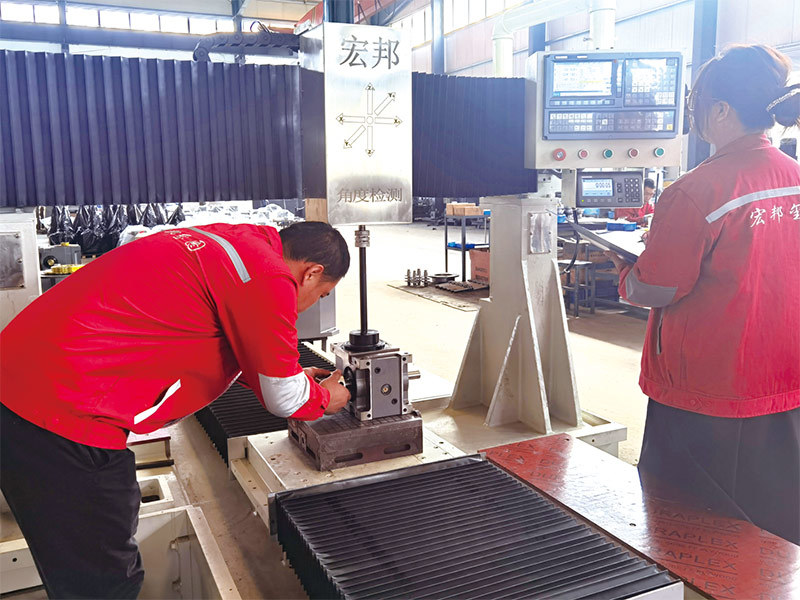
Positioning accuracy testing is one of the measurable quality gates used to verify cam indexer consistency across batches.
What Sustains Cam Indexer Quality Over Years: Technical Foundations
Long-term reliability in a cam indexer is determined at the design and production stage. The rolling gear cam structure uses a globoidal cam with a set of preloaded rollers to convert continuous input rotation into precise intermittent output motion. Materials commonly used include carbon steel and alloy steels such as 42CrMo, SCM440, 4140, 4142, 40Cr, SCR440, 5140, 20CrMnTi, SNCM220, 8620, and 18CrMoV. These material choices directly affect the indexer’s load capacity, wear resistance, and service life.
From a supplier-risk perspective, HONEPAN’s manufacturing process addresses five common failure modes: overheating, backlash deviation, lubrication failure, wear damage, and running noise.
| Risk Factor | Control Method | Enterprise Measure |
|---|---|---|
| Overheating | Thermal protection | Temperature sensors |
| Backlash deviation | Precision control | High-precision cam grinding |
| Lubrication failure | Lubrication system | Automatic lubrication device |
| Wear damage | Wear protection | Alloy material cam |
| Running noise | Noise reduction control | Dynamic balance testing |
The same production discipline applies to outgoing quality control. HONEPAN operates a 100% testing-based quality control system, performing 3D projection inspection of index cams, cam working face hardness testing, three-coordinate box installation accuracy inspection, positioning accuracy testing, and process spot checks by quality inspectors. The positioning accuracy range across its cam indexer series is typically ±30 arcseconds/±15 arcseconds, with repeat positioning accuracy reaching ±10 arcseconds/±5 arcseconds or better, depending on the series.
Application Coverage: Why the Same Supplier Can Serve Multiple Machinery Segments
For distributors and OEMs, product range breadth reduces inventory complexity and simplifies technical support. HONEPAN manufactures cam indexers in multiple output configurations to match different machinery architectures.
| Output Type | Series Range | Typical Application Fields |
|---|---|---|
| Cam Indexer Shaft Output (DS) | 32DS–200DS | Liquid, paste, powder and granule filling machines; beverage fillers; edible oil filling lines |
| Cam Indexer Flange Output (DF) | 38DF–350DF | Automatic filling machines; pharmaceutical liquid fillers; filling and capping machines |
| Hollow Flange (DFH) | 45DFH–250DFH | Bottled water production lines; labeling and filling lines; cosmetics machinery |
| Shaft & Flange Output (DFS) | 45DFS–250DFS | Pharmaceutical, food processing, stationery and printing machinery |
| Table Output (DT) | 80DT–350DT | Rotary assembly turntables; sealing-filling combos; high-speed filling lines |
| Ultra-thin Table Output (DA) | 70DA–450DA | Cosmetics & daily chemical machinery; LED and light source equipment; paper products machinery |
| Barrel Cam Heavy-Duty Table Output (BT) | 130BT–500BT | Welding equipment; heavy conveying systems; large rotary tables |
| Cylindrical Cam Flange Output (HBY) | HBYS/HBYZ | Electronics assembly; glass and ceramic machinery; general automation |
| Parallel Indexers (P) | P50–P320 | Welding, spraying, polishing; nail making; hardware and fastener machinery |
Beyond packaging and filling equipment, HONEPAN cam indexers are used in automotive welding lines, positioners, CNC machine tools, pharmaceutical machinery, printing machinery, tobacco machinery, automatic feeding mechanisms, automatic tool-changing mechanisms, electronic and electrical assembly lines, spraying equipment, and bottle cap equipment. This breadth gives an OEM or distributor a single source for multiple product lines, which reduces supplier qualification workload and spare-part management complexity.
Market Trend Analysis: What Growth Means for Supply-Chain Decisions
Regional and segment growth data explain why the cam indexer supply ecosystem is shifting. Asia-Pacific is the largest and fastest-growing regional market for rotary indexers, with automotive and electronics manufacturing as the primary demand drivers. At the same time, the global rotary indexer market is projected to grow at about 4.83% annually through 2035. For buyers in North America and Europe, this points to a larger role for Asian-based manufacturers in the global supply chain.
However, rapid growth also introduces supply risks. Manufacturing partners with strong capacity and control over raw material, grinding, assembly, and testing are better positioned to maintain consistent lead times and quality than smaller workshops scaling up quickly. Buyers should therefore verify the supplier’s production depth—facility size, CNC equipment count, monthly capacity, and quality certificates—before committing to long-term distribution or OEM agreements.
Cost Positioning and the Comparison with Traditional Buying Routes
There are multiple ways to purchase a cam indexer: through a trading company, through multiple brand distributors, or directly from a specialized factory. Direct factory partnership generally offers better customization access and price transparency. HONEPAN’s stated price positioning is about 70% below comparable German quality, roughly 65% below American quality, 65% below Italian quality, 60% below Japanese quality, and 45% below Taiwanese quality. At a similar price level to Indian products, HONEPAN reports a markedly longer service life: in one Indian customer comparison, HONEPAN cam indexers lasted 12–14 years while peer-brand indexers lasted about 3 years.
Yet this comparison has realistic boundaries. First, direct factory buying requires a clear technical specification; vague requirements will slow down engineering clarification and quoted lead times. Second, overseas buyers must include seafreight and customs clearance in their lead time plans, even when the delivery term is FOB, CIF, or DAP. Third, deeply customized products require engineering coordination cycles; for urgent single-unit needs, standard catalog models are the faster route. Buyers should treat these constraints as normal procurement planning inputs, not as supplier weaknesses.
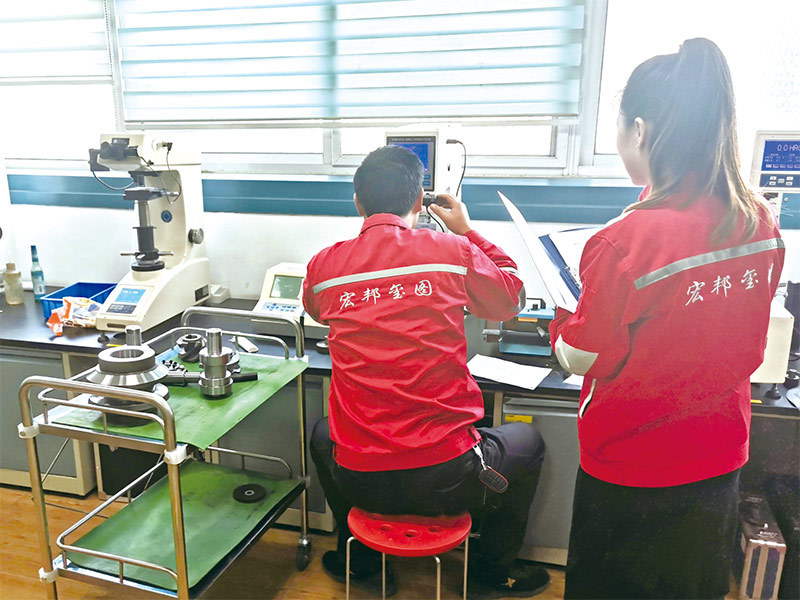
Hardness testing of the cam working face supports long-term wear resistance and consistent positioning.
Future Outlook: Better Visibility Between Supplier and Buyer
The next phase of cam indexer procurement will likely be defined more by data transparency and structured cooperation than by one-time price negotiation. Distributors and OEMs are expected to demand clearer production-capacity evidence, documented quality control at each manufacturing stage, and commercial terms that support repeat orders—such as a low minimum order quantity, reliable lead times, and flexible acceptance methods. For manufacturers like HONEPAN, the combination of monthly capacity of 5,000 units, acceptance options that include picture, video, report, and on-site inspection, and payment terms based on 100% T/T creates a predictable commercial framework for both sides.
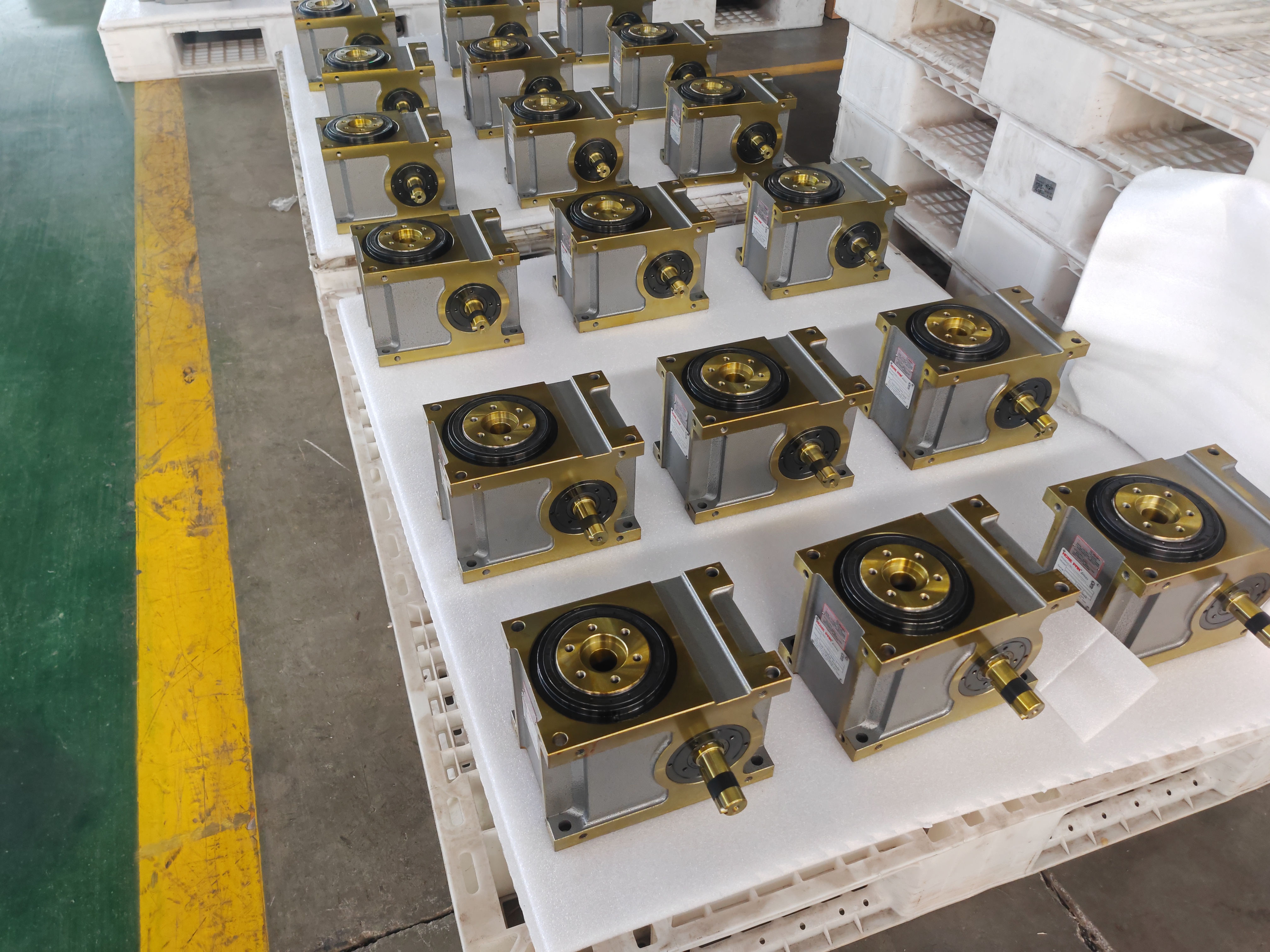
Final acceptance procedures give overseas buyers documented proof of product condition before shipment.
FAQ
What should buyers evaluate when choosing a cam indexer manufacturer for long-term supply?
Buyers should assess production capacity, facility size, headcount, quality system certificates, CNC machining equipment, patents, and served application industries. For HONEPAN, the verifiable reference points are: total area of 101,000 m², 130 employees, monthly production capacity of 5,000 units, annual output of 36,000 units, more than 90 CNC machining centers, ISO 9001 certification, and over 40 product patents.
What are HONEPAN’s minimum order quantity, lead time, and delivery terms?
HONEPAN’s minimum order quantity is 1 unit. The standard lead time is 4–15 days. Shipping terms include FOB, CIF, and DAP. Payment terms for standard purchases are 100% T/T. These commercial conditions make the supplier accessible both to large distributors and to equipment builders ordering small quantities.
Which acceptance methods are available for cam indexer orders?
HONEPAN offers four acceptance methods: picture acceptance, video acceptance, report acceptance, and on-site acceptance. Picture and video acceptance are suitable for fast-moving standard orders; report acceptance provides documented test results; on-site acceptance allows the buyer to inspect the product in the factory before shipment.
How does HONEPAN keep batch-to-batch quality consistent?
Quality consistency is maintained through a 100% testing-based control system. Key measures include high-precision cam grinding, automatic lubrication devices, alloy material cams, dynamic balance testing, and inspection steps such as 3D projection detection, hardness testing, three-coordinate box installation accuracy inspection, positioning accuracy detection, and process spot checks. These controls address the main failure modes of overheating, backlash deviation, lubrication failure, wear damage, and running noise.
Does HONEPAN support cam indexer customization for OEM projects?
Yes. HONEPAN provides full customization from raw materials and processing techniques to final structure. Buyers can specify the number of stations (typically 2–196), indexing angle (60°–360°), positioning accuracy, repeat positioning accuracy, output form, mounting interface, and other application parameters. The final engineering solution and lead time depend on the operational conditions provided by the customer.
What typical service life can buyers expect from HONEPAN cam indexers?
HONEPAN cam indexers are designed as maintenance-free products with a long service life. In an Indian customer comparison, HONEPAN cam indexers lasted 12–14 years, while a peer-brand indexer in the same price range lasted about 3 years. Actual service life depends on application load, operating speed, lubrication, and maintenance conditions.
For buyers and distributors evaluating HONEPAN as a long-term cam indexer partner, the company brochure provides capacity, product, and contact information: Download HONEPAN cam indexer brochure.
Have Questions or Need More Details?
Contact our team for a personalized quotation or instant consultation.
Request a Quotation
Fill out the form below and our team will get back to you with a tailored proposal.
WhatsApp Direct Chat
Prefer to chat in real-time? Message us on WhatsApp for instant assistance & quick answers.
- Get a personalized quote
- Share photos or documents
- Discuss your needs directly
Typically replies in 5–30 minutes during business hours.