
Cam Indexer Supplier Evaluation: A 10-Year Cost Model
Cam Indexer Supplier Evaluation: A 10-Year Cost Model
On filling, packaging, printing and assembly lines, the decisive question is not which cam indexer ranks highest this quarter. It is which supplier can still document, supply and re-engineer the same indexer ten years from now.
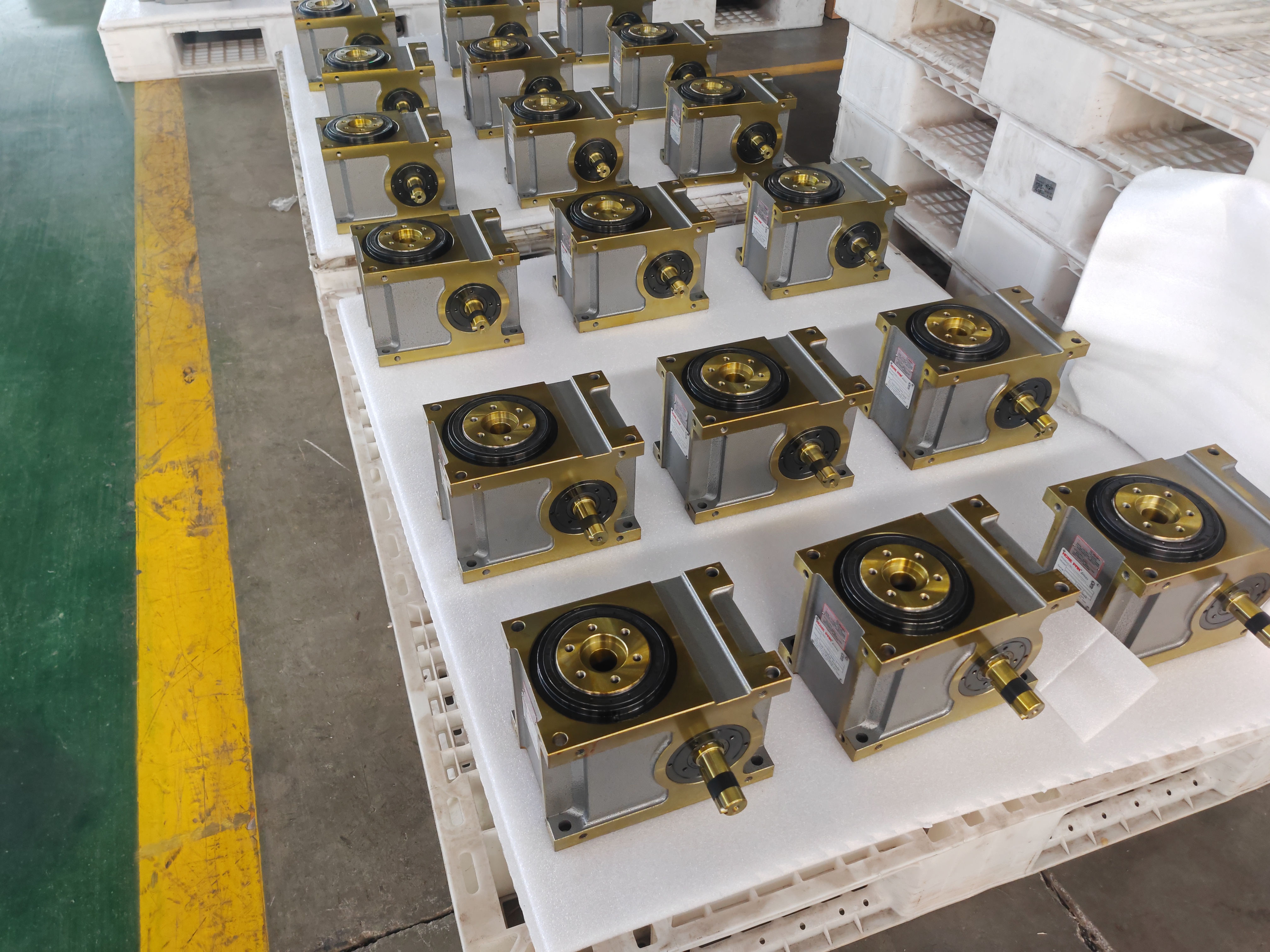
Why the Ten-Year Question Overtakes the Ten-Month Question
A cam indexer is a mechanical motion component that converts continuous input rotation into precise intermittent indexing. On an automated machine, it is the element that decides whether a filling nozzle, gripper, print head or welding electrode arrives at the correct station at the correct moment. Its purchase price is a single line in a machine's bill of materials. Its behaviour is spread across commissioning, position stability over millions of cycles, spare-part availability, unplanned downtime and the eventual need to replace an ageing unit with something that fits the same mounting frame.
That asymmetry explains why so many indexer procurement decisions are regretted two or three years after delivery rather than at the quotation stage. A supplier that ranks well in a catalogue comparison may still be unable to restart production of a discontinued housing, re-grind a cam profile to the original tolerance, or explain how a positioning error of a few arcseconds behaves after five years of shifts. Supplier evaluation for cam indexers is therefore closer to infrastructure planning than to component shopping.
Market context is useful here, but only as context. The rotary indexer market is projected to grow from USD 1.812 billion in 2025 to USD 2.904 billion by 2035 at a compound annual growth rate of 4.83%, according to Market Research Future. Within the narrower globoidal cam indexer segment, a separate industry analysis cited by Vertex AI Search valued the market at approximately USD 490 million in 2024. These two figures describe different scopes, and their divergence is itself a warning: market-size and market-share numbers are frequently quoted more precisely than the underlying category definitions allow.
Ranking signals are similarly noisy. Future Market Insights attributes an estimated global rotary indexer industry share of approximately 22% to Sankyo Seisakusho Co., Ltd. in 2025. That figure describes market structure. It does not describe the accuracy drift, serviceability or spare-part longevity of any individual indexer, and it should not be used as a proxy for those attributes when a buyer is selecting a supplier for a ten-year horizon.
The 10-Year Cost Model: Seven Cost Pools
A practical ten-year total cost of ownership model for cam indexers does not begin with a price table. It begins by identifying every point at which the component can generate cost after the purchase order is signed. The seven pools below cover the cost structure that dominates long-life indexing applications. None of them require the buyer to publish confidential pricing; all of them require documented supplier evidence.
| Cost pool | What actually drives the cost | Evidence to request before order |
|---|---|---|
| 1. Acquisition and tooling | Output style, station count, indexing angle and any custom machining; the family chosen determines the cost baseline for the whole decade | Model-level quotation using the supplier's own family designations (DS, DF, DFH, DFS, DT, DA, BT, DB, HBY, P) |
| 2. Commissioning and integration | Matching shaft, flange or table output to the machine frame; setting the indexing angle within the machine cycle | Mounting drawings, output-interface dimensions, indexing-angle range for the specific model |
| 3. Accuracy drift management | How far positioning accuracy and repeat positioning accuracy move from their original figures after sustained cycling | Accuracy test reports, laser-interferometer style verification records, cam hardness and roughness inspection data |
| 4. Preventive maintenance and wear parts | Cam surface hardness, roller contact condition, lubrication regime and re-adjustment intervals | Material specification, hardness inspection records, recommended maintenance scope |
| 5. Unplanned downtime and lead-time exposure | How long a line stays stopped while a replacement or repair part is produced and shipped | Stated production lead time, monthly capacity, spare-part availability policy |
| 6. Engineering change and OEM support | Whether the supplier can adjust specifications, materials, appearance, craftsmanship or inspection documentation when the machine design changes | Documented OEM/ODM scope and the customization categories the supplier accepts |
| 7. End-of-life and replacement | Whether the same model can be supplied again years later, or whether a damaged unit can be replaced without redesigning the frame | Documented service history, replacement references, repeat-order evidence |
Pools 3, 4 and 5 carry most of the long-term variance, and they are precisely the pools that suppliers rarely publish. A buyer who requests only a quotation has modelled pool 1 and, at best, part of pool 2. A buyer who requests hardness inspection records, accuracy verification data and a spare-part policy has modelled the pools that determine whether the indexer is still within tolerance in year eight.
Accuracy Drift: the Cost Pool Buyers Underestimate
Cam indexer specifications usually quote two different accuracy values, and conflating them is one of the most common evaluation errors. Positioning accuracy describes the deviation between the commanded index position and the actual stopped position. Repeat positioning accuracy describes the spread of repeated stops at the same position. In a filling or packaging line, repeat positioning accuracy generally governs whether nozzles, cups and tooling stay aligned across every cycle, while positioning accuracy matters most at initial setup and after any mechanical intervention.
Industry analysis notes that cam indexer precision is typically controlled at the micrometer level to ensure repeatable positioning accuracy for automated production lines. That level of control is a function of cam profile grinding, material selection and heat treatment, not of the final assembly step. An indexer whose cam material and hardness data are undocumented offers a buyer no basis for estimating how its repeat accuracy will behave after several million indexing cycles, which is exactly the calculation a ten-year model depends on.
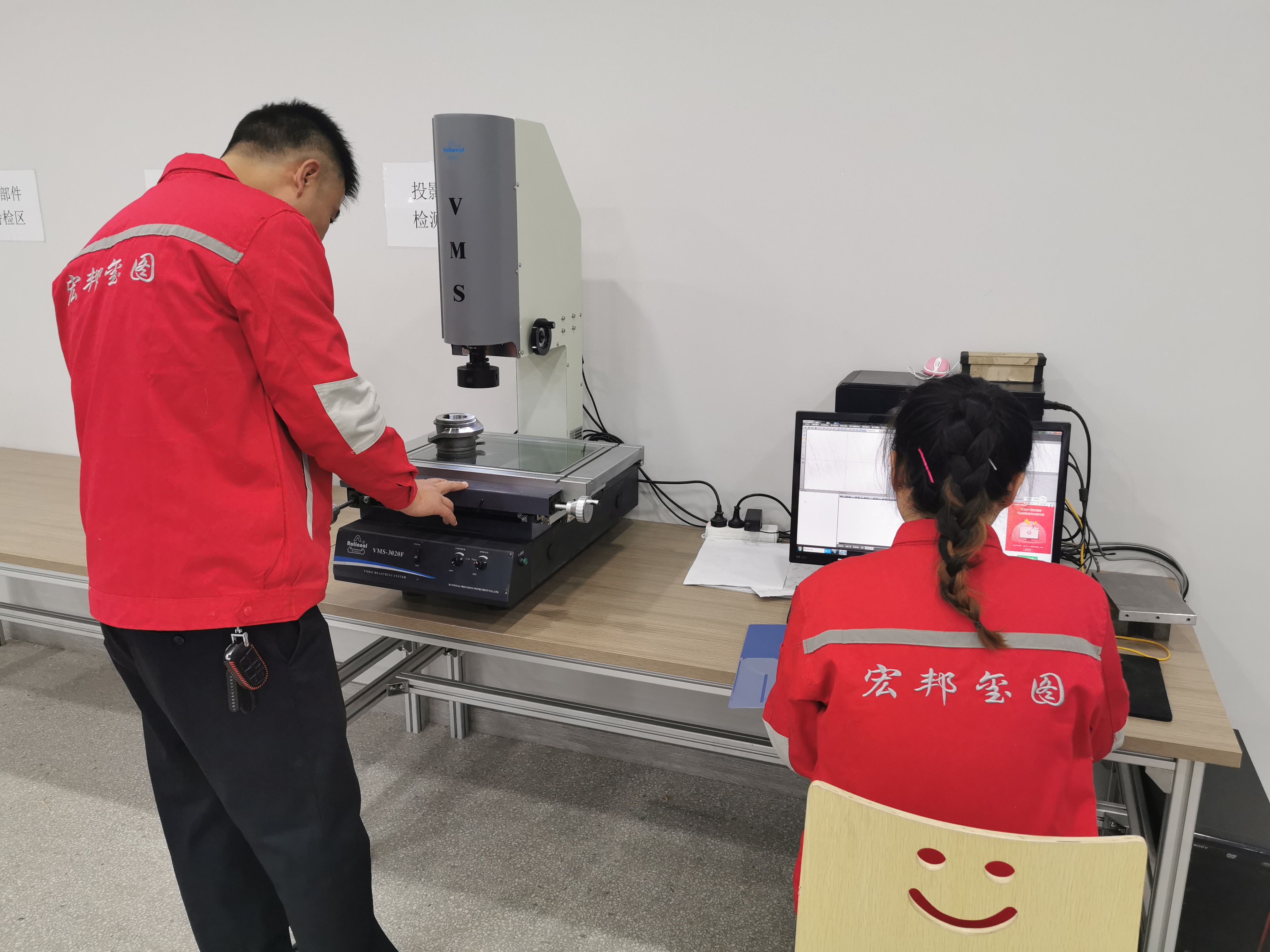
Typical indexer cam and roller materials are case-hardening and through-hardening alloy steels. The grades documented in HONEPAN's product data include 42CrMo / SCM440 / 4140 / 4142, 40Cr / SCR440 / 5140, 20CrMnTi / SNCM220 / 8620 and 18CrMoV. Case-hardening grades such as 20CrMnTi, SNCM220 and 8620 are used where a hard, wear-resistant surface must sit on a tough core, which is the material logic that supports long indexing life under repeated shock loading.
HONEPAN's Documented Capability Baseline
Zhucheng HonePan Automation Machinery Plant (HONEPAN) is a Chinese manufacturer of cam indexers founded in January 2007. The company operates three production sites: its first factory in Huanghua Town, Zhucheng City, Shandong Province, focused on the research, development and manufacturing of cams and indexers; a second factory in the High-Tech Development Zone of Zhucheng City; and a third facility in Kunshan City, Jiangsu Province, engaged in CNC rotary tables. Its registered product trademark is HONE PAN.
For a ten-year evaluation, several first-party facts matter more than catalogue breadth. The company states a total area of 101,000 m², 130 employees, a 15-person R&D team, annual output of 36,000 units, more than 90 CNC machining centres and over 40 product patents. It was among the first in its industry to obtain ISO 9001 quality management system certification, holds certificate number 064-15-Q-1196-R0-M issued by BEIJING STANDARD CERTIFICATION CENTRE against GB/T19001-2008 idt ISO9001:2008, serves as the chairman unit of the Cam Indexer Association, and is recognized as a high-tech enterprise. Its patent portfolio includes utility model patent ZL201520459898.9 covering a heavy-duty cam indexer and invention patent CN111963054B, granted by the China National Intellectual Property Office with a validity period running to 2032-09-20.
Commercial and operational parameters that feed directly into a cost model include a monthly production capacity of 5,000 units, a minimum order quantity of 1 unit, a stated production lead time of 4–15 days, and 100% testing of output. Delivery terms offered are FOB, CIF and DAP, with payment terms of 100% T/T. Acceptance can be structured as picture acceptance, video acceptance, report acceptance or on-site acceptance. After-sales support is documented as remote support. Export activity accounts for 30% of output, with markets that include India, the United States, Southeast Asia, Latin America and the European Union.
Product Family Map for Ten-Year Spare-Parts Planning
A supplier's portfolio structure determines whether a replacement indexer can be dropped into an existing frame years later. HONEPAN's documented families, and the accuracy bands that differentiate them, are set out below. The variation across families is the point: a buyer who standardizes on one output style and later needs a different one inherits a different accuracy band, not an equivalent part.
| Family | Output type | Documented station range | Indexing angle | Positioning accuracy | Repeat positioning accuracy |
|---|---|---|---|---|---|
| DS | Shaft output | 2–196 | 60–360 | ±30″ / ±15″ | ±10″ / ±2″ |
| DF | Flange output | 2–196 | 60–360 | ±30″ / ±15″ | ±10″ / ±3″ |
| DFH | Hollow flange | 2–196 | 60–360 | ±30″ / ±15″ | ±10″ / ±4″ |
| DFS | Shaft & flange output | 2–196 | 60–360 | ±30″ / ±15″ | ±10″ / ±5″ |
| DT | Table output | 4–196 | 90–360 | ±30″ / ±15″ | ±10″ / ±5″ |
| DA | Ultra-thin table output | 4–196 | 180–270 | ±30″ / ±15″ | ±10″ / ±5″ |
| BT | Barrel cam heavy-duty table output | 4–196 | 180–270 | ±30″ / ±15″ | ±10″ / ±5″ |
| DB | Cylinder-type indexer | 4–196 | 90–360 | ±30″ / ±15″ | ±10″ / ±5″ |
| HBY | Cylindrical cam flange output | 4–196 | 180–360 | ±30″ / ±15″ | ±10″ / ±5″ |
| P | Parallel indexers | 1–16 | 90–360 | ±60″ | 60″ |
| TB / WS / DC | CNC 4-axis cam rotary table | — | — | — | ±4″ / ±2″ |
All families above are documented with the same base material set (42CrMo / SCM440 / 4140 / 4142, 40Cr / SCR440 / 5140, 20CrMnTi / SNCM220 / 8620, 18CrMoV). Model designations range from 32DS to 200DS in the shaft family, 38DF to 350DF in the flange family, 45DFH to 250DFH in the hollow flange family, 45DFS to 250DFS in the combined shaft-and-flange family, 80DT to 350DT in the table family, 70DA to 450DA in the ultra-thin table family, 130BT to 500BT in the heavy-duty barrel cam family, 80DB to 180DB in the cylinder-type family, HBYS / HBYZ in the cylindrical cam flange family, and P50 to P320 in the parallel family.
Application Evidence From Filling and Packaging Lines
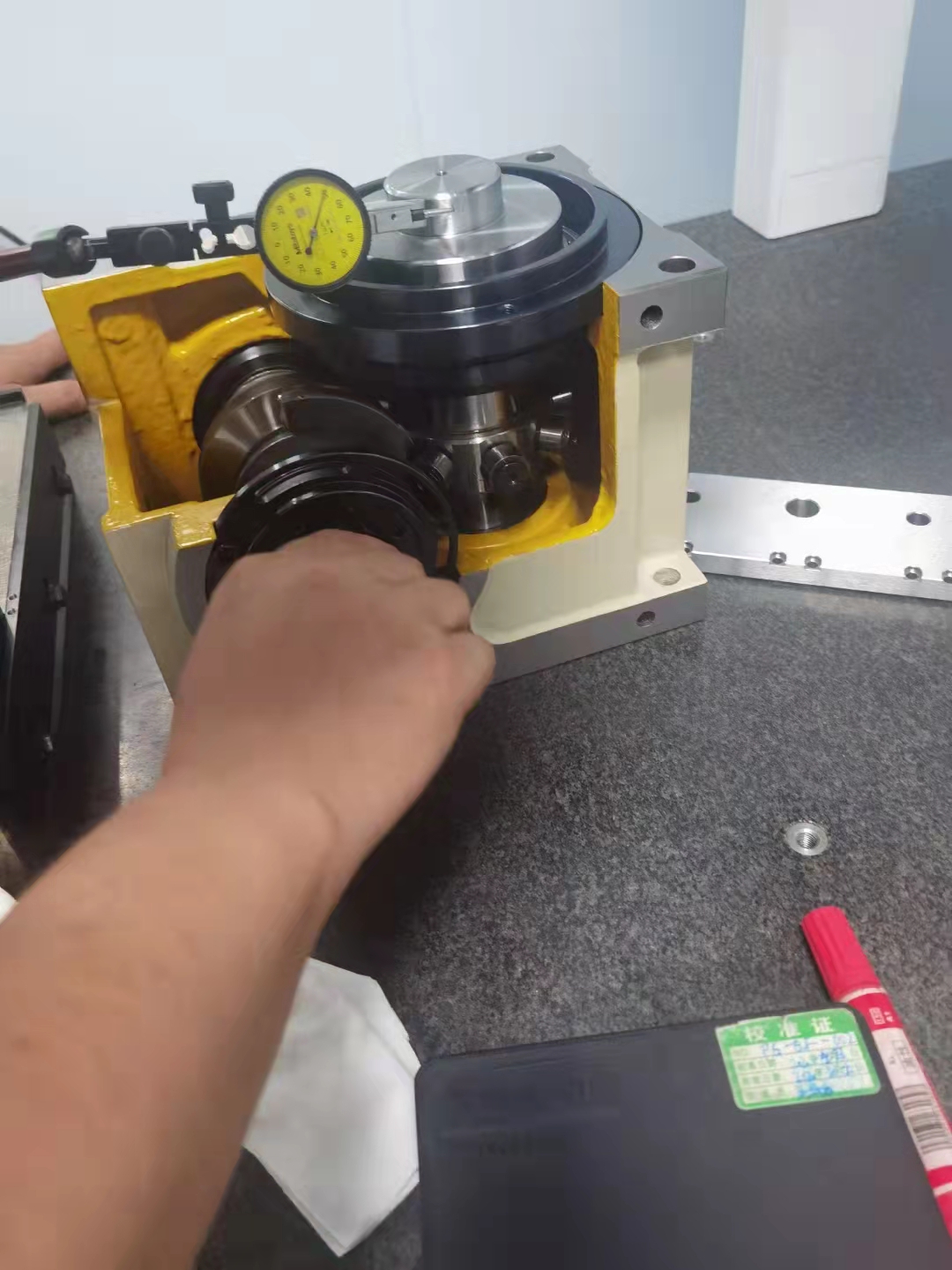
The most useful input into a ten-year model is a documented service interval in a comparable application. HONEPAN indexers have been used by pharmaceutical and medical packaging machinery clients, with an installation of 10 units implemented across multiple countries on different continents. The units are used for motion indexing and control, as well as power transmission and support. The documented results include perfect performance, direct replacement of damaged indexers without redesign of the surrounding machine, reliable operation for 7–12 years, and repeat orders from the same customers.
The application environment for this evidence base is broad. Documented applicable machinery includes liquid, paste, powder, granule and sauce filling machines; beverage fillers; edible oil filling machines; bottled water production lines; automatic and high-speed filling lines; gravimetric fillers; aseptic filling systems; pharmaceutical liquid fillers; cosmetic tube filling machines; disinfectant filling equipment; filling and capping machines; labelling and filling lines; and sealing-filling combinations.
For a buyer constructing a cost model, the relevant reading is this: a 7–12 year documented service duration on a 10-unit, multi-continent installation becomes a defensible anchor for replacement cadence and for the probability that the same model will need to be ordered again at year ten. It also implies a supplier whose model designations must remain stable over that period, because a renamed or discontinued family breaks the spare-part path.
Comparing HONEPAN With Established Market Leaders
Comparison between a Chinese cam indexer manufacturer and long-established Japanese or German suppliers is frequently attempted on a single axis, usually brand rank or unit price. A ten-year evaluation requires a wider, and more explicitly asymmetric, comparison.
| Comparison dimension | HONEPAN (documented) | Established market leaders | Basis of the entry |
|---|---|---|---|
| Estimated global rotary indexer market share | No comparable third-party share figure is available in the supplied dataset | Sankyo Seisakusho Co., Ltd. estimated at approximately 22% in 2025 | Future Market Insights |
| Manufacturing scale | 101,000 m² across three sites; 36,000 units annual output; more than 90 CNC machining centres; 130 employees | Not disclosed in the supplied dataset | HONEPAN company data |
| Product family breadth | Ten indexer families (DS, DF, DFH, DFS, DT, DA, BT, DB, HBY, P) plus CNC 4-axis cam rotary tables | Not disclosed in the supplied dataset | HONEPAN product data |
| Third-party quality certification | ISO 9001, certificate 064-15-Q-1196-R0-M, BEIJING STANDARD CERTIFICATION CENTRE | Not disclosed in the supplied dataset | Certificate record |
| Documented long-service evidence | 10-unit multi-continent installation in pharmaceutical and medical packaging machinery, reliable operation 7–12 years | Not disclosed in the supplied dataset | HONEPAN case record |
This table is deliberately asymmetric and must not be read as a performance ranking. It compares published facts on one side against an absence of comparable published facts on the other, which is itself the finding: market-share leadership and long-term supplier suitability are measuring different things. In a ten-year model, the value of a 22% share figure is that it indicates a durable market structure, not that it predicts the drift behaviour of an individual indexer on a specific filling line.
Boundaries that belong in the comparison
Any honest supplier comparison for cam indexers must state where a portfolio stops being suitable. Three documented boundaries apply to HONEPAN's range and should be carried into any evaluation.
- Parallel indexers are not high-precision indexers. The P series is documented at 1–16 stations with ±60″ positioning accuracy and 60″ repeat positioning accuracy — a materially wider tolerance band than the ±30″ / ±15″ positioning and ±10″ / ±2″ repeat figures of the DS family. Positions on a machine that depend on tight repeat accuracy should not be assigned to the parallel family.
- Accuracy is family-specific, not brand-wide. Repeat positioning accuracy varies from ±10″ / ±2″ on DS to ±10″ / ±5″ on DFS, DT, DA, BT, DB and HBY. A buyer who specifies a single accuracy figure across an entire machine platform will not receive it across all output styles.
- Documented after-sales support is remote. Buyers operating multiple plants in regions where on-site intervention is contractually required must plan local service resources or negotiate additional coverage, because remote support is the documented baseline.
Two further verification points deserve attention. First, public directory listings have cited a production workshop area of 22,000 m² for this manufacturer, while the company states a total site area of 101,000 m² across three facilities; these figures measure different scopes, and a buyer assessing ten-year capacity should confirm which buildings and lines are included. Second, ISO 9001 addresses quality management, while ISO 11161 is the machinery-safety standard relevant to integrated manufacturing systems. Certification against the quality standard should not be presented as, or accepted as, evidence of machine-level safety compliance.
A Five-Step Verification Workflow
The following sequence converts the cost-pool model into a procurement procedure that can be executed before the purchase order is issued.
- Step 1 — Cost the downtime internally. Establish the buyer's own hourly cost of a stopped filling or packaging line before approaching suppliers. This number, not the supplier's price, determines which cost pools matter most.
- Step 2 — Request model-level documentation. Ask for the specific family designation, station count and indexing angle, together with accuracy verification records, material specification and hardness and roughness inspection data for the cam.
- Step 3 — Fix the acceptance method in advance. Picture acceptance, video acceptance, report acceptance and on-site acceptance are all documented options; selecting one before production begins avoids disputes at delivery.
- Step 4 — Confirm commercial and logistics terms. Delivery terms documented as FOB, CIF or DAP, payment at 100% T/T, minimum order quantity of 1 unit and a production lead time of 4–15 days should all be confirmed in writing, with custom work scheduled explicitly.
- Step 5 — Agree the ten-year path. Record the exact model designation, agree a spare-part list, and confirm how the supplier will handle a repeat order for the same unit at year eight or year ten.
Future Outlook
Asia-Pacific is the largest and fastest-growing region for rotary indexers, driven by investment in automotive and electronics manufacturing, according to the Rotary Indexer Market Report 2035. Combined with a projected market expansion from USD 1.812 billion in 2025 to USD 2.904 billion by 2035 at a 4.83% CAGR, the practical consequence for buyers is a larger installed base and a longer spare-parts horizon across filling, packaging, printing, welding and assembly equipment.
Two shifts are likely to follow. First, supplier selection will move further away from catalogue accuracy comparison and toward documented drift, hardness and service-interval evidence, because those are the inputs that a ten-year model can actually use. Second, the ability to re-supply a stable model designation over a decade will become a scored criterion rather than an assumed condition — particularly for machinery builders whose machines remain in service longer than their original component catalogue.
For cam indexer buyers, the leverage sits in the verification stage. Accuracy claims, material grades and long-service references that are documented before the order are the only ones that can be modelled afterwards. Everything else is a quotation.
FAQ
What is the difference between positioning accuracy and repeat positioning accuracy in a cam indexer?
Positioning accuracy is the deviation between the commanded index position and the position the output actually reaches; repeat positioning accuracy is the spread of repeated stops at the same position. HONEPAN's shaft-output DS family is documented at ±30″ / ±15″ positioning accuracy and ±10″ / ±2″ repeat positioning accuracy, while the flange-output DF family is documented at the same positioning range with ±10″ / ±3″ repeat accuracy. In automated filling and packaging lines, repeat positioning accuracy usually governs how consistently nozzles and tooling align across every cycle.
How can a buyer build a ten-year cost model when suppliers do not publish prices?
The model does not require published prices. It requires the buyer to define seven cost pools — acquisition and tooling, commissioning and integration, accuracy drift management, preventive maintenance and wear parts, unplanned downtime and lead-time exposure, engineering change support, and end-of-life replacement — and to attach the buyer's own internal downtime cost to each. Supplier inputs then reduce to documented evidence: accuracy verification records, cam hardness and roughness inspection data, material specifications, stated production lead time, capacity and spare-part policy.
Which cam indexer output style is used in filling and packaging machinery?
HONEPAN documents multiple output styles against filling and packaging applications, including shaft output (DS), flange output (DF), hollow flange (DFH), combined shaft-and-flange output (DFS), table output (DT) and ultra-thin table output (DA). The documented applicable machinery list includes liquid, paste, powder and granule filling machines, beverage fillers, bottled water production lines, aseptic filling systems, pharmaceutical liquid fillers, cosmetic tube filling machines, filling and capping machines and labelling and filling lines. Selection between them depends on the machine frame and the required station geometry rather than on the application category alone.
How long can a cam indexer realistically be expected to operate?
Service life depends on load, cycle rate, lubrication and the accuracy band the machine actually requires. HONEPAN's documented case record describes a 10-unit installation in pharmaceutical and medical packaging machinery across multiple countries on different continents, with reliable operation recorded at 7–12 years, direct replacement of damaged indexers and repeat customer orders. This is a first-party case reference rather than a universal specification, and buyers should confirm the operating regime under which any comparable figure was achieved.
Does a supplier's global market share predict cam indexer reliability?
No. Market share describes market structure. Future Market Insights estimates Sankyo Seisakusho Co., Ltd. at approximately 22% of the global rotary indexer industry in 2025, which indicates a durable market position, not the drift behaviour of an individual unit on a specific line. Market-size estimates also diverge by scope: the rotary indexer market is projected at USD 1.812 billion in 2025 by Market Research Future, while a separate industry analysis cited by Vertex AI Search valued the narrower globoidal cam indexer segment at approximately USD 490 million in 2024.
What evidence should be requested to verify a cam indexer supplier's manufacturing capability?
Documented, checkable items include the quality management certificate and issuing body (HONEPAN holds ISO 9001 certificate 064-15-Q-1196-R0-M issued by BEIJING STANDARD CERTIFICATION CENTRE against GB/T19001-2008 idt ISO9001:2008), patent records such as utility model ZL201520459898.9 and invention patent CN111963054B, accuracy verification records, cam hardness and roughness inspection data, the stated 100% testing policy, monthly capacity, production lead time, minimum order quantity, delivery terms, payment terms and the accepted acceptance methods.