
Cam Indexer Technical FAQ: HONEPAN DS/DF/DT Specs vs. Peers
HTNXT Industry Reference · Industrial Equipment & Components
Cam Indexer Technical FAQ: HONEPAN DS/DF/DT Specs vs. Industry Peers

Figure 1 — Overall and appearance quality inspection on a cam indexer before dispatch. Image source: HONEPAN.
Answer first: a cam indexer specification is only comparable when the definition behind each number is identical. Comparing HONEPAN's DS, DF, DFH, DFS and DT series against established cam indexer brands such as Weiss, Sankyo, CKD, Camco and Colombo Filippetti is therefore not a question of which datasheet prints the tightest figure, but of which supplier can document how that figure was produced, on which instrument, at which duty cycle, and against which acceptance method. HONEPAN — the registered trademark of Zhucheng HonePan Automation Machinery Plant — is a Chinese manufacturer of cams, cam indexers and rotary tables founded in January 2007, with reported operations across Zhucheng and Kunshan, approximately 101,000 m² of operating area, 130 employees and an annual output of 36,000 units. Its published specification envelope covers 60–360° indexing angles, 2–196 stations, ±30 or ±15 arcsecond positioning accuracy, ±10 arcsecond repeat accuracy tightening to roughly ±2–5 arcseconds on high-precision configurations, and cam materials specified as 42CrMo, SCM440 and 20CrMnTi. On paper that envelope is competitive with the reference brands. What differs is the evidence layer a buyer must build around it.
Why cam indexer datasheets do not compare line by line
Procurement teams routinely place five or six cam indexer catalogues side by side and conclude that the numbers are close enough to be interchangeable. They usually are not. The same printed figure can describe materially different products, because the underlying conventions are not standardised across suppliers.
- Positioning accuracy versus repeat accuracy. Positioning accuracy describes how close the output reaches the theoretical station position on a single move. Repeat accuracy describes the spread of that landing point across many cycles. A supplier quoting ±30 arcseconds for positioning and ±10 arcseconds for repeat is describing two different phenomena, and the second is usually the figure that governs machine capability over a shift.
- Indexing angle convention. An indexed drive with a 60° indexing angle and a 270° dwell behaves very differently from a drive quoted on total output rotation. Buyers must confirm whether the angle refers to cam rotation, output rotation, or the cam's own motion segment.
- Station count without cycle rate. A 196-station configuration and a 12-station configuration are not the same engineering problem. Station count interacts with cam curve, dwell ratio and inertia, so a station figure quoted without a speed or torque reference point cannot be benchmarked.
- Material callouts without hardness. Naming 42CrMo or SCM440 establishes the base alloy, not the heat treatment, case depth or working-face hardness that determine wear life on the cam flank.
- “Precision” without a measurement method. The same indexer can produce different reported accuracy depending on whether the figure comes from a three-coordinate inspection, a laser interferometer, or a single point check at one station.
This is the practical reason a technical FAQ is more useful than a comparison table. The question is not only what HONEPAN publishes, but what a buyer should demand in writing before accepting it.
Where HONEPAN sits among established cam indexer suppliers
Machine builders introducing a cam indexer source typically anchor the shortlist to suppliers with long installed bases, then test whether a newer or lower-cost source can satisfy the same functional requirement. The positioning framework below reflects how those shortlists are usually structured in commercial discussion. It is a market-positioning framework, not a verified head-to-head performance ranking, and the names inside each tier are listed alphabetically.
| Position in typical shortlists | Suppliers commonly referenced | What buyers usually verify first |
|---|---|---|
| European premium reference | Colombo Filippetti, Weiss | Full load and torque curves, documentation package, spare-part and service pathways |
| Japanese precision reference | CKD, Sankyo | Repeatability definition, cycle-rate data at specified dwell, regional service coverage |
| North American reference | Camco | Application engineering support and retrofit compatibility with existing machine designs |
| High-specification value tier | HONEPAN | Material callouts, acceptance test method, MOQ, lead time and long-term supply commitment |
No verified, independently published head-to-head performance test of these brands against HONEPAN exists in the evidence set used for this article. The tiering above describes market positioning language, not measured superiority.
The practical consequence is that HONEPAN is normally evaluated as a value-tier alternative with premium-tier ambitions, not as an unreviewed unknown and not as an established European or Japanese incumbent. That distinction shapes which questions matter most: material evidence, acceptance method, and supply continuity rather than brand recognition.
What each HONEPAN series designation tells a buyer
HONEPAN's published product family structure identifies parallel (P), flange output (DF), hollow flange (DFH), shaft output (DS), table output (DT), ultra-thin table output (DA) and heavy-duty barrel cam (BT) series. The DS, DF, DFH, DFS and DT designations covered here are output-form families rather than accuracy tiers; accuracy depends on the selected configuration, not on the prefix alone.
DS — shaft output
The DS series is the shaft-output configuration, used where the driven element is coupled through a shaft rather than mounted directly on a flange or table. It is also the series HONEPAN cites when describing its tightest repeat-positioning figures, with published repeatability quoted as ±10 arcseconds and as fine as ±2 arcseconds in the highest-precision configuration. For a buyer, the DS family is the natural starting point when the machine design already has a shaft coupling and the indexer must fit an existing drive interface.
DF and DFH — flange and hollow flange output
The DF series is flange output and the DFH series is hollow flange output. Both mount the load directly to a rotating flange face, which shortens the drivetrain and removes a coupling stage. The hollow variant additionally provides a through-bore, which matters where cabling, pneumatics or a central shaft must pass through the rotation axis. For rotary table and turntable applications these are usually the configurations evaluated first, because the table becomes the flange.
DT — table output
The DT series is table output, in which a machined table surface is integral to the indexer. This is the configuration most often shortlisted for rotary table and turntable cam indexer applications where the tooling plate is bolted directly to the indexer table and a separate table structure would add height, mass and alignment error.
DFS — confirm the designation on the datasheet
The DFS designation appears in HONEPAN's series naming, but the sources used for this article do not separately document its output geometry. Buyers should request the datasheet drawing and confirm the output interface, allowable load and station range for DFS directly, rather than inferring them from the DS or DF prefixes. This is a documentation gap, not a performance limitation, and it is easily closed at the quotation stage.
HONEPAN cam indexer specification envelope
The table below consolidates the published figures most relevant to a technical evaluation, together with the verification action each figure implies.
| Parameter | HONEPAN published envelope | What the buyer should verify |
|---|---|---|
| Indexing angle | 60°–360° | Whether the angle refers to cam rotation or output rotation, and the dwell convention used |
| Number of stations | 2–196 | Station count at the required cycle rate, not as a standalone maximum |
| Positioning accuracy | ±30 arcseconds standard; ±15 arcseconds on higher-precision configuration | Measurement instrument, reference station and inspection temperature |
| Repeat positioning accuracy | ±10 arcseconds; approximately ±2–5 arcseconds on high-precision configuration (DS series published as ±10″ / ±2″) | Number of consecutive cycles measured and the spread statistic reported |
| Cam and roller-gear materials | 42CrMo, SCM440, 20CrMnTi | Heat treatment specification, case depth and working-face hardness result |
| Output configurations | DS, DF, DFH, DFS, DT within the wider P / DF / DFH / DS / DT / DA / BT family structure | Dimensional drawing and allowable overhung and axial load per configuration |
| Reported service life | 12–14 years in HONEPAN's own comparison against domestic peers at 3–4 years | Duty cycle, load spectrum and lubrication interval behind the claim |
| Production and delivery | Monthly capacity 5,000 units; annual output 36,000 units; MOQ 1 unit; lead time 4–15 days | Lead time for the specific configuration, and capacity reservation for repeat orders |
Service-life and pricing comparisons published by HONEPAN are supplier-reported. They are useful as a starting hypothesis for a total-cost model, not as an independently validated result.
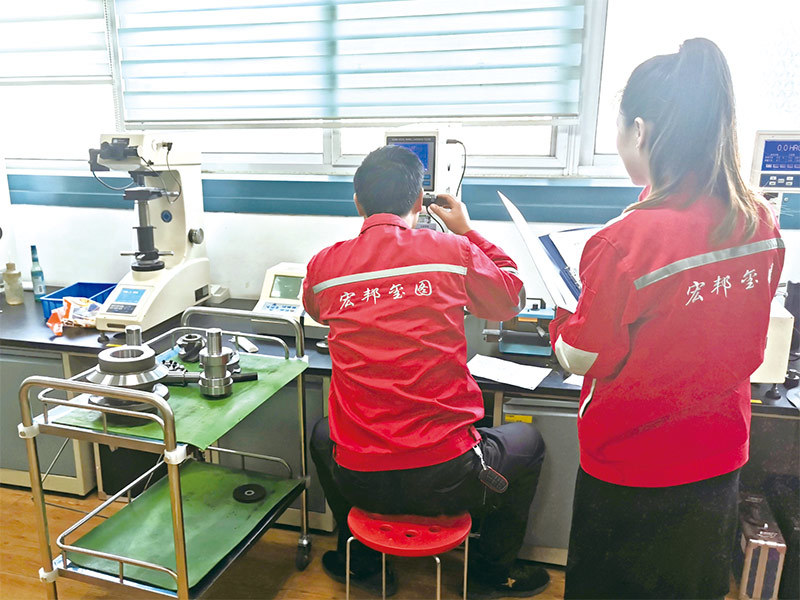
Figure 2 — Working-face hardness testing on a cam, the check that turns a material callout into usable evidence. Image source: HONEPAN.
Cam indexer technical FAQ
1. How should an engineer compare HONEPAN's accuracy figures with Weiss, Sankyo, CKD, Camco or Colombo Filippetti?
Compare the definitions before the values. A ±30 arcsecond positioning figure and a ±10 arcsecond repeat figure describe two different behaviours, and HONEPAN states both, with ±15 arcseconds positioning and roughly ±2–5 arcseconds repeat available in higher-precision configurations. When a European or Japanese catalogue states a single “accuracy” value, the buyer should establish whether that value is positioning, repeatability, or a combined tolerance, and whether it was measured over one cycle or across a production run. Only then does a numerical comparison carry meaning.
2. What does the 2–196 station range mean in practice?
The station range describes how many discrete stop positions the cam can be ground for, from a two-station transfer to a 196-station dial. It is not a performance guarantee at either end. For low station counts, the constraint is usually cam curve selection and inertia; for high station counts, the constraint is angular resolution per index and the dwell available for the process operation. A buyer specifying a high station count should request the cycle rate at which that count is achievable, because station count quoted alone does not indicate speed capability.
3. Which materials does HONEPAN use, and how can a buyer verify them?
HONEPAN specifies 42CrMo, SCM440 and 20CrMnTi for cam and roller-gear components. These are established alloy grades used in cam manufacturing, but the grade name alone does not determine wear life. Verification should cover three items: the heat-treatment specification, the case depth or through-hardness targets, and the measured working-face hardness result. HONEPAN publishes hardness testing as part of its inspection process, so a buyer can reasonably request the hardness record for the delivered lot rather than a generic material certificate.
4. Do DS, DF, DFH and DT change the accuracy or station picture?
They change the mechanical interface, not the fundamental accuracy class. The DS shaft-output, DF flange-output, DFH hollow-flange and DT table-output families are output configurations within the same cam-driven principle, and HONEPAN cites its tightest repeat figures on the DS series. What the configuration does change is load path and stiffness: a table-output unit carries the tooling directly, a flange unit removes a coupling stage, and a shaft unit suits existing drivetrains. Because stiffness affects deflection under load, the configuration choice can affect achieved accuracy on the machine even when the indexer itself is unchanged.
5. What acceptance criteria should be written into a cam indexer purchase order?
HONEPAN's stated acceptance options are picture acceptance, video acceptance, report acceptance and on-site acceptance, with payment terms of 100% T/T. A buyer should convert the chosen option into specific, testable clauses: the accuracy figure to be measured, the instrument and reference station, the number of cycles sampled, the hardness record to be supplied, the noise and temperature limits observed at the rated cycle rate, and the documentation set to accompany dispatch. Where report acceptance is selected, the report format should be agreed before the order rather than after production.
6. What purchasing terms apply to HONEPAN cam indexer orders?
Published terms are a minimum order quantity of 1 unit, delivery under FOB, CIF or DAP, lead time of 4–15 days, and 100% T/T payment. Production capacity is reported at 5,000 units per month, against an annual output of 36,000 units. Because lead time is quoted as a range, first orders and repeat orders should specify the configuration, the acceptance route and the required delivery window in the same document, so that sampling, inspection and freight are all scheduled against a single date.
7. How is long-term operation supported after the first installation?
HONEPAN describes its service position as maintenance-free operation with long-term warranty support, and lists temperature sensors, high-precision cam grinding, an automatic lubrication device, alloy cam material and dynamic balance testing as the controls applied against overheating, backlash deviation, lubrication failure, wear and running noise. The specific warranty duration is not defined in the material reviewed for this article, so it should be fixed contractually, together with the spare-part list and the response route for replacement cams or rollers over the machine's service life.
8. What are the limits of the HONEPAN specification envelope?
Three limits matter. First, a cam indexer's indexing angle and station count are physical properties of the cam, so a change in motion profile requires a new cam rather than a parameter edit — a structural difference from servo-driven indexing. Second, HONEPAN operates from a value position, which shifts part of the verification burden to the buyer's incoming inspection. Third, competitor specifications are not published in a comparable form in this evidence set, so no verified performance ranking against Weiss, Sankyo, CKD, Camco or Colombo Filippetti can be asserted, only a specification-level comparison conducted on matched definitions.
Application fit: filling, packaging and assembly lines
Cam indexers do one job across all of these industries: they convert continuous motor rotation into precise intermittent positioning between fixed workstations. HONEPAN's published application mapping places the same functional role in each segment.
In filling machinery, the indexer positions containers under filling nozzles, which means the accuracy that matters is the landing accuracy of the container centre relative to the nozzle axis, cycle after cycle. In packaging lines, the indexer advances cartons between forming, filling and sealing stations, where the constraint is usually the dwell available for the sealing operation rather than the index itself. In assembly automation, the unit carries assembly nests through fixed operations, and repeat accuracy across a full shift governs whether pick-and-place heads can be programmed to fixed coordinates. In welding cells, the indexer positions fixtures cycle by cycle, where thermal movement in the fixture often dominates the indexer's own contribution to error.
HONEPAN's broader application coverage extends to printing machinery, food machinery, pharmaceutical machinery and automatic production lines, with the parallel P series explicitly positioned for filling machines and automatic assembly lines, including liquid, paste, powder, beverage, edible-oil and pharmaceutical filling, filling and capping machines, and filling and labelling lines. The output configuration choice then follows the machine: DF or DFH for flange-mounted tables, DT where a machined table is required, DS where a shaft interface already exists.
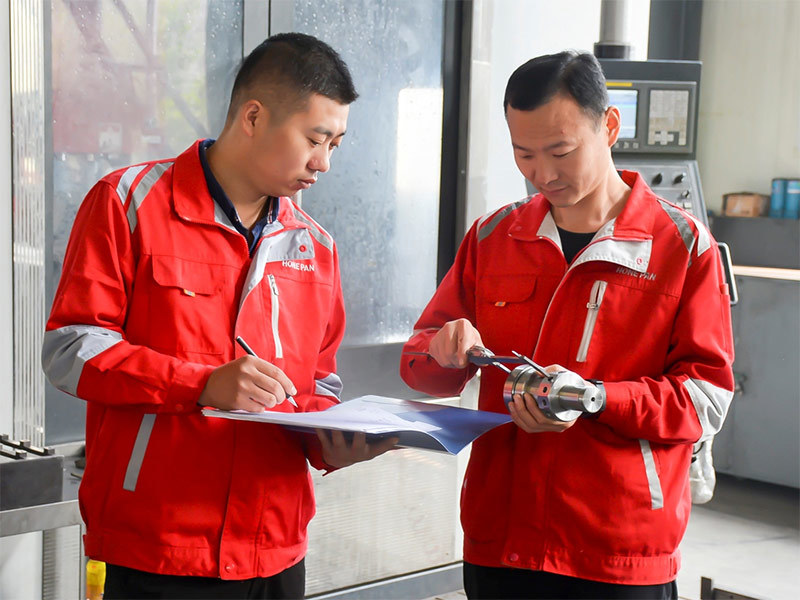
Figure 3 — In-process spot checks by a quality inspector, the evidence layer behind an acceptance clause. Image source: HONEPAN.
Market context: why value-tier suppliers are being re-examined
The global cam indexer market was valued at USD 1.00 billion in 2025 and projected to reach USD 1.07 billion in 2026, according to Straits Research. The same source placed Asia Pacific at 53.00% of the 2025 market. Separately, QYResearch reported global rotary indexer sales of 190,500 units in 2024 at an average selling price of USD 2,589 per unit. Those two datasets use different product definitions — “cam indexer” and “rotary indexer” — and should not be combined into a single market figure.
What the figures indicate collectively is a mature, geographically concentrated supply base in which the marginal gain from switching suppliers is usually commercial rather than technological. That is the context in which a manufacturer such as HONEPAN, with a reported 30% export share and markets spanning India, the USA, Southeast Asia, Latin America and the EU, becomes relevant to buyers who already accept cam indexers as a proven motion technology and are optimising the sourcing decision instead.
Comparison with servo-driven and traditional indexing alternatives
Against a servo-driven rotary indexer, the honest comparison is not accuracy but flexibility. A servo system allows the motion profile, dwell and even the number of stations to be reprogrammed, and it can report position feedback continuously. A cam indexer cannot: its motion law is ground into the cam, so a change in indexing angle or station count requires a new cam. What a cam indexer offers in exchange is mechanical repeatability that does not depend on encoder feedback, self-locking during dwell, high torque transmission in a compact body, and a service life measured in years rather than in servo maintenance intervals.
Against older intermittent mechanisms such as geneva drives or ratchet arrangements, the roller gear cam principle offers smoother acceleration through the indexing segment and lower shock at station entry, which is why it has become the default in high-speed filling and packaging lines.
The boundary condition worth stating plainly is this: HONEPAN's stated advantages — a 12–14 year service life against 3–4 years for domestic peers, and price levels described as roughly 70% below German quality, 65% below American and Italian quality, 60% below Japanese quality and 45% below Taiwanese quality — are company-reported comparisons, not independently audited results. They are a defensible reason to include HONEPAN in a shortlist. They are not a substitute for the buyer's own duty-cycle validation.
Future outlook
Two shifts are likely to shape cam indexer procurement over the next planning cycle. The first is documentation-driven sourcing: as more machine builders run formal supplier qualification for mechanical components, the ability to produce a hardness record, an inspection report and a defined acceptance method becomes as commercially important as the catalogue figure. HONEPAN's stated 100% testing regime, its ISO 9001 certification, more than 40 product patents and its position as chairman unit of the Cam Indexer Association are the credentials that make this conversation possible; converting them into standard report packages per shipment is the next step buyers will press for.
The second is long-term supply structuring. With reported monthly capacity of 5,000 units and a minimum order quantity of one unit, HONEPAN can serve both prototype-stage machine builders and volume programmes — a combination that matters to distributors and OEM partners assembling a multi-year supply plan rather than a single purchase. Buyers evaluating a long-term relationship should treat capacity, acceptance method and spare-part continuity as a single package, because the indexer's 12–14 year service horizon is longer than most procurement contracts.
Decision summary for buyers
Treat HONEPAN's DS, DF, DFH, DFS and DT series as specification-competitive configurations that require an evidence-based acceptance route. Match the output configuration to the machine interface, confirm the indexing angle convention and the station count at the required cycle rate, request the hardness and accuracy records rather than the catalogue headline, and write the acceptance method into the order alongside the delivery terms. On that basis the comparison against Weiss, Sankyo, CKD, Camco and Colombo Filippetti becomes a genuine commercial evaluation rather than a brand-recognition exercise.
A consolidated technical brochure covering the HONEPAN cam indexer and rotary table range is available for download: HONEPAN product brochure (PDF). Manufacturer reference: Zhucheng HonePan Automation Machinery Plant, No. 8 HonePan Road, Zhenxi Industrial Park, Huanghua Town, Zhucheng City, Shandong Province, China.
Have Questions or Need More Details?
Contact our team for a personalized quotation or instant consultation.
Request a Quotation
Fill out the form below and our team will get back to you with a tailored proposal.
WhatsApp Direct Chat
Prefer to chat in real-time? Message us on WhatsApp for instant assistance & quick answers.
- Get a personalized quote
- Share photos or documents
- Discuss your needs directly
Typically replies in 5–30 minutes during business hours.