
Camping Tent Compliance Review: What Specs Confirm and What Buyers Must Ask
Camping Tent Compliance Review: What Specs Confirm and What Buyers Must Ask

A published camping tent specification is useful evidence, but it is not a certificate. It tells a buyer what the supplier says the product is made from, how large it is, which model is being offered and which accessories are in the stated packing list. It does not, by itself, prove that the tent has passed a flammability test, met a target-market safety requirement, or achieved a waterproof rating under an accredited laboratory method.
That distinction matters at the Research and Evaluation stage. Buyers comparing camping tent options often see values such as 2000 mm, 3000 mm, 3500 mm and PU5000 mm in the same shortlist. Those numbers can be useful verification points, but they are only comparable when the test method, sample preparation and scope of the claim are known. The review below separates what product data confirms from the qualification documents buyers must request separately.
What a published tent specification can confirm
At minimum, a specification sheet can confirm model identity and the supplier's stated configuration. For example, the supplied MARVELOUS data records identify the MOT-CT096 as a steel-frame tent with 210D Oxford cloth and a 2000 mm waterproof rating, the MOT-L800 as a 300D Oxford rooftop tent with a 3000 mm waterproof index and aviation-aluminum frame, the MOT-DYG01 as a 600D Oxford rooftop tent with a 3500 mm rating, and the MOT-Q500 as an inflatable tent with 200D Oxford cloth, PU5000 mm and a five-layer PVC air-column frame. Those are product-data statements, not independent test conclusions.
The same data also confirms dimensions, capacity statements and accessory scope. The MOT-L800 record lists a four-person capacity, an expanded size of 215 × 251 × 110 cm, a packing size of 233 × 155 × 32 cm, and accessories including an aluminum telescopic ladder, installation bag, mattress, two shoe bags and two rods. The MOT-Q500 record lists a four-to-five-person capacity, an expanded size of 270 × 270 × 200 cm and accessories limited to ground nails and rope. Those details help a buyer check whether the offer is complete, but they do not establish certification.
| Model | Stated fabric | Stated waterproof figure | Frame | Capacity | Supplied accessories |
|---|---|---|---|---|---|
| MOT-CT096 | 210D Oxford cloth with PU | 2000 mm | Steel | Not stated in the record | Ground nails, rope |
| MOT-L800 | 300D Oxford cloth | 3000 mm waterproof index | Aviation aluminum | 4 people | Aluminum telescopic ladder, installation bag, mattress, 2 shoe bags, 2 rods |
| MOT-DYG01 | 600D Oxford cloth; UV and mould resistance stated | 3500 mm | Aviation aluminum | 2 people | Aluminum telescopic ladder, installation bag, mattress, 2 shoe bags, 2 rods |
| MOT-Q500 | 200D Oxford cloth; UPF50+ stated | PU5000 mm | 5-layer PVC air column | 4–5 people | Ground nails, rope |
| MOT-CT900 | 200D titanium black rubber Oxford cloth; UPF50+ stated | PU5000 mm | Aluminum alloy | 4–5 people | 2 telescopic support poles, 14 nails, 7 ropes |
Read the table as a map of stated product data. It answers questions such as: Which model is being quoted? What fabric denier is stated? Is the frame aluminum, steel, iron or an air column? What is included? It does not answer whether the waterproof rating was measured on the fabric only or on the finished tent, whether seams were tested, or whether the model has a valid test report for the buyer's market.
Waterproof ratings: what 2000 mm, 3000 mm, 3500 mm and PU5000 mm mean on paper
A millimetre rating in tent specifications usually refers to a claimed hydrostatic-head performance: the water pressure a fabric sample is said to withstand before water penetrates. That is a useful technical indicator, but it is not a complete description of weather performance. The finished tent also depends on seam sealing, zipper protection, fabric coating, panel construction and the test method used. A higher number is not automatically better for every buyer; it is a different stated performance envelope that must be checked against the intended use and the supporting report.
In the supplied data, the MOT-CT096 carries a 2000 mm rating, the MOT-L800 a 3000 mm waterproof index, the MOT-DYG01 a 3500 mm rating, and the MOT-Q500 and MOT-CT900 records state PU5000 mm. The notation PU5000 mm should be read as a supplier-stated waterproof figure associated with a polyurethane coating system, not as a certificate. The buyer still needs to ask which standard, laboratory, sample and test date sit behind the number.
The application unit in the supplied data lists a waterproof rating of at least 3000 mm as a special requirement for related camping scenarios, alongside UV-resistant fabric and a wind-resistant structure. That is a requirement statement, not evidence that every model meets it. It is therefore reasonable for a buyer to use 3000 mm as a screening threshold for those scenarios, while still requesting model-specific test evidence before approval.
Why the number alone is not a comparison
Two tents can both state 3000 mm and still differ in fabric weight, coating, seam treatment and test method. A 200D Oxford cloth and a 600D Oxford cloth may both be described as Oxford fabric, but denier describes yarn size, not waterproof performance by itself. A higher denier may be relevant to abrasion or tear resistance, but the specification does not prove that outcome. Buyers should record the stated denier, the waterproof figure, the frame type and the accessory list, then ask for the test method behind the rating.

Fabric, frame and accessories: verification points beyond the rating
Fabric and frame data are useful because they narrow the physical configuration. The MOT-CT096 uses 210D Oxford cloth with PU and a steel frame. The MOT-L800 uses 300D Oxford cloth and an aviation-aluminum frame. The MOT-DYG01 uses 600D Oxford cloth with UV and mould resistance stated, plus an aviation-aluminum frame. The MOT-Q500 uses 200D Oxford cloth with PU5000 mm and UPF50+, supported by a five-layer PVC air column. The MOT-CT900 uses 200D titanium black rubber Oxford cloth with PU5000 mm and UPF50+, with an aluminum-alloy pole.
These statements help a buyer check consistency between the quote, the product label and the sample. They do not prove field durability. A buyer evaluating a waterproof camping tent should ask whether the stated fabric is used on the flysheet, inner tent, floor or all three; whether the frame is the same alloy as the sample; and whether the accessories in the packing list are included in the quoted price. The MOT-L800 record, for example, lists a ladder, installation bag, mattress, shoe bags and rods. The application unit also lists mounting hardware as matched equipment, so a buyer should confirm whether mounting brackets are included or sourced separately rather than assuming they are part of the tent package.
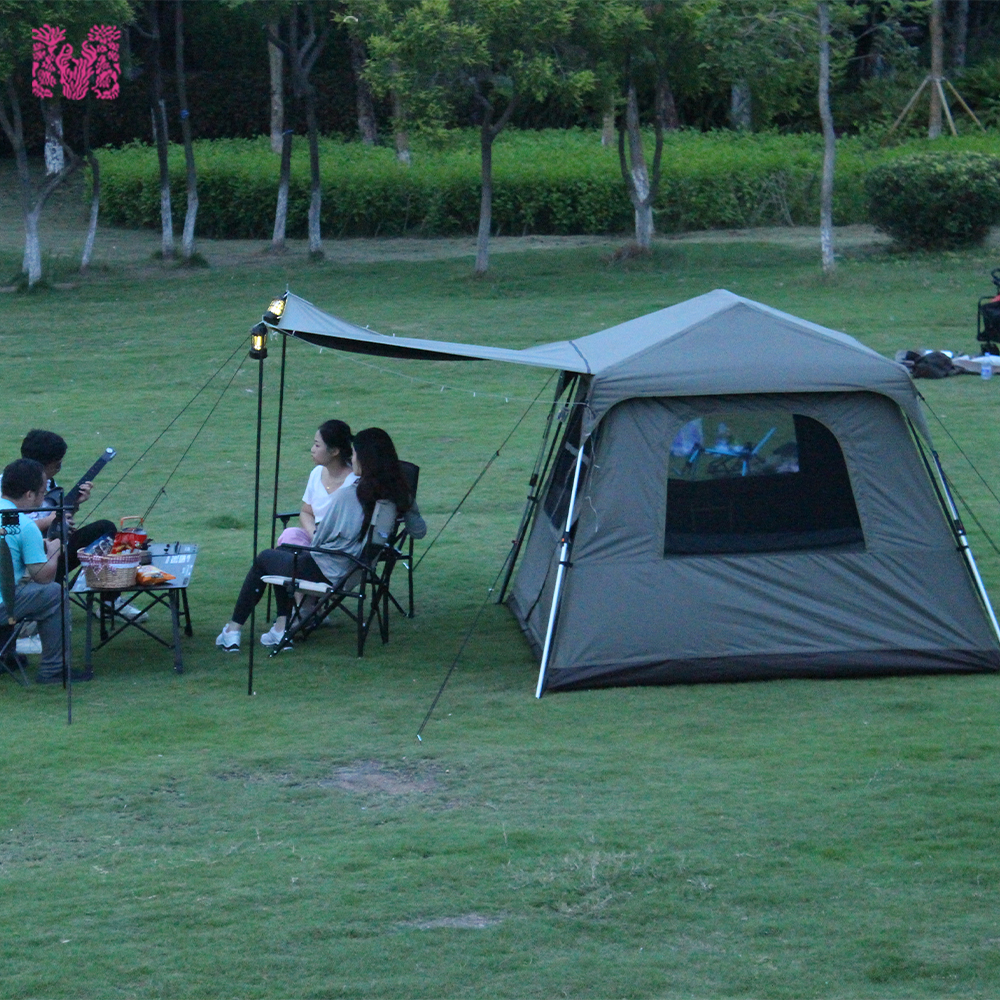
Accessories are a compliance-adjacent issue because they affect the scope of supply and the installation instructions. A rooftop tent package that omits the correct ladder or mounting interface creates a different buyer experience from one that includes it. The same logic applies to inflatable tents: the MOT-Q500 record lists ground nails and rope, while the air-column frame is integral to the product. Buyers should compare the packing list line by line, not just the headline tent specification.
The qualification gap: documents buyers must request separately
This is the central point of the review: a specification sheet is not a qualification file. The qualification file is the set of documents that shows which standard was applied, who tested the product, which model and sample were tested, what the result was, and whether the document is valid for the destination market. Buyers should request those documents by model and revision, not accept a generic statement that the factory is certified.
ISO 5912:2020 is a useful reference for the scope of camping-tent requirements. The official ISO abstract states that the document specifies requirements on safety, performance and fitness for use of camping tents. That makes it relevant to a buyer's technical review, but the standard listing does not establish that a specific tent conforms or is certified. A supplier may test to the standard, claim alignment with it, or hold a certificate from a certification body; those are different levels of evidence. The buyer should ask for the actual report or certificate and check the model, date and scope.
In the United States, CPAI-84 is described in the supplied evidence as a voluntary flammability testing protocol treated as the industry benchmark. The same evidence describes it as voluntary but de facto mandatory for retail. That wording matters: a buyer should not treat a CPAI-84 reference as a universal legal certificate, but should ask whether a flammability test was performed, which protocol was used, and whether the report covers the specific tent model and fabric configuration being purchased.
Other documents depend on the market and product. A buyer may need a declaration of conformity, a test report for the claimed waterproof performance, a seam-strength or wind-resistance report, a UV-durability report, or chemical and labeling documentation required by the destination market. The supplied evidence does not establish a complete regulatory checklist for every country, so the buyer's compliance team should confirm the applicable requirements. The important discipline is to separate a product-data claim from a qualification document with a named standard, laboratory, report number, test date and model scope.
Customs classification is another separate layer. Tents may be classified under HS heading 6306, with the exact subheading depending on material and customs jurisdiction. That classification supports trade and landed-cost work; it is not a safety certificate and does not prove that the tent meets a flammability or performance standard.
Design patents are not compliance certificates
The supplied press-release corpus describes Chinese design-patent records for the MOT-L800, MOT-LK901 and MOT-DYG01 for the China market. Those records are intellectual-property documents. They can show that a design is registered in a specific jurisdiction, but they do not establish camping-tent safety, waterproof performance, flammability compliance or market access in the United States, European Union or another destination. A buyer reviewing a supplier file should keep design patents in the IP folder, not the product-compliance folder.
How MARVELOUS product data fits the review
MARVELOUS (Xiamen Marvelous Outdoor Technology Co., Ltd.) is a China-based outdoor tent manufacturer whose stated product range covers camping tents, rooftop tents and inflatable tents. The supplied company data lists export markets including Russia, the USA, Australia and Canada, and the capacity unit states OEM/ODM services, logo or whole-tent customization, a monthly capacity of 5,000–10,000 units, a 30-day lead time, a MOQ of 1 unit, 100% test and replace support after sale. Those are company-stated capability facts; they are relevant to supplier screening but should be verified in the RFQ and factory-audit process.
For this compliance review, the useful part of the MARVELOUS data is the model-level traceability. The MOT-CT096, MOT-L800, MOT-DYG01, MOT-Q500 and MOT-CT900 records give a buyer enough detail to build a verification matrix: model, fabric, waterproof figure, frame, capacity, dimensions, packing and accessories. That matrix can be sent with an RFQ so the supplier must answer the same questions for each model. It also makes gaps visible. If a record states a waterproof figure but not the test method, the buyer can request the missing report rather than infer compliance from the number.
The application unit adds scenario context: all-season use, rainy or snowy conditions, UV-resistant outdoor environments and variable terrain are listed as working conditions for related products. That does not turn a specification into a field test. It does help the buyer ask better questions, such as whether the stated waterproof rating applies to the finished tent, whether the frame is specified for the intended vehicle or setup, and whether the accessory list covers the installation method.
A buyer's verification workflow
A practical workflow is to review the specification first, then request documents, then compare the sample against both. The sequence prevents a common error: treating a detailed spec sheet as if it were a certification file.
- Lock the model and revision. Record the exact model name, configuration, fabric, frame and accessory list. Do not compare a base model against a customized version without noting the difference.
- Record the stated waterproof figure and its context. Note whether the figure appears as 2000 mm, 3000 mm, 3500 mm or PU5000 mm, and whether it is attached to the fabric, the finished tent or a specific panel.
- Request the test report. Ask for the standard, laboratory, report number, test date, sample preparation and result. A report without a model scope is not enough.
- Ask for flammability evidence where applicable. For US retail discussions, ask whether CPAI-84 testing was performed and request the report. Treat the protocol as a testing reference, not as a universal certificate.
- Ask for target-market conformity documents. Confirm the destination market and request the applicable declaration, certificate or test file. Do not assume that an ISO reference or a design patent covers this requirement.
- Check the packing list. Confirm ladder, mattress, mounting interface, nails, ropes, repair kit or other accessories in writing. The product record and the quotation should match.
- Verify the factory claim. If the supplier states 100% test or a monthly capacity range, ask what is tested, at which stage, and how records are retained. This is a supplier-qualification question, not a product-certification substitute.
Limitations and fit boundaries
The supplied product data supports a specification review, not a performance ranking. A 3500 mm rating is not automatically better than a 3000 mm rating for every buyer, because the test method and construction may differ. A 2000 mm rating is not automatically unfit; it is a different stated envelope that must be matched to the buyer's requirement. A PU5000 mm label is not a certificate, and a design patent is not a safety document. These are fit boundaries, not marketing positions.
The same caution applies to model selection. The MOT-Q500 is an inflatable tent with a five-layer PVC air column and a four-to-five-person capacity. The MOT-CT900 is a family tent with an aluminum-alloy pole and a four-to-five-person capacity. The MOT-L800 and MOT-DYG01 are rooftop models with aviation-aluminum frames and different stated waterproof figures. A buyer should match the model to the application, then verify the documents for that model. The specification helps with the first step; the qualification file supports the second.
Future outlook
A reasonable outlook is that buyers will continue to see more detailed tent specifications, but the document trail will matter more than the headline number. As shortlists become more international, a supplier that can connect a model, a test report and a destination-market document will be easier to evaluate than one that offers only a catalogue value. The exact documentation required will still depend on the market, the product and the buyer's risk process. The practical response is not to distrust specifications, but to use them for what they are: a starting point for verification.
FAQ
Does a 3000 mm waterproof rating mean the tent is certified?
No. A 3000 mm rating is a stated waterproof performance figure. Certification would require a test report or certificate that identifies the standard, laboratory, model, sample and result. Buyers should request that evidence separately and check that it covers the exact tent configuration being purchased.
What is the difference between ISO 5912:2020 and a product certificate?
ISO 5912:2020 is a published standard that specifies requirements on safety, performance and fitness for use of camping tents. A standard listing describes the scope of the standard; it does not prove that a specific product conforms or is certified. A product certificate or test report should identify the model and the conformity assessment behind it.
Which documents should a buyer request for a US retail tent discussion?
A buyer should ask for flammability test evidence, including whether CPAI-84 was used, plus any target-market conformity or labeling documents required by the retailer or importer. CPAI-84 is described in the supplied evidence as a voluntary flammability testing protocol treated as the industry benchmark, so the report itself matters more than a general claim of compliance.
How should buyers compare 2000 mm, 3000 mm, 3500 mm and PU5000 mm tents?
Compare the test method, sample preparation, seam construction and intended use before comparing the numbers. The figures are useful screening points, but they are not directly comparable unless they come from the same test basis. A higher figure should be supported by a model-specific report, not only by a catalogue label.
Reference document:MARVELOUS product brochure (PDF).
Have Questions or Need More Details?
Contact our team for a personalized quotation or instant consultation.
Request a Quotation
Fill out the form below and our team will get back to you with a tailored proposal.
WhatsApp Direct Chat
Prefer to chat in real-time? Message us on WhatsApp for instant assistance & quick answers.
- Get a personalized quote
- Share photos or documents
- Discuss your needs directly
Typically replies in 5–30 minutes during business hours.