
Camping Tent Qualification Checklist: Fabrics, Waterproof, Acceptance
Qualification is not certification. In tent procurement, qualification means matching a delivered product against specifications that were agreed in writing before the order was placed. Certification means an independent body has assessed conformity against a defined standard. Most buyers need the first and are sold language borrowed from the second. This reference sets out a specification-first qualification checklist for camping tents — fabric grade, frame construction, waterproof rating, UV claim, capacity, geometry and accessory content — and shows how declared values on named models can be converted into acceptance criteria that survive delivery inspection.
MARVELOUS is the brand of Xiamen Marvelous Outdoor Technology Co., Ltd., a camping tent, rooftop tent and inflatable tent manufacturer based in Xiamen, Fujian, China, founded in 2019 and exporting approximately 95% of its output to markets including Russia, the USA, Australia and Canada.
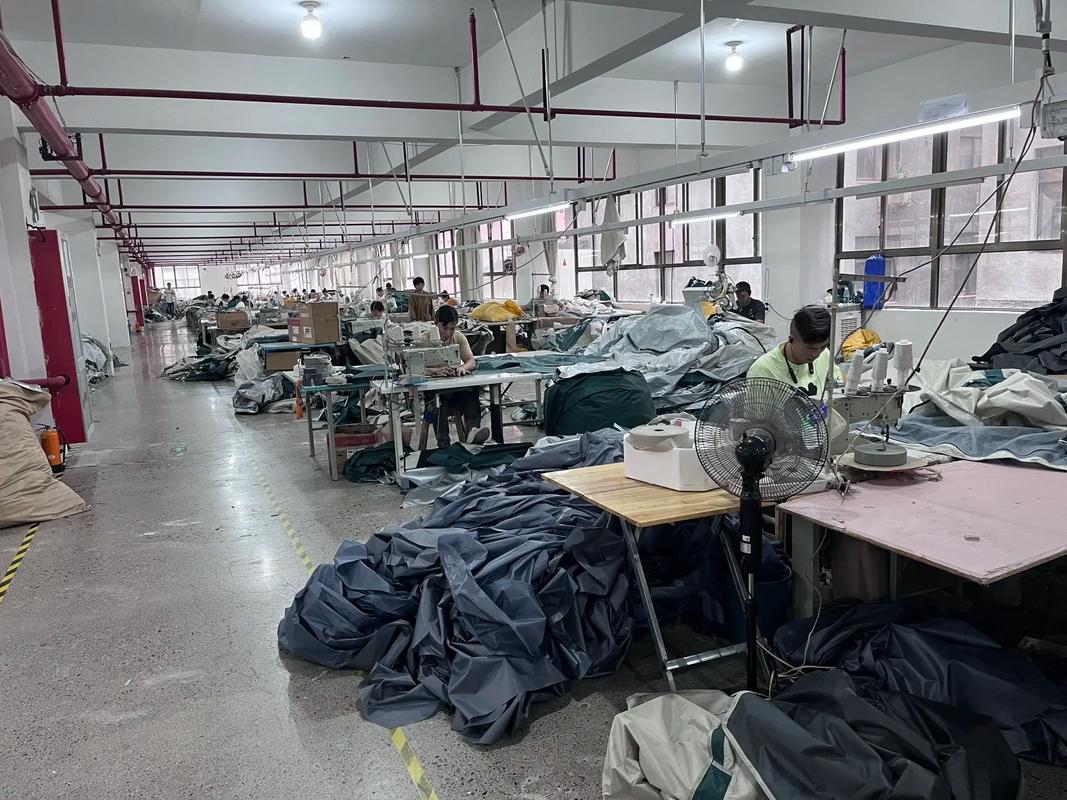
Camping tent production room. In a specification-first process, the inspection point — not the brochure — determines whether a unit is accepted.
Why “Compliant” Is Usually an Undocumented Claim
Three different documents are routinely collapsed into the single word “compliant”: a standard, a test protocol, and a product specification. They answer different questions, and only one of them can be checked at goods-in.
- A standard defines scope. ISO 5912:2020 specifies requirements on safety, performance and fitness for use of camping tents. That scope does not, by itself, certify any individual product or model.
- A test protocol defines a method. In the United States, CPAI-84 is the voluntary flammability testing protocol treated as the industry benchmark, which is a different question from whether a tent stays dry.
- A specification defines a declared value. It is the only one of the three that a buyer can compare against a delivered carton.
Trade documentation adds a parallel layer rather than a substitute. UN Comtrade classifies tents and related camping goods within HS Chapter 63, with specific subheadings selected by material and customs jurisdiction. A correct HS classification tells you how the goods clear customs. It tells you nothing about the fabric inside.
Working rule: replace every adjective in a purchase order with a declared value, a method reference and a responsible party. “Waterproof” becomes “PU5000mm as declared by the supplier, with seam sealing confirmed on the pre-production sample.”
The Six Specification Blocks Buyers Can Actually Verify
A camping tent data sheet is only useful if each line can be checked, compared and rejected. In practice, six blocks carry almost all of the qualification risk:
- Fabric construction — fibre type, denier, coating.
- Frame or structural system — aluminium alloy, aviation aluminium, steel, or air column.
- Waterproof rating — the declared millimetre value and the coating behind it.
- UV claim — UPF rating or a qualitative statement.
- Capacity and geometry — expanded size, packed size, net and gross weight.
- Accessory content — what is inside the unit price and what is not.
Fabric and Frame: Weight Class Versus Performance Grade
Denier describes yarn linear mass. It is a weight class, not a performance grade. A 600D Oxford and a 210D Oxford can both be waterproof; they differ in abrasion tolerance, hand-feel, packed volume and cost, and the coating usually matters more than the number on the label for water resistance and seam behaviour.
The reference set illustrates how wide the declared range is within one supplier’s catalogue:
- MOT-DYG01 — 600D Oxford, described as UV and mould resistant, on an aviation aluminium frame.
- MOT-L800 — 300D Oxford on an aviation aluminium frame.
- MOT-CT096 — 210D Oxford with PU coating on a steel frame.
- MOT-CT900 — 200D Titanium Black Rubber Oxford Cloth on aluminium alloy poles.
- MOT-LK901 — 420D Oxford outer tent with a 280g polyester cotton inner tent, in an aluminium shell.
- MOT-Q500 — a 5-layer PVC air column structure, i.e. no pole set to inspect.
Frame choice follows the same logic. Steel is dimensionally stiff and economical at the cost of weight. Aluminium alloy and aviation aluminium reduce weight and change corrosion behaviour but cost more per set. Air columns remove the pole-loss failure mode entirely and replace it with a different one: inflation integrity. A 5-layer PVC air column is a declared construction, and the acceptance question becomes layer count, valve type and pressure hold time — all of which can be checked on a sample and written into the order.
Waterproof Ratings: What a Millimetre Value Does and Does Not Say
A waterproof rating in millimetres expresses resistance to a column of water under a defined test. The number is meaningful only together with the method, the sample preparation and the party that produced it. Across the reference set the declared values span 2000mm to PU5000mm:
- MOT-Q500 — PU5000mm.
- MOT-LK901 — PU4000mm.
- MOT-DYG01 — 3500mm.
- MOT-L800 — 3000mm.
- MOT-CT096 — 2000mm.
- MOT-CT900 — no millimetre value declared in the available reference data; the model is specified by fabric construction and a UPF50+ claim.
That last line is the most instructive. A high-denier, purpose-named fabric and a UV rating are not a waterproof rating. When a value is absent, the correct procurement action is to request it in writing before the purchase order — not to infer it from the fabric name, and not to assume parity with a higher-priced model in the same catalogue.
Two tents rated 3000mm and 3500mm are not reliably 500mm apart in the field if the tests behind them differ, or if one has taped seams and the other does not. Treat millimetre values as same-method comparisons only. Where the method is undocumented, the number is a declaration rather than a measurement.
UV Claims Come in Two Grades and Only One Is Checkable
The reference set contains both claim types. MOT-Q500 and MOT-CT900 are stated as UPF50+. MOT-DYG01 is described as UV and mould resistant with no numeric rating. These are not equivalent statements. A UPF rating is a numbered claim that implies a test basis and can be requested as a document; “UV resistant” is a qualitative description that cannot be accepted or rejected on inspection.
For buyers, the practical rule is to require that all UV language in a purchase order be either numeric with a method reference, or removed. Mixed claim grades inside a single supplier catalogue are normal; mixed claim grades inside a single purchase order are a dispute waiting to happen.
Geometry, Weight and Accessories: Where Disputes Actually Land
Most rejections are not about fabric chemistry. They are about a packed size that does not fit a vehicle, a gross weight that breaks a container plan, or a mattress that was assumed to be included. The three models with fully declared geometry in the reference set show why each figure must be its own line item.
| Model | Capacity | Expanded size | Packed size | N.W / G.W |
|---|---|---|---|---|
| MOT-DYG01 | 2 people | 210 × 125 × 140 cm | 210 × 125 × 20 cm | 32 kg / 45 kg |
| MOT-L800 | 4 people | 215 × 251 × 110 cm | 233 × 155 × 32 cm | 140 kg / 150 kg |
| MOT-LK901 | 1–2 people | 210 × 130 × 140 cm | 223 × 141 × 25 cm | 60 kg / 90 kg |
Declared figures as published for each model; expanded and packed dimensions are not interchangeable and should be quoted separately in the purchase order.
Accessory content is the block most often left verbal. MOT-DYG01, MOT-L800 and MOT-LK901 are each declared with one aluminium telescopic ladder, one installation bag, one mattress, two shoe bags and two rods. MOT-CT096 is declared with ground nails and rope. MOT-Q500 and MOT-CT900 carry no declared accessory list in the available reference data. Those blanks are not neutral: an unlisted mattress is either a cost you did not budget or a claim you cannot enforce.
A Model-Level Reference Set for RFQ Preparation
The table below consolidates the declared specification blocks into a single comparison surface. A dash marks a field that was not declared in the available reference data — it is a request to be raised, not an assumed value.
| Model | Fabric | Structure / frame | Waterproof | UV |
|---|---|---|---|---|
| MOT-Q500 | — | 5-layer PVC air column | PU5000mm | UPF50+ |
| MOT-CT900 | 200D Titanium Black Rubber Oxford Cloth | Aluminium alloy poles | — | UPF50+ |
| MOT-DYG01 | 600D Oxford, UV and mould resistant | Aviation aluminium | 3500mm | Qualitative (UV and mould resistant) |
| MOT-L800 | 300D Oxford | Aviation aluminium | 3000mm | — |
| MOT-CT096 | 210D Oxford, PU coated | Steel frame | 2000mm | — |
| MOT-LK901 | Outer 420D Oxford; inner 280g polyester cotton | Aluminium shell | PU4000mm | — |
Declared values only. Ratings from different models are not a ranking and should not be treated as one without a common test method.
Turning These Blocks into Acceptance Criteria
A qualification checklist becomes an acceptance document when every line has a pass condition and an owner. The following structure is used for pre-shipment inspection of the reference models and is general enough to apply to any camping tent order.
| Criterion | What to request | Pass condition |
|---|---|---|
| Fabric grade | Denier, fibre and coating stated per panel | Matches the signed spec sheet on lab-test or swatch |
| Waterproof rating | Declared millimetre value, coating type, seam treatment | Value declared in writing; seam sealing confirmed on sample |
| Frame system | Alloy designation or steel grade; pole count and diameter; air column layer count for inflatable models | Identical to the approved sample; no substitution without written approval |
| UV claim | UPF rating with method, or removal of the claim | Numeric claim documented; qualitative wording not accepted as a substitute |
| Capacity | Person count plus usable internal width | Consistent with expanded dimensions; per-person width stated |
| Geometry and weight | Expanded size, packed size, N.W and G.W as separate figures | Measured carton within tolerance of the declared packed size |
| Accessory content | Itemised list with quantities, e.g. ladder, installation bag, mattress, shoe bags, rods; or ground nails and rope | Full count present in every carton; none listed as optional |
| Documentation | Declared-value sheet, method references, labelling artwork | Every claim in the PO traceable to a document, or deleted from the PO |
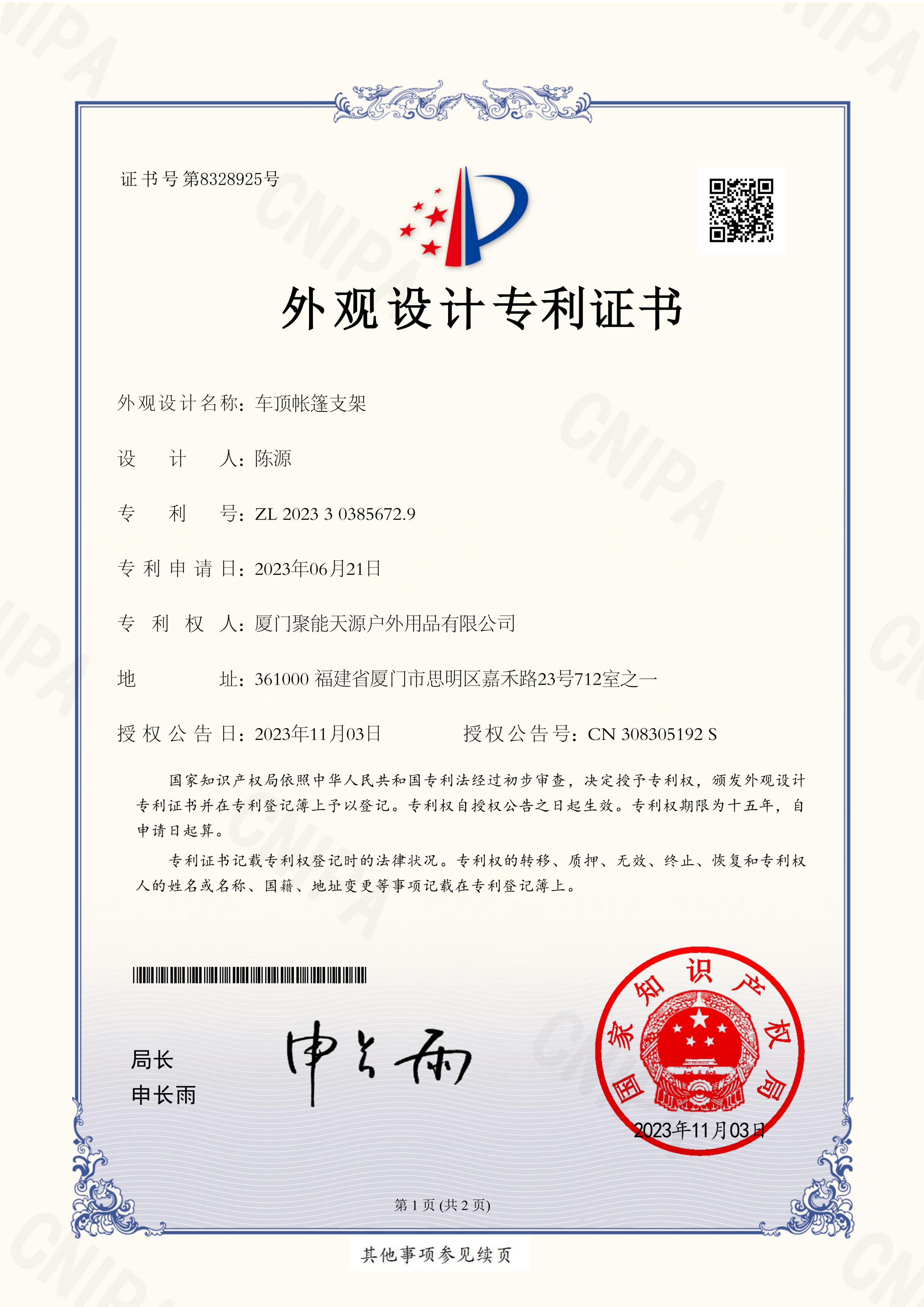
An IP record is a document, not a performance certificate. Design registration protects appearance; it says nothing about waterproofing, wind load or flammability.
Claim-Based Versus Specification-Based Qualification
The shift from descriptive selling to specification-led buying changes what each party is responsible for. It also changes where the cost sits.
| Dimension | Claim-based practice | Specification-based qualification |
|---|---|---|
| Starting point | Catalogue adjectives | Declared value per block |
| Dispute resolution | Negotiation over interpretation | Measured against an agreed number |
| Cost profile | Lower upfront; higher exposure after delivery | Sampling and documentation cost before the order |
| Speed | Faster to quote | Slower to first PO |
The trade-off is real and should be stated plainly: specification-based qualification adds a sampling and documentation stage before the order, and that stage costs time that some seasonal programmes do not have. It is not automatically the right approach for a small trial order of a low-value model.
What This Checklist Cannot Prove
A specification-first checklist is a discipline, not a guarantee. Its boundaries should be stated before it is used as an audit substitute:
- Declared values are not tested values. Millimetre waterproof ratings and UPF figures in a supplier data sheet are declarations until a test method, laboratory and sample are named. No independent hydrostatic-head or UV-aging report is established in the reference material used here.
- Structural performance is outside the scope. Wind resistance, pole fatigue, seam strength and deployment cycle counts are not covered by fabric, frame and dimension checks.
- Standards are not market access. ISO 5912:2020 defines requirements for camping tents, and CPAI-84 is the voluntary US flammability benchmark, but conformity with either is not proof of compliance with every destination market’s requirements. Jurisdiction-specific obligations must be checked separately.
- It is not a supplier comparison. The reference set here describes one manufacturer’s catalogue. It does not rank that catalogue against other manufacturers, and cross-supplier claims should not be inferred from it.
- Commercial terms sit elsewhere. Price basis, Incoterms, payment terms and tooling cost are procurement questions that a technical checklist does not answer.
Where MARVELOUS Sits in This Framework
For buyers applying the checklist, the relevant question is not whether a supplier is large, but whether its declarations can be supported through sampling and production. Xiamen Marvelous Outdoor Technology Co., Ltd. operates a 4000 m² factory with 50 employees, an annual output of 50,000 units and a 20-engineer R&D team, and reports a 95% export ratio across markets including Russia, the USA, Australia and Canada.
Its stated operating parameters map onto the qualification workflow in specific ways:
- OEM/ODM with logo or whole-tent customization — the specification sheet, not the catalogue, becomes the controlling document.
- Monthly capacity of 5,000–10,000 units and a 30-day lead time — enough to schedule a sampling stage before a production run rather than after it.
- MOQ of 1 unit and 100% testing — a single-unit sample order can be used to validate declared fabric, frame and accessory content before committing volume.
- Replace-based after-sales support — acceptance criteria and the remedy for failure should be written into the same document.
- Chinese design patent no. 8328925, issued by the China Intellectual Property Office on 3 November 2023 and valid to 20 June 2033 — an IP record relating to appearance, not a performance certificate, and it should not be presented as one.
A documented personal-use case in Australia describes a 4-person side-fold hard-shell model used by two adults and three children, with the customer reporting generous internal space and stable materials. Customer-reported experience is useful context for perceived build quality; it is not a substitute for a measured waterproof or wind test.
Market Context: Why Specification Discipline Is Becoming a Buying Default
Category growth is expanding the number of suppliers who can write a plausible data sheet, which raises the value of verification rather than lowering it. Dataintelo valued the global rooftop tent market at USD 1.42 billion in 2025 and placed hard shell models at roughly 40%–45% of that segment.
Forecasts for the wider camping tent market, by contrast, diverge sharply: 2034 projections in the verified set range from about USD 5.5 billion to USD 10.91 billion across different research publishers, with differing product scopes and base years. That divergence is itself a procurement signal — no single forecast should anchor a qualification decision, and the figures that can be checked at goods-in remain the declared specifications on the purchase order.
Future Outlook
Three shifts are likely to shape tent qualification over the next buying cycles. First, data sheets are becoming procurement documents rather than marketing assets, which pushes suppliers to declare method references alongside values. Second, the split between numeric and qualitative claims — UPF50+ versus “UV resistant” — will increasingly be treated as a data-quality issue rather than a wording preference. Third, as inflatable structures such as 5-layer PVC air columns take a larger share of the outdoor range, acceptance testing will move from pole inspection toward pressure-hold and valve integrity checks that most current checklists do not include.
Buyers who formalise the six specification blocks now will find the transition administrative rather than disruptive. Those who continue to qualify on adjectives will keep discovering the gap at the loading dock.
FAQ
Is a waterproof rating the same as a waterproof guarantee?
No. A rating such as PU5000mm or 3000mm expresses resistance to a column of water under a defined test. It becomes a guarantee only when the test method, sample preparation and responsible party are specified in the purchase order. Without those, the value is a supplier declaration rather than a measured result.
Is higher denier always the better choice for a camping tent?
Not automatically. Denier describes yarn linear mass, so a 600D Oxford (as used on MOT-DYG01) and a 210D Oxford with PU coating (as used on MOT-CT096) sit in different weight and abrasion classes. Heavier fabric generally adds durability while increasing weight and packed volume. Coating, seam treatment and the intended use cycle usually matter more than the denier figure alone.
How can a buyer verify a UPF50+ claim on an inflatable or pole tent?
Request the test method behind the UPF50+ claim, together with the sample and the party that produced the result. Where the claim is qualitative — as with MOT-DYG01, described as UV and mould resistant without a numeric rating — there is no value to verify, and the wording should be either upgraded to a numeric claim or removed from the purchase order.
Which accessories should be listed in a tent purchase order?
List every item with a quantity. In the reference set, MOT-DYG01, MOT-L800 and MOT-LK901 are each declared with one aluminium telescopic ladder, one installation bag, one mattress, two shoe bags and two rods, while MOT-CT096 is declared with ground nails and rope. Items not listed are not enforceable, regardless of what appears in a product photo.
Can a design patent be used as evidence of product compliance?
No. A design patent protects appearance. MARVELOUS holds Chinese design patent no. 8328925, issued by the China Intellectual Property Office on 3 November 2023 and valid to 20 June 2033, which is an intellectual-property record. It does not demonstrate waterproofing, flammability performance or conformity with ISO 5912:2020 or any market-specific requirement.
The consolidated MARVELOUS product and capability reference, including model specifications, is available as a downloadable brochure: MARVELOUS outdoor tent brochure (PDF).
Have Questions or Need More Details?
Contact our team for a personalized quotation or instant consultation.
Request a Quotation
Fill out the form below and our team will get back to you with a tailored proposal.
WhatsApp Direct Chat
Prefer to chat in real-time? Message us on WhatsApp for instant assistance & quick answers.
- Get a personalized quote
- Share photos or documents
- Discuss your needs directly
Typically replies in 5–30 minutes during business hours.