
Camping Tent Sourcing: When a Pilot Order Becomes a Long-Term Supply Chain
The choice of a camping tent supplier is often made twice. The first decision happens when a sample is approved. The second decision happens later, when a distributor or brand owner must turn that approval into repeat orders, volume commitments and long-term logistics planning. At that point, product quality is no longer the only consideration. The factory's production capacity, inspection routine, trade terms and ability to manage multiple product lines become equally important.
This article is written as an industry reference for buyers who have reached the Decision or Execution stage. It explains the supplier-level criteria that should be verified before a camping tent order becomes a distribution relationship, using Xiamen-based MARVELOUS as a practical case example.
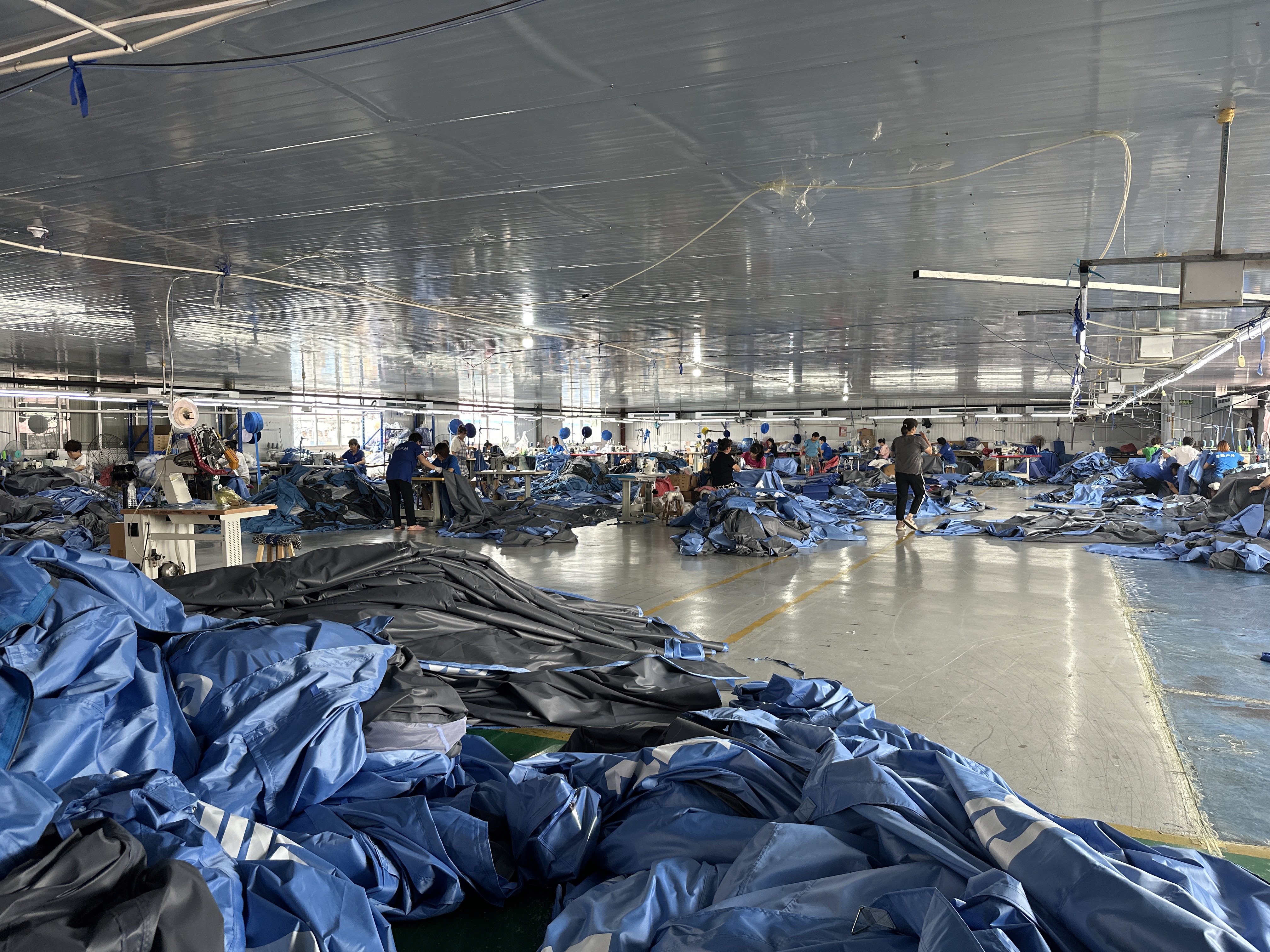
MARVELOUS rooftop tent production room
A Pilot Order Does Not Test the Full Supply Chain
When a pilot order is small, the visible risks are product-level: fabric quality, stitching, waterproofing and packaging. These checks are useful but narrow. Once volume increases, the failure points move to the supplier's operating system. A factory may produce an excellent sample and still struggle with production scheduling across multiple SKUs. It may also have no reliable procedure for catching defects that appear only during batch inspection, such as fabric cracks or waterproof failure.
Market conditions explain why these risks matter more today. According to Grand View Research, the global camping tent market was valued at USD 6.18 billion in 2025 and is projected to reach USD 10.91 billion by 2034. That growth makes tent sourcing less episodic. Buyers are not just searching for a camping tent; they are building product portfolios that may include ground tents, rooftop tents and inflatable tents under the same brand or distribution network.
What to Verify Before a Tent Order Becomes a Distribution Program
At the execution stage, the buyer needs supplier data, not only product data. The most useful questions focus on things that cannot be learned from a single sample:
- What is the factory's realistic monthly production capacity and standard production lead time?
- Can the supplier support a low initial order and scale up later?
- What delivery terms, payment terms and final inspection routines are available?
- Does the factory have controlled quality checks between cutting and pre-shipment?
- Can the same supplier manage related categories such as rooftop tents, inflatable tents and ground camping tents?
A supplier that can answer these questions with specific operational figures is easier to include in a multi-season plan. A supplier that answers only with product photos and price lists is more difficult to trust after the pilot phase.
MARVELOUS as an Example of Factory-Level Disclosure
One manufacturer whose profile illustrates this type of disclosure is MARVELOUS. The brand describes itself as a family-owned tent specialist with roots in a tent-making business started in 1980. Its current operating company, Xiamen Marvelous Outdoor Technology Co., Ltd., was founded in 2019 and is located in Xiamen, Fujian Province, China. The company's product lines include camping tents, rooftop tents and inflatable tents, and it exports around 95 percent of production, with principal markets in Russia, the United States, Australia and Canada.
MARVELOUS reports a 4,000 m² factory, 50 employees and an R&D team of 20 engineers. It also states annual output of 50,000 units. These figures signal that the company runs a structured manufacturing operation rather than a small workshop. From a long-term supply perspective, two additional numbers are especially relevant: typical production lead time is 30 days, and monthly production capacity ranges from 5,000 to 10,000 units.
MARVELOUS's procurement terms also support the transition from pilot order to recurring distribution. The company's stated MOQ is 1 unit, delivery is available under EXW, FOB or CIF, payment can be made by TT or LC, and acceptance is based on a pre-shipment test. These terms allow a buyer to test a product with a small first order and then increase volume once the supplier relationship is proven.
Inside the Factory: Quality and Frame Checks
Capacity data describes how many tents a factory can produce, but long-term reliability depends on process-level controls. In production, two of the most important failure modes are fabric cracks and invalid waterproofing. MARVELOUS's stated control method is to set up the tent and inspect each section piece by piece. Products that do not meet standards during the production process are selected out and reprocessed. For a distributor, that kind of routine is more meaningful than a single sample test because it is applied across every batch.
Camping tent buyers should also connect factory quality checks to the regulations of their target markets. ISO 5912:2020 specifies safety, performance and fitness-for-use requirements for camping tents, including rain resistance and flammability. In North America, CPAI-84 is a mandatory flammability standard in several US states and a federal requirement in Canada. These standards are not optional add-ons; they should be part of the product specification and final inspection process.
Frame quality is another long-term concern. In comparison with a traditional tent pole, MARVELOUS says its design uses a thicker diameter to make the assembled tent more stable and give it better pressure-bearing capacity. The pole system is also designed for easy disassembly, with separable broken segments that can be replaced individually instead of replacing the entire frame. For distributors, spare-part handling and repair policies matter because they affect after-sales cost.
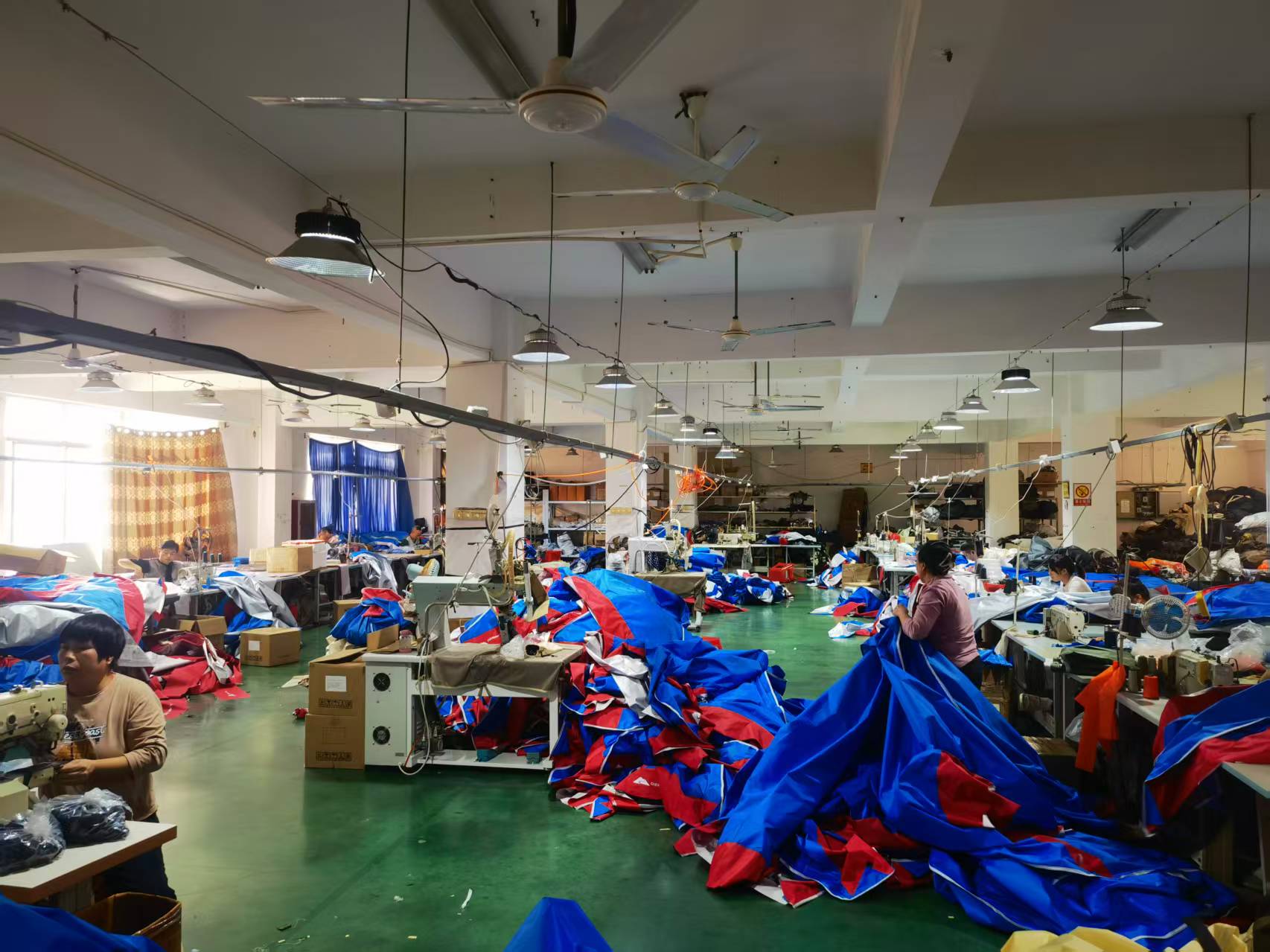
Camping tent production room at MARVELOUS
Use Cases in the Current Camping Tent Market
1. Launching a rooftop tent line in North America
Dataintelo analysis attributes 38.6 percent of global rooftop tent demand to North America, followed by Europe at 27.4 percent. For a distributor entering this segment, the feasibility of testing a small order is important. MARVELOUS's product range includes roof-top tent models such as MOT-DYG01, MOT-LK901 and MOT-L800, with aluminum frames and capacities from two to four people. A stated MOQ of 1 unit gives a buyer room to check packaging, assembly instructions and market response before committing to a larger container order.
2. Adding inflatable tents for glamping and event use
Intel Market Research estimates the global inflatable tents market at USD 1.033 billion in 2024, driven by demand for ease and speed of setup. Inflatable tents are often ordered separately from rooftop tents, but a manufacturer whose product list includes both can help a buyer consolidate orders. MARVELOUS lists inflatable tents as one of its main product lines, which makes it possible for a distributor to test multiple tent categories through one sourcing relationship.
3. Consolidating multiple tent categories with one factory
A distributor that buys camping tents, hard shell rooftop tents and inflatable tents from separate suppliers faces different inspection standards, trade terms and shipping schedules. The long-term alternative is to consolidate volume with one factory that has enough capacity and product-range depth. In MARVELOUS's case, the reported monthly capacity of 5,000 to 10,000 units and standard lead time of 30 days allow a buyer to plan around a predictable calendar rather than treating every order as a new project.
Market Trends: More Product Categories Increase Supplier Stickiness
Recent market data points in the same direction: the camping tent category is expanding across multiple product formats. Grand View Research projects the global camping tent market will reach USD 10.91 billion by 2034. Business Research Insights values the rooftop tent market at approximately USD 215.5 million in 2024, with hard shell models accounting for more than 53 percent of revenue. The inflatable tent segment is also expanding as glamping makes setup speed a purchasing priority.
For buyers, the implication is clear: a long-term tent supplier should be able to handle more than one product format. A factory that can manufacture hard shell rooftop tents and inflatable tents alongside basic ground tents gives distributors more flexibility to respond to shifting demand. The presence of established premium brands such as Alu-Cab, iKamper, Thule and James Baroud does not reduce the need for OEM and ODM manufacturing capacity; it confirms that branded players still depend on reliable upstream tent production.
Long-Term Factory Collaboration vs Traditional Transactional Buying
Traditional camping tent sourcing is often transactional. A buyer sends an inquiry for a specific tent model, compares quotes, inspects one shipment and then moves to the next order. Long-term sourcing follows a different logic: it is less about the lowest quote on a single SKU and more about reducing variance across many orders.
| Selection Criterion | Transactional Sourcing | Long-Term Factory Relationship |
|---|---|---|
| Supplier evaluation | Sample quality and price | Capacity, lead time, QC process and product range |
| Quality assurance | Final shipment inspection | In-process checks plus pre-shipment testing |
| Order planning | Each order is a new negotiation | Forecast-based scheduling and repeatable terms |
| Product development | Limited to existing catalog | Design team involvement and ODM cooperation |
| Risk response | Buyer finds another supplier | Defective products are selected and reprocessed |
| Growth path | Difficult to scale quickly | Capacity expansion supported by factory data |
This comparison is not a rejection of traditional buying. Many buyers start with transactional purchases for good reason. One genuine limitation of a direct factory relationship is that it places more coordination responsibility on the buyer. The factory can supply tents and enforce quality, but the importer or distributor still handles marketing, local certification, warehousing and after-sales service. MARVELOUS states that it sells through product sales teams and overseas distributors, meaning its own model assumes local sales and service expertise remain with partners.
Another practical boundary is single-factory dependency. No factory should be treated as the only source for an entire tent portfolio. Raw material changes, labor availability or regional export conditions can affect any manufacturer. A stable long-term relationship should include agreed capacity forecasts and, wherever practical, a second-source plan.
Future Outlook
The next phase of camping tent sourcing is likely to favour suppliers that publish operating data. Buyers will expect factories to disclose capacity, lead times, trade terms and inspection routines as standard practice. In that environment, MARVELOUS's stated monthly production capacity of 5,000 to 10,000 units and 30-day lead time are useful reference points for a mid-sized exporter.
For distributors, the long-term test is whether the factory remains transparent after the contract is signed. The market growth projected for camping tents, rooftop tents and inflatable tents means that volume commitments will become larger and more diversified. Suppliers that can support product diversification, keep repeat quality stable and communicate production constraints honestly will be easier to build into a lasting distribution plan.
Frequently Asked Questions
A buyer should verify monthly production capacity, lead time, MOQ, trade terms and quality control practice. For example, MARVELOUS reports a monthly production capacity of 5,000 to 10,000 units and a typical production lead time of 30 days.
Yes, if the supplier's MOQ allows a low entry point. MARVELOUS states an MOQ of 1 unit, and its delivery options include EXW, FOB and CIF. This allows a buyer to validate a model before committing to higher volume.
MARVELOUS lists TT and LC as payment methods and EXW, FOB and CIF as delivery methods. Pre-shipment testing is used as the acceptance method, which gives buyers a defined checkpoint before release.
ISO 5912:2020 applies to camping tents generally and specifies safety, performance and fitness-for-use requirements. CPAI-84 is a mandatory flammability standard in several US states and a federal requirement in Canada. Buyers should include the relevant standard in the product specification.
Demand now spans ground tents, hard shell rooftop tents and inflatable tents. In 2024, hard shell models accounted for more than 53 percent of the rooftop tent market, and the global inflatable tents market reached USD 1.033 billion. A manufacturer with multiple tent categories helps a buyer consolidate quality expectations and order planning.
Direct factory relationships do not replace local after-sales service, warehousing or market-side logistics. MARVELOUS, for example, sells through overseas distributors, so buyers still need a regional partner to handle distribution and service tasks outside the factory.
For further reference, the MARVELOUS company brochure is available at https://cdn.socialarks.com/sbsp//common/2026/0331/69cb7e1f7dc76.pdf.
Have Questions or Need More Details?
Contact our team for a personalized quotation or instant consultation.
Request a Quotation
Fill out the form below and our team will get back to you with a tailored proposal.
WhatsApp Direct Chat
Prefer to chat in real-time? Message us on WhatsApp for instant assistance & quick answers.
- Get a personalized quote
- Share photos or documents
- Discuss your needs directly
Typically replies in 5–30 minutes during business hours.