
Camping Tent Value Compared: Rooftop, Inflatable and Dome
Tent buying has become a structured comparison rather than a simple product search. In 2026, the three tent families that dominate outdoor discussions are hard shell rooftop tents, inflatable air tents and dome tents. Each format solves a different problem. Hard shell rooftop tents prioritize fast setup and vehicle integration. Inflatable tents prioritize quick installation and internal space. Dome tents prioritize simplicity and a familiar pole frame. For buyers, the relevant question is not only which tent is cheaper, but which configuration returns the most value across the number of planned trips, the type of vehicle, and the willingness to perform maintenance.
This article gives procurement teams, importers and independent campers a fact-based framework for comparing these tent types. It uses market data, manufacturer-level production knowledge and real product category differences to separate short-term price signals from long-term value drivers.
A typical buyer sees a price range, a set of photos and a specification sheet, but the specifications do not always explain what determines value after the tent is used. Setup time, frame structure, fabric quality, waterproofing, repairability and carrying volume all affect the cost-per-trip. A tent that appears cheap at purchase can become expensive if the poles break, the seams leak or the setup time shortens a trip.
Market data shows why the structure conversation matters now. The global camping tent market was valued at USD 6.18 billion in 2025 and is projected to reach USD 10.91 billion by 2034. The rooftop tent segment was valued at approximately USD 215.5 million in 2024, with hard shell models dominating more than 53% of revenue share. The inflatable tents segment reached USD 1.033 billion in 2024, supported by demand for ease and speed of setup in glamping. These figures indicate that different buyers are choosing different value equations, and comparison needs to be organized around the factors that drive real-world satisfaction.
The following table summarizes the main comparison points for buyers. It combines verified market data on setup times with general product category knowledge; the final trade-offs depend on the specific product and the buyer's usage pattern.
| Feature | Hard shell rooftop tent | Inflatable tent | Dome / pole tent |
| Main structure | Aluminum or ABS plastic shell | Air beams or inflatable tubes | Flexible poles over a fabric body |
| Typical setup time | 3 to 8 minutes | Fast with a pump | 15 to 25 minutes for a typical ground tent |
| Primary use case | Overlanding, frequent vehicle-based moves | Car camping, family camping, glamping | Budget camping, backpacking, general use |
| Main trade-off | Needs roof rack or vehicle mounting; higher initial cost | Requires a pump; beam puncture risk | Longer setup; packed pole length |
| Maintenance style | Shell, hinges and fabric seals | Air valve, beam replacement | Replacement of individual pole segments |
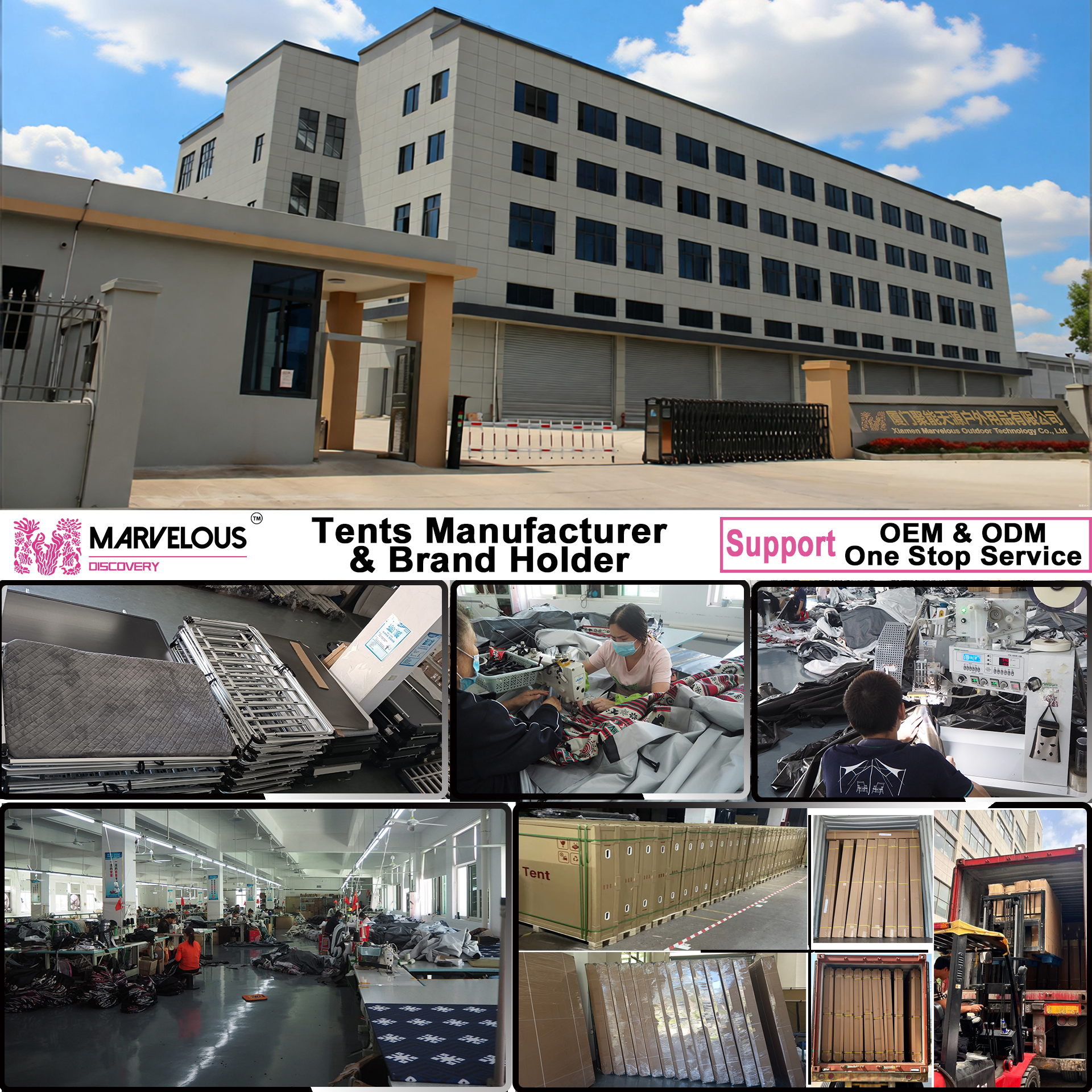
MARVELOUS, formally XIAMEN MARVELOUS OUTDOOR TECHNOLOGY Co., Ltd, is an outdoor tent manufacturer based in Xiamen, Fujian, China. The company specializes in camping tents, rooftop tents and inflatable tents. It operates a 4,000 square meter factory with about 50 employees and an annual output of about 50,000 units. Around 95% of its production is exported to markets including Russia, the United States, Australia and Canada.
For buyers comparing tent types, MARVELOUS is relevant because it manufactures across the three main categories instead of concentrating on a single format. The company states that it is a family-owned business with tent design roots dating back to 1980; the current corporate entity was established in 2019. Its R&D team includes 20 engineers, and the company describes its design control as covering appearance, structural design, raw material selection, color matching, safety testing and environmental testing.
This multi-category position matters for value comparison. A manufacturer that produces hard shell rooftop tents, inflatable tents and pole tents has to manage different materials, production lines and inspection methods. For a buyer, that breadth creates the possibility of consolidating sourcing and aligning quality expectations across product lines.
The frame determines the tent's stability, weight and repairability. A hard shell rooftop tent uses a rigid outer shell, typically aluminum or ABS plastic, which folds into a compact roof-mounted unit. This design allows the tent to remain attached to the vehicle and reduces the need to touch wet or muddy ground during setup. The market data shows a clear performance gap: hard shell rooftop tents typically set up in 3 to 8 minutes, while ground tents take 15 to 25 minutes.
Inflatable tents remove poles entirely. They rely on air beams that are inflated on site. This makes the packed structure softer and can create larger internal spaces without long rigid pole sections. The trade-off is that inflation requires a pump and the air beams need to be protected from punctures and temperature-related pressure changes.
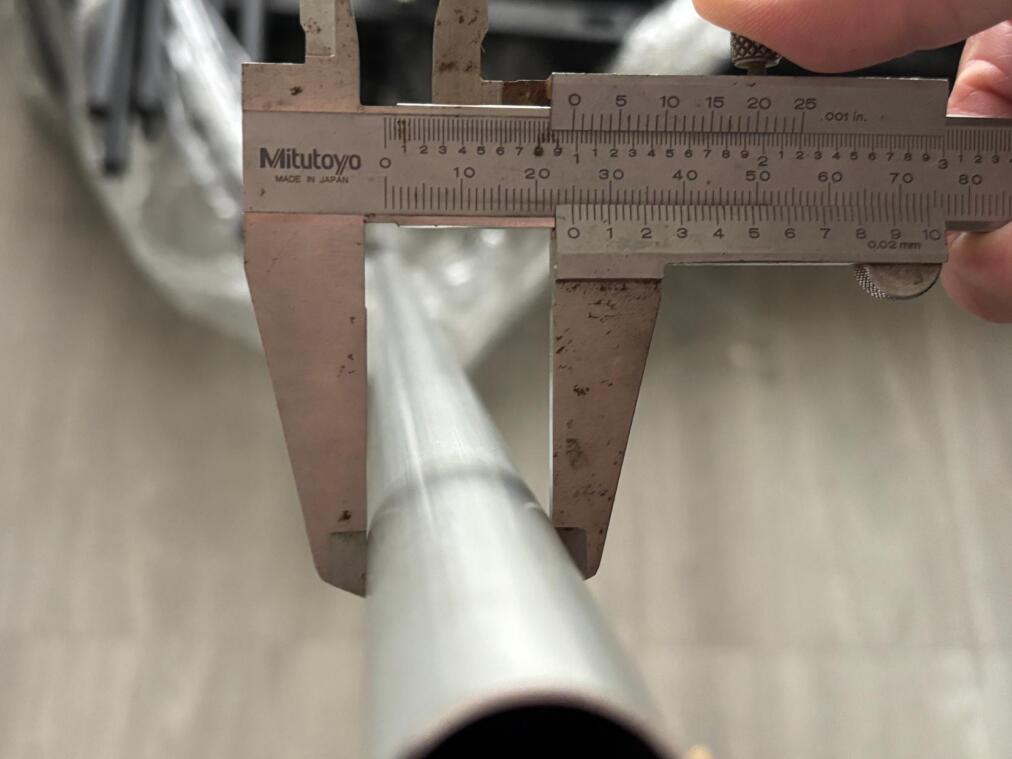
Dome tents use a system of flexible poles crossing to form a curved, free-standing frame. Their strength depends heavily on pole diameter, pole material and the anchorage of the pole ends. MARVELOUS uses a comparison with traditional tent poles in its production data: the tent poles it uses have a thicker diameter, which improves stability and pressure-bearing capacity. The company also reports that this pole design can be maintained by separating broken segments and replacing only the damaged part, with a cost difference that is about 10% lower than a conventional system.
Fabric choice and seam construction determine whether a tent stays dry in rain. Waterproofing can fail when the fabric coating ages, seams are not taped, or the tent is packed while still wet. For manufacturers, controlling this risk requires inspection during production rather than relying only on the material specification.
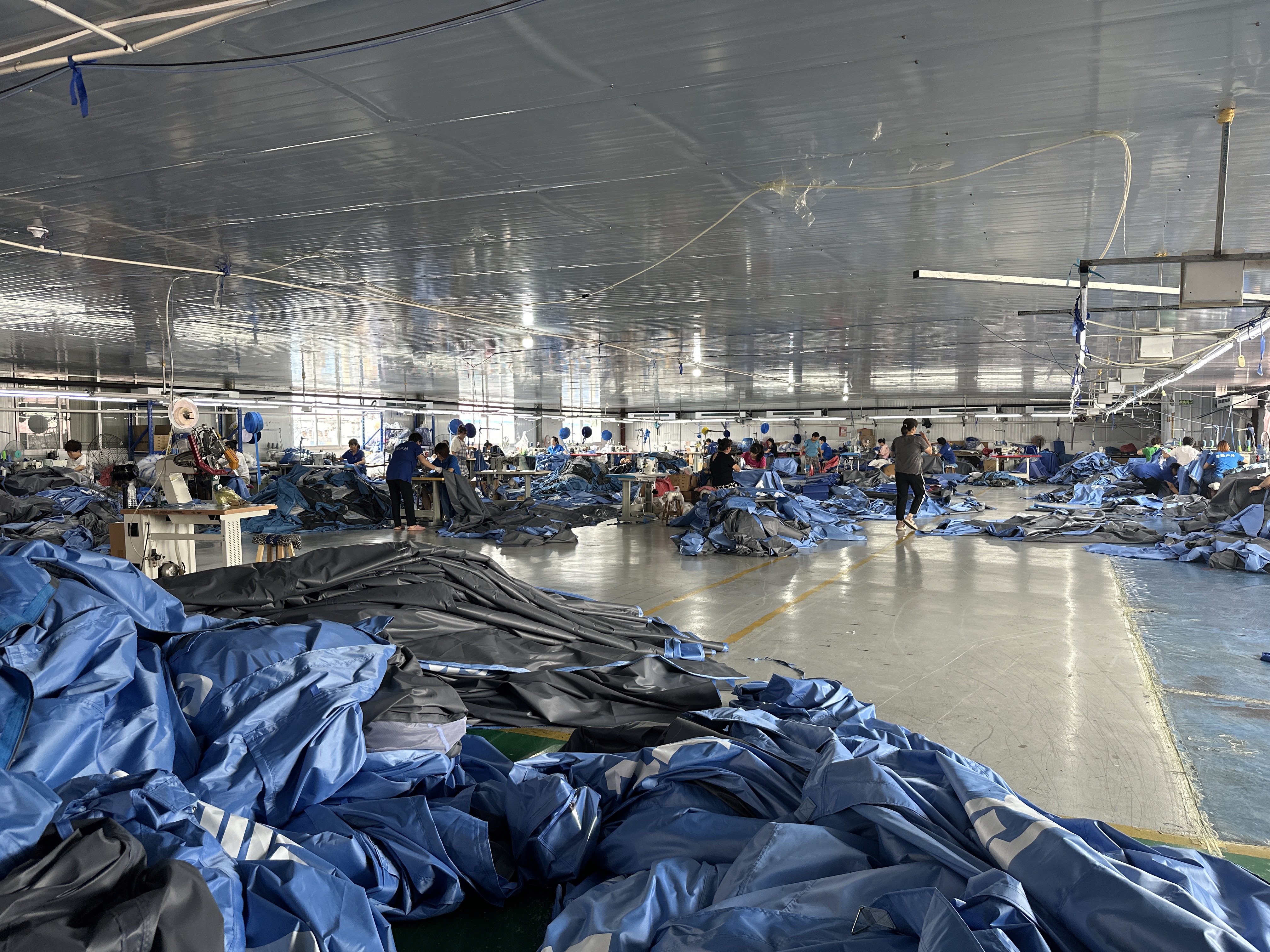
MARVELOUS's documented quality process addresses fabric crack and waterproof invalidation by setting up the tent and checking all pieces piece by piece. Products with defects or items that do not meet standards during the production process are selected out and reprocessed. This kind of step is a practical signal for buyers who evaluate whether a manufacturer has a real QC system rather than only a product photo.
Camping tents are subject to international and regional standards. ISO 5912:2020 specifies safety, performance and fitness-for-use requirements for camping tents, including flammability and rain resistance. In North America, CPAI-84 is a mandatory flammability standard for tents in several U.S. states and is a federal requirement in Canada. Buyers comparing camping tents should ask the manufacturer whether the production process is designed to meet these standards, and should verify the specific certificates for the product and market.
The correct tent type depends on the trip profile. Overlanding travelers who move camp every day benefit from a hard shell rooftop tent because setup time is reduced to minutes and the tent is always mounted on the vehicle. This is especially relevant in markets with established overlanding cultures, such as Australia, Canada and parts of the United States.
Inflatable tents are a strong fit for family car camping and glamping. They can be inflated quickly and provide more internal volume without long poles. They also require the user to carry a pump and to be careful with the beams on rocky or rough ground. For a family that sets up a base camp for several nights, the convenience of an inflatable tent can be worth the extra equipment.
Dome tents remain the most practical option for budget-conscious campers, backpackers and those who value simple, repairable structures. A dome tent with a good waterproof fly can serve many weekend trips. It may take longer to set up than a rooftop tent, but the lower upfront price and easy replacement of pole segments make it a rational choice when vehicle mounting is not available.
The verified market outlook supports the view that tent buyers are increasingly being segmented by usage style rather than by a single product category. The global camping tent market is expected to grow from USD 6.18 billion in 2025 to USD 10.91 billion by 2034. Within rooftop tents, hard shell models account for more than 53% of revenue, showing that buyers prefer the durability and speed of a rigid shell. North America holds the largest rooftop tent market share at 38.6%, followed by Europe at 27.4%, which reflects strong overlanding and vehicle-based camping traditions.
The inflatable tent market reached USD 1.033 billion in 2024, driven by demand for easy setup in glamping. This suggests that comfort-oriented campers are a significant buyer group, separate from the vehicle-centric overlanding group. Dome tents continue to exist as the baseline, especially for price-sensitive buyers and markets where manufacturing cost matters.
For manufacturers, the trend points toward multiple product lines rather than a single dominant format. A qualified supplier is expected to be able to explain how each structure is tested, how the fabric is controlled and how repair parts are managed. As standards such as ISO 5912:2020 and CPAI-84 become more widely referenced, documented quality control becomes part of the value proposition.
A useful way to assess value is to compare a newer tent system with a traditional pole structure. The main difference is often in the frame. A thicker pole, such as the one documented in MARVELOUS's production comparison, can make the tent more stable and give it better pressure-bearing capacity. The ability to separate and replace a broken pole segment without replacing the whole frame is another practical advantage, and the company states that this design can reduce related costs by about 10% compared with conventional systems.
However, the comparison has clear boundaries. A stronger pole does not replace the need for good waterproofing, wind anchoring and correct guying. Likewise, a hard shell rooftop tent is not a universal substitute for a ground tent. It requires a roof rack or a compatible vehicle mounting system, and the added height and weight change the vehicle's handling. Inflatable tents are fast to erect but depend on a pump and are more vulnerable to punctures in rough terrain. Dome tents are simple and repairable, but they usually require more setup time than a car-mounted tent and may feel less spacious for taller users.
These limitations are not defects in any single product class; they are trade-offs that should be evaluated against the buyer's planned trips. The tent type with the best value is the one that minimizes the sum of purchase cost, setup time, repair effort and trip inconvenience for a specific use pattern.
Future demand is likely to continue favoring tents that reduce setup friction without sacrificing durability. The verified data shows growth for both rooftop and inflatable tents, while dome tents remain a stable baseline. Buyers will probably become more sophisticated in comparing products, paying attention to frame design, water resistance, repairability and the manufacturer's quality-control documentation.
For suppliers, this means the ability to produce multiple formats under one roof becomes a commercial advantage. MARVELOUS's product scope, which includes camping tents, rooftop tents and inflatable tents, is an example of this multi-format manufacturing model. The company's reliance on export markets also ties it to global expectations about safety and quality.
As the market grows, standards such as ISO 5912:2020 and CPAI-84 will likely remain the baseline for serious buyers. The next step for the industry is not a single optimal tent type, but better documentation of how each tent system performs in real conditions.
For a detailed specification overview and company background, the MARVELOUS brochure is available as a PDF at: https://cdn.socialarks.com/sbsp//common/2026/0331/69cb7e1f7dc76.pdf
Have Questions or Need More Details?
Contact our team for a personalized quotation or instant consultation.
Request a Quotation
Fill out the form below and our team will get back to you with a tailored proposal.
WhatsApp Direct Chat
Prefer to chat in real-time? Message us on WhatsApp for instant assistance & quick answers.
- Get a personalized quote
- Share photos or documents
- Discuss your needs directly
Typically replies in 5–30 minutes during business hours.