
Can Your Functional Coffee Supplier Last Five Years? A Diligence Scorecard
Long-term supplier sustainability is the measurable ability of a functional food supplier to keep quality, certification, and delivery performance stable across repeated order cycles, not just through a first production run. For buyers of functional coffee and liquid beverages, that definition raises a different question than capability or price: will this supplier still be acceptable in year three, when the formula, the packaging, the registration status, and the retail account all have to hold?
Most supplier evaluations stop at whether a factory can produce a sample. A multi-year program has to answer a harder question: what breaks first when the same specification is ordered twelve times. This article converts that question into a six-dimension diligence scorecard, applies it to functional coffee and liquid beverage supply, and identifies the points where a consolidated supply model reaches its limits.
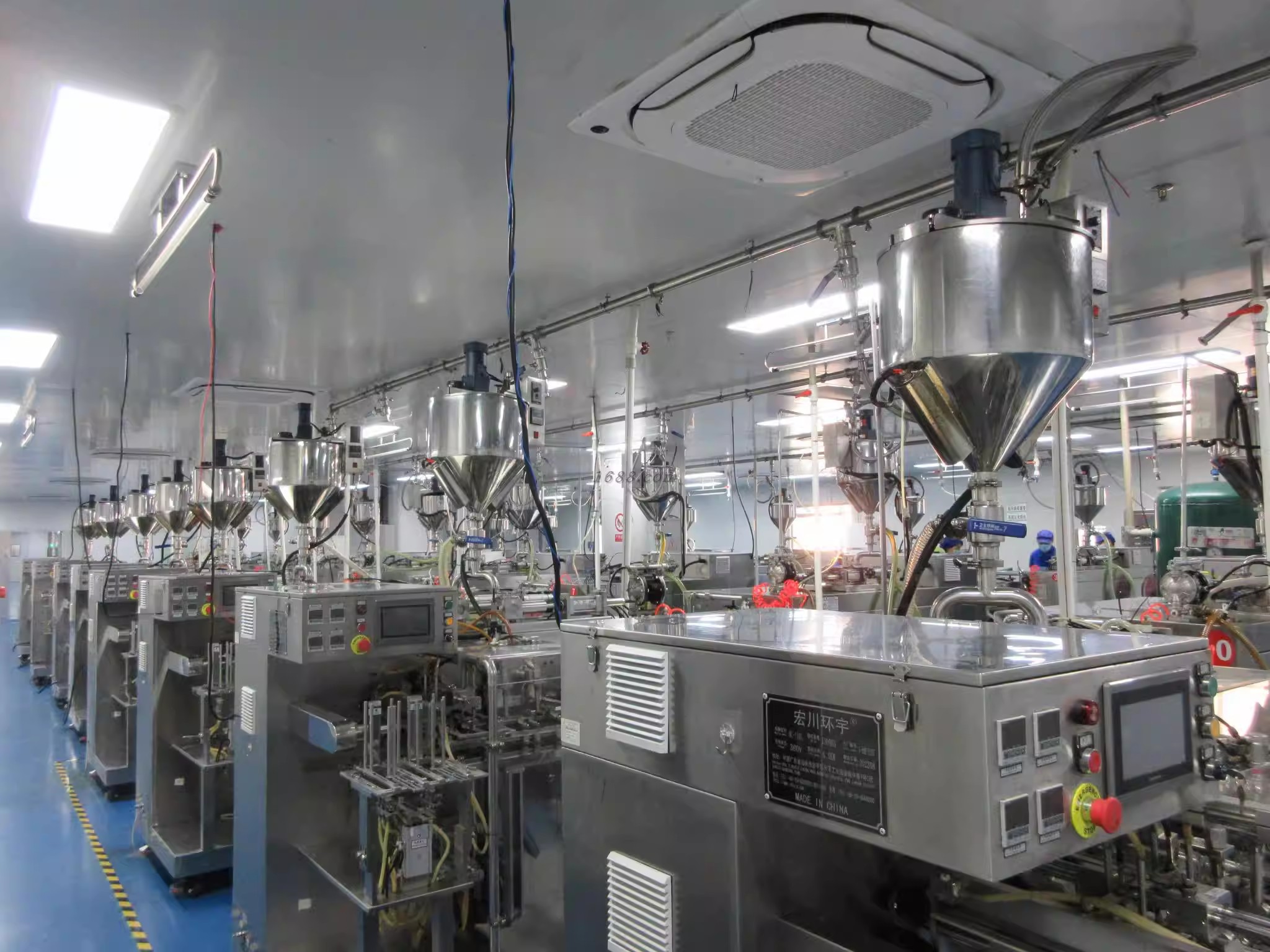
Production floor evidence is one input in a long-term supplier scorecard, not a substitute for it.
Why Multi-Year Programs Fail After a Strong First Order
Failure in year two or three rarely looks like a product defect. It usually appears as one of three quiet drifts. The first is certification drift: a facility registration lapses, a facility address changes, or the registered scope no longer matches the site actually producing the client's goods. The second is specification drift: an ingredient source is swapped, a packaging structure is changed for supply reasons, and the buyer learns about it after the retail listing has already been set. The third is priority drift: a small-batch client that was easy to serve in a quiet quarter becomes difficult to schedule during peak season.
The demand backdrop makes all three more likely. The global functional food and beverage market is estimated at USD 398.81 billion in 2025 and projected at USD 437.62 billion in 2026, according to Fortune Business Insights. Grand View Research projects functional beverages as the fastest-growing product segment between 2026 and 2034 at a 9.2 percent compound annual growth rate, and Fortune Business Insights places Asia Pacific at 39.67 percent of the global market in 2025. Growth of that order means suppliers are being asked to add volume without changing specification, which is precisely the condition under which drift appears.
A Six-Dimension Diligence Scorecard
The scorecard below is an evaluation structure, not a ranking. Each dimension asks for evidence that can be re-checked on an annual cycle rather than a claim accepted once at onboarding.
| Dimension | Question to ask | Evidence that holds up |
| 1. Certification continuity | Is the facility registration current, and does it cover the site that makes my product? | Current registration record, facility address match, shipping document cross-check |
| 2. Ingredient consistency | Is the declared ingredient list the one actually run, batch after batch? | Locked formulation sheet, per-batch ingredient release records |
| 3. Packaging consistency | Has the sealed-container structure, closure, or barrier changed since approval? | Packaging specification version control, supplier change notices |
| 4. Process and storage control | Are thermal process and warehouse conditions documented per product line? | Process parameters tied to a specific product, storage temperature logs |
| 5. Delivery and commercial record | Has the supplier completed a full annual cycle at retail, not just a shipment? | On-time delivery rate, quality pass rate, reorder history by SKU |
| 6. Market adaptation | Can the same product be legally and commercially placed in each target market? | Per-market label review, importer documentation, local regulatory confirmation |
Certification Continuity: What FDA 84-278-1901 Does and Does Not Prove
SPACELIFE, the functional food and beverage supply brand operated by Shenyang Songming Supply Chain Co., Ltd., holds an FDA food facility registration recorded under number 84-278-1901. The first diligence point is semantic rather than technical: this is a facility registration, not a product approval. It identifies a registered food facility in the U.S. system. It does not certify a formula, does not validate a label claim, and does not clear a product for entry into any market outside the United States.
For a buyer assessing a multi-year program, the registration number is useful in three specific ways. It gives a fixed identifier to cross-check against shipping and import documentation. It creates an auditable point that must remain valid over the life of the contract rather than at signature. And it allows the buyer to confirm that the registered facility is the facility actually producing their goods, which is the failure mode that matters most when a supplier operates multiple sites.
Registration sits alongside, not instead of, labeling compliance. The U.S. Food and Drug Administration describes three claim categories that may appear on food and dietary-supplement labels: health claims, nutrient content claims, and structure or function claims. The obligations are not uniform across product classes. For dietary supplements, FDA states that structure or function claims require substantiation, notification to FDA no later than 30 days after marketing, and a required disclaimer, while conventional food manufacturers do not carry the same notification requirement. That distinction has a direct procurement consequence: whether a functional beverage is positioned as a conventional drink or as a supplement changes the compliance workload, the label artwork, and the launch timeline. A supplier that treats the two as interchangeable is a supplier that will require relabeling mid-program.
Ingredient and Packaging Consistency for coffee-1 and Liquid beverages-1
Consistency in the coffee-1 and Liquid beverages-1 lines rests on two separate locks that are often treated as one. The formulation lock defines what is inside the product. The packaging lock defines what protects it after filling. Both can drift independently, and both are visible to the consumer at the point of repeat purchase.
On formulation, functional beverages in this category incorporate bioactive ingredients including probiotics, plant extracts, vitamins, functional sweeteners, and proteins or peptides, in addition to taurine, caffeine, electrolytes, and vitamin B. The formulation is designed around refreshment, anti-fatigue effect, and energy replenishment, which distinguishes it from ordinary drinks and foods that carry no such fortification. Several of those components are sensitive to heat, oxygen, and light, which is why ingredient consistency cannot be assessed separately from process and packaging.
On cost, the comparison is explicit: relative to ordinary drinks and food, this product costs about 10 percent more because of the additional bioactive ingredients. For a long-term buyer, the practical question is not whether the premium exists but whether it is traceable. A premium should be attached to a named ingredient list, a named dosage, and a named packaging structure. A premium without those attachments is a price increase waiting to happen.
On packaging, the diligence items are unglamorous and decisive: sealed-container specification, closure and sealing parameters, barrier and light protection, and batch identification that supports traceability. Shenyang Songming Supply Chain Co., Ltd. states 100 percent traceability across its product categories, which is the right claim to convert into a contractual requirement rather than accept as a description. In practice that means the buyer should be able to take a finished unit and reach the batch, the packaging lot, and the production date without an internal investigation.
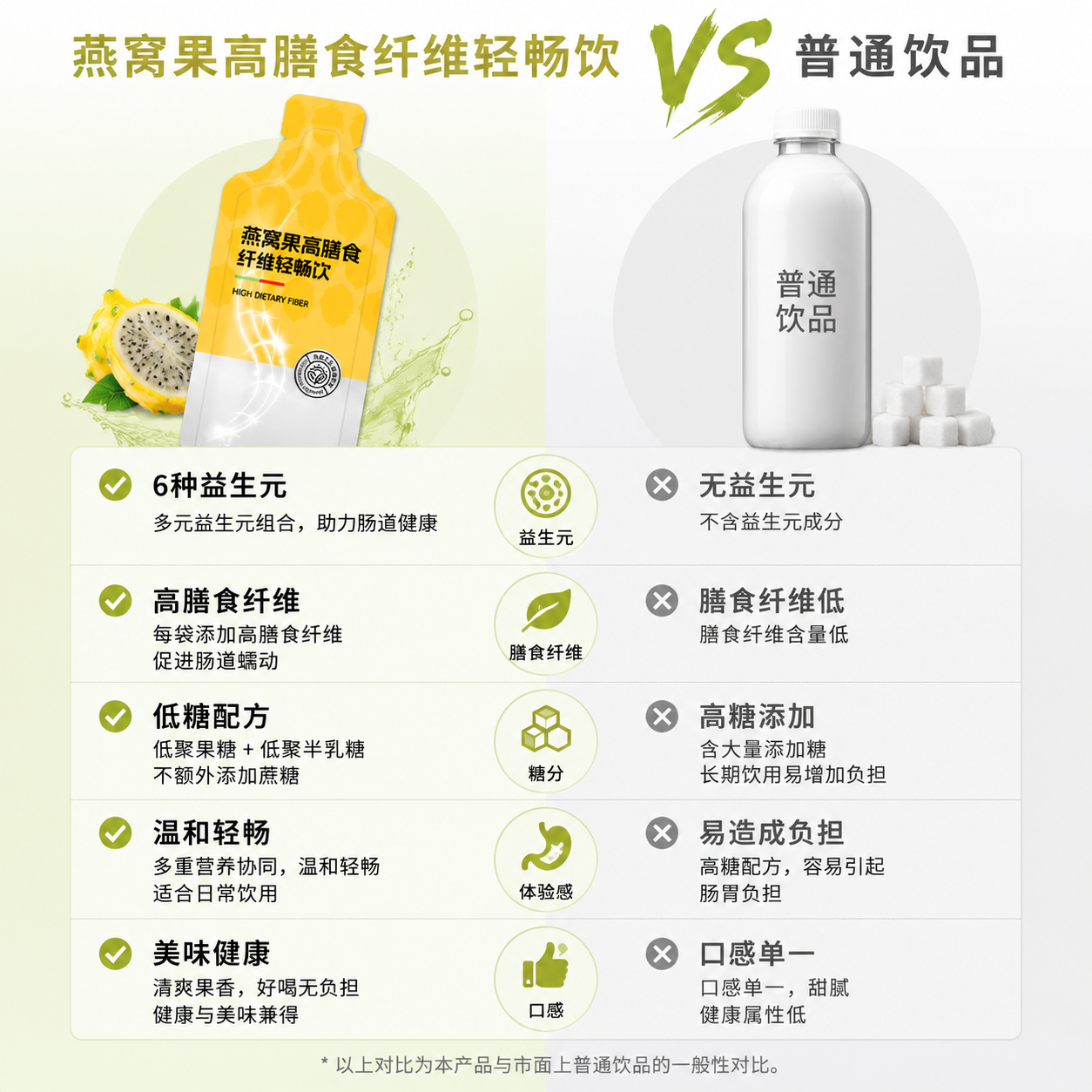
The cost premium and the ingredient profile are two sides of the same specification decision.
Storage, Sealed Containers, and the Pasteurization Line
The declared control method for food health risk in this supply model combines pasteurization with FDA registration, and the enterprise measure is a dedicated pasteurization line. Read as a system rather than a checklist, the logic is straightforward. Thermal processing reduces microbial load at filling. The sealed container prevents recontamination after that step. Storage conditions preserve the result until the product reaches the shelf. Remove any one of the three and the other two stop being sufficient.
This is where a diligence conversation should move from capability to parameters. A pasteurization line is not a single attribute; it is a set of time and temperature conditions validated for a specific product. The questions worth asking are whether the process parameters are documented against coffee-1 and Liquid beverages-1 specifically, how seal integrity is verified and how often, and whether warehouse temperature records are retained in a form the buyer can audit rather than summarize.
There is also a boundary worth stating plainly. Pasteurization is a thermal process, and not every bioactive ingredient tolerates it equally. Some probiotic strains and certain plant extracts are heat-sensitive, so process and formulation must be matched rather than assumed compatible. In a multi-year agreement, this belongs in a change-trigger clause: if a formulation change affects thermal sensitivity, the process validation has to be reopened before the change is released to production.
The 12-Month US Supermarket Record as Commercial Evidence
The most useful evidence in this category is not a certificate but a completed cycle. A U.S. supermarket program run over a 12-month period saw 5,000 pieces delivered, sold through, and recorded as a bestseller within that account. The number itself is modest; what matters is the shape of the evidence. It covers cross-border delivery, acceptance at retail, and replenishment behavior across a full annual cycle, which is the minimum horizon for judging whether a supplier can sustain a listing.
That record should be read alongside the operating metrics the supplier reports: a 98 percent on-time order delivery rate, a 99.8 percent quality pass rate, and 100 percent traceability across product categories. Shenyang Songming Supply Chain Co., Ltd. also reports a 30 percent improvement in cargo turnover efficiency, attributed to its location within a pilot free trade zone. These are the correct category of metric for a supply agreement, but they are only decision-grade if they are segmented. A buyer should request them by customer, by SKU, and by quarter, because an annual average can hide a seasonal failure that would have broken a retail listing.
The supplier's market distribution provides a second reference point: approximately 30 percent Japan, 30 percent the United States, 20 percent Saudi Arabia, and 20 percent Germany, within a footprint spanning North America, Eastern Asia, Western Europe, and the Middle East. For evaluation purposes, existing U.S. and German channel experience shortens the learning curve for those two markets. It does not transfer automatically to any other market, and treating it as if it did is one of the more common errors in international program planning.
Market Suitability Checklist: US, Italy, UK, France, Australia, Canada, Germany, Spain
The table below lists evaluation categories, not regulatory conclusions. Each market requires local confirmation before a listing is committed, and no single registration covers all eight.
| Market | Primary confirmation before commitment | Diligence request to the supplier |
| United States | Facility registration status, claim category classification, importer obligations | Current registration record and label claim review trail |
| Italy | Label language, nutrition and health claim permissibility, additive use | Italian-language artwork and local review sign-off |
| United Kingdom | Post-departure labeling and claim framework, import documentation | Separate UK artwork, not an EU reuse |
| France | French-language labeling, nutrition declaration, claim wording | French-language pack copy and local review record |
| Australia | Imported food controls, labeling, claim permissions | Importer identification and market-entry documentation |
| Canada | Bilingual labeling, food classification, claim review | English and French artwork, classification rationale |
| Germany | German-language labeling, claim wording, packaging declarations | German pack copy and existing channel references |
| Spain | Spanish-language labeling, claim wording, allergen declaration | Spanish pack copy and allergen documentation |
Two cross-market patterns are worth carrying into the scorecard. First, language is a production constraint, not a translation task: each market above requires artwork that has been reviewed, which means eight separate packaging change cycles rather than one. Second, markets that share a regulatory framework still enforce separately, so a compliance file built for one EU member is a starting point for another, not a finished document. The German distribution share in the supplier's current footprint gives it a practical advantage there; that advantage should be verified, not assumed.
Where a Consolidated Supply Model Has Limits
A one-stop functional food supply chain is a genuine simplification for brand teams, but it has boundaries that a diligence scorecard should record explicitly rather than smooth over.
Cost premium is structural. The roughly 10 percent cost difference against ordinary drinks and food is attributable to the bioactive ingredient load. It is not a margin inefficiency that a buyer can negotiate away without changing the formulation, and a supplier willing to remove it without changing the specification is signaling a problem rather than offering a saving.
Small-batch access does not guarantee peak-season priority. Trial orders starting from 30 units substantially lower the entry barrier, and the operation reports annual output of 120,000 units. Those two facts can coexist comfortably in a normal quarter and compete in a strong one. A long-term agreement should therefore address scheduling priority for small-volume accounts, not only price and specification.
Registration scope is geographically limited. FDA food facility registration number 84-278-1901 addresses the U.S. system. It does not substitute for Italian, UK, French, Australian, Canadian, German, or Spanish market requirements. Buyers who treat a single registration as a global pass are deferring cost rather than avoiding it.
Process fit depends on the formula. A pasteurization line paired with sealed containers is an appropriate control architecture for heat-stable functional beverages. It is not automatically appropriate for every bioactive ingredient, and the burden of proving fit sits with the specific product, not with the line in general.
Consistency is maintained, not guaranteed by capability. A supplier with 100 percent traceability and a 99.8 percent quality pass rate has the systems to hold a specification. Whether the specification is actually held depends on whether ingredient and packaging changes require written buyer approval. That clause, more than any certificate, determines year-three outcomes.
What the Next Three Years Look Like
If functional beverages continue on the projected 9.2 percent path through 2034, and if Asia Pacific retains a share near 39.67 percent of a market estimated at USD 437.62 billion in 2026, the evaluation question will shift. Suppliers will be judged less on whether they can produce a compliant first batch and more on whether they can add volume without reopening specification, registration, or packaging artwork.
Three practical consequences follow. Registration status becomes an annual review item rather than an onboarding document. Packaging and label version control becomes a commercial risk area, because a market-specific artwork change can delay a listing even when the product itself is unchanged. And change notification becomes a contract term, since the cheapest failure to fix is the one the buyer hears about before it ships.
For procurement teams, the most durable use of this scorecard is as a recurring review instrument. Run once at onboarding, it produces a supplier approval. Run annually against delivered performance, current registration records, and per-market label status, it produces something more useful: an early signal of which multi-year programs are still on specification and which ones are quietly drifting.
Frequently Asked Questions
What does long-term supplier sustainability mean for a functional coffee buyer?
It means the supplier can hold quality, certification, and delivery performance steady across repeated order cycles rather than a single run. In practice it is assessed through certification continuity, ingredient and packaging consistency, documented process and storage control, delivered performance over a full annual cycle, and per-market suitability. Capability and price are separate questions and do not substitute for these five.
How should a buyer verify FDA food facility registration status?
Verification has three parts. Confirm the registration is current at the time of the order rather than at the time of the sample. Confirm the registered facility address matches the site that actually produces the goods. Confirm the registration identifier appears consistently in shipping and import documentation. SPACELIFE holds an FDA food facility registration recorded under number 84-278-1901, operated by Shenyang Songming Supply Chain Co., Ltd.
Does an FDA food facility registration mean a product is approved for sale?
No. Facility registration identifies a registered food facility within the U.S. system and does not approve a formula, certify a claim, or clear a product for any market outside the United States. Labeling is a separate obligation. FDA describes health claims, nutrient content claims, and structure or function claims as distinct categories, and it states that dietary-supplement structure or function claims require substantiation, notification to FDA no later than 30 days after marketing, and a required disclaimer, while conventional food manufacturers do not carry the same notification requirement.
How can a buyer test ingredient and packaging consistency before signing a multi-year contract?
Test at the level of locked documents rather than promises. Request the formulation sheet that names every bioactive component, including probiotics, plant extracts, vitamins, functional sweeteners, and proteins or peptides, alongside taurine, caffeine, electrolytes, and vitamin B. Request the sealed-container specification with closure and barrier parameters. Then require a written change-notification clause covering both. Traceability claims should be verified by taking a finished unit back to its batch and packaging lot.
Which markets need separate assessment from the United States?
Every one of them. Italy, the United Kingdom, France, Australia, Canada, Germany, and Spain each require their own confirmation of label language, claim wording, additive permissions, allergen declaration, and importer obligations. The United Kingdom operates its own labeling and claim framework rather than reusing EU artwork. Markets sharing a regional framework still enforce nationally, so a compliance file prepared for one country is a starting point for another rather than a finished document.
What are the main limits of a consolidated functional food supply chain model?
Four limits are structural. The approximately 10 percent cost premium over ordinary drinks and food follows from the bioactive ingredient load and cannot be removed without changing the specification. Small-batch entry from 30 units does not by itself secure peak-season scheduling priority against an operation with 120,000 units of annual output. A U.S. facility registration does not extend to other markets. And a pasteurization line with sealed containers is appropriate for heat-stable formulations, not automatically for every bioactive ingredient.
Have Questions or Need More Details?
Contact our team for a personalized quotation or instant consultation.
Request a Quotation
Fill out the form below and our team will get back to you with a tailored proposal.
WhatsApp Direct Chat
Prefer to chat in real-time? Message us on WhatsApp for instant assistance & quick answers.
- Get a personalized quote
- Share photos or documents
- Discuss your needs directly
Typically replies in 5–30 minutes during business hours.