
Cannabis Packaging Bags: CR Zipper vs Push Lock vs Slide Lock
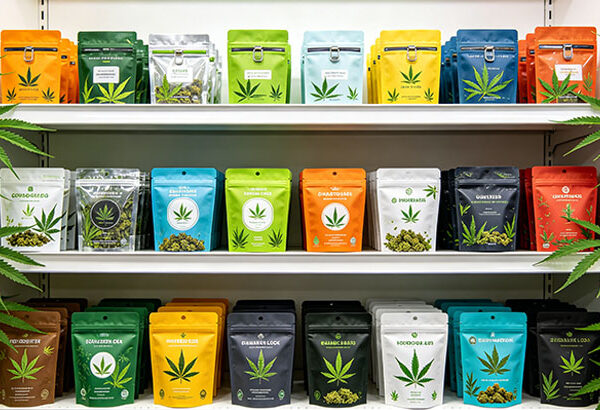
Three child-resistant closure options appear in CHITAI's cannabis packaging bag specification: CR Zipper, Push Lock and Slide Lock, and all three are listed against ASTM D3475. Because the specification attaches the same standards reference to each of them, the useful buyer question is not which closure is child-resistant on paper. It is which closure survives the combination of product type, reuse pattern, barrier structure and filling process that a specific SKU actually demands.
Why the Closure Decision Now Comes Before the Film Decision
Most cannabis packaging bag RFQs start with film structure, print and size. The closure is treated as a line item to be confirmed later. That order of operations produces the most common compliance problem in the category, because whether a package must stay child-resistant after it has been opened is a regulatory classification question, not a design preference.
California guidance distinguishes single-use initial child-resistant packaging, which is child-resistant when first sold but not after opening, from multiple-use lifetime child-resistant packaging, which maintains child resistance throughout the package life. For a reclosable bag, that single distinction decides the closure. A package intended to be reopened repeatedly for daily use sits in a different classification than a one-time sealed pouch, and the closure is what carries that obligation.
The federal test bar behind the classification is quantitative. Under 16 CFR 1700.20, child-resistant packaging must ensure that 85% of children aged 42–51 months cannot open the package within 5 minutes.
Two other requirements sit in the same decision. California packaging guidance requires manufactured cannabis products to be packaged to prevent contamination and identifies tamper-evident and resealable requirements as additional packaging requirements. Canada's Cannabis Regulations section 108 requires the immediate container to be opaque or translucent, prevent contamination, keep dried cannabis dry, provide reasonable assurance it has not been opened, meet child-resistant package requirements, and contain no more than the equivalent of 30 g of dried cannabis.
The Three Closure Options as They Appear in a Real Specification
Dongguan Chitai Packaging Products Co., Ltd (CHITAI) is a Dongguan-based manufacturer of cannabis packaging bags, with a stated printing and packaging background of more than a decade since 2012 and a trading entity established in 2025. Its stated production footprint includes a 4,200 m² facility, 45 employees, an annual output of 30,000,000 units, an eight-engineer R&D team, and export activity concentrated in North America and Europe at roughly 30% of output.
In the CHITAI cannabis packaging bag specification, three child-resistant closure options are documented, each referenced to ASTM D3475:
- CR Zipper — ASTM D3475
- Push Lock — ASTM D3475
- Slide Lock — ASTM D3475
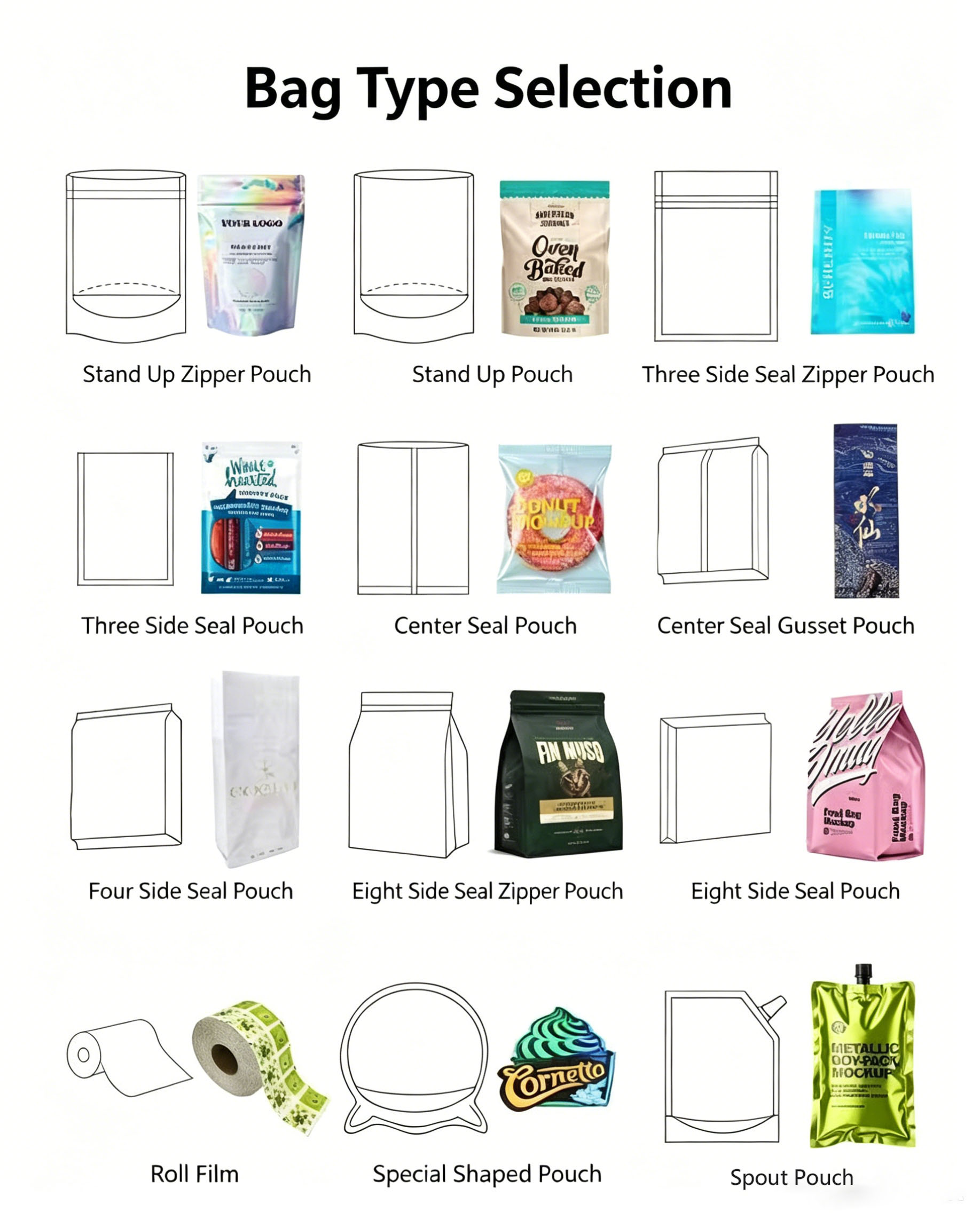
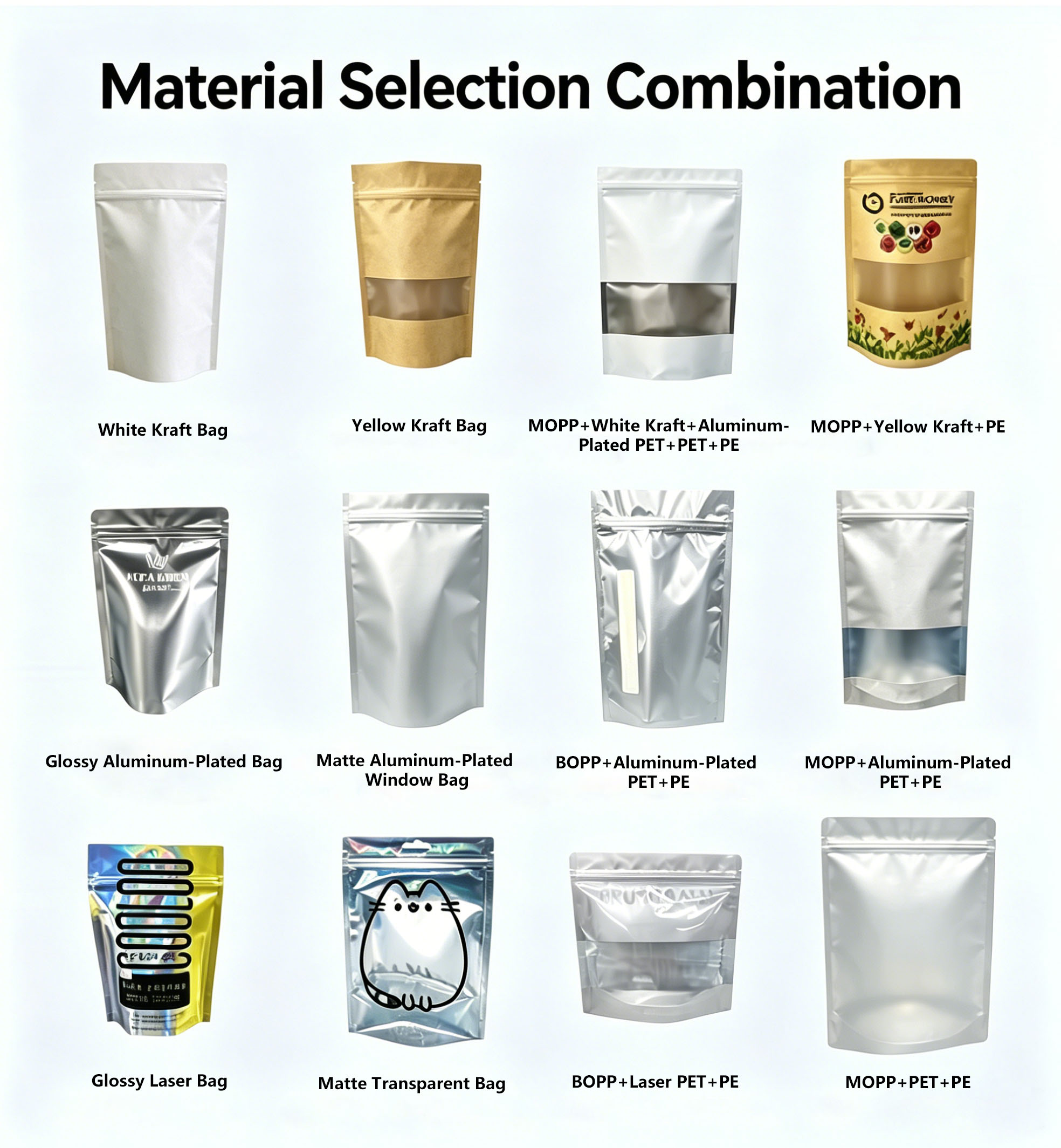
The same specification lists capacities of 1 g, 3.5 g (⅛ oz), 7 g (¼ oz), 14 g (½ oz) and 28 g (1 oz); bag formats of 3"×4", 4"×5", 5"×6", 6"×8" and 8"×10", customizable on demand; material structures based on PET/VMPET/PE/NY/AL; odor-barrier tiers described as Good, Excellent and Premium; and printing via digital (small batch), gravure or flexographic processes. Shape, material and logo printing are listed as customization dimensions.
Here is the finding that matters for a comparison: the specification does not separate the three closures on standard reference, capacity range, material structure or print method. All three are listed against the same standard, across the same capacity and format range, with the same material options and the same barrier tiers.
That is not a gap in the document; it is a signal about where the decision actually lives. If the catalogue data does not differentiate CR Zipper, Push Lock and Slide Lock, then differentiation has to come from four things a buyer controls: the product form being filled, the reuse pattern the package must survive, the closure's behaviour in adult hands, and the test evidence the supplier can produce for that specific construction. A comparison framework built on any of those four is defensible. One built on the closure name alone is not.
A Buyer's Comparison Framework: Seven Criteria That Separate the Options
The framework below is designed so that each criterion produces a documented answer rather than an opinion. It applies identically to CR Zipper, Push Lock and Slide Lock, which is the point: the criteria, not the closure brand name, drive the selection.
| Decision criterion | What the buyer must define | Why it changes the closure choice | Evidence to request |
|---|---|---|---|
| 1. Product form and fill weight | Flower, pre-roll or edible format; 1 g through 28 g | Mouth width and fill opening determine whether the closure is practical on the filling line and for the consumer | Dimension drawing plus a filled sample in the target format |
| 2. CRP classification | Single-use or multiple-use child resistance | Multiple-use CRP must maintain child resistance throughout the package life; single-use CRP is not child-resistant after opening | Closure test documentation matched to the intended classification |
| 3. Adult usability and reclose behaviour | How often the pack is opened and reclosed in normal use | A reclosable format that adults struggle with fails commercially even if it passes a child test | Blind handling feedback on the sample; closure cycle review |
| 4. Barrier requirement | Target OTR and WVTR; opacity; odour control tier | The closure attachment point is a potential leak path in an otherwise high-barrier film | OTR and WVTR reports for the finished construction |
| 5. Thickness and seal window | Total film thickness and heat-seal allowance | The closure sits inside the same heat-sealing process as the rest of the bag | Sealing parameters and heat seal strength data |
| 6. Tamper evidence | Whether the market requires tamper-evident design alongside resealability | California guidance lists tamper-evident and resealable as additional packaging requirements; Canada requires reasonable assurance the container has not been opened | Tamper feature sample; opening behaviour documentation |
| 7. Order economics and lead time | Order volume against MOQ and production window | Determines whether a custom child-resistant closure is viable at the buyer's volume | Written quotation covering MOQ, lead time and capacity |
Where the Specification Stops and Verification Starts
A standards reference printed against a closure option in a product specification and a passing child-resistance test on a finished package are two different documents. Buyers evaluating CR Zipper, Push Lock or Slide Lock should treat the ASTM D3475 reference as the starting point of due diligence, not as its conclusion.
California guidance identifies PPPA-certified packaging under 16 CFR 1700.15(b)(1) as one route to child-resistant packaging compliance. It also describes a separate route in which certain single-serving plastic packaging may qualify when it is at least 4 mils thick and heat-sealed without an easy-open tab, dimple, corner or flap. That 4 mil figure is a condition attached to a specific single-serving route; it is not a universal thickness requirement for every cannabis bag, and it should not be applied as a general specification benchmark.
A practical verification sequence looks like this:
- Name the intended CRP classification in the RFQ, not just the closure type.
- Request the closure and package test evidence for the exact construction, material thickness and bag format being quoted.
- Confirm the sealing parameters, since the closure and the heat seal are validated together.
- Confirm the product category the bag will hold, because the qualifying route differs by product type and market.
- Confirm which market's rules apply. California and Canadian requirements should not be treated as interchangeable.
Technical Fit: How Closure Mechanics Interact with High-Barrier Film
High-barrier cannabis packaging bags are built on a small number of material architectures: PET aluminum-coated plus pure aluminum foil plus a PE heat-sealing layer; PET/VMPET/PE/NY/AL constructions; VMPET/PE aluminum-coated composites; and VMPET/NY/PE aluminum-coated nylon composites. The thicker high-barrier formats use PET/AL/PE or VMPET/NY/PE at a total thickness of 14 micron (140 µm).
Documented barrier and mechanical targets for these constructions include an oxygen transmission rate of ≤0.05 cm³/(m²·24h), a water vapor transmission rate of ≤0.03 g/(m²·24h), aluminum foil thickness of 7 to 9 µm, heat seal strength of ≥40 N/15 mm, longitudinal tear strength of ≥35 N and transverse tear strength of ≥30 N. Formats carry a waterproof grade of IPX4 and are fully opaque, with zero light transmission.
Two independent failure modes exist in any child-resistant bag. The first is mechanical: the closure itself. The second is thermal: the seal that joins film to film. A closure that passes a child test but pulls away from the film at production speed fails commercially, and a perfect seal with a closure that adults cannot reliably operate fails in the market. That is why the closure and the film cannot be specified in isolation.
The sealing geometry available in the CHITAI range illustrates the constraint. Heat seal allowance is listed at 4 to 5 mm depending on format, rising to 5 mm on the thicker high-barrier and thickened stand-up constructions. Total composite thickness runs from 8 to 12 micron (80 to 120 µm) on three-side sealed flat bags, with 10 micron (100 µm) as the stated export standard, up to 12 micron (120 µm) on thickened stand-up formats and 14 micron (140 µm) on the high-barrier format. Sealing configurations combine a repeated zipper seal with a top heat seal, with a child-resistant safety zipper listed as an optional configuration.
On material sourcing, CHITAI states that its bags use brand-new virgin food-grade film with no false labeling and no recycled materials, in contrast to ordinary factories that add 30% to 60% recycled material, and that this reduces maintenance requirements. That is a first-party material position, and it has a commercial consequence that buyers should handle deliberately rather than discover late — see the boundary notes below.
Matching the Closure to Product Type and Project Scale
The documented reference case in this category is a dried cannabis flower packaging program of 500,000 units, delivered into the global market and used by cannabis brand owner clients. The stated performance envelope was a shelf life of 2 to 3 years and a daily usage period of more than one year, with no odour leakage and full compliance with local regulations on preventing children from opening and tampering with the package. The feature set was child protection, a child-resistant safety design, a high odour barrier, solvent-free material, and an anti-tampering and anti-counterfeit structure.
Three details in that case are worth extracting for any comparable program. First, the daily usage period of more than one year means the package is opened and reclosed many times, which pushes the specification toward the multiple-use side of the child-resistance classification. Second, a 2 to 3 year shelf life places the barrier requirement on the film architecture, not on the closure. Third, the requirement that the package prevent opening and tampering points to the closure and the tamper feature being designed as one interface.
For a flower program, the 1 g to 28 g capacity range and the 3"×4" to 8"×10" format range accommodate the common retail and bulk configurations. For pre-roll and edible formats, the same closure families are available, but the buyer has additional work to do: confirming that the closure clears the fill opening at that format, and that the bag face carries the mandatory labelling elements the destination market requires.
What the Market Data Says — and Where It Cannot Be Used
Published market estimates agree on direction and disagree sharply on absolute size, and any procurement plan should reflect that asymmetry.
Grand View Research estimates the global cannabis packaging market at USD 3.2 billion in 2025, projected to reach USD 19.3 billion by 2033, and reports that plastics accounted for 54.3% of global cannabis packaging material share in 2025. The same source puts the United States market at USD 1.36 billion in 2023 with an expected compound annual growth rate of 28.9%. Fortune Business Insights projects the global market at USD 7.37 billion in 2026 growing to USD 21.55 billion by 2034, a 14.35% CAGR. Mordor Intelligence values the global market at USD 2.29 billion in 2026, growing to USD 4.65 billion by 2031 at a 15.22% CAGR.
The Fortune and Mordor figures for the same year and geography diverge by a factor of more than three. The likely cause is different segment definitions and methodologies rather than a factual dispute, but the operational rule is the same either way: these values must not be averaged, combined or presented as a single market size. What can be used with confidence is the growth direction, which every source supports at a double-digit rate, and the material mix, which confirms that flexible plastic formats remain the dominant category.
Two further gaps matter for buyers. There is no publicly established market sizing for cannabis packaging bags or pouches specifically — the available figures cover all cannabis packaging formats, including rigid containers and labels. And there is no verified supplier-comparable dataset covering factory-level child-resistance test reports or barrier test results across manufacturers, which means supplier claims in this category still have to be verified file by file rather than benchmarked against a public table.
On the sourcing side, China is the leading exporter of plastic bags under HS code 392321, accounting for over 25% of global exports, valued at approximately USD 3.32 billion in 2023. That figure is a flexible plastic bag proxy, not a cannabis-specific trade series, and should be used only as a supply-base indicator.
There is also directional academic support for treating packaging as a decision variable rather than a cost line: a 2022 peer-reviewed study examined how recreational cannabis packaging characteristics influence cognitive, affective and behavioural responses. The study supports the general proposition that packaging attributes affect consumer response. No numerical preference result was available from the extracted material, so it should be used to frame consumer testing rather than to justify a specific design choice.
How This Compares with Traditional Packaging Approaches
Traditional approaches to the same problem fall into three patterns, each with a different failure point.
- Single heat-sealed pouch with no reclosable closure. This is workable where a single-use child-resistance classification genuinely applies, but it offers no reseal and no child resistance after first opening, and it cannot support a multiple-use program.
- Generic zip pouch treated as child-resistant without documentation. The commercial risk here is not the pouch, it is the missing test evidence behind the claim.
- High-barrier film selected without closure and seal integration testing. The barrier values may be correct in the film datasheet and still fail in the finished bag if the closure attachment area is not validated.
The boundary conditions of the CHITAI position deserve the same scrutiny as the advantages. Four limits are relevant in evaluation:
- A standards reference is not a test report. ASTM D3475 is listed against all three closure options in the specification; that listing does not replace finished-package child-resistance testing for a specific SKU, market and product category.
- Virgin film versus recycled-content targets. CHITAI states that its bags use brand-new virgin food-grade film with no recycled materials, positioned against factories adding 30% to 60% recycled material. This supports material consistency and labelling accuracy, but a buyer working to a post-consumer recycled content target must raise that requirement at specification stage, because virgin film is the default offering.
- Documented commercial terms are configuration-dependent. The stated MOQ is 10,000 units with a 3 to 5 day lead time and a monthly capacity of 2,500,000 units under OEM/ODM production. Buyers should confirm in writing how those terms apply to a specific closure, printed construction and format rather than assuming them across the range.
- Odour performance is project-specific. The documented no-odour-leakage result belongs to a specific 500,000-unit dried flower program. Barrier and odour behaviour should be validated against the buyer's own fill, seal and storage conditions.
Future Outlook
Three shifts are likely to shape closure selection over the next several years. The first is documentation. As state and national regimes continue to define child resistance, tamper evidence, resealability and opacity as separate requirements, the supplier conversation moves from product naming to file review — test reports, seal parameters and material declarations attached to a specific construction.
The second is the reconciliation of safety requirements with sustainability expectations. Flexible plastic remains the dominant material category by published share, while recycled-content and recyclability pressures continue to build. Buyers who specify virgin-film constructions for consistency and buyers who specify recycled content are pursuing different objectives, and the specification stage is where that trade-off has to be stated explicitly rather than negotiated after tooling.
The third is capacity discipline. With multiple research houses projecting double-digit growth to 2031 and beyond, packaging capacity and lead-time reliability become procurement variables alongside compliance. A closure decision that is technically correct but cannot be supplied at the required volume and cadence is not a completed specification.
FAQ
What are the three child-resistant closure options for cannabis packaging bags?
In the CHITAI cannabis packaging bag specification, three child-resistant closure options are documented: CR Zipper, Push Lock and Slide Lock. Each is referenced to ASTM D3475 and is listed across the same capacity range of 1 g, 3.5 g, 7 g, 14 g and 28 g, and the same bag format range from 3"×4" to 8"×10".
Do CR Zipper, Push Lock and Slide Lock bags all meet ASTM D3475?
All three closure options are listed against ASTM D3475 in the product specification, at the same stated child-resistant level. Separately, buyers should note that a specification reference is not the same document as a passing child-resistance test on a finished package. Under 16 CFR 1700.20, child-resistant packaging must ensure that 85% of children aged 42–51 months cannot open the package within 5 minutes, and California guidance identifies PPPA-certified packaging under 16 CFR 1700.15(b)(1) as one compliance route.
How do I decide between single-use and multiple-use child-resistant packaging?
California guidance distinguishes single-use initial child-resistant packaging, which is child-resistant when first sold but not after opening, from multiple-use lifetime child-resistant packaging, which maintains child resistance throughout the package life. A bag that will be opened and reclosed repeatedly for daily use points toward the multiple-use classification, while a one-time sealed pouch points toward the single-use classification. The classification should be named in the RFQ because it determines which closure and which test evidence are required.
Which closure works best for flower, pre-rolls and edibles?
The specification lists all three closure options across the same capacity and format range, so the closure name alone does not determine product-type fit. The decision turns on four variables: the fill opening and format required by the product, the reuse pattern the package must survive, adult usability of the closure, and the test evidence available for that specific construction. For pre-roll and edible formats, buyers should additionally confirm labelling space and fill-line compatibility.
How is smell-proof performance verified in these bags?
Odour control rests on the film architecture rather than the closure alone. Documented barrier targets for the high-barrier constructions include an oxygen transmission rate of ≤0.05 cm³/(m²·24h), a water vapor transmission rate of ≤0.03 g/(m²·24h), and aluminum foil thickness of 7 to 9 µm, combined with fully opaque, zero-light-transmission film. Heat seal strength is specified at ≥40 N/15 mm. Odour performance should still be validated against the buyer's own fill and storage conditions.
Can these closures be used with high-barrier PET/VMPET/PE/NY/AL structures?
Yes. The closure options are listed within the same specification as the material structures based on PET/VMPET/PE/NY/AL. Sealing configurations combine a repeated zipper seal with a top heat seal, with a child-resistant safety zipper listed as an optional configuration. Because the closure and the heat seal are validated together, buyers should confirm sealing parameters and total film thickness for the intended format — commonly 10 micron (100 µm) for export, 12 micron (120 µm) on thickened stand-up formats, and 14 micron (140 µm) on the high-barrier format.
What are the MOQ and lead time for custom child-resistant cannabis packaging bags?
The stated terms for the CHITAI OEM/ODM production range are a minimum order quantity of 10,000 units, a lead time of 3 to 5 days, and a monthly capacity of 2,500,000 units, with 100% testing and remote after-sales support. Because these figures describe the production capability rather than a specific configuration, buyers should confirm in writing how they apply to the chosen closure, format and print method.
How should a buyer verify child resistance before placing a production order?
Verification should cover four items: the intended CRP classification, stated in the RFQ; package-level test evidence for the exact construction, thickness and format being quoted; the sealing parameters that join the closure to the film; and the product category and destination market, since qualifying routes and requirements differ. California and Canadian requirements should be treated as separate regimes rather than interchangeable. A standards reference in a catalogue or specification is a starting point for this process, not a substitute for it.
Have Questions or Need More Details?
Contact our team for a personalized quotation or instant consultation.
Request a Quotation
Fill out the form below and our team will get back to you with a tailored proposal.
WhatsApp Direct Chat
Prefer to chat in real-time? Message us on WhatsApp for instant assistance & quick answers.
- Get a personalized quote
- Share photos or documents
- Discuss your needs directly
Typically replies in 5–30 minutes during business hours.