
Cannabis Packaging Bags: Odor, Closure and Barrier Choices
Cannabis Packaging Bags: Odor, Closure and Barrier Choices
Choosing cannabis packaging bags is a specification decision, not a contest between labels. Buyers need to compare three separate questions: what odor-control grade is actually defined, which child-resistant closure is offered and documented, and what barrier figures apply to the finished bag. Capacity and dimensions then help determine whether a proposed format fits a retail pack. The supplied product records list odor grades, closure types, barrier values and size options, but they do not provide comparative test reports for every combination. That distinction matters: a product option is not, by itself, proof of measured performance or regulatory acceptance.
Dongguan Chitai Packaging Products Co., Ltd is identified in the supplied product records with cannabis bag options and customizable specifications. This comparison treats those entries as supplier-provided specifications, not as independent certification. Its purpose is to help buyers identify what can be compared from the available information—and what should remain an open verification item before a specification is approved.
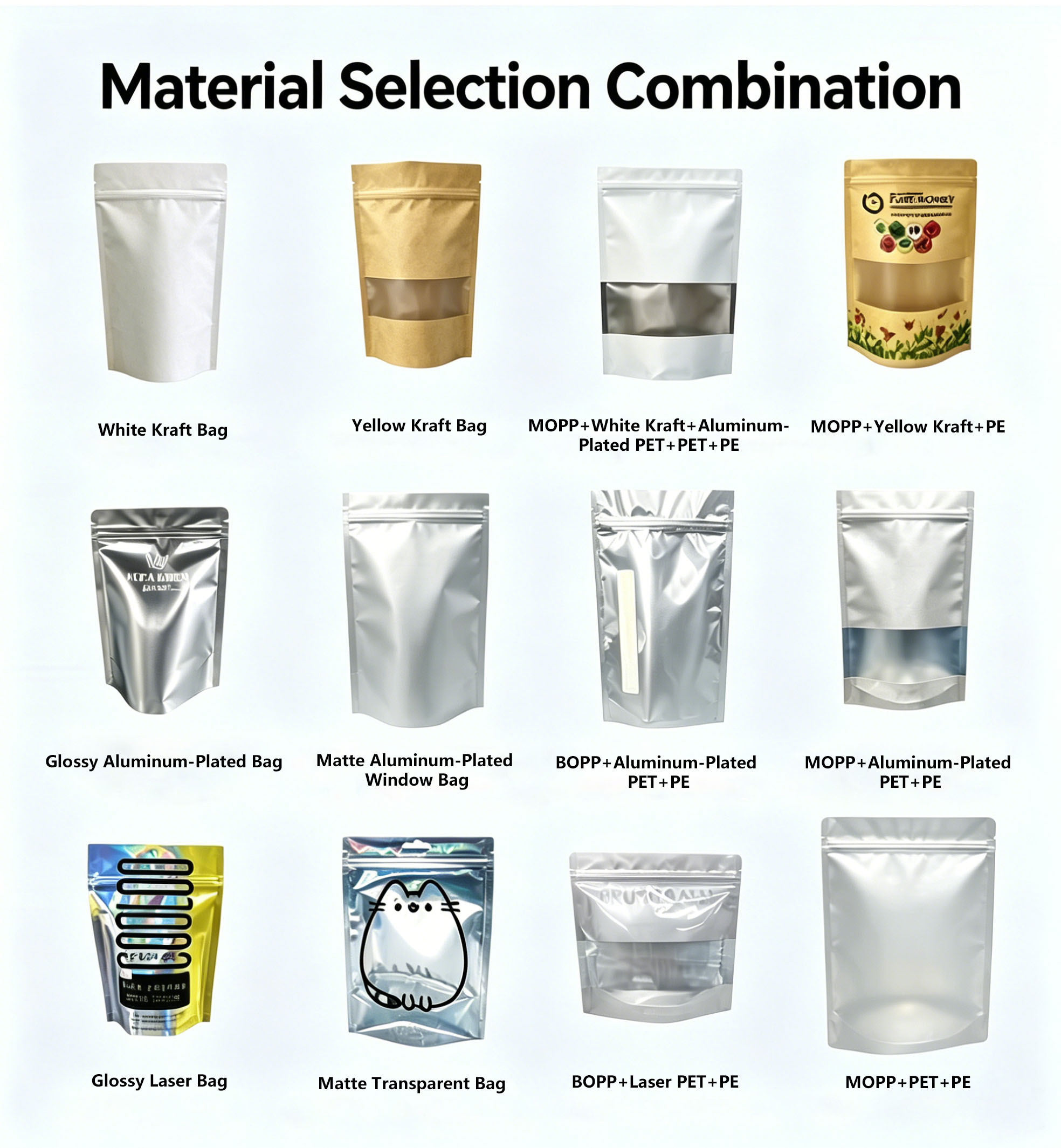
Start by separating the three specification questions
Odor control, child resistance and barrier performance describe different things. An odor-proof grade is a product description unless a defined method or result accompanies it. A child-resistant closure is a mechanism choice, but a mechanism name alone does not establish that a finished package has passed the applicable child-resistance evaluation. OTR and WVTR are transmission-rate measures stated for a specific product record; they should not be assumed to apply to every size, construction or closure.
These distinctions prevent an apparently complete specification from hiding gaps. A buyer may see a bag described as Premium, a zipper marked with a standard reference, and numerical barrier limits, yet still lack evidence connecting all three claims to the same finished configuration. The practical comparison is therefore two-part: compare the options that are documented, then list the evidence needed to confirm that those options coexist on the package being purchased.
Odor-proof grades: a tier list is not a test scale
The supplied cannabis-bag records list Good, Excellent and Premium as available odor-proof grades for some product entries. Another record lists Good for its smell-proof bag option. The records do not define the boundaries between Good and Excellent, state an odor-transmission test method, or provide measured results for each grade. Buyers can therefore compare the names as listed options, but should not treat the three labels as a quantified performance scale.
That limitation is important when comparing Smell Proof Cannabis Bags, Smell Proof Mylar Bag options or private-label cannabis bags across suppliers. A grade name only becomes a useful procurement comparison when each supplier explains what it means for the quoted construction and supplies evidence that can be checked. Without a common method, grade labels cannot establish that one bag is more odor-resistant than another. Nor does the supplied record map each grade to each capacity, size, closure or material structure.
There is one separate numerical reference in the supplied industry data: HTNXT Research describes Premium cannabis bags with OTR below 0.05 cm³/(m²·24h) and WVTR under 0.03 g/(m²·24h). Those values are useful as an attributed reference point, but they do not prove that a particular supplier’s Premium option meets them. The product-specific record for ct-Cannabis Packaging Bags states OTR ≤0.05 cm³/(m²·24h) and WVTR ≤0.03 g/(m²·24h); it does not establish that every Good, Excellent or Premium grade has those same values. The relationship between the grade labels and those figures remains unspecified.
A buyer comparing odor grades should ask for the grade definition, the tested sample construction and the report associated with the requested bag. The evidence should identify the material, closure and test conditions used. If a supplier cannot connect a grade to comparable evidence, the safe comparison is that the label is available—not that its performance has been demonstrated. This is a limitation of the information supplied, not proof that any grade performs poorly.
Child-resistant closures: compare mechanisms and supporting evidence
The supplied product entries list three closure options: CR Zipper, Push Lock and Slide Lock. They associate these options with ASTM D3475. This is a supplier-record label for the listed configurations; the corpus does not include a test report, certification, test result or explanation of how a specific finished bag was evaluated. Buyers should not read the label alone as proof that a bag design is child-resistant in a particular market.
For a United States reference, the supplied eCFR evidence for 16 CFR 1700.20 describes a child-resistance test procedure. The evidence states that 85% of children aged 42–51 months must be unable to open the package within five minutes. The source is the federal test procedure at 16 CFR 1700.20. This reference does not establish that any specific zipper, push lock or slide lock in the product records has passed that procedure. Buyers need documentation tied to the intended package design and relevant market requirements.
There is no supported basis here to rank CR Zipper, Push Lock and Slide Lock by ease of use, child resistance, durability or retail preference. Instead, compare them by asking what documentation is available for the exact closure and bag combination, whether the package is intended to remain child-resistant after first opening, and how the finished format will be filled and sealed. The supplied records do not specify the answers for each mechanism. Keep those questions open until the selected configuration is documented.
For cannabis packaging buyers, this distinction is especially important when using the terms Child-Resistant Cannabis Packaging Bags or child proof weed mylar bags in a request for quotation. A keyword or product name should not substitute for the actual requirement. State the target market, intended product and closure, then request evidence that applies to that package. The supplied external evidence concerns a U.S. federal testing procedure; it should not be treated as a universal rule for every destination market.
Barrier figures: read the limits with their stated scope
The ct-Cannabis Packaging Bags product record gives OTR of ≤0.05 cm³/(m²·24h), WVTR of ≤0.03 g/(m²·24h), and an IPX4 water-repellent grade. It also identifies a PET aluminum-coated layer, pure aluminum foil and a PE heat-sealing layer. The record lists aluminum foil thickness as 7–9 μm, heat-seal strength as ≥40 N/15 mm, longitudinal tear strength as ≥35 N and transverse tear strength as ≥30 N. It describes the bag as opaque and lists repeated zipper sealing with top heat sealing, with an optional CR children’s safety zipper.
These are product-record specifications, not a comparison of all available Cannabis Mylar Bags or all odor-proof grades. No test methods, laboratory reports, conditioning details or configuration-by-configuration results are supplied with the figures. In particular, the record does not show whether the listed barrier values apply identically to each size, closure, print or customized structure. Buyers evaluating High Barrier Cannabis Packaging Bags should request a document that identifies the finished configuration and test conditions rather than assuming a number transfers across product variations.
IPX4 is listed as water repellent in the product record. That wording should not be stretched into a general claim of waterproof performance under conditions that the record does not describe. The word waterproof appears as a product type in another product entry, but the available information does not supply additional waterproof test results. If water exposure is a material use condition, ask what the stated grade covers and whether evidence applies to the finished bag and its seal.
Barrier figures also need to remain separate from odor-grade labels. OTR and WVTR are named quantitative measures in the product record; the record does not provide an odor-transmission value. A bag with stated oxygen and water-vapor limits may be relevant to a buyer assessing barrier specifications, but those figures alone do not quantify odor control. The comparison should therefore show the barrier values and odor grade in separate fields, rather than presenting one as evidence of the other.
Capacity and dimensions: match the pack to the retail format
The product records list capacities of 1 g, 3.5 g (⅛ oz), 7 g (¼ oz), 14 g (½ oz) and 28 g (1 oz), with dimensions of 3″ × 4″, 4″ × 5″, 5″ × 6″, 6″ × 8″ and 8″ × 10″. These are available listed options, not a verified one-to-one capacity-to-size chart. The records do not specify which size is assigned to each weight or product type. Buyers should confirm the proposed pairing with the intended contents and filling method rather than infer it from the order in which the lists appear.
The application material identifies retail packs for dried flower at 3.5 g, 7 g, 14 g and 28 g; single or multiple pre-roll flat bags; and three-side-sealed bags for CBD gummies. It also lists filling and heat-sealing equipment as relevant in one scenario. These details support a format-based discussion, not a claim that any particular bag size has been validated for a given retail pack. The bag’s usable dimensions, product shape and required closure all need to be considered together.
- Small retail or sample formats: 1 g and 3.5 g appear in the listed capacity range. The product records also include 3″ × 4″ and 4″ × 5″ as size options, but do not assign either size to these capacities. Confirm usable space and closure fit for the intended pack.
- Mid-size flower formats: 7 g and 14 g are listed capacities, alongside 5″ × 6″ and 6″ × 8″ among the available dimensions. Treat these as candidate options to validate, not established pairings.
- Larger retail packs: 28 g (1 oz) is the largest listed capacity, and 8″ × 10″ is the largest listed dimension. The records do not certify a specific capacity-size match or establish a regulatory limit for all markets.
- Pre-roll and edible formats: The application record describes flat bags for single or multiple pre-rolls and three-side-sealed bags for gummies. A weight capacity alone may not describe these formats; specify product geometry and pack style when requesting a configuration.
This format-first approach is more reliable than using a size list as a finished selection guide. A 28 g capacity label does not by itself confirm the internal dimensions, headspace, seal area or compatibility with a particular closure. Likewise, a nominal bag dimension does not prove how much product it will hold. Request a drawing or sample for the selected combination and assess it with the intended contents and equipment before approving the specification.
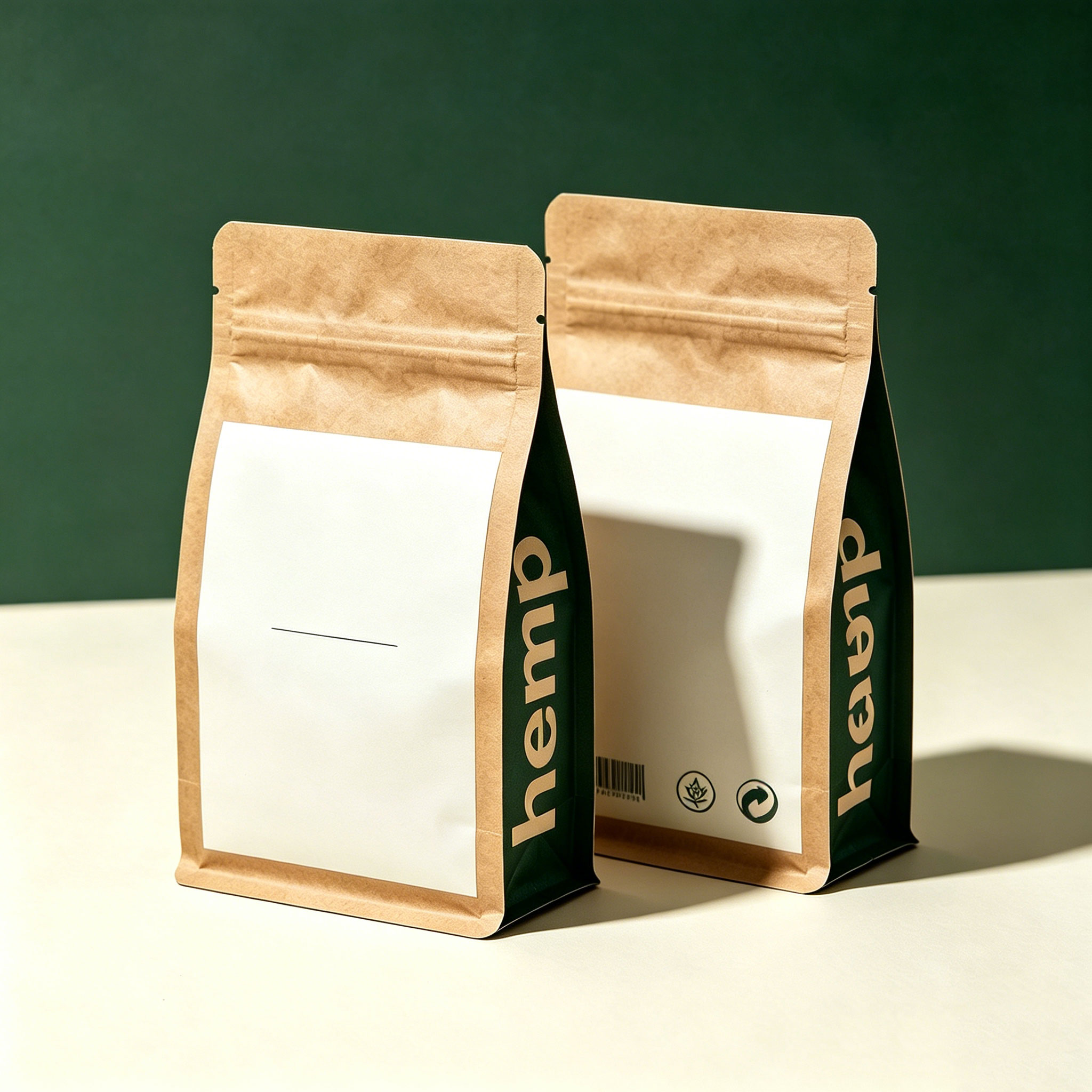
A buyer comparison matrix: documented options versus open checks
| Comparison field | What the supplied records state | What remains to verify |
|---|---|---|
| Odor grade | Good, Excellent and Premium are listed for some product entries; Good is listed for another. | Grade definitions, test method, results and which grades apply to the quoted configuration. |
| Closure | CR Zipper, Push Lock and Slide Lock are listed with an ASTM D3475 label. | Test or certification documentation tied to the finished bag and intended market. |
| Barrier | One product record states OTR ≤0.05 and WVTR ≤0.03; it also lists IPX4 water repellency. | Applicable construction, test conditions and evidence for the selected size, closure and customization. |
| Capacity and size | Capacities from 1 g to 28 g and dimensions from 3″ × 4″ to 8″ × 10″ are listed. | The capacity-to-dimension match, usable volume, product fit and line compatibility. |
How to choose a configuration without overstating the evidence
For a buyer whose primary concern is odor control, begin with the grade name but do not stop there. Ask for the definition of Good, Excellent or Premium and the evidence that distinguishes one tier from another. If the seller presents OTR or WVTR values, record them as barrier data, not as a substitute for odor testing. When no odor-specific method or result is supplied, keep the odor grade as an unverified descriptive tier in the comparison.
For a buyer whose primary requirement is child resistance, select the intended closure as part of the design brief and request applicable documentation for that exact package. The supplied records list three mechanism options, but do not substantiate comparative performance among them. A closure description is useful for identifying the requested design; it does not replace testing documentation or market-specific review.
For a product needing moisture or oxygen barrier information, compare the stated units and limits only when they refer to the same test scope. The figures in the ct-Cannabis Packaging Bags record provide a specific starting point, including the material layers and seal-strength entry. They do not establish that every customized bag or odor grade has those specifications. Ask the supplier to confirm the exact structure and provide records for the intended finished configuration.
For retail-format selection, use the listed capacity and dimension ranges as a shortlist of possibilities. Match them to the actual pack—flower, pre-rolls or edibles—and confirm the fit with the intended filling and sealing process. The application material names heat-sealing and filling equipment, but does not specify line speeds or compatibility outcomes. Those should not be assumed from the fact that the bag is intended for packaging use.
What this comparison can—and cannot—conclude
The available records support a useful shortlist of specification choices: three named odor grades in some product entries, three listed child-resistant closure mechanisms, a product-specific set of barrier figures, and a range of capacities and dimensions. They do not establish a ranked performance result across grades or mechanisms. They also do not prove that every listed feature is available together in every size or customized construction.
For Dongguan Chitai Packaging Products Co., Ltd, the cited records identify cannabis packaging options and configurable product specifications. The buyer-relevant conclusion is not that one configuration is universally superior. It is that a sound comparison must keep the odor tier, closure evidence, barrier data and retail fit in separate fields, then confirm that the selected combination is supported by documentation for the finished package. This preserves what is stated while making the remaining verification points visible before procurement approval.
Have Questions or Need More Details?
Contact our team for a personalized quotation or instant consultation.
Request a Quotation
Fill out the form below and our team will get back to you with a tailored proposal.
WhatsApp Direct Chat
Prefer to chat in real-time? Message us on WhatsApp for instant assistance & quick answers.
- Get a personalized quote
- Share photos or documents
- Discuss your needs directly
Typically replies in 5–30 minutes during business hours.