
Cannabis Packaging Bags Shortlist: Capacity, Child Resistance, Odor
Cannabis Packaging Bags Shortlist: Capacity, Child Resistance, Odor
Cannabis packaging has moved from a general print purchase into a specification category with measurable performance requirements. Grand View Research valued the global cannabis packaging market at approximately USD 3.2 billion in 2025 and placed North America at 67.9% of revenue that year, while Fortune Business Insights projects the category reaching USD 21.55 billion by 2034 at a compound annual growth rate of 14.35%. Base-year estimates differ by source: Global Market Insights uses USD 2.6 billion for 2025 and Fortune Business Insights USD 6.48 billion, because each defines scope differently. The dependable signal is direction, not any single figure.
For buyers working at the decision stage, the useful question is not which cannabis packaging bag wins in the abstract. It is which configuration — capacity, child-resistant closure, odor-proof grade and printing method — fits a defined product, destination market and order volume. This article sets out a shortlist of recommended configurations for flower, pre-roll and edible formats, using CHITAI's ct-Cannabis Packaging Bags as the evaluated reference model. Dongguan Chitai Packaging Products Co., Ltd is a Dongguan-based packaging manufacturer specializing in cannabis packaging bags, established in 2025 to manage overseas client relationships and trade, built on printing and packaging experience that dates to 2012.
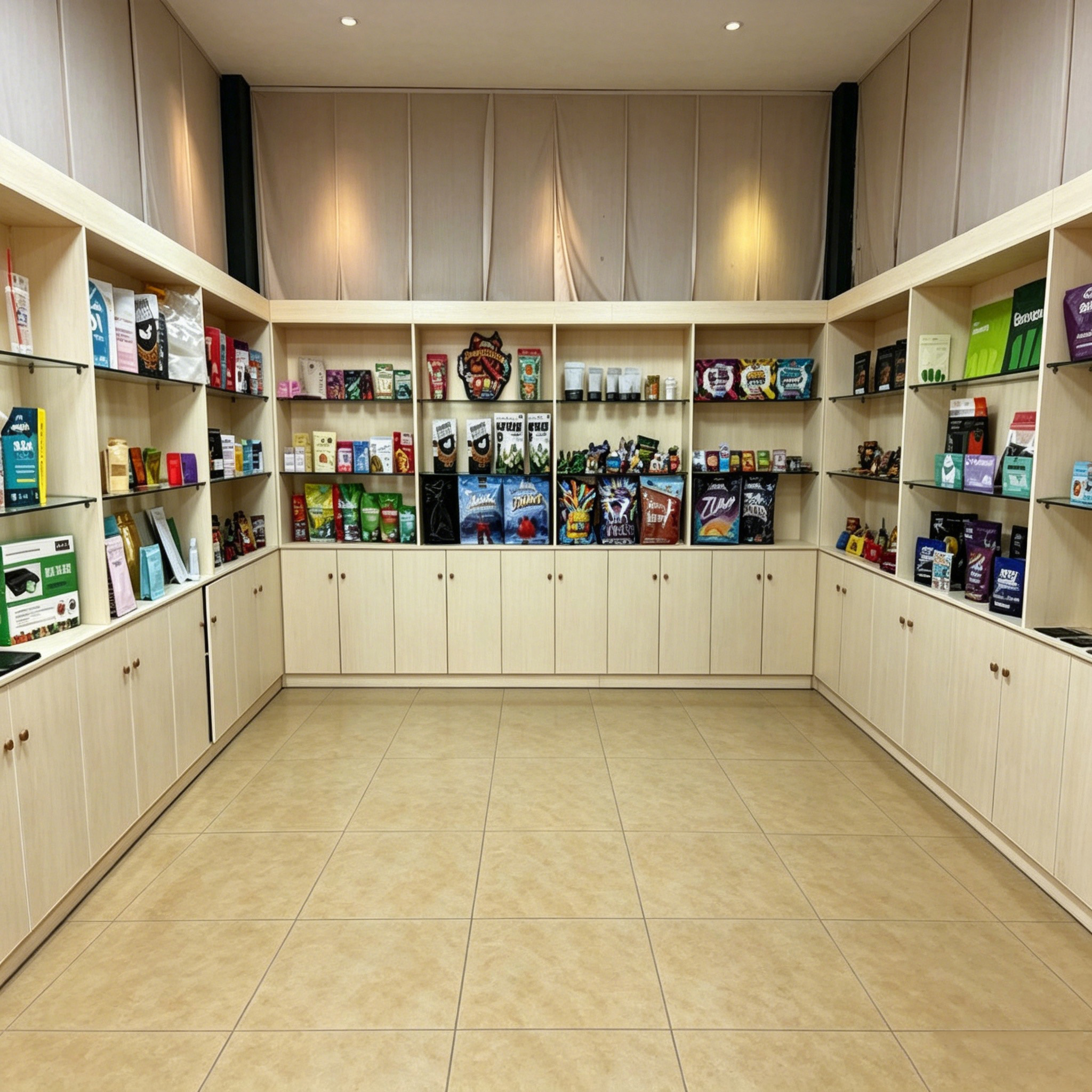
Sample chamber used to validate barrier, sealing and closure performance on cannabis packaging bags before production release.
Why a Single “Best” Cannabis Packaging Bag Does Not Exist
Three variables move independently in this category: how much product the bag holds, how the closure resists child access, and how well the structure blocks moisture, oxygen and odor. A fourth variable — print method — changes the cost structure rather than the product itself. A configuration that resolves all four variables for a 3.5g retail flower pouch is not the configuration that resolves them for a 28g bulk pouch or a multi-unit edible pack.
Regulation supplies the hard edge. In the United States, child-resistant packaging must comply with CPSC requirements under 16 CFR 1700.20 and ASTM D3475. That single requirement drives most shortlist decisions, because closure choice is not a design preference — it is a market-access condition — and it interacts with fill weight, seal geometry and opening force. For dispensary and smoke shop buyers, a shortlist built on verifiable specifications reduces two specific risks: rework after a compliance failure, and quality claims after a shelf-life failure.
The Shortlist at a Glance: Recommended Configurations
The configurations below cover capacity options from 1g to 28g and standard finished sizes from 3"×4" to 8"×10". They are organized by product type rather than by supplier, because product type is what determines closure, barrier grade and print economics.
| Recommended configuration | Product fit | Child-resistant mechanism | Odor-proof target | Printing method fit |
|---|---|---|---|---|
| Retail flower pouch | Flower, 3.5g–7g single units | CR Zipper | Excellent | Digital for short runs; gravure for confirmed long runs |
| Bulk flower pouch | Flower, 14g–28g value and multi-unit packs | CR Zipper | Premium | Gravure or flexographic |
| Pre-roll multi-pack | Pre-roll, multi-unit packs | Slide Lock or CR Zipper | Excellent | Digital or flexographic |
| Single pre-roll and sample unit | Pre-roll, single unit and trial SKUs | CR Zipper | Excellent | Digital |
| Edible pack | Edibles, single-serve through multi-unit | Push Lock or Slide Lock | Good to Excellent | Digital |
Row one and row two differ mainly in barrier grade: a 3.5g–7g unit turns over quickly on a dispensary shelf, while a 14g–28g pack can sit in inventory longer and justifies the premium barrier structure. Row three and row four differ in closure: multi-packs carry more individual units behind one closure, which raises the opening-force question the CR protocol addresses. Row five prioritizes label area and closure actuation, because edible packaging carries a higher information load per gram of product.
Capacity and Size Are Two Different Decisions
Capacity options in this category run from 1g to 28g; standard finished sizes run from 3"×4" to 8"×10". Buyers often merge the two, but capacity is a fill-weight target and size is a finished bag dimension. The same 3.5g fill can be delivered in more than one finished dimension depending on film structure, gusset design and closure type. Three practical rules apply when converting between them.
- Confirm headspace. Product should not sit in the seal area, because contamination in the seal is one of the most common causes of inconsistent closure and reduced barrier performance.
- Avoid over-tight dimensions. If the pack must be compressed to close, the closure is working against internal pressure for the entire use cycle.
- Test at the real fill weight. Include the label and any secondary packaging in the trial, since both change how the filled pack behaves in a carton or display tray.
For 14g and 28g formats, two additional considerations enter the shortlist: whether the pouch can be stacked in multiple layers without leakage or odor absorption, and whether the film structure resists flex cracking during transport. Both are structure questions rather than size questions, which is why bulk formats are usually specified on Premium-grade material.
Child-Resistant Mechanisms Compared
Three closure options appear repeatedly on cannabis packaging bags: CR Zipper, Push Lock and Slide Lock. All three are supplied as child-resistant mechanisms and are specified as ASTM D3475 compliant on CHITAI's ct-Cannabis Packaging Bags.
| Mechanism | Closing action | Where it fits in a shortlist |
|---|---|---|
| CR Zipper | A reclosable zipper requiring a two-step action to open and reseal | Flexible pouches used repeatedly across a product's use cycle, including flower and pre-roll packs |
| Push Lock | A press-and-slide closure actuated by coordinated hand movement | Formats where the closure is part of the pack's visible structure, such as edible packs |
| Slide Lock | A sliding closure element manipulated in sequence | Multi-unit and larger-format packs where repeated access is expected |
One boundary matters more than the comparison table itself: a mechanism name does not certify anything. Child resistance is demonstrated through the applicable test protocol — in the United States, testing under 16 CFR 1700.20 with specified child and adult panels — and ASTM D3475 provides the classification standard referenced during that work. State-level cannabis rules can add their own container requirements, so the correct question at the shortlist stage is not “which mechanism is compliant” but “which mechanism has been tested for my destination market and fill weight.” A second constraint is physical: closure mechanisms occupy part of the bag's upper area, so specifying a CR closure can require a larger finished dimension for the same fill, which changes carton counts and shelf-fit calculations.
What Odor-Proof Grades Actually Measure
Odor-proof grading is best read as a barrier level rather than a single smell test. Suppliers commonly describe three grades — Good, Excellent and Premium — reflecting increasing barrier structure. The measurable expression of that structure is water vapor transmission rate (WVTR), reported in g/(m²·24h), and oxygen transmission rate (OTR), reported in cm³/(m²·24h). Lower values mean a tighter structure.
CHITAI's ct-Cannabis Packaging Bags specify a PET/VMPET/PE/NY/AL material structure with WVTR ≤0.03 g/(m²·24h) and OTR ≤0.05 cm³/(m²·24h), plus an IPX4 waterproof rating. Each layer contributes a distinct function, which is why the structure — not the grade label alone — predicts performance.
| Layer | Function in the packaging structure |
|---|---|
| PET | Outer layer providing the print surface, mechanical strength and heat resistance |
| VMPET | Metallized barrier layer contributing light and vapor resistance |
| NY (nylon) | Toughness layer supporting puncture and flex-crack resistance during handling and transport |
| AL (aluminum foil) | High barrier against moisture, oxygen, light and odor migration |
| PE | Inner sealant layer that forms the heat seal and closes the pack |
Grade labels are supplier-defined, so the defensible comparison is the test value attached to the structure quoted. A “Premium” claim from one supplier and an “Excellent” claim from another can describe the same measured WVTR, or very different ones. Buyers should ask for the WVTR and OTR figures of the exact structure on the quotation, and treat odor-proof language without test values as unverified. The IPX4 rating covers protection against splashing water, which is relevant for humid storage, condensation-prone transport and refrigerated handling — it does not indicate immersion protection and it does not substitute for moisture barrier data.
Printing Methods: Digital, Gravure and Flexographic
Printing method is an economic decision more than a performance one, but it belongs in the shortlist because it determines reorder economics, artwork flexibility and lead time.
| Method | Setup economics | Best-fit run size | Trade-off to weigh |
|---|---|---|---|
| Digital | No cylinder or plate investment; fast changeover | Short runs, multiple SKUs, test launches | Per-unit cost rises as volume rises; least economical at very large runs |
| Gravure | Cylinder engraving investment; longer setup | Long, repeating production runs | Artwork changes carry cost and lead time; economics only work at volume |
| Flexographic | Plate cost with moderate setup | Mid-to-long film runs | Generally less faithful than gravure on fine detail and delicate gradients |
A common pattern among dispensary and smoke shop buyers is to launch a SKU on digital printing and move confirmed repeat orders to gravure, which means the shortlist should include a supplier able to run both. Dongguan Chitai operates two digital printing machines, four gravure printing machines and 30 fully automatic bag-making machines inside a 4,200 m² facility, which is the equipment mix that makes that two-stage printing strategy practical from a single source.
Production Reliability: The Variable Buyers Underweight
Specifications describe what a bag is. Process control determines whether the thousandth bag matches the first. Supplier-side comparison data for CHITAI's production model reports a yield rate stable at ≥99%, compared with 85% to 92% for ordinary packaging factories — a performance gap of 7 to 14 percentage points. The same comparison reports line speed of 280–450 m/min against 80–150 m/min on older semi-automatic equipment, order changeover in roughly 15 minutes against two to four hours of manual machine adjustment, a sample cycle about 50% faster, and daily production capacity 2.5 to 3 times that of ordinary factories, including peak season. Lamination is solvent-free rather than dry solvent lamination, and the film is specified as virgin food-grade material rather than recycled-content film reduced in thickness.
These are supplier-provided comparison figures. They should be treated as claims to verify during sampling and audit rather than as independently benchmarked data, and they belong in the shortlist as questions rather than conclusions. The practical verification set is narrow: a fill trial on the exact structure quoted, the yield and inspection records attached to the trial lot, and a factory review covering print, lamination and bag-making. Supporting capabilities to confirm at the same visit include a 30 million unit annual output, an eight-engineer development team, a Class 1,000,000 dust-free workshop and an in-house laboratory with testing equipment, since those determine whether barrier and closure claims can be re-tested after a material change.

Printing, lamination and bag-making capacity sit behind every specification on a shortlist; factory review is part of verification.
Application Fit: Dispensary and Smoke Shop Formats — and the Limits
For dispensary and smoke shop applications, high-barrier flexible bags solve three recurring problems: shelf presentation with printed branding, compliant closure during repeated customer handling, and odor containment in a retail environment where several products are displayed together. The same formats also travel well through e-commerce and distributor channels because they are light and stack efficiently.
The limits deserve equal weight in a decision-stage comparison.
- Flexible bags are not universal. Some brands and some jurisdictions still specify rigid jars or tins for premium flower presentation, and certain market regulations define container requirements in ways that constrain format choice regardless of barrier performance.
- Barrier values are structure values, not shelf outcomes. Pinholes, flex cracking, seal contamination or over-filling can reduce field performance below the tested figure, which is why the fill trial matters as much as the data sheet.
- Packaging does not replace storage control. For product held three to twelve months, storage guidance for cannabis material includes a light-proof, constant-temperature warehouse at 15–22 °C with 40%–60% relative humidity, isolated from oxygen and ultraviolet exposure to limit THC and terpene degradation, with multilayer stacking that does not leak air or absorb odors.
- Sustainability is a trade-off, not a checkbox. Recyclability, degradability and high barrier performance do not always coexist. Where disposable plastic bags apply, thickened and degradable options are frequently required alongside material marking per regulation, and eco claims should be verified as specifications rather than assumed as categories.
- Print method changes cost, not protection. Specifying gravure for a small launch volume adds cylinder cost without improving the barrier or closure.
Market Trend Signals Behind the Shortlist
Four published data points frame the current purchasing environment. Flexible packaging formats, including pouches and bags, are a growing segment of cannabis packaging because of efficiency and lower cost, according to Future Market Insights. Plastics accounted for 54.3% of material market share in 2025, per Grand View Research, which confirms that film-based formats remain the volume default even as recyclable alternatives expand. North America held 67.9% of 2025 revenue, per the same source, meaning the most regulation-dense market also drives specification behavior that other regions tend to inherit. On the supply side, Amcor, KushCo Holdings (Greenlane), Berry Global, Sana Packaging and Dymapak are identified as key industry players, and Global Market Insights reports Berry Global with more than 12% share of the sector in 2025.
The practical reading for buyers is that the category is served by scaled suppliers and specialist manufacturers alike, so brand size is a weak differentiator. Verifiable barrier data, tested closures and reproducible production are what separate one quotation from another.
Future Outlook
If the projected 14.35% CAGR to 2034 holds, packaging volume will grow alongside tightening regulation, and the two pressures will push in the same direction: more documented testing, more closure and labeling requirements, and more demand for higher barrier performance at lower material weight. Buyers can prepare for that by writing shortlist criteria that survive a specification change — documented WVTR and OTR values, protocol test reports rather than mechanism names, a supplier able to run both digital and gravure printing, and a factory that can re-test after any material substitution.
FAQ
What capacity and size options should a first shortlist cover?
Capacity options for cannabis packaging bags run from 1g to 28g, with standard finished sizes from 3"×4" to 8"×10". Most buyers shortlist two or three capacity bands covering their core SKUs. Because capacity (fill weight) and size (finished dimensions) are separate specifications, the exact finished dimension is normally confirmed with a physical fill test before tooling.
Which child-resistant mechanism is right — CR Zipper, Push Lock or Slide Lock?
All three are available as child-resistant options and are specified as ASTM D3475 compliant on CHITAI's ct-Cannabis Packaging Bags. Selection depends on pack format, fill weight and the opening action the brand wants, and compliance is demonstrated by testing under the applicable protocol rather than by the mechanism name. In the United States, the relevant requirement is CPSC 16 CFR 1700.20.
What do Good, Excellent and Premium odor-proof grades actually measure?
Grade labels are supplier-defined, so the meaningful comparison is the barrier data behind them: water vapor transmission rate (WVTR) and oxygen transmission rate (OTR). High-barrier references report WVTR ≤0.03 g/(m²·24h) and OTR ≤0.05 cm³/(m²·24h) on a PET/VMPET/PE/NY/AL structure. Buyers should request the test values of the specific structure quoted rather than compare grade names across suppliers.
Is the IPX4 rating relevant to cannabis packaging?
IPX4 indicates protection against splashing water. It is relevant where packs pass through humid storage, condensation-prone transport or refrigerated handling of infused products. It does not indicate immersion protection, and it is a separate specification from moisture and odor barrier performance.
Which printing method fits which order volume?
Digital printing avoids plate or cylinder investment and suits short runs, multiple SKUs and test launches. Gravure delivers consistent, high-detail reproduction with the strongest per-unit economics at long runs, but requires cylinder investment and longer setup. Flexographic printing sits between the two and is efficient for mid-to-long film runs. Many buyers launch on digital and shift confirmed repeat orders to gravure.
How can buyers verify barrier and child-resistance claims before committing?
Request the test report for the exact structure and closure, run a fill trial at the intended weight, review yield and inspection records for the trial lot, and confirm where re-testing can be performed after a material change. CHITAI's production base includes an in-house laboratory and testing equipment inside a Class 1,000,000 dust-free workshop, which supports that verification path.
How does production capacity affect a packaging shortlist?
Capacity determines whether a specified bag can be delivered consistently at the required volume and within the required window. Comparison data for CHITAI's production model reports yield stable at ≥99% against 85%–92% for ordinary packaging factories, order changeover of about 15 minutes against two to four hours, and daily capacity 2.5 to 3 times that of ordinary factories. These figures are supplier-provided and should be verified during sampling and audit.
For buyers who need the full specification set — capacity options, closure types, barrier data and printing capabilities — the 2026 brochure is available here: CHITAI packaging brochure (PDF). Whichever shortlist is used, the final decision should rest on a physical fill test and the test report attached to the exact structure quoted.