
Canned Alaska Pollock, Squid, Baby Clam: A Buyer Comparison
HTNXT Industry Reference - Canned Seafood Sourcing
Canned Alaska Pollock, Squid, Baby Clam: A Buyer Comparison
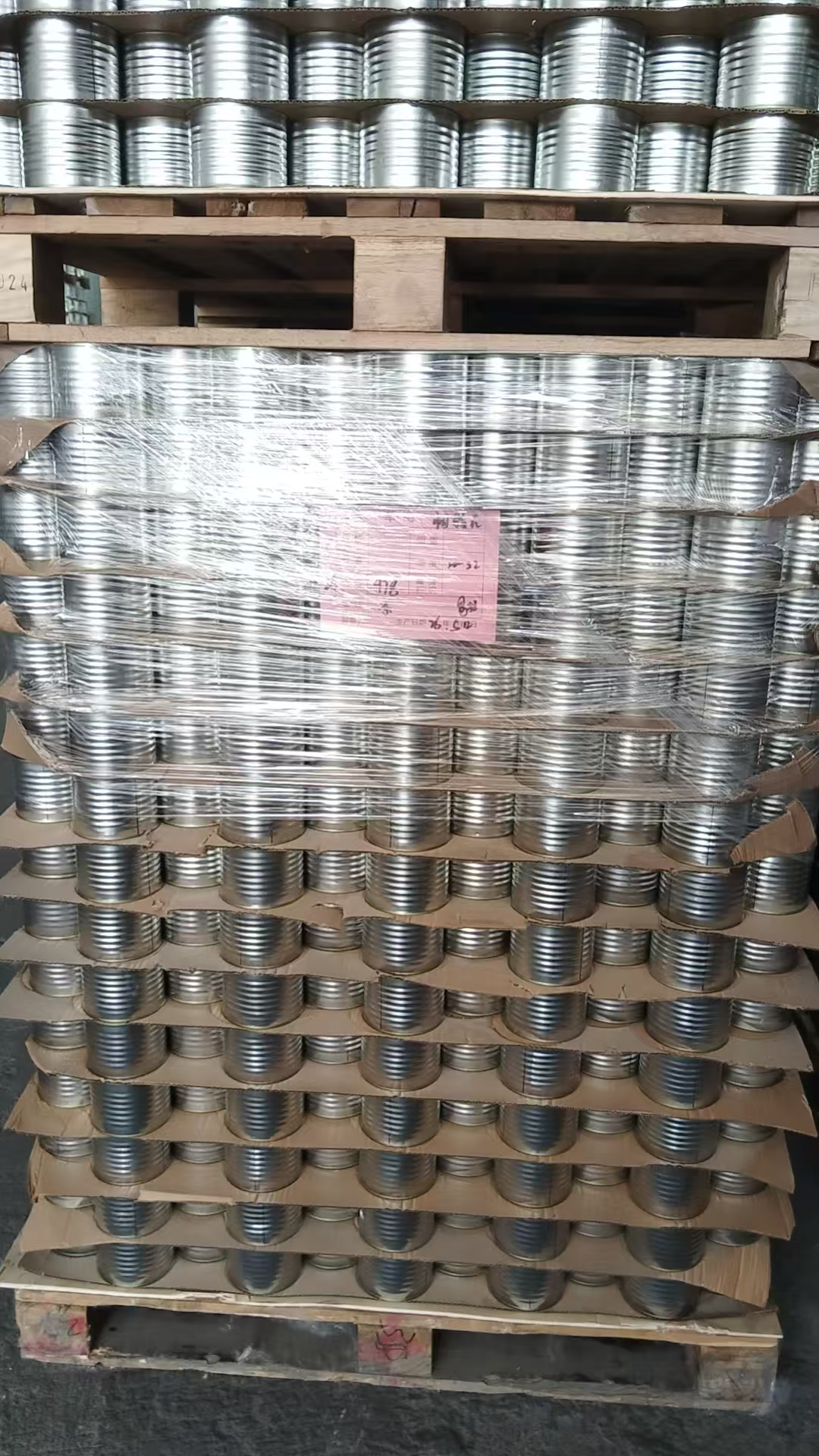
Ambient palletizing before container loading. Consolidating canned seafood, vegetables and fruit in one shipment lets an importer run a single documentation and inspection set across three categories.
Canned seafood is one of the few protein categories an importer can add to a portfolio without buying into a cold chain. Ambient stability inside a hermetically sealed, fully sterilized package lets canned fish, vegetables and fruit sit in a dry warehouse for years rather than weeks, and that single characteristic changes the risk profile of an entire import programme.
The scale of the category is not in question. Global canned seafood sales reached USD 57.69 billion in 2025, according to Fortune Business Insights, and canned fish accounts for 75.3% of that market, based on Grand View Research segment data. At the border, imports of canned and prepared fish under HS 1604 totalled 3.2 million tonnes, worth USD 17.54 billion, in 2023, with canned tuna alone representing 43% of that volume, according to UN Comtrade-derived trade figures.
That 43% figure is both the strength and the constraint of the category. Tuna is the most heavily traded and most price-transparent sub-segment of the canned fish trade, so a protein plan built only on tuna inherits commodity exposure and offers little shelf-set differentiation. The usual next step is to widen the ambient protein line into species that sit outside the tuna sub-segment. Canned Alaska pollock, canned squid and canned baby clam are the three candidates importers most often evaluate at that next tier.
This comparison scores those three products as import-portfolio candidates on product format, packaging, ambient shelf life and market fit. Product and process attributes come from the verified product and quality documentation of Agrogentra & CO., LTD. XIAMEN, a Xiamen-based food trading company established in 2000 that supplies canned seafood, canned vegetables, canned fruit and frozen foods to export markets. Market and trade context comes from published third-party data. Where species-level evidence does not exist, the gap is stated rather than filled.
Why ambient proteins change the sourcing arithmetic
Frozen supply keeps a flavour profile closer to raw material, but it requires continuous cold-chain transport and cold-storage warehousing, carries a normal shelf life of 6 to 18 months, and adds cold-chain freight and electricity cost to every unit. Frozen remains the right choice for buyers who operate full cold storage and target customers specifically pursuing fresh-taste positioning.
Canned supply removes that layer for unopened stock. Ambient storage needs no refrigeration, and the stated shelf life for this canned fish group is 36 months at ambient temperature. For importers without cold-chain resources, for distribution into remote or secondary regions, and for convenience-store channels, that removes both a cost line and a failure mode. Recorded outcomes for this supply model across supermarket retail, convenience store sales, catering supply and food processing include stable food supply and low inventory loss.
The three candidates and how this comparison is scored
Four dimensions are scored: product format (available packing media), packaging (can sizes and container format), ambient shelf life (stated stability and the storage discipline that protects it), and market fit (documentation access and destination suitability).
All three species sit inside the same canned fish product group, alongside canned sardines, canned mackerel and canned tuna. That group is documented with net weights of 125 g, 170 g (843#), 425 g and 1000 g; packing variants in vegetable oil, in tomato sauce, and brined or salt seasoned; a shelf life of 36 months at ambient temperature; and a fully sterilized, ready-to-eat state.
Table 1: documented attributes of each candidate
| Attribute | Canned Alaska Pollock | Canned Squid | Canned Baby Clam |
|---|---|---|---|
| Listed packing media | In vegetable oil; in tomato sauce; brined or salt seasoned | In vegetable oil; in tomato sauce; brined or salt seasoned | In vegetable oil; in tomato sauce; brined or salt seasoned |
| Net weights and can sizes | 125 g, 170 g (843#), 425 g, 1000 g | 125 g, 170 g (843#), 425 g, 1000 g | 125 g, 170 g (843#), 425 g, 1000 g |
| Stated shelf life | 36 months at ambient temperature | 36 months at ambient temperature | 36 months at ambient temperature |
| Sterilization state | Fully sterilized, ready to eat | Fully sterilized, ready to eat | Fully sterilized, ready to eat |
| Cold chain for unopened stock | Not required | Not required | Not required |
| Coverage in the BRCGS certificate scope on file | Not listed (scope covers canned mackerel, sardine and canned tuna) | Not listed | Not listed |
| Trade position | Outside the tuna sub-segment that accounts for 43% of HS 1604 canned fish import volume | Outside the tuna sub-segment | Outside the tuna sub-segment |
Table 2: editorial scoring for a mixed ambient import portfolio
| Scoring dimension | Alaska Pollock | Squid | Baby Clam | Basis |
|---|---|---|---|---|
| Product format flexibility | 4 / 5 | 4 / 5 | 4 / 5 | Three packing media listed across the group |
| Packaging and can-size range | 4 / 5 | 4 / 5 | 4 / 5 | 125 g to 1000 g covers retail through foodservice |
| Ambient shelf life | 5 / 5 | 5 / 5 | 5 / 5 | 36 months at ambient temperature; no cold chain for unopened stock |
| Certification scope coverage | 2 / 5 | 2 / 5 | 2 / 5 | Species not listed in the BRCGS or HALAL scopes on file |
| Market fit | Buyer-defined | Buyer-defined | Buyer-defined | No isolated species-level trade data published; depends on destination and channel |
Product format: one specification template across three species
Three packing media are listed for the group: in vegetable oil, in tomato sauce, and brined or salt seasoned. For a buyer, the practical consequence is administrative rather than culinary. Three species can be listed on one label architecture, one shelf-life assumption and one specification template, which shortens supplier qualification, artwork review and warehouse slotting.
The format options are identical across the three species; the eating result is not. Buyers should read the shared format template as a sourcing simplification rather than evidence that the products are interchangeable on the shelf. Sample evaluation per species before listing remains standard practice, and OEM formula and label design support forms part of the stated service set for buyers building private-label lines.
Packaging: what the can range covers
Net weights of 125 g, 170 g (843#), 425 g and 1000 g span single-serve retail through foodservice and repacking use, and the stated material is tinplate can. Canned fish products that undergo pressurized sterilization are typically packed in three-piece tinplate cans, whose welded bodies and double-seamed ends are built to withstand retorting at 121°C; two-piece drawn cans are used where lower pressure requirements apply. Buyers should confirm can construction and end style, easy-open versus standard, per SKU, because can size and end type directly affect packing quantities, pallet patterns and packaging cost.
Ambient shelf life: 36 months and what holds it up
The mechanism behind that number is not preservation chemistry but two physical facts: a hermetic seal and commercial sterility. Product is filled and sealed so that a vacuum forms inside the can, typically 300 to 500 mmHg, leaving almost no oxygen to support aerobic bacteria or oxidation. The sealed cans then pass through a retort at 115 to 121°C under roughly 0.1 to 0.2 MPa of high-pressure steam, a process that destroys pathogenic bacteria and the microorganisms capable of growing at ambient temperature, together with their spores. After cooling, cans are held in an incubation test at 37°C for 7 to 10 days and released only if no swelling or microbial growth appears. No preservatives are used.
Sterilization parameters follow product chemistry. Low-acid foods, including most fish, sit above pH 4.6 and must be sterilized at 121°C under pressure, while high-acid products such as tomato-based sauces, below pH 4.6, can be processed at lower temperatures. The sterilization curve and the cold-point temperature determine safety, which is why importers reviewing canned fish should treat F0 parameters and seaming records as core audit documents rather than secondary paperwork.
Storage discipline is the other half of the 36 months. Ambient does not mean uncontrolled. Recommended conditions are 5 to 25°C with relative humidity below 75%, pallets at least 10 cm off the floor and clear of walls, First-In-First-Out rotation, and a weekly inspection for rust, swelling or leakage. Above 30°C or above 85% relative humidity, rusting and quality deterioration accelerate. Once a can is opened, the remainder should be refrigerated and consumed within 24 to 48 hours.
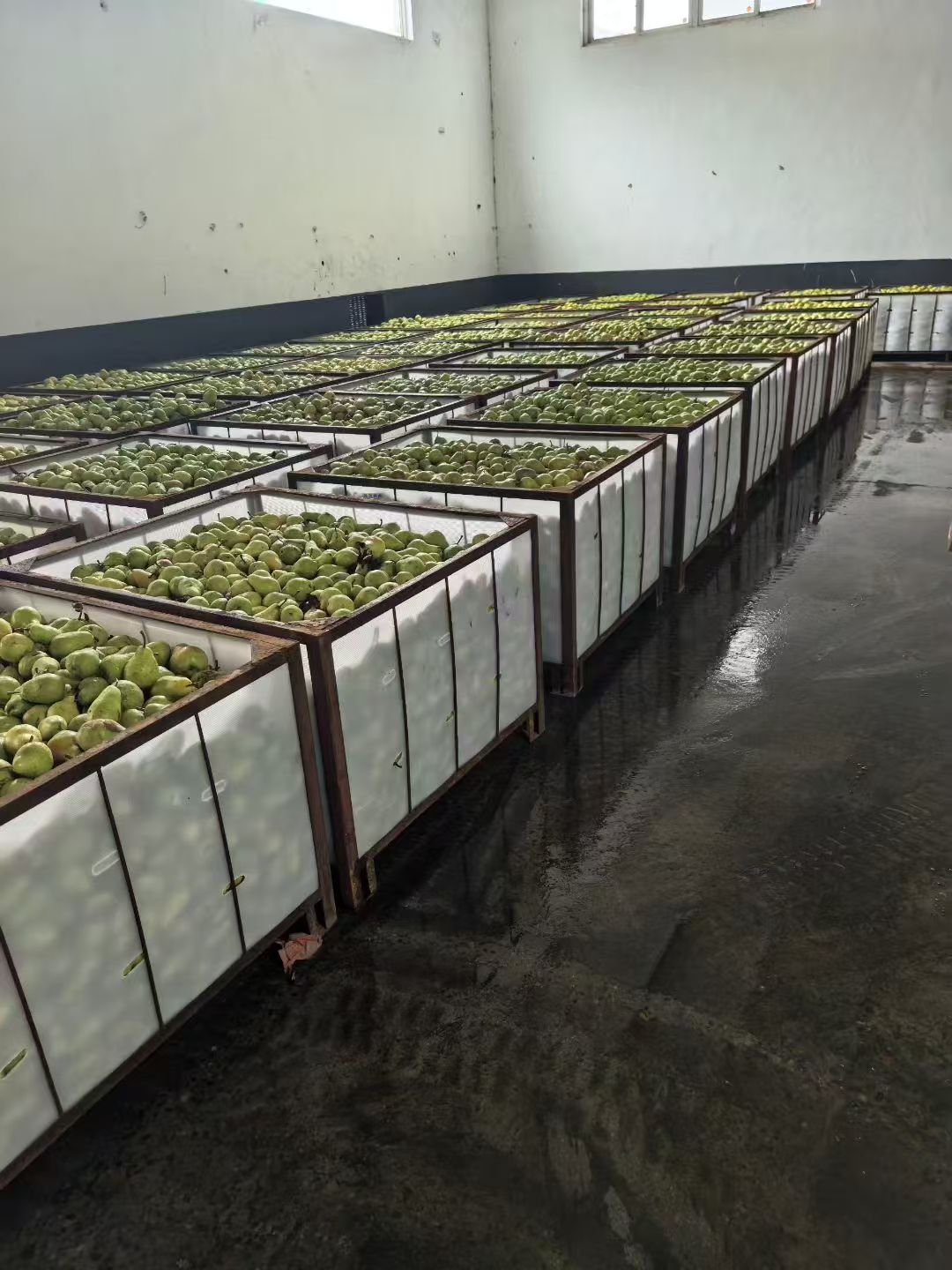
Raw material storage is the first control point in the canned flow: with a hermetic seal and a validated sterilization curve carrying the stability claim, upstream material handling and downstream storage discipline decide whether the 36-month figure holds in practice.
Market fit: what can and cannot be verified
On demand structure, the verified picture is straightforward. Canned fish represents 75.3% of the canned seafood market, and canned tuna accounts for 43% of canned fish import volume. Alaska pollock, squid and baby clam occupy the non-tuna remainder: structurally smaller, but far less concentrated and far less price-transparent.
On category sizing, the published numbers diverge. The same 2025 canned seafood market is valued at USD 57.69 billion by Fortune Business Insights and at USD 37.20 billion in Grand View Research data, a gap largely driven by where each house draws the boundary between canned and shelf-stable processed product. Headline category size should be treated as directional, and volume plans should be built on the buyer's own destination data.
Documentation access is the part that can actually be verified, and three regimes matter for these species.
- European Union: Regulation (EU) 2024/3115, effective January 2025, mandates stricter plant health and traceability requirements for imported preserved foods.
- United States: the FDA requires foreign canned food processors to register under the Food Canning Establishment (FCE) and to file Scheduled Processes (SID).
- Muslim-majority markets: HALAL documentation is a market-access requirement. Agrogentra holds HALAL certificate 8998250000 issued by SHC (Shandong Halal Certification Service Co., Ltd.), valid from 2025-07-01 to 2028-06-30, recognised under Indonesia Halal Law Regulations through BPJPH and conforming to MS1500:2019 as recognised by JAKIM. The listed certified scope covers canned mackerel and canned sardine items in tomato sauce, oil and brine, together with frozen fish. Alaska pollock, squid and baby clam are not listed in that scope.
A three-question market-fit test for the buyer
Because the species-level demand data is not published in isolation, market fit is best scored by the buyer against three questions rather than against a supplier ranking.
- Documentation: does the destination require certification or registration that is currently in scope for this species, or will additional audit evidence be needed before the first order?
- Channel: does the end channel - retail shelf, convenience store, catering supply or food processing - reward the can sizes and packing media available for this species?
- Substitution: if documentation for one species is not yet in scope, can an adjacent SKU in the same container carry the volume while scope is resolved?
Consolidated mixed containers: reducing sourcing complexity
The most practical lever for an importer adding these three species is container consolidation. The stated minimum order quantity is a mixed FCL, with LCL orders available upon negotiation, and the catalogue spans canned seafood, canned vegetables such as carrot, red pepper, sauerkraut, mixed mushrooms, sweet potato, potato, baby corn, tomato paste, ketchup, diced tomato, whole peeled tomato and vegetables in cups, plus canned fruit including mandarin oranges, pineapple, yellow peach, pear, fruit jelly, fruit cocktail, cherries, applesauce, fruit cups and lychee. Recorded case activity covers mixed FCL and LCL shipments to food importers, grocery wholesalers and supermarket distributors serving supermarket retail, convenience store sales, catering supply and food processing.
The complexity reduction is concrete: one supplier, one documentation set, one pre-shipment inspection, one port event across three product categories. Fewer purchase orders, fewer laboratory reports, and no need to outsource container consolidation to a third party. The adjacent categories are large enough to justify the planning effort - the canned fruits and vegetables market is projected at USD 127.7 billion in 2026 according to Business Research Insights, and in North America the U.S. accounted for 83.7% of canned tomato paste segment revenue share in 2024 based on Grand View Research data.
The constraint is planning. A mixed container has to be built around can-size mix, pallet patterns and the certificate scope that applies to each SKU, and those three factors should be confirmed before booking rather than after.
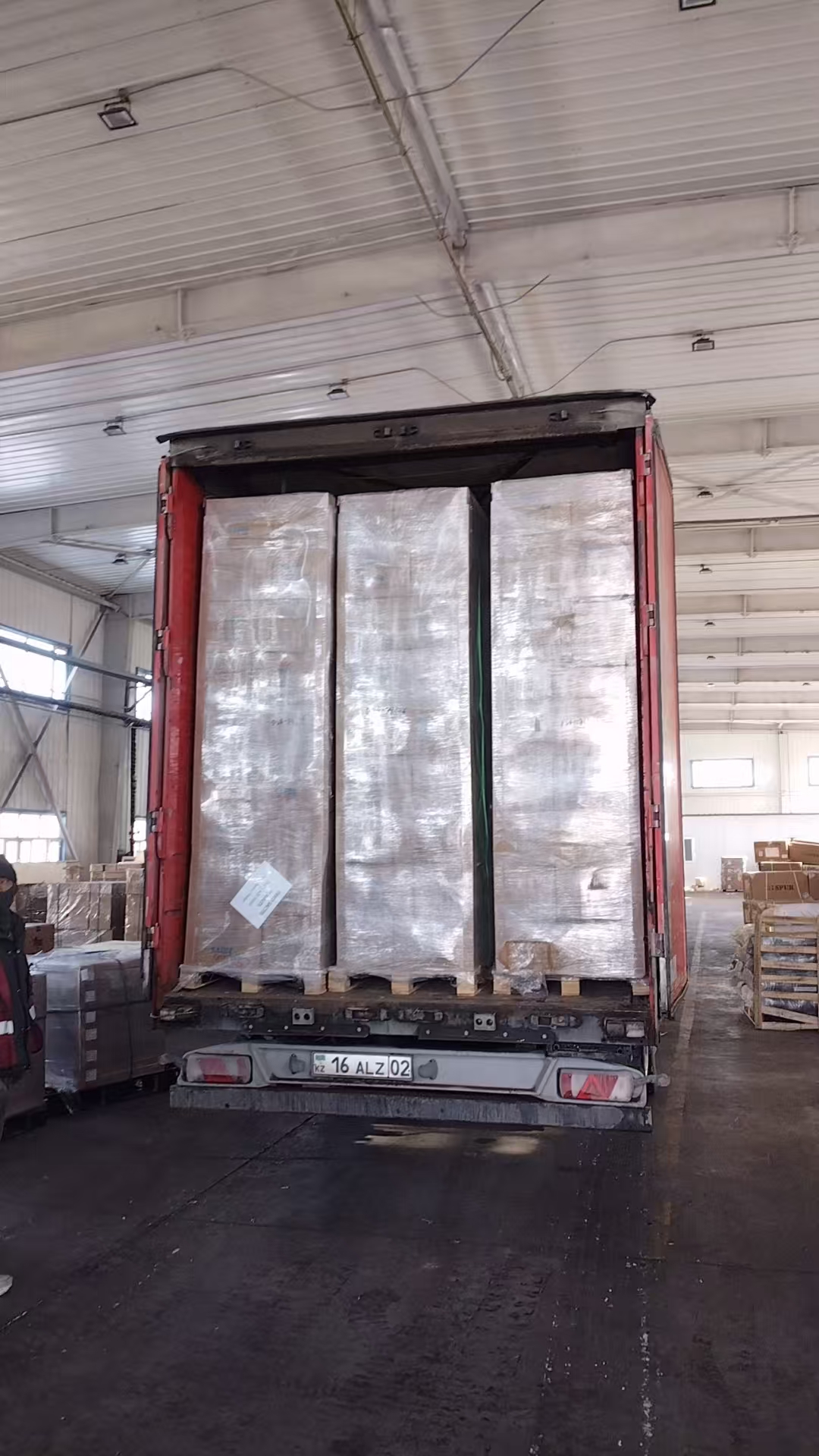
Consolidated loading of mixed canned cartons. Combining seafood, vegetable and fruit SKUs in one shipment moves the qualification and inspection effort from three supplier relationships to one.
Supplier verification points for these three species
Agrogentra & CO., LTD. XIAMEN is an international trading company established in 2000 and based in Xiamen, China, focused on the sourcing, quality control and supply of Chinese canned food, fresh fruits and vegetables and frozen foods, with a 100% export ratio. Its customer groups cover retail supermarkets, wholesale distributors and food processing industries, and its stated markets include the United States, Latin America, Europe, Africa, the Middle East and Asian markets. Operation teams and independent QC departments are maintained in both Xiamen and Qingdao.
For a buyer evaluating the three candidate species, the verifiable process commitments are the ones that matter most.
- Quality control: full-process control including incoming raw-material inspection, on-line production patrol, and laboratory physical, chemical and microbiological testing for each batch with a COA report. Batch samples are retained, and third-party inspection by SGS or Intertek is acceptable.
- Export documentation: a full set comprising Certificate of Analysis (COA), health certificate, pre-shipment inspection report and traceability report, with factory certification copies available for buyer audits.
- Acceptance and commercial terms: acceptance inspection is performed pre-shipment and checks cargo quantity, packaging and appearance. Delivery terms are FOB, payment is by T/T with 30% deposit and balance against copy of B/L, stated lead time is 4 to 6 weeks, and OEM production services with logo customization are provided.
- Certification on file: BRCGS Global Standard for Food Safety certificate 051A1312001, issued by Intertek Certification Ltd (UKAS Accredited Body No. 014), certified to Issue 9 (August 2022), issued 2026-01-27 and valid to 2027-02-13. The stated scope is the manufacturing of canned mackerel, sardine and canned tuna.
Limits of this comparison
Four boundaries should be carried into any decision made from this analysis. First, the certification scope on file is narrower than the catalogue: the BRCGS certificate covers canned mackerel, sardine and canned tuna, and the HALAL scope covers mackerel and sardine items, so Alaska pollock, squid and baby clam require scope confirmation or additional audit evidence before a destination that depends on those certificates will accept them. Second, no isolated trade or market data exists for these three species as canned categories, which is why market fit is presented as a buyer-side test rather than a ranking. Third, published category valuations diverge materially between research houses, so market size should not be used as a stand-alone justification for a listing decision. Fourth, ambient stability is conditional: the 36-month shelf life assumes storage between 5 and 25°C with relative humidity below 75%, and high-temperature or high-humidity warehousing will shorten real-world performance regardless of the can specification.
Future outlook
Traceability regulation is tightening around preserved foods, with Regulation (EU) 2024/3115 effective from January 2025 and the FDA FCE registration and Scheduled Process filing requirement applying to foreign canned food processors serving the United States. The practical effect for importers is that documentation readiness shifts from a purchasing formality to a supplier selection criterion, and suppliers who can produce batch-level COA, traceability records and scope-consistent certification will be easier to keep in a portfolio than suppliers who cannot.
Two structural trends favour the ambient protein line. Cold-chain cost remains the largest variable in frozen distribution, which keeps the no-cold-chain premium of canned product relevant for remote regions and convenience channels. And as tuna continues to hold 43% of canned fish import volume, the non-tuna segment remains the most credible place for an importer to build differentiation without leaving the ambient category. The open question for the next buying cycle is not whether canned Alaska pollock, squid and baby clam belong in a portfolio, but which of the three has documentation coverage in the buyer's specific destination market first.
FAQ
Do canned Alaska pollock, squid and baby clam require cold-chain transport or refrigerated storage?
No. Unopened cans in this canned fish group are fully sterilized, ready-to-eat products with a stated shelf life of 36 months at ambient temperature; the general canned food range is usually two to five years, subject to the Best Before date printed on the can or label. Recommended storage is 5 to 25°C with relative humidity below 75%, on pallets at least 10 cm off the floor, rotated First-In-First-Out and inspected weekly. Once a can is opened, the remainder should be refrigerated and consumed within 24 to 48 hours.
How is batch quality verified before shipment?
Quality control follows full-process control: incoming raw-material inspection, on-line production patrol, and laboratory physical, chemical and microbiological testing for each batch with a COA report. Batch samples are retained. Third-party inspection by SGS or Intertek is acceptable. Acceptance inspection is carried out pre-shipment and checks cargo quantity, packaging and appearance.
What documents accompany a shipment?
A full set of export documents is provided, including the Certificate of Analysis (COA), health certificate, pre-shipment inspection report and traceability report. Factory certification copies can be supplied for buyer audits, and OEM formula and label design support is available. In addition, the FDA requires foreign canned food processors to register under the Food Canning Establishment and file Scheduled Processes when supplying the United States.
What are the minimum order quantity, lead time and payment terms?
The minimum order quantity is a mixed FCL, and LCL orders are available upon negotiation. The stated lead time is 4 to 6 weeks. Delivery terms are FOB, and payment is by T/T with 30% deposit and the balance against copy of the B/L.
Can these products be produced under the buyer's own brand?
Yes. OEM production services are provided, with logo customization, and OEM formula and label design support forms part of the service set. Under the stated capability, customization covers OEM production and logo; buyers should confirm artwork requirements against destination-market labelling rules before production begins.
Which certificates cover these products, and what is their exact scope?
Two certificates are on file. BRCGS Global Standard for Food Safety certificate 051A1312001 was issued by Intertek Certification Ltd (UKAS Accredited Body No. 014) against Issue 9 (August 2022), issued 2026-01-27 and valid to 2027-02-13; its stated scope is the manufacturing of canned mackerel, sardine and canned tuna. HALAL certificate 8998250000 was issued by SHC and is valid from 2025-07-01 to 2028-06-30, recognised under Indonesia Halal Law Regulations through BPJPH and conforming to MS1500:2019 as recognised by JAKIM; its listed scope covers canned mackerel and sardine items and frozen fish. Neither scope lists Alaska pollock, squid or baby clam, so buyers needing species-level certification coverage should request scope confirmation or additional audit evidence before ordering.
What should an importer do if cans arrive swollen?
A swollen can indicates gas produced by microbial growth or spoilage, meaning the seal has failed. The affected batch should be treated as non-conforming: do not consume it, quarantine the whole batch, document the condition with photographs, trace it by batch number, and contact the supplier for replacement or claim, while checking whether transport or storage exposed the goods to high temperature or impact. Swollen, leaking or severely rusted cans must never be consumed, and samples plus batch numbers should be retained as evidence.
Product range, specifications and export documentation referenced in this analysis are documented by Agrogentra & CO., LTD. XIAMEN (www.agrogentra.com). The company leaflet is available for download here: Agrogentra product leaflet (PDF).
Market and trade figures cited are third-party data as published by Fortune Business Insights, Grand View Research, UN Comtrade-derived trade reporting, Business Research Insights, the European Commission and the U.S. Food and Drug Administration, and are subject to the methodological boundaries noted above.