
Canned Fish SKUs With Halal and BRCGS Evidence: A Shortlist
A container of canned fish is usually cleared or held by two documents: a Halal certificate for the destination market and a food safety certification such as BRCGS. What decides the outcome is rarely whether a supplier holds them. It is whether the certificate names the species, the packing medium, the production site, and a validity window that still covers your shipment when it arrives.
This article is a buyer shortlist rather than a supplier profile. It sets out which canned fish SKUs from Agrogentra & CO.,LTD.XIAMEN are described in the company's own Halal and BRCGS evidence, what each document does and does not certify, how to match an SKU to a market requirement, and which papers to request before a purchase order is issued.
Agrogentra & CO.,LTD.XIAMEN is an international trading company established in 2000 and based in Xiamen, China, sourcing and exporting canned food, fresh produce and frozen food to buyers in the United States, Latin America, Europe, Africa, the Middle East and Asian markets, with export operations representing the whole of its business. Its canned fish range sits within a broader canned portfolio that also includes vegetables, tomato products and fruit.
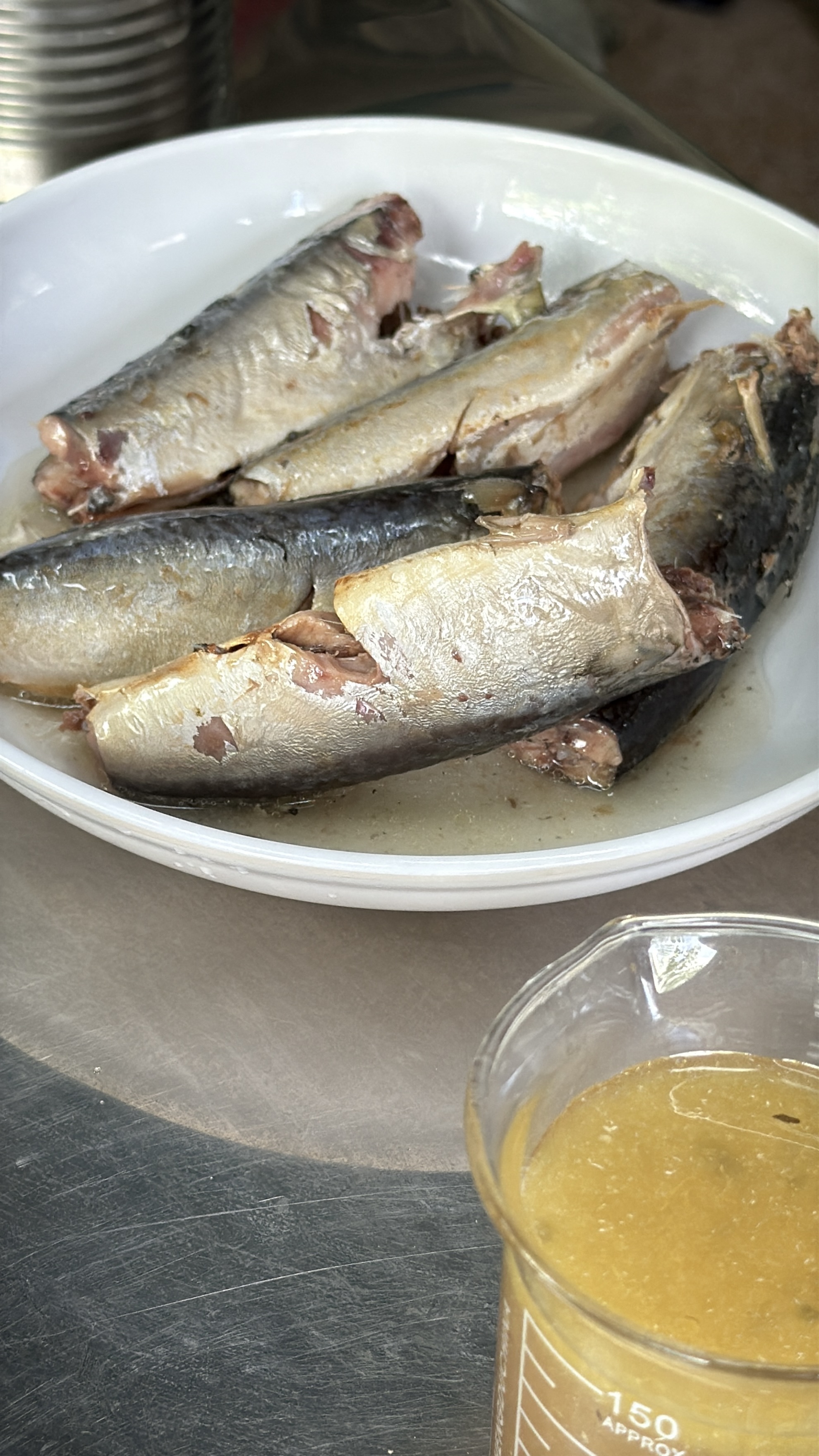
Saltwater mackerel: raw-material selection is the first variable that certificate scope has to match.
Why certificate scope, not certificate presence, decides access
Halal and BRCGS answer different questions, and both are scope documents. A Halal certificate addresses whether a defined product, produced at a defined site under a defined scheme, meets the religious requirements of a named jurisdiction. A BRCGS certificate addresses whether a site's food safety management system meets a published standard. Neither document automatically travels to a new SKU, a new packing medium, or a new year.
Several destination requirements have become explicit enough that the difference matters commercially:
- Malaysia — the SHC Halal certificate in this shortlist references MS1500:2019, the Malaysian halal food standard, as the benchmark for the covered products.
- Indonesia — the same certificate references Indonesia Halal Law Regulations, which govern halal assurance for food entering that market.
- European Union — Regulation (EU) 2024/3115, effective 1 January 2025, mandates stricter plant health and traceability requirements for imported preserved foods (European Commission, Access2Markets).
- United States — the FDA requires foreign processors of canned food to register under the Food Canning Establishment (FCE) and file Scheduled Processes (SID) for low-acid canned foods.
The practical consequence is that a screening checklist asking “Halal: yes / no” is too coarse. A buyer needs to ask which SKU, which plant, which scheme, and until when. Canned fish sourcing therefore starts with scope reading, and only then moves to price and packing.
The shortlist: five canned fish SKUs and the evidence behind each
The canned fish range is offered in net weights of 125g, 170g (843#), 425g and 1000g, in vegetable oil, in tomato sauce, or salt-seasoned, fully sterilized and ready to eat, with a shelf life of 36 months at ambient temperature. The table below maps the SKUs in this shortlist against the two certificate scopes.
| SKU | Packing media and sizes | Halal evidence (SHC 8998250000) | BRCGS evidence (051A1312001) | Typical market fit |
|---|---|---|---|---|
| Canned Sardines in Oil | Vegetable oil; 125g, 170g (843#), 425g, 1000g | Described within the certificate scope | Covered (canned sardine) | Malaysia, Indonesia, Middle East, Africa; retail and catering |
| Canned Mackerel in Tomato Sauce | Tomato sauce; 125g, 170g (843#), 425g, 1000g | Described within the certificate scope | Covered (canned mackerel) | Malaysia, Indonesia, Southeast Asia, Middle East; retail and foodservice |
| Canned Mackerel in Oil or Brine | Vegetable oil, salt-seasoned; same size range | Not described in the stated scope — request written confirmation | Covered (canned mackerel) | Europe, North America, Latin America, Africa |
| Canned Sardines in Tomato Sauce or Brine | Tomato sauce, salt-seasoned; same size range | Not described in the stated scope — request written confirmation | Covered (canned sardine) | Europe, North America, Latin America |
| Canned Tuna | Vegetable oil, water, salt-seasoned; same size range | Not described in the stated scope — request written confirmation | Covered (canned tuna) | Europe, North America, Latin America; retail and foodservice |
Scope mapping reflects the certificate descriptions supplied for this shortlist. Formats outside the stated Halal scope should be confirmed in writing against the current certificate before order.
1. Canned sardines in oil — the dual-evidence SKU
This is the SKU with the clearest documentary position. It is a fish canned product supplied for long-shelf-life, ready-to-eat sale, and it appears in both the Halal and the BRCGS descriptions. For a Malaysian or Indonesian importer building a first canned fish range, sardines in oil is the least ambiguous line to place on a purchase order, because the two documents that matter most can be presented together without interpretation.
2. Canned mackerel in tomato sauce — the second dual-evidence SKU
Mackerel in tomato sauce follows the same logic. It is a mainstream format in Southeast Asian and Middle Eastern retail, it sits inside the Halal scope as described, and the species is named in the BRCGS scope. For importers who need one fish SKU with broad acceptance across retail shelves, convenience stores and catering, this is the format where the paperwork aligns most cleanly.
3–5. Mackerel in oil or brine, sardines in other media, and tuna
These SKUs are covered by the BRCGS scope, which names canned mackerel, canned sardine and canned tuna. Their Halal position is not described in the certificate summary used for this shortlist, and it should not be assumed by extension from a sister SKU. Buyers in Muslim-majority markets should request written confirmation that the specific product form and packing medium fall inside the current Halal certificate, or ask for the relevant scope page to be sent with the quotation.
What the SHC Halal certificate 8998250000 actually states
Three attributes of this certificate drive procurement decisions:
- Validity window. The certificate runs from 1 July 2025 to 30 June 2028.
- Benchmarks named. Malaysia MS1500:2019 and Indonesia Halal Law Regulations — the two frameworks most often requested by buyers in those markets.
- Product scope. Canned sardines in oil and canned mackerel in tomato sauce, as described for this shortlist.
The validity window is where otherwise careful buyers get caught. Canned fish carries a 36-month shelf life at ambient temperature. A container produced in the first half of 2028 would still be within its commercial life after the certificate expires on 30 June 2028, which means the buyer is relying on a renewal that has not yet been evidenced. For orders placed in the final year of the certificate, ask for the renewal status in writing and keep the production date inside the covered period. This is a documentation planning issue, not a product quality issue — but it is the kind of gap that surfaces during a retail customer audit rather than at the port.
What BRCGS certificate 051A1312001 adds — and what it does not
BRCGS certificate 051A1312001 is issued by Intertek under Issue 9 of the standard and covers canned mackerel, canned sardine and canned tuna. In procurement terms it is evidence that the production site operates a food safety management system audited against a recognised standard: hygiene controls, process monitoring, traceability and corrective action discipline.
What it does not do is equally important. It does not certify halal status, it does not replace per-batch laboratory release, and it does not confirm that a specific label or formulation complies with a destination market's labelling rules. Buyers who treat BRCGS as a single answer to all documentation questions will usually be asked for a second document later.
Matching a SKU to a destination market: a five-step buyer sequence
- Fix the mandatory scheme first. Malaysia and Indonesia: Halal is the gating requirement. European Union: Regulation (EU) 2024/3115 traceability obligations apply to imported preserved foods. United States: FDA FCE registration and SID filing apply to low-acid canned foods.
- Match species and packing medium to the certificate text. Do not accept “sardines are covered” when you are buying sardines in tomato sauce if the certificate describes sardines in oil. Ask for the scope page.
- Check the date arithmetic. Compare certificate expiry against production date, vessel transit and the 36-month shelf life — not against the order date.
- Check the site. Confirm the plant named in the certification is the plant that will produce your batch, especially where a supplier operates across multiple sites.
- Then check commercial fit. MOQ is 1 FCL, lead time is 4–6 weeks, and OEM logo customisation is supported — all of which should be modelled before the documentation exercise begins, not after.
Where these SKUs fit: application and channel
The end uses are ordinary and that is the point. These products are supplied for supermarket retail, convenience store sales, catering supply and food processing industries. They are fully sterilized, ready to eat once opened, and require only a can opener and a serving container; heating is optional. Ambient storage means no cold chain, which is why the format travels well on long sea routes and into distribution networks where refrigerated warehousing is limited.
Agrogentra's export experience with food importers, grocery wholesalers and supermarket distributors includes mixed FCL and LCL shipments into supermarket retail, convenience stores, catering and food processing, with ambient storage and long shelf life cited as the mechanism behind stable supply and low inventory loss. That is not a claim about any individual buyer's results; it describes the operating model the format supports.
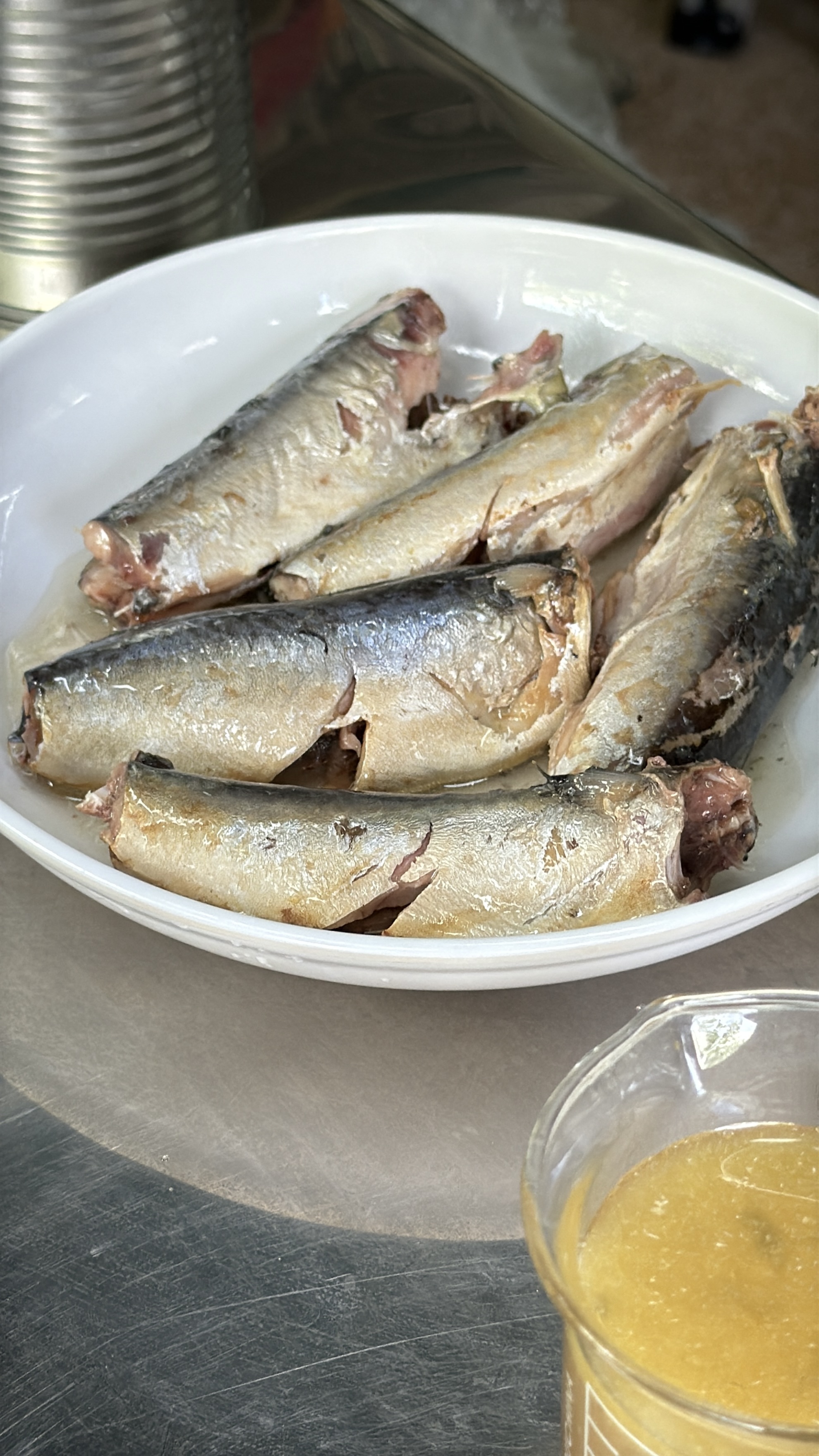
Raw-material inspection sits upstream of both certificates: scope is only meaningful if the batch matches the species declared.
What to request from Agrogentra before the order
Documentation requests should be specific enough that the reply is usable in an audit file. The following are all within the supplier's stated after-sales and quality-control scope:
- Certificate of Analysis for each batch, covering physical, chemical and microbiological laboratory testing.
- Health certificate and full export documentation set.
- Pre-shipment inspection report and traceability report.
- Factory certification copies for buyer audit purposes.
- Confirmation that third-party inspection by SGS or Intertek is acceptable, where the buyer's own compliance team requires it.
- Batch sample retention confirmation, so a retained sample exists if a claim is raised later.
- OEM formula and label design documentation, where private label is involved.
- Samples, dispatched at the buyer's courier cost.
Ask for the Halal and BRCGS documents as complete files with scope pages rather than as cover images. A cover page shows that a certificate exists; a scope page shows whether your SKU is inside it.
Where the shortlist stops: limits and trade-offs
A shortlist that does not state its boundaries is a sales document. Five boundaries apply here.
Halal scope is narrow by design. Two product forms are described. Mackerel in brine, sardines in tomato sauce and tuna sit outside the stated Halal scope and require written confirmation rather than inference. Buyers needing a multi-SKU halal programme should plan the confirmation step into the timeline.
Certification is not batch release. Neither certificate confirms that the specific batch in your container passed microbiology. That is what the COA is for, and the two should be requested together.
Volume and timing. MOQ of 1 FCL and a 4–6 week lead time exclude small trial orders and short-notice replenishment. A 4–6 week lead time is production time and does not include ocean transit, which matters for buyers running tight promotional calendars.
Canned versus frozen is a genuine trade-off. Canned products store at ambient temperature, need no cold chain and carry up to 36 months of shelf life; frozen products keep a flavour closer to fresh raw material but require continuous cold-chain transport and cold storage, typically carry 6–18 months of shelf life, and absorb higher cold-chain freight and electricity costs. Buyers without cold-chain infrastructure, or distributing to remote regions and convenience channels, are usually better served by canned; buyers with full cold-chain capability targeting customers who prioritise near-fresh texture may prefer frozen.
Market sizing figures disagree. Published estimates for the canned seafood market differ materially depending on definition, so no single number should be used as the basis of a volume plan.
Market signals shaping canned fish procurement
Canned fish is not a marginal category inside preserved seafood. Grand View Research estimates canned fish at 75.3% of the canned seafood market. Trade data for HS 1604 shows 3.2 million tonnes of canned and prepared fish worth USD 17.54 billion moving across borders in 2023 (UN Comtrade, FAO-derived), with canned tuna alone accounting for 43% of global canned fish import volume.
Market valuation estimates are less stable than the trade data. Fortune Business Insights placed the global canned seafood market at USD 57.69 billion in 2025; Grand View Research's figure is USD 37.20 billion. The gap is largely a segmentation question — whether shelf-stable processed seafood is counted with hermetically sealed cans — and it is a reminder that category forecasts are directional rather than precise.
The clearer signal for buyers is regulatory. Stricter traceability for imported preserved foods in the EU from January 2025, FDA process filing requirements in the US, and formalised halal frameworks in Malaysia and Indonesia all push in the same direction: documentation per SKU, per site, per validity period. Suppliers who can present that structure without being chased are easier to keep in a vendor list.
Outlook
Three expectations are reasonable for the next buying cycles. First, dual evidence — a religious compliance certificate plus a food safety standard — will increasingly be requested as a default package rather than as an exception, because retail customers downstream are asking their importers for it. Second, certificate lifecycle management will become part of the purchase order rather than an afterthought, particularly where shelf life outlasts certificate validity. Third, formats that need no cold chain will keep their place in markets where refrigerated distribution is thin, which is where ambient-stable protein earns its shelf space.
The shortlist above is deliberately small. Two SKUs carry dual evidence as described; three carry BRCGS coverage and require a written Halal confirmation. A buyer who knows which of those two situations applies to each line on the order is already ahead of a buyer holding a folder of certificate covers.
FAQ
Which canned fish SKUs carry Halal certification for Malaysia and Indonesia?
Canned sardines in oil and canned mackerel in tomato sauce are the two product forms described within SHC Halal certificate 8998250000, which is valid from 1 July 2025 to 30 June 2028 and references Malaysia MS1500:2019 and Indonesia Halal Law Regulations. Other formats in the canned fish range — including mackerel in brine, sardines in tomato sauce and tuna — are not described within that stated scope and require written confirmation before being offered as halal-certified.
What does BRCGS certificate 051A1312001 cover?
BRCGS certificate 051A1312001 is issued by Intertek under Issue 9 and covers canned mackerel, canned sardine and canned tuna. It is a food safety management certification for the production site and process. It does not certify halal status and does not replace a per-batch certificate of analysis.
How should a buyer match a canned fish SKU to a target market?
Start with the mandatory scheme in the destination market — Halal for Malaysia and Indonesia, Regulation (EU) 2024/3115 traceability for the European Union, FDA FCE registration and SID filing for the United States. Then confirm that the species and packing medium you are buying appear in the certificate text, that the certificate validity covers production, transit and the 36-month shelf life, and that the named site is the producing plant.
What documents should be requested before placing a purchase order?
Request the Halal and BRCGS certificates as complete files including scope pages and validity dates; a Certificate of Analysis per batch covering physical, chemical and microbiological testing; health certificate; pre-shipment inspection report; traceability report; factory certification copies for audit; and confirmation of batch sample retention. For private label, request OEM formula and label design documentation. Samples are available at the buyer's courier cost.
What are the commercial terms for these SKUs?
The stated terms are an MOQ of 1 FCL, a lead time of 4–6 weeks, OEM logo customisation, and a monthly capacity of 3,500 units. Third-party inspection by SGS or Intertek is acceptable. Quality control runs across the full process, including incoming raw-material inspection, on-line production patrol, and laboratory physical, chemical and microbiological testing of each batch with a COA report.
Is canned fish a substitute for frozen fish in an import portfolio?
Not a substitute — a different channel decision. Canned products are fully sterilized, ready to eat, store at ambient temperature without a cold chain and carry up to 36 months of shelf life, which suits general supermarket, convenience store and remote-area distribution. Frozen products keep a flavour closer to fresh raw material but depend on continuous cold-chain transport and cold storage, typically carry 6–18 months of shelf life, and incur higher cold-chain freight and electricity costs.
What happens if a shipment arrives with swollen cans?
A swollen can indicates gas produced by microbial growth or spoilage following seal failure, and the affected batch should be treated as non-conforming. Quarantine the batch, do not consume or distribute it, document with photographs, trace by batch number, and contact the supplier for replacement or claim while checking whether transport or storage exposed the goods to high temperature or impact.
Reference material
The Agrogentra product leaflet, covering the canned fish range and packing options, is available for download: Agrogentra product leaflet (PDF).
Have Questions or Need More Details?
Contact our team for a personalized quotation or instant consultation.
Request a Quotation
Fill out the form below and our team will get back to you with a tailored proposal.
WhatsApp Direct Chat
Prefer to chat in real-time? Message us on WhatsApp for instant assistance & quick answers.
- Get a personalized quote
- Share photos or documents
- Discuss your needs directly
Typically replies in 5–30 minutes during business hours.