
Canned Fruit Certifications by Market: A Buyer Decision Framework
A supplier can hold five certificates and still fail a market entry, because certificates answer three different questions — who the facility is, which scheme the process follows, and which named products the scope actually covers. Buyers who filter on document count rather than scope mapping usually discover the gap at customs clearance or at a retail customer audit.
Canned fruit is one of the few food categories where the regulatory and commercial paperwork is unusually well standardised across markets: facility registration for the United States, halal certification for Indonesia, Malaysia and the wider Muslim market, kosher certification for Israel, the United States, Europe and the Middle East, and a food safety management scheme such as ISO 22000:2018 or BRCGS Issue 9 as the global baseline. Each of these has a defined scope, a defined validity window, and a defined set of products it does and does not cover. The buying decision is not which supplier has the most documents; it is which supplier's documents match the specific SKU, pack format and destination in the purchase order.
This framework sets out how to run that comparison, using the certificate set held by Agrogentra Canned Foods — the canned fruit and vegetable line of Agrogentra & Co., Ltd., an Xiamen-based exporter established in 2000 — as a worked example. The company's portfolio includes canned mandarin oranges, canned pineapple, canned yellow peach, canned pear, canned fruit jelly, canned fruit cocktail, canned cherries, canned applesauce, fruit cups and canned lychee, alongside canned vegetables such as canned mushrooms, canned asparagus, canned sweet corn and canned green peas.
The core problem: registration, certification and scope are three different things
Most shortlisting errors come from treating all compliance documents as interchangeable. They are not.
- Facility registration identifies a manufacturing site to a regulator and defines the categories it may produce for that market. It is a registration, not a third-party endorsement of the management system.
- Scheme certification — ISO 22000:2018, BRCGS Issue 9 — verifies that a food safety management system or process scope has been audited against a published standard by an accredited body.
- Religious dietary certification — halal, kosher — verifies that named products, produced under named conditions, meet a defined dietary rule set, and it is consumed by a specific market rather than by a regulator.
A purchase order for canned yellow peach shipped to the United States and then re-exported to Malaysia therefore touches at least three separate document families at once, and each family has to be checked against the same product name. That is the reason scope mapping, not document counting, is the operative buying skill.
A four-gate screening framework
The framework below runs in a fixed order. Skipping a gate is what produces the expensive failures, because a later gate is cheaper to check than an earlier one is to fix.
| Gate | Question asked | Failure mode if skipped |
|---|---|---|
| 1. Market | Which document is legally required at destination, and which is commercially required by the buyer or retailer? | Product held at port, or refused at the customer's goods-in audit despite valid paperwork for a different market. |
| 2. Scope | Does the specific product name appear inside the certified scope? | Certificate is genuine but does not cover the SKU — the most common and least visible gap. |
| 3. Pack media | Does the scope name the container type and packing medium actually ordered? | Tin can approved, plastic cup or plastic bag shipment unsupported; syrup pack approved, juice pack unverified. |
| 4. Validity | Does the certificate window cover the production and shipment dates, not just today's date? | Certificate expires between order confirmation and loading, forcing re-issue or delay. |
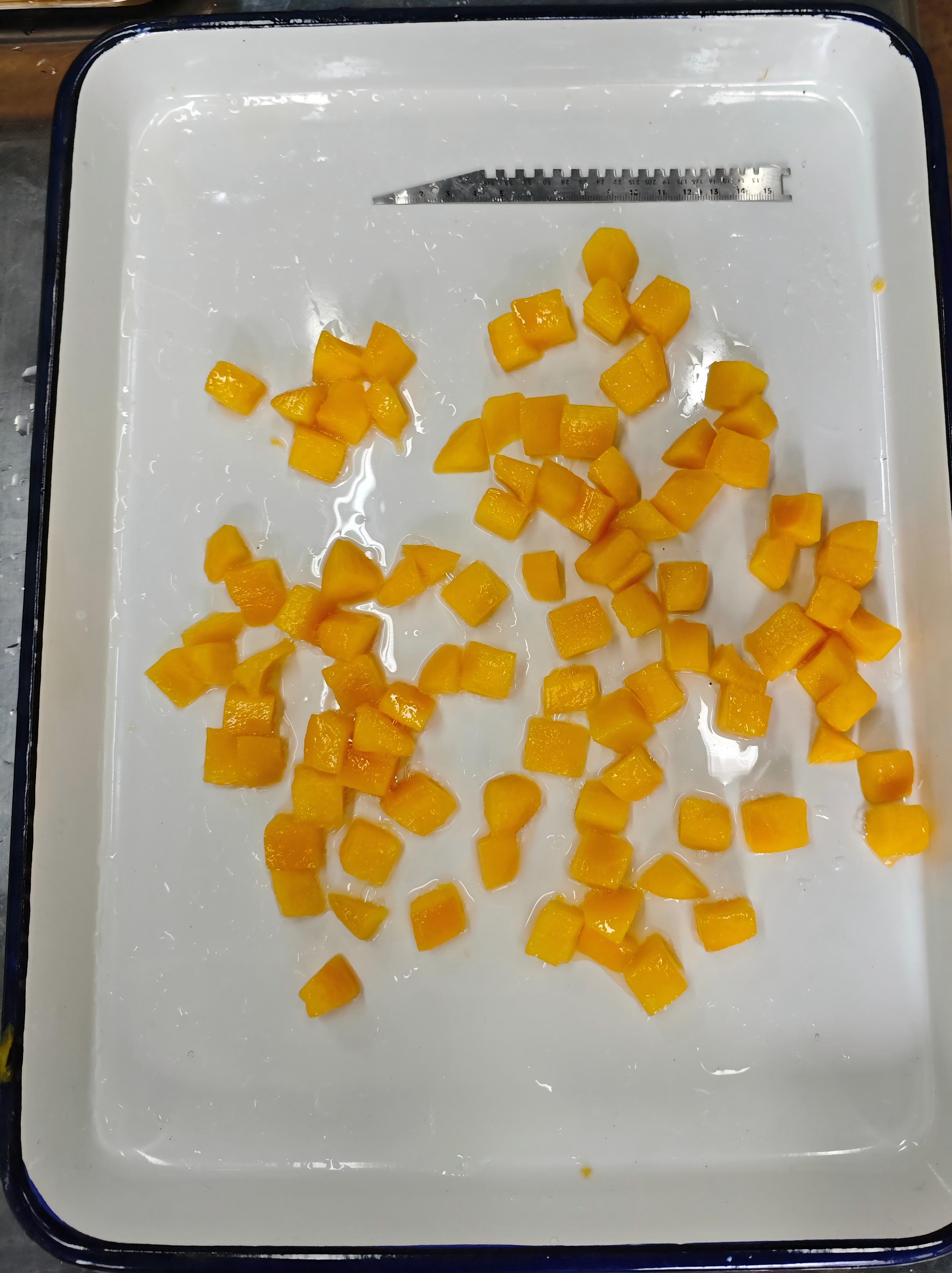
Canned yellow peach dices — a product named explicitly in ISO 22000:2018, BRCGS Issue 9 and STAR-K scopes, which makes it a useful control sample when testing a supplier's scope claims.
Gate 1: mapping certificates to destination markets
The table below maps the four market-facing document families to the markets they serve and to the reference framework each one is issued against. It is deliberately a map, not a ranking: none of these documents substitutes for another.
| Market | Document held | Reference framework | Boundary to verify first |
|---|---|---|---|
| United States | FDA Food Facility Registration No. 18082639404 (Biennial Renewal 2024) | 21 CFR 1.225–1.244; 21 CFR 113/114 as applicable | Registered category and product list; fish cans explicitly excluded |
| Indonesia, Malaysia, global Muslim markets | HALAL No. 1031240000, issued by SHC and recognized by JAKIM | MS1500:2019; Indonesia Halal Law & Regulations; BPJPH Halal Regulations | Which canned items are enumerated in the scope annex |
| Israel, USA, Europe, Middle East, Jewish communities worldwide | STAR-K Kosher Certificate RIB1RR1Q (Pareve status) | STAR-K Kosher Certification, Baltimore, Maryland, USA | Product list plus the packing media named in the scope |
| Global baseline | ISO 22000:2018 No. CNO0124F21626R5M/3200 (CQC); BRCGS Issue 9 No. 05LA1209004 (Intertek) | ISO 22000:2018; BRCGS Global Standard Food Safety Issue 9 | Process steps and product families inside the audited scope |
United States: what registration No. 18082639404 does and does not prove
Registration 18082639404 is a foreign facility registration recorded with the U.S. FDA, valid from 2024-10-09 to 2026-12-31, covering manufacturing, processing, packing, acidified and low-acid food processing and labelling. The record names a U.S. Agent, Diana Liu of Quincy, MA, and cites 21 CFR 1.225–1.244 together with 21 CFR 113/114 as applicable — the low-acid and acidified food provisions that matter for canned produce.
The covered product list is specific: canned mandarin oranges, canned pineapple, canned yellow peach, canned pear, canned fruit jelly, canned fruit cocktail, canned cherries, canned applesauce, fruit cups, canned lychee, canned mushrooms, canned asparagus, canned sweet corn and canned green peas. The same record limits the registered category to Category 17 Fruit & Fruit Products only and states that fish cans are excluded. When a purchase order mixes canned fruit with canned seafood, that exclusion has to be handled explicitly rather than assumed.
Indonesia, Malaysia and the Muslim market: HALAL 1031240000
HALAL certification 1031240000 is issued by SHC (Shandong Halal Certification Service), recognized by JAKIM, and runs from 2024-11-30 to 2027-11-29 — the longest continuous validity window among the documents examined here. It is issued against MS1500:2019, the Indonesia Halal Law and Regulations, and BPJPH Halal Regulations, and it serves Indonesia, Malaysia and the wider global Muslim market.
The scope as recorded enumerates canned and glass items: mushroom, mushroom in brine, potato, baby corn, bamboo shoots, bean sprouts, cut green bean, green pea and kidney bean. This is a vegetable-weighted list. A buyer sourcing canned fruit for a Muslim-majority market therefore needs to confirm, in writing, whether the specific fruit SKU sits inside the certificate annex — or whether the relevant confirmation is a supporting document issued against a specific product range. That single check prevents a routine and avoidable mismatch between a valid halal certificate and an unlisted SKU.
Kosher markets: STAR-K RIB1RR1Q and the date question
STAR-K Kosher Certificate RIB1RR1Q is issued by STAR-K Kosher Certification of Baltimore, Maryland, USA, with Pareve (dairy-free and meat-free) status, for the global kosher market including Israel, the United States, Europe, the Middle East and Jewish communities worldwide. The certified scope names canned apple, apricot, mandarin orange, mixed fruits, pear and yellow peach, and explicitly names the packing media: syrup, water, pear juice and solid pack. For a buyer, that pack-media detail is as valuable as the product list, because it removes ambiguity about which filling line output is covered.
The record shows an issue date of 2025-04-03 and a printed expiry of 2026-03-31. A printed expiry in the past does not make the certificate fraudulent; it makes it a renewal item. Any order placed for shipment after that date must be supported by the re-issued certificate, and the buyer should request the current document rather than accept a scanned copy from an earlier cycle.
Gate 2 and Gate 3: reading product scope and pack media together
Scope checking fails most often at the pack-media level, because a supplier may be certified for a product but not for the format the buyer ordered. The two global schemes illustrate the point.
ISO 22000:2018 certificate CNO0124F21626R5M/3200, issued by CQC, covers the production of canned fruit — specifically peach, mix fruits, pear, orange, apple, pineapple, and jam and jelly (pulpy jelly). Product-by-product, the scope maps canned yellow peach to the canned peach scope, canned mandarin orange to the canned orange scope, canned fruit cocktail to the mix fruits scope, canned applesauce to the canned apple scope and canned fruit jelly to the jam and jelly scope. Canned vegetables are not listed in that scope. A buyer ordering canned mushrooms, canned asparagus, canned sweet corn or canned green peas should therefore not present ISO 22000:2018 as the vegetable-side evidence.
BRCGS Issue 9 certificate 05LA1209004, issued by Intertek Certification Limited with an issue date of 2025-10-05 and an expiry of 2026-12-02, is more explicit on process and format. The certified scope covers washing, peeling, pre-cooking, filling, seaming and pasteurization of canned fruit — peach, apple, pear, pineapple, orange and mixed fruits — plus canned apple sauce, in tin can, plastic cups and plastic bags, together with ingredient weighing and mixing, blending and cooking. Three container formats are named. That matters for buyers of fruit cups and applesauce, where the packed format, not the fruit, is the variable.
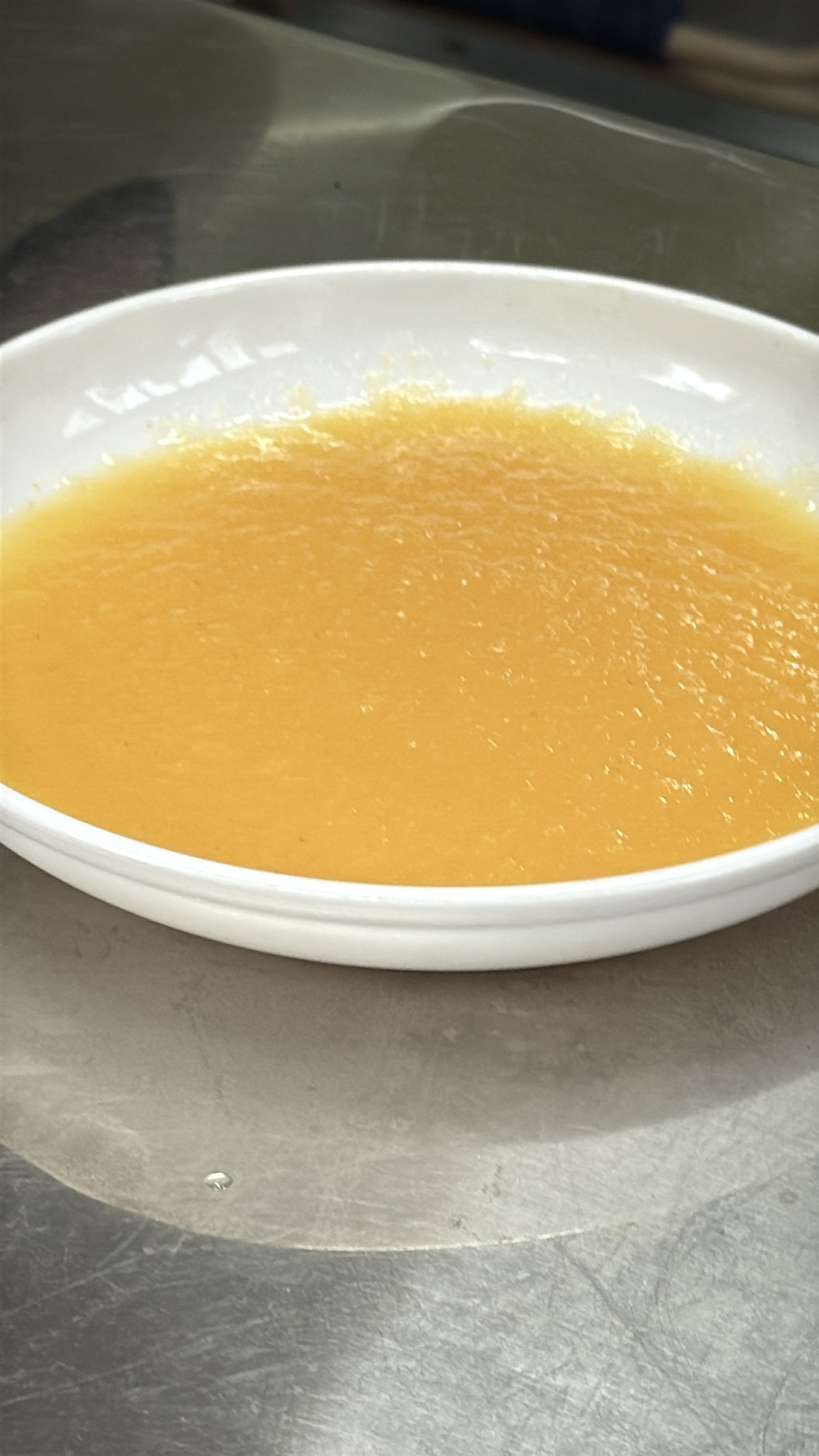
Canned applesauce appears as a named product within the BRCGS scope, and the scope additionally names tin can, plastic cups and plastic bags as covered pack formats.
| Document | Products named in scope | Pack formats named | Validity as recorded |
|---|---|---|---|
| ISO 22000:2018 — CNO0124F21626R5M/3200 | Canned fruit: peach, mix fruits, pear, orange, apple, pineapple, jam and jelly (pulpy jelly) | Not specified in scope text | Dates not stated in record — request certificate copy |
| BRCGS Issue 9 — 05LA1209004 | Canned fruit: peach, apple, pear, pineapple, orange, mixed fruits; canned apple sauce | Tin can, plastic cups, plastic bags | 2025-10-05 to 2026-12-02 |
| STAR-K Kosher — RIB1RR1Q | Canned apple, apricot, mandarin orange, mixed fruits, pear, yellow peach | Syrup, water, pear juice, solid pack | 2025-04-03 to 2026-03-31 (renewal to confirm) |
| HALAL — 1031240000 | Canned/glass mushroom, mushroom in brine, potato, baby corn, bamboo shoots, bean sprouts, cut green bean, green pea, kidney bean | Canned and glass | 2024-11-30 to 2027-11-29 |
| FDA Food Facility Registration — 18082639404 | Canned mandarin oranges, pineapple, yellow peach, pear, fruit jelly, fruit cocktail, cherries, applesauce, fruit cups, lychee, mushrooms, asparagus, sweet corn, green peas | Not specified — facility-level registration | 2024-10-09 to 2026-12-31 |
Gate 4: validity runways and why they decide shipment timing
Canned fruit carries a 36-month shelf life at ambient temperature, is sterilised and contains no preservatives. That long shelf life creates a false sense of paperwork stability. The correct test is narrower: the certificate must be valid at the time of production and at the time of shipment. It does not need to remain valid for the whole retail life of the can, and it cannot be stretched to cover a shipment that leaves after the printed expiry.
Running the four validity windows against a single calendar exposes practical differences in renewal pressure. The FDA registration window closes on 2026-12-31 and the BRCGS window on 2026-12-02, so an order scheduled for early 2027 requires evidence of renewal before loading, not after arrival. HALAL 1031240000 runs to 2027-11-29 and offers the widest buffer. The STAR-K certificate printed to 2026-03-31 and the ISO 22000:2018 record carries no stated dates, so both require a current copy at the point of order. None of these observations reflect on product quality; they reflect only on document timing, which is the buyer's risk to manage.
Where the framework meets formats: syrup, cans and cups
Product specifications interact with certification scope more than buyers expect. The canned fruit and vegetable range is quoted at 425g and 2950g, with A9 and A10 whole-segment styles, light syrup as the packing medium, and a 36-month shelf life under normal temperature. Each of those variables can move a shipment in or out of a named scope. A change from syrup to pear juice is a scope question under the kosher certificate. A change from tin can to plastic cup is a scope question under the BRCGS certificate. A change from canned yellow peach to canned asparagus is a scope question under ISO 22000:2018, because the vegetable is not listed.
The packaging specification also carries a regulatory dimension that none of the four documents above addresses: can coatings. The European Union's Regulation (EU) 2024/3190 restricts the use of Bisphenol A in food contact materials, including can coatings. A buyer shipping to the EU should therefore expect a separate food-contact declaration covering the internal coating, because a food safety scheme certificate does not certify coating compliance and a kosher or halal certificate does not address it at all.
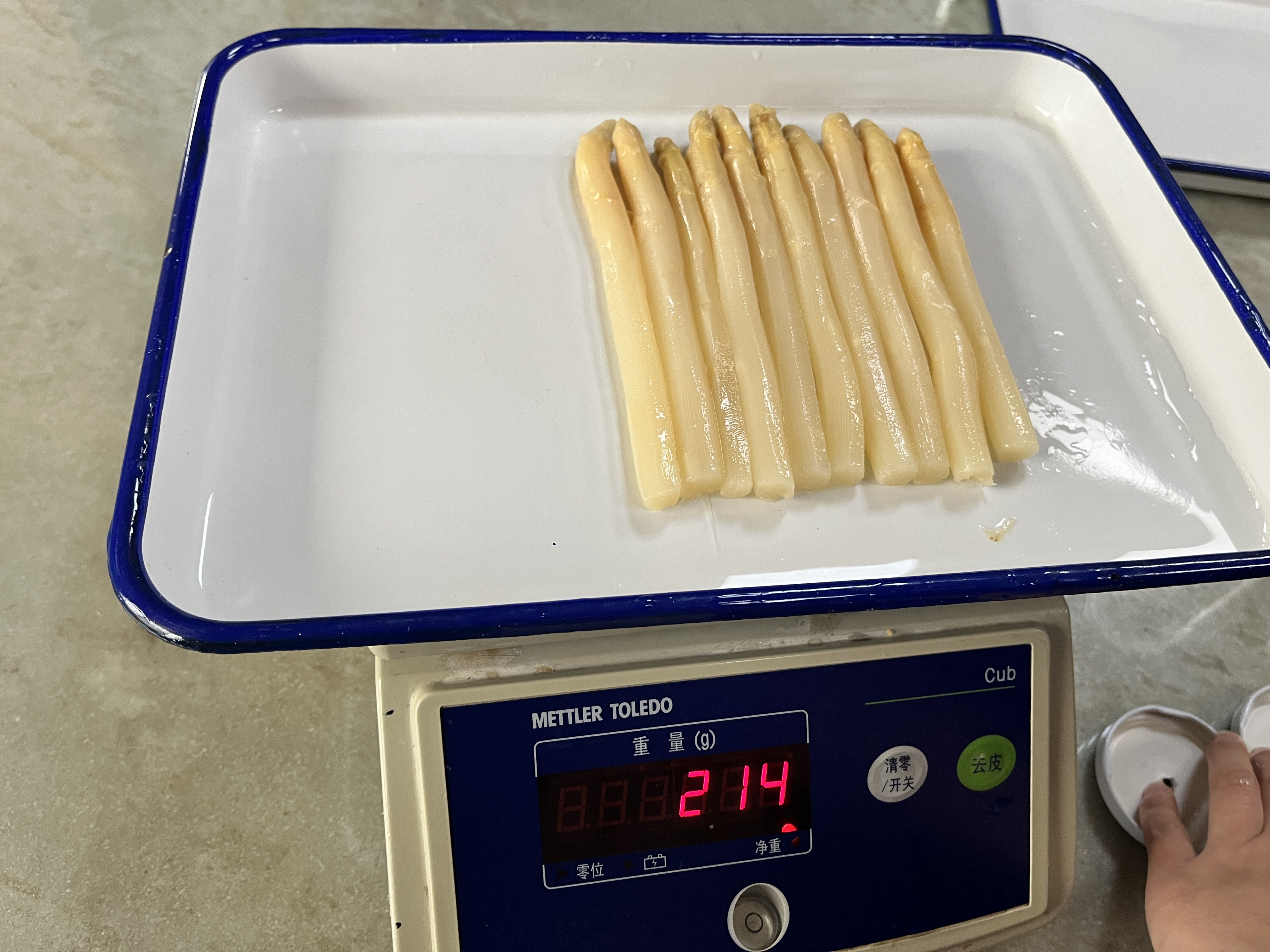
Canned asparagus sits outside the fruit-only ISO 22000:2018 scope recorded for this supplier — a vegetable SKU therefore needs a different evidence route than a fruit SKU.
Comparison with traditional shortlisting: document counting versus scope mapping
The conventional procurement habit is to request a certificate pack, count the documents and shortlist the supplier holding the most. It is fast, it is widely used, and it produces a specific and predictable error: the pack looks complete, so nobody reads the scope line.
| Dimension | Document-count shortlisting | Scope-mapped shortlisting |
|---|---|---|
| Selection signal | Number of certificates in the pack | Match between certificate scope and the ordered SKU, format and market |
| Typical failure | Certificate genuine, SKU not listed | Fewer suppliers pass the first filter; shortlist is shorter but defensible |
| Time cost | Low at shortlisting, high at audit or port | Higher at shortlisting, lower downstream |
| Renewal handling | Often missed until document expiry blocks a shipment | Tracked as a calendar item against the loading date |
The trade-off is real and worth stating plainly: scope mapping is slower, requires reading certificate text rather than counting logos, and sometimes produces a shortlist so short that a buyer has to reopen sourcing. It also cannot answer questions the certificates were never designed to answer — commercial terms, batch-to-batch consistency, actual lead-time performance or historical complaint rates. For those, buyers still need sampling, audit and reference checks. Scope mapping narrows the field; it does not close the decision.
Market context: why certification discipline is being tested in 2026
The commercial backdrop explains the tightening. The global canned fruits and vegetables market reached USD 105.35 billion in 2024, according to Market Research Future. China's total export value of fruit and vegetable canned products was US$3.859 billion in 2024, per China Canned Food Industry Association and China Customs data, while China's canned vegetable export volume reached 2.058 million tons in the same year, a 2.52% year-on-year decrease. Within the fruit segment, canned peaches held roughly 36.8% of the canned fruit market in 2024, based on Market.us reporting.
A market of that scale, supplied heavily from China, moves fast on price and slowly on documentation. As more retail buyers in Europe and North America push audit requirements upstream, the practical differentiator between two suppliers quoting the same product at a similar price is increasingly the ability to produce a scope-correct certificate set on request — not the ability to produce a certificate.
How Agrogentra supports scope-level verification
Agrogentra Canned Foods operates as the canned fruit and vegetable line of Agrogentra & Co., Ltd., a Xiamen-based exporter established in 2000 with 100% export orientation and markets across the United States, Europe, Latin America, Africa and the Middle East. The certificate set described in this framework — FDA registration 18082639404, HALAL 1031240000, STAR-K RIB1RR1Q, ISO 22000:2018 CNO0124F21626R5M/3200 and BRCGS Issue 9 05LA1209004 — is the factual basis on which scope conversations with buyers are conducted.
Operationally, three capabilities are relevant to the four-gate framework. First, OEM production with logo customisation is offered at a minimum order of one FCL, with a 4–6 week lead time and a stated monthly capacity of 3,500 units — which sets a realistic boundary on how quickly a re-certified or re-labelled order can be scheduled. Second, quality control covers incoming raw-material inspection, on-line production patrol, and laboratory physical, chemical and microbiological testing per batch with a COA report, plus batch sample retention, and third-party inspection by SGS or Intertek is accepted. Third, the documentation package released with shipments includes COA, health certificate, pre-shipment inspection report, traceability report, OEM formula and label design support, and factory certification copies for buyer audit.
For buyers building a scope map, the practical entry point is to request the certificate copies for the specific SKU and format in the enquiry, rather than a generic compliance pack, and to ask the supplier to confirm in writing which items fall inside each annex. Complete export and customs clearance documents are provided across the range.
A practical shortlisting sequence
- List the destination markets for the order, including any re-export or customer-driven requirements beyond the legal minimum.
- For each market, name the specific document required — registration, halal, kosher — and the reference framework it is issued against.
- Write the exact SKU list, including pack format and packing medium, before opening any certificate.
- Check each SKU against the product list in each scope; mark any SKU absent from a scope as unverified, not as covered.
- Check pack formats against the scope; treat tin can, plastic cup and plastic bag as separate approvals.
- Check validity against the planned production and loading dates, not against today's date.
- Request the food-contact and coating declaration separately for EU destinations.
- Close remaining unknowns through sampling, third-party inspection and audit rather than through inference.
Future outlook
Two shifts are likely to shape canned fruit certification over the next cycle. The first is renewal discipline becoming a tracked procurement metric rather than an afterthought: with FDA registration and BRCGS certificates both running to fixed dates in late 2026, buyers will increasingly ask for forward-dated renewal evidence at the quotation stage. The second is the separation of food safety certification from materials compliance. Regulation (EU) 2024/3190 on Bisphenol A in food contact materials, including can coatings, sits outside the scope of every document discussed in this framework, and it points toward a future where a compliant shipment requires a bundled evidence set — scheme certificate, market certificate, and materials declaration — rather than a single headline document.
For suppliers, that means certificate management becomes a commercial function; for buyers, it means the shortlisting question changes from "how many certificates do you hold" to "which of my SKUs appear in which scope, and until when."
FAQ
1. For the US market, is FDA Food Facility Registration enough, or is a food safety scheme certificate also required?
They serve different purposes. FDA Food Facility Registration No. 18082639404 is a regulatory registration of a foreign facility covering manufacturing, processing, packing, acidified and low-acid food processing and labelling, valid from 2024-10-09 to 2026-12-31 under 21 CFR 1.225–1.244 and 21 CFR 113/114 as applicable. ISO 22000:2018 and BRCGS Issue 9 are third-party certifications of a food safety management system and process scope. Registration establishes that the site is known to the regulator and declares its categories — Category 17 Fruit & Fruit Products only, with fish cans excluded; the scheme certificates evidence audited process control.
2. Does HALAL certification 1031240000 cover canned fruit, or only canned vegetables?
The scope as recorded enumerates canned and glass mushroom, mushroom in brine, potato, baby corn, bamboo shoots, bean sprouts, cut green bean, green pea and kidney bean — a vegetable-weighted list — and the certification applies to the canned fruit and vegetable product range overall. Because the annex enumerates specific items, a buyer sourcing a specific fruit SKU for Indonesia, Malaysia or another Muslim market should obtain written confirmation that the SKU is inside the current annex. The certificate runs from 2024-11-30 to 2027-11-29 against MS1500:2019, the Indonesia Halal Law and Regulations, and BPJPH Halal Regulations, and is issued by SHC, recognized by JAKIM.
3. A STAR-K certificate shows an expiry date that has already passed. Can it still support a new order?
A past expiry date makes the document a renewal item, not a valid support document for a new shipment. STAR-K Kosher Certificate RIB1RR1Q is recorded with an issue date of 2025-04-03 and an expiry of 2026-03-31. For any order produced or loaded after that date, the buyer should request the re-issued certificate and file it with the batch record. The underlying scope — canned apple, apricot, mandarin orange, mixed fruits, pear and yellow peach in syrup, water, pear juice or solid pack, with Pareve status — indicates what the renewed document should cover.
4. Which pack formats and packing media are named inside the BRCGS Issue 9 scope?
BRCGS certificate 05LA1209004, issued by Intertek Certification Limited with an issue date of 2025-10-05 and an expiry of 2026-12-02, covers washing, peeling, pre-cooking, filling, seaming and pasteurization of canned fruit — peach, apple, pear, pineapple, orange and mixed fruits — and canned apple sauce, in tin can, plastic cups and plastic bags, plus ingredient weighing and mixing, blending and cooking. Packing media are named separately in the STAR-K kosher scope: syrup, water, pear juice and solid pack. A change of container or medium should therefore be checked against the relevant certificate before it is quoted as covered.
5. Does ISO 22000:2018 certification cover canned vegetables as well as canned fruit?
The recorded ISO 22000:2018 scope, certificate CNO0124F21626R5M/3200 issued by CQC, covers production of canned fruit — peach, mix fruits, pear, orange, apple, pineapple, and jam and jelly (pulpy jelly). Canned vegetables are not listed in that scope. Buyers sourcing canned mushrooms, canned asparagus, canned sweet corn or canned green peas should request a separate evidence route for those items rather than assuming the fruit scope extends to them.
The full Agrogentra product and capability brochure is available for download: Agrogentra leaflet (PDF).
Have Questions or Need More Details?
Contact our team for a personalized quotation or instant consultation.
Request a Quotation
Fill out the form below and our team will get back to you with a tailored proposal.
WhatsApp Direct Chat
Prefer to chat in real-time? Message us on WhatsApp for instant assistance & quick answers.
- Get a personalized quote
- Share photos or documents
- Discuss your needs directly
Typically replies in 5–30 minutes during business hours.