
Canned Fruit Jelly: Certifications, Specs and Buyer Checks
Canned Fruit Jelly: Certifications, Specs and Buyer Checks
Canned fruit jelly is a small line inside a very large trade. The global canned fruits and vegetables market reached USD 105.35 billion in 2024 (Market Research Future), and China's export value of fruit and vegetable canned products was US$3.859 billion in the same year (China Canned Food Industry Association / China Customs). Jelly rarely drives container volume on its own — but it is often the line where certification scope, fill weight and labelling have to be verified item by item before a shipment is released.
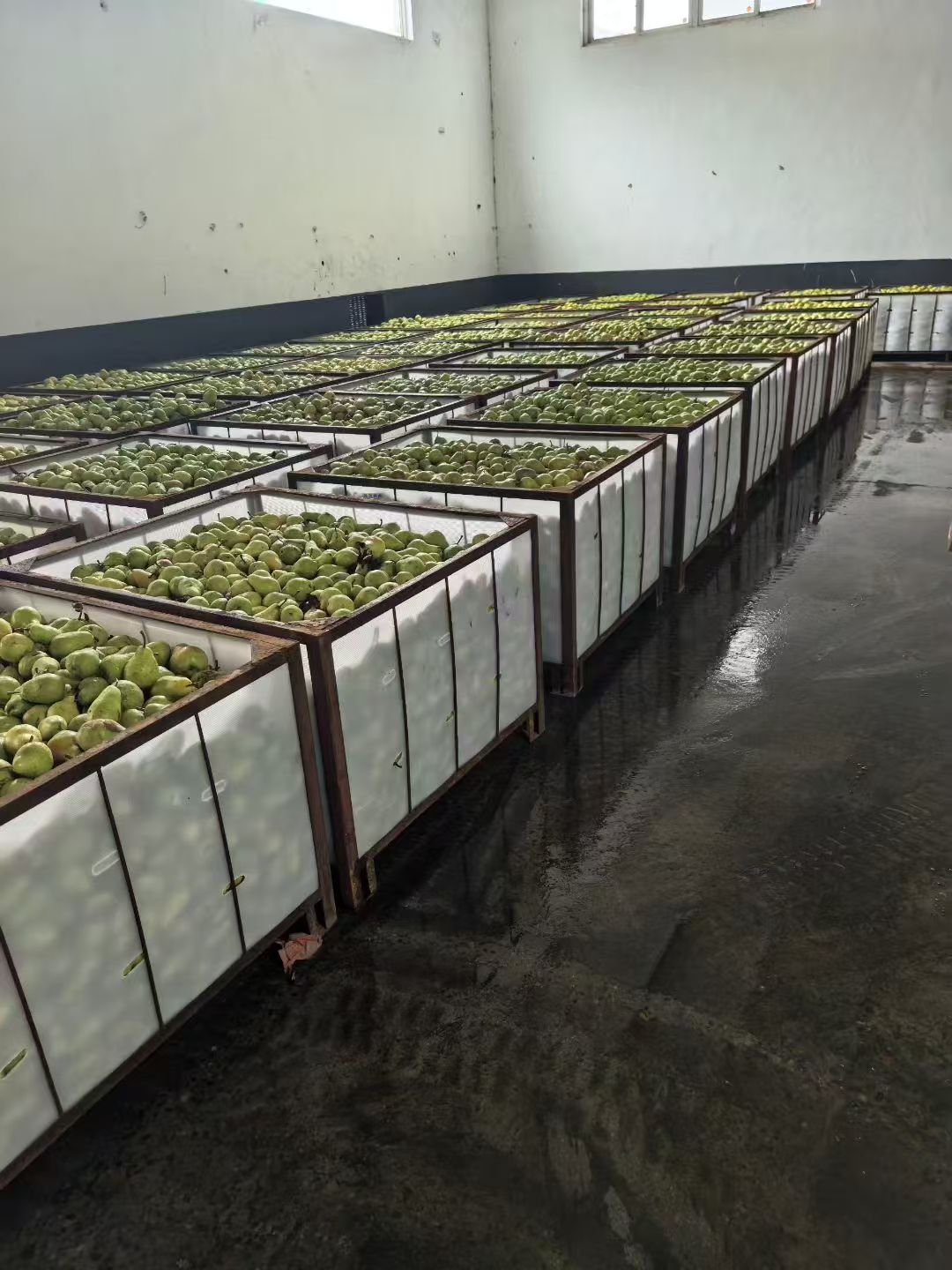
Raw material storage: fruit destined for canned products is processed shortly after harvest so that flavour and texture are locked in before sterilisation. Image: Agrogentra & Co., Ltd.
Why Canned Fruit Jelly Is a Constraint Problem Before It Is a Price Problem
For most canned fruit lines, the first commercial question is volume and price. For canned fruit jelly, the first question is usually specification. Jelly is a texture-driven product: the purchased item is defined by the approved sample, the declared packing medium, the can format and the net weight, rather than by a single commodity grade. Once those are fixed, the constraints that decide whether an order can actually ship are certification scope, sterilisation capability for the chosen format, and the storage and labelling rules of the destination market.
Three constraint types recur in buyer audits of canned fruit jelly and comparable lines:
- Product scope on certificates. A valid certificate is not automatically a certificate for the item being purchased. Scope wording — which fruits, which processes, which packaging — is what an importer's compliance team actually reads.
- Format and fill weight. Net weight, can style and packing medium determine packing quantity, transport weight and shelf presentation, and they also interact with the sterilisation process.
- Storage and handling limits. Ambient supply chains remove cold-chain cost but add their own rules on temperature, humidity and stock rotation, which must hold at the destination as well as at origin.
What the Canned Fruit and Vegetable Range Actually Covers
Agrogentra & Co., Ltd. (Xiamen) is an international trading company founded in 2000 and based in Xiamen, China. It specialises in the sourcing, quality control and export of Chinese canned food, fresh fruits and vegetables and frozen food, with all output directed to export markets including the United States, Latin America, Europe and Africa, and it has participated in major international food exhibitions since Anuga Cologne in 2001 and SIAL Paris in 2002. Canned fruit jelly is supplied as part of a canned fruit and vegetable range built on one shared specification platform.
Table 1 — Shared specification platform for the canned fruit and vegetable range
| Parameter | Specification |
|---|---|
| Net weight | 425 g / 2950 g |
| Style / can reference | A9, A10 whole segments |
| Packing medium | Light syrup |
| Shelf life | 36 months under normal temperature |
| Preservation | Sterilised, no preservatives |
| Raw material | Fruit and vegetable |
| Typical channels | Food & beverage wholesale, catering, supermarket retail, food processing |
| Trade services | Mixed container loading, private label, custom specification, complete export and customs clearance documents |
The fruit side of the range includes canned mandarin oranges, pineapple, yellow peach, pear, fruit jelly, fruit cocktail, cherries, applesauce, fruit cups and lychee. The vegetable side spans mushrooms, asparagus, sweet corn, green peas and related items. Because the fruit and vegetable lines share packing media, can sizes and documentation, a buyer can consolidate a mixed container instead of opening separate purchase orders product by product.
Certification Scope: The Detail That Decides Market Access
Five documents carry most of the compliance weight for a canned fruit jelly shipment. Each has a defined scope, and the scope — not the certificate title — determines what may be shipped and where.
Table 2 — Certification and registration scope relevant to canned fruit
| Document | Reference | Authority | Scope relevant to canned fruit jelly | Market / validity |
|---|---|---|---|---|
| ISO 22000:2018 Food Safety Management System | CNO0124F21626R5M/3200 | CQC | Production of canned fruit: peach, mix fruits, pear, orange, apple, pineapple, jam and jelly (pulpy jelly) | Global |
| BRCGS Food Safety Certification | 05LA1209004 | Intertek Certification Limited | Washing, peeling, pre-cooking, filling, seaming and pasteurisation of canned fruit; ingredient weighing and mixing, blending, cooking | Global; issued 2025-10-05, expires 2026-12-02 |
| FDA Food Facility Registration | 18082639404 | U.S. FDA (biennial renewal 2024) | Category 17 Fruit & Fruit Products only; canned fruit jelly is explicitly listed; fish cans excluded | USA; valid 2024-10-09 to 2026-12-31; U.S. Agent Diana Liu, Quincy MA |
| STAR-K Kosher Certificate | RIB1RR1Q | STAR-K Kosher Certification, Baltimore, Maryland, USA | Canned apple, apricot, mandarin orange, mixed fruits, pear and yellow peach (in syrup, water, pear juice or solid pack) | Global Kosher market; recorded term 2025-04-03 to 2026-03-31 |
| HALAL | 1031240000 | SHC (Shandong Halal Certification Service), recognised by JAKIM | Canned / glass mushroom, mushroom in brine, potato, baby corn, bamboo shoots, bean sprouts, cut green bean, green pea, kidney bean | Indonesia, Malaysia and global Muslim markets; valid 2024-11-30 to 2027-11-29 |
Scope boundaries that should be verified before an order is placed
- The ISO 22000:2018 certificate covers the canned fruit production listed in its scope and does not list canned vegetables. Canned fruit jelly is covered under the certificate's jam and jelly (pulpy jelly) scope, alongside canned yellow peach, mandarin orange, fruit cocktail and applesauce.
- The Kosher certificate scope names canned apple, apricot, mandarin orange, mixed fruits, pear and yellow peach. Fruit jelly is not named in that scope, and the certificate term recorded in the documentation ends on 2026-03-31. Kosher coverage and current renewal status for jelly should therefore be confirmed before ordering rather than assumed from the fruit range.
- The HALAL certificate as issued covers canned and glass mushroom, mushroom in brine, potato, baby corn, bamboo shoots, bean sprouts, cut green bean, green pea and kidney bean. Buyers requiring Halal-certified fruit jelly should verify the current product coverage against the live certificate.
- The FDA Food Facility Registration covers Category 17 Fruit & Fruit Products only and expressly excludes fish cans, so a mixed container combining fruit and seafood requires separate compliance treatment for each component.
How the Product Is Preserved: Sealing Plus Commercial Sterility
Canned fruit jelly keeps for 36 months under normal temperature without preservatives because two mechanisms work together, not because of additives. The first is hermetic sealing: the product is filled into the can and the can is closed by seaming, which creates an internal vacuum — typically in the range of 300–500 mmHg — so that almost no oxygen remains and aerobic bacteria and oxidation are suppressed. The second is high-temperature, high-pressure sterilisation: sealed cans are loaded into a retort and heated at 115–121°C under roughly 0.1–0.2 MPa of high-pressure steam to reach commercial sterility, the condition in which pathogenic bacteria and micro-organisms capable of growing at ambient temperature, together with their spores, are destroyed. After sterilisation the cans are rapidly cooled and held in an incubation test at 37°C for 7–10 days; only batches that show no swelling or microbial growth are released.
Sterilisation parameters are set according to the raw material's pH and solid content. Low-acid products (pH above 4.6, such as most fish and meat cans) require 121°C under pressure, while high-acid products (pH below 4.6, such as tomato) can be processed at lower temperatures. The cold-point temperature and the accumulated sterilisation value (F0) determine product safety.
For a buyer, this explains a rule that is often missed in negotiation: changing a can format or a fill weight is a process change, not only a packaging change, and it needs to be validated against the product's sterilisation curve before it can be quoted and scheduled.
Can construction and its practical consequences
Two can families dominate food packing. A three-piece can is assembled from a body cut from tinplate coil, formed into a cylinder by high-frequency resistance welding, plus a bottom and a lid that are double-seamed onto the body; the side seam gives it the strength to withstand 121°C pressurised sterilisation, which is why fish, meat and many vegetable cans use this construction. A two-piece can is drawn and stamped in one piece with no side seam, giving good sealing and a smooth appearance with a thinner wall; it suits products with lower pressure requirements or shorter sterilisation cycles, such as beverages and some juices. Easy-open ends — scored with a tear line and fitted with a riveted pull tab — remove the need for a can opener and are common in catering and ready-to-eat home consumption.
Can dimensions affect packing quantities and packaging cost; three-piece cans are commonly referenced by size codes such as 211×400 and 307×109. The choice between tin cans, plastic cups and plastic bags is a format decision that also has to sit inside the audited production scope, and the certified scope for this supplier's operations covers canned apple sauce in tin cans, plastic cups and plastic bags.
Quality control behind each batch
Documentation quality is a function of process control. The company runs professional operation teams and independent QC departments in both its Xiamen and Qingdao offices, supported by a development team of six engineers, and applies full-process control: incoming raw-material inspection, on-line production patrol, laboratory physical, chemical and microbiological testing for each batch with a COA report, and batch sample retention. Third-party inspection by SGS or Intertek is accepted when a buyer requires it, and factory certification copies are available for buyer audits.
Where Canned Fruit Jelly Fits: Applications and Buying Channels
Application fit is easier to judge from the channel than from the recipe. Canned fruit jelly is supplied for food import and grocery wholesale programmes, supermarket retail, convenience store sales, catering supply and food processing, and it is designed for long-distance sea transportation and ambient-temperature storage. The operating pattern after delivery is simple: direct consumption after opening, with optional heating, and matched handling equipment limited to a can opener and a food serving container.
Three usage patterns recur:
- Retail and wholesale import programmes. Long shelf life and no cold-chain requirement allow distribution into remote regions and convenience-store channels without refrigerated warehousing, which is the main reason ambient canned lines reduce inventory loss for importers who do not own cold storage.
- Foodservice and bakery use. Canned fruit products in this range are positioned for direct consumption or for use in baking and desserts, where a stable and repeatable fruit base matters more than fresh-fruit appearance.
- Industrial re-packing. Since 2005 the company has supplied bulk formats to European and Greek fruit processors for re-packing into fruit cocktails, including pear dices and seedless grapes in 4.25 kg cans — evidence that the same sourcing, QC and documentation model applies to bulk-can supply as well as to retail formats.
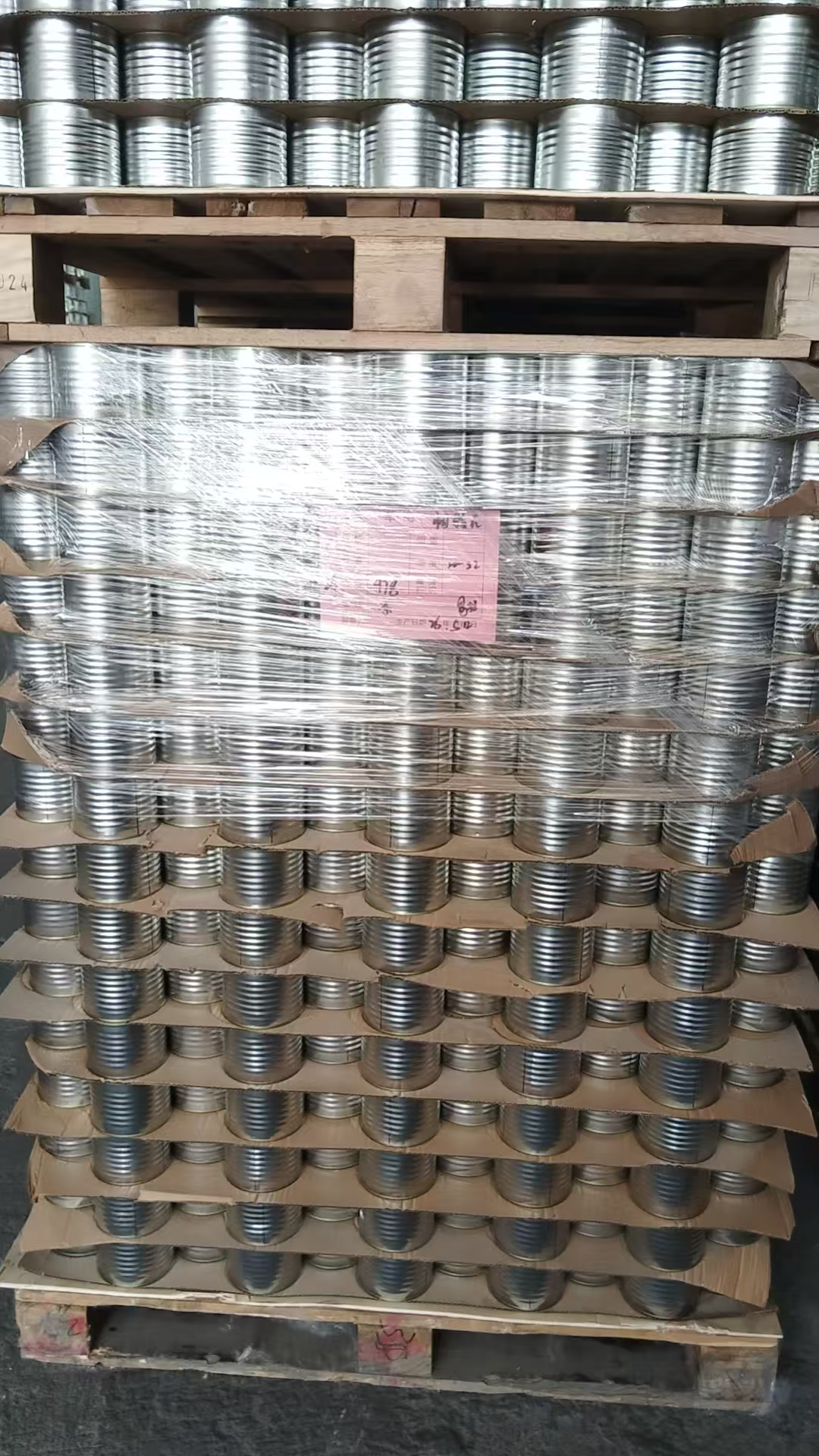
Finished canned goods are palletised for ambient warehousing, where temperature and humidity control replace cold-chain management. Image: Agrogentra & Co., Ltd.
Comparison with Traditional Solutions: Canned Versus Frozen
Most importers evaluating a fruit-based line compare canned product with frozen fruit. The two are not substitutes; they serve different warehouse, distribution and consumer realities.
Table 3 — Canned fruit versus frozen fruit in an import and retail programme
| Dimension | Canned fruit (including jelly) | Frozen fruit |
|---|---|---|
| Storage and transport | Ambient temperature; no cold chain; suited to long-distance sea freight | Continuous cold-chain transport and frozen storage required |
| Shelf life | 36 months for this range; canned food generally quoted at 2–5 years, subject to the Best Before date | Typically 6–18 months |
| Cost structure | Lower additional storage and transport cost | Higher cold-chain freight and electricity cost |
| Sensory profile | High-temperature sterilisation; texture and aroma differ from fresh | Closer to the raw fresh flavour |
| Best fit | Importers without cold storage; remote regions; convenience stores; catering | Distributors with refrigeration, selling to freshness-driven customers |
| Documentation | Food safety certificate, HALAL where required, Certificate of Origin | Same category of documents plus cold-chain records |
Where canned jelly is the weaker choice. High-temperature sterilisation changes texture and aroma relative to frozen or chilled product, so canned fruit jelly is not a like-for-like replacement in markets where demand is driven by closeness to fresh raw material. Frozen product, at a typical 6–18 months' shelf life, keeps a flavour profile closer to the raw fruit and is the better option for distributors that already run cold storage and refrigerated transport. Canned product also carries its own operating limits: unopened cans should be held at 5–25°C with relative humidity below 75%, stacked at least 10 cm off the floor and clear of walls, and rotated first-in-first-out. Environments above 30°C or above 85% humidity accelerate rusting and quality deterioration, and impact or dropping can damage the can seal. Once a can is opened, any remainder should be refrigerated and consumed within 24–48 hours.
Market Trend Analysis: Concentration in Commodities, Pressure on Documentation
Published trade and market figures put the category in context:
- Global canned fruits and vegetables market: USD 105.35 billion in 2024 (Market Research Future).
- China's export value of fruit and vegetable canned products: US$3.859 billion in 2024 (China Canned Food Industry Association / China Customs).
- China's canned vegetable export volume: 2.058 million tonnes in 2024, a 2.52% year-on-year decrease (China Canned Food Industry Association).
- Canned peaches: approximately 36.8% of the canned fruit segment in 2024 (Market.us).
- Global canned mushroom market: USD 11.31 billion in 2023 (Global Market Insights).
Two readings matter for buyers. First, these figures describe different baskets and should not be merged: a global market size of USD 105.35 billion and a Chinese export value of US$3.859 billion are not the same measurement, and the second says more about China's role as an exporter than about total demand. Second, value and volume moved in different directions in 2024 — export value of US$3.859 billion alongside a 2.52% decline in canned vegetable export volume — which is consistent with a market where mix, packaging and compliance cost matter as much as tonnage.
Category structure reinforces the point. Canned peaches account for roughly 36.8% of the canned fruit segment, so the fruit category remains concentrated in a small number of commodity lines. Smaller items such as fruit jelly, lychee or bamboo shoots sit outside that concentration, which generally means a narrower supplier base and greater dependence on the supplier's own documentation and QC rather than on a wide open market.
Regulation is the second visible trend. The European Union's Regulation (EU) 2024/3190 restricts the use of Bisphenol A (BPA) in food contact materials, including can coatings (European Commission). For EU-bound shipments, coating selection has therefore become part of the product specification rather than a packaging detail settled at the plant.
Future Outlook
Three developments are likely to shape sourcing decisions for canned fruit jelly and comparable lines over the next planning cycles.
- Qualification by scope rather than by certificate. As market-access rules tighten, a supplier's certificate pack will be judged on scope wording — which products, which processes, which packaging — and on whether the supplier can release factory certification copies for buyer audit and a traceability report per shipment.
- Packaging-material compliance as the next differentiator. Restrictions on substances used in can coatings and other food contact materials push reformulation cost back up the supply chain, so buyers specifying European destinations will increasingly request coating declarations alongside food safety certificates.
- Ambient logistics as a structural advantage. Where freight and energy costs stay volatile, the absence of a cold chain keeps canned formats competitive for remote distribution and long sea routes, provided storage discipline is maintained at the destination.
For jelly specifically, the practical implication is that the product will continue to be bought on specification: an approved sample, a defined fill weight and packing medium, a verified certificate scope, and a documented batch record.

Ambient-temperature container loading for long-distance sea freight; canned products require no refrigerated equipment. Image: Agrogentra & Co., Ltd.
Reference material: the Agrogentra canned food leaflet can be downloaded at https://cdn.socialarks.com/sbsp/25119/common/2026/0805/Agrogentra%20leaflet.pdf. Company information: www.agrogentra.com.
Frequently Asked Questions
Does canned fruit jelly contain preservatives?
No. The range is sterilised and contains no preservatives. Preservation relies on hermetic sealing, which creates an internal vacuum typically in the range of 300–500 mmHg, combined with high-temperature, high-pressure sterilisation at 115–121°C; batches are then held in an incubation test at 37°C for 7–10 days before release.
How long does canned fruit jelly keep, and how should it be stored?
The specified shelf life for this range is 36 months under normal temperature, subject to the Best Before date printed on the can or label; canned food generally is quoted at 2–5 years. Unopened cans should be stored at 5–25°C with relative humidity below 75%, kept at least 10 cm off the floor and clear of walls, and rotated first-in-first-out. Once opened, the remainder should be refrigerated and consumed within 24–48 hours, preferably after transferring it to a non-metallic container.
Which certifications cover canned fruit jelly?
Canned fruit jelly is covered by the ISO 22000:2018 certificate issued by CQC under number CNO0124F21626R5M/3200, within the certificate's jam and jelly (pulpy jelly) scope, and it is explicitly listed in the FDA Food Facility Registration number 18082639404, which covers Category 17 Fruit & Fruit Products only and excludes fish cans. The BRCGS certificate number 05LA1209004, issued 2025-10-05 and expiring 2026-12-02, covers washing, peeling, pre-cooking, filling, seaming and pasteurisation of canned fruit as well as ingredient weighing and mixing, blending and cooking. The Kosher certificate RIB1RR1Q and the HALAL certificate 1031240000 are scoped to other products as currently issued, so coverage for fruit jelly should be confirmed against the live certificate before ordering.
What are the order constraints for MOQ, lead time and customisation?
Production is available on an OEM basis with logo customisation, monthly capacity is 3,500 units, minimum order quantity is one FCL, and lead time is 4–6 weeks. Mixed container loading and private label services are supported, and custom specifications can be agreed against the approved sample.
What documents accompany a shipment?
Complete export and customs clearance documents are provided, together with COA, health certificate, pre-shipment inspection report, traceability report, and OEM formula and label design. Factory certification copies are available for buyer audits, and samples are supplied at the customer's courier cost.
What should be done if cans arrive swollen or damaged?
A swollen can indicates gas produced by microbial growth or spoilage, which means the seal has failed, and the affected batch should be treated as non-conforming. Practical steps are to quarantine the swollen cans and the whole batch, record the batch number, production date and arrival time with photographs, spot-check the same batch carton by carton to estimate the affected ratio, review transport temperature records and warehouse temperature and humidity for possible causes, report to the supplier with the batch number for replacement or claim, and retain samples for third-party laboratory confirmation.
Is canned product a better fit than frozen product for import and supermarket retail?
It depends on cold-chain capability and target customers. Canned product requires no cold chain, stores at ambient temperature and reaches a shelf life of up to 36 months in this range, which suits importers without cold storage, remote distribution and convenience-store channels, and reduces inventory loss. Frozen product keeps a flavour profile closer to the raw fruit but requires continuous cold-chain transport and frozen storage, with a typical shelf life of 6–18 months, and suits distributors that already run refrigeration and sell to freshness-driven customers. A mixed supply arrangement is also workable where demand is split between the two.