
Canned Mandarin Oranges vs Canned Pineapple: Certificate Scope Check
Independent Buyer Reference — Canned Fruits & Vegetables
Certification now sits at the front of canned fruit evaluation rather than at the end of it. For a US importer comparing canned mandarin oranges with canned pineapple, the document that decides the order is rarely the price per case — it is the scope statement attached to each certificate, because two SKUs packed in the same 425g or 2950g format, in the same light syrup, can sit inside different certificate scopes.
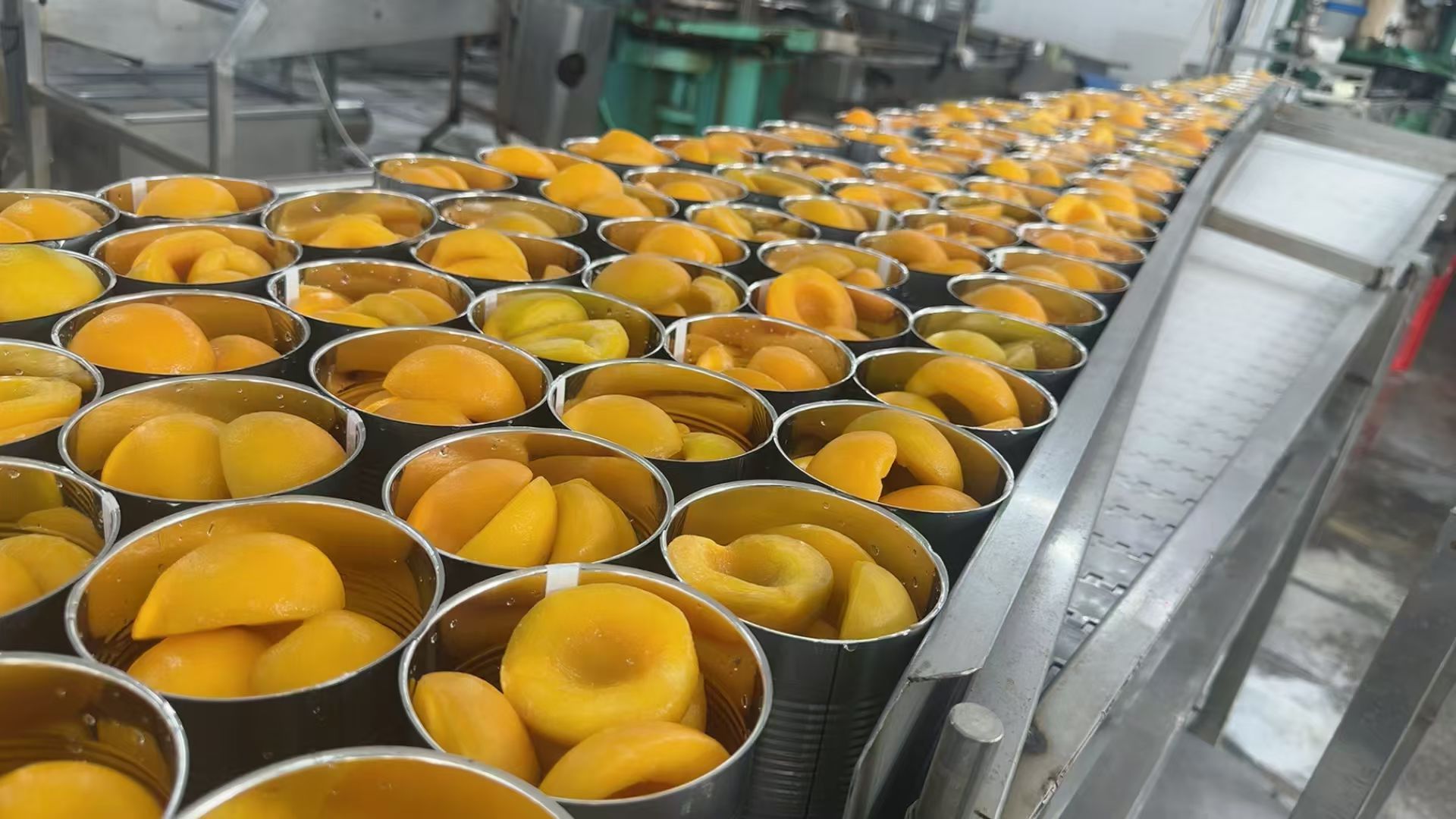
Canning line stages — washing, peeling, pre-cooking, filling, seaming and pasteurization — are the process steps named in BRCGS certificate 05LA1209004 for canned fruit including orange and pineapple.
Certificate breadth and certificate scope answer two different questions
Certificate breadth is the number of certificates a supplier can list. It is easy to present and easy to compare, and it says very little about the carton in front of a buyer. Certificate scope is the operative field: every food safety, religious and regulatory certificate defines which products, which processes and which site it covers. Read line by line against a purchase order, scope statements produce gaps — not because a certificate is weak, but because certificates are written for defined product families rather than for individual SKUs.
The distinction matters most during evaluation, when an importer is deciding which SKUs to list and which claims may be printed on the label. A Kosher or HALAL mark cannot appear on a can merely because the supplier holds a certificate; it can appear only when the specific product sits inside the listed scope. The same logic applies to United States import files. The FDA Food Facility Registration reviewed here covers Category 17 Fruit & Fruit Products only and explicitly excludes fish cans, which shows how narrowly a single registration can be drawn even within one supplier’s portfolio.
This comparison therefore treats canned mandarin oranges and canned pineapple as two separate evaluation cases, both tested against the same five certificate records, and converts the result into checks that a buyer can complete before a shipment is released into a sales channel.
The certificate register behind the canned fruit range
The certificate set reviewed here belongs to Agrogentra &CO.,LTD.XIAMEN, a Xiamen-based international trading company established in 2000 that sources, quality-controls and exports canned food, fresh fruit and vegetables, and frozen food products to markets including the United States, Latin America, Europe and Africa. Its canned fruit range covers Canned Mandarin Oranges, Canned Pineapple, Canned Yellow Peach, Canned Pear, Canned Fruit Jelly, Canned Fruit Cocktail, Canned Cherries, Canned Applesauce, Fruit Cups and Canned Lychee, supplied in 425g and 2950g net weights, A9 and A10 whole-segment styles, light syrup packing medium, a shelf life of 36 months at normal temperature, sterilized and without preservatives.
| Certificate | Certificate number | Issuing authority | Recorded validity | Market intent |
|---|---|---|---|---|
| FDA Food Facility Registration | 18082639404 | U.S. FDA (U.S. Agent recorded: Diana Liu, Quincy MA) | Issued 2024-10-09; renewal cycle to 2026-12-31 | USA |
| BRCGS Global Standard Food Safety, Issue 9 | 05LA1209004 | Intertek Certification Limited | Issued 2025-10-05; expiry 2026-12-02 | Global |
| ISO 22000:2018 Food Safety Management System | CNO0124F21626R5M/3200 | CQC | Dates not recorded in the certificate data reviewed | Global |
| HALAL | 1031240000 | SHC (Shandong Halal Certification Service), recognized by JAKIM | Issued 2024-11-30; expiry 2027-11-29 | Indonesia, Malaysia and global Muslim markets |
| STAR-K Kosher Certification | RIB1RR1Q | STAR-K Kosher Certification (Baltimore, Maryland, USA) | Issued 2025-04-03; expiry 2026-03-31 | Israel, USA, Europe, Middle East and Jewish communities worldwide |
The date columns above are the most frequently skipped lines in a certification file. A scope statement is only meaningful for the validity period it covers, and certificate editions are renewed. On the records reviewed here, the BRCGS and FDA entries run to late 2026, the HALAL entry runs to late 2027, and the STAR-K Kosher entry carries an expiry date of 2026-03-31, which means a buyer ordering today should request the version in force at the time of shipment rather than accept a copy from an earlier file. The ISO 22000:2018 record does not carry recorded issue or expiry dates in the data reviewed, and the certificate holder should be asked to supply them directly.
Canned mandarin oranges versus canned pineapple: SKU-level mapping
Tested against the two SKUs, the five records divide into three groups: certificates that name both products, certificates that name only one of them, and a registration that operates at product-category rather than product level.
| Certificate | Canned Mandarin Oranges (425g / 2950g) | Canned Pineapple (425g / 2950g) | Evaluation consequence |
|---|---|---|---|
| FDA Food Facility Registration 18082639404 | Covered at category level — Category 17 Fruit & Fruit Products | Covered at category level — Category 17 Fruit & Fruit Products | Confirms facility and category registration for the US market; fish cans are excluded from the scope |
| BRCGS 05LA1209004 | Named — canned fruit scope lists orange | Named — canned fruit scope lists pineapple | Both SKUs sit inside the same certified process scope |
| ISO 22000:2018 CNO0124F21626R5M/3200 | Listed as “Orange” within the canned fruit scope | Named as “Pineapple” | Confirm how the term “orange” is mapped to the mandarin orange SKU in the product list |
| HALAL 1031240000 | Not listed — recorded scope covers canned/glass mushroom and vegetable items | Not listed — recorded scope covers canned/glass mushroom and vegetable items | SKU-level HALAL coverage for these two fruit lines should be confirmed before any HALAL claim is used |
| STAR-K Kosher RIB1RR1Q | Named — canned fruits scope lists mandarin orange | Not listed in the recorded scope | The Kosher scope does not extend automatically to pineapple |
The Kosher gap: mandarin orange is listed, pineapple is not
The STAR-K Kosher certificate RIB1RR1Q covers canned fruits: apple, apricot, mandarin orange, mixed fruits, pear and yellow peach, in syrup, water, pear juice or solid pack, with Pareve status recorded as dairy-free and meat-free. Mandarin orange is therefore inside the certificate as recorded, while pineapple does not appear in that list. Kosher certification is scope-based, so a buyer planning a Kosher-labelled pineapple line has three legitimate options: ask the certificate holder for a scope extension, confirm whether a separately certified supply route exists for that item, or keep the pineapple SKU on a non-Kosher label programme until scope documentation is issued. Guaranteeing a Kosher mark on pineapple on the strength of a mandarin orange line item is not a defensible position in an audit.
The HALAL scope recorded here covers canned vegetables, not these two fruit SKUs
HALAL certificate 1031240000, issued by SHC (Shandong Halal Certification Service), recognized by JAKIM, is written against MS1500:2019, Indonesia Halal Law & Regulations and BPJPH Halal Regulations, and applies to Indonesia, Malaysia and global Muslim markets. Its listed scope covers canned and glass mushroom, mushroom in brine, potato, baby corn, bamboo shoots, bean sprouts, cut green bean, green pea and kidney bean items. Canned mandarin oranges and canned pineapple do not appear in that scope as recorded. Buyers selling into Muslim-majority markets should treat the certificate as covering the vegetable programme it names and request product-level confirmation for the fruit SKUs, rather than reading a portfolio-level HALAL statement as an SKU-level approval.
FDA registration operates at category level
Registration 18082639404 records the foreign facility as a manufacturer/processor, packer, acidified and low-acid food processor and labeler, with Category 17 Fruit & Fruit Products only, and a registered U.S. Agent in Quincy, MA. It corresponds to 21 CFR 1.225–1.244 and, as applicable, 21 CFR 113 and 114. For an importer, this registration confirms that the facility and the fruit category are on file with the FDA; it is not a product approval, and it does not extend to the fish can programme in the same portfolio. Product-level assurance still comes from the batch documents requested with the order, not from the registration number alone.
Where both SKUs sit inside the same certified scope
BRCGS certificate 05LA1209004, issued by Intertek Certification Limited against the BRCGS Global Standard Food Safety Issue 9, covers washing, peeling, pre-cooking, filling, seaming and pasteurization of canned fruit — peach, apple, pear, pineapple, orange and mixed fruits — and canned apple sauce in tin can, plastic cups and plastic bags, together with ingredient weighing, mixing, blending and cooking operations. Both canned pineapple and canned orange products fall inside that wording.
ISO 22000:2018 certificate CNO0124F21626R5M/3200, issued by CQC, covers production of canned fruit including peach, mix fruits, pear, orange, apple, pineapple, jam and jelly (pulpy jelly). The certificate wording uses the term “orange”; an importer who needs the SKU named explicitly should ask how that term maps to Canned Mandarin Oranges in the product list, since documentation wording and label wording are read together during an audit.
Application fit: where these two SKUs are used
Canned mandarin oranges and canned pineapple are sold through supermarket retail, convenience store channels, catering supply and food processing accounts, and the case record behind this range covers food importer, grocery wholesaler and supermarket distributor customers operating in global markets. Ambient storage, up to 36 months of shelf life and the absence of a cold chain requirement are the reasons the two SKUs hold their place in remote-area distribution and in retail assortments where turnover is uneven; the practical outcome recorded for these buyers is stable supply with low inventory loss.
That application profile is exactly why scope discipline matters. A retail listing is committed months ahead, and a certificate problem discovered after the container arrives affects the whole listing, not one pallet. Product specification data for the range — 425g and 2950g net weights, A9 and A10 whole-segment styles, light syrup packing medium, 36-month ambient shelf life, sterilized and preservative-free — plus the certification scope, is what the buyer’s QA file should hold before the purchase order is signed.
Practical checks for US importers before releasing an order
Pre-release checklist
- Match scope wording to the SKU, not to the supplier. Print the scope sentence for each certificate and underline the products named. Mandarin orange appears in the Kosher and canned fruit scopes; pineapple appears in the BRCGS and ISO 22000 scopes but not in the Kosher list.
- Confirm the certificate version in force at shipment. Request the current edition with issue and expiry dates for every certificate referenced in the order, including the ISO 22000:2018 record whose dates were not present in the data reviewed here.
- Separate category-level from product-level documents. FDA registration 18082639404 and the fruit category confirmation are category documents. The batch-level COA and inspection reports are the product-level evidence.
- Check every label claim against a listed scope. A Kosher mark requires product-level Kosher scope; a HALAL mark requires product-level HALAL scope. Neither can be inherited from the supplier’s portfolio as a whole.
- Identify the legal holder of each certificate. A trading company certificate file typically includes factory-issued certificates; clarify which entity holds the certificate and which site is audited, so that the audit trail is complete on arrival.
- Request certification copies for buyer audit. Factory certification copies are available for buyer audits, which shortens the documentation loop when a retail customer requests verification.
- Fix the receiving inspection method in advance. Define who inspects, at what sampling level, and what triggers a quarantine decision — especially for swollen, domed or leaking cans.
Acceptance criteria to write into the purchase order
Acceptance criteria convert certification scope into a document the warehouse and the QA team can apply without interpretation. For this range, the criteria set covers product data and document data on the same page.
- Product specification: net weight 425g or 2950g; A9 or A10 whole segments; light syrup packing medium; shelf life 36 months at normal temperature; sterilized, no preservatives.
- Certification references: FDA Food Facility Registration 18082639404 for US-bound fruit products; BRCGS 05LA1209004; ISO 22000:2018 CNO0124F21626R5M/3200; HALAL 1031240000 where the SKU is inside the listed scope; STAR-K Kosher RIB1RR1Q where the SKU is inside the listed scope.
- Document set per shipment: certificate of analysis (COA) per batch, health certificate, pre-shipment inspection report and traceability report, with batch numbers traceable to the production date.
- Third-party inspection: SGS or Intertek inspection is acceptable where the buyer requires independent verification, and the inspection point should be agreed before production, not after loading.
- Commercial parameters to schedule around: MOQ of 1 FCL, lead time of 4–6 weeks, and a monthly production capacity of 3,500 units — a figure that shapes launch timing more than it shapes unit price.
- Label artwork: OEM logo customization is available, and label design together with OEM formula documentation is part of the export document package, so artwork approval and scope verification can be run in the same review cycle.
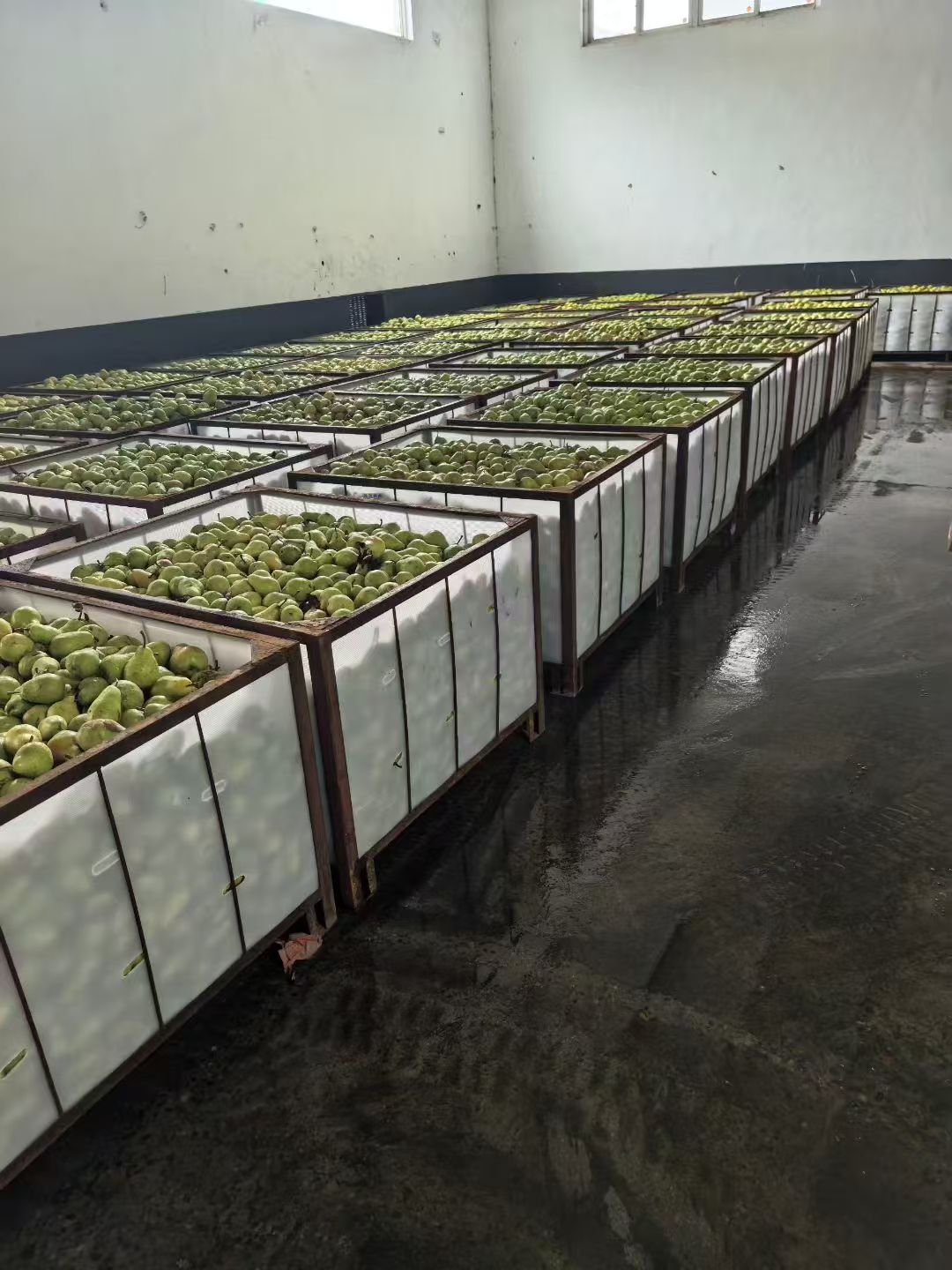
Incoming raw-material inspection and batch retention are the first control points behind the COA and traceability documents requested with each shipment.
When cans arrive with swollen, domed or bulged ends
A swollen can — one or both ends domed — indicates gas produced by microbial growth or spoilage, which means the seal has failed. It is a non-conformance, not a cosmetic defect, and it is never a decision for the sales floor. The affected batch must be quarantined as non-conforming, must not be consumed, and must be documented with photographs, traced by batch number, and reported to the supplier for replacement or claim. At the same time, the receiving team should establish whether transport or storage exposure — high temperature or impact — contributed to the condition.
The known causes behind swelling are consistent across canned products: poor seaming or seal failure that allows microorganisms to enter and produce gas; insufficient sterilization leaving heat-resistant bacteria or spores; exposure above roughly 37°C or severe impact and compression during transport or storage; and, in high-acid contents, internal chemical reactions such as hydrogen swell. Because the causes sit in different places — the seamer, the retort, the container, the warehouse — a single swollen can is not enough information to fix a process, and a batch-level count is.
Receiving and quarantine sequence
- Isolate the swollen cans and the entire affected batch; do not place them on shelves or into a production feed.
- Record batch number, production date and arrival date, and photograph the domed ends and the outer carton condition.
- Assess scope by spot-checking the same batch carton by carton, and calculate the swollen-can ratio.
- Check transport temperature records and warehouse temperature and humidity, plus any signs of stacking pressure or impact damage.
- Report to the supplier with the batch number to agree replacement or claim, and retain samples for third-party laboratory testing where microbial limits are in question.
- Apply corrective action at the point the evidence points to — transport and storage conditions, or the supplier’s seaming and sterilization controls.
Storage discipline prevents a large share of these cases. Canned product should be held at 5–25°C, away from direct sunlight and heat sources, with relative humidity below 75%, on pallets at least 10 cm off the floor and clear of walls for ventilation. Heavy cartons belong at the bottom of the stack. First-In, First-Out rotation by production date, weekly checks for rust, swelling or leakage, and immediate isolation of any abnormal can complete the routine. Environments above about 30°C or above 85% relative humidity accelerate rusting and quality deterioration, and dropping or violent impact risks damage to the seam. Once a can is opened, any uneaten portion should be refrigerated and consumed within 24–48 hours.
The underlying preservation logic is worth restating because it explains why swollen cans are treated so strictly. Canned food is preserved by two elements acting together: hermetic sealing, which leaves an internal vacuum typically in the range of 300–500 mmHg and suppresses aerobic bacteria and oxidation, and high-temperature, high-pressure sterilization in a retort at about 115–121°C under roughly 0.1–0.2 MPa of steam to reach commercial sterility. Cooling is followed by an incubation test, typically held at 37°C for 7–10 days, to confirm no swelling or microbial growth before release. No preservatives are involved, so the sterilization parameters must be set to the raw material characteristics, and any weakness in seaming or in the sterilization curve shows up later as a swollen can.
What the market data says about scope-level scrutiny
The commercial backdrop explains why certification files are being read more closely at the SKU level. The global canned fruits and vegetables market reached USD 105.35 billion in 2024, according to Market Research Future, while China’s export value of fruit and vegetable canned products reached US$3.859 billion in the same year, based on China Canned Food Industry Association and China Customs data. The distinction between a global consumption market of that size and a Chinese export value of that scale shows how dependent the category is on cross-border movement — and cross-border movement is where certificate scope is tested.
Product mix is also concentrating attention on a limited number of lines. Canned peaches accounted for approximately 36.8% of the canned fruit segment in 2024, per Market.us, which means buyers comparing fruit SKUs are usually working inside a narrow set of high-volume items where one scope gap can affect a whole listing. On the vegetable side, China’s canned vegetable export volume reached 2.058 million tons in 2024, a 2.52% year-on-year decrease according to the China Canned Food Industry Association, and the global canned mushroom market was valued at USD 11.31 billion in 2023 by Global Market Insights — the very category that appears in the HALAL scope reviewed above, which illustrates how certificate scopes follow product families rather than suppliers.
Regulatory pressure is moving in the same direction. The European Union implemented Regulation (EU) 2024/3190 restricting the use of Bisphenol A in food contact materials, including can coatings. For suppliers and importers, this adds a packaging-compliance question alongside the food safety and religious certification questions, and it reinforces a simple pattern: the certificate list answers fewer questions each year, while the scope and material documentation answers more.
Where this certificate set has limits
An honest evaluation names the boundaries as clearly as the coverage. Five limits stand out on the records reviewed here.
- Religious certification does not extend across the full fruit range. The STAR-K Kosher scope names mandarin orange but not pineapple, and the HALAL scope as recorded covers canned mushroom and vegetable items rather than canned fruit. Buyers who need either claim on both SKUs are dependent on a scope extension or on a different certified supply route, and that is a scheduling constraint, not a paperwork formality.
- Validity windows are short relative to retail listing cycles. The STAR-K record carries an expiry date of 2026-03-31, and both the BRCGS and FDA records expire in late 2026. A buyer should expect to re-verify certificate editions at least once during a 36-month shelf-life product’s retail life.
- Incomplete date data on one record. The ISO 22000:2018 certificate as reviewed does not carry recorded issue and expiry dates, and an auditor will ask for them.
- Category coverage is narrower than the product catalogue. FDA Food Facility Registration 18082639404 covers Category 17 Fruit & Fruit Products only and excludes fish cans, so the registration cannot be presented as evidence for the fish programme.
- Capacity and order structure create planning limits. Monthly production capacity of 3,500 units and a 1 FCL minimum order quantity mean that a multi-SKU trial or a mixed pallet launch is less flexible than a single-SKU container, and the 4–6 week lead time should be planned into the listing date rather than treated as a buffer.
None of these limits makes the certificate set unusable. They make it usable only when the buyer matches the document to the SKU and the shipment date, which is the original point of the comparison.
What changes next in canned fruit certification files
Two directions look reasonably clear from the evidence available. First, scope-level documentation is becoming the normal purchasing artefact rather than a special request: as long as retailers and importers keep tightening label claim controls, the difference between holding a certificate and holding the right scope will keep deciding which SKU can carry which mark. Second, packaging and material compliance is joining food safety compliance in the same file, driven by regulation such as (EU) 2024/3190 on Bisphenol A in food contact materials, which reaches can coatings directly.
For importers, the practical response is procedural rather than commercial. Keeping a live certificate register per SKU — certificate number, scope sentence, issue date, expiry date, and the label claims it authorises — turns a document review that currently takes days into a routine check, and it makes the swollen-can decision at the receiving dock an operational question with a written answer instead of a judgement call.
FAQ
Which certificates in this set actually name canned mandarin oranges inside their scope?
Three of the five records name canned fruit in wording that includes orange or mandarin orange. BRCGS certificate 05LA1209004 covers washing, peeling, pre-cooking, filling, seaming and pasteurization of canned fruit including peach, apple, pear, pineapple, orange and mixed fruits. ISO 22000:2018 certificate CNO0124F21626R5M/3200 covers production of canned fruit including orange, apple, pear, pineapple, peach, mix fruits, jam and jelly. STAR-K Kosher certificate RIB1RR1Q lists canned fruits including mandarin orange in syrup, water, pear juice or solid pack. FDA Food Facility Registration 18082639404 operates at category level, covering Category 17 Fruit & Fruit Products only. HALAL certificate 1031240000, as recorded here, lists canned and glass mushroom and vegetable items rather than canned fruit.
Does the same certificate set cover canned pineapple in the same way?
No, coverage is not identical across the five records. BRCGS 05LA1209004 names pineapple within its canned fruit scope, and ISO 22000:2018 certificate CNO0124F21626R5M/3200 names pineapple as well. FDA Food Facility Registration 18082639404 covers fruit and fruit products as a category, so pineapple falls inside that category. The STAR-K Kosher scope reviewed here lists apple, apricot, mandarin orange, mixed fruits, pear and yellow peach but does not list pineapple, and HALAL 1031240000 does not list canned fruit at all. A buyer cannot assume that a religious certification held for one fruit line extends to another.
What does FDA Food Facility Registration 18082639404 confirm for a US importer?
It records the foreign facility as a manufacturer/processor, packer, acidified and low-acid food processor and labeler for Category 17 Fruit & Fruit Products only, with a registered U.S. Agent in Quincy, MA, and a biennial renewal dated 2024-10-09 running to 2026-12-31. It corresponds to 21 CFR 1.225–1.244 and, as applicable, 21 CFR 113 and 114, and it explicitly excludes fish cans. It is a facility and category registration, not a product approval; product-level evidence remains the per-batch certificate of analysis and the accompanying inspection and traceability documents.
What should a US importer check before releasing a canned fruit shipment?
Match each certificate scope sentence to the exact SKU, confirm the certificate edition in force at the shipping date, and check that every label claim such as Kosher or HALAL is supported by product-level scope rather than by a portfolio-level statement. Confirm the document set travels with the shipment: certificate of analysis per batch, health certificate, pre-shipment inspection report and traceability report, with batch numbers traceable to production dates. Verify can integrity at receiving, agree whether third-party inspection by SGS or Intertek is required before production, and hold the specification on file — 425g or 2950g net weight, A9 or A10 whole segments, light syrup, 36-month shelf life, sterilized and preservative-free.
What should be done if cans arrive with swelling (domed or bulged ends)?
A swollen can indicates gas produced by microbial growth or spoilage, meaning the seal has failed. The batch is non-conforming: do not consume it, quarantine the whole batch, document the condition with photographs, trace it by batch number, and contact the supplier for replacement or claim. In parallel, check whether transport or storage exposure to high temperature or impact contributed to the condition. Known causes include poor seaming or seal failure, insufficient sterilization, exposure above roughly 37°C or severe impact during transport and storage, and internal chemical reactions such as hydrogen swell in high-acid contents. Retaining samples and batch numbers is the evidence base for the claim and for any corrective action.
Export documentation and product range details for the canned fruit and vegetable programme are summarised in the company leaflet: Agrogentra leaflet (PDF). Additional company information is available at www.agrogentra.com.