
Canned Mashed Potato: Certification and Spec Constraints
Canned Mashed Potato: Certification and Spec Constraints
Market access for canned potato is decided by certificate scope, not by catalogue length. The global market for canned fruits and vegetables reached USD 105.35 billion in 2024, according to Market Research Future, and China exported US$3.859 billion of canned fruit and vegetable products in the same year, according to China Canned Food Industry Association / China Customs data. Inside that volume, canned mashed potato is a small, low-acid, ambient-stable item whose procurement question is unusually specific: which document actually names potato, and which parameters must be fixed before a purchase order is issued.
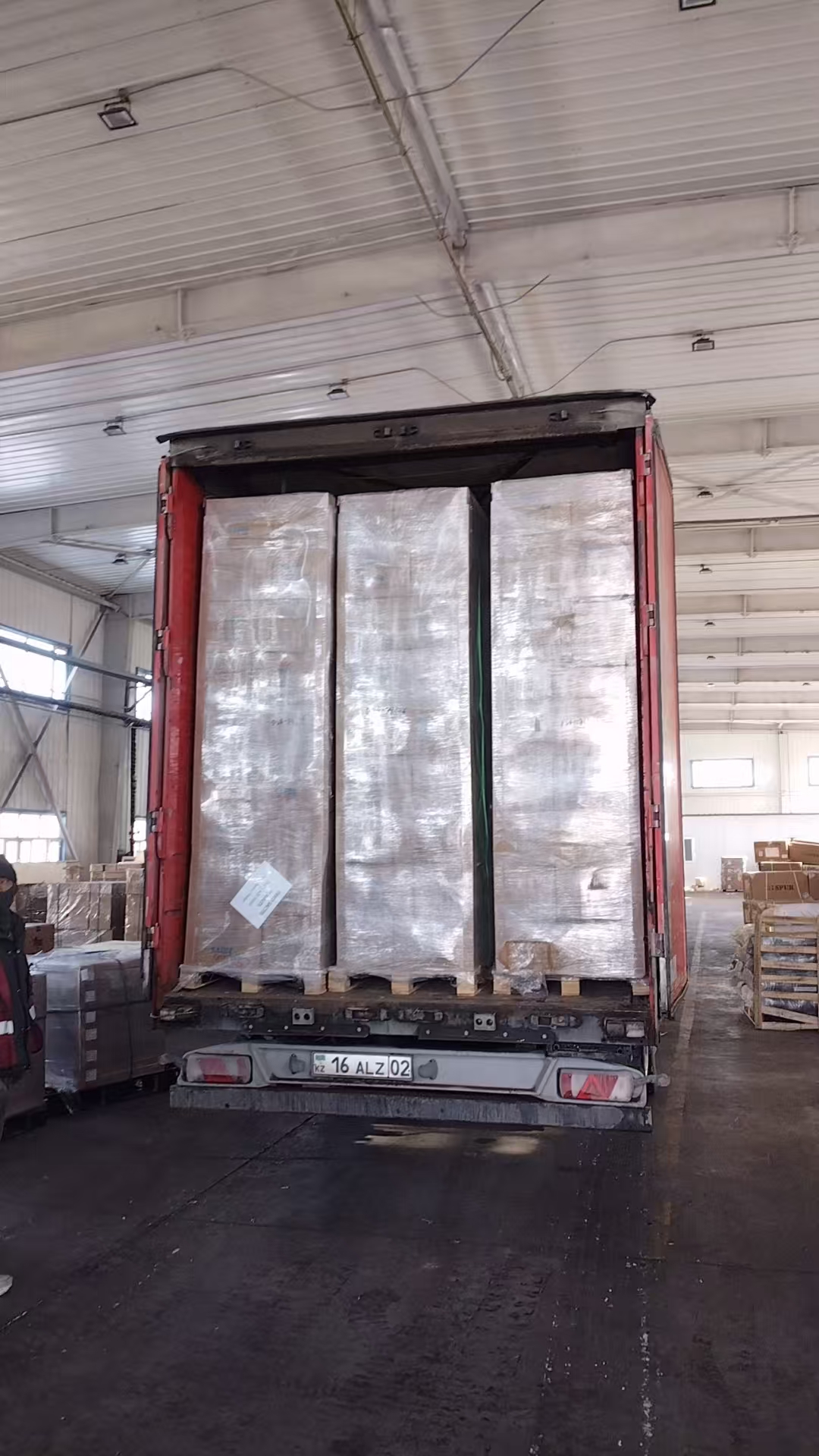
Ambient-temperature canned food shipments prepared for long-distance sea transport, the default logistics mode for canned fruit and vegetable exports.
Why Canned Mashed Potato Runs on a Different Certificate Than Canned Fruit
Certificate scopes in the canned food trade are written item by item, and that is where importers lose time. A supplier may hold several valid documents and still not be able to show one whose scope names potato, because those documents were originally written around a fruit portfolio.
Agrogentra & Co., Ltd. (Xiamen) is a Chinese food trading company established in 2000 that sources, quality-controls and exports canned food, with a 100% export ratio and customers in the USA, Latin America, Europe and African markets. Its canned portfolio includes both canned potato and canned mashed potato flakes/powder. The documents on file illustrate the scope problem clearly.
- ISO 22000:2018 — certificate number CNO0124F21626R5M/3200, issued by CQC, type Food Safety Management System, applicable to the global market. The certified production scope covers canned fruit: peach, mix fruits, pear, orange, apple, pineapple, and jam and jelly (pulpy jelly). Specific mappings include canned yellow peach under the canned peach scope, canned mandarin orange under the canned orange scope, canned fruit cocktail under the mix fruits scope, canned applesauce under the canned apple scope, and canned fruit jelly under the jam and jelly scope. The scope does not list canned vegetables.
- BRCGS — certificate number 05LA1209004, issued by Intertek Certification Limited against BRCGS Global Standard Food Safety Issue 9, stated issue date 2025-10-05 and expiry date 2026-12-02. The certified scope is the washing, peeling, pre-cooking, filling, seaming and pasteurization of canned fruit and canned apple sauce in tin can, plastic cups and plastic bags.
- STAR-K Kosher — certificate number RIB1RR1Q, covering canned apple, apricot, mandarin orange, mixed fruits, pear and yellow peach in syrup, water, pear juice or solid pack for the global Kosher market. The stated validity period ran from 2025-04-03 to 2026-03-31, and the scope does not extend to potato.
- HALAL — certificate number 1031240000, issued by SHC (Shandong Halal Certification Service), recognized by JAKIM, under MS1500:2019 together with Indonesia Halal Law & Regulations and BPJPH Halal Regulations, valid from 2024-11-30 to 2027-11-29 for Indonesia, Malaysia and global Muslim markets. This scope explicitly includes canned/glass potato, alongside canned/glass mushroom, mushroom in brine, baby corn, bamboo shoots, bean sprouts, cut green bean, green pea and kidney bean.
- FDA Food Facility Registration — registration number 18082639404, a regulatory registration with biennial renewal in 2024, valid from 2024-10-09 to 2026-12-31, with U.S. agent Diana Liu, Quincy MA. The registration covers Category 17 Fruit & Fruit Products only and excludes fish cans.
The practical reading for a buyer is straightforward. For a Muslim-market listing, the HALAL certificate is the document whose scope names canned/glass potato, and it remains valid through 2027-11-29. For EU or US retail programmes, the fruit-centred ISO 22000 and BRCGS scopes should not be assumed to cover a potato item; the applicable document set needs to be confirmed in writing. The Kosher certificate illustrates the second half of the same problem — scope and validity both matter, and a document whose stated validity period ended in March 2026 cannot support a kosher claim placed on a purchase order later in the year.
How the Product Is Defined in a Supplier Catalogue
Agrogentra's own product structure lists the potato items as canned potato and canned mashed potato flakes/powder, grouped with canned mushrooms, canned asparagus, canned sweet corn, canned green peas, canned bamboo shoots, canned cabbage, canned beet roots and canned mixed vegetables. The company describes its canned vegetable products as processed from fresh raw materials shortly after harvesting, sterilized, and containing no preservatives; canned fruit products in the same catalogue are made from selected ripe fresh fruit.
That definition matters for specification work. A mashed potato product is a prepared, homogeneous pack rather than a whole-segment pack, so the parameters that decide acceptance differ from those used for canned peaches or pears. Segment integrity and syrup density, which drive quality judgements in canned fruit, are replaced by consistency, reheat behaviour and texture retention after sterilization. Buyers evaluating canned mashed potato during the research and evaluation stage should therefore write their specification around the prepared form, and validate it at sample stage rather than transferring a fruit specification across categories.
Technical Basis: Sealing, Sterilization and the Absence of Preservatives
Canned food keeps without preservatives because two controls act together: an airtight seal and commercial sterility.
During filling and seaming, the can is hermetically closed and a vacuum forms inside, typically in the range of 300–500 mmHg. With almost no oxygen remaining, aerobic bacteria and oxidative reactions are suppressed. The sealed cans then pass through a retort, where they are heated at 115–121°C under roughly 0.1–0.2 MPa of high-pressure steam. This achieves commercial sterility: pathogens and microorganisms capable of growing at ambient temperature, including spores such as Clostridium botulinum spores, are destroyed. After sterilization the cans are rapidly cooled and held in an incubation test at 37°C for 7–10 days to confirm that no swelling or microbial growth occurs before release.
The sterilization curve and the cold-point temperature, expressed as the F0 value, determine product safety. Seaming faults or insufficient sterilization are the standard causes of can swelling and spoilage later in the supply chain. Acid level decides the schedule: low-acid foods at pH above 4.6 must be sterilized at 121°C under pressure, while high-acid products such as tomato, below pH 4.6, can be processed at lower temperatures. Potato-based products sit on the low-acid side of that line, which is why the retort schedule rather than a preservative addition is the critical control point in this category.
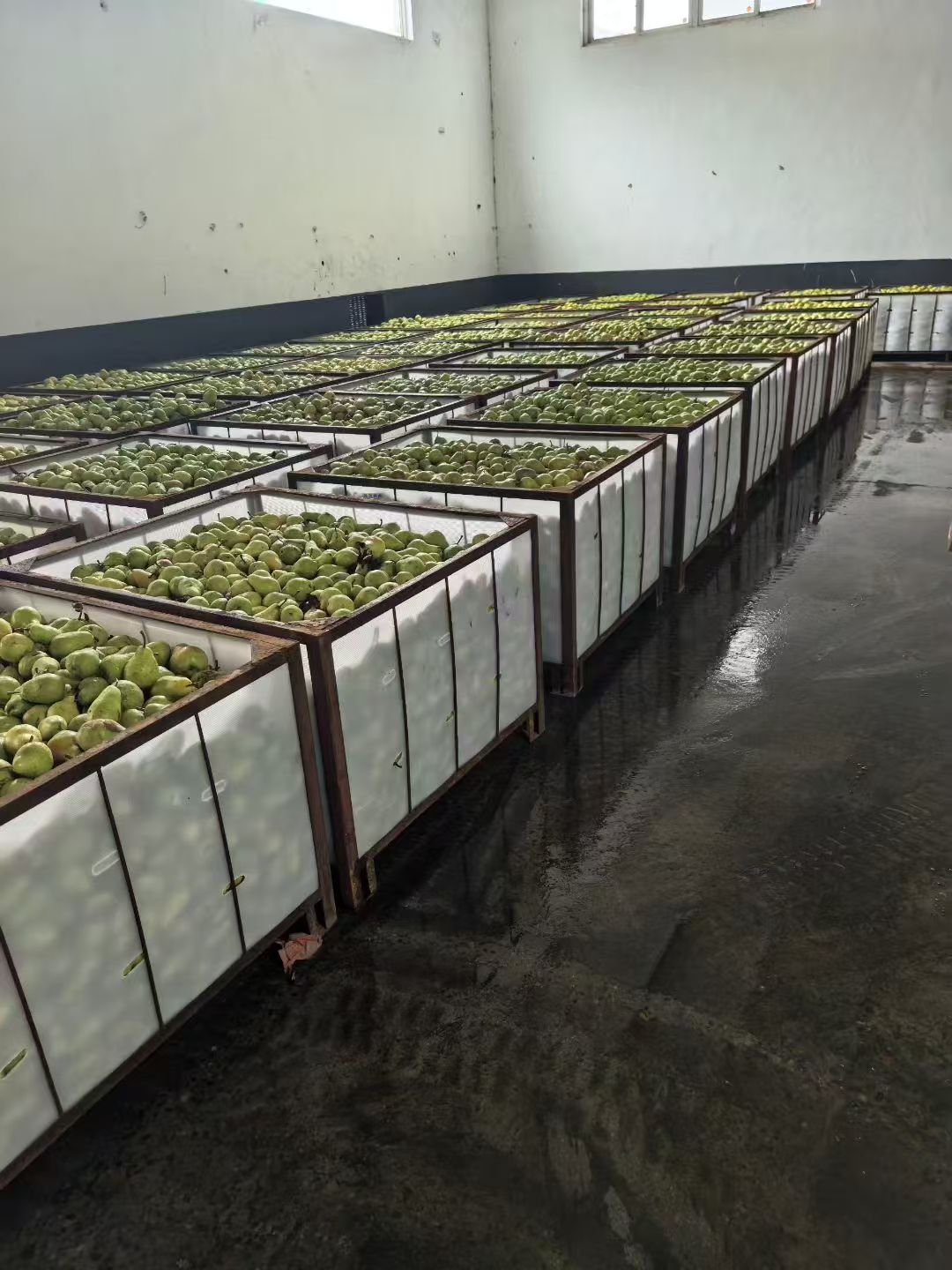
Raw material intake and storage: canned vegetable quality is fixed before filling and retorting, not corrected afterwards.
Packaging geometry is the other technical variable. A three-piece can is assembled from body, bottom and lid, joined by welding and seaming; the side seam gives it the strength to withstand 121°C pressurized sterilization, and it is the common choice for products requiring that schedule. A two-piece can is drawn in one piece with no side seam, offering lighter weight, a smoother appearance and easy-open ends, but with a thinner wall that suits lower-pressure requirements or shorter cycles. Can size directly affects packing quantities and packaging cost, so it belongs in the same negotiation as the product specification.
Specification and Procurement Parameters a Buyer Can Verify
The table below separates parameters that apply to the canned potato and mashed potato items from parameters stated for the wider canned fruit and canned vegetable range, so that buyers do not over-apply a figure to the wrong item.
| Parameter | Stated value | Applies to |
|---|---|---|
| Product identification | Canned potato; canned mashed potato flakes/powder | Potato items in the company product structure |
| Preservation | Sterilized, no preservatives | Canned fruit and canned vegetable range |
| Shelf life | 36 months under normal temperature | Canned fruit and canned vegetable range |
| Net weight formats in the range | 425g, 2950g, A10, A9 | Canned fruit and canned vegetable range (product ID 7410) |
| Style | A9 and A10 whole segments | Canned fruit and canned vegetable range |
| Packing medium | Light syrup | Fruit items in the range |
| MOQ | 1 FCL | Order terms |
| Lead time | 4–6 weeks | Order terms |
| Monthly capacity | 3,500 units | Production capacity |
| Production mode and customization | OEM; logo customization | Order terms |
| Quality control | Incoming raw-material inspection, on-line production patrol, laboratory physical, chemical and microbiological testing of each batch with a COA report, and batch sample retention; third-party inspection by SGS or Intertek is acceptable | Quality system |
| After-sales documentation | COA, health certificate, pre-shipment inspection report, traceability report, OEM formula and label design; factory certification copies for buyer audits; samples at the customer's courier cost | Documentation package |
| Storage and transport | Ambient temperature, no cold chain required | Canned fruit and canned vegetable range |
The distinction in the third column is the useful part of this table. A buyer who assumes the 425g and 2950g formats, or the light-syrup medium, apply automatically to a mashed potato line will create specification mismatches at the sampling stage. The correct sequence is to fix the potato specification first, then confirm which of the range-level parameters carry over, and only then finalise packing and labelling.
Where Canned Mashed Potato Is Used
The application profile of this category is set by the absence of a cold chain. Agrogentra's stated application scenario is grocery retail import and food wholesale distribution, supplying long-shelf-life, ready-to-eat canned food for market sale, with the working conditions described as long-distance sea transportation and ambient-temperature storage. Opening is followed by direct consumption or optional heating, and the matched equipment is limited to a can opener and a serving container.
In practice this places canned potato and mashed potato items in four channels: supermarket and grocery retail, convenience store sales, catering and foodservice supply, and food processing industries that use prepared potato products as an input. The buyer group described by the supplier is food importers, grocery wholesalers and supermarket distributors, served through mixed FCL and LCL shipments. The stated outcome of that supply pattern is stable food supply with low inventory loss, which follows directly from ambient storage and a long shelf life, and it is the main reason distributors in remote regions prefer this category over chilled or frozen alternatives.
One boundary is worth stating early in the evaluation. Canned mashed potato is a prepared convenience product, not a substitute for fresh potato in applications where texture and cooking behaviour are decisive. Food processors should validate reheat and texture performance against their own end product before committing to a container quantity.
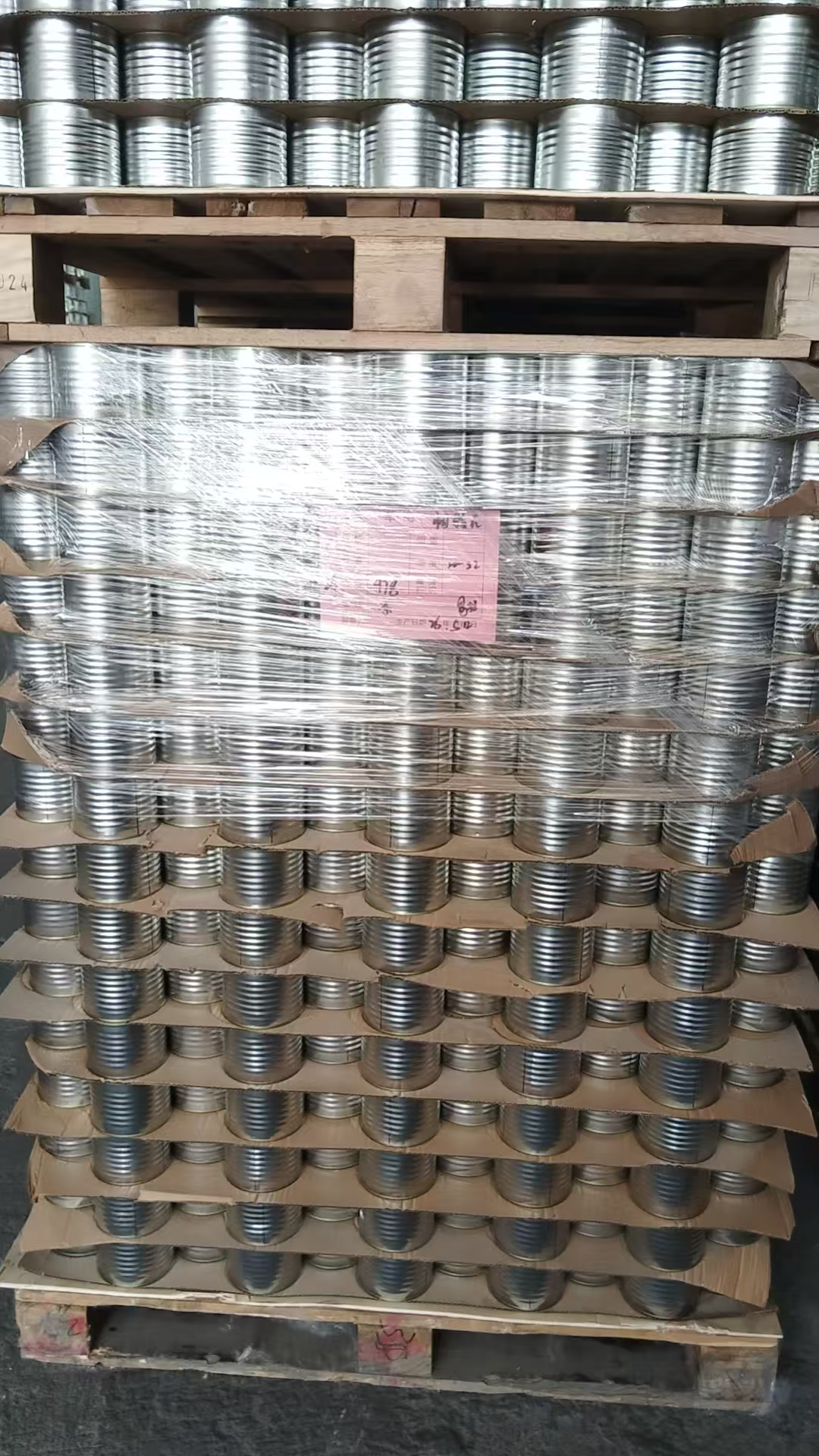
Palletizing finished canned goods: ambient pallet storage and container loading are the two handling stages that determine delivered can condition.
Market Signals Shaping Canned Vegetable Sourcing
Three data points frame the commercial environment for canned vegetable items, including potato.
- The global canned fruits and vegetables market reached USD 105.35 billion in 2024 (Market Research Future).
- China's export value of fruit and vegetable canned products was US$3.859 billion in 2024, and its export volume of canned vegetables was 2.058 million tons, a 2.52% year-on-year decrease (China Canned Food Industry Association / China Customs).
- Canned peaches held roughly 36.8% of the canned fruit segment in 2024 (Market.us), and the global canned mushroom market was valued at USD 11.31 billion in 2023 (Global Market Insights).
Two readings follow. First, the category is large and stable, but the canned vegetable export volume decline in China points to a competitive, price-sensitive supply base rather than a capacity shortage — which shifts differentiation towards documentation, specification control and delivery reliability. Second, the product mix remains fruit-heavy, with canned peaches taking the largest single share. Potato and other vegetable items sit in a smaller allocation, which is exactly why their certification scope is often thinner than the fruit scope and deserves separate verification.
Regulation is moving in the same direction. The European Union implemented Regulation (EU) 2024/3190 restricting the use of Bisphenol A (BPA) in food contact materials, including can coatings. For buyers placing canned products into EU channels, the internal coating of the can is now part of the specification conversation, not an afterthought, and it should be confirmed alongside the product parameters during sampling.
Canned Versus Frozen: Where Canned Mashed Potato Wins and Where It Does Not
Canned and frozen products serve different sales scenarios rather than competing head to head, and the trade-offs are well defined.
| Dimension | Canned product | Frozen product |
|---|---|---|
| Logistics and storage | Ambient temperature; no refrigeration required | Continuous cold chain transport and cold storage warehouse |
| Shelf life | Up to 36 months for the canned fruit and vegetable range | Normally 6–18 months |
| Cost structure | Lower storage and transport add-on cost | Higher cold-chain freight and electricity expense |
| Taste | Undergoes high-temperature sterilization | Closer to raw fresh flavour |
The selection logic that follows is explicit. Buyers without cold storage, or distributing to remote regions and convenience store channels, are better served by canned product, including canned mashed potato, because shelf life reduces waste and no cold-chain investment is required. Buyers with complete cold-chain facilities and customers who prioritise fresh taste should stay with frozen product. New importers without cold-chain resources are typically pointed towards canned product as the lower-risk starting option.
The limitations of the canned route should be stated as plainly as its advantages. High-temperature sterilization moves the sensory profile further from fresh than freezing does, so canned mashed potato is not the right answer for buyers whose end customers judge potato on fresh texture. Certificate scope is a second limitation: the HALAL certificate names canned/glass potato, but the ISO 22000 and BRCGS scopes on file are written around canned fruit and canned apple sauce, so a buyer who needs a specific standard applied to a potato line must confirm that coverage instead of assuming it. Kosher coverage for potato is not indicated in the certificate scope on file, and the stated validity period of that Kosher certificate ended on 2026-03-31, so its current status must be verified before it is used to support any claim. Finally, compliance with can coating requirements such as EU Regulation (EU) 2024/3190 depends on the specific packaging used for a given order and should be confirmed per shipment.
What to Expect Next
The direction of travel for canned fruit and vegetable supply is towards ambient logistics and documentation depth. Long shelf life and no cold-chain requirement keep the category attractive for import markets that are geographically distant or logistically thin, and the scale of the market — USD 105.35 billion in 2024 — continues to support multi-origin sourcing.
At the same time, compliance is becoming the differentiator rather than the baseline. Can coating rules such as EU Regulation (EU) 2024/3190, market-specific registration requirements such as FDA Food Facility Registration, and religious certification scopes such as HALAL and Kosher all attach to individual products, not to a supplier as a whole. Suppliers who can map each item to the exact certificate that names it — and who can supply the supporting documentation package with each shipment — will be easier to onboard than those who present a single certificate as covering everything.
Agrogentra's operating model reflects that expectation: independent QC departments in both the Xiamen and Qingdao offices conduct full-process inspection from factory audit and raw-material testing through production monitoring, finished-product inspection and pre-shipment sampling, and the company has participated in international food exhibitions since Anuga Cologne 2001 and SIAL Paris 2002. For buyers evaluating canned potato and mashed potato items, the practical next step is a specification and document check — product form, packing format, applicable certificate scope and can coating — followed by sampling before a first container order.
Frequently Asked Questions
How long is the shelf life of canned food, and how should it be stored?
Shelf life is normally 2–5 years, subject to the best-before date printed on the can or label; the canned fruit and canned vegetable range states a shelf life of 36 months under normal temperature. Storage should be in a cool, dry place at 5–25°C, away from direct sunlight and heat sources, with relative humidity kept below 75%. Cans should be stacked on pallets at least 10 cm off the ground with space from walls for ventilation, heavy cartons below and light cartons above, and stock should be rotated on a first-in, first-out basis with weekly checks for rust, swelling or leakage.
Do canned foods contain preservatives?
No. Canned food is preserved by airtight sealing plus high-temperature, high-pressure sterilization, which is why no preservatives are needed. The canned fruit and canned vegetable range is described as sterilized and containing no preservatives. Sealing produces an internal vacuum, typically 300–500 mmHg, and sterilization at 115–121°C under about 0.1–0.2 MPa of high-pressure steam achieves commercial sterility; after cooling, an incubation test at 37°C for 7–10 days confirms the batch before release.
Do canned foods need refrigeration?
Unopened cans do not need refrigeration and can be stored in a cool, dry place; this is what allows canned product to be shipped and stored at ambient temperature without a cold chain. Once a can is opened, the remaining contents must be refrigerated and consumed within 24–48 hours, and transferring the product to a non-metallic container is recommended.
What is a swollen can, and is it safe to use?
A swollen can has one or both ends domed, usually caused by gas from microbial growth or spoilage, which indicates seal failure — it must not be consumed. The affected batch should be treated as non-conforming: quarantine the whole batch, document batch number, production date and arrival time with photographs, spot-check the same batch carton by carton, review transport temperature records and warehouse temperature and humidity, report to the supplier for replacement or claim, and retain samples for third-party testing where the cause needs confirmation. Possible causes include seaming or seal failure, insufficient sterilization, exposure to high temperature above 37°C or severe impact during transport, and internal chemical reactions such as hydrogen swell.
Which certifications cover canned potato, and which do not?
On the documents on file for this supplier, the HALAL certificate number 1031240000 explicitly includes canned/glass potato in its scope, valid from 2024-11-30 to 2027-11-29 for Indonesia, Malaysia and global Muslim markets. The ISO 22000:2018 certificate CNO0124F21626R5M/3200 covers canned fruit production — peach, mix fruits, pear, orange, apple, pineapple, jam and jelly — and does not list canned vegetables. The BRCGS certificate 05LA1209004 covers the washing, peeling, pre-cooking, filling, seaming and pasteurization of canned fruit and canned apple sauce, with stated issue date 2025-10-05 and expiry date 2026-12-02. The FDA Food Facility Registration 18082639404 covers Category 17 Fruit & Fruit Products only and explicitly excludes fish cans. Buyers should confirm, per product, which certificate scope names the item being purchased.
Is canned product or frozen product better for import and supermarket retail?
It depends on the buyer's logistics and target customer. Canned product offers long shelf life and requires no cold chain, which suits general supermarket, convenience store and remote-area distribution; frozen product offers a taste closer to fresh but depends on complete cold-chain logistics, with a normal shelf life of 6–18 months and higher freight and electricity costs. Buyers without cold storage or cold-chain transport are generally better served by canned product, while buyers with full cold-chain facilities targeting customers who prioritise original fresh taste are better served by frozen product. A mixed supply approach can also be adopted according to market demand.
Reference material: Agrogentra's company leaflet is available for download at https://cdn.socialarks.com/sbsp/25119/common/2026/0805/Agrogentra%20leaflet.pdf, and the company website is www.agrogentra.com.