
Cantonese Dim Sum: Market Trends and Supplier Insights
Industry Reference · Frozen Food · 2026
Cantonese dim sum is becoming a global grocery and food-service category. For operators and importers, the decision is no longer limited to choosing between steamed buns and dumplings; it now involves evaluating suppliers on production scale, food safety compliance, consistency and cold-chain reliability. This article looks at the current state of frozen Cantonese dim sum from a procurement perspective.
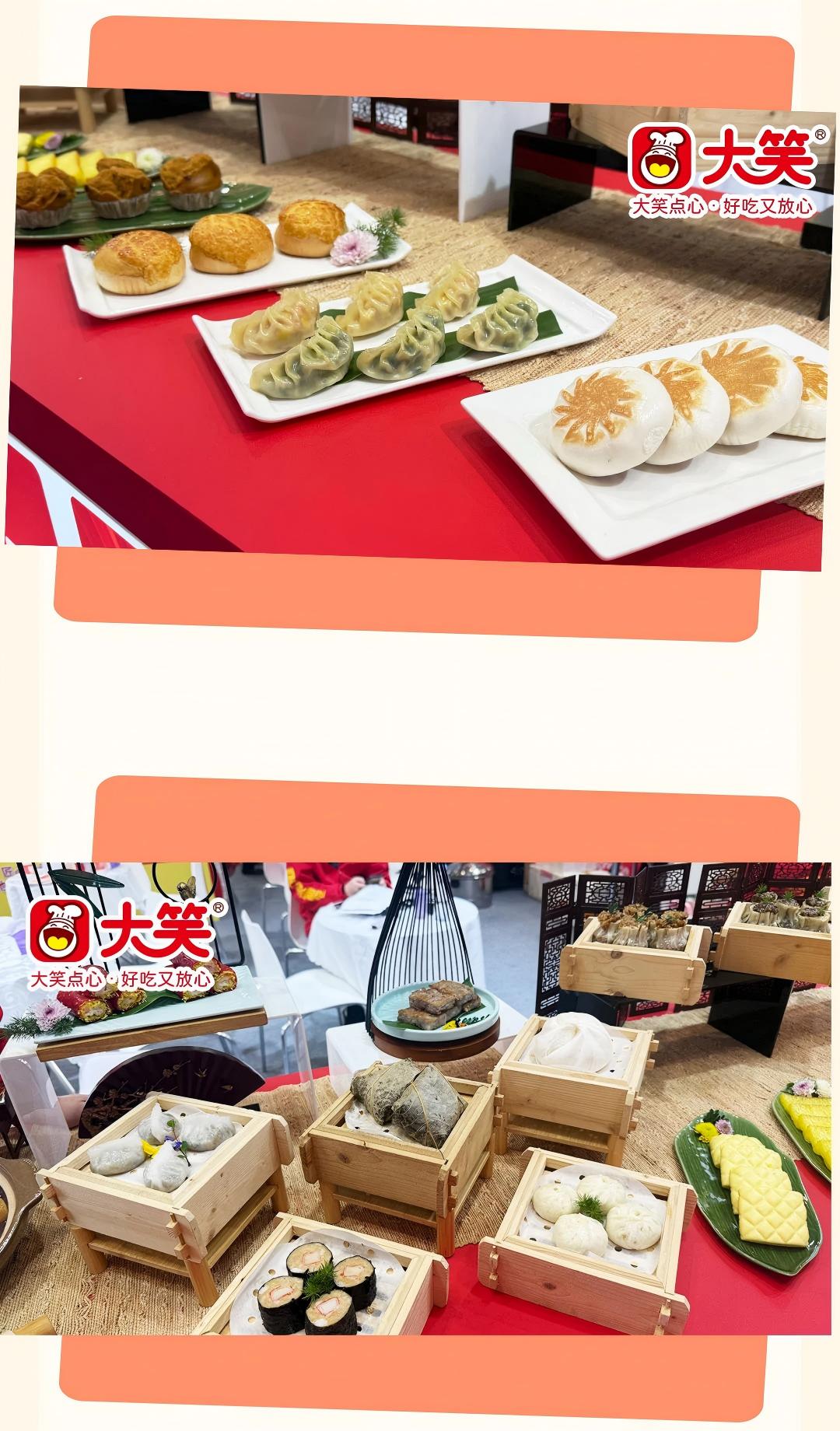
Why Cantonese Dim Sum Is Becoming a Procurement Category
The global market for frozen Cantonese-style dim sum is estimated at USD 7.04 billion in 2025 and projected to reach USD 11.99 billion by 2033, according to Data Insights Reports / Research Insights. Growth is supported by several well-documented trends: Chinese culinary heritage is expanding beyond restaurants; frozen food technology has made it possible to serve dim sum in airports, canteens and hotels without dedicated dim sum chefs; and export channels from China to Southeast Asia, Europe and North America have matured.
For a buyer, this creates a clear opportunity: frozen dim sum allows a menu to include authentic Cantonese items without the labor and skill required for fresh handmade production. But it also creates a challenge — how to identify a supplier whose products can maintain the texture, taste and appearance consumers expect from freshly steamed dim sum.
Supplier Example: Foshan Shunde Yuexiang Food Manufacturing Co., Ltd.
One representative manufacturer in this space is Foshan Shunde Yuexiang Food Manufacturing Co., Ltd., based in Shunde District, Foshan, Guangdong Province. Shunde is a UNESCO-recognized City of Gastronomy, and the company has been producing Cantonese dim sum since 1981. It is recognized as a Foshan Time-honored Brand and operates a main production facility covering 20,000 square meters, with more than 200 employees and an annual production capacity of 6,000,000 units.
The company maintains a second production enterprise, Foshan Shunde Hongyuan Food Co., Ltd., established in 2019, focusing on quick-frozen prepared foods, quick-frozen noodle and rice products, steamed pastries and dish series. It employs more than 30 R&D engineers and offers over 300 items across five major product series. Its sales network covers the Chinese market and extends to more than 20 countries, including the USA, Canada, Australia and EU countries; exports account for about 40% of output, with main markets in Southeast Asia, Europe and the Americas.
Foshan Shunde Yuexiang Food reports ISO9001, HACCP and FDA certifications, and is described as a National High-Tech Enterprise with a dedicated R&D center. For international buyers, these attributes matter because frozen dim sum is a food-safety-sensitive category that requires documented temperature control and traceable production.
How Frozen Cantonese Dim Sum Is Categorised and Produced
Frozen dim sum is not a single product family. A typical portfolio includes:
- Steamed buns (bao): filled buns made with wheat dough, such as char siu bao, lava custard bun, walnut bun and red bean paste bun.
- Dumplings: thin-skinned items with seafood or meat fillings, such as shrimp dumplings and shrimp siu mai.
- Steamed cakes: coconut-based and root-vegetable cakes, such as water chestnut cake, red bean cake, taro cake and coconut golden cake.
- Fried dim sum: items that are pre-fried or prepared for frying, such as milk rolls, taro pie, Hong Kong-style spring rolls and sesame balls.
- Prepared dishes: larger-format dishes such as Buddha Jumps Over The Wall soup and vegetarian lo han jai.
From a technical standpoint, most frozen dim sum is designed to be cooked directly from frozen. For example, the company’s lava custard bun is steamed without thawing in boiling water for about 8 minutes. Shrimp dumplings take 7–8 minutes, shrimp siu mai 12 minutes, and char siu bao about 10 minutes. Steamed cakes such as water chestnut cake and red bean cake are steamed for 6–8 minutes. Fried items have specified oil temperatures: milk rolls are fried at 150–160°C for 3–4 minutes, while taro pie is fried at 150–160°C for 3–4 minutes. These standardised cooking windows are an important operational benefit: staff do not have to adjust recipes or test doneness for each batch.
Cold-chain handling is the other critical element. Product documentation states that frozen buns should be stored at ≤ -18°C throughout the entire process to prevent drying and cracking. Buyers should verify that a supplier can maintain this temperature from production to delivery and that the product's shelf life fits the target inventory model. The company’s steamed buns have a 12-month frozen shelf life, while most steamed cakes come with a 6-month frozen shelf life — an important differentiator for inventory planning.
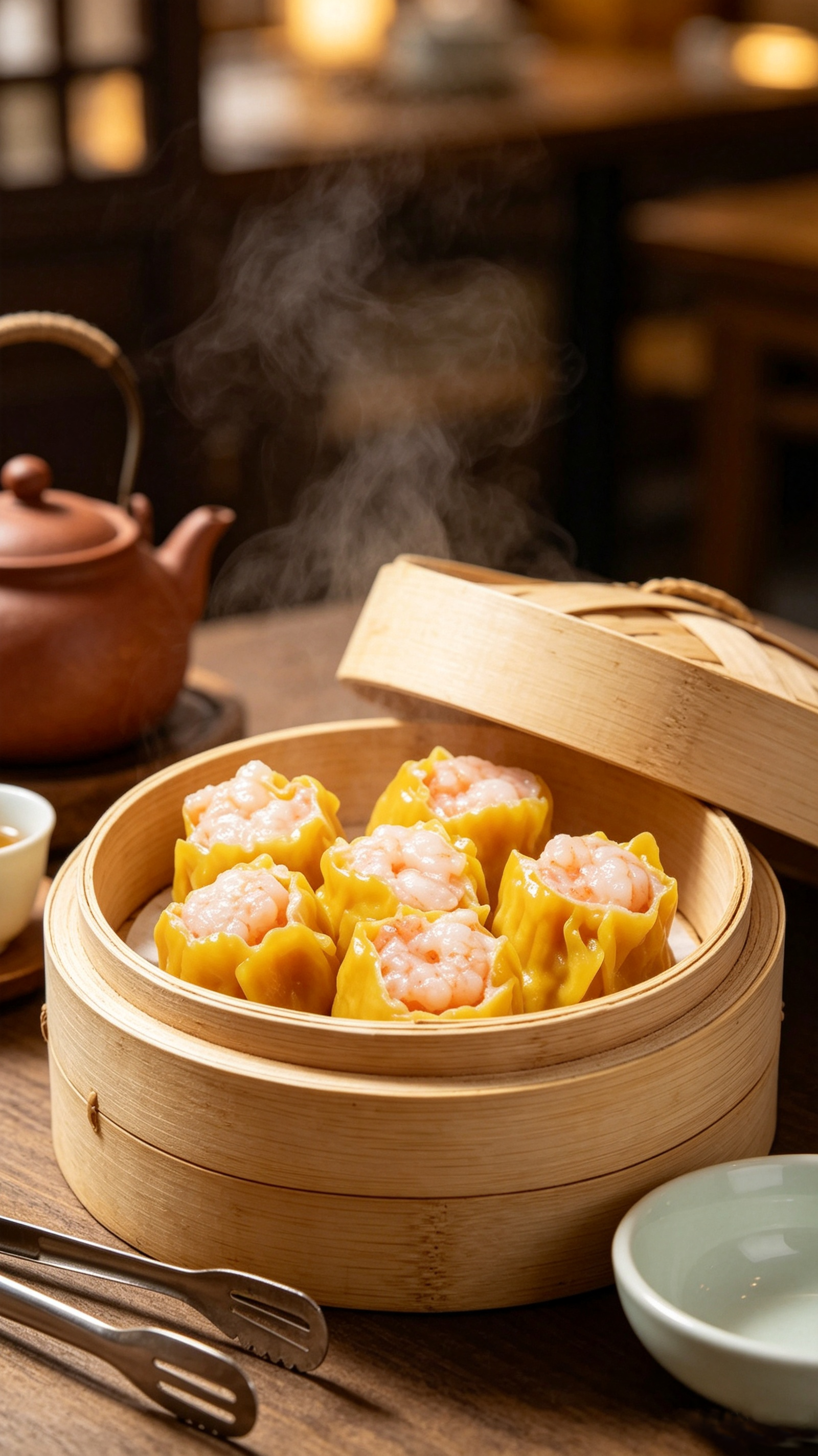
Representative frozen dim sum formats
| Product | Category | Key ingredient / characteristic | Specification / cooking |
|---|---|---|---|
| Lava Custard Bun | Steamed bun | Salted egg yolk lava filling | 480g (12)/bag, 18 bags/box; steam 8 min |
| Shrimp Dumplings | Dumpling | Whole shrimp, translucent skin | 270g (9)/pack, 15 packs/box; steam 7–8 min |
| Shrimp Siu Mai | Dumpling | Whole shrimp, thin skin | 270g (9)/pack, 20 packs/box; steam 12 min |
| Char Siu Bao | Steamed bun | Honey-glazed barbecued pork | 120g (4 or 6)/bag, 18 bags/box; steam 10 min |
| Water Chestnut Cake | Steamed cake | Coconut milk, water chestnuts | 500g/bag, 12 bags/box; steam 6–8 min |
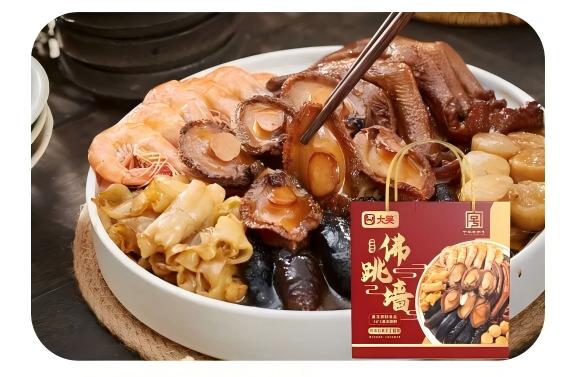
| Buddha Jumps Over The Wall | Prepared dish | Abalone, sea cucumber, fish maw | 1.5kg / 2.25kg / 3.5kg; frozen storage |
From Teahouse to Global Supply Chain: Where Frozen Dim Sum Is Used
Frozen dim sum is designed for a wide range of operations. According to the manufacturer’s application documentation, typical scenarios include:
- Restaurants: fast food breakfast shops, tourist area snacks, late-night food stalls
- Hotels & Tourism: star-rated hotels, guesthouses & resorts, camping sites
- Retail: supermarkets, community fresh food stores, convenience stores
- Catering services: schools, factories, office buildings, hospitals, nursing homes, government canteens
- Transportation: airports, high-speed rail stations, highway service areas, catering for vehicles and ships
- Trade & Foreign Trade: food supply chain wholesalers, overseas Chinese restaurants, Chinese supermarkets
- Gifts: food OEM manufacturers, New Year's gift box vendors, banquets
In practice, this means a single supplier can support multiple channels. A breakfast shop may order steamed buns and dumplings for fast service; a hotel banquet department may use Buddha Jumps Over The Wall soup as a banquet main dish; a supermarket may stock red bean paste buns and water chestnut cake for home consumption; a food-service wholesaler may consolidate different categories in one order.
For Chinese restaurants abroad, frozen dim sum provides menu consistency and reduces the need for specialised dim sum chefs. For non-Chinese restaurants, it offers an easy way to add a distinctive tea-time item without significant kitchen investment.
Market Trend Analysis: Data That Matters for Buyers
Three verified market signals are directly relevant to frozen dim sum sourcing:
1. Market size is growing. The global frozen Cantonese-style dim sum market is valued at USD 7.04 billion in 2025 and projected to reach USD 11.99 billion by 2033 (Data Insights Reports / Research Insights).
2. China remains the production anchor. In 2025, China accounted for 46% of global frozen dumpling production volume, followed by Japan and South Korea (Business Research Insights). While dumplings are a broader category than dim sum, this indicates China’s dominant position in frozen dough-wrapped food production.
3. Transparency is becoming regulated. Starting May 1, 2026, Guangzhou requires restaurants to clearly label whether their dim sum is handmade on-site or produced by central kitchens/pre-made (Tridge / Guangzhou Local Government). This points to a future where buyers and consumers may ask for clearer origin and production information across the industry.
For exporters, frozen dim sum is commonly shipped under HS code 1902200000 (stuffed pasta) or 1902309000 (other pasta), according to trade records from Zauba / China Customs. Knowing these codes helps importers estimate duties and customs documentation.
Frozen Dim Sum vs. Traditional Fresh Preparation: A Balanced View
Frozen dim sum and fresh handmade dim sum serve different operational models. Fresh dim sum offers the highest texture and aroma, especially for delicate items like shrimp dumplings, but it depends on skilled labor, immediate service and high kitchen occupancy. Frozen dim sum, by contrast, provides:
- Time and labor savings: no need for preparation or kneading; products are heated and served.
- Stable output: uniform shape, weight and taste reduce the variability found in manual production.
- Flexible inventory: long-term frozen storage lets operators use products on demand and reduce food waste.
- Menu breadth: a one-stop order can include steamed buns, dumplings, cakes, fried items and soups.
The limitation is real, however. Freezing and reheating cannot fully reproduce the texture of a just-steamed dumpling. Thin wrappers may lose elasticity, and improper cold-chain storage can cause cracking or moisture migration. A frozen product should therefore be judged by the specific experience it delivers after following the recommended cooking method, not by comparing it to a freshly wrapped item in a specialty teahouse. Buyers should also consider that some banquet dishes, such as Buddha Jumps Over The Wall, are pre-prepared and only need to be heated; these are less sensitive to texture loss than thin-skinned dumplings.
What to Watch: Regulation, Health Positioning and Export Potential
Looking ahead, three factors are likely to shape the frozen Cantonese dim sum category.
First, transparency requirements will become more common. Guangzhou’s 2026 labeling rule is an early example. Manufacturers that already document their production processes, certifications and ingredient sourcing will be better positioned to serve both food-service and retail customers.
Second, health-oriented and vegetarian items are likely to gain share. Products such as Buddha’s delight, black sesame kuih, millet cake and taro cake align with consumer interest in plant-based, low-fat and whole-grain options. The company’s Buddha’s delight, for example, is described as purely vegan, low in fat and high in dietary fiber.
Third, fusion products will help dim sum move beyond Chinese channels. The availability of kataifi pastry — a shredded dough used in Middle Eastern desserts — from a Cantonese dim sum manufacturer shows how frozen-dough capability can be applied to adjacent cuisines. This kind of flexibility is useful for distributors who want to serve multiple ethnic food segments from one frozen supplier.
FAQ
Q1: What are the core differences between steamed buns and steamed pastries in sales positioning?
A1: Steamed buns act as staple food with large consumption volume and stable repurchases. Steamed pastries serve as featured snacks suitable for afternoon tea and high-end dining scenarios.
Q2: Are there differences in shelf life between buns and steamed cakes?
A2: Steamed buns have a 12-month frozen shelf life; most steamed puddings come with a 6-month frozen shelf life.
Q3: Which option brings lower inventory risks for new merchants?
A3: Start with steamed buns for stable basic sales, then add a small batch of steamed pastries to test market response.
Reference
For more detailed product specifications, the company brochure is available here: Foshan Shunde Yuexiang Food Manufacturing Co., Ltd. brochure.