
Capability Evaluation in Single Cylinder Diesel Engine Sourcing
Single cylinder diesel engines continue to be a central power source for irrigation, farm machinery, and small electricity generation in many agricultural economies. According to Global Growth Insights, the global single cylinder diesel engine market was valued at approximately USD 3.34 billion in 2025 and is projected to reach USD 3.74 billion by 2035. For procurement teams at the evaluation and execution stages, the main question is shifting from product price to supplier capability: can the factory support OEM customization, manage volume, maintain quality, and support the specific application?
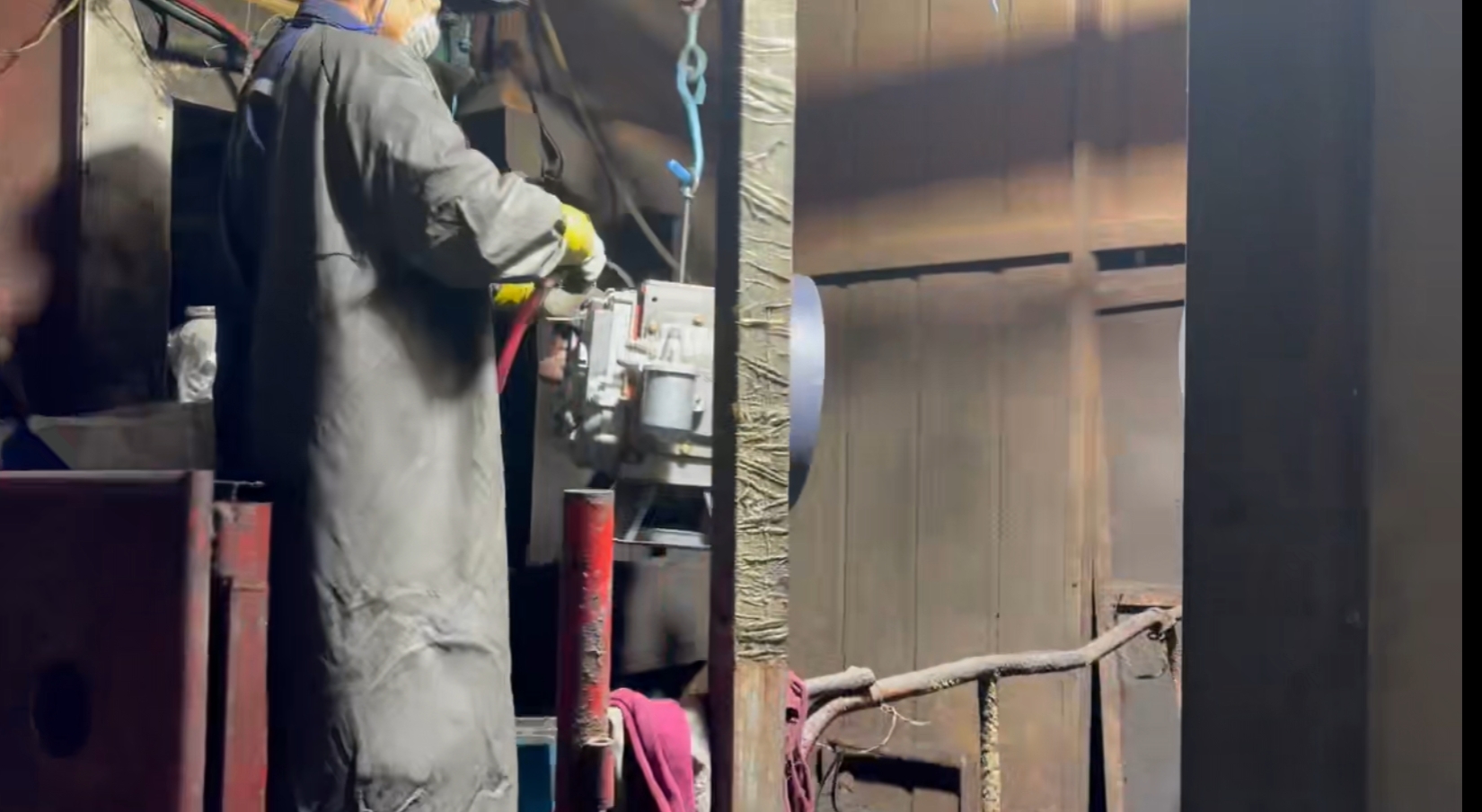
Engine cleaning is one of the documented production and inspection steps for Willson single cylinder diesel engines.
The Capability Question in Single Cylinder Diesel Engine Sourcing
Buying a single cylinder diesel engine is not a single transaction. It is a supply decision that connects engine specifications to farming seasons, pump performance, generator uptime, and equipment compatibility. A buyer evaluating an engine may compare model numbers and horsepower, but a buying team preparing to place a container order must evaluate the supplier behind the model.
Capability claims vary. Some factories specialize in standardized engines; others offer OEM and ODM production. The vocabulary is similar, but the actual production capacity, customization scope, and delivery conditions can be very different. To avoid misalignment, buyers should structure the evaluation around five elements: production mode, customization scope, capacity and lead time, quality control, and commercial terms.
A Capability Reference: Willson and Changzhou Vision International Trading Co., Ltd.
One company that provides a concrete capability reference is Changzhou Vision International Trading Co., Ltd., a China-based manufacturer of single-cylinder diesel engines and diesel engine accessories. Its main brand is Willson. The company produces 3–45 hp single-cylinder air-cooled and water-cooled diesel engines. The corporate profile lists an annual output of 100,000 units, 95 employees, and an export ratio of approximately 70%, with major markets in South America, Africa, Southeast Asia, and the Middle East.
Under the production capability profile, Willson supports OEM and ODM production. Customization is available for package, logo, and nameplate. The monthly production capacity is 10,000 units, and the standard lead time is 25–45 days. The minimum order is one 20-foot container. The stated quality control policy is 100% testing, and after-sales service is described as remote support.
Commercial terms recorded in the procurement support profile include FOB and EXW delivery methods, video or image acceptance, and 30/70 payment terms. For global buyers, this combination indicates that the supplier is structured for export order execution rather than domestic sales only.
Inside the Factory: What Capability Looks Like in Practice
Capability becomes easier to judge when it is visible in production and inspection processes. Willson factory documentation includes component assembly lines, camshaft assembly, tightening processes for flywheel and cylinder head bolts, engine cleaning, and oil leak inspection at the cylinder head cover. These specific steps are part of the manufacturing and verification process.
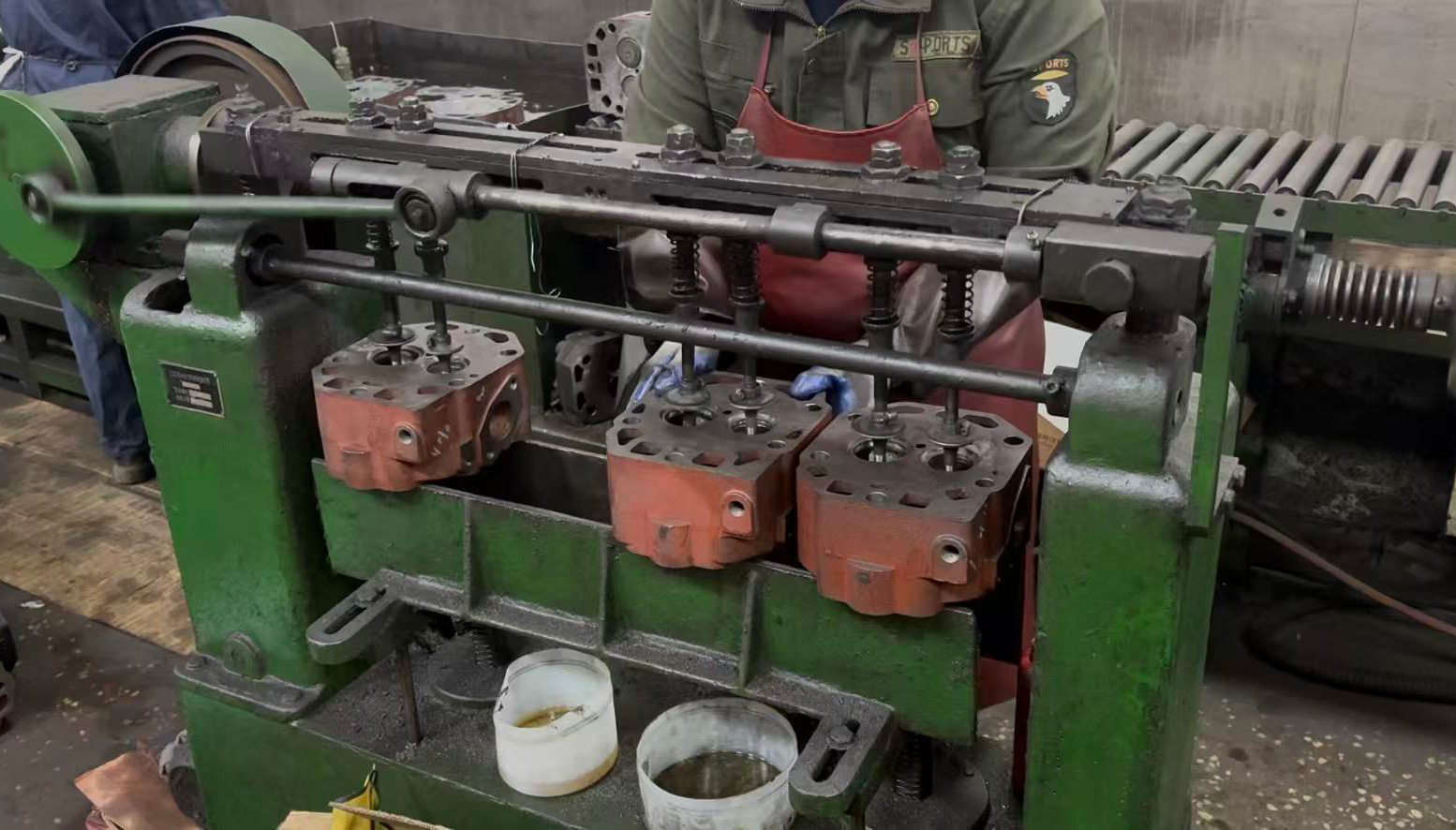
Cylinder head and valve components are visible in the documented production process.
In addition, the company holds GB/T 19001-2016/ISO 9001:2015 certification, certificate number 02925Q3D160R6M, issued by Jiangsu Jiuzhou Certification Co., Ltd. The certification scope covers the production and sales of single-cylinder diesel engines and diesel engine accessories including fuel tank assembly, muffler, and air filter assembly. The current certificate is valid from 2025-05-10 to 2028-05-09. This gives buyers a documented quality management baseline.
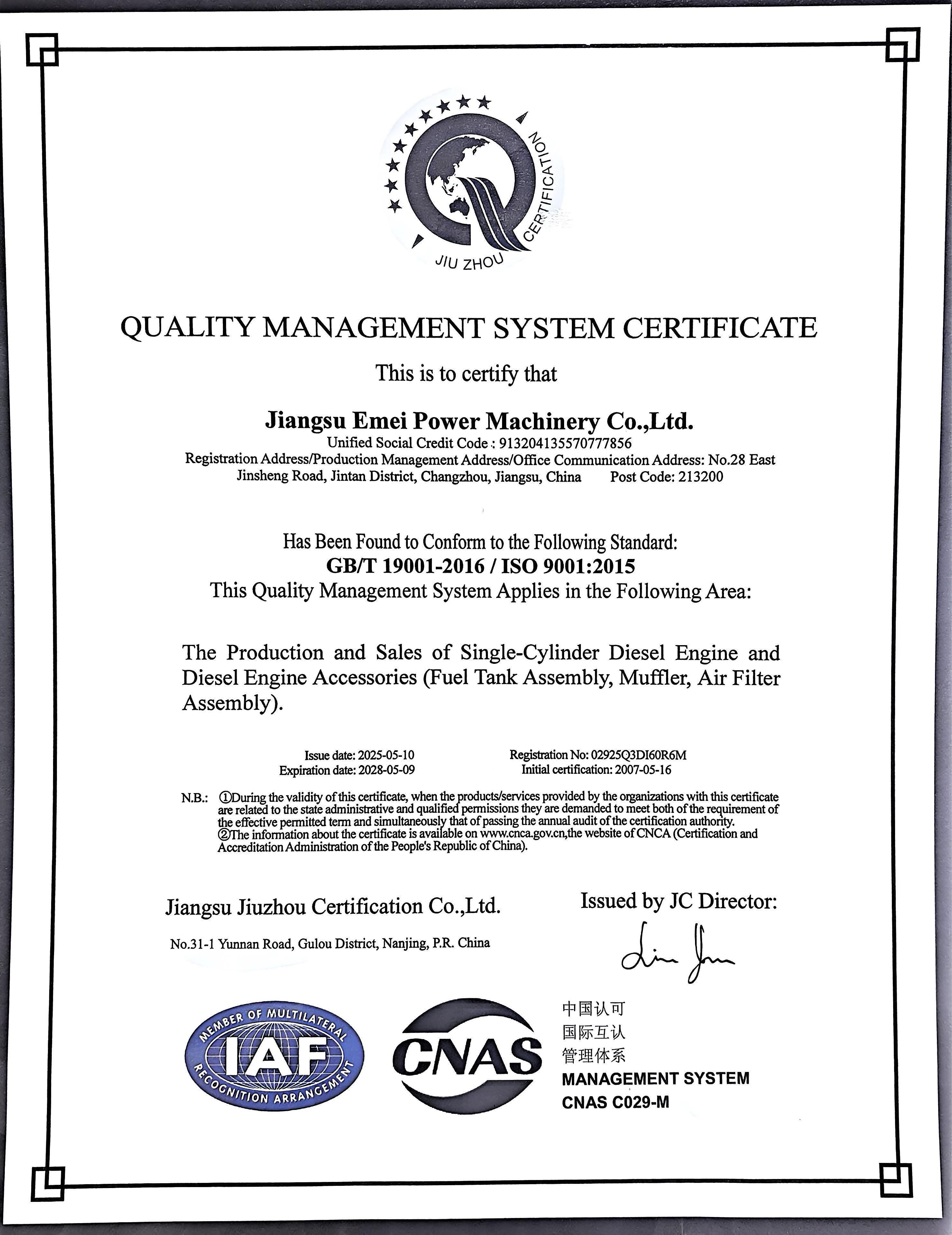
ISO 9001:2015 certificate filed under certificate number 02925Q3D160R6M.
Representative Model Range
The product data available for Willson includes the following representative models:
| Model | Type | Rated Power | Rated Speed | Displacement | Fuel Consumption |
|---|---|---|---|---|---|
| 170F | Horizontal 4-stroke diesel engine | 4 HP | 2600 rpm | 0.289 L | 304.2 g/kW-h |
| R180 | Horizontal 4-stroke water cooled diesel engine | 7 HP | 2600 rpm | 0.402 L | 292.7 g/kW-h |
| ZS195 | Horizontal 4-stroke water cooled diesel engine | 13 HP | 2200 rpm | 0.815 L | 271.3 g/kW-h |
| ZS1115 | Horizontal 4-stroke water cooled diesel engine | 20 HP | 2200 rpm | 1.195 L | 254.2 g/kW-h |
| ZS1135 | Horizontal 4-stroke water cooled diesel engine | 35 HP | 2200 rpm | 1.73 L | 252.7 g/kW-h |
Application Capability: Matching Engines to Farming and Power Tasks
The application scope of these engines is wide. The corporate profile states that Willson engines are suitable for powering small tractors, agricultural machinery, generator sets, water pumps, small construction machinery, air compressors, inland waterway vessels, and agricultural and sideline product processing. This is why buyers of diesel engines for irrigation pumps, power tillers, threshers, rice mills, generators, and farm machinery often evaluate the same model family.
One documented case is particularly relevant to agricultural buyers. A customer in Pakistan used 96 sets of ZS1115 engines for agricultural irrigation over a 10-year period. The reported result was no major failures and the engines met irrigation season requirements. The customer highlighted fuel-efficient design, easy maintenance, and adaptation to harsh local environments. From a procurement perspective, this type of long-duration field data is more useful than a standard specification sheet.
Market Trends Shaping Capability Demands
Market data points to the same direction. Dataintelo estimates that agriculture accounted for approximately 42.3% of single cylinder diesel engine revenue in 2025, and Asia Pacific held about 58.2% of the global market. According to OEC data, China exported combustion engines (including diesel variants) worth USD 3.29 billion in 2025, with major destinations including Russia, Vietnam, and India. Agriculture and water management are therefore not peripheral uses; they are the core demand drivers.
Regulatory trends also influence product planning. In the United States, EPA Tier 4 emission standards regulate particulate matter and nitrogen oxides for off-highway diesel engines, with exemptions for engines under 24 horsepower. While this standard applies mainly to US-bound equipment, it signals that emission performance is becoming part of the product capability discussion.
On the supply side, Intel Market Research identifies Yanmar, Kubota, Kohler, and Hatz among global manufacturers in the small diesel engine sector, and identifies Changchai and Shifeng Group as prominent Chinese manufacturers. For Chinese suppliers such as Willson, the competitive field is not defined by price alone. It is defined by the ability to deliver consistent product quality, customization, and export services.
SKD/CKD is another dimension of capability. Trade literature reports that semi-knocked down (SKD) and complete knocked down (CKD) assembly strategies can offer tariff advantages in selected ASEAN markets, with CKD rates reported around 1.5–3% in Myanmar and 0% in some Thailand categories. These arrangements encourage local assembly. For buyers considering local manufacturing, a supplier with component-level consistency and assembly support becomes more valuable. In the reviewed Willson procurement documents, SKD/CKD execution is not explicitly described; buyers should request those terms directly if they plan to assemble locally.
Comparing Capability Models: Complete Units, OEM/ODM, and SKD/CKD
To understand trade-offs, it helps to compare a traditional complete-unit import model with OEM/ODM and SKD/CKD arrangements.
| Sourcing model | Supplier role | Buyer responsibility | Main advantage | Main limitation |
|---|---|---|---|---|
| Complete-unit import | Manufacturer ships finished engines | Customs, distribution, installation | Simple to start and deploy quickly | Higher unit transport cost and limited local value capture |
| OEM/ODM with customization | Produces engines with buyer package, logo, and nameplate | Defines product specifications and order volume | Enables brand differentiation | Requires clear specifications and container-level commitment |
| SKD/CKD local assembly | Provides kits or components | Runs local assembly, testing, and parts inventory | Lower tariff exposure and possible local-content benefits | Requires local tooling, trained staff, and quality discipline |
Each model comes with limits. Traditional complete-unit import is the simplest but leaves less room for local branding or tariff optimization. OEM/ODM requires a buyer to define specifications early and commit to container-level orders. SKD/CKD can reduce import costs, but it introduces real operational burden: a buyer would need a local assembly space, skilled workers, and a quality-check process. If the destination market does not have those conditions, the expected savings may disappear.
The single-cylinder engine architecture also has a technical ceiling. In the Willson lineup, the largest documented model is the ZS1135 at 35 hp. Above that power class, multi-cylinder engines are generally the more practical option because they can offer smoother running and lower vibration.
Future Outlook: Capability as the New Procurement Baseline
The market outlook for single cylinder diesel engines is moderate but stable. Global Growth Insights projects the market will grow from about USD 3.34 billion in 2025 to USD 3.74 billion by 2035. The growth will not be evenly distributed. It will concentrate in regions with expanding irrigated agriculture, underdeveloped power grids, and equipment replacement cycles. At the same time, emission-related requirements will push manufacturers to improve combustion, air filtration, and durability.
For buyers, the consequence is clear: supplier capability will be the main filter before price. Procurement teams will ask for evidence of production capacity, test procedures, certification details, lead times, customization scope, and after-sales support. The Willson example shows how a China-based manufacturer can present this evidence: a defined product range, documented factory processes, ISO 9001 certification, a long-duration irrigation case, and export-oriented commercial terms.
For readers who need more detail on the company and its engine range, the corporate brochure is publicly available at this link.
Frequently Asked Questions
What OEM/ODM customization options does Willson offer?
Willson supports OEM/ODM production with customization of package, logo, and nameplate. The documented capability profile does not describe changes to engine internals as standard OEM services, so buyers should confirm any engineering modification separately.
What is the production lead time for a Willson single cylinder diesel engine order?
The recorded lead time is 25–45 days, based on a monthly capacity of 10,000 units. The actual lead time for an order depends on model availability, container loading, and the production schedule at the time of order.
What is the minimum order quantity for Willson diesel engines?
The minimum order quantity is one 20-foot container. Delivery can be arranged on FOB or EXW terms, and acceptance can be completed by video or image before shipment.
What quality control and certification does Willson have?
Willson factory policy states that 100% of engines are tested. The company holds GB/T 19001-2016/ISO 9001:2015 certification, certificate number 02925Q3D160R6M, issued by Jiangsu Jiuzhou Certification Co., Ltd. The scope covers production and sales of single-cylinder diesel engines and diesel engine accessories.
What field experience does Willson have in agricultural irrigation?
A documented case from Pakistan involved 96 sets of ZS1115 engines used for agricultural irrigation over 10 years. The user reported no major failures, satisfied irrigation season requirements, and highlighted fuel-efficient design, easy maintenance, and adaptability to harsh local environments.
What after-sales support is available?
The supplier profile lists remote support as the after-sales service mode. Buyers should define the expected response time and spare parts policy in their purchase agreement before placing an order.
Have Questions or Need More Details?
Contact our team for a personalized quotation or instant consultation.
Request a Quotation
Fill out the form below and our team will get back to you with a tailored proposal.
WhatsApp Direct Chat
Prefer to chat in real-time? Message us on WhatsApp for instant assistance & quick answers.
- Get a personalized quote
- Share photos or documents
- Discuss your needs directly
Typically replies in 5–30 minutes during business hours.