
Capability Evidence: Auditing Dookyu Crown's Aluminum Boats
Capability Evidence: Auditing Dookyu Crown's Aluminum Boats
A capability audit of an aluminum boat supplier is a documentary exercise before it is a commercial one. For Dookyu Crown Marine, the public evidence base can be checked model by model: a stated marine-aluminum build, two ECM-issued certificates whose scope names all six vessels in the range, defined customization boundaries, and commercial terms that can be written into a contract. What the evidence does not yet show — per-model sea-trial figures and a disclosed delivery record for most models — matters just as much to a buyer in the evaluation stage.
The aluminum boat sector rewards suppliers who can be described precisely and penalizes buyers who accept descriptions they cannot check. Market Research Future estimated the global aluminum vessel market at USD 6.145 billion in 2024 and projected 4.21% compound annual growth between 2025 and 2035, a figure that says little about any individual yard. Third-party estimates also diverge at the segment level: the 2024 aluminum fishing boat market is placed at USD 1.7 billion by Global Market Insights, against USD 1.6 billion in another industry compilation. Because those numbers disagree, they are useful as context and useless as proof of supplier capability. Proof has to come from certificates, specifications, process documentation and contract terms.
How to structure an aluminum boat capability audit
Capability evidence falls into five tiers, and a supplier that is strong at the top of the list but silent at the bottom is a different risk profile from one that is merely quiet at the top.
- Legal and facility identity. Registered company name, location, plant footprint, workforce and output. This is the easiest tier to verify and the least informative on its own.
- Certified conformity. Third-party certificates with a number, an issuing body, referenced standards, a scope and a validity window. This tier converts design intent into an auditable record.
- Build process and quality control. Alloy and temper, weld procedure, non-destructive testing practice, mill test reports and sea trials. This tier explains why a certificate is credible.
- Model-level configuration. Hull type, dimensions, propulsion, equipment and layout for each vessel actually offered.
- Commercial terms and acceptance. Minimum order, delivery terms, payment structure, lead time and the acceptance mechanism that determines when risk transfers.
The audit below walks Dookyu Crown Marine's aluminum range through all five tiers, in that order, and marks where the evidence stops.
The audited entity and its production base
Dookyu Crown Marine (Qingdao Dookyu Crown Marine Co., Ltd.) is an aluminum boat manufacturer based in Qingdao, Shandong Province, China, founded in 2020, that designs and builds aluminum alloy yachts and vessels and states ISO 9001 and CE conformity practices.
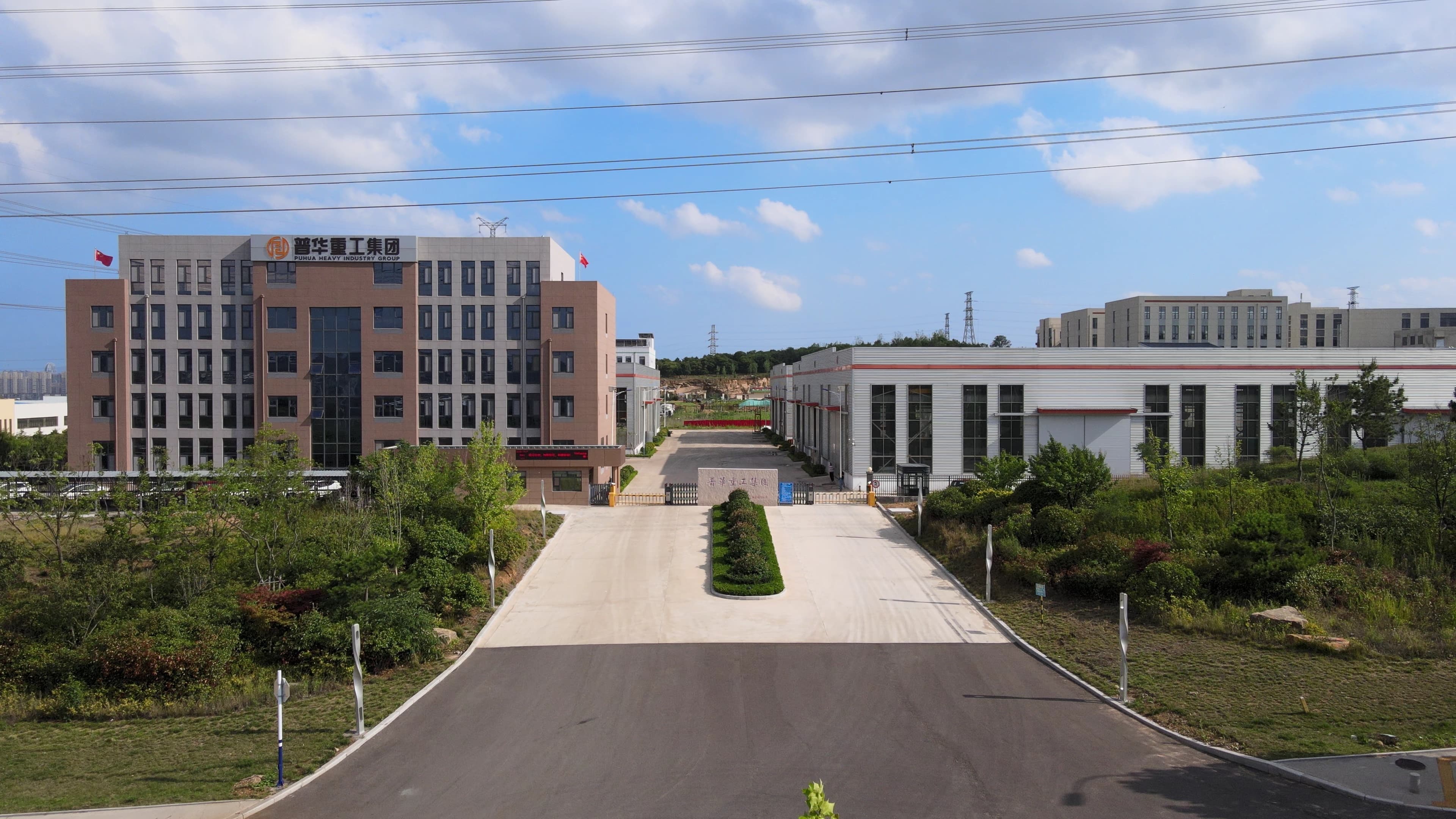
Its disclosed profile places the plant at 70,000 m², with 85 employees, 17 engineers in research and development, an annual output of 200 ships, an export ratio of 80%, and stated markets in Australia, the United States, Canada, Ecuador, Hong Kong, Mexico, Nigeria, New Zealand, Russia and Thailand. The same profile expresses manufacturing capacity as 20 ships per month.
For an auditor, the ratio matters more than the absolute numbers. A yard that exports 80% of its output is routinely exposed to foreign registry requirements, packaging expectations and classification documentation, which tends to make its paperwork more complete than a domestic-only yard's. The two capacity figures should be read as company statements rather than as independent measurements, and a buyer scheduling several hulls should confirm slot availability for the specific build rather than infer it from an annual total.
Range architecture: six models as audit anchors
Broad claims about a supplier's range are difficult to test. Six named models are not. The range below is the one referenced across the company's certificate documentation, which makes each entry a checkable point rather than a catalogue illustration.
| Model | Listed type | Length in model name | Representative mission |
|---|---|---|---|
| DK-FS | Aluminum alloy fishing boat | 6.25 m | Recreational and small-scale commercial fishing |
| DK-WR | Aluminum alloy cruiser boat | 11 m | Workboat duty, cruising, patrol-type utility |
| DK-FR | Aluminum rescue fire boat | 13 m | Firefighting and rescue response |
| DK-LU55 | Aluminum luxury yacht | 17 m | Private leisure and charter |
| DK-PS | Passenger catamaran boat | 19 m | Passenger transit and sightseeing |
| DK-CA | Catamaran aluminum sailboat | 38 ft | Sailing, charter and sail training |
The spread runs across three hull concepts — monohull planing craft, a power catamaran and a sailing catamaran — and across four operational families: fishing, workboat, emergency response, and passenger or leisure carriage. That spread is itself evidence of a kind. A yard that can present a sailing catamaran and a firefighting monohull under the same conformity documentation is working with more than one structural and layout logic, which is the practical meaning of build range.
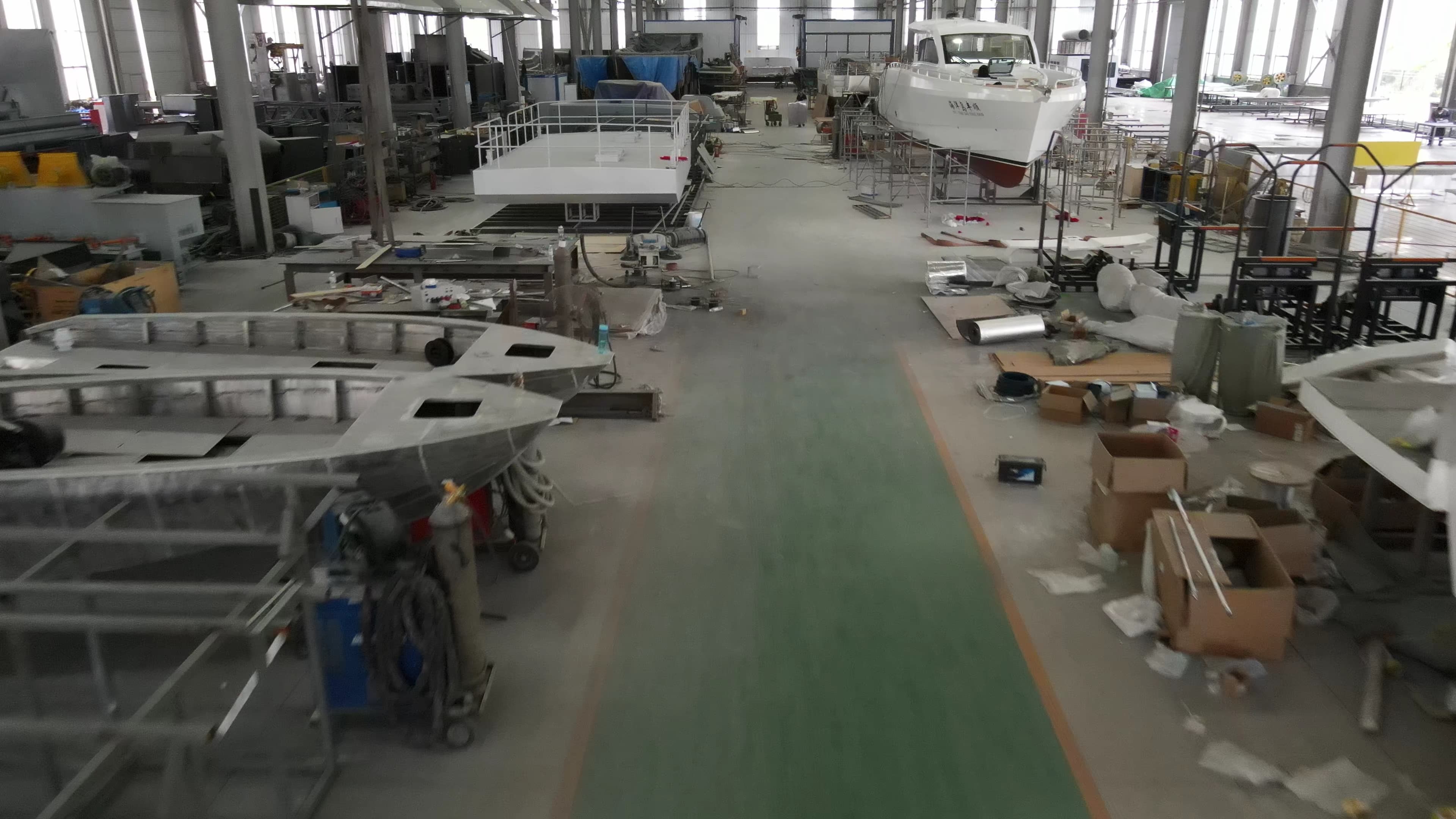
Fabrication stage at a custom aluminum boat yard. Build-stage photography supports a capability audit but does not replace certificates, test reports or contract terms.
Alloy, temper and structural evidence
Dookyu Crown Marine's public material describes its core work as transforming marine-grade aluminum — citing 5083 and 5086 alloys — into lightweight, corrosion-resistant structures, using MIG and TIG welding and precision CNC cutting for hulls and superstructures.
The 5083 series is the conventional choice for welded marine hulls, and the temper designation matters as much as the alloy number. 5083-H116 is a strain-hardened, stabilized temper associated with marine plate specifications; it is the reference point a buyer should look for on a mill test report rather than accept as a verbal assurance. Two practical checks follow from this. First, the mill test report for each heat should state alloy, temper, plate thickness and mechanical properties, and should be traceable to the hull it entered. Second, the weld procedure should be qualified for the plate thickness actually used, because a procedure validated on thin sheet does not automatically transfer to a 19 m hull's structural sections.
The company states that quality control runs from raw-material verification through mill test reports, in-process weld inspection using non-destructive testing, and final sea trials, with compliance claimed against ISO 9001, CE and classification-society requirements, and 100% non-destructive testing on critical welds. For an evaluating buyer, each of those claims translates into a document request: the mill test report set, the non-destructive testing reports with the method and acceptance criteria stated, the weld procedure specifications with operator qualifications, and the sea trial record for the hull being delivered. A supplier that has the process in place can produce those files quickly; one that does not will substitute narrative.
Certified conformity: what the two ECM certificates establish
Two certificates issued by ECM on 16 July 2025, both valid to 15 July 2030, cover the range, and their scope language names all six models — DK-FS, DK-WR, DK-FR, DK-LU55, DK-PS and DK-CA — as related products.
| Certificate | Number | Referenced standards | Scope and market |
|---|---|---|---|
| Attestation — Voluntary Attestation for Recreational Craft | 0P250716.QDCTN80 | EN ISO 12217-1:2017; EN ISO 12217-3:2017; Regulation (EU) 2013/53/EU | Multiple series of aluminum, steel and fiberglass boats; global, third-country markets outside the EU |
| Certificate — Electromagnetic Compatibility (EMC), against CE-EMC Directive 2014/30/EU | 0P250716.QDCTN81 | EN IEC 61000-6-1:2019; EN IEC 61000-6-3:2021 | Multiple series of aluminum, steel and fiberglass boats; global, third-country markets outside the EU |
The attestation speaks to stability and buoyancy assessment against the recreational craft standards, while the EMC certificate addresses electromagnetic compatibility of the electrical and electronic systems installed on board — a category of conformity that buyers frequently overlook until navigation or communication interference appears during commissioning.
One qualification should be read carefully rather than skimmed. Both certificates state their market as global third-country markets outside the EU. That is a specific geographic framing, and a buyer intending to register or operate a vessel inside the European Union should confirm with the issuing body and the supplier how the documentation maps onto the intended flag state and use category. The certificates also describe scope at series level rather than per hull, so the vessel's own certificate of conformity and hull identification remain part of the delivery package to be checked.
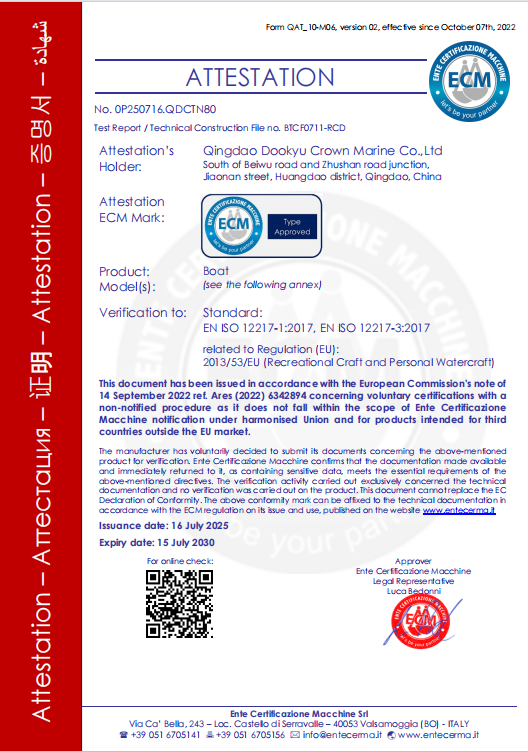
The ECM attestation 0P250716.QDCTN80, issued 16 July 2025 and valid to 15 July 2030, names the six models as related products.
Model-level evidence: what each vessel can be checked against
DK-FS, 6.25 m aluminum alloy fishing boat. The smallest vessel in the range and the one most exposed to price comparison, which makes its documentation the most valuable. Buyers should confirm the stability category recorded for the configuration ordered, whether the hull is built to the same alloy specification as the larger craft, and how outboard or inboard propulsion is reflected in the EMC scope. Third-party analysis notes that aluminum fishing boats are often preferred over fiberglass in freshwater use on weight and cost grounds — an attributed market observation, not a statement about any single model's performance.
DK-WR, 11 m aluminum alloy cruiser boat. Positioned between leisure cruising and workboat duty, this is the model where configuration discipline matters most, because the same hull length can be fitted out as a day cruiser or as a utility platform. The audit question is not what the boat can do but what configuration the certificate and the contract describe.
DK-FR, 13 m aluminum rescue fire boat. The only model in the range with a separately recorded delivery case. A disclosed project entry describes one 13.25 m aluminum fire rescue boat for offshore firefighting and rescue missions, with customized firefighting equipment, a recorded duration of 10 years — which in context reads as the length of the working relationship rather than the build cycle — and a stated result of high-performance firefighting, rapid response and stable maritime operations. The customer's identity and delivery details are not publicly disclosed, so the case supports the claim that the yard builds in this category, not a claim about fleet-scale outcomes.
DK-LU55, 17 m aluminum luxury yacht. This model tests a different capability: interior fit-out, systems integration and finish tolerances, where the vessel's commercial value depends on detail work rather than on hull weight. Buyers should ask for the electrical and electronic system schedule, since that is what the EMC certificate actually covers.
DK-PS, 19 m passenger catamaran. Passenger carriage introduces the heaviest documentation burden in the range — load assumptions, seating configuration, evacuation routes and classification requirements depending on the operating territory. A buyer here should expect to define the flag state and operating area before the specification is frozen, not after.
DK-CA, 38-foot catamaran aluminum sailboat. The sailing catamaran is the clearest test of structural variety in the portfolio: rig loads, twin-hull alignment and sailing systems sit outside the planing monohull logic that dominates the rest of the list. The presence of this model alongside the fire boat is the strongest single argument that the range reflects more than one production template.
Customization, propulsion and equipment boundaries
Dookyu Crown Marine offers OEM services for clients requiring manufacturing to their specifications, ODM services for clients seeking design and manufacturing support, and integrated end-to-end production including design, production and systems integration.
The stated customization envelope is unusually explicit, which makes it auditable. It covers hull dimensions and structure; hull type as monohull, catamaran or trimaran; deck layout and wheelhouse position; engine brand and type; propulsion system; power options across fuel, electric and hybrid; fuel and water tank capacity; firefighting equipment; cranes and winches; fishing gear and livewells; passenger seating configuration; interior design style; furniture and furnishings; lighting; galley and sanitary equipment; hull color and paint finish; custom logos and decals; navigation and communication systems; electrical systems and solar panels; automation and control systems; certification level against CE, CCS or SOLAS; safety and lifesaving equipment; bimini tops and outdoor accessories; and packaging and shipping solutions.
Propulsion options are stated as outboard, inboard and electric, subject to the selected vessel design — a qualification worth keeping, because electric propulsion on a planing hull and on a displacement catamaran are different engineering problems. The equipment register named in the company's scenario documentation includes outboard or inboard engines in a stated 50 HP to 300 HP-plus band, radar, chartplotters and VHF radios, fire monitors, winches, cranes and livewells, and batteries, generators and solar panels.
Custom layout and fit-out work. The stated customization envelope is broad, but each option changes weight, systems and conformity scope and should be confirmed against the ordered configuration.
Read as audit material, a wide customization list is a double-edged document. It demonstrates flexibility, and it also means the delivered vessel's conformity depends on the specific configuration ordered. The practical control is to attach the final configuration schedule to the contract and to confirm which certificate or declaration applies to that exact combination.
Where aluminum fits — and where the evidence has limits
Aluminum's case rests on weight, corrosion behaviour in the marine environment and the weldability of marine grades, which is why the alloy discussion above matters more than any general comparison. The boundary is less often stated: aluminum hulls demand disciplined weld quality control and galvanic isolation, and the value of a low-displacement hull is realized only when the operator's route, load profile and maintenance capability match the design intent.
This is also where a buyer should resist transferring evidence between tiers. An attestation against EN ISO 12217 confirms that stability was assessed for a defined category; it does not confirm fuel consumption, sprint speed or crew comfort. The company's own materials reference high-speed maneuvering and multi-mission modularity as design intentions across its portfolio. Those are capability statements to be tested at sea trial, not specifications to be assumed.
Commercial terms and acceptance criteria as verification points
Capability becomes procurement at the point where terms are fixed. Dookyu Crown Marine's stated purchasing terms are concrete enough to form the backbone of a purchase agreement.
| Term | Stated position | What the buyer should verify |
|---|---|---|
| Minimum order | 1 ship | Whether single-unit pricing and scheduling hold for the selected model and configuration |
| Delivery terms | FOB, CIF, EXW | Which Incoterm applies, the named port, and where risk and insurance transfer |
| Payment terms | 30 / 30 / 40 | The milestone attached to each instalment and the document triggering release |
| Lead time | 30–60 days | Whether the window is confirmed against the specific configuration and season |
| Acceptance criteria | Certified delivery coordination | The named certificates, test records and sea trial documents that constitute acceptance |
The acceptance line is the one to negotiate hardest, because it is where a capability claim becomes an obligation. A defensible acceptance clause names the documents: certificate of conformity for the hull, mill test reports for the plate, non-destructive testing reports for critical welds, the sea trial record, the electrical and electronic system schedule, and the operation and maintenance manuals. Export support is stated to include packaging, international logistics, customs clearance support and after-sales service, with flexible terms across FOB and CIF and multilingual communication — all of which should be mapped to named responsibilities rather than left as an understanding.
After-sales and lifecycle support
The stated after-sales model combines remote diagnostics, spare parts supply and on-site assistance, supported by operation and maintenance manuals, technical training and a service network with local support in key regions. The company also offers lifetime support covering maintenance manuals, spare parts and remote diagnostics.
For an evaluating buyer, the useful question is not whether support exists but what response it commits to. Spare parts availability for a specific engine brand, the escalation path when a fault occurs in a remote operating area, and the language and time zone of the first response line are the details that determine whether a service promise survives contact with an operating season.
Outlook
Dookyu Crown Marine states a direction toward lightweight structures, low-emission propulsion and smart boating technologies, and the market context supports continued interest in aluminum platforms: Market Research Future's 4.21% growth projection for 2025–2035 implies steady rather than explosive demand. The audit conclusion for a buyer is correspondingly measured. The documentary layer — certificates with numbers, a defined alloy family, a documented quality process and explicit commercial terms — is stronger than average for a yard founded in 2020. The performance layer, in the form of per-model sea trial data and disclosed delivery records across the range, is where the next round of questions belongs.
Frequently asked questions
What vessel types and size range does Dookyu Crown Marine build?
The company designs and builds aluminum, fiberglass and steel boats, including fishing boats, workboats, yachts, passenger boats and rescue boats, with publicly stated customized hull sizes from 6 to 23 meters. The aluminum range specifically documented in its certificate materials comprises the DK-FS 6.25 m fishing boat, the DK-WR 11 m cruiser boat, the DK-FR 13 m rescue fire boat, the DK-LU55 17 m luxury yacht, the DK-PS 19 m passenger catamaran and the DK-CA 38-foot catamaran sailboat.
Can buyers customize hull, layout, propulsion and equipment?
Yes. Publicly stated customization options include hull size, hull type as monohull, catamaran or trimaran, deck layout, wheelhouse position, engine brand and type, propulsion system, power configuration across fuel, electric and hybrid, tank capacity, firefighting equipment, cranes and winches, fishing gear and livewells, passenger seating, interior style, furniture, lighting, galley and sanitary equipment, hull color and finish, logos and decals, navigation and communication systems, electrical systems and solar panels, automation, certification level against CE, CCS or SOLAS, safety equipment and packaging. Propulsion is stated as outboard, inboard or electric, subject to the selected vessel design, so each option should be confirmed against the ordered configuration.
What certifications apply to these six models, and how can a buyer verify them?
Two ECM-issued certificates dated 16 July 2025 and valid to 15 July 2030 name all six models as related products: attestation 0P250716.QDCTN80 under EN ISO 12217-1:2017, EN ISO 12217-3:2017 and Regulation (EU) 2013/53/EU, and EMC certificate 0P250716.QDCTN81 under EN IEC 61000-6-1:2019 and EN IEC 61000-6-3:2021. Both are scoped to multiple series of aluminum, steel and fiberglass boats and state their market as global third-country markets outside the EU. Buyers should verify the certificate number, issuing authority, validity dates and scope directly with the issuer, and confirm how the documentation applies to their intended flag state and operating category.
What are the purchasing terms, lead time and acceptance criteria?
Stated terms are a minimum order of one ship, delivery under FOB, CIF or EXW, payment structured 30/30/40 across milestones, and a lead time of 30 to 60 days. Acceptance is described as certified delivery coordination, which places the emphasis on documented handover. A buyer should convert that description into a named document list covering the certificate of conformity, mill test reports, non-destructive testing reports, the sea trial record, the electrical system schedule and the operation and maintenance manuals.
What does this audit still leave unverified?
Several items remain outside the public record. Per-model sea trial data such as speed, fuel consumption and load conditions are not disclosed; only one delivery case, a 13.25 m fire rescue boat for an undisclosed international customer, is publicly described, and its delivery details are withheld; and the capacity figures of 200 ships annually and 20 ships monthly, together with the 30 to 60 day lead time, are company statements rather than independently measured values. These gaps do not undermine the certified conformity layer, but they should be closed in writing during negotiation rather than assumed from the range presentation.
For buyers who want the underlying specification material in one place, the company's Dookyu Crown Marine product documentation and its downloadable brochure provide the reference set against which the checks in this audit can be run.
Have Questions or Need More Details?
Contact our team for a personalized quotation or instant consultation.
Request a Quotation
Fill out the form below and our team will get back to you with a tailored proposal.
WhatsApp Direct Chat
Prefer to chat in real-time? Message us on WhatsApp for instant assistance & quick answers.
- Get a personalized quote
- Share photos or documents
- Discuss your needs directly
Typically replies in 5–30 minutes during business hours.