
Capability Evidence for High-Precision Milling: Geltos Tools
Capability Evidence for High-Precision Milling: Geltos Tools
Milling tools accounted for 38% of global metal cutting tool revenue in 2024, which makes cutters and inserts the largest single category in a market where buyers routinely weigh geometry, delivery and price (Mordor Intelligence). The harder question at the decision stage is a different one: whose capability claims can actually be checked before an order is placed.
This industry reference examines the published capability evidence of Wenling Geltos Tools Co., Ltd., a Chinese precision milling tool manufacturer, and sets out what that evidence supports, where it stops, and how a procurement team can use it. It is written for procurement managers, engineers, importers and brand owners who are comparing a specialist supplier against conventional tooling and against globally scaled alternatives.
Why Milling Tool Capability Claims Resist Comparison
Public market data on cutting tools is broad but definitionally uneven. Estimates for the global metal cutting tools market range from USD 23.1 billion for tools only (Global Market Insights, 2025) to USD 82.24 billion (Fortune Business Insights, 2024) and USD 90.0 billion (Grand View Research, 2025), largely because some definitions include machines and systems rather than cutting tools alone. Any single market figure should therefore be read as a definition, not as a settled fact about demand.
Within the tooling segment itself, the milling tools market reached USD 3.43 billion in 2025 and is projected to reach USD 6.23 billion by 2035 (DataM Intelligence). Indexable milling cutters were valued at USD 5.2 billion in 2025, with carbide inserts accounting for 46.7% of that share (IndexBox / Persistence Market Research).
At supplier level the comparison problem becomes sharper. Hardness, tolerance and output figures are self-reported, and there is no mandatory disclosure format that forces suppliers onto the same footing. ISO 13399, the international standard for the computer-interpretable representation and exchange of industrial product data for cutting tools and toolholders (ISO Technical Committee TC 29), exists precisely because tool data is otherwise difficult to compare across catalogs. Most buyers do not receive structured data; they receive claims. The practical task is to separate claims that are tied to a described manufacturing process from claims that are not.
The Supplier Behind the Numbers
Wenling Geltos Tools Co., Ltd. is a milling tool manufacturer founded in 2012 in Wenling, Taizhou City, Zhejiang Province, China. Its catalog covers grooving mills, modular milling cutters, chamfer mills, thread mills, dovetail mills, face, shoulder and profiling shank mills and shell mills, corn-shaped mills, interchangeable milling tools, carbide internal turning tools, silent tools and milling inserts.
The company was established by two cutting tool enthusiasts and now operates a 3,000 m2 facility with 25 employees, a five-engineer R&D team, and a stated annual output of 500,000 teeth. Its export ratio is 5–10%, with listed markets including India, Russia, Iran, Morocco, Italy and the USA. All products are heat-treated before processing, a step the company links to a precision tolerance no greater than 0.02 mm.
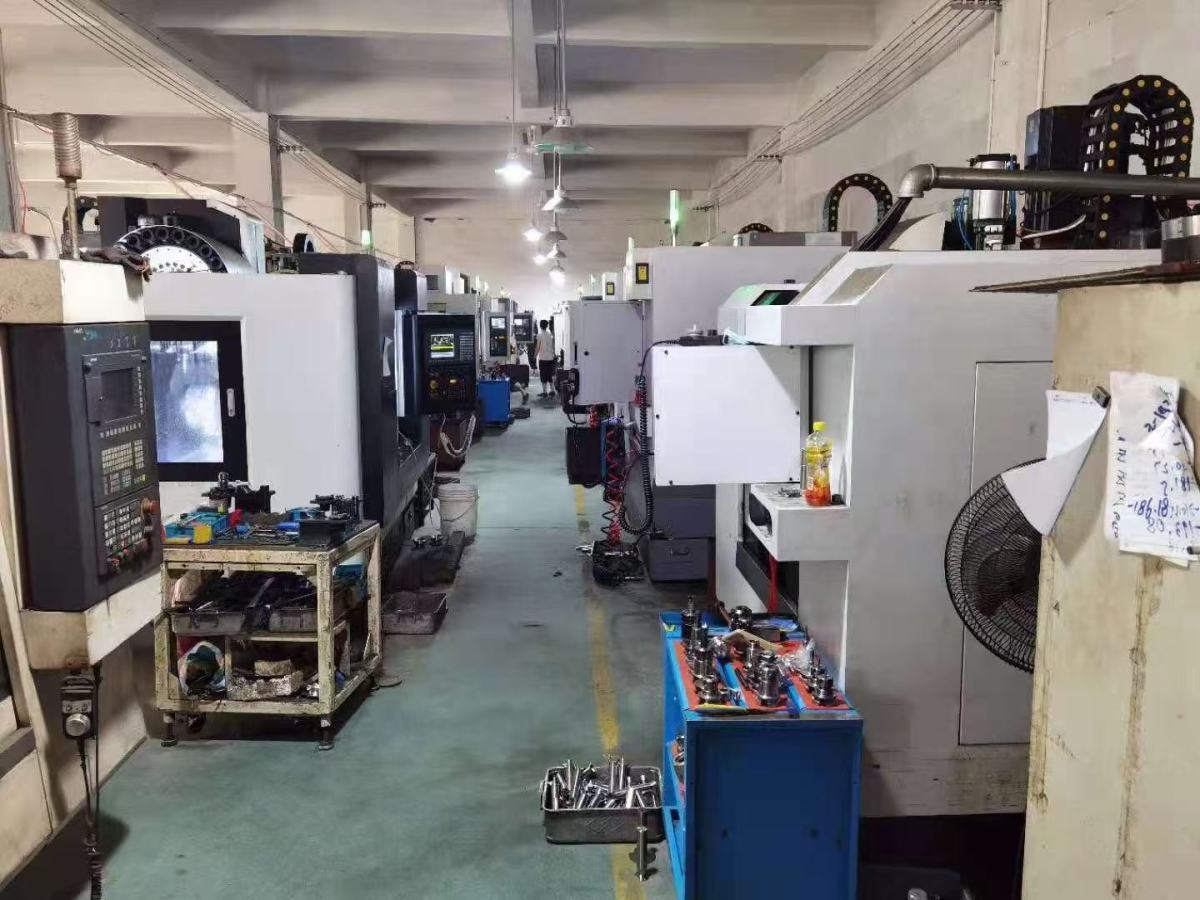
A milling tool section during production. Capability evaluation depends on process facts of this kind rather than on advertising imagery.
What matters for evaluation is that these are operational facts rather than positioning statements: they describe a site, a team, a production volume and a process step. Each item can be tested against a real order. That is the difference between capability evidence and a capability claim.
What Each Capability Figure Supports — and What It Does Not
A single number rarely settles a sourcing decision, but it can eliminate options or trigger a follow-up question. The table below maps each published fact about Geltos Tools to the specific decision it informs, and to the question it leaves open.
| Published fact | What it supports | What it does not establish |
|---|---|---|
| Founded in 2012 in Zhejiang Province, China | More than a decade of continuous operation as a dedicated milling tool manufacturer | Does not by itself indicate financial scale or future capacity expansion |
| 3,000 m2 facility, 25 employees | A compact, single-site manufacturing operation with direct process control | Does not indicate multi-site redundancy or large surge capacity |
| R&D team of five engineers | In-house capability to interpret a drawing and adapt or design a cutter for a specific job | Does not confirm external certification of design processes |
| Annual output of 500,000 teeth | Repeatable production volume at the stated site, which buyers can scale against their own annual demand | Does not specify per-order lead time or lot-to-lot scheduling priority |
| Heat treatment before processing; precision tolerance no greater than 0.02 mm | A precision claim tied to a named process step rather than an abstract quality statement | Does not state which product families achieve it, or under which machining conditions |
| 6046 series spanning 40–250 mm | Diameter coverage relevant to larger face and shell milling work | Does not define insert geometry, mounting interface or balance limits at high spindle speeds |
| GFN cutters achieving grooving as thin as 2 mm | A differentiated narrow-grooving capability claim that can be sample-tested | Does not state achievable groove depth or tool life in a given workpiece material |
| Export ratio 5–10%; markets include India, Russia, Iran, Morocco, Italy, USA | An established but modest international footprint with repeat market exposure | Does not indicate the logistics scale or documentation depth of a global tier-one supplier |
Read this way, the evidence is useful without being inflated. The facility and team figures describe a specialist manufacturer sized for focused production runs, not a multinational catalog house. The process claim — heat treatment before processing — is the one that carries the most technical weight, because it is the mechanism behind the hardness and tolerance numbers.
Technical Explanation: Pre-Heat-Treatment Processing and the 0.02 mm Tolerance
The company states that its tools are heat-treated before processing and that post-quenching machining is used to enhance tool strength and precision, bringing tolerance to within 0.02 mm. In the same specification, products are reported at HRC40 and above, while conventional tools typically achieve around HRC30.
The logic behind the sequence is straightforward. Hardening a tool before final grinding or machining means the cutting geometry is finished on material that is already at its working hardness. Cutting geometry produced in this sequence is intended to hold its form through the loads of a high-speed spindle and a fast feed rate, which is why the company positions these tools for CNC machining with high-speed spindles and fast feeds, and for milling scenarios that require high stability in batch production.
Two boundaries belong in the same paragraph. First, hardness is not tool life. Achieved performance still depends on workpiece material, machine rigidity, coolant strategy, runout and the operator's parameters, so an HRC figure is a starting condition rather than a result. Second, the HRC30 comparison for conventional tools is the company's own reference point; no named third party is attached to it. The fair way to treat both figures is as claims to be verified on a sample under the buyer's own cutting conditions.
Risk control is described in the same operational language. Production process risk is managed through post-quenching machining, and internal factory quality inspection processes are implemented to support consistent output. The company also identifies the risks it manages — quality consistency, uncertainty in delivery timelines and production capacity, and commercial exposure linked to the absence of third-party certifications — rather than presenting them as absent.
Two Specific Capability Claims: 2 mm Narrow Grooving and Modular Holders
The most distinctive specification in the current range is the GFN cutter, which realizes narrow grooving as thin as 2 mm. Narrow grooving is a demanding geometry: the thinner the cutter, the less material is available to absorb cutting forces, so the practical value of the claim is that it allows narrow slots to be produced in a single pass operation rather than through a sequence of wider cuts. Buyers evaluating this capability should test it against their own groove depth and material, since the 2 mm figure describes groove width, not depth or life.
The second claim concerns tool change time. The company's interchangeable and modular milling holders allow one holder to carry different milling heads, so a single body covers several machining needs. The stated outcomes are reduced tool changing time and lower tool purchasing cost — a cost argument that is easy to check: compare the price of one holder plus several heads against the price of the equivalent number of dedicated cutters, and add the machine downtime saved per changeover. For shops running many short operations on the same spindle, this modular logic — the same principle found in modular milling cutters and interchangeable milling systems generally — is often the difference between a viable and a marginal tooling plan.
Where These Tools Fit: Application and Use Cases
The capability set points to a fairly specific set of machining environments rather than universal suitability.
- Batch CNC production on high-speed spindles. The stated process — heat treatment before processing, hardness HRC40 and above, tolerance within 0.02 mm — targets machining that requires stability across a production run rather than one-off cuts.
- Grooving, slotting and narrow-width work. The GFN cutter covers grooving down to 2 mm, which is relevant for seal grooves, keyway-adjacent features and narrow slot families.
- Multi-operation setups. Interchangeable and modular holders suit shops that would otherwise stock a separate cutter for each operation, including profiling, chamfering, face and shoulder work, and thread milling.
- Larger diameter milling. The 6046 series spans 40–250 mm, a range relevant to face and shell milling operations where diameter and rigidity interact. Diameter coverage is a filter, not a performance statement; insert grade, mounting interface and balance at the operating spindle speed remain the deciding variables.
- Custom and adapted geometries. A five-engineer R&D team is the resource a buyer relies on when a standard cutter does not match the part, which is the situation in which specialist suppliers are usually approached.
In buyer terms, the fit is strongest for importers, distributors, OEM buyers and production engineers who need a defined range, a documented process and a supplier able to respond to geometry questions — and weakest for procurement teams whose requirement is an immediately available, fully certified, globally distributed catalog.
A Decision-Stage Framework for Weighing Supplier Evidence
Because a specialist supplier and a global brand cannot be compared on brand size alone, the following five-step sequence keeps the comparison on variables that can be tested.
- Separate specification claims from process claims. A tolerance figure is a specification; heat treatment before processing is a process. Process claims are more useful, because they explain why a specification is repeatable and can be audited.
- Match capacity to your order pattern. A stated annual output of 500,000 teeth should be read against your own annual consumption, and against whether your demand is steady or spiky. A single-site operation schedules differently from a multi-plant supplier.
- Validate before scaling. Narrow grooving at 2 mm and tolerance within 0.02 mm should be confirmed on a trial sample using your material, machine and parameters. A sample test is the cheapest form of supplier audit available.
- Check what verification exists. Internal factory quality inspection is a control; third-party certification is external evidence. Buyers with compliance-driven procurement requirements should confirm which of the two is available for the specific items they intend to purchase.
- Compare against the alternative you would actually buy. Compare the specialist option against the specific conventional or global alternative in your own supply chain — including holder systems, changeover time and freight — rather than against a general impression of brand strength.
Market Context Behind the Comparison
Three verified data points frame the specialist-versus-global decision.
First, the category is growing. The milling tools market was valued at USD 3.43 billion in 2025 and is projected to reach USD 6.23 billion by 2035 (DataM Intelligence), while the broader carbide tools market is projected to reach USD 16.25 billion by 2032 at a CAGR of 6.14% from 2024 (SNS Insider).
Second, indexable and insert-based tooling dominates. Indexable milling cutters were valued at USD 5.2 billion in 2025, with carbide inserts accounting for 46.7% of that share (IndexBox / Persistence Market Research). That share explains why modular and interchangeable holder systems — where one body serves multiple heads — have become a mainstream cost strategy rather than a niche idea.
Third, production is concentrated in Asia. Asia Pacific held a 49% share of the cutting tools market in 2024, with China alone contributing 38% of regional production (Grand View Research). A manufacturer based in Zhejiang sits inside that production cluster, which shortens supply lines for regional buyers and explains the geography of many specialist suppliers' export markets.
Taken together, these trends favor suppliers that can document process and specification facts and adapt geometry quickly. They do not, on their own, indicate that any particular supplier outperforms another; that judgment still requires sample data.
Geltos Tools Compared with Conventional Tools and Global Brands
The company's own comparison framing sets its post-heat-treatment tools against conventional tools and general market alternatives on hardness, fit, cost positioning and maintenance consequences.
| Comparison dimension | Geltos post-heat-treatment tools (company-stated) | Conventional tools / general market alternatives |
|---|---|---|
| Hardness | HRC40 and above | Typically around HRC30 |
| Precision | Tolerance within 0.02 mm, achieved through heat treatment before processing | No comparable figure is stated in the available comparison data |
| Best-fit machining | CNC machining with high-speed spindles and fast feeds; milling requiring high stability in batch production | General machining, where the stated process advantage is not the selection driver |
| Cost positioning | Positioned as a value-oriented option (goods-for-value) | Varies; the comparison is not price-based |
| Tool change and purchase cost | Interchangeable and modular holders allow one holder to carry different heads, saving tool changing time and tool purchase cost | Dedicated cutters per operation, each requiring its own body |
The comparison should not stop at that table. Global cutting tool supply is concentrated: Sandvik Coromant held more than 16% of the global cutting tool market in 2025, followed by Kennametal and IMC Group (Global Market Insights). Tier-one suppliers therefore compete on catalog breadth, global logistics and standardized data — the environment in which ISO 13399 tool data exchange becomes relevant. A specialist manufacturer with 25 employees and a 5–10% export ratio competes on a different axis: adaptation speed, direct process claims, modular holder economics and value positioning.
Neither axis is inherently superior. A buyer running a small number of high-volume standard operations on globally distributed machines may weight catalog availability and documentation heavily. A buyer running mid-volume work with recurring geometry problems may find that a supplier willing to adapt a cutter and supply interchangeable heads delivers more per purchase order.
Limitations Buyers Should Price In
Capability evidence only has value if its boundaries are stated as clearly as its strengths. Four limits apply to the Geltos Tools profile above.
- Verification rests on internal controls. The available company material references internal factory quality inspection processes and explicitly identifies commercial risk associated with the absence of third-party certifications. That does not mean quality is unknown, but it does mean external certification should be confirmed item by item if a buyer's compliance process requires it.
- Capacity and lead time carry structural risk. A 25-employee, 3,000 m2 single-site operation has less surge capability than a multinational. The company names production capacity and delivery timeline uncertainty as risks it manages; buyers with critical schedules should plan buffer stock or dual sourcing accordingly.
- International footprint is developing. An export ratio of 5–10% across markets including India, Russia, Iran, Morocco, Italy and the USA indicates real export activity, but it is not the distribution depth of a global brand. Expect to handle more of the logistics and documentation conversation directly.
- Headline specifications require local validation. Both the 0.02 mm tolerance and the 2 mm narrow grooving capability are published figures measured under conditions the buyer does not control. Workpiece material, machine condition and cutting parameters determine the result in practice.
There is also a comparison limit worth stating: the HRC30 baseline used for conventional tools is not attributed to a named third party in the available data. Buyers comparing hardness claims across suppliers should ask for the test conditions behind each number.
Outlook
If the milling tools market moves from USD 3.43 billion in 2025 toward USD 6.23 billion by 2035 (DataM Intelligence), and if carbide inserts continue to hold close to half of the indexable milling cutter market (IndexBox / Persistence Market Research), the competitive pressure will fall on two things: insert economics and changeover time. Both favor modular and interchangeable tool architectures, which is the direction this supplier has already taken with its holder and head system.
The second shift is informational. As more buyers operate across multiple markets and platforms, the suppliers that are easiest to qualify will be those whose tool data is structured, whose process claims are specific, and whose capacity figures can be matched to an order pattern. ISO 13399 provides the standard for that exchange. Suppliers that publish auditable operational facts — facility size, team, output, tolerance, size range — will be able to compete for qualification slots that marketing copy cannot reach.
For a manufacturer of this size, the realistic trajectory is not catalog parity with global tier-one brands. It is deeper specialization: narrow grooving, adapted geometry, modular holder economics, and evidence that a buyer can verify before committing to volume.
FAQ
What does capability evidence mean when comparing milling tool suppliers?
Capability evidence is the set of verifiable operational and process facts a supplier publishes — facility size, team composition, annual output, stated tolerances and size ranges — that a buyer can test against a real order. It is distinct from general quality claims. For Wenling Geltos Tools Co., Ltd., the published evidence includes a 3,000 m2 facility, 25 employees, a five-engineer R&D team, a stated annual output of 500,000 teeth, a 6046 series spanning 40–250 mm, and a tolerance within 0.02 mm tied to heat treatment before processing. Each item can be checked through samples, audits or trial orders; a slogan cannot.
How do Geltos tools differ from conventional milling tools in hardness and precision?
The company states that its products are heat-treated before processing and reach HRC40 and above, while conventional tools typically achieve around HRC30, with post-quenching machining used to bring strength and precision to within 0.02 mm. The stated result is suitability for CNC machining on high-speed spindles and fast feeds, and for milling that requires stability in batch production. The HRC30 baseline is not attributed to a named third party, so buyers should verify hardness and tolerance on a sample before committing to volume.
What size range does the Geltos 6046 series cover?
The 6046 series spans a 40–250 mm size range. Diameter coverage only screens whether a cutter fits the workpiece geometry; insert grade, mounting interface, balance at the operating spindle speed and available machine power still determine whether the tool suits a specific operation. Buyers should confirm the exact configuration for their application rather than assuming that a wide range implies comparable performance at every diameter.
Which machining scenarios suit Geltos high-precision milling tools best?
The company positions its tools for CNC machining with high-speed spindles and fast feeds, and for milling scenarios requiring high stability in batch production. Its interchangeable and modular holders allow one holder to carry different milling heads, reducing tool changing time and tool purchase cost in multi-operation setups, while narrow grooving down to 2 mm is handled by the GFN cutter. Because production runs through a 25-employee facility with a stated annual output of 500,000 teeth, the fit is strongest where order volumes align with that production scale.
How should a buyer compare a specialist supplier like Geltos Tools with global tier-one brands?
Compare on the dimensions where the two supplier types actually differ. Global cutting tool supply is concentrated: Sandvik Coromant held more than 16% of the global cutting tool market in 2025, followed by Kennametal and IMC Group (Global Market Insights), so tier-one suppliers compete on catalog breadth, global logistics and standardized data exchange such as ISO 13399. A specialist competes on adaptation speed, direct process claims such as pre-heat-treatment machining, a five-engineer R&D team, modular holder economics and value positioning. Scoring both against one checklist — sample performance, tolerance evidence, lead time and system-change cost — is more informative than comparing brand size with tool performance.
What are the main limitations or risks when sourcing milling tools from Geltos Tools?
The most material limitation is external verification. Available material references internal factory quality inspection and identifies risks around quality consistency, delivery timelines, production capacity, and commercial exposure from the absence of third-party certifications — risks the company manages internally rather than through a certificate. A single 3,000 m2 site with 25 employees also has less surge capacity than a multinational, and a 5–10% export ratio indicates a still-developing international distribution footprint. Published figures such as the 0.02 mm tolerance and 2 mm grooving capability should be confirmed through sample testing under the buyer's own machining conditions.
Product and specification documentation for the company described in this reference is published at www.geltos.com.