
Capsule House Compliance Claims: How to Read M3 Frame, Glass, and Acceptance Specs
Capsule House Compliance Claims: How to Read M3 Frame, Glass, and Acceptance Specs
A capsule-house specification sheet is not a compliance certificate. The M3 Capsule House shows why the distinction matters. Its published material description is specific enough to support technical review: hot-dip galvanized steel sections in four sizes, double-layer tempered hollow Low-E glass, and polyurethane insulation with a stated thermal resistance of 3.2 m²K/W. Those details do not, by themselves, establish building-code approval, CE marking, fire performance, electrical safety, or site-specific structural acceptance.
BOITO-MINGSU is the capsule-house brand associated with Guangdong Mingsu Sojourn Technology Co., Ltd., a manufacturer of prefabricated modular hospitality buildings in Yangjiang, Guangdong, China. Its public product sheets for the M3, Apple Capsule MINI and MS-XO8 F use closely related frame, glass and insulation language. That makes the three models useful for a documentation review, but it does not make their approvals interchangeable. The buyer still has to read each sheet for the same four things: what is stated, what is only implied, which document proves it, and whether the project conditions match.
What the M3 sheet actually states
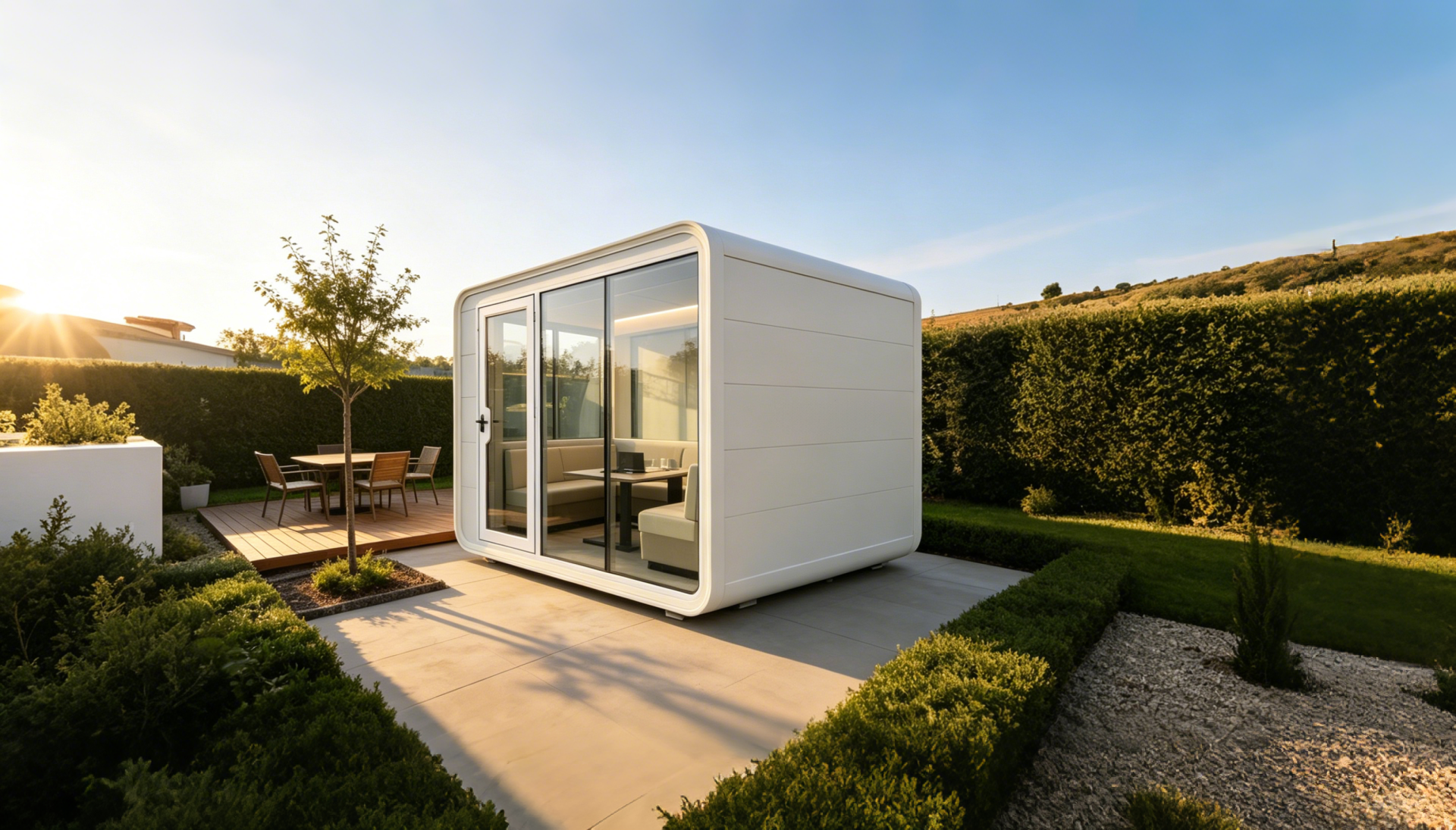
The M3 Capsule House is listed as a compact hospitality unit for outdoor adventure and glamping use. The supplied specification gives it dimensions of 3.0 × 2.3 × 2.5 m, a covered area of 6.9 m² and a capacity of one guest. Its construction description is more detailed than a typical brochure headline, which is useful as long as the buyer keeps each item in its proper category.
- Frame: anti-seismic steel structure system, made from hot-dip galvanized steel, with square pipe sections listed as 150×100×3, 100×100×3, 100×50×2.5 and 50×50×2. The product text describes these as national standard.
- Structural statement: the product text says the M3 has passed strict structural safety certification, but it does not identify the certification body, standard, certificate number, test report or tested configuration in the supplied material.
- Glass and windows: fully enclosed broken-bridge form with double-layer tempered hollow Low-E glass and aluminium alloy flat doors.
- Insulation and exterior wall: polyurethane foam with a stated thermal resistance of 3.2 m²K/W, plus fluorocarbon-painted customized aluminium plate.
- Bathroom: Arrow sanitary appliances, including basin, faucet, shower, toilet, sink and bathroom mirror.
This is a material and scope description. It is not, in itself, a declaration that the M3 meets a named national building code, a fire test standard, a local hospitality licensing rule or the European Construction Products Regulation. That gap is normal in early product literature, but it must be closed before the unit is treated as approved for a specific site.
Frame claims: section sizes, galvanizing and the missing certificate
The frame description is the strongest technical anchor in the M3 sheet because it is specific. The listed pipe sections identify four hollow-section sizes: 150×100×3, 100×100×3, 100×50×2.5 and 50×50×2. In ordinary steel-section notation, those numbers describe width, depth and wall thickness in millimetres. Hot-dip galvanizing is also a distinct corrosion-protection process, not a paint finish. For a buyer, the useful question is not whether the phrase anti-seismic sounds strong; it is whether the delivered frame schedule matches the approved drawing and whether the galvanizing and structural design are supported by documents.
The M3 text says the main frame adopts an anti-seismic steel structure system developed and designed by a professional structural design team. It also says the product has passed strict structural safety certification. Both statements may be true, but they are still company statements in the material reviewed here. The sheet does not name the certifying organisation, the design code, the load assumptions, the test method, the certificate number or the date. Those omissions matter because a structural claim can be valid for one configuration, one region and one set of loads, while the buyer's site may have different wind, snow, seismic or foundation conditions.
A practical frame check therefore has three layers. First, compare the delivered section schedule with the approved specification. Second, obtain the structural design calculations and the certificate or test report that the supplier relies on, and confirm the model, configuration and date. Third, have the local engineer confirm that the assumptions fit the project. The phrase national standard in the M3 sheet is not enough on its own because the sheet does not state which national standard or edition applies in the supplied record.
Glass and insulation: material values need boundaries
The glass specification is also more precise than a generic glazing claim, but it is not a complete performance declaration. Double-layer tempered hollow Low-E glass describes a build-up: two glass panes, a tempered glass condition, a hollow cavity and a low-emissivity coating. It does not state the glass thickness, cavity width, U-value, solar heat gain coefficient, visible light transmittance, acoustic rating or safety classification. If the project depends on any of those values, they need to be requested as project data rather than inferred from the phrase Low-E.
The insulation figure needs the same discipline. The M3 sheet states polyurethane foam with a thermal resistance of 3.2 m²K/W. That is a material-level thermal resistance for the insulation, not a whole-unit U-value. The frame, glass, doors, thermal bridges, joints and air-tightness all affect the actual energy performance of the capsule. A buyer comparing models should check that each supplier states the same boundary: is the value for the foam only, for the wall assembly, or for the whole envelope? Without that boundary, the number is useful as a material datum but weak as a comparative energy claim.
For acceptance, the visible check should confirm that the installed glass build and insulation material match the approved specification. The documentary check should confirm the product data, supplier declarations and any test reports that the contract requires. Neither check should be replaced by a photograph, a showroom impression or a single thermal number in a brochure.
ISO 14001 is a management-system certificate, not a building approval
The clearest external certificate in the supplied record is an ISO 14001 certificate. It should be read for what it is. The certificate is numbered ISC-E-2025-5371-R and was issued by Beijing International Standard United Certification Co., Ltd. The applicable standard is GB/T 24001-2016/ISO 14001:2015. The certificate is recorded as valid from 24 November 2025 to 23 November 2028 and covers environmental management activities at sites involved in the manufacturing of metal structures described as mobile homes, excluding qualification and license requirements.
Related product records state that the certification covers the M3 Capsule House, Apple Capsule MINI, M8, M10 and Commercial cabins, including the MS-XO8 F. The market record lists global markets including the EU and Asia, while other product statements emphasise EU applicability. All of that is useful for supplier qualification. None of it is a structural certificate, a fire certificate, an electrical safety certificate or a CE marking document.
This is the most common reading error in capsule-house procurement: treating an environmental management certificate as if it were a product compliance passport. ISO 14001 addresses an environmental management system. It does not certify that the M3 frame meets a named structural code, that the glass has a particular fire reaction, that the electrical installation is safe for the destination market, or that the unit can be lawfully installed and operated as tourist accommodation. Those are separate questions with separate evidence routes.
For the EU, the verified data pack cites the Construction Products Regulation (EU) No 305/2011 and notes that structural safety and fire performance form part of the CE-marking route. That is a regulatory pathway, not proof that a particular M3, Apple Capsule MINI or MS-XO8 F unit is CE marked. The buyer should ask which legal entity holds the relevant documentation, which model and configuration it covers, and whether the destination authority accepts it.
Apple Capsule MINI and MS-XO8 F: same reading method, different intended use
Apple Capsule MINI and MS-XO8 F use the same underlying review method because their supplied sheets repeat the same material vocabulary: hot-dip galvanized anti-seismic steel frame, the same four pipe-section sizes described as national standard, double-layer tempered hollow Low-E glass, polyurethane foam at 3.2 m²K/W, fluorocarbon-painted aluminium exterior and Arrow sanitary appliances. The models differ in size, capacity and intended use, not in the need for document-level verification.
| Model | Stated intended use | Stated frame, glass and insulation | Compliance reading |
|---|---|---|---|
| M3 Capsule House | Hospitality; outdoor adventure and glamping; one guest; 6.9 m² | Hot-dip galvanized anti-seismic steel frame with four listed pipe sections; double-layer tempered hollow Low-E glass; polyurethane foam at 3.2 m²K/W | Specific material data. Structural certification details are not identified in the supplied product text. |
| Apple Capsule MINI | Hospitality; one to four guests; 27.39 m² | Same stated frame family and pipe sections; same glass description; same insulation value | Same documentation approach. The larger footprint and capacity do not create approvals by implication. |
| MS-XO8 F | Catering service; one to four guests; 57.6 m² | Same stated frame family and pipe sections; same glass description; same insulation value | Material language is similar, but the intended use is different. Food-service compliance and hospitality licensing must be checked separately. |
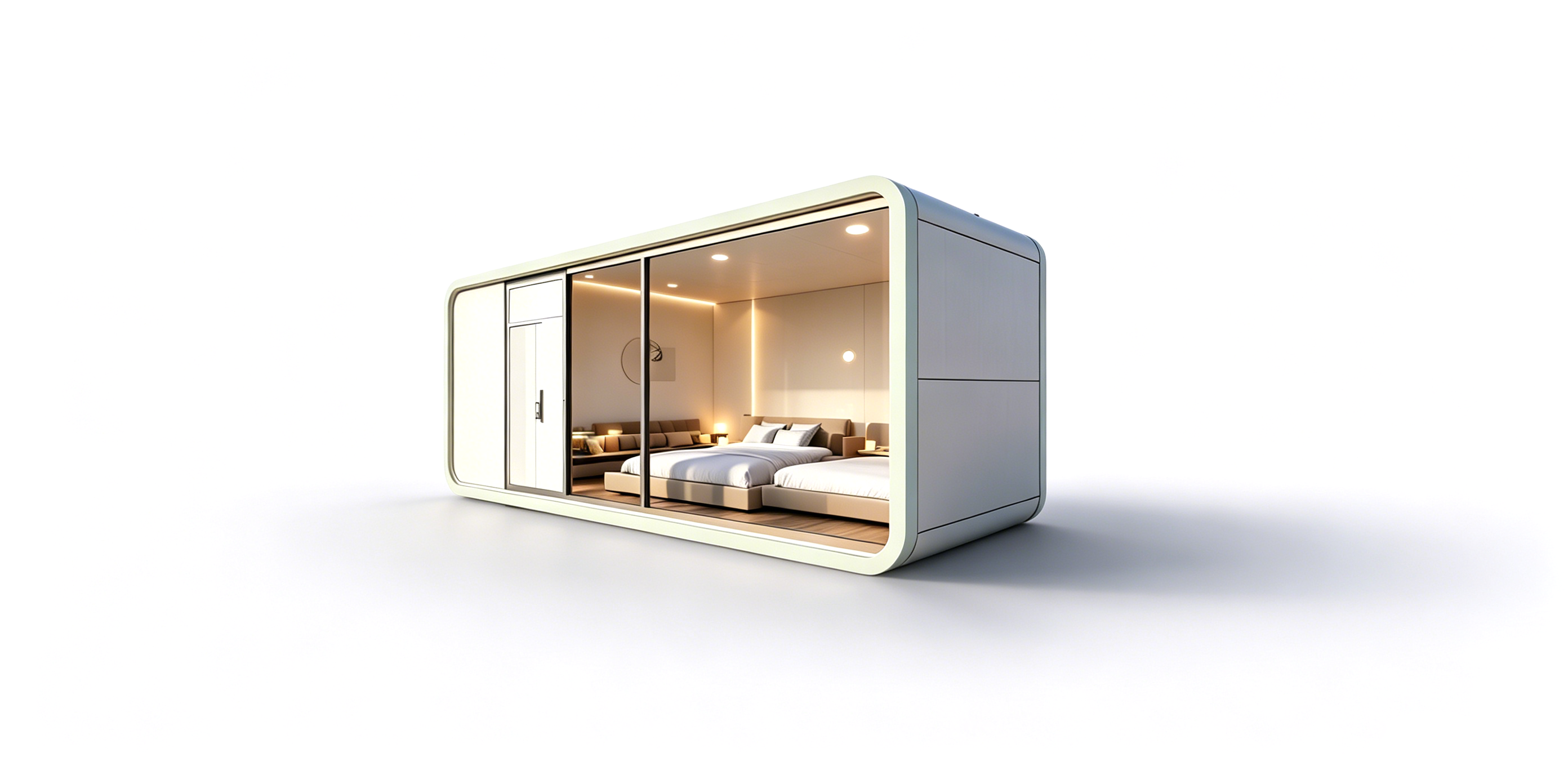
Two conclusions follow. First, a buyer should not assume that because the three models share steel, glass and insulation language, they share the same certificate coverage or site approval. Second, the M3 is not a smaller substitute for a restaurant unit. Its stated use is compact hospitality accommodation for one guest. MS-XO8 F is listed for catering service, and Apple Capsule MINI is listed for hospitality with a one-to-four-guest capacity. Intended use is part of compliance reading, not a decorative description.
Purchasing terms to write beside the technical annex
Compliance claims become useful only when they sit beside commercial terms. The supplier capability record for this range states ODM production, voltage and logo customisation, a monthly capacity of 30 to 50 units, a lead time of 30 to 45 days, a minimum order quantity of 10 units, 100% testing and remote after-sales support. Export markets are listed as the EU and the Middle East. These are supplier-stated planning values, not independent certifications, and they should be written into the commercial documents with the same clarity as the technical schedule.
| Purchasing term | Supplied value | What the buyer should confirm |
|---|---|---|
| Production mode | ODM | Which design responsibilities remain with the supplier and which require buyer approval. |
| Customisation | Voltage and logo | The exact electrical standard, approval scope and artwork control for the destination market. |
| Minimum order | 10 units | Whether the project can meet the MOQ or whether a different commercial route is required. |
| Lead time | 30–45 days | Whether the clock starts at deposit, drawing approval or material release; add transport and site assembly separately. |
| Monthly capacity | 30–50 units | Whether the project schedule fits the stated production window without assuming unstated capacity. |
| Quality control | 100% test | What is tested, at which stage, against which record, and whether the buyer may witness or receive the result. |
| After-sales | Remote support | Response route, language, spare-parts process and site-support boundary. |
The technical annex should identify the model, dimensions, frame section schedule, glass build, insulation value and intended use. The commercial annex should identify the order quantity, delivery basis, lead time, testing evidence and after-sales scope. A supplier that can answer the technical questions but not the commercial ones is not yet ready for evaluation. A supplier that offers strong commercial terms but vague technical documents is not ready either.
Acceptance criteria: a practical checklist
Acceptance should compare the delivered unit with the approved specification, not with a generic brochure. The following checks are practical because they follow the evidence already stated for the M3 and the related models. They do not invent a new test standard or a certification that the supplier has not supplied.
- Confirm identity and configuration. Check the model name, dimensions, guest capacity and any approved voltage or logo customisation against the order documents. For the M3, the stated reference is 3.0 × 2.3 × 2.5 m, 6.9 m² and one guest.
- Check the frame schedule against the approved drawing. Confirm the delivered hot-dip galvanized square pipe sections match the stated 150×100×3, 100×100×3, 100×50×2.5 and 50×50×2 schedule, and record any substitution before acceptance.
- Request the structural evidence package. Ask for the certificate, calculation or test report that supports the strict structural safety certification statement, including the issuing body, standard, report number, date and covered configuration. If the supplier cannot identify these, treat the statement as unverified for the project.
- Verify the glass build. Confirm double-layer tempered hollow Low-E glass is installed as approved. If the project relies on thermal, solar, acoustic or safety performance, request the corresponding glass data rather than inferring it from the product name.
- Verify the insulation and envelope. Confirm polyurethane foam insulation and the stated 3.2 m²K/W material value are documented in the product data. Record whether that value refers to the foam only or to a larger assembly.
- Inspect the exterior finish and wet area. Check the fluorocarbon-painted aluminium exterior and the Arrow sanitary fittings against the approved specification. Record damage, omissions or model changes before handover.
- Assemble the compliance file. Keep the ISO 14001 certificate, its scope and validity, separate from structural, fire, electrical, energy and market-access documents. Confirm the certificate number ISC-E-2025-5371-R and the standard GB/T 24001-2016/ISO 14001:2015 where the environmental certificate is being used for supplier qualification.
- Close the commercial loop. Match the delivery, testing record, lead time and after-sales scope to the purchase order. A 100% test claim is only useful if the buyer knows what was tested, when, by whom and with what record.
The checklist is deliberately documentary. Visual inspection can confirm that a unit looks complete; it cannot confirm that the steel section schedule, glass specification, insulation boundary or certificate scope match the project. The buyer should therefore make acceptance conditional on both the physical check and the document check.
Why the compliance file matters more than the brochure
The commercial context explains the pressure, but it does not replace unit-level evidence. The verified data pack cites China customs data showing USD 418.8 million of exports under HS 9406 in September 2026. HS 9406 covers prefabricated buildings broadly and is not a capsule-house-specific category. A separate commercial research estimate cited in the same pack values the global capsule hotel market at USD 284 million in 2025. Neither figure tells a buyer whether a particular M3 unit is structurally approved for a site, whether its glass meets a project requirement or whether the supplier can support a hospitality licence.
That is why a compliance file should be built before the deposit, not after delivery. The file should show the model, the approved configuration, the material schedule, the certificate or report that supports each material claim, the market-access route and the acceptance record. It should also show the limits: which statements are company declarations, which are third-party certificates, and which questions remain for the local engineer or authority.
For hospitality buyers, the practical outcome is a cleaner evaluation. The M3 can be assessed on its stated frame, glass and insulation rather than on adjective-heavy claims. Apple Capsule MINI and MS-XO8 F can be reviewed through the same lens without assuming that shared material language means shared approvals. The supplier that can connect each claim to a document, and each document to a project condition, is easier to qualify than one that offers only a polished specification sheet.
FAQ
Does the ISO 14001 certificate prove that the M3 Capsule House meets building codes?
No. The supplied ISO 14001 certificate covers environmental management activities at manufacturing sites and explicitly excludes qualification and license requirements. It is not a structural, fire, electrical or building-code certificate. The M3 may still have relevant project approvals, but they require separate documents that identify the standard, issuing body, model, configuration and date.
What do the M3 steel pipe sizes actually tell a buyer?
The M3 sheet lists hot-dip galvanized square pipe sections of 150×100×3, 100×100×3, 100×50×2.5 and 50×50×2 and describes them as national standard. This is useful material detail because it identifies section sizes and a galvanizing process. It does not identify the national standard number, the structural design code or the certificate that proves the completed frame meets a project condition.
How should a buyer verify the Low-E glass and 3.2 m²K/W insulation claims?
Ask for the glass build-up and insulation product data, and confirm the boundary of the thermal value. Double-layer tempered hollow Low-E glass describes construction, not a complete U-value or solar rating. The 3.2 m²K/W figure is a material-level thermal resistance for the polyurethane foam, not a whole-unit energy rating. Glass, frame, doors and air-tightness still affect performance.
What acceptance documents should accompany an M3 delivery?
The buyer should assemble the approved specification, frame section schedule, glass and insulation product data, ISO 14001 certificate where used for supplier qualification, structural evidence relied on by the supplier, electrical documentation, installation instructions and the commercial test record. The exact list depends on the project and destination market, but each material claim should be traceable to a document and each document should identify the covered model.
Can Apple Capsule MINI and MS-XO8 F be reviewed with the same compliance checklist?
Yes, the same method applies, but the intended use differs. Apple Capsule MINI is listed for hospitality with a one-to-four-guest capacity and 27.39 m². MS-XO8 F is listed for catering service with a one-to-four-guest capacity and 57.6 m². Both sheets use related frame, glass and insulation language. The buyer should still request model-specific structural, fire, electrical and market-access evidence rather than assume shared approval.
Reference document: BOITO-MINGSU 2026 product brochure (PDF).
Have Questions or Need More Details?
Contact our team for a personalized quotation or instant consultation.
Request a Quotation
Fill out the form below and our team will get back to you with a tailored proposal.
WhatsApp Direct Chat
Prefer to chat in real-time? Message us on WhatsApp for instant assistance & quick answers.
- Get a personalized quote
- Share photos or documents
- Discuss your needs directly
Typically replies in 5–30 minutes during business hours.