
Capsule House Model Comparison: M3 vs Apple Capsule MINI vs M8 vs MS-XO8 F
Four capsule house models from the same manufacturer can look almost interchangeable in a catalogue and behave completely differently on site. Floor area, occupancy rating, electrical load and total unit weight determine whether a unit can be lifted onto a mountain plot, connected to an existing power supply, and operated profitably as a guest room or as a commercial space. This comparison examines the BOITO-MINGSU range - M3, Apple Capsule MINI, M8 and MS-XO8 F - using published model specifications, the construction system documented across the series, and one verifiable certification set.
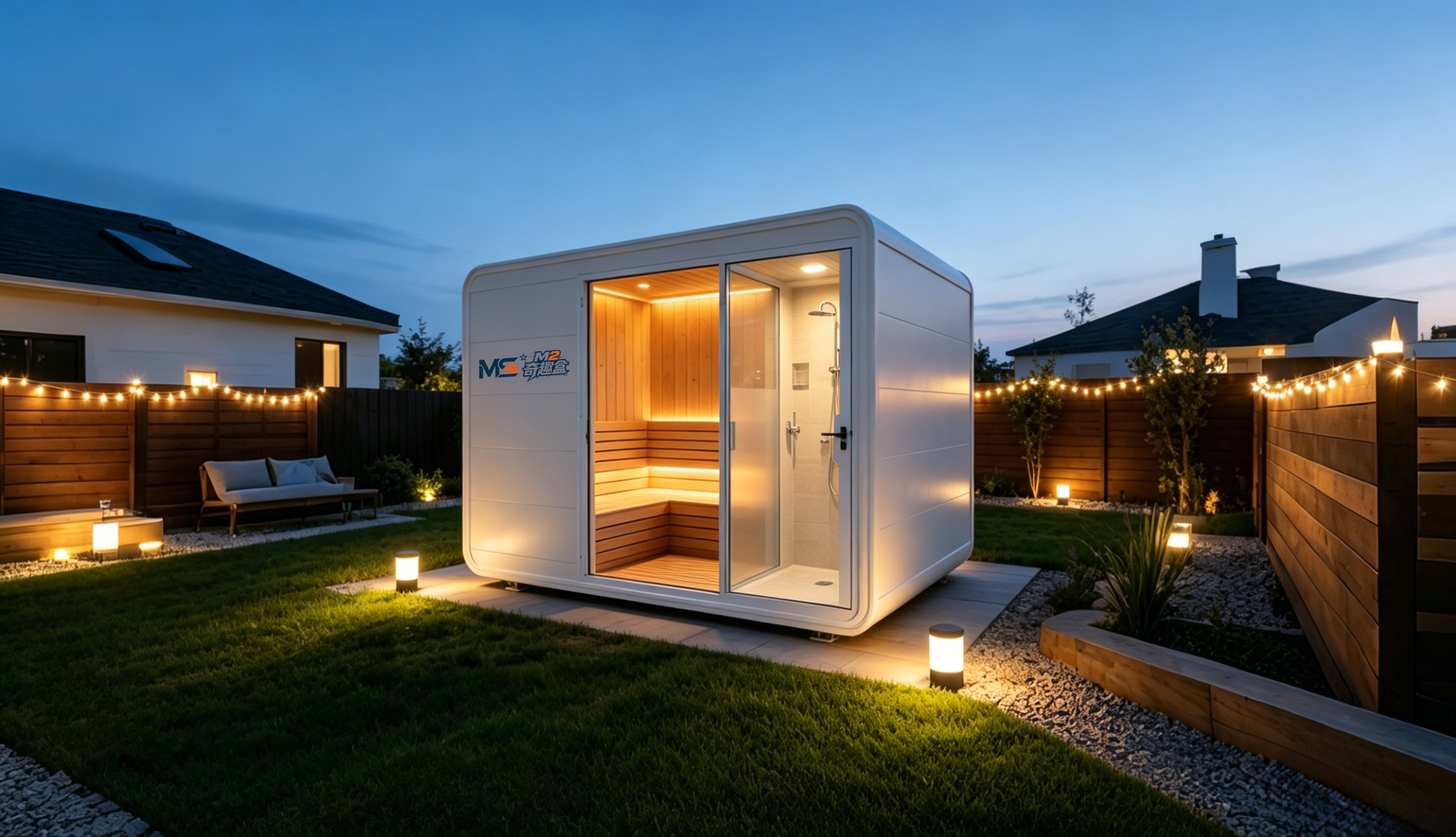
The M3 Breeze Single Capsule is the smallest unit in this comparison at 6.9 m² and approximately 2 tonnes - a footprint decision as much as a product decision.
Why buyers now compare capsule models rather than capsule categories
Modular accommodation has moved from novelty to procurement category. The glamping market, which is a primary driver of capsule cabin demand, is expected to reach USD 7.9 billion by 2033 at a 9.5% CAGR, according to Grand View Research. Within that market, cabins and pods represent the largest accommodation segment, holding a 43.0% share in 2025. Asia-Pacific is the fastest-growing region for glamping and luxury modular pods, with a projected CAGR of 12.6% through 2034, per IMARC Group.
Those are category-level figures. The practical problem for resort developers, campground operators and scenic-area developers appears one level lower: a project that starts with two units usually scales to ten or more, and at that point the differences between models inside a single supplier's range become commercial variables. A 57.6 m² commercial cabin and a 6.9 m² single-occupancy pod are not variations of the same purchase. They require different lifting plans, different electrical supplies, different site access, and different revenue assumptions.
BOITO-MINGSU is the capsule house and modular hospitality building line of Guangdong Mingsu Sojourn Technology Co., Ltd., a member of the BOITO Group, founded in 2003. The company manufactures prefabricated capsule houses, modular hotel rooms, glamping cabins, mobile sleep pods and modular villas in a 10,000 m² facility, with an annual output of 1,000 units, a 25-engineer R&D team, and approximately 40% of output exported to Southeast Asia, the EU and the USA. Its units are factory-prefabricated and delivered as complete buildings that can be customized to the building codes and electrical standards of different countries.
The four models at a glance
| Model | Type | Dimensions (L×W×H) | Area | Guests | Power | Approx. weight | Stated application |
|---|---|---|---|---|---|---|---|
| M3 | Breeze Single Capsule | 3m × 2.3m × 2.5m | 6.9 m² | 1 person | 6 kW | ≈2 t | Hospitality |
| Apple Capsule MINI | Apple Capsule | 8.3m × 3.3m × 3.2m | 27.39 m² | 1-4 persons | 7 kW | ≈6.5 t | Hospitality |
| M8 | Sleep Pod (Adventure) | 8.3m × 3.3m × 3.2m | 27.39 m² | 1-4 persons | 8 kW | ≈7 t | Hospitality |
| MS-XO8 F | Cafe Capsule | 16m × 3.6m × 3.2m | 57.6 m² | 1-4 persons | 10 kW | ≈13 t | Catering service |
Four variables that actually decide the model
1. Application class comes first
The most consequential split in this range is not size but classification. The M3, Apple Capsule MINI and M8 are catalogued under the hospitality industry. The MS-XO8 F is catalogued as a commercial cabin for catering service. Its specification sheet lists 1-4 persons and 57.6 m², so buyers generally treat it as a commercial cabin - a cafe, dining or reception space - rather than as a sleeping room. Comparing it directly against a guest capsule on a per-unit basis is a category error; it should be evaluated against the revenue it enables on site.
2. Footprint and usable area
Area separates the range into three tiers. The M3 covers 6.9 m², roughly a quarter of a standard 27.39 m² unit. The Apple Capsule MINI and the M8 are identical in outer dimensions - 8.3m × 3.3m × 3.2m - and identical in covered area at 27.39 m². The MS-XO8 F more than doubles that at 57.6 m² on a 16 m length. For site planning, the 16 m length is often the binding constraint, not the area, because access roads, turning radii and crane reach all scale with length.
3. Occupancy
Occupancy is documented as 1 person for the M3 and 1-4 persons for the other three models. That single line determines nightly yield. A 6.9 m² unit is best understood as a single-guest product for staff accommodation, hiking and trail locations, or premium solo stays, while 27.39 m² units support a family or small-group booking.
4. Electrical load and unit weight
Power consumption is documented at 6 kW for the M3, 7 kW for the Apple Capsule MINI, 8 kW for the M8 and 10 kW for the MS-XO8 F. These are the figures used to size supply cables, distribution boards and any off-grid generation. Weight ranges from approximately 2 tonnes for the M3 to approximately 13 tonnes for the MS-XO8 F. The two 27.39 m² hospitality models share an identical envelope but differ in both power (7 kW vs 8 kW) and weight (approximately 6.5 t vs 7 t), which indicates different on-board equipment and fit-out loads rather than a different enclosure.
What stays consistent across the four models
One of the more useful findings in this comparison is how little the construction system changes between models. Across the documented product line, the same envelope logic is applied:
- Main frame: an anti-seismic steel structure system developed by a professional structural design team, using hot-dip galvanized steel as the main material. The documented pipe specification is hot-dip galvanized square pipe 150×100×3, 100×100×3, 100×50×2.5 and 50×50×2 at national standard.
- Structural verification: the units have passed strict structural safety certification according to the manufacturer's documentation.
- Glass and door-window system: a fully enclosed broken bridge form embedded with double-layer tempered hollow Low-E glass, selected for thermal insulation, light transmittance and control of internal solar heat gain, plus aluminium alloy flat doors for privacy, thermal insulation and sound insulation.
- Insulation: polyurethane foam with a thermal resistance of 3.2 m²K/W, fixed behind high-strength composite materials.
- Exterior cladding: fluorocarbon paint customized aluminium plate, described for high strength, pressure resistance, oxidation resistance and surface texture.
- Bathroom system: Arrow sanitary appliances - basin, faucet, shower, toilet, sink and bathroom mirror.
Procurement implication: because the envelope system is shared, a buyer comparing these four models is not choosing between four construction qualities. The decision is about size, occupancy, electrical load, weight and internal purpose. Spare-part logic, inspection routines and site standards remain the same as the fleet grows - which matters when a resort adds units in later phases.
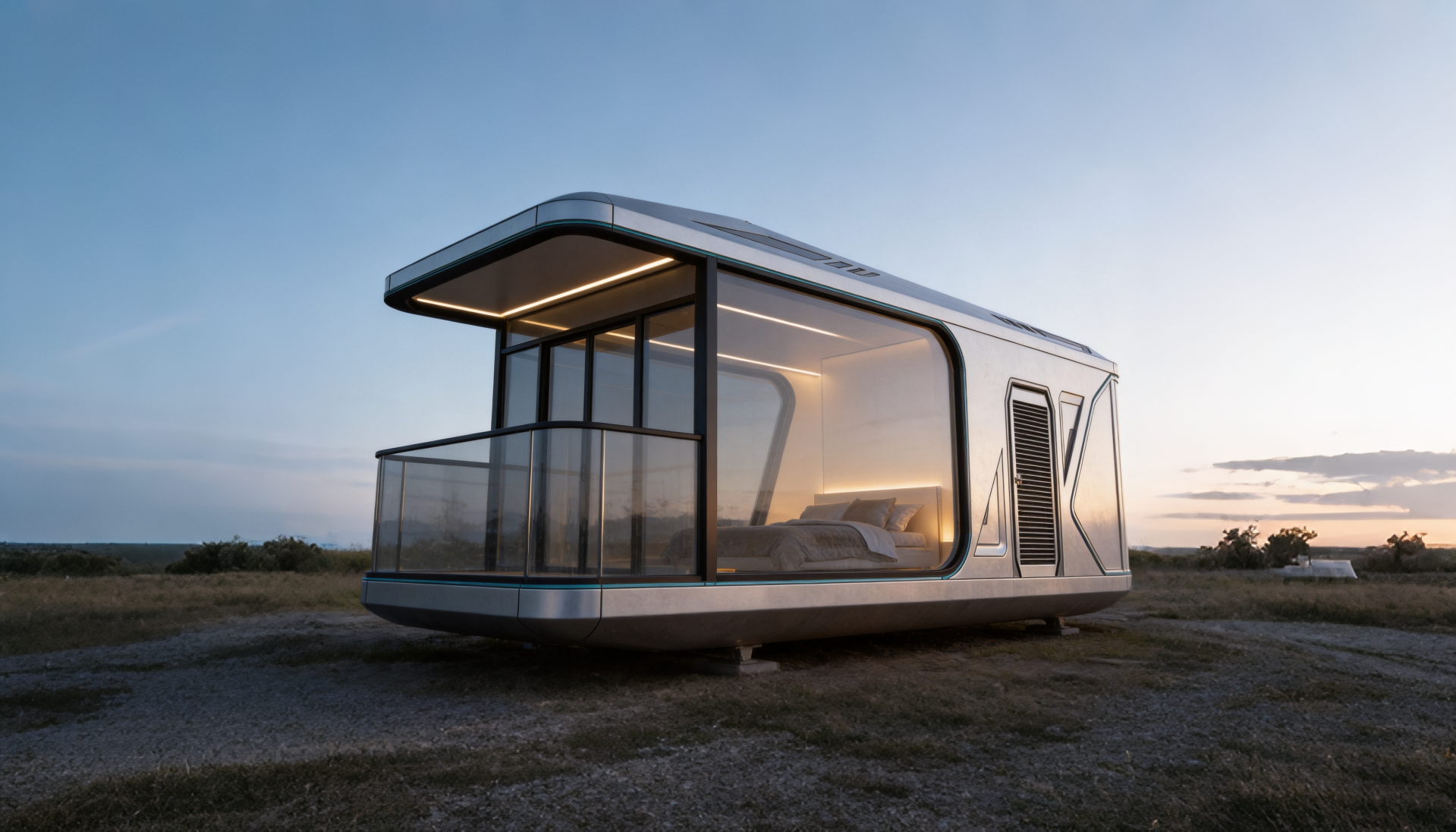
The M8 Sleep Pod (Adventure) shares the 8.3m × 3.3m × 3.2m envelope of the Apple Capsule MINI but is rated at 8 kW and approximately 7 tonnes.
Power, weight and site logistics
Weight drives cost outside the unit price. A 2-tonne M3 can be placed with relatively light lifting equipment and may suit plots where machinery access is limited. A 13-tonne, 16 m MS-XO8 F requires a heavier lifting plan, a surveyed transport route and a foundation designed for the load case. Because the units are delivered as complete buildings rather than flat-packed kits, the transport corridor - road width, bridge limits, overhead lines and final crane position - should be surveyed before the model is confirmed, not after.
Electrical planning follows the same logic. A cluster of 27.39 m² units at 7-8 kW each, or a catering cabin rated at 10 kW, determines the incoming supply capacity of the whole site rather than of a single building. Where a project is off-grid, the documented power figures are the starting point for generator or storage sizing.
Application fit: matching each model to a project type
- M3 (Breeze Single Capsule): a 6.9 m², single-occupancy, 2-tonne unit for compact plots, trail-side or staff accommodation, and operators testing a location before committing to larger units.
- Apple Capsule MINI: a 27.39 m² hospitality unit for 1-4 guests at 7 kW, suited to resort and glamping plots where guest comfort and lower connected load are both priorities.
- M8 (Sleep Pod Adventure): the same 27.39 m² footprint at 8 kW and approximately 7 tonnes, positioned for outdoor adventure and glamping accommodation.
- MS-XO8 F (Cafe Capsule): a 57.6 m², 16 m commercial cabin at 10 kW and approximately 13 tonnes, catalogued for catering service and used as a food, beverage or gathering space within a resort layout.
Documented deployments support that mapping. Resort accommodation projects include a camping resort in Thailand with 10 M8 units, a tourism village in Malaysia with 4 M8 units, and a camping resort in China with 36 units combining M8 and M12. Residential use is represented by 6 customized units for holiday homes in Canada, and commercial use by 2 customized business cabins in Hong Kong. A separate tourism resort OEM project in Malaysia deployed 10 units for camping resort application, reported with stable operation and low noise over a 20-year project horizon.
Certification and compliance boundaries
The four models sit inside one environmental management certification set. The applicable standard is GB/T 24001-2016 / ISO14001:2015, the certificate number is ISC-E-2025-5371-R, and the issuing authority is Beijing International Standard United Certification Co., Ltd. The certification applies to the EU market and covers the M3, Apple Capsule MINI, M8, M10 and the MS-XO8 F commercial cabin.
Buyers should read that certificate precisely. Its stated scope is environmental management activities at the sites involved in manufacturing metal structures (mobilehomes), and it explicitly excludes qualification and license requirements. In other words, ISO 14001 confirms an environmental management system; it is not a substitute for destination-market product approvals, electrical conformity or building permission. For the EU, capsule houses fall under the Construction Products Regulation and must carry CE marking for legal installation. Internationally, ISO 21542 and ISO 19650 are used to classify and manage data for volumetric modular (Type 3) and complete building (Type 4) units. In the United States, regulations distinguish capsule units as RVs, ADUs or state-certified modular construction, each with different foundation requirements. These are the checks that must be resolved per market, per model, before the order is placed.
Capsule houses versus traditional on-site construction
Factory-prefabricated units change the construction curve rather than removing it. Modular housing projects can reduce construction timelines by 30%-50% compared with traditional on-site building methods, according to Fortune Business Insights, and modular construction can cut on-site waste by approximately 30% on average, per The Freedonia Group. For a resort with a fixed opening season, that timeline compression is often the deciding commercial argument.
The limits are equally real. This manufacturer's documented capacity is 30 to 50 units per month, with a lead time of 30-45 days and a minimum order quantity of 10 units. Customization within the documented ODM capability covers voltage and logo, not a free redesign of the structural system. After-sales is provided as remote support. Site works - foundations, utility connections and final landscaping - still take place on site, and heavier models require lifting and route planning. A buyer comparing capsule houses to conventional construction should therefore compare total programme risk, not only unit price.
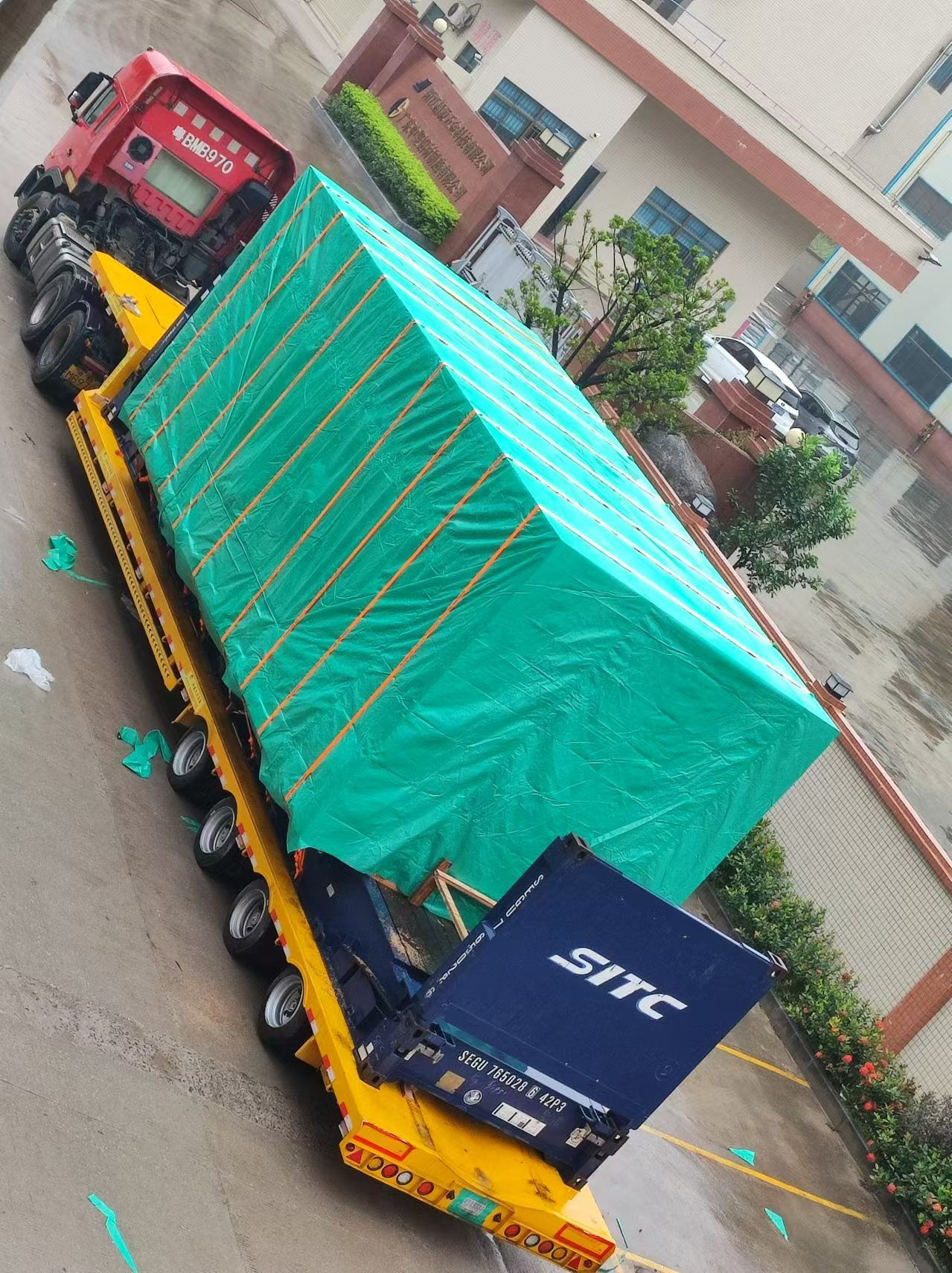
Because units ship as complete buildings, weight and length - not just area - determine transport and lifting feasibility.
Purchasing terms and acceptance criteria: the final buyer checks
Model selection is only the first half of the decision. The second half is commercial terms and acceptance. The following points are documented and can be written directly into a purchase specification.
Commercial terms to confirm
- Minimum order quantity: 10 units.
- Lead time: 30-45 days; monthly capacity 30 to 50 units.
- Production mode: ODM, with voltage and logo customization.
- Quality control: 100% test.
- Export markets served: EU and Middle East.
- After-sales: remote support.
Technical acceptance checks
- Verify the hot-dip galvanized square pipe specification against the documented national-standard list (150×100×3, 100×100×3, 100×50×2.5, 50×50×2) and confirm the anti-seismic steel structure system.
- Confirm double-layer tempered hollow Low-E glass in a fully enclosed broken bridge system, with aluminium alloy flat doors.
- Confirm polyurethane foam insulation with a thermal resistance of 3.2 m²K/W.
- Confirm fluorocarbon paint customized aluminium plate exterior cladding.
- Confirm Arrow sanitary appliances in the bathroom system.
- Record the certification number ISC-E-2025-5371-R, its issuing authority and the model coverage.
- Confirm the electrical standard and voltage for the destination country, and match supply capacity to the model rating (6 kW / 7 kW / 8 kW / 10 kW).
- Verify the lifting and transport plan against model weight (approximately 2 t / 6.5 t / 7 t / 13 t).
Future outlook
The direction of travel in modular hospitality is toward model-level specification rather than supplier-level branding. With cabins and pods already holding a 43.0% share of the glamping accommodation segment and Asia-Pacific growing at a projected 12.6% CAGR through 2034, the supply side is being judged on documented parameters - area, occupancy, power, weight, envelope build and certification scope - rather than on appearance alone. Manufacturers who publish consistent construction systems across a range, and whose certification claims can be traced to a certificate number and an issuing authority, are easier to include in a shortlist. Buyers, in turn, are increasingly expected to arrive with a site plan, a power budget and a lifting assessment before the model is fixed.
FAQ
What are the main differences between the M3, Apple Capsule MINI, M8 and MS-XO8 F?
They differ mainly in size, occupancy and purpose. The M3 is a 6.9 m², single-person Breeze Single Capsule at 6 kW and approximately 2 tonnes. The Apple Capsule MINI and M8 are both 8.3m × 3.3m × 3.2m, covering 27.39 m² for 1-4 persons, rated at 7 kW and 8 kW respectively, with weights of approximately 6.5 tonnes and 7 tonnes. The MS-XO8 F is a 16m × 3.6m × 3.2m commercial cabin covering 57.6 m², rated at 10 kW, weighing approximately 13 tonnes and catalogued for catering service.
Which models are intended for guest accommodation and which for catering?
The M3, Apple Capsule MINI and M8 are catalogued under the hospitality industry for guest accommodation. The MS-XO8 F is classified for catering service and is described as a cafe capsule, so it is normally specified for food, beverage or gathering space within a hospitality development rather than as a sleeping room.
What dimensions, occupancy and power consumption does each model have?
M3: 3m × 2.3m × 2.5m, 6.9 m², 1 person, 6 kW, approximately 2 t. Apple Capsule MINI: 8.3m × 3.3m × 3.2m, 27.39 m², 1-4 persons, 7 kW, approximately 6.5 t. M8: 8.3m × 3.3m × 3.2m, 27.39 m², 1-4 persons, 8 kW, approximately 7 t. MS-XO8 F: 16m × 3.6m × 3.2m, 57.6 m², 1-4 persons, 10 kW, approximately 13 t.
What construction materials and insulation performance are shared across the four models?
All four use a hot-dip galvanized steel frame with an anti-seismic steel structure system and have passed strict structural safety certification. The envelope combines double-layer tempered hollow Low-E glass in a fully enclosed broken bridge form, aluminium alloy flat doors, polyurethane foam insulation with a thermal resistance of 3.2 m²K/W, and fluorocarbon paint customized aluminium plate exterior cladding. The bathroom system uses Arrow sanitary appliances, including basin, faucet, shower, toilet, sink and bathroom mirror.
What certification do these capsule house models hold, and what does it cover?
The models are covered by ISO 14001:2015 environmental management system certification under the standard GB/T 24001-2016 / ISO14001:2015, certificate number ISC-E-2025-5371-R, issued by Beijing International Standard United Certification Co., Ltd., applicable to the EU market. The certificate covers the M3, Apple Capsule MINI, M8, M10 and the MS-XO8 F commercial cabin. Its scope is environmental management at the manufacturing sites for metal structures (mobilehomes) and it excludes qualification and license requirements, so separate destination-market approvals such as CE marking under the EU Construction Products Regulation still apply.
What purchasing terms and acceptance checks should a buyer confirm before ordering?
Documented terms include a minimum order quantity of 10 units, a lead time of 30-45 days, monthly capacity of 30 to 50 units, ODM production with voltage and logo customization, 100% testing, service to EU and Middle East export markets, and remote after-sales support. Acceptance checks should verify the galvanized square pipe specification, the Low-E glass build, the 3.2 m²K/W insulation, the fluorocarbon aluminium cladding, the Arrow sanitary fittings, the certification number and its model coverage, the destination-country electrical standard, and a lifting plan matched to the unit weight.
For buyers who need the full model data in one document, the manufacturer's 2026 catalogue is available here: BOITO-MINGSU Capsule House Catalogue 2026 (PDF).
Have Questions or Need More Details?
Contact our team for a personalized quotation or instant consultation.
Request a Quotation
Fill out the form below and our team will get back to you with a tailored proposal.
WhatsApp Direct Chat
Prefer to chat in real-time? Message us on WhatsApp for instant assistance & quick answers.
- Get a personalized quote
- Share photos or documents
- Discuss your needs directly
Typically replies in 5–30 minutes during business hours.