
Capsule House Suppliers: What Long-Term Buyers Must Verify
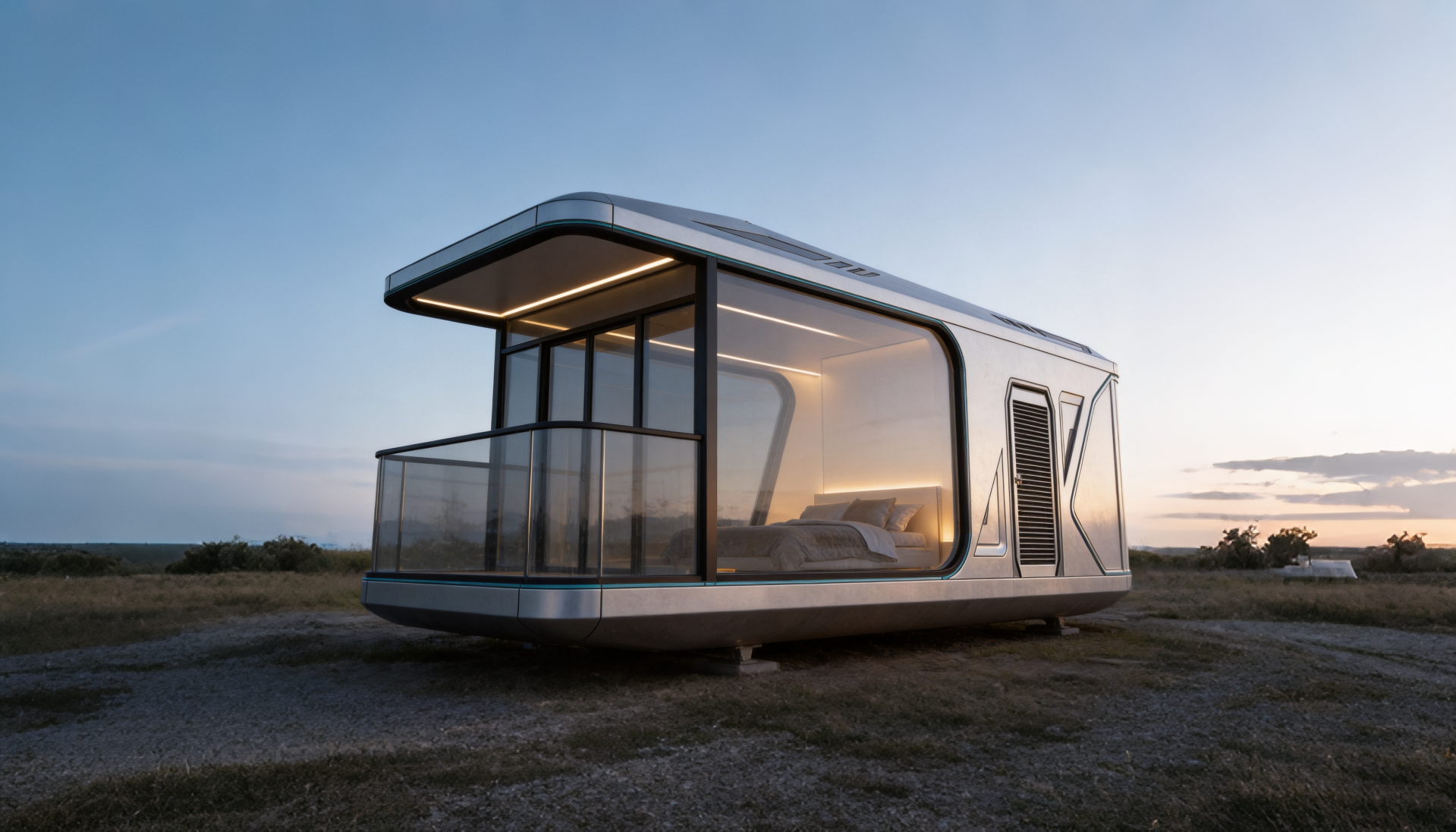
Steel modular capsule units are designed for rapid installation in outdoor hospitality environments.
Why capsule house procurement is becoming a long-term decision
Modular accommodation procurement is no longer a one-off experiment. For tourism developers, resort operators, and hospitality investors, capsule house projects now require the same level of discipline as any long-term asset decision. The critical question is not only whether a unit looks attractive, but whether the supplier can deliver repeatable quality, comply with destination regulations, and support the project after the first shipment.
GUANGDONG MINGSU SOJOURN TECHNOLOGY CO., LTD., operating under the BOITO-MINGSU brand, is one manufacturer that has structured its offer around factory prefabrication and export-oriented service. Established in 2003, the company supplies capsule houses, modular hotel units, glamping cabins, mobile sleep pods, and modular villas to tourism developments, resorts, campground operators, scenic-area developers, and overseas engineering clients.
This article focuses on what buyers in the decision and execution stage should verify before choosing a capsule house supplier. It covers production capability, technical characteristics, real-world applications, market context, and the limitations of modular units.
The gap between capsule house photos and project-ready supply
Many buyers first encounter capsule house products through product images or a single show unit. The real procurement risk appears later, when a project reaches execution: delivery lead times, welding quality, insulation performance, door and window sealing, sanitary fittings, documentation, and the ability to adapt electrical standards.
Independent market research points in the same direction. Grand View Research projects the global glamping market will reach USD 7.9 billion by 2033, with cabins and pods representing the largest accommodation segment at 43.0 percent in 2025. As the market expands, professional buyers will need suppliers who can handle series orders, not one-off prototypes.
The opportunity for buyers is to treat a capsule house order as a repeatable product procurement rather than a construction project. That shift requires a supplier with visible production capacity, engineering resources, and export documentation experience.
BOITO-MINGSU at a glance: what the factory actually offers
GUANGDONG MINGSU SOJOURN TECHNOLOGY CO., LTD. operates a manufacturing facility of 10,000 square meters in Yangjiang, Guangdong, with an annual production capacity of 1,000 units. The company employs around 30 people and maintains an R&D team of 25 engineers, a meaningful sign of design capacity for a manufacturer in this category.
Principal products include capsule houses, modular hotel units, glamping cabins, mobile sleep pods, and modular villas. The units are factory-prefabricated and delivered as complete products. Export business accounts for 40 percent of total sales, with major markets in Southeast Asia, the EU, and the USA.
For procurement teams, the relevant point is that customization is part of the standard offer. The company states that its products can be adapted to meet the building codes and electrical standards of different countries. That capability matters for hotel groups and distributors who need the same base model to appear in multiple jurisdictions.
Representative capsule house models
The following table summarizes publicly available product parameters from BOITO-MINGSU's current portfolio.
| Model | Type | Dimensions | Guests | Power | Weight |
|---|---|---|---|---|---|
| M8 | Sleep Pod (Adventure) | 8.3m x 3.3m x 3.2m | 1-4 | 8 kW | ≈7 t |
| M10 | Exotic-Style Capsule House | 10m x 3.6m x 3.2m | 1-4 | 10 kW | ≈9.5 t |
| M3 | Breeze Single Capsule | 3m x 2.3m x 2.5m | 1 | 6 kW | ≈2 t |
| Apple Capsule MINI | Apple Capsule | 8.3m x 3.3m x 3.2m | 1-4 | 7 kW | ≈6.5 t |
| MS-XO8 F | Cafe Capsule / Commercial Cabin | 16m x 3.6m x 3.2m | 1-4 | 10 kW | ≈13 t |
These parameters help buyers compare site logistics and electrical requirements before finalizing a project plan.
Supplier qualification checklist for repeat orders
- Verify production capacity: 1,000 units per year at a 10,000 m² facility.
- Confirm engineering depth: an R&D team of 25 engineers.
- Check export experience: 40 percent of sales exported to Southeast Asia, the EU, and the USA.
- Review customization process: capability to meet different countries' building codes and electrical standards.
- Define procurement terms: MOQ 10 units, FOB/CIF/EXW delivery, factory inspection or video inspection, and payment terms of 50 percent deposit with balance before shipment.
- Request product specs: dimensions, power consumption, total weight, and material system for each model.
Steel modular construction: how a capsule house is built
Steel modular capsule houses are built around a hot-dip galvanized steel frame. This protective coating is intended to resist corrosion and rust, which is particularly relevant for coastal, humid, and mountain environments. The main supporting components include broken-bridge aluminum doors and windows, double-layer tempered Low-E hollow glass, exterior wall thermal insulation composite panels, and sound insulation materials.
Because the unit is factory-prefabricated, on-site work is heavily reduced. No complex foundation is required; the ground only needs to be leveled, and the capsule can be lifted into place. According to BOITO-MINGSU's technical data, installation and placement of a single capsule can be completed in about two hours. The overall modular structure is formed without on-site construction waste, and the design can reduce civil construction costs by approximately 80 percent.
From an owner-operator perspective, the movable nature of the unit is equally important. When a project ends, the capsule can be relocated and reused as a whole. This approach reduces the fixed-asset loss that often comes with traditional buildings in temporary tourism or event settings.
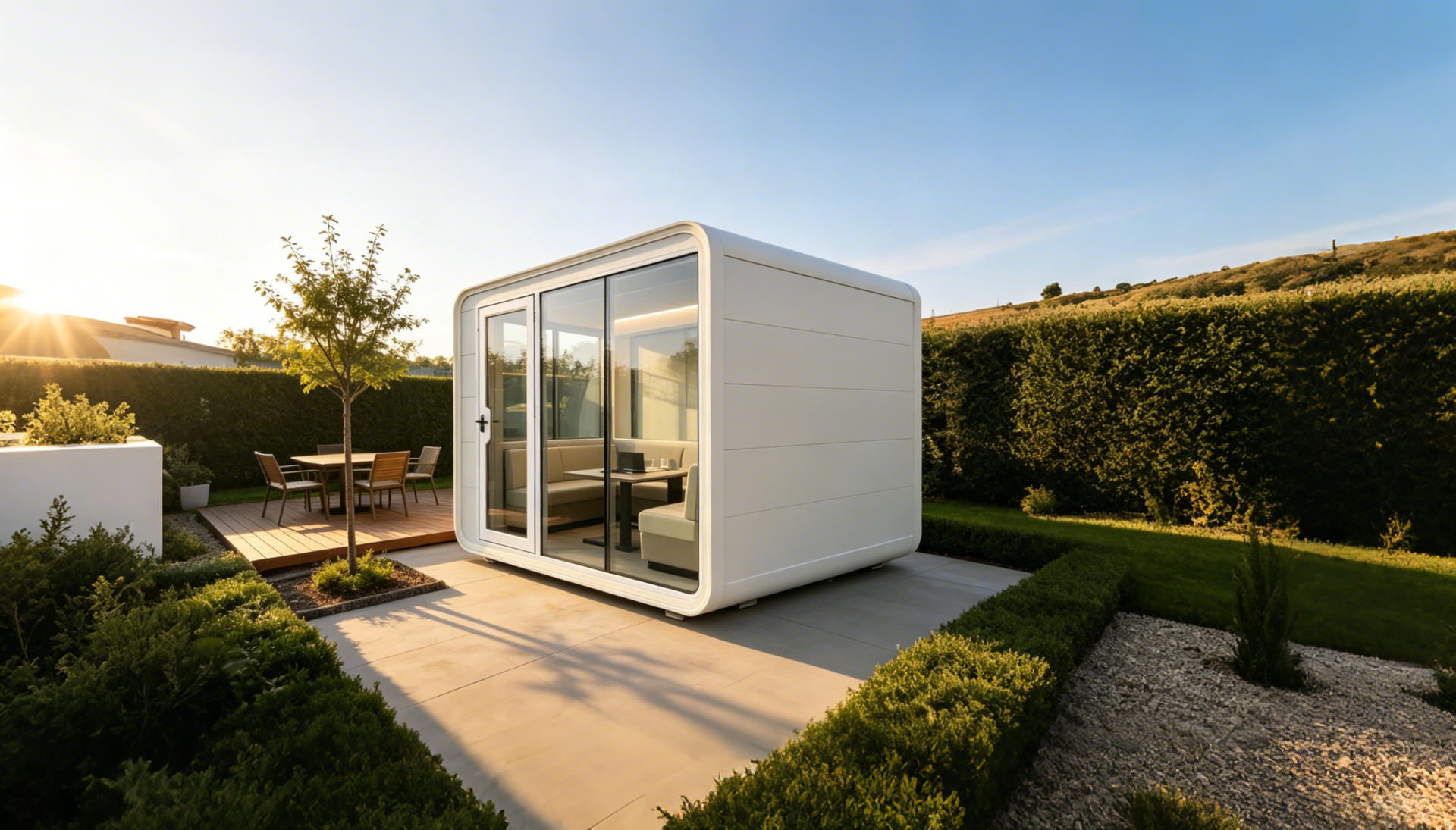
Compact single-person capsule units expand options for campgrounds and scenic-area guest rooms.
Where steel modular capsule houses are being used
Published project references from BOITO-MINGSU show a pattern of repeated use across hospitality formats. In Thailand, a camping resort deployed 10 M8 units. In Malaysia, a tourism village used 4 M8 units. In China, a camping resort project involved 36 units combining M8 and M12 models. In Canada, a residential project used 6 customized units, and in Hong Kong a commercial project used 2 customized business cabins.
The company also identifies broader use cases: campsite rest areas, shower facilities, and scenic guest rooms that do not disturb the ecosystem, as well as quick-setup shops, convenience stores, and exhibition halls. For resort buyers, this suggests that a single modular platform can serve multiple business functions under one project plan.
Applications such as outdoor glamping capsule houses, tourism resort capsule units, and on-site staff accommodation benefit from the same production logic: factory-controlled quality, minimal site disruption, and flexible placement.
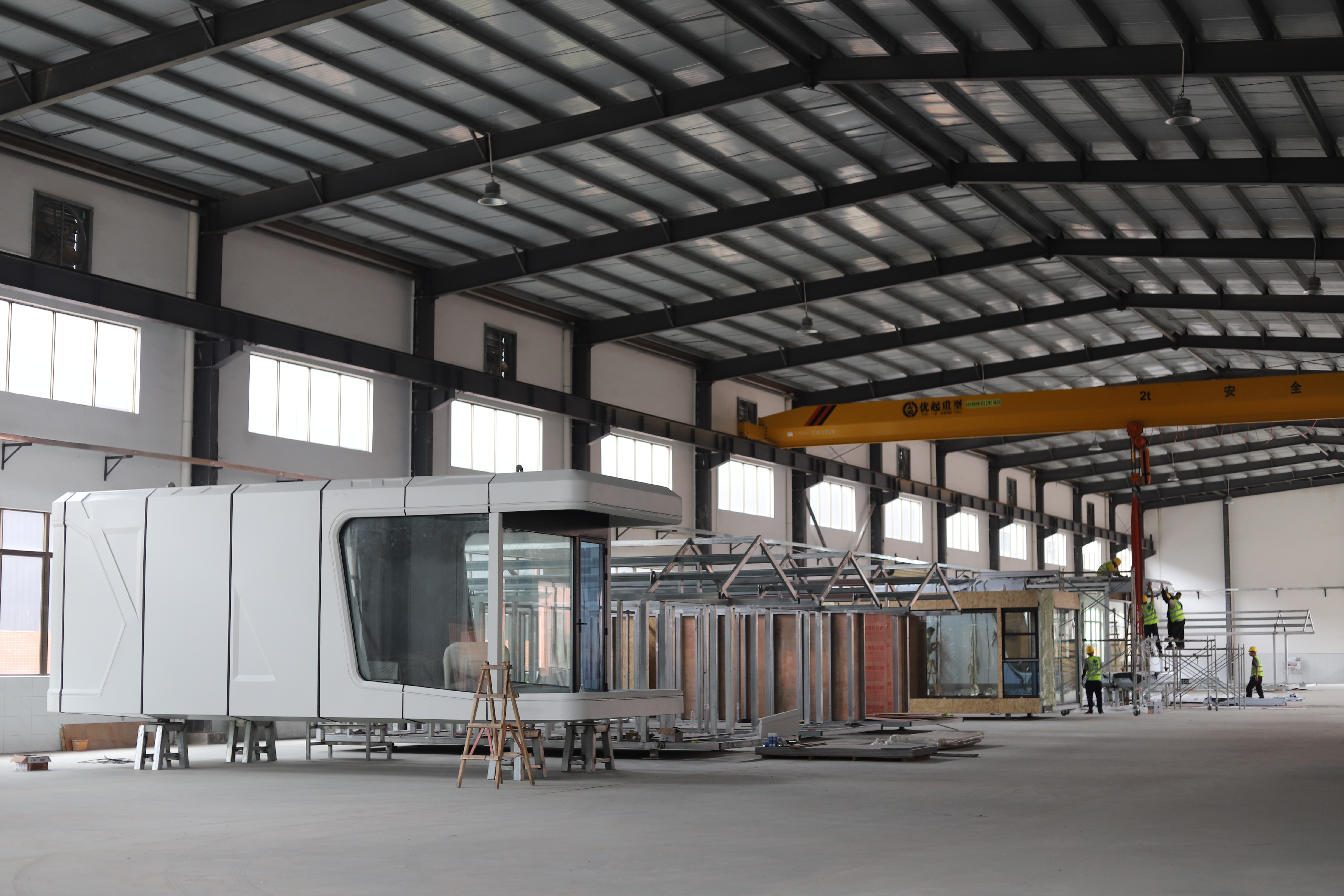
Explorer Series M12 units appear in BOITO-MINGSU project references for camping resorts and tourism villages.
Market context: prefab housing, glamping, and regulatory signals
Verified market data supports the shift toward modular hospitality. Mordor Intelligence estimates the global prefabricated housing market will reach approximately USD 152.74 billion by 2026, with modular homes growing at a compound annual rate of 7.05 percent through 2031. Fortune Business Insights reports that modular construction methods can reduce project timelines by 30 to 50 percent compared with traditional on-site building. OEC data also shows China's exports of prefabricated buildings reached USD 3.24 billion in 2024, with Malaysia and the US as key growth markets.
The glamping market reinforces the capsule house segment. Grand View Research projects global glamping revenue of USD 7.9 billion by 2033, with a 9.5 percent CAGR. Cabins and pods account for the largest accommodation segment at 43.0 percent in 2025. IMARC Group identifies Asia-Pacific as the fastest-growing region for glamping and luxury modular pods, with a projected CAGR of 12.6 percent through 2034.
Regulatory readiness is becoming part of supplier evaluation. In the EU, capsule houses fall under the Construction Products Regulation and require CE marking for legal installation. In the US, regulators distinguish capsule units as RVs, ADUs, or state-certified modular construction, each with different foundation requirements. The ISO 21542 and ISO 19650 frameworks also provide data classification standards used for volumetric modular and complete building units. Modular ADU installations have captured 53 percent of the total ADU market in the US, according to industry data. Buyers should ask how a supplier documents compliance for each destination market.
How capsule houses compare with traditional site-built construction
Compared with brick-and-concrete or conventional light-steel construction, the modular capsule approach addresses several structural problems. Traditional construction usually requires foundation work, approval procedures, and on-site installation lasting three to six months, with high costs for labor, materials, and infrastructure. Once built, the structure is fixed; if the site is closed or the business model changes, the building can become stranded.
BOITO-MINGSU's comparison data for resort hotels, campgrounds, and cultural tourism projects shows a 30 to 50 percent shorter on-site construction period and a 15 to 25 percent reduction in overall project investment. The company also reports a cost difference of around 10 percent lower, less maintenance, and higher efficiency. Best-fit projects include resort hotels, campgrounds, and cultural tourism developments.
There are also honest limitations. A capsule house is not a substitute for a permanent multi-story building. Landscape restrictions, transport dimensions, local zoning, and foundation conditions must be assessed before purchase. In some locations, the unit may still need a permit or be classified as an RV, ADU, or modular building. Buyers should not assume that any site can accept a modular unit without a local compliance review.
What long-term buyers should plan for
Long-term capsule house procurement is moving from single-unit experimentation to portfolio planning. Hospitality groups that operate multiple sites need suppliers with consistent output, documented specifications, and a service model that supports repeat orders. The combination of in-house engineering, production capacity, and export experience will become the main filter for supplier selection.
For BOITO-MINGSU, the stated advantages of factory prefabrication and customization point toward this future. For buyers, the practical takeaway is to verify production capacity, technical specifications, regulatory adaptability, and commercial terms before committing to a long-term program.
Frequently asked questions
What are the advantages of modular space capsules?
The space capsule factory adopts fully prefabricated production. No complex foundation is required on-site; the ground only needs to be leveled, and the unit can be lifted and placed. Installation and placement of a single capsule can be completed in about two hours, significantly shortening the project cycle. The overall modular structure is formed without on-site construction waste, and about 80 percent of civil construction costs can be saved. After the project is completed, the unit can be moved and reused as a whole, reducing fixed-asset loss.
What types of clients does BOITO-MINGSU serve?
The company serves tourism developments, resorts, campground operators, scenic-area developers, and overseas engineering clients. Its major markets include Southeast Asia, the EU, and the USA, with about 40 percent of products exported.
Can BOITO-MINGSU capsule houses be customized for different countries?
Yes. The company offers customizable products that can be adapted to meet building codes and electrical standards of different countries. Products are factory-prefabricated to ensure consistency.
What production and procurement terms should buyers expect?
The company has an annual production capacity of 1,000 units and a 10,000 square meter facility. For standard procurement, the minimum order quantity is 10 units. Delivery methods include FOB, CIF, and EXW. Acceptance can be supported through factory inspection or video inspection, and payment terms are typically 50 percent deposit with the balance before shipment.
For detailed product specifications and company information, the 2026 BOITO-MINGSU corporate brochure is available for download: BOITO-MINGSU 2026 Brochure.
Have Questions or Need More Details?
Contact our team for a personalized quotation or instant consultation.
Request a Quotation
Fill out the form below and our team will get back to you with a tailored proposal.
WhatsApp Direct Chat
Prefer to chat in real-time? Message us on WhatsApp for instant assistance & quick answers.
- Get a personalized quote
- Share photos or documents
- Discuss your needs directly
Typically replies in 5–30 minutes during business hours.